LSU football has produced some of the fiercest competitors in college football history, blending raw talent with relentless grit. From roaring Tiger Stadium crowds to championship glory, it has become a breeding ground for legends.
Through decades of intense SEC battles, certain players have risen above, leaving indelible marks with unforgettable plays and game-changing moments. Their influence extends beyond stats, shaping the identity of LSU football itself.
From electrifying quarterbacks to unstoppable defensive stars, these Tigers have defined eras, inspired fans, and set standards of excellence that continue to echo through Baton Rouge and the wider college football world.
Abe Mickal
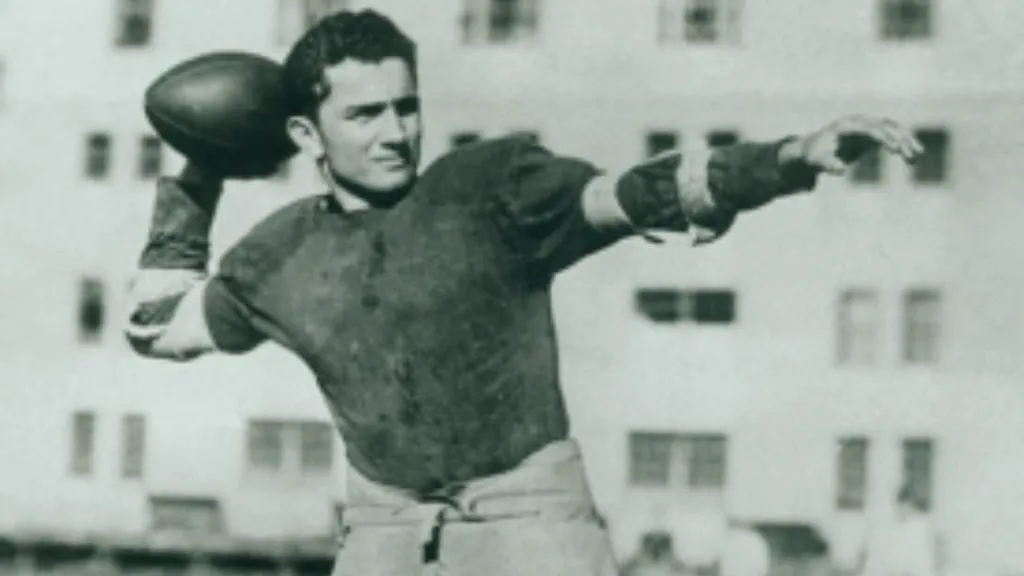
Abe Mickal (Source: LSU Libraries)
In the early 1930s, LSU’s gridiron was graced by Ibrahim Khalil “Abe” Mickal, a versatile athlete who excelled in four sports. As a triple-threat back from 1933 to 1935, he led the Tigers to a 23-4-5 record, earning three All-SEC selections and an All-American honor in 1935.
His leadership propelled LSU to a perfect season in 1933 and an SEC Championship with a Sugar Bowl appearance in 1935. His legacy was cemented with inductions into the National Football Foundation Hall of Fame in 1967 and the Mississippi Sports Hall of Fame in 1985.
Devin White
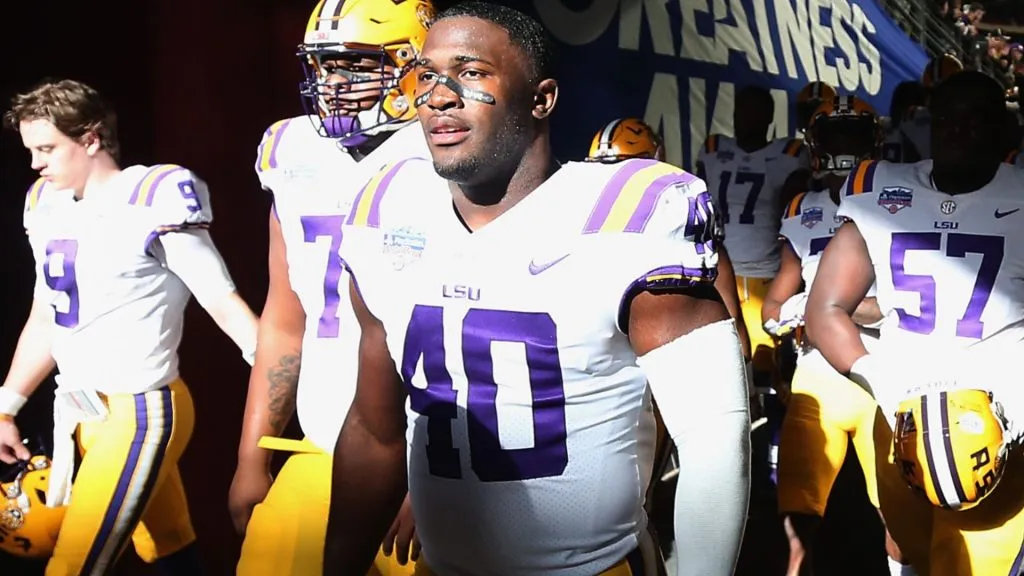
Linebacker Devin White #40 of the LSU Tigers walks off the field before the PlayStation Fiesta Bowl against the UCF Knights at State Farm Stadium on January 01, 2019. (Source: Christian Petersen/Getty Images)
Devin White‘s tenure at LSU was marked by his relentless pursuit and leadership on the field. In 2018, he led the SEC with 10.2 tackles per game and amassed 133 total tackles, ranking second in the conference.
His standout performances included eight double-digit tackle games, tying a school record. His prowess earned him first-team All-SEC honors and second-team All-America recognition. His impact was further acknowledged with the Corbett Award, making him the 12th LSU player to receive this honor.
Dalton Hilliard
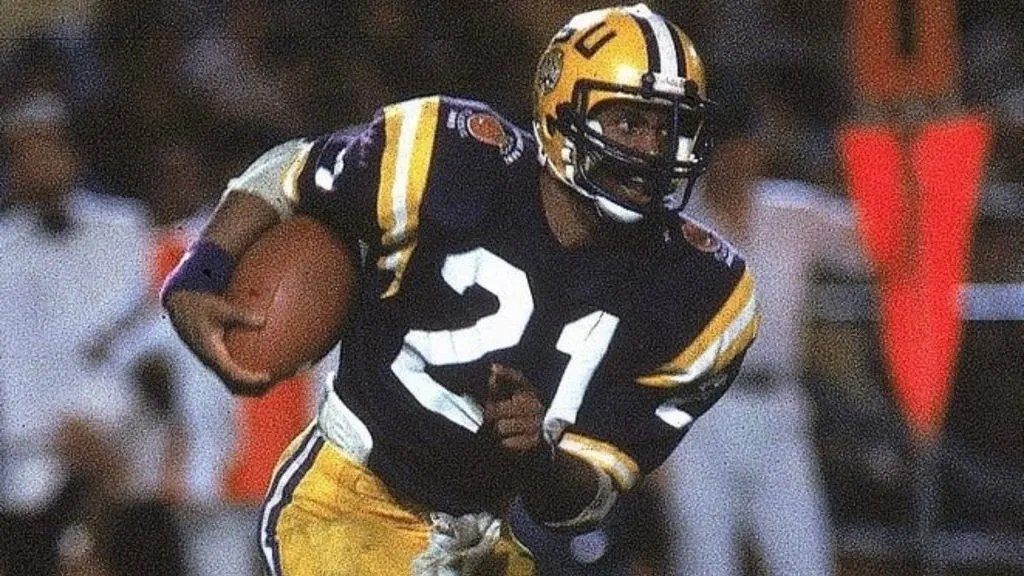
Dalton Hilliard (Source: @CountdownLSU)
Dalton Hilliard‘s career at LSU was a testament to consistency and scoring prowess. From 1982 to 1985, he rushed for 44 touchdowns, ranking fifth all-time in the SEC as of 2013.
His performance earned him a second-round selection in the 1986 NFL Draft by the New Orleans Saints. His contributions were recognized with inductions into the Louisiana Sports Hall of Fame in 1997 and the New Orleans Saints Hall of Fame in 1998.
Wendell Davis
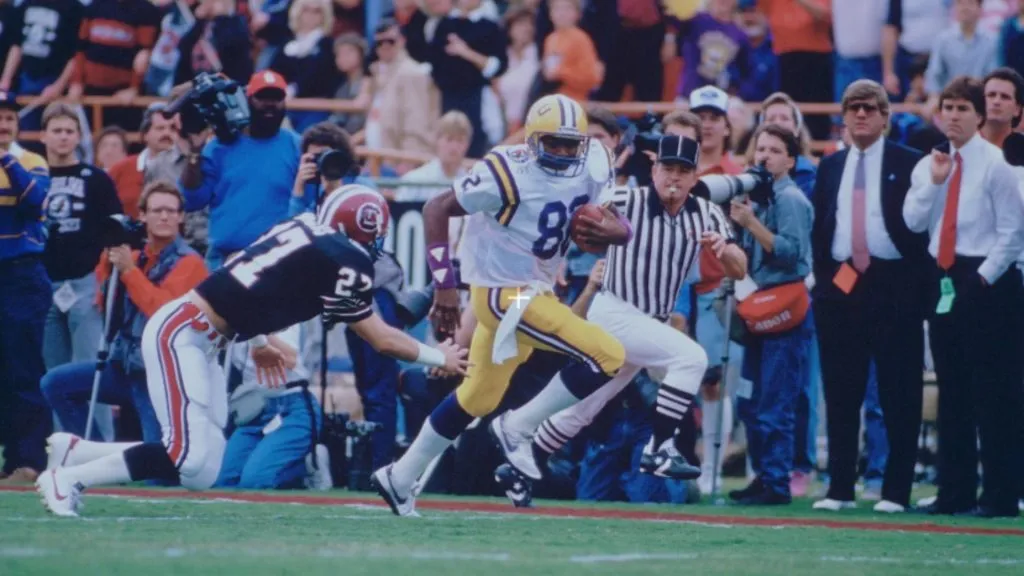
Wendell Davis (Source: Louisiana Sports Hall of Fame)
Wendell Davis redefined LSU’s receiving game in the mid-1980s. A two-time All-American in 1986 and 1987, he set numerous school records, many of which stood until 2001. His exceptional skills earned him the SEC Player of the Year award in 1987. His legacy was solidified with his induction into the Louisiana Sports Hall of Fame.
Tommy Hodson
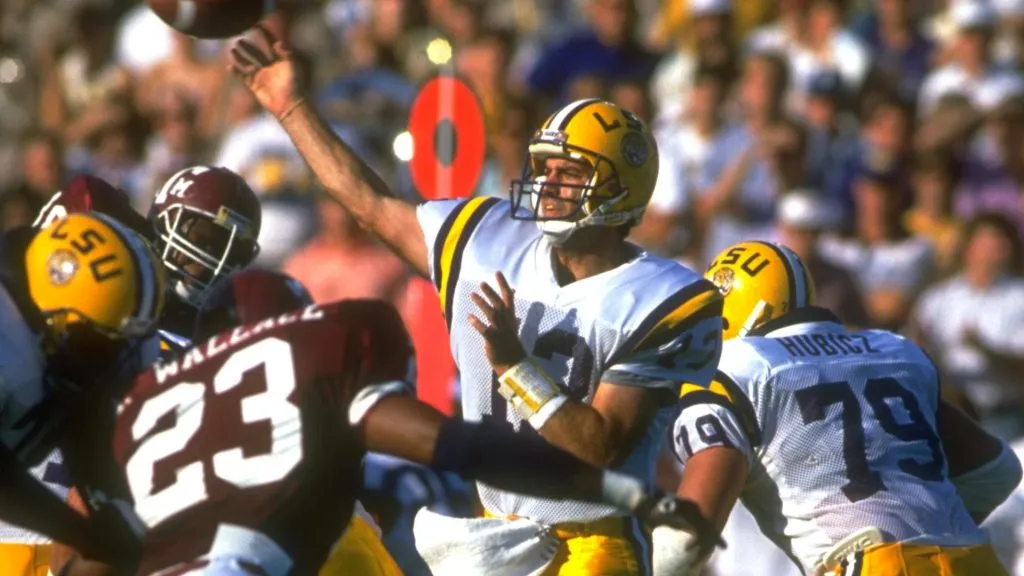
Tommy Hodson #13, quarterback for Luisiana State, releases a pass during their 28-16 loss to Texas A&M in 1989. (Source: Joe Patronite/Allsport)
Tommy Hodson‘s era at LSU marked a significant shift in the passing game. As a four-year starting quarterback from 1986 to 1989, he compiled a 31-14-1 record. He became LSU’s all-time leading passer with 9,115 yards, 69 touchdowns, and 967 completions, setting SEC records at the time. His achievements earned him induction into the Louisiana Sports Hall of Fame.
Patrick Peterson
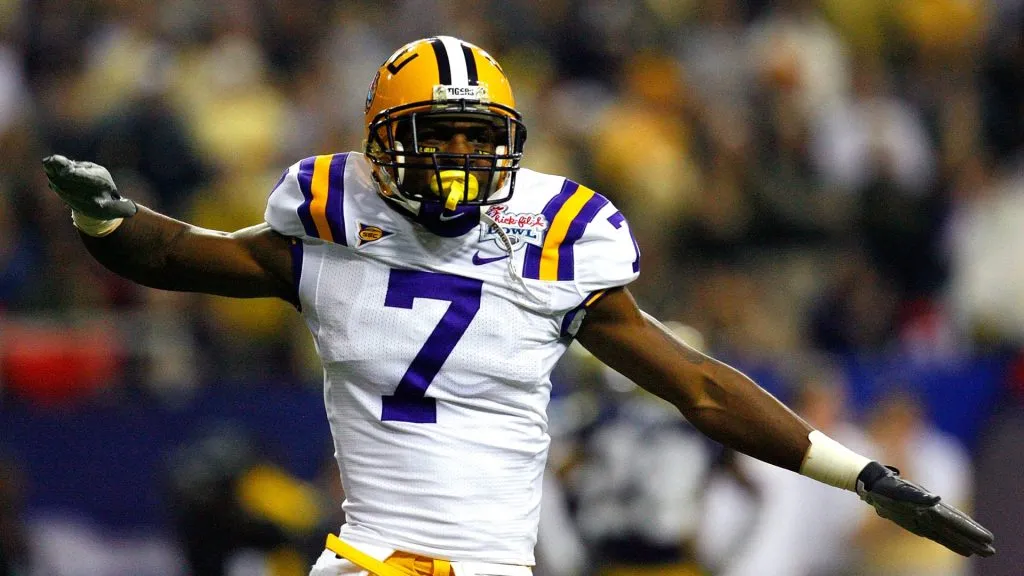
Cornerback Patrick Peterson #7 of the LSU Tigers reacts after forcing a fumble and turnover by the Georgia Tech Yellow Jackets during the Chick-fil-A Bowl on December 31, 2008. (Source: Kevin C. Cox/Getty Images)
Patrick Peterson‘s tenure at LSU was marked by his dominance in the secondary. A three-year starter, he recorded 135 tackles, 22 pass breakups, and seven interceptions. His versatility was evident as he scored touchdowns in three different ways: punt return, interception, and blocked field goal return. His exceptional play earned him the Thorpe and Bednarik Awards in 2010, along with consensus All-America honors.
Malik Nabers
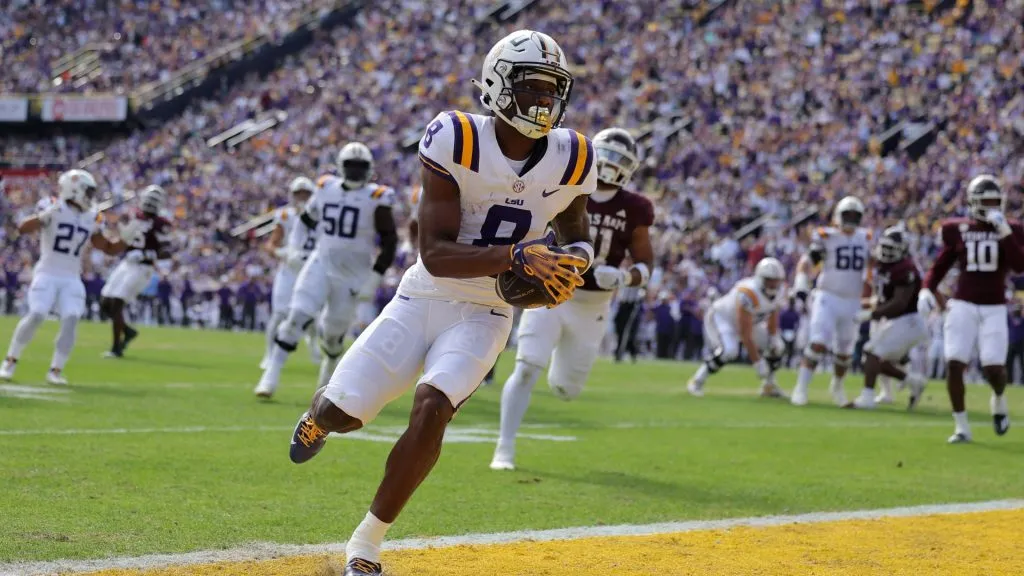
Malik Nabers #8 of the LSU Tigers scores a touchdown during the first half against the Texas A&M Aggies at Tiger Stadium on November 25, 2023. (Source: Jonathan Bachman/Getty Images)
Malik Nabers‘ impact at LSU was immediate and profound. In his final season, he set a school record with 1,569 receiving yards and 14 touchdowns, ranking sixth in SEC history for receiving yards in a season. His consistency was evident as he caught a touchdown in nine games and capped the regular season with five straight 100-yard games. His performance earned him unanimous All-American honors in 2023.
Leonard Fournette
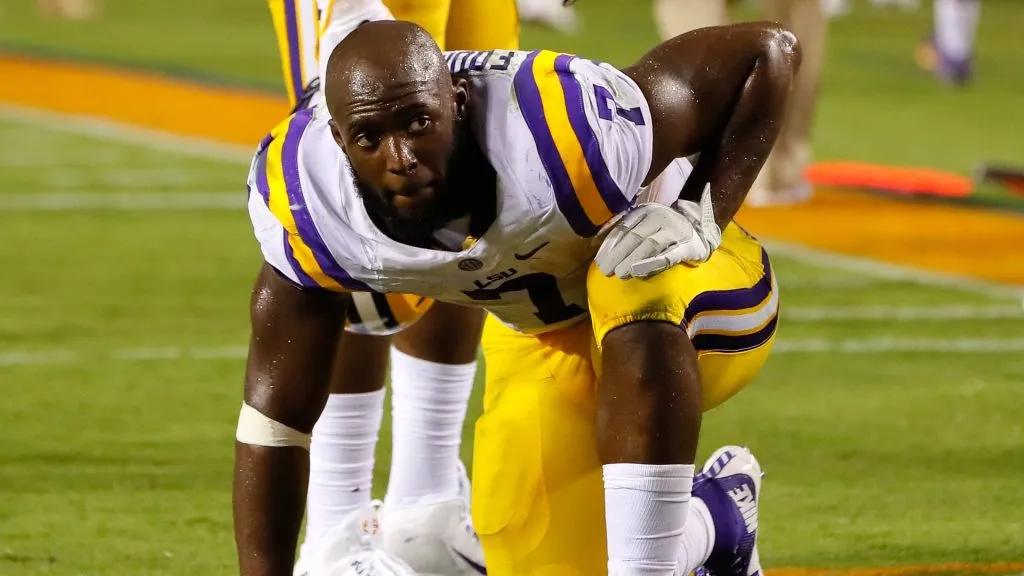
Leonard Fournette #7 of the LSU Tigers reacts after the Auburn Tigers won 18-13 over an official review to end the game at Jordan-Hare Stadium on September 24, 2016. (Source: Kevin C. Cox/Getty Images)
Leonard Fournette‘s tenure at LSU was characterized by his unparalleled rushing ability. In 2015, he set a school record with 1,953 rushing yards and 22 touchdowns, leading the nation with 162.8 rushing yards per game. His dominance earned him consensus All-America honors and a sixth-place finish in the Heisman Trophy voting. His exceptional performance solidified his status as one of LSU’s all-time greats.
Ja’Marr Chase
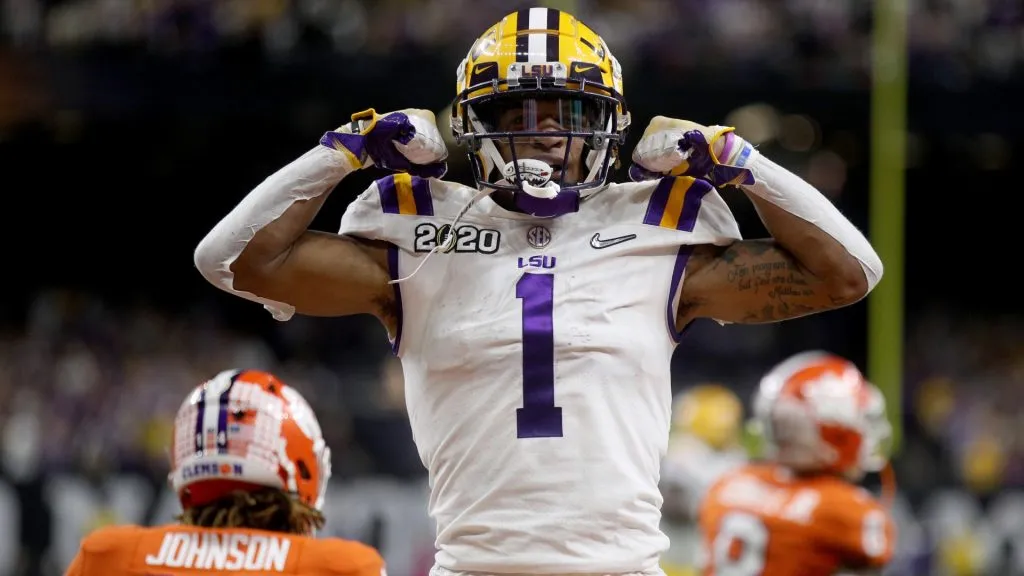
Ja’Marr Chase #1 of the LSU Tigers reacts to a touchdown during the first half against the Clemson Tigers in the College Football Playoff National Championship game in 2020. (Source: Chris Graythen/Getty Images)
Ja’Marr Chase‘s tenure at LSU from 2018 to 2019 was marked by explosive performances and record-breaking statistics. In his sophomore season, he amassed 1,780 receiving yards and 20 touchdowns, leading the nation in both categories.
His remarkable ability to create separation, combined with exceptional ball-tracking skills, made him a nightmare for opposing defenses. His chemistry with quarterback Joe Burrow was palpable, culminating in a national championship victory and a Heisman Trophy for Burrow.
His decision to opt out of the 2020 season did not diminish his impact on LSU’s legacy. His brief but stellar college career set a new standard for wide receivers, showcasing the potential for dominance at the position. His transition to the NFL has been equally impressive, where he continues to build upon the foundation laid during his time at LSU.
Odell Beckham Jr.
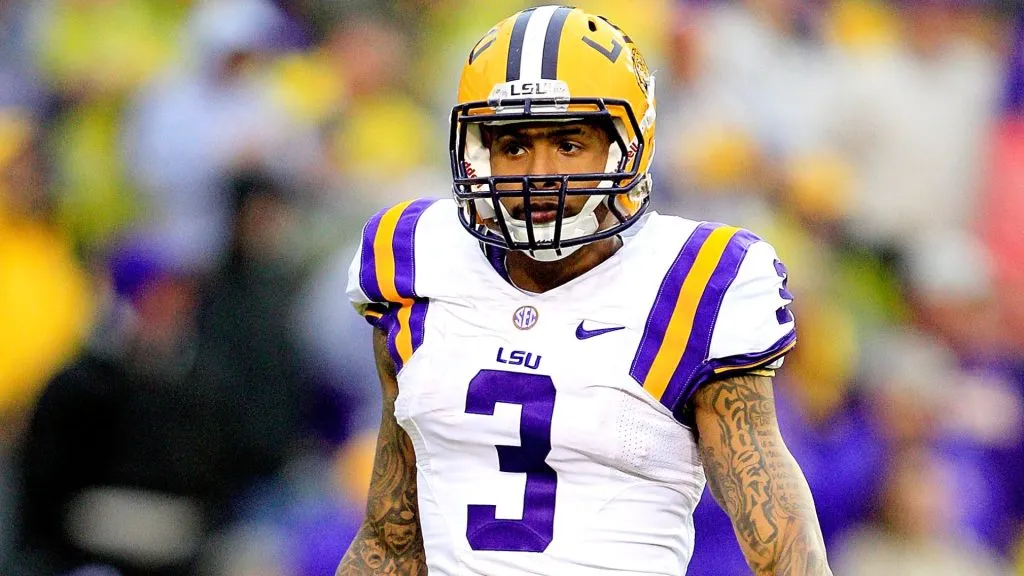
Wide receiver Odell Beckham Jr. #3 of the LSU Tigers walks on the field as his team took on the Texas A&M Aggies at Tiger Stadium on November 23, 2013. (Source: Sean Gardner/Getty Images)
Odell Beckham Jr. brought electrifying speed and hands to LSU from 2011 to 2013. Even as a freshman, he stood out with 41 receptions for 475 yards and two touchdowns, earning Freshman All-SEC honors and quickly becoming a versatile offensive threat.
By his junior year, he led the Tigers with over 1,100 receiving yards and eight touchdowns. His acrobatic catches and explosive punt returns left lasting highlights, cementing his legacy as one of LSU’s most dynamic playmakers.
Johnny Robinson
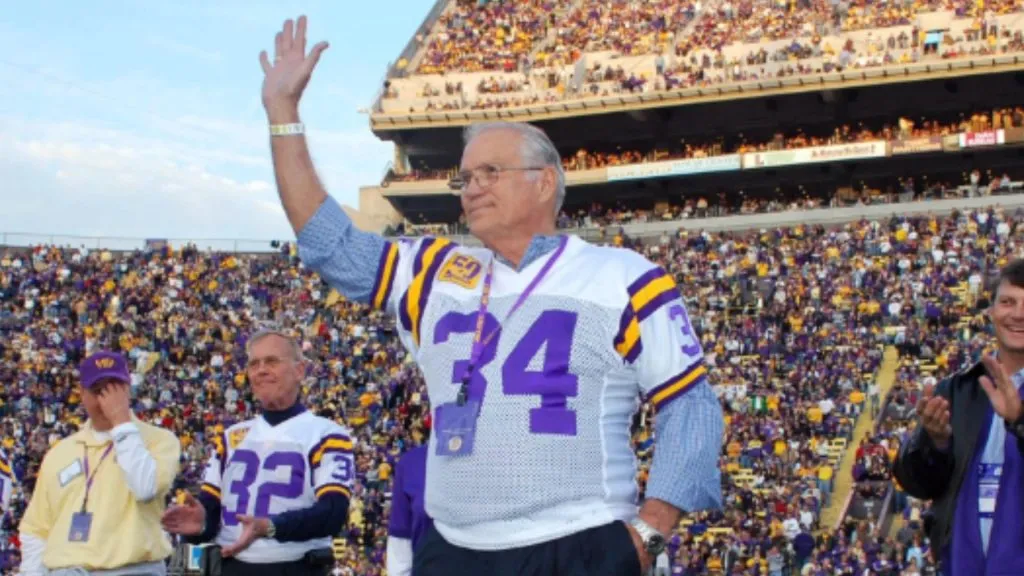
Johnny Robinson (Source: LSU Sports)
Johnny Robinson patrolled LSU’s secondary during the late 1950s and early 1960s with unmatched instincts and athleticism. He was known for his ability to read the quarterback, anticipate plays, and deliver decisive tackles.
His speed and versatility allowed him to contribute offensively at times, making him a dual-threat on the field. His intelligence and playmaking skills earned him All-American honors, cementing his status as one of the most impactful players in school history.
His influence extended beyond the college game. After LSU, he became a Hall of Fame safety in the AFL/NFL, showing that his college performances were only a glimpse of his professional excellence. At LSU, his leadership, preparation, and game-changing moments became a blueprint for future defensive stars, solidifying him as one of the Tigers’ all-time legends.
Ben Wilkerson
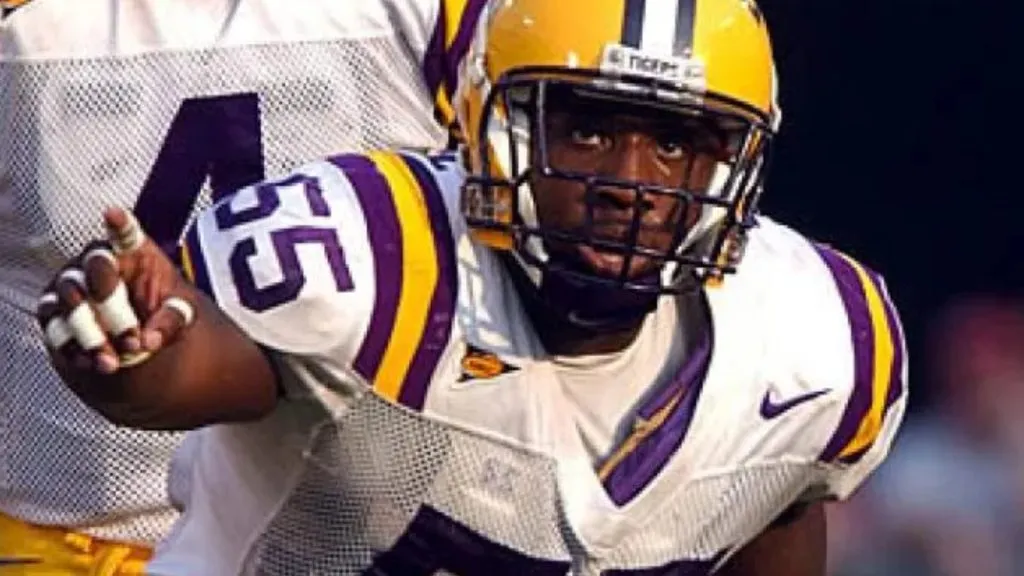
Ben Wilkerson (Source: And the Valley Shook)
Ben Wilkerson anchored LSU’s offensive line in the early 2000s, providing the strength and leadership critical to the team’s offensive success. Known for his physicality and technique, he excelled at creating running lanes for his teammates while providing elite pass protection. His reliability allowed quarterbacks and skill players to thrive, establishing LSU as a balanced and formidable offense during his tenure.
Beyond his technical skills, his leadership was central to LSU’s locker room culture. He mentored younger linemen and set a standard for preparation and toughness. His contributions earned him All-SEC recognition, and his consistent performance on the field made him a key figure in the Tigers’ offensive schemes, proving that elite linemen can define a team just as much as flashy skill players.
Warren Capone
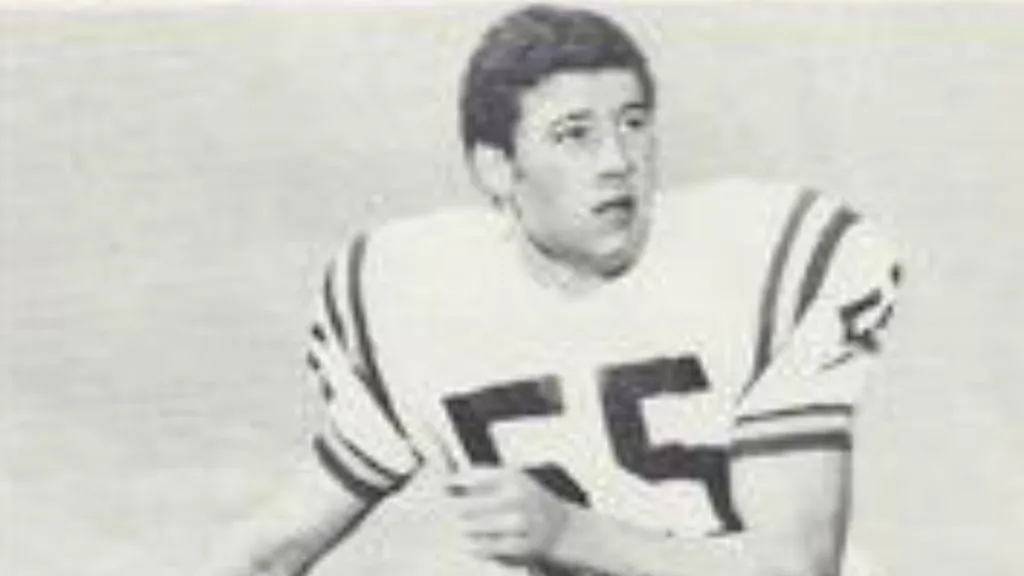
Warren Capone (Source: Trading Card Database)
Warren Capone dominated the linebacker corps at LSU in the early 1970s, combining intelligence with aggression. His ability to read opposing offenses and make critical tackles made him a cornerstone of the Tigers’ defense.
His presence on the field demanded respect from opponents, often neutralizing key plays before they could develop. He excelled at both run defense and pass coverage, proving himself as one of the most versatile defensive players in LSU history.
His leadership extended off the field, where he served as a mentor to younger teammates. His preparation, discipline, and football IQ made him indispensable to LSU’s defensive schemes. By the time he graduated, he had left a lasting mark on the program, embodying the hard-nosed, physical style of play that would define LSU football for decades.
Josh Reed
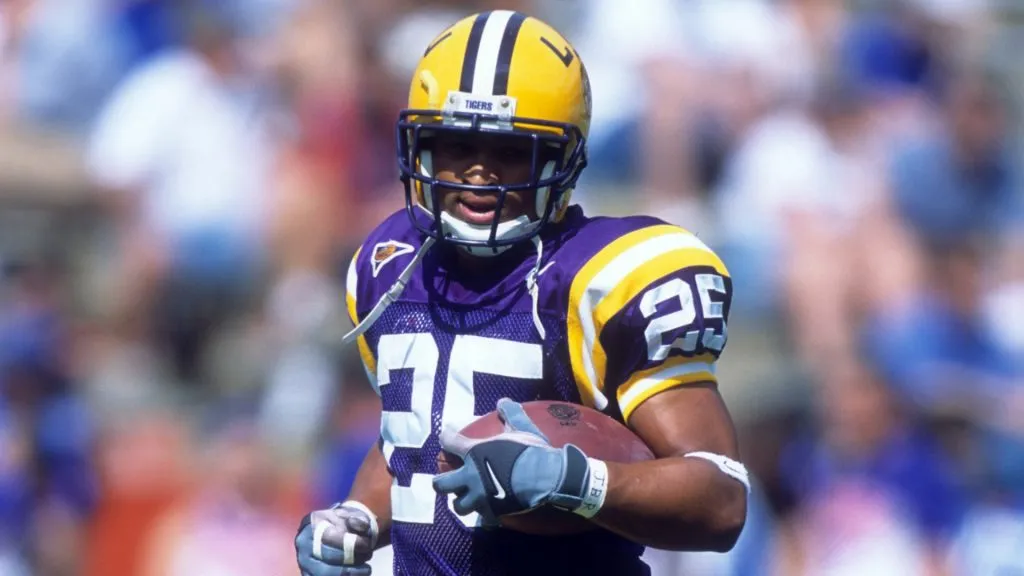
Josh Reed #25 of the LSU Tigers runs on the field during the game against the Florida Gators on October 7, 2000. (Source: Scott Halleran/Getty Images)
Josh Reed’s tenure at LSU in the late 1990s was defined by his exceptional receiving skills and consistency. As a wide receiver, he combined precise route-running with reliable hands, quickly becoming a go-to target for the Tigers’ quarterbacks.
Over his college career, he set multiple school receiving records, including career receptions and yards, showcasing both his talent and dedication. His ability to perform in high-pressure situations made him a critical component of LSU’s offensive success during his era.
His impact extended beyond the stat sheet. He consistently delivered in crucial games, turning third-down conversions and red-zone opportunities into touchdowns. His work ethic and on-field awareness earned him All-SEC honors, and his legacy helped pave the way for future LSU receivers.
Andrew Whitworth
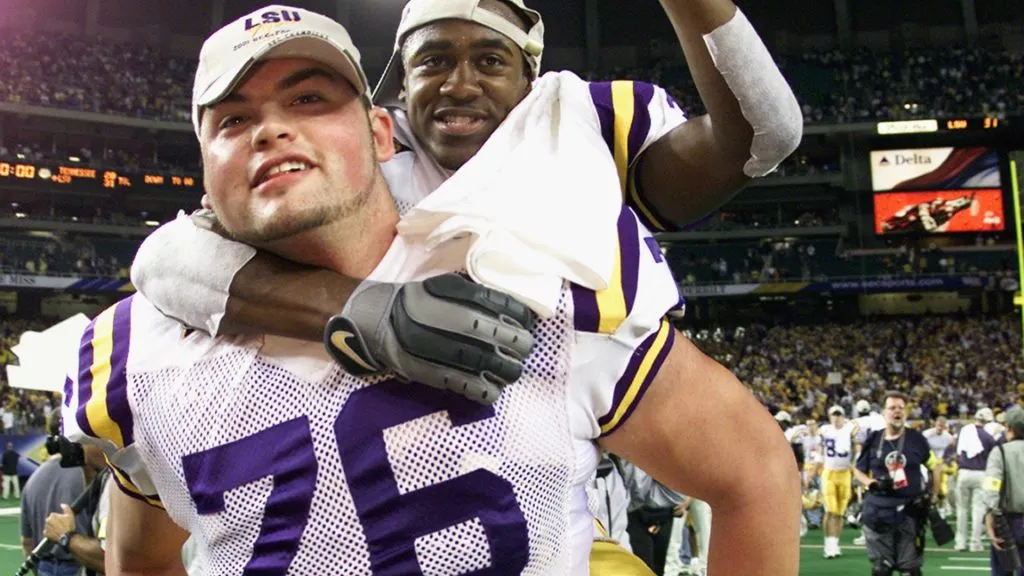
Andrew Whitworth #76 of the LSU Tigers gives a teammate a piggyback ride after winning the Southeastern Conference Championship Game in 2001. (Source: Jamie Squire/Getty Images)
Andrew Whitworth’s LSU career in the late 1990s showcased the vital importance of a dominant offensive lineman. As a left tackle, he provided elite pass protection, giving quarterbacks the time and confidence to execute plays.
His size, technique, and strength made him a formidable presence, while his football intelligence allowed him to read defenses and adjust blocking schemes on the fly. His consistent performance contributed to the Tigers’ success in both the passing and running games.
Beyond physical skills, his leadership on and off the field defined his tenure at LSU. He set a standard of preparation, discipline, and professionalism for younger teammates, mentoring future linemen in the program.
Leonard Marshall
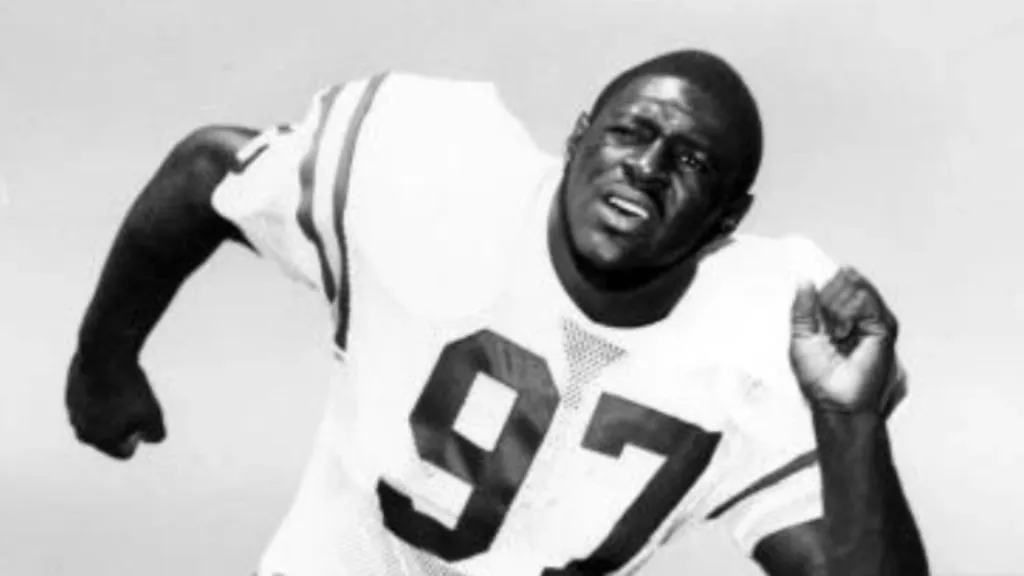
Leonard Marshall (Source: LSU Sports)
Leonard Marshall made his mark at LSU as a dominant defensive end in the late 1970s and early 1980s. Known for his speed off the edge and relentless pursuit of quarterbacks, he became a nightmare for opposing offenses.
His combination of size, strength, and agility allowed him to disrupt plays in the backfield, record sacks, and force turnovers, making him one of LSU’s most feared defenders of his era.
His impact went beyond individual stats. He was a leader on the defensive line, inspiring teammates with his intensity and work ethic. His performances earned him All-SEC recognition and laid the groundwork for a successful NFL career, where he would continue to showcase the skills and dominance first displayed in Baton Rouge.
Bert Jones
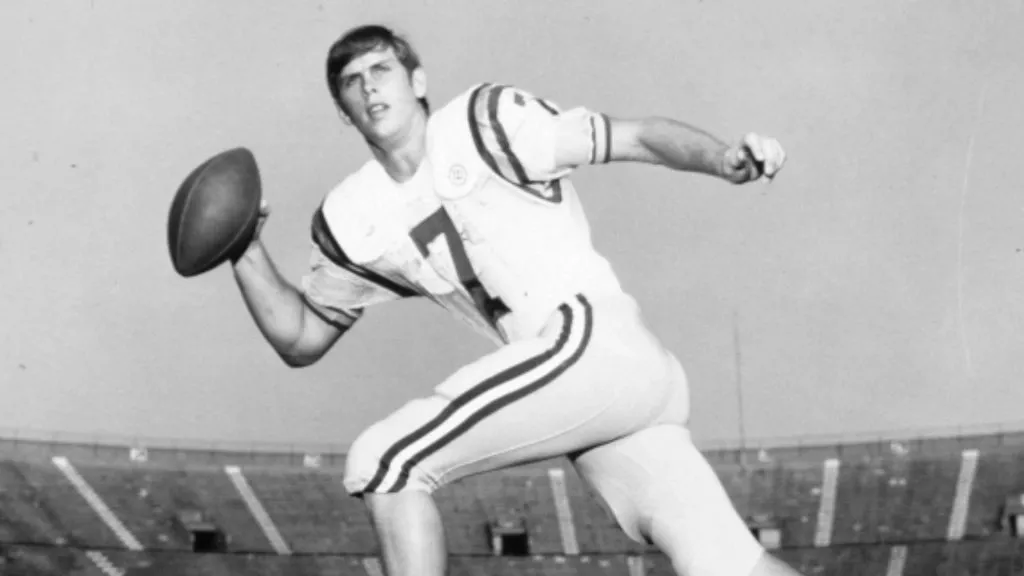
Bert Jones (Source: Louisiana Sports)
Bert Jones quarterbacked LSU in the late 1960s, bringing a combination of arm strength, intelligence, and leadership. Known for his precise passing and calm demeanor under pressure, he led the Tigers through some of their most competitive seasons of the era. His ability to read defenses and execute complex plays made him a standout college quarterback.
His performances earned him All-SEC honors and national recognition, setting records in passing yards and touchdowns that stood for years. Beyond stats, his leadership elevated LSU’s offense and set a precedent for future quarterbacks, leaving an enduring legacy in Baton Rouge.
Kevin Faulk
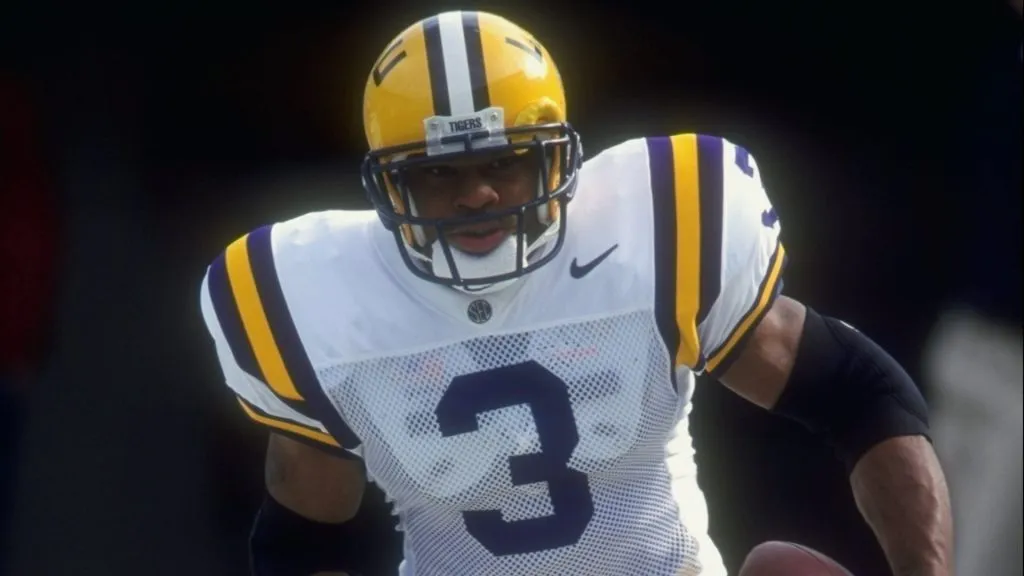
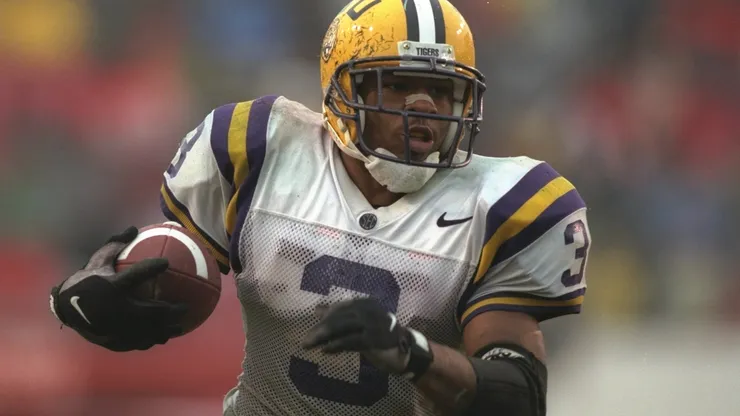
Kevin Faulk #3 of the Louisiana State Tigers runs with the ball during a game against the Alabama Crimson Tide at the Bryant Denny Stadium in 1997. (Source: Andy Lyons /Allsports)
Kevin Faulk’s career at LSU in the late 1990s showcased versatility and football intelligence. As a running back and return specialist, he could change the course of a game with his vision, speed, and agility. He consistently contributed both on the ground and through the air, making him one of the most multi-dimensional players in LSU history.
His leadership and work ethic were equally impressive. He was a reliable presence in crucial situations, often converting key downs and making decisive plays. His success at LSU foreshadowed a long, productive NFL career, cementing his status as a Tiger legend.
Alan Faneca
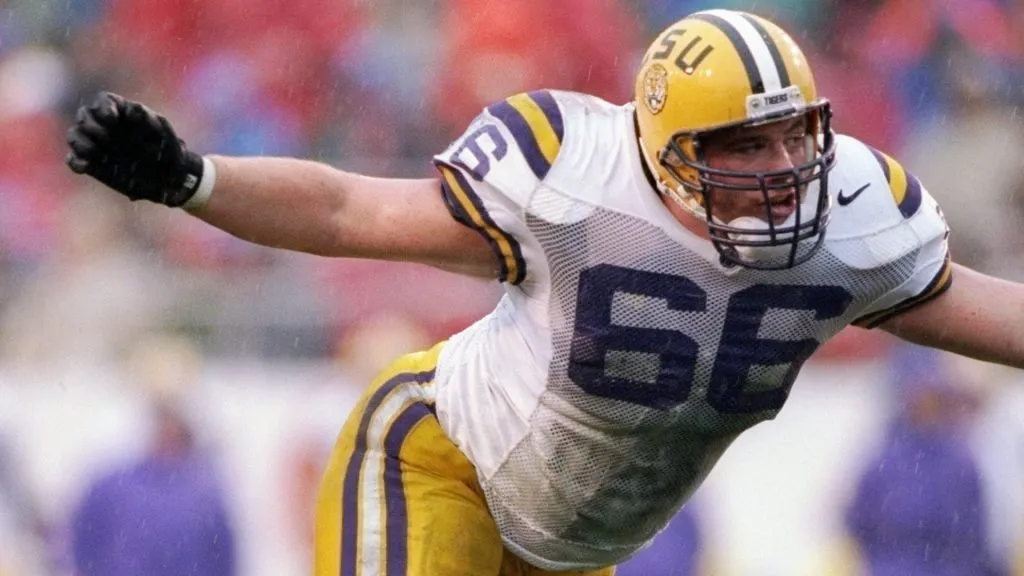
Offensive lineman Alan Faneca of the Louisiana State Tigers tries to make a block during a game against the Arkansas Razorbacks in 1996. (Source: Andy Lyons/Allsport)
Alan Faneca dominated LSU’s offensive line in the mid-1990s, excelling as a guard with a rare combination of power and agility. His ability to anchor the line in both run blocking and pass protection made him indispensable to the Tigers’ offense. His technique and anticipation allowed him to neutralize elite defenders, giving his quarterbacks and running backs the space to make plays.
Beyond his physical dominance, his leadership and preparation set him apart. He was known for studying film meticulously and mentoring younger linemen, helping to build a culture of excellence on LSU’s offensive front. His outstanding college career earned him All-SEC honors and paved the way for a Hall of Fame NFL career.
Billy Cannon
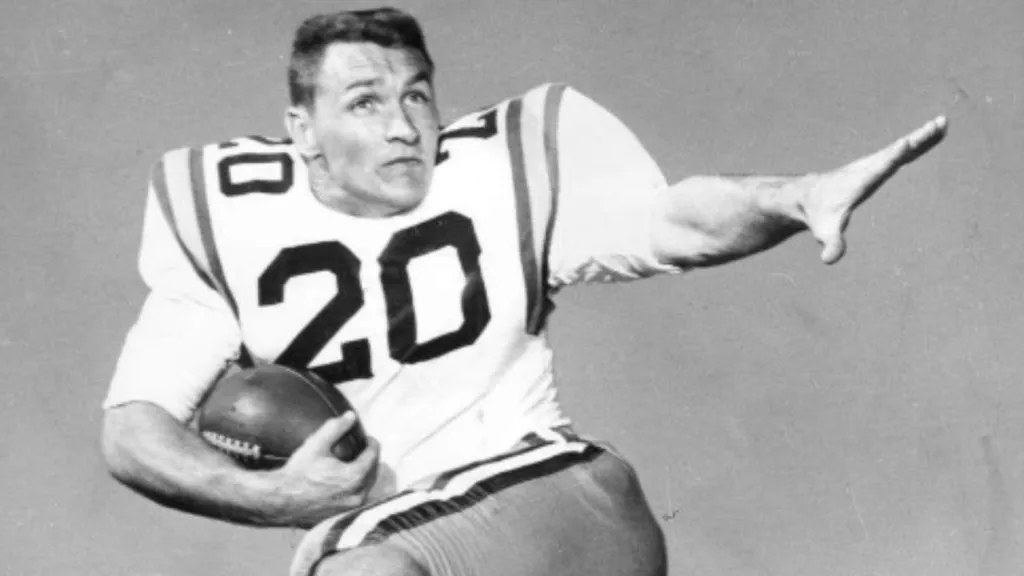
Billy Cannon (Source: Louisiana State Museums)
Billy Cannon remains one of LSU’s most legendary figures, remembered for his combination of speed, strength, and versatility in the late 1950s and early 1960s. He excelled as both a running back and a return specialist, scoring touchdowns on the ground, through the air, and on kick returns.
His electrifying plays and competitive spirit earned him the Heisman Trophy in 1959, cementing his place in college football history. His influence extended beyond statistics; his charisma and determination embodied the spirit of LSU football.
He became a symbol of the program’s national prominence, inspiring future generations of Tigers. His legacy continues to define the standard of excellence for LSU skill players.
Joe Burrow
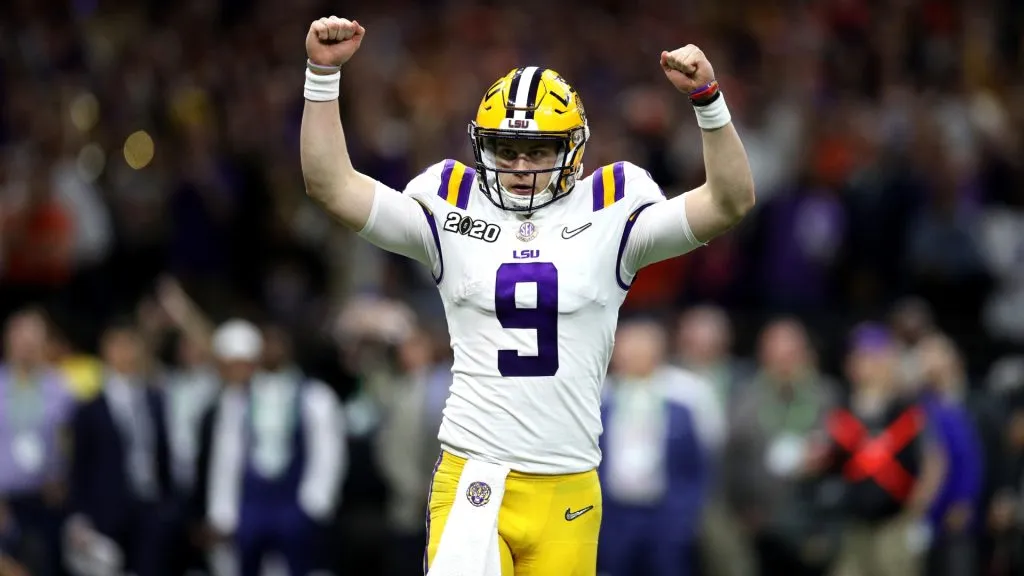
Joe Burrow #9 of the LSU Tigers reacts to a touchdown against Clemson Tigers during the third quarter in the College Football Playoff National Championship game in 2020. (Source: Chris Graythen/Getty Images)
Joe Burrow‘s arrival at LSU in 2018 marked the beginning of a transformative era for the Tigers. Transferring from Ohio State, he quickly established himself as a leader both on and off the field. In his senior season, he shattered numerous LSU and NCAA records, including setting the single-season record for passing touchdowns with 60 and leading LSU to a 15-0 record and a national championship.
His performance in the 2019 College Football Playoff was nothing short of legendary, culminating in a 463-yard, five-touchdown performance in the national title game against Clemson, earning him the game’s Offensive MVP honors.
Beyond statistics, his impact was felt in the cultural shift he brought to LSU football. His poise, work ethic, and commitment to excellence elevated the program to new heights, setting a standard for future generations.
His success at LSU propelled him to the first overall pick in the 2020 NFL Draft, where he continued to build upon his legacy. His time at LSU remains a defining chapter in the program’s history, symbolizing resilience, leadership, and unparalleled achievement.
Y.A. Tittle
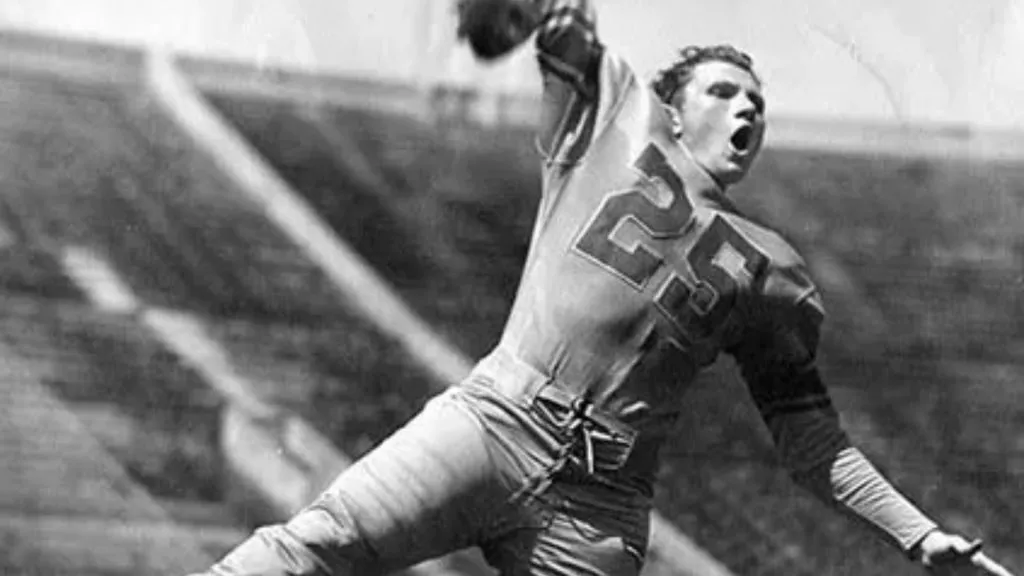
Y.A. Tittle (Source: @vintagelsuftb)
Y.A. Tittle quarterbacked LSU in the late 1940s, demonstrating precision, arm strength, and strategic intelligence. His ability to read defenses and deliver accurate throws made him one of the early stars of LSU football, setting records for passing yards and touchdowns. His style of play laid the foundation for modern passing strategies at the program.
His impact extended beyond statistics; he was a field general who elevated the play of his teammates. His college success translated to a stellar professional career in the NFL, where he became one of the league’s most celebrated quarterbacks. Tittle’s LSU tenure remains a historic chapter in the Tigers’ legacy.
Jim Taylor
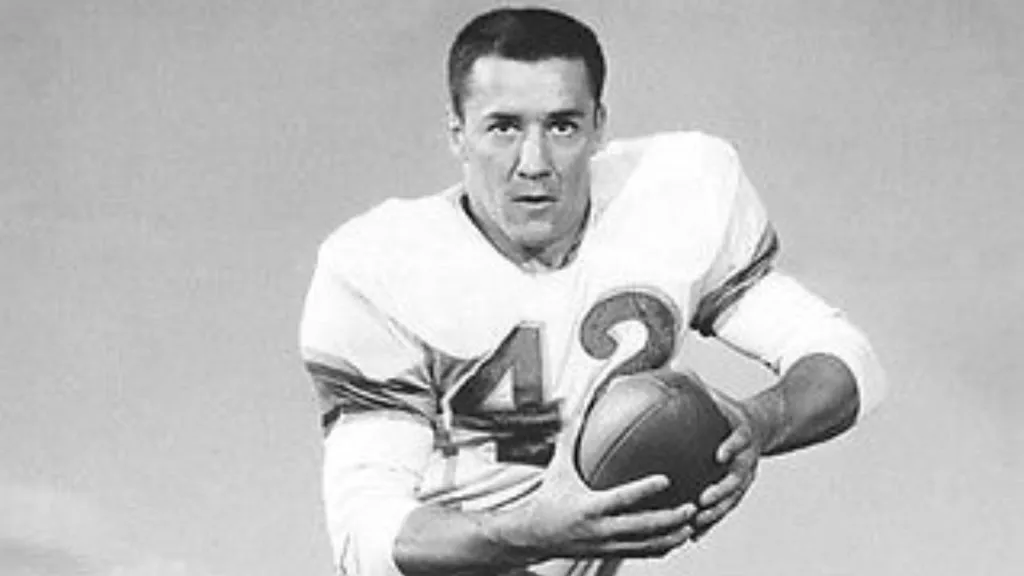
Jim Taylor (Source: @vintagelsuftb)
Jim Taylor dominated the LSU backfield in the 1950s with a blend of power, speed, and toughness. Known for his punishing running style, Taylor consistently gained tough yardage and became a reliable scoring threat. His performances earned him All-SEC recognition and solidified his reputation as one of LSU’s most formidable running backs.
His influence on the field went beyond raw athleticism; he embodied leadership and resilience. He set a standard for ball security, work ethic, and clutch performances that would inspire future generations of Tigers. His college success paved the way for a Hall of Fame NFL career, further cementing his status as a LSU legend.