Few college programs carry the weight of tradition like the Texas Longhorns. From the roar of Darrell K Royal–Texas Memorial Stadium to the bright lights of championship games, the program has produced legends that shaped football.
These players didn’t just rack up stats, they built moments that defined eras. Whether through game-winning heroics, record-breaking runs or leadership that lifted entire teams, their impact stretched far beyond Austin.
The list of icons is long, but certain names stand out above the rest. They represent the spirit of Texas football—resilient, explosive and unforgettable—each leaving behind a legacy that still fuels the pride of burnt orange.
Harrison Stafford, running back
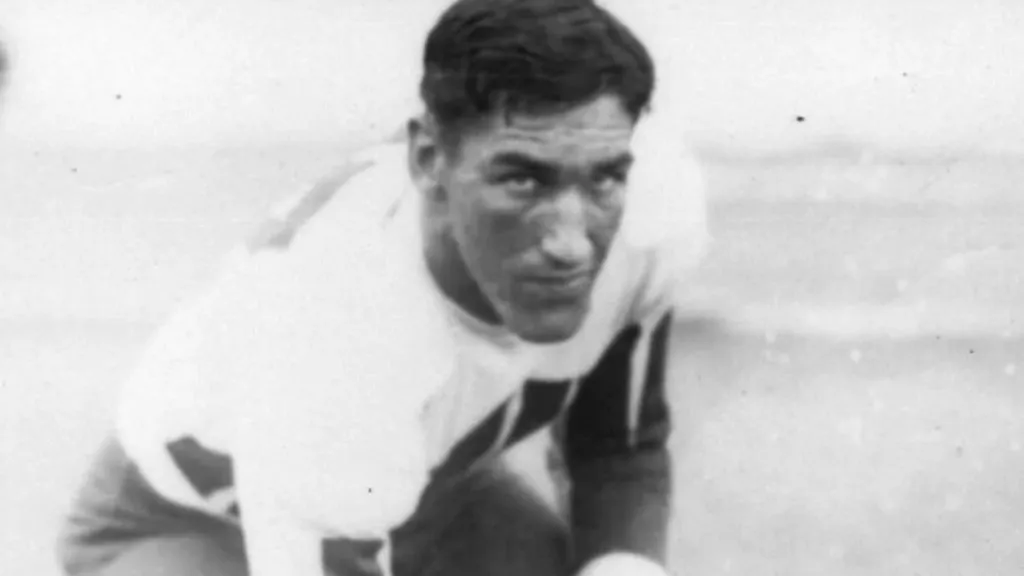
Harrison Stafford (Source: Texas Sports Hall of Fame)
Harrison Stafford was a formidable force in the Texas backfield during the early 1930s. As a walk-on from Wharton, Texas, he became known for his punishing blocks and leadership on the field. His contributions were crucial in Texas securing the Southwest Conference championship in 1930.
His impact extended beyond his playing days, as he was inducted into the College Football Hall of Fame in 1975. His legacy is a testament to the enduring spirit and dedication that defines Texas Longhorns football.
Hub Bechtol, end
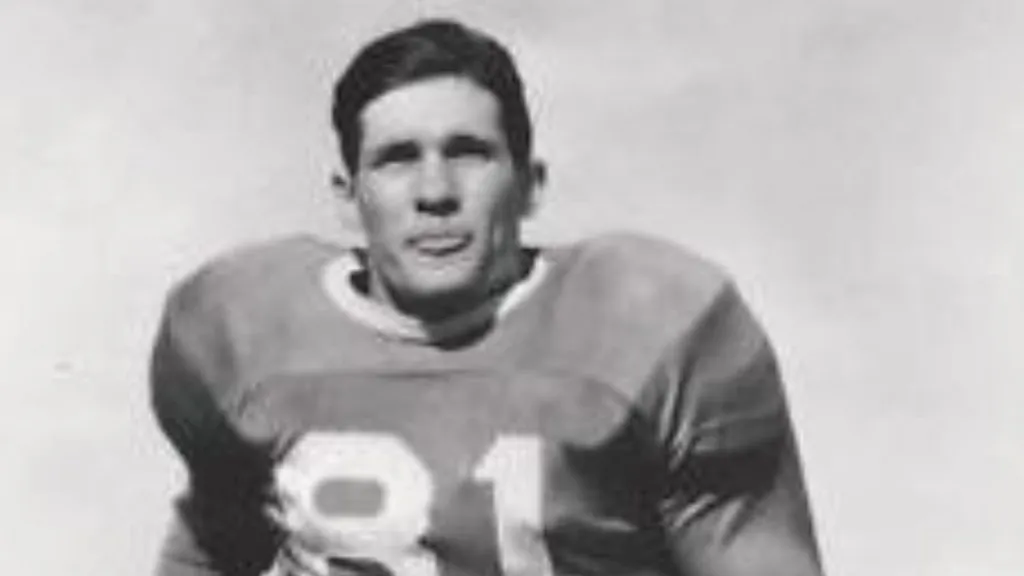
Hub Bechtol (Source: Texas Legacy Support Network)
Hub Bechtol was a standout end for the Texas Longhorns during the mid-1940s, earning consensus All-American honors in 1945 and 1946. His exceptional receiving skills and versatility made him a key player in Texas’ offensive schemes.
His contributions were instrumental in Texas’ success during his tenure, including a victory in the 1946 Cotton Bowl. His legacy as one of the program’s early stars continues to be celebrated, reflecting the foundation he helped lay for future Longhorns’ success.
Jimmy Saxton, running back
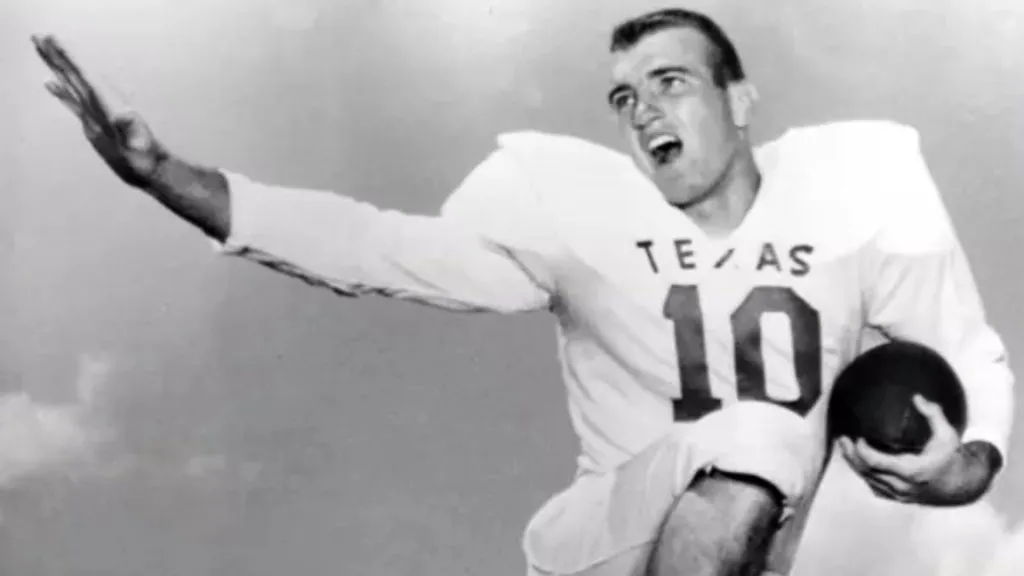
Jimmy Saxton (Source: National Foobtall Foundation)
James Saxton, known as “Rabbit” for his elusive speed, was a trailblazer for the Texas Longhorns in the late 1950s and early 1960s. In 1961, he became the first running back in Texas history to be named an All-American, finishing third in the Heisman Trophy voting. His remarkable 7.9 yards per carry that season remains a school record.
His electrifying runs, including touchdowns of 80, 79, and 66 yards, showcased his game-changing ability. Despite playing in an era without a national playoff system, his performances helped elevate Texas football to national prominence. His legacy endures as a symbol of excellence and innovation in the program’s history.
Tommy Nobis, linebacker
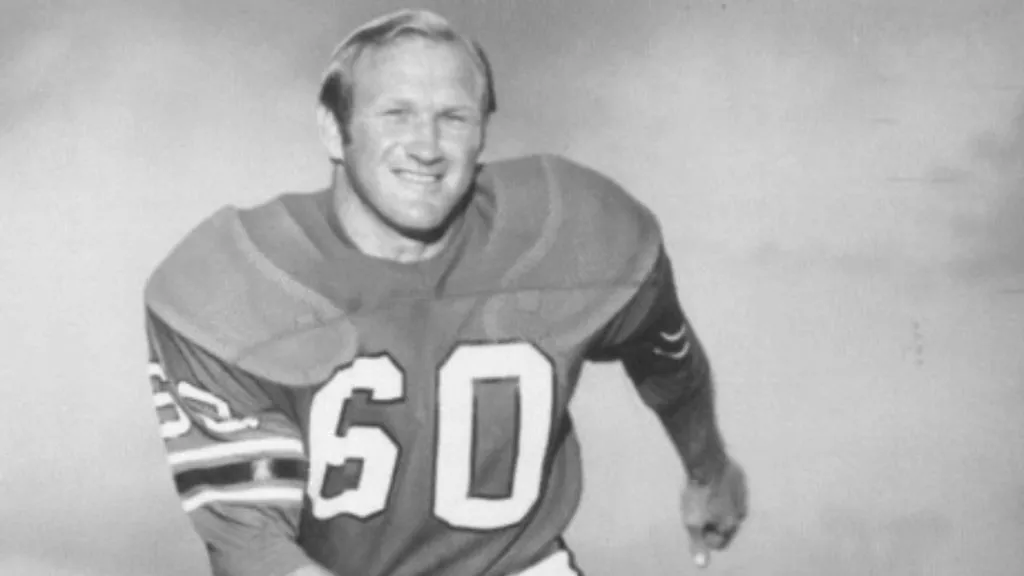
Tommy Nobis (Source: Texas Sports Hall of Fame)
Tommy Nobis was a cornerstone of the Texas Longhorns defense in the 1960s. Known for his leadership and versatility, he played both linebacker and guard, contributing significantly to the team’s success.
He was instrumental in Texas securing its first national championship in 1963. He earned All-American honors in 1964 and 1965, showcasing his exceptional skills and dedication. His impact on the field was profound, setting a standard for future generations of Longhorns.
After his collegiate career, he was selected first overall in the 1966 NFL Draft by the Atlanta Falcons, becoming the franchise’s first-ever draft pick. He played 11 seasons with the Falcons, earning five Pro Bowl selections and two All-Pro honors.
Despite the team’s struggles during his tenure, his individual excellence was undeniable. He was posthumously inducted into the College Football Hall of Fame in 1981 and remains a revered figure in Texas football history.
Russell Erxleben, punter/place-kicker
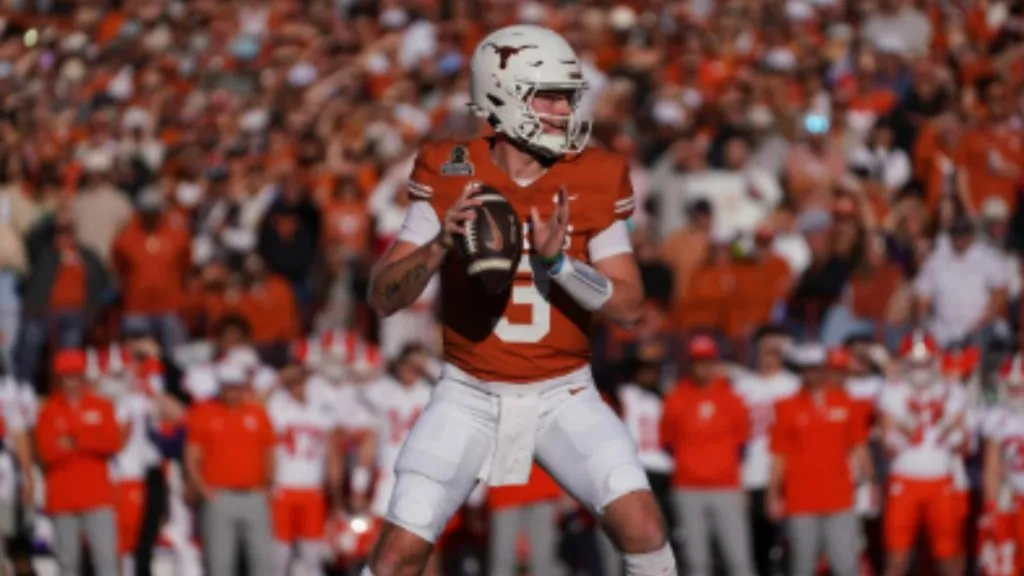
Russell Erxleben (Source: The Daily Texan)
Russell Erxleben was a dual-threat specialist for the Texas Longhorns in the late 1970s. As a punter and place-kicker, he set a then-NCAA record with a 67-yard field goal in 1977, showcasing his powerful leg. He was a three-time All-American punter, earning recognition in 1976, 1977, and 1978. His consistency and leg strength made him a valuable asset to the Longhorns’ special teams unit.
In the 1979 NFL Draft, he was selected in the first round, an uncommon occurrence for a kicker. He played for the New Orleans Saints, where he continued to demonstrate his punting prowess. While his NFL career had its ups and downs, his legacy at Texas remains intact, remembered for his powerful kicks and contributions to the team’s success.
Jordan Shipley, wide receiver
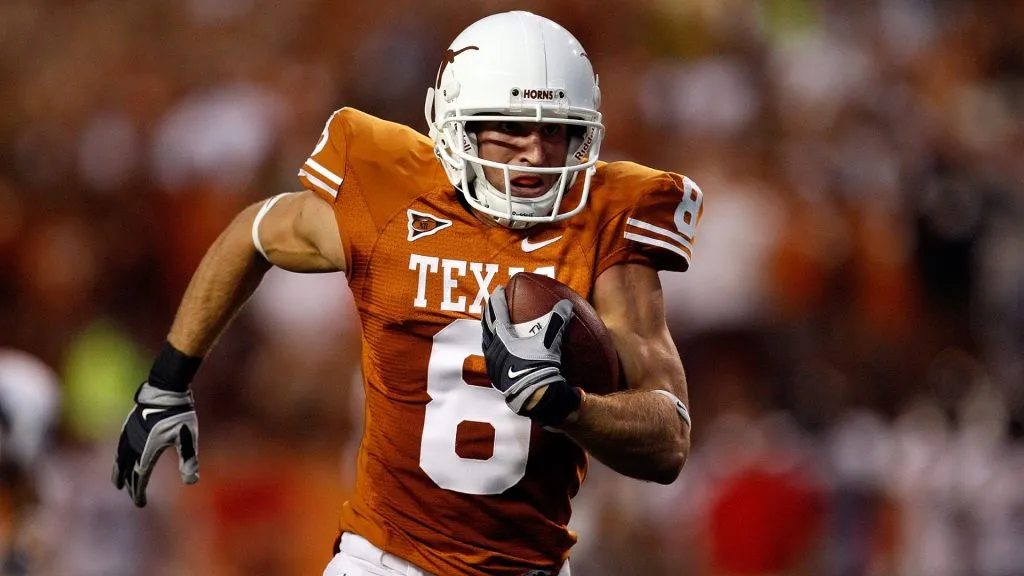
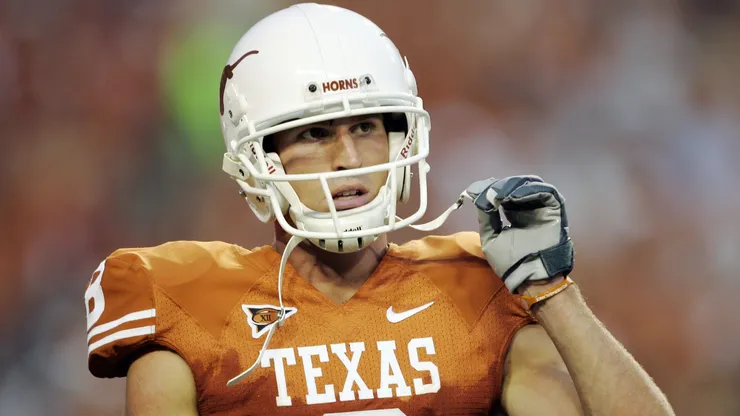
Jordan Shipley #8 of the Texas Longhorns returns a 36-yard punt for a touchdown against the Texas Tech Red Raiders on September 19, 2009. (Source: Ronald Martinez/Getty Images)
Jordan Shipley was a standout wide receiver for the Texas Longhorns in the late 2000s. He finished his career as Texas’ all-time leader in receptions with 248, and ranks second in receiving yards with 3,191 and touchdowns with 33.
He was a two-time All-American and a finalist for the Biletnikoff Award, which honors the nation’s top wide receiver. His precise route running and reliable hands made him a favorite target in the Longhorns’ high-powered offense.
Beyond his receiving records, he was a dynamic return specialist. He became the first player in Texas history to score a touchdown by reception, kickoff, and punt return in the same season.
His versatility and playmaking ability were instrumental in Texas’ success during his tenure. His contributions to the Longhorns’ offense and special teams solidified his place as one of the program’s all-time greats.
Colt McCoy, quarterback
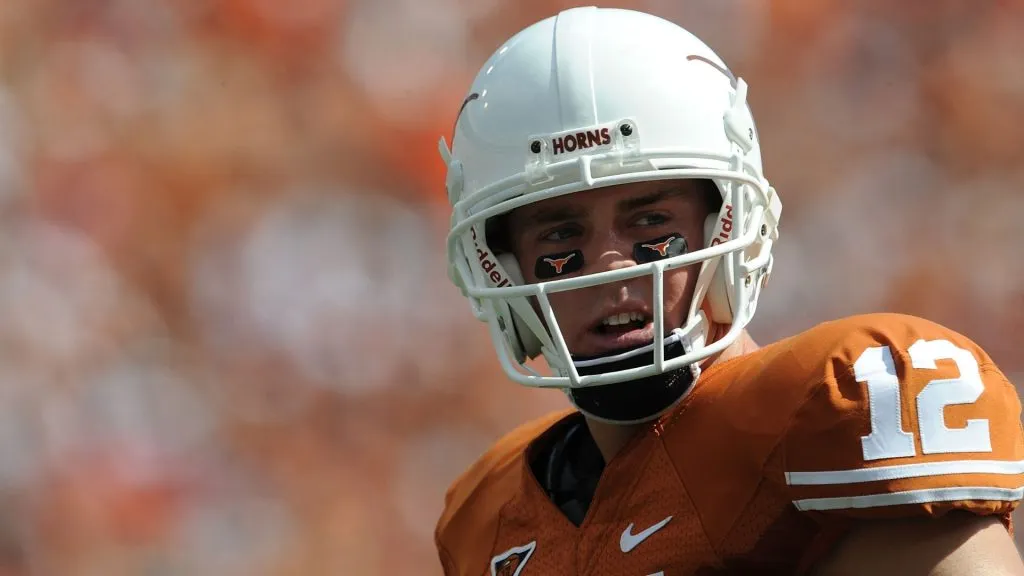
Quarterback Colt McCoy #12 of the Texas Longhorns at Darrell K Royal-Texas Memorial Stadium on September 26, 2009. (Source: Ronald Martinez/Getty Images)
Colt McCoy’s tenure in burnt orange was less a flash and more a steady flame. From 2006 to 2009, he started every game, earning team MVP honors all four years – a University of Texas first. His 2009 campaign turned heads: he led the Longhorns to a perfect 12-0 regular season, a Big 12 Championship, and cemented his place as the winningest quarterback in NCAA Division I history at that time.
His precision under center was poetry, threading balls into tight windows with such grace it downplayed his modest arm strength. Yet college football pundits remember him most for the calm grit he brought to pressure-cooker games, and—even after college—fans echoed sentiment like “Dude… Colt is the man who pulled me to be a fan of UT”.
Brian Orakpo, outside linebacker/defensive end
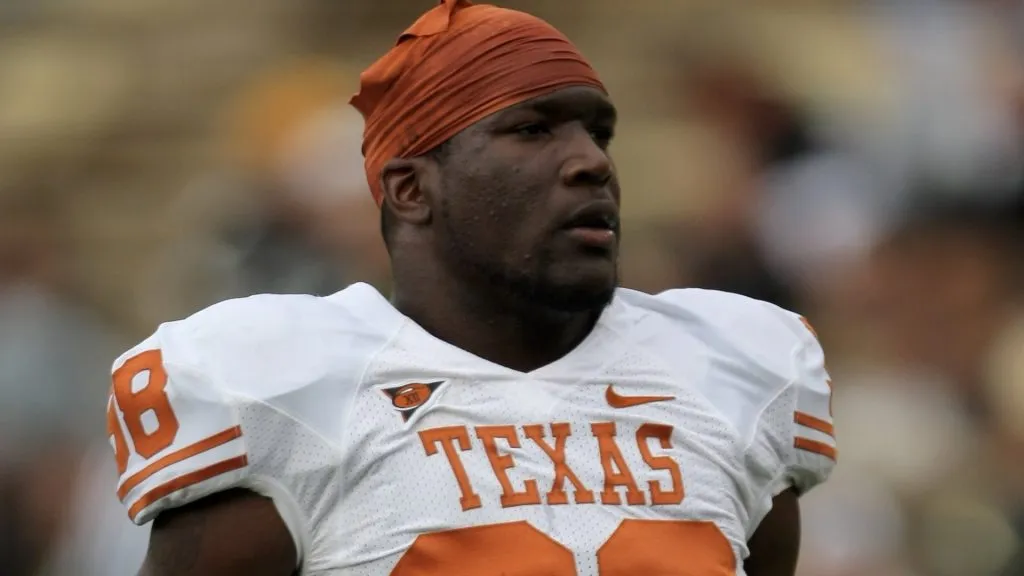
Brian Orakpo #98 of the Texas Longhorns warms up prior to facing the Colorado Buffaloes at Folsom Field on October 4, 2008. (Source: Doug Pensinger/Getty Images)
In the trenches of the Longhorn defense, Brian Orakpo‘s presence was seismic. From his breakout as Defensive Freshman of the Year in 2005 to his dominant senior season in 2008, he cloaked offenses in anxiety.
That final year saw him rack up 11.5 sacks, 132 tackles, and 38 tackles-for-loss, and he swept nearly every defensive award—Nagurski, Hendricks, Lombardi, and even Big 12 Defensive Player of the Year.
What separates he isn’t just numbers, but his imposing physicality—ESPN once labeled him “the nation’s top workout warrior,” capable of benching 515 pounds, squatting 600, and power-cleaning 380.
Watching him collapse pockets, strip quarterbacks, and become the heartbeat of dominant UT defenses brings to mind a bulldozer carving lanes through offensive lines—a muscular definition of defensive artistry.
Derrick Johnson, linebacker
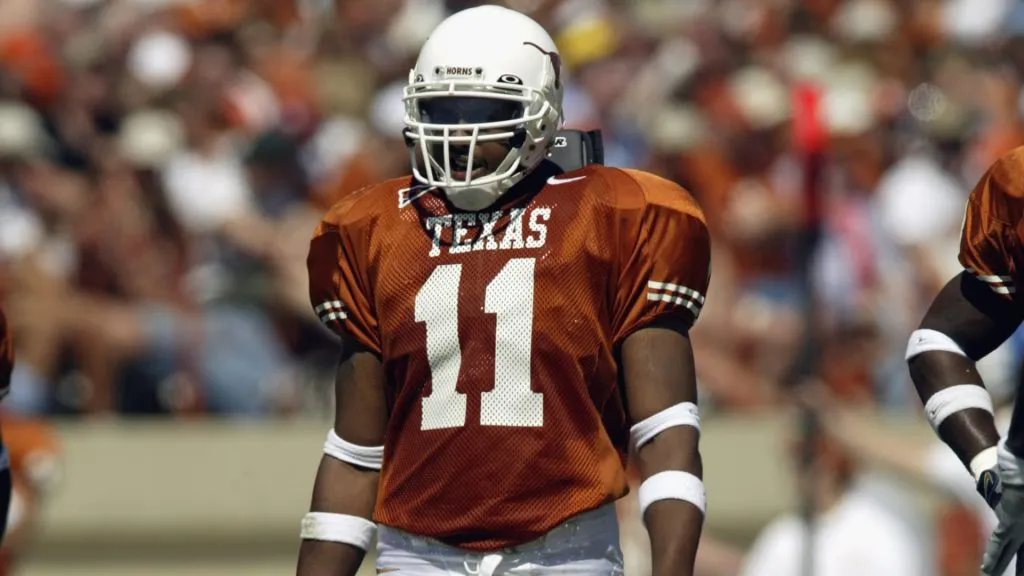
Linebacker Derrick Johnson #11 of the Texas Longhorns stands on the field during the Big 12 Conference football game against the Oklahoma State Cowboys on October 5, 2002. (Source: Ronald Martinez/Getty Images)
Derrick Johnson’s speed and athleticism at linebacker transformed the position for the Longhorns. A tackling machine, he consistently shut down opposing offenses with instincts that seemed almost clairvoyant. His ability to cover sideline-to-sideline made him an irreplaceable asset for Texas in the early 2000s.
He capped his career as the 2004 Butkus Award winner, solidifying his reputation as the best linebacker in the nation. His dominance didn’t end in Austin — he carried his success into a long NFL career, becoming a cornerstone for the Kansas City Chiefs.
Roy Williams, wide receiver
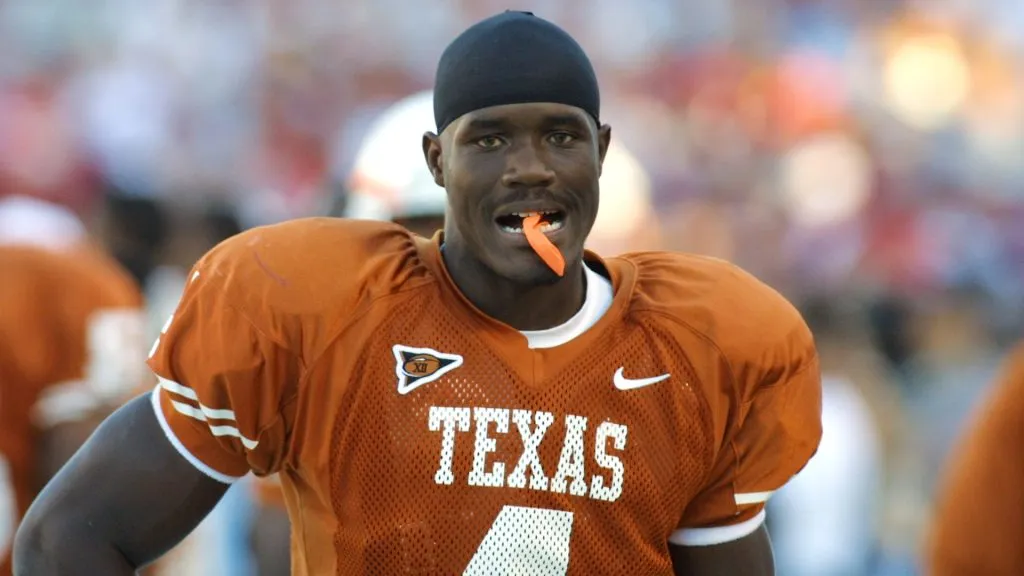
Roy Williams of Texas during the game against Oklahoma at the Cotton Bowl in 2001. (Source: Ronald Martinez/Allsport)
Roy Williams was a prolific wide receiver for the Longhorns from 2000 to 2003. Over his career, he set Texas records for receptions (241), receiving yards (3,866), and touchdown receptions (36), becoming one of the most dynamic playmakers in school history.
In 2003, he was a consensus All-American and a three-time first-team All-Big 12 selection. His performance on the field earned him the 2004 Biletnikoff Award as the nation’s top wide receiver. He was selected seventh overall in the 2004 NFL Draft by the Detroit Lions, where he continued to showcase his skills in the professional ranks.
Jerry Gray, defensive back
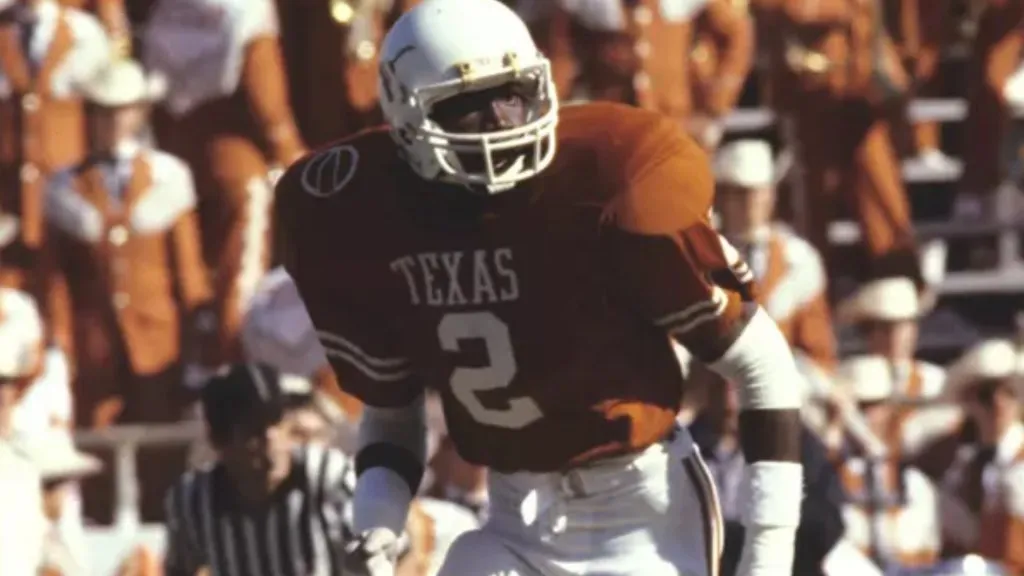
Jerry Gray (Source: National Foobtall Foundation)
Jerry Gray was a standout defensive back for the Longhorns from 1981 to 1984. A two-time consensus All-American, he was known for his exceptional coverage skills and playmaking ability. He recorded 297 tackles and 16 interceptions during his college career, earning him the 1984 team MVP honors.
Drafted in the first round of the 1985 NFL Draft by the Los Angeles Rams, he played 10 seasons in the NFL, earning Pro Bowl honors in 1990. After retiring as a player, he transitioned into coaching, serving as a defensive backs coach and coordinator for several NFL teams. His contributions to the game have left an indelible mark on both college and professional football.
Kenneth Sims, defensive tackle
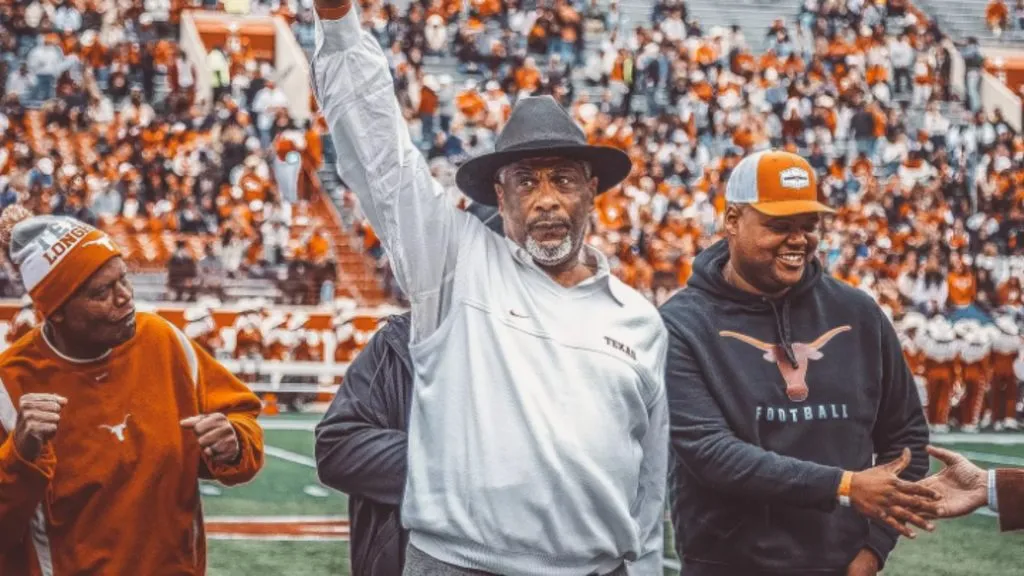
Kenneth Sims (Source: Texas Longhorns)
Kenneth Sims was a dominant force on the defensive line for the Longhorns from 1978 to 1981. Standing 6’6″ and weighing 265 pounds, he earned consensus All-American honors in 1980 and 1981 and was named team MVP in both years. His senior season was particularly remarkable, recording 23 tackles for loss—a then-school record—and leading the Longhorns to a No. 2 national ranking.
His prowess on the field led to him being selected first overall in the 1982 NFL Draft by the New England Patriots. During his eight-season NFL career, he recorded 17 sacks and was part of the Patriots’ 1985 Super Bowl team. His legacy is cemented with his induction into the College Football Hall of Fame in 2021.
Jerry Sisemore, offensive lineman
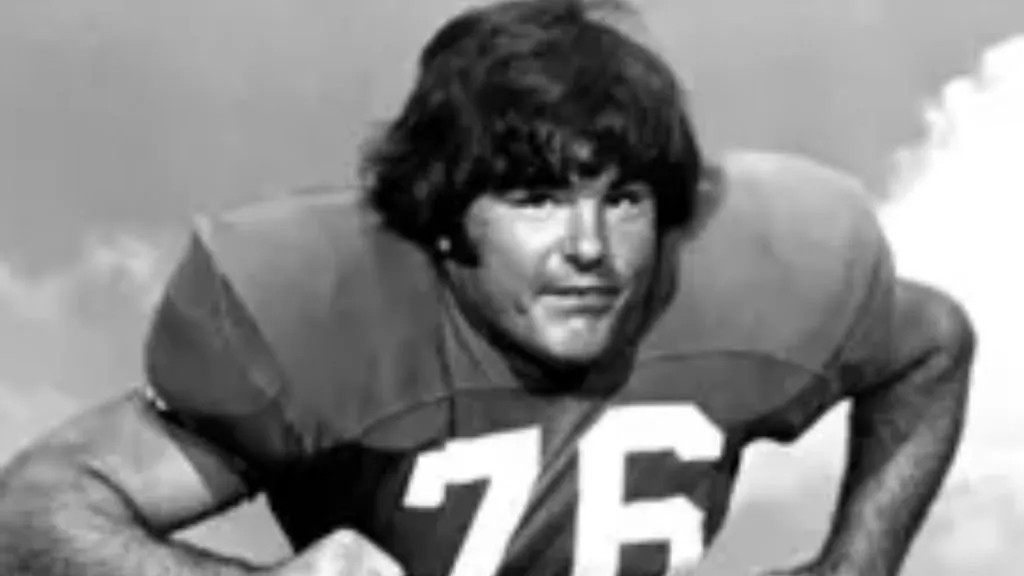
Jerry Sisemore (Source: National Football Foundation)
Jerry Sisemore was the cornerstone of Texas’ offensive line during the early 1970s, a period marked by dominance in the Southwest Conference. Standing 6’4″ and weighing 265 pounds, he was a two-time consensus All-American and co-captain of the 1972 team. His leadership and skill were instrumental in securing three consecutive SWC championships and a national title in 1970.
His impact extended beyond college football. Drafted in the first round by the Philadelphia Eagles in 1973, he played 12 seasons in the NFL, earning Pro Bowl selections in 1980 and 1982. His legacy is celebrated both in Austin and Philadelphia, where his contributions to the game continue to be honored.
Bobby Layne, quarterback
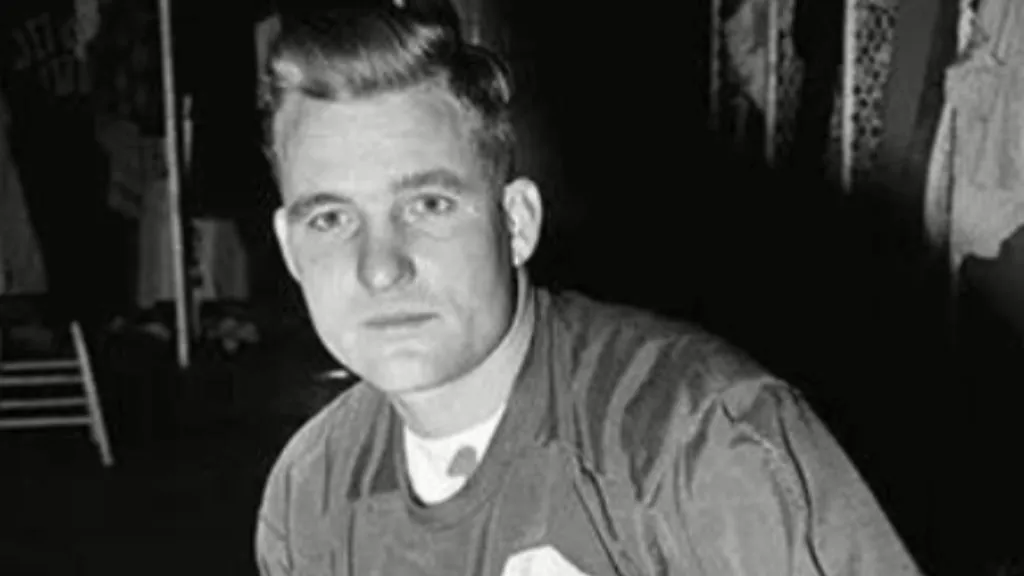
Bobby Layne (Source: Texas HS Football)
Bobby Layne’s legend stretches farther back than most but carries a weight all its own. In the late 1940s, he steered the Longhorns with wizened field vision and iron nerves, setting early drafts of leadership standards for future quarterbacks.
While his collegiate passing yardage pales compared to modern totals, Layne’s signature was foreshadowing—he played with uncanny anticipation and a swagger that foreshadowed smoldering NFL success.
Reporting from the era often focused on his unshakeable calm in chaos. When Longhorns trailed or stadiums crackled with pressure, he stayed cool, launching precision throws and rallying his team.
It’s precisely that blend of composure and grit that historians link to his later acclaim as an NFL Hall of Famer—an early Longhorn alumnus who helped cement the quarterback as the program’s narrative center.
Malcolm Brown, running back
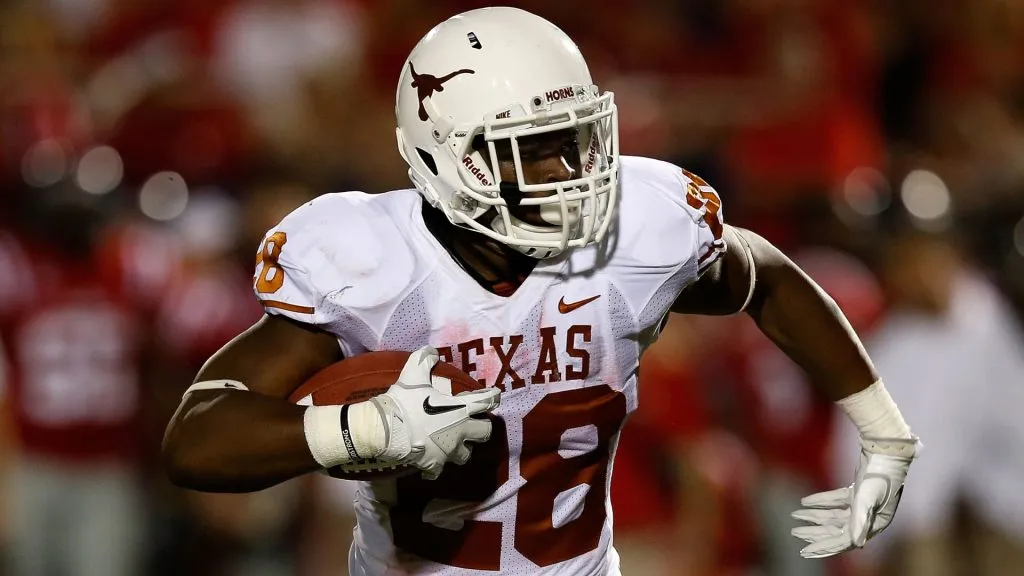
Malcolm Brown #28 of the Texas Longhorns runs upfield against the Ole Miss Rebels at Vaught-Hemingway Stadium on September 15, 2012. (Source: Scott Halleran/Getty Images)
When Malcolm Brown finally grabbed the reins of Texas’ running game, it felt like a promise fulfilled. After limited action in 2011, he surged across his junior and senior seasons—posting 904 rushing yards in 2013 and 708 yards in 2014—often delivering in tight spots with tough runs and late-game grit.
He wasn’t an explosive highlight reel artist, but his steady production when the Longhorns needed stabilizing helped bridge the gap during transitional offensive years. One of the more telling narratives of his time at Texas was his reliability in shared backfields.
Whether carrying the load or sharing touches with peers like Johnathan Gray, he remained durable and coachable. Journalists often framed him as smart, selfless, and fundamentally sound—traits embodied by experienced players who give offenses balance more than romantic numbers.
D’Onta Foreman, running back
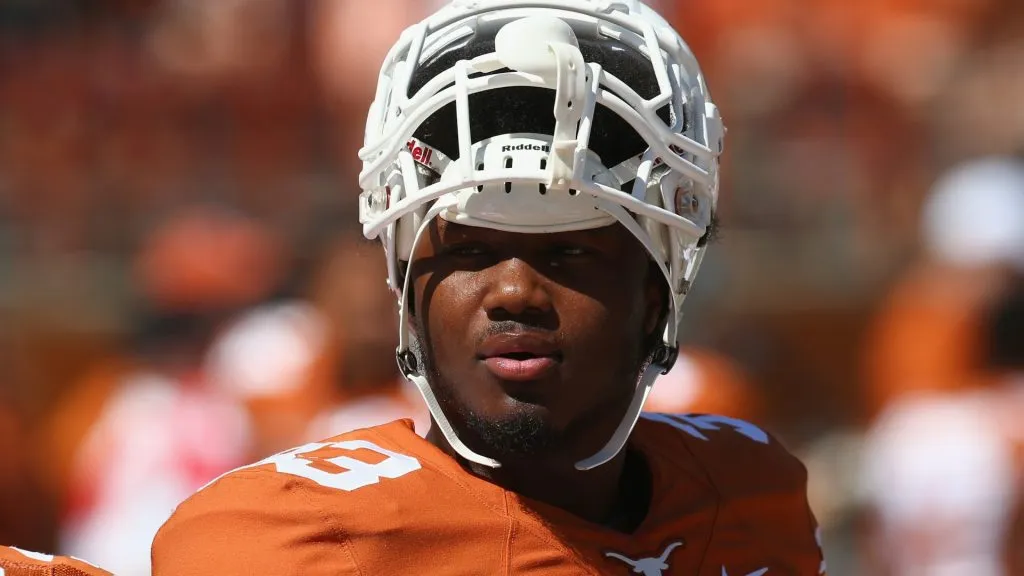
D’Onta Foreman #33 of the Texas Longhorns at Darrell K Royal-Texas Memorial Stadium on October 4, 2014. (Source: Ronald Martinez/Getty Images)
D’Onta Foreman broke onto the Texas scene with a burst of power and resilience. By his junior year in 2016, he had vaulted past the 2,000-yard mark—becoming the first Longhorn to do so since Jamaal Charles in 2007.
That season he compiled 2,028 rushing yards and 15 touchdowns, highlighted by staggering outings like a 341-yard game against Texas Tech and a dazzling 250-yard effort against Baylor—performances that earned him both the Doak Walker Award and the Earl Campbell Tyler Rose Award.
In those runs, you could feel the vibration of every yard gained—not merely numbers, but declarations of dominance. Each stiff-arm and jagged cut seemed to echo through the stands, forging a physical presence and production that made defenders feel like mere spectators.
His decision to declare for the NFL draft after that electric season capped a chapter that still resonates with fans as a reminder of what ground-pound singularity at its best can look like.
A.J. “Jam” Jones, running back
A.J. “Jam” Jones (Source: Trading Card Database)
A.J. “Jam” Jones remains a lesser-celebrated but pivotal name in Texas backfield lore. Emerging in the 1970s, his style of power running—stylized by a low pad level and clenched grip on the ball—became a trademark.
While detailed season stats are harder to aggregate today, longtime fans recall his ability to churn out tough yards between the tackles, often turning short-yardage downs into momentum-shifting gains. His physical presence made him a dependable option when opponents crowded the line of scrimmage.
Beyond the numbers, what lent him a journalistic spotlight was his quiet leadership. He rarely made headlines or flashy plays, but his consistency earned the trust of teammates and coaches alike.
Articles from that era reflect a collegial respect: he was the kind of player who set the tone—hurt the defense quietly and repeatedly, game after game. In those early years of the program, that sometimes understated dependability carried outsized weight.
Roosevelt Leaks, fullback
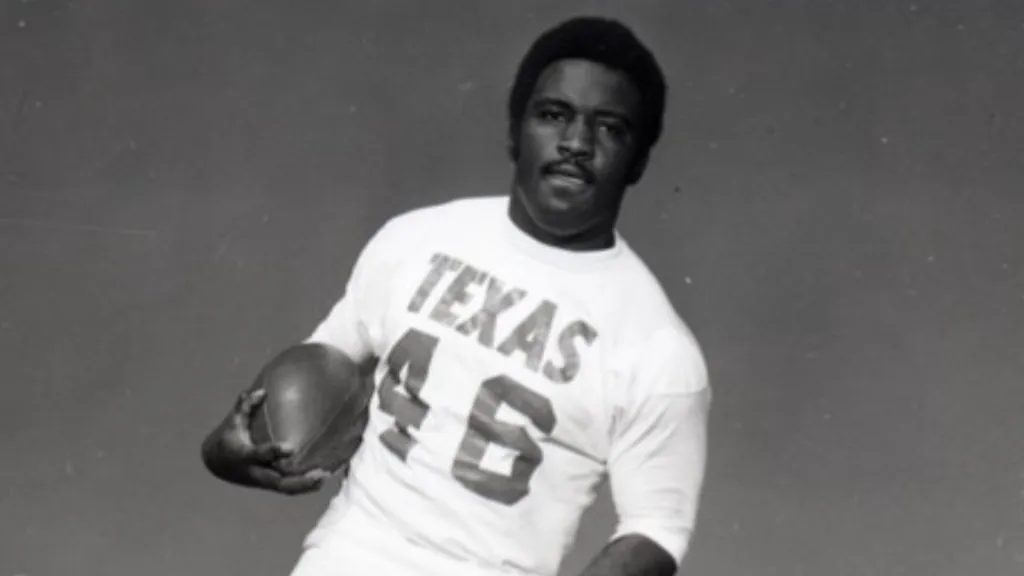
Roosevelt Leaks (Source: Texas Sports Hall of Fame)
In 1973, Roosevelt “Rosey” Leaks was more than a punishing fullback—he was a history-maker. Widely known as “The Sledgehammer,” Leaks blasted for 1,415 yards that season and shattered the SWC single-game rushing mark with a 342-yard performance against SMU—a feat that earned the stadium’s roar and his place in lore. A unanimous All-American and conference MVP, he nearly won the Heisman before injuries in 1974 cast long “what-if” shadows.
Vince Young, quarterback
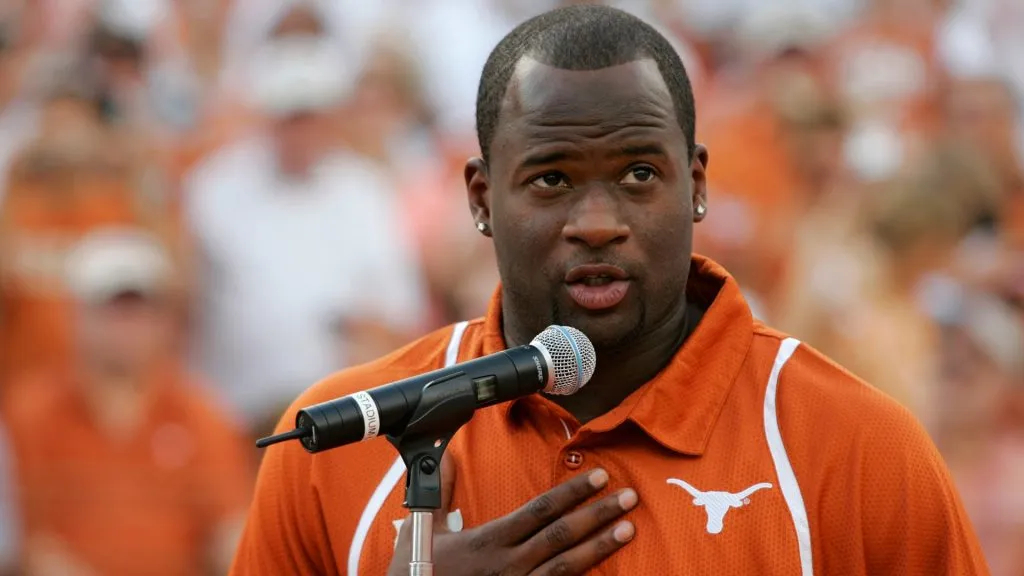
Quarterback Vince Young of the Tennessee Titans speaks after his Texas Longhorns jersey number is retired before a game against the Florida Atlantic Owls in 2007. (Source: Brian Bahr/Getty Images)
Vince Young’s tenure at Texas was nothing short of cinematic. Between 2003 and 2005, he completed 444 of 718 passes for 6,040 yards and 44 touchdowns while rushing for 3,127 yards and 37 scores—becoming the first player in FBS history to exceed 3,000 passing yards and 1,000 rushing yards in a single season.
His junior year remains engraved in college football lore: in the 2006 Rose Bowl, he threw for 267 yards, rushed for 200, and sealed the national championship with a daring game-winning touchdown run on fourth down with 19 seconds left.
Beyond raw stats, Young was the electric heartbeat of an offense that averaged over 50 points and 500 yards per game in 2005—catapulting the Longhorns into their first national title in 35 years. He closed his college career with a staggering 30–2 record as a starter, boasting a .938 winning percentage that ranked among the best in NCAA history.
Chris Gilbert, running back
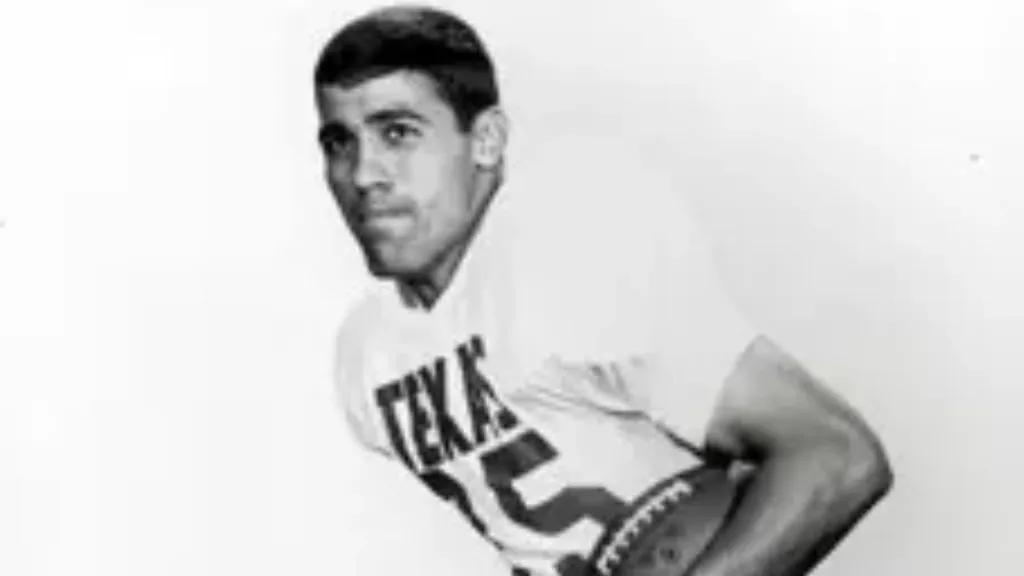
Chris Gilbert (Source: National Football Foundation)
Chris Gilbert was a trailblazer for the Texas Longhorns in the late 1960s. He became the first player in NCAA history to rush for over 1,000 yards in three consecutive seasons, achieving this feat from 1966 to 1968.
He finished his career with 3,231 rushing yards and 28 touchdowns, earning consensus All-American honors in 1968. His consistent performance and durability made him a cornerstone of the Longhorns’ offense during his tenure.
His contributions extended beyond his rushing yards. He was named the team’s Most Valuable Player for three consecutive years, a testament to his leadership and impact on the field. His legacy at Texas is marked by his groundbreaking achievements and his role in elevating the program to national prominence.
Jamaal Charles, running back
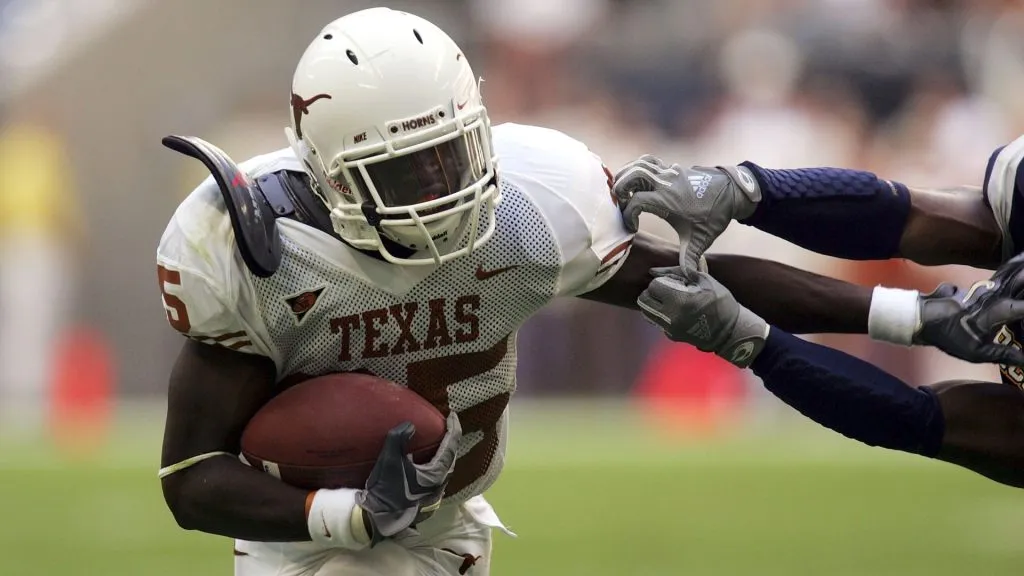
Running back Jamaal Charles #25 of the Texas Longhorns runs the ball against the Rice Owls on September 16, 2006. (Source: Ronald Martinez/Getty Images)
Jamaal Charles was the embodiment of high-octane explosiveness—when he burst into the open field, defenders didn’t just miss, they disappeared. Racking up over 3,300 rushing yards from 2005–2007, he quickly became known for his springy stride and shiftiness that epitomized the electric offenses of that Longhorn era.
Earl Campbell, running back
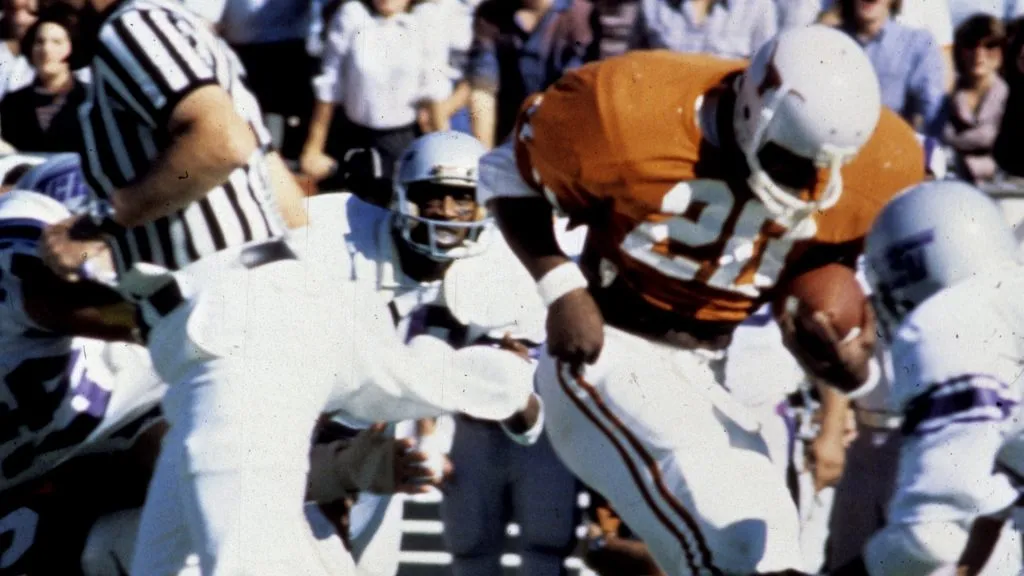
Running back Earl Campbell of the University of Texas Longhorns in 1977. (Source: University of Texas/Getty Images)
There was nothing delicate about Earl Campbell’s game—he bulldozed defenses like few before or after. In 1977 he became the first Longhorn to claim the Heisman, powering through defenses for 1,744 rushing yards and 19 touchdowns, leading the nation in both categories. Over his Texas career he amassed 4,443 yards and 40 touchdowns, earning All-American honors, a rare spot in ESPN’s top 150 college players at No. 7.
Cedric Benson, running back
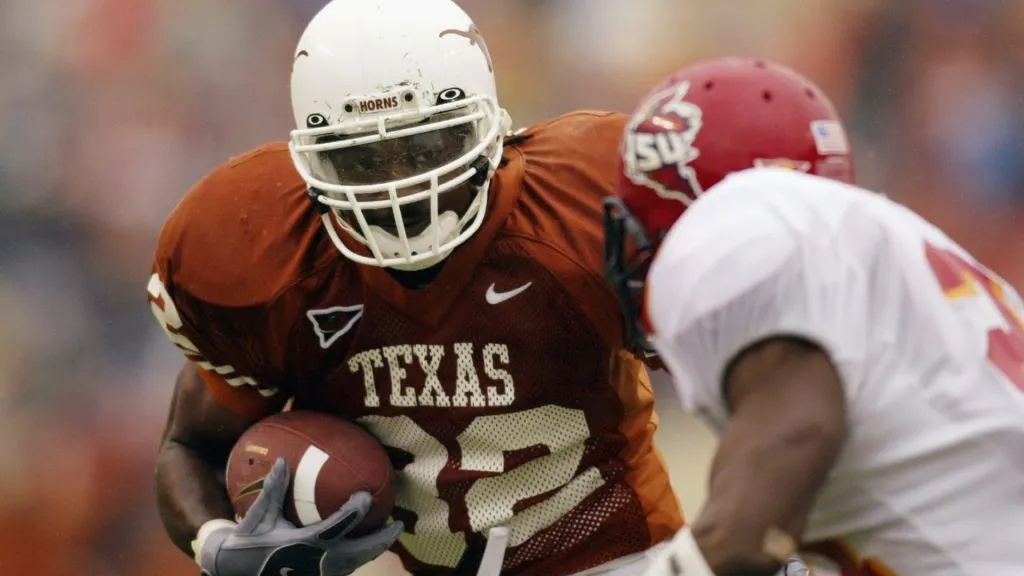
Running back Cedric Benson #32 of the Texas Longhorns carries the ball against the Iowa State Cyclones on October 26, 2002. (Source: Ronald Martinez/Getty Images)
Cedric Benson’s legacy is one of relentless reliability and raw production. He stands second in UT history with 5,540 yards and 64 touchdowns, the only back to rush for over 1,000 yards in four consecutive seasons—a testament to his consistency and durability.
A Doak Walker Award winner and first-team All-American, he left as one of college football’s most prolific backs and carried that success into a solid eight-year NFL career.
Ricky Williams, running back
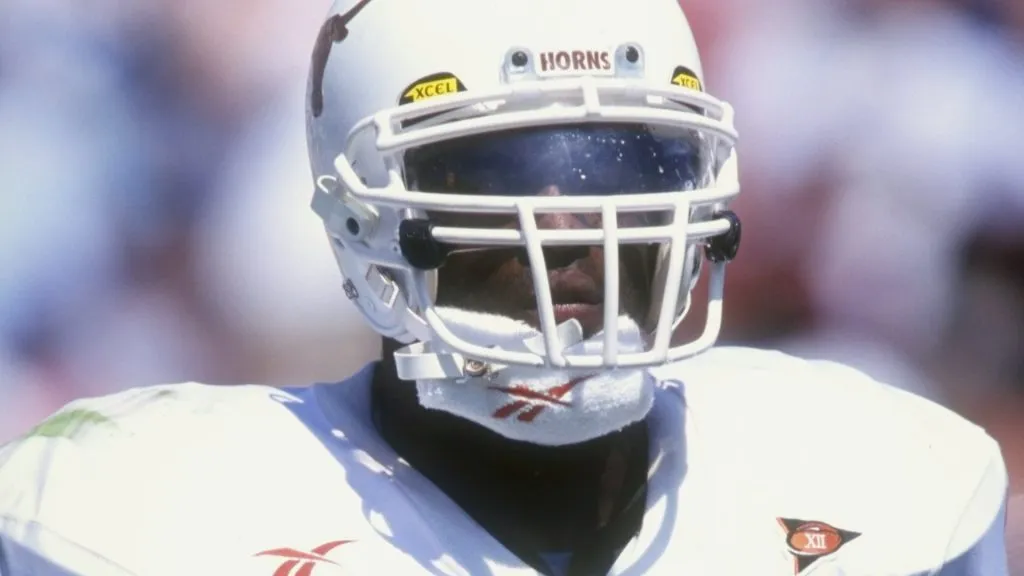
Running back Ricky Williams #34 of the Texas Longhorns in action during the game against the UCLA Bruins at the Rose Bowl in 1998. (Source: Getty Images)
In a way, Ricky Williams reimagined what a running back could be—graceful yet unrelenting. Across four seasons he piled up 6,279 rushing yards and 72 touchdowns, shattering Tony Dorsett’s long-standing career record en route to becoming just the second Longhorn to win the Heisman in 1998.
That senior year became legend: multiple games with six touchdowns, staggering yardage feats—including a 350-yard outburst—and a deluge of NCAA, Big 12, and school records crowned him the AP Player of the Year.