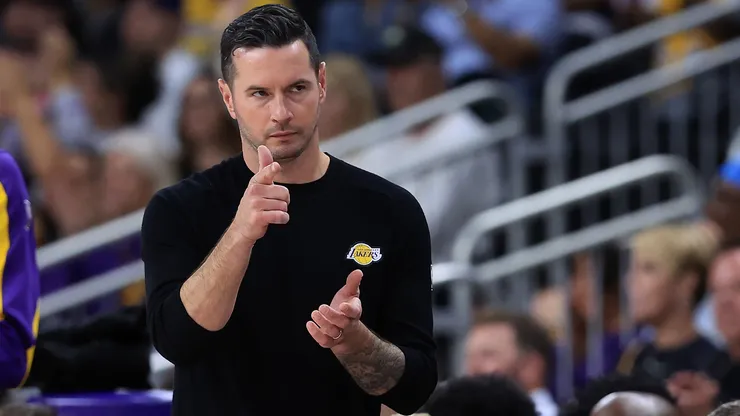
In recent years, the NBA has faced challenges not only on the court but also in the media landscape. Fan engagement has waned, with some citing the game’s perceived monotony and lack of physicality compared to previous eras. Los Angeles Lakers coach JJ Redick has weighed in on the issue, placing the blame squarely on traditional and social media for failing to celebrate the league’s strengths.
“I don’t think we… have done a good job of storytelling, of celebrating the game,” Redick stated. “If I’m a casual fan and you tell me every time I turn on the television that the product sucks, well, I’m not going to watch the product. And that’s really what has happened over the last 10 to 15 years. I don’t know why. It’s not funny to me.”
Redick also emphasized that today’s NBA is more challenging and competitive than ever before. He praised the league’s transformation into a skill-driven game, showcasing a wealth of talented players and teams.
“This game should be celebrated,” Redick said. “The league is more talented and skilled than it was 18 years ago when I was drafted. That’s a fact. There are more players that are excellent. There are more teams that are excellent.“
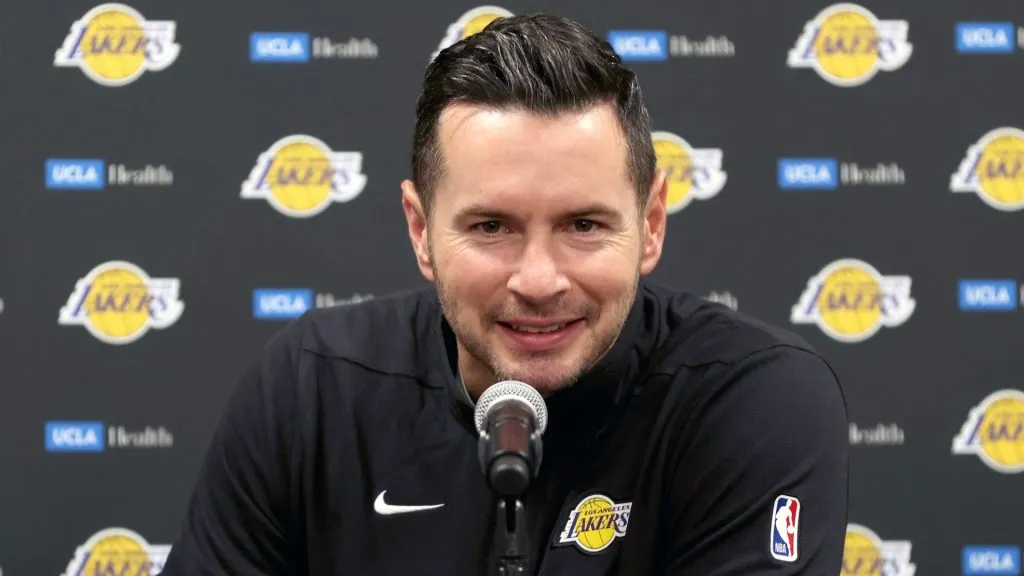
Head coach JJ Redick of the Los Angeles Lakers speaks with media prior to the game against the Phoenix Suns at Acrisure Arena on October 06, 2024 in Palm Springs, California.
Media’s role in shaping perceptions
Redick criticized traditional media and social platforms for focusing disproportionately on negative narratives. He noted that these platforms rarely highlight the league’s positives and that those who do often struggle to gain widespread attention.
“We don’t have anybody that’s willing to step up to the fact that this is an awesome game and we should talk about it and celebrate it in a positive way,” Redick argued. “That doesn’t mean we don’t critique it. We should critique it, but we should celebrate it.”
He also called out the ecosystem of fans and analysts who give too much weight to Twitter (now X) discussions, which often revolve around hot-button issues like declining ratings or controversial moments.
“Frankly, I would argue as well, that everyone in our ecosystem pays too much attention to what is said on Twitter,” Redick added. “And part of this whole ratings discussion is because people on Twitter are talking about it.”
Negative narratives dominate the discourse
One of the most persistent critiques of the NBA is the idea that it has grown “monotonous” and lacks the grit of past decades. Analysts and fans often glorify the 1980s and 1990s as the league’s golden era, framing modern basketball as less compelling. While today’s game has shifted toward a focus on three-point shooting and floor spacing, this criticism ignores the unprecedented skill and athleticism required in the current era.
Social media plays a significant role in amplifying these narratives. Viral posts and memes frequently ridicule perceived shortcomings in the league, such as player rest due to “load management” or officiating controversies. These discussions create an echo chamber, especially for casual fans, who may walk away with a skewed perspective of the league.