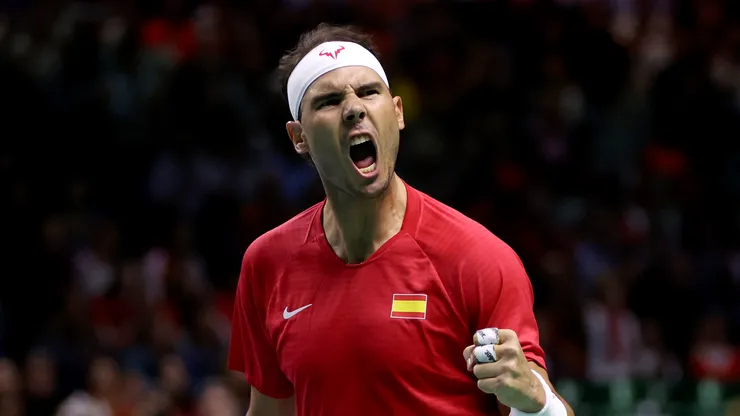
Tennis legend Rafael Nadal joined Andy Roddick on a new episode of his podcast Served with Roddick, where he opened up about his rivalries with Roger Federer and Novak Djokovic like never before. The 14-time French Open champion revealed which of his opponents’ weapons troubled him the most and how he approached each matchup.
With Federer, Nadal said he “approached each match completely differently,” which is why he believes their rivalry was “more attractive” to fans, despite facing Djokovic more often. As hardcore fans know, Nadal frequently targeted Federer’s backhand—a strategy that proved highly effective—but he admitted the biggest challenges against the Swiss were his forehand and serve.
“Every time he hit a forehand, I felt like I was being pushed back—his forehand was the best I ever played against. Our matches were like a chess match; everyone knew the strategy in advance, and there were no secrets. If he played at his best, he beat me; if I played at my best, I beat him,” Nadal said.
“His serve was incredibly difficult to read. It wasn’t just the precision—he could hit seven different serves off the same toss. That made it unpredictable. He had his preferred serve, but he could disguise it so well that it was hard to anticipate,” he added.
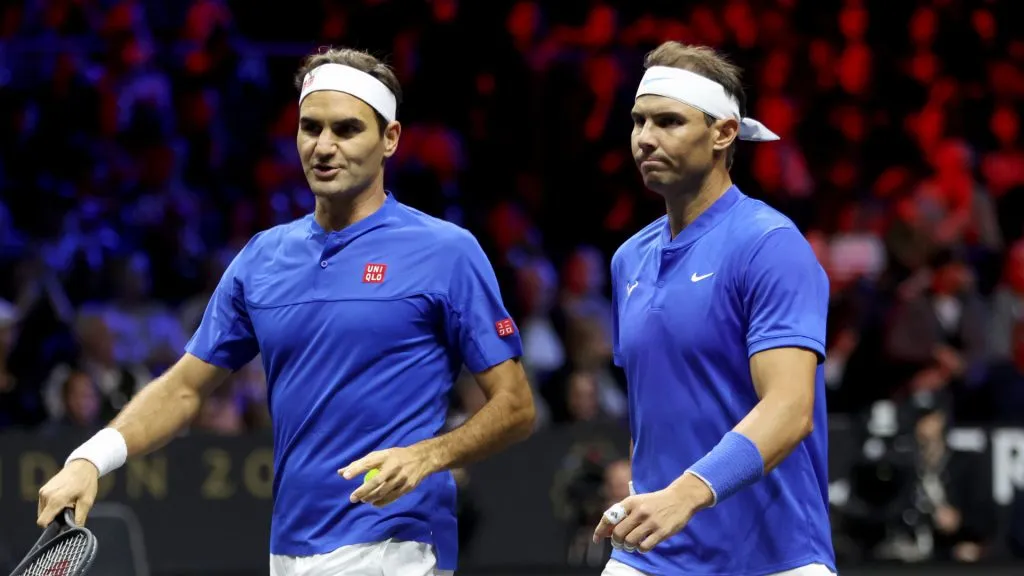
Rafael Nadal and Roger Federer during the 2022 Laver Cup (Clive Brunskill/Getty Images for Laver Cup)
Nadal noted that while Federer initially made the “mistake” of “trying to rally with his backhand,” the 20-time Grand Slam champion later adapted by “taking more risks, stepping in more, and playing more aggressively.” To Nadal, Federer’s best tennis came in 2017. “On hard courts, I felt like I was at his mercy. Of course, it was different on clay, but on hard courts, he was dominant. He didn’t play on clay that year, but when he returned a few years later, he was still playing very aggressively.”

Nadal on Djokovic: He is the best ever at switching directions
When it comes to strategy against Djokovic, Nadal admitted that he didn’t have a clear strategy. “Against Novak, it wasn’t the same—I just knew I had to play at a very high level for a long time. It wasn’t about breaking down one specific shot; it was about constant adjustments. I couldn’t hit too many high balls to his backhand because he would take them early and put me in a tough position. That’s why I started using the slice more against him. Sometimes it worked, sometimes it didn’t,” he said.
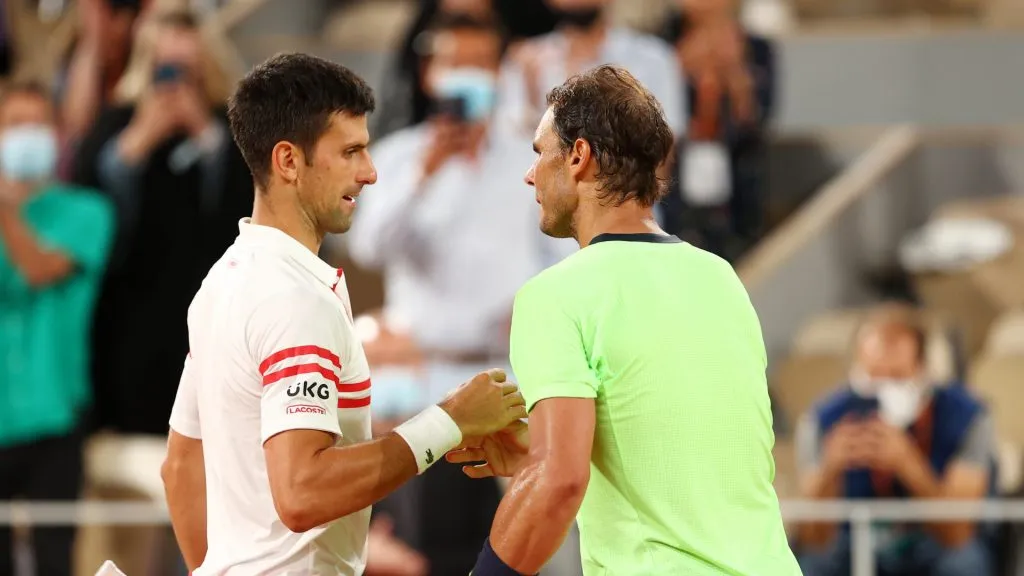
Novak Djokovic and Rafael Nadal during the French Open (Julian Finney/Getty Images)
However, he found a way to break him. “One thing that helped against Novak was playing more to the middle of the court to limit his angles. If I didn’t create enough damage with my shots, he would open up the court even more. I think he’s the best ever at switching directions—he could take a forehand and hit the down-the-line shot safely, controlling the ball better than anyone. In terms of pure ball control, he’s the best player I’ve ever faced,” he explained.
Nadal’s head-to-head against Federer and Djokovic
Against Federer, Nadal led their overall meetings 24-16, with a dominant 14-2 record on clay, including multiple wins at the French Open. Federer had the edge on hard courts (11-9) and grass (3-1), but Nadal’s ability to exploit his backhand with heavy topspin defined their battles.
Against Djokovic, Nadal trails 29-30, making it the most-played rivalry in the Open Era. While Nadal holds a clear advantage on clay (20-8), Djokovic leads on hard courts (22-9) and has won most of their Grand Slam finals outside of Roland Garros.