
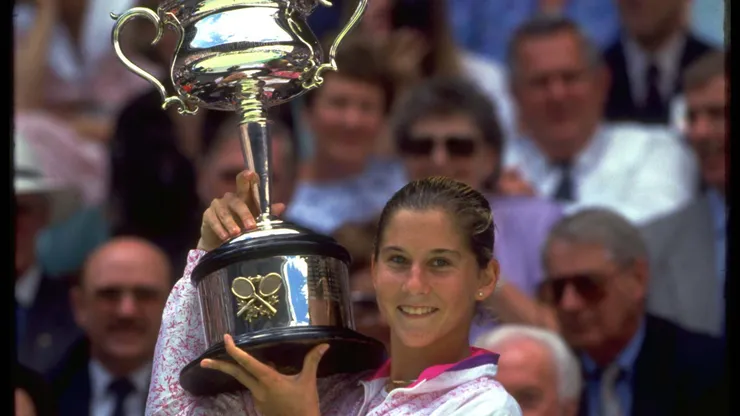
Tennis has produced some of the greatest champions in sports history. From the icons of the Golden Age, often associated with the 1970s and 1980s, to the ‘Big 3,’ the sport is filled with legendary athletes and remarkable achievements. However, no story in tennis carries a bigger “what if” than that of Monica Seles, who was on track to become arguably the greatest of all time until a brutal attack changed her life forever.
Born on December 2, 1973, in Novi Sad, then part of Yugoslavia (now Serbia), Seles began playing tennis at five years old. She was coached by her father, Károly, who was a professional cartoonist. According to her memoir, From Fear to Victory, he drew cartoon characters on tennis balls to make practice fun.
In 1986, she moved to the United States to train at the Nick Bollettieri Tennis Academy. Where she trained for two years, before turning professional in 1989. She won her first career title at Houston in May 1989, beating Chris Evert in the final. That same year, she also reached the semifinals of the French Open, losing to World no. 1 Steffi Graf. She ended the year as the World No. 6 in the WTA rankings.
Seles’ dominance in tennis
Seles revolutionized tennis with her aggressive baseline play and unique two-handed strokes on both sides, which allowed her to generate exceptional power, precision, and control. Due to these strengths, she became almost unstoppable in the early 1990s.
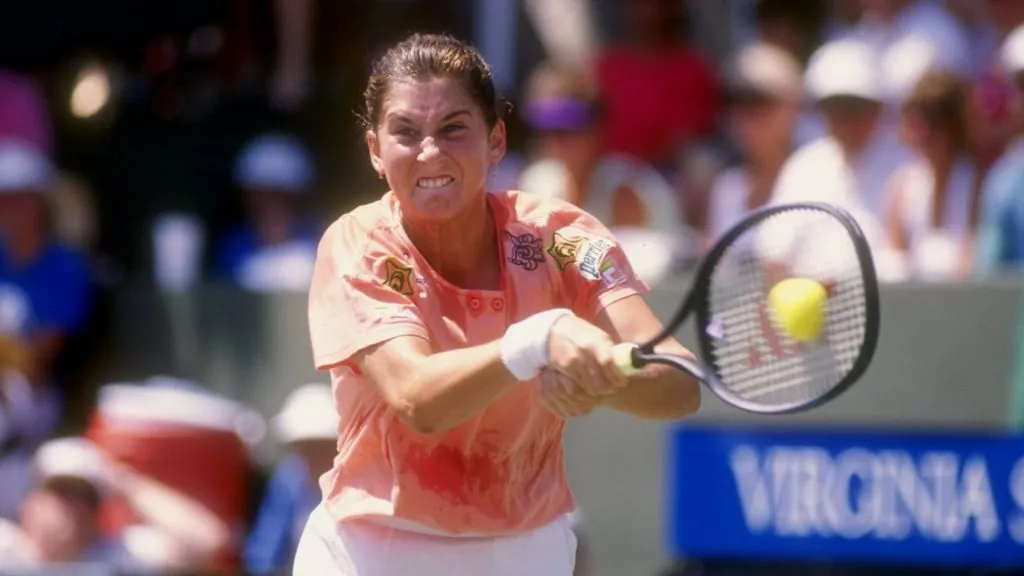
Monica Seles in 1992 (Ken Levine/Getty Images)
Seles became the youngest-ever French Open champion in 1990 at age 16 and six months. For the next two years, she dominated the women’s tennis circuit, winning eight Grand Slam singles titles before turning 20, including four Australian Opens, three French Opens, and two US Opens.
In total, from February 1991 through February 1993, she won 22 titles and reached 33 finals out of the 34 tournaments she played. During that time, her winning percentage was 92.2%, with a 159–12 win–loss record. In March 1991, Seles also became the then-youngest player to reach the World No. 1 ranking, at 17 years old, later surpassed by Martina Hingis (16 years old) in 1997.
Tragic stabbing incident
On April 30, 1993, Seles’ career took a devastating turn. Seles, then just 19 years old, was seated during a changeover when a man emerged from the crowd and stabbed her in the back with a nine-inch knife. The attacker, later identified as Günter Parche, was a fanatical supporter of German player Graf. His motivation for the attack stemmed from a desire to see Graf reclaim the top spot in the rankings, which Seles had held for nearly two years.
The injury, though not life-threatening, was deeply traumatic. The blade penetrated half an inch into Seles’ upper back, just inches from her spine. She was rushed to the hospital, where she received treatment and began her physical recovery. However, the psychological impact of the attack was profound.

Seles took a hiatus from professional tennis, which lasted over two years, citing the emotional scars and fear that lingered long after the physical wound had healed. Her absence from the sport dramatically altered the trajectory of her career, as she struggled to regain her dominance upon her return.
Comeback and later career: Final Grand Slam title
Seles returned to the tour in 1995, after becoming a US citizen in 1994. She won her first tournament after her comeback, the Canadian Open, and lost the US Open final to Graf. However, it wasn’t long before she reached the Grand Slam glory once again.
In 1996, she won the Australian Open, marking her ninth and final Grand Slam title. While she remained a strong competitor, being runner-up in two more GS finals, she never full regained her pre-incident dominance.
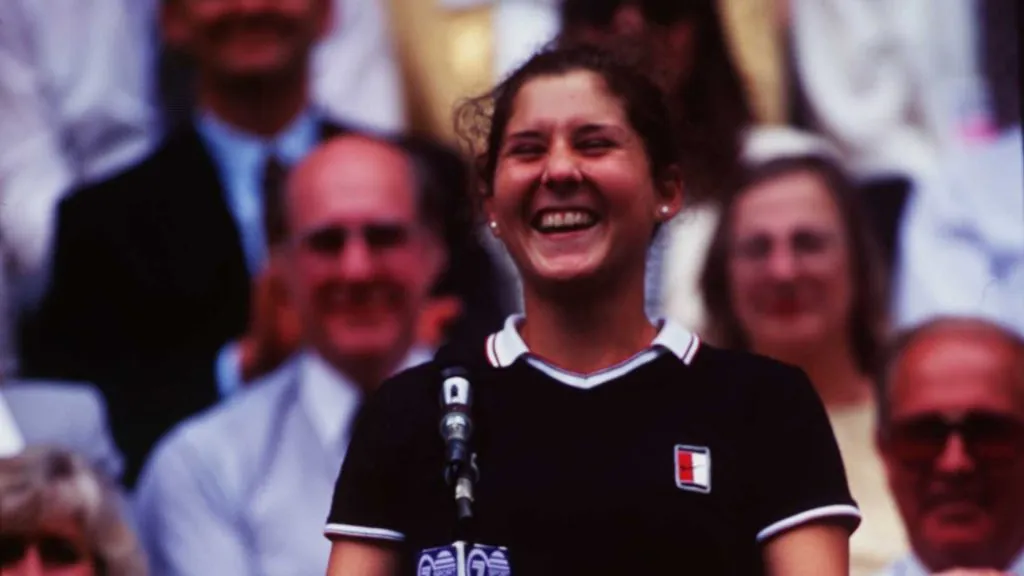
Monica Seles at the 1995 US Open after her comeback (Clive Brunskill/ALLSPORT)
However, she also won the Bronze medal in the 2000 Sydney Olympics, as well as three Fed Cups with the United States in 1996, 1999, and 2000. 2002 was her last full year on tour, in which she ended as World No. 7.
In 2003, she sustained a foot injury that forced her to retire during the second set of a match against Nadia Petrova at the Italian Open. A few weeks later, still struggling with the injury, she faced Petrova again in the first round of the 2003 French Open, losing in straight sets. This marked the only first-round loss of her career at a Grand Slam. Seles never played another official tour match after that defeat. She retired officially in 2008.
Legacy and personal Life
Seles is remembered as one of the greatest female tennis players, known for her tenacity and groundbreaking style. She has been inducted into the International Tennis Hall of Fame and continues to inspire through public speaking, raising awareness about mental health and eating disorders, which she has openly discussed battling.
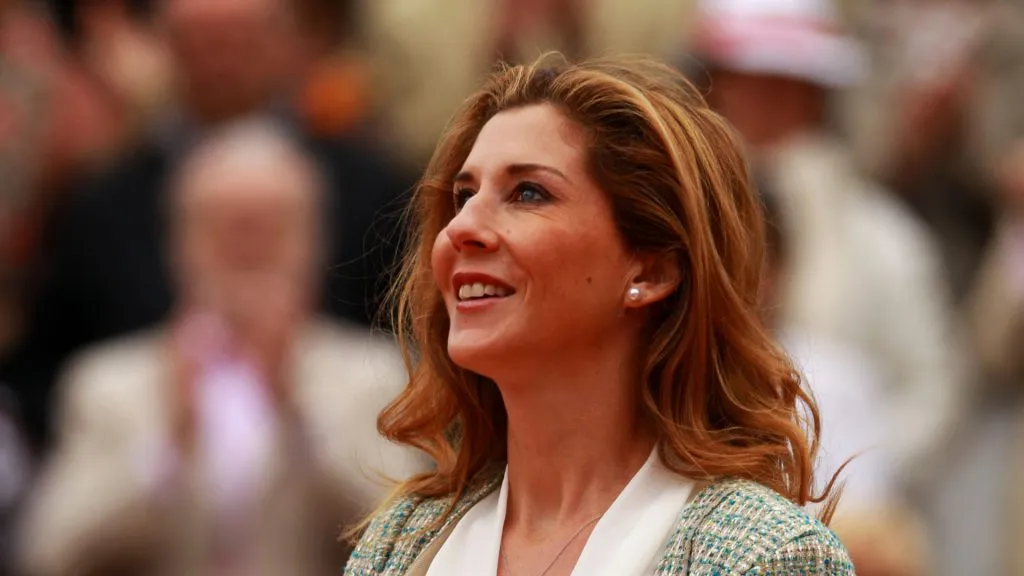
Monica Seles at 2012 Roland Garros (Clive Brunskill/Getty Images)
While Seles’ career was successful by all means, the doubt of whether she could have been the greatest tennis player will always be there. Her former coach Nick Bollettieri, rivals like Martina Navratilova and Chris Evert, and analysts such as Jon Wertheim of Sports Illustrated and Mary Carrillo of NBC have argued that, due to her talent and performance, she could have been. But, even if she didn’t win the most titles or broke the most records, she will always be remembered as an example of resilience and grace.