
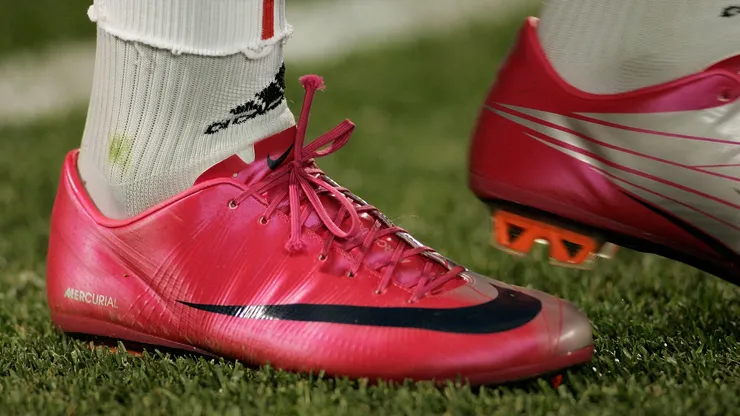
At the start of the 2026 FIFA World Cup, one of the most unexpected visual trends has been the sheer number of players stepping onto the pitch in bright pink boots. The color has appeared across multiple teams.
The reason behind this wave is not tied to a single club or national team, but rather to a coordinated push from major sportswear manufacturers like Nike, Adidas, Puma, New Balance and Skechers.
For the tournament, these brands released similar “electric fuchsia” or neon pink collections designed to stand out on the pitch and on television broadcasts, making the footwear highly visible during replays, celebrations and close-ups.
Has this pink boot trend appeared in previous World Cups?
No, the 2026 FIFA World Cup is the first tournament where pink boots have become a dominant, widespread visual trend across multiple teams and brands.
In editions like 2014, 2018 and 2022, players wore a wide mix of neon greens, blues, orange gradients and custom designs, with brands deliberately trying to differentiate their products rather than converge on one aesthetic.
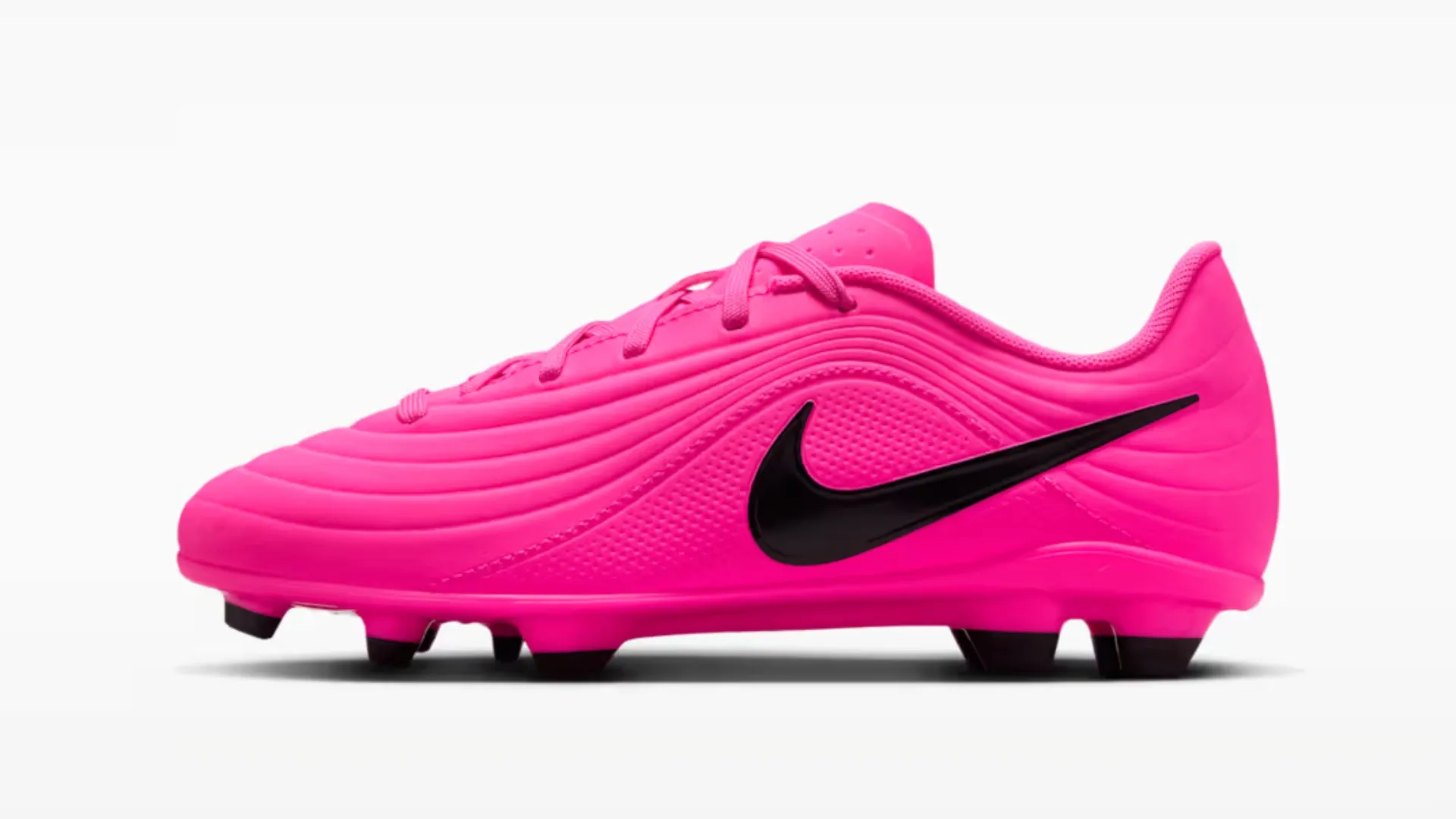
Nike Jr. Tiempo Maestro Club (Source: Nike)
What makes 2026 different is the scale and synchronization. Multiple leading sportswear companies—including Nike, Adidas and Puma—have simultaneously launched pink-heavy collections for the tournament, with similar tones.
The result is a rare moment in World Cup fashion history: instead of competing with radically different color identities, brands have converged on nearly identical shades, turning the pitch into a unified display of neon pink dominance.
Which brands are behind the pink boot trend in the 2026 World Cup?
The pink boot trend at the 2026 FIFA World Cup is being led primarily by the “Big Three” brands Nike, Adidas and Puma. Nike, in particular, has leaned heavily into the color as part of its design strategy.
These companies dominate global soccer footwear, and for this World Cup cycle they have all released collections where pink tones—often described as “electric fuchsia”—feature prominently.
Speaking to The Athletic, Odinga Nimako, a senior figure at Nike’s global soccer footwear team, explained that the shift toward pink was driven by strong consumer demand for bolder visual identities. He noted that players and fans increasingly associate bright colors with confidence and individuality on the pitch.
“What we always hear from our consumers and athletes is when you wear a color like pink that is so loud and so bright it is like… you need to be really good to wear these (colors) as well. At the same time, there’s also been a level of acceptance with pink that makes it not too niche for people, it speaks to a broad audience”.
Beyond aesthetics, Nike’s internal testing also highlighted the visual power of the color during on-field trials. According to Nimako, pink consistently stood out more than any other shade when viewed under match conditions.
“Pink really helps bring it out against the green grass on the pitch, whether you’re in the stands or whether you’re watching on TV, making sure that visibility is there”, he said. “That is definitely something that we looked at. For this (World Cup) moment we really wanted to focus on that visual impact”.