The underdog victories in March Madness are more than just a collection of improbable upsets—they’re a testament to the unpredictability of sports. They give hope to every team that enters the tournament, no matter their seeding.
With each low-seeded team that defies expectations, the tournament becomes a bit more magical. Whether it’s Villanova or NC State, these underdog triumphs are what make it a celebration of unpredictability, heart and hope.
And as the brackets are filled in every spring, there’s always that one question on everyone’s mind: Could this be the year another low seed rises to the top and makes history? With March Madness 2025, anything is possible.
The birth of March Madness: An expanded opportunity
The NCAA Tournament was always a spectacle, but it was in 1985 that the madness really began. That year, the tournament expanded from 53 teams to 64, a move that opened up new possibilities for teams that would’ve otherwise been left out of the conversation.
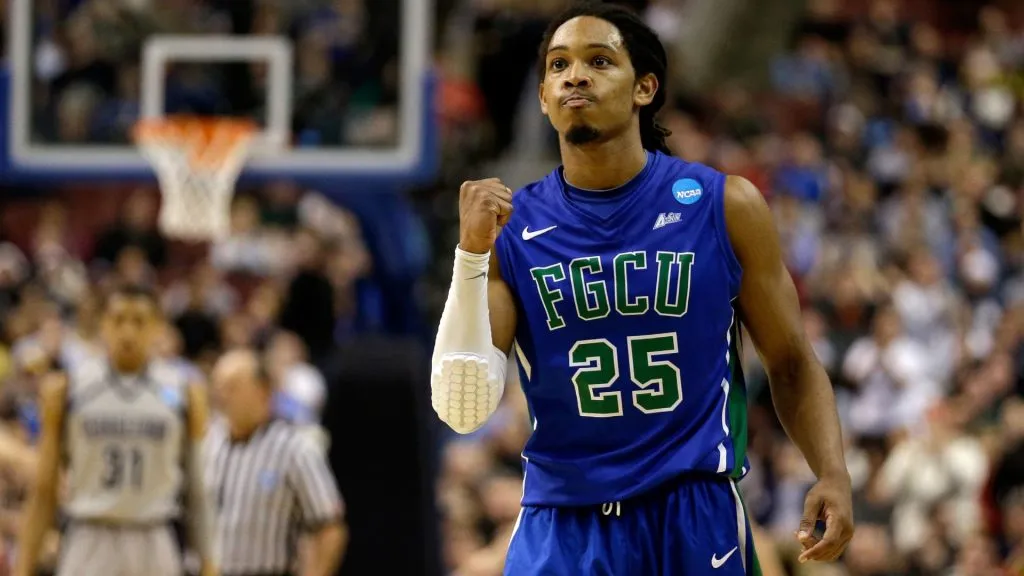
Sherwood Brown #25 of the Florida Gulf Coast Eagles celebrates late in the second half against the Georgetown Hoyas during the second round of the 2013 NCAA Men’s Basketball Tournament. (Source: Rob Carr/Getty Images)
This seismic shift not only made the field more diverse, but it also created more opportunities for lower-seeded teams to make an impact. The allure of March Madness lies in its unpredictability—when a 16-seed can knock off a 1-seed in the first round, the underdogs have a shot.
The underdogs who shocked the world
While a low seed hasn’t clinched the championship every year, several have come very close. Here are some standout examples of teams that reached unprecedented heights despite their position in the bracket:
- Villanova (1985)
Long before “Cinderella” became synonymous with March Madness, Villanova’s 1985 run captured the imagination of the basketball world. As a No. 8 seed, the Wildcats shocked everyone by marching all the way to the championship game, defeating Georgetown in a legendary Final.
What makes this victory particularly remarkable is the way Villanova won—the Wildcats shot an astounding 78.6% in the final game, one of the highest shooting percentages in a championship game. Their win changed the narrative surrounding the tournament, proving that lower-seeded teams could not only make deep runs, but also win the ultimate prize.
- NC State (1983)
Another iconic underdog victory came in 1983, when Jim Valvano’s North Carolina State team—riding the momentum of a 6th seed—defied the odds and clinched the championship.
NC State’s tournament run remains one of the most stunning upsets in NCAA history, as they took down powerhouses like Houston and their high-flying, “Phi Slama Jama” squad, which included future NBA stars Hakeem Olajuwon and Clyde Drexler. Valvano’s emotional post-game celebration and his team’s dogged defense and resilience created a new definition of “March Madness.”
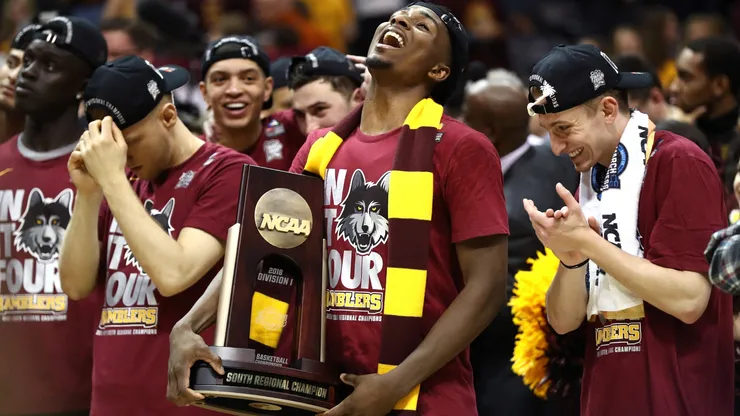
- Loyola-Chicago (2018)
Fast forward to 2018, and Loyola-Chicago, a No. 11 seed, shocked the college basketball world with an unforgettable run to the Final Four. Guided by the wisdom of Sister Jean, the team’s 98-year-old team chaplain, Loyola-Chicago was the heart of March Madness.
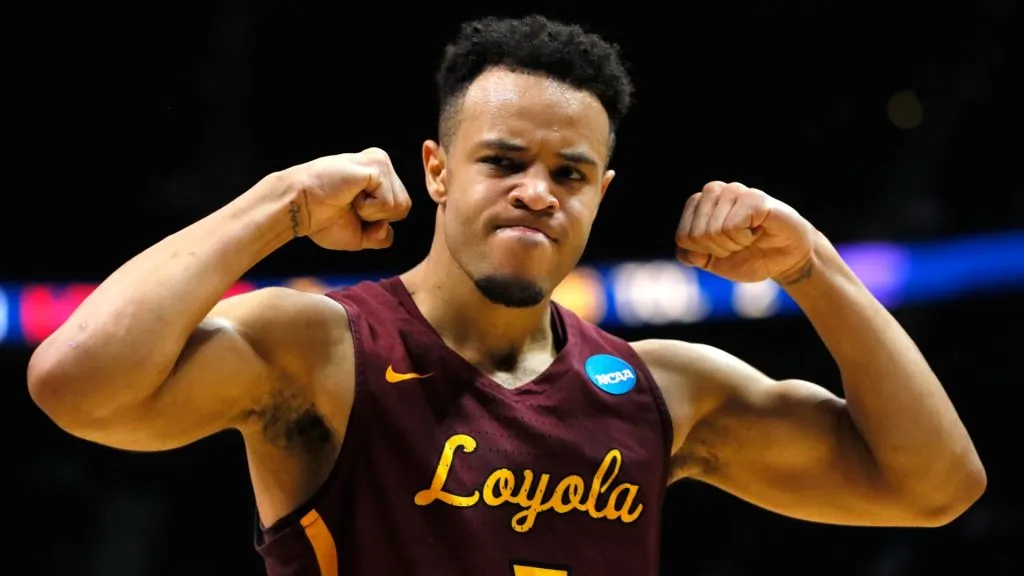
Marques Townes #5 of the Loyola Ramblers reacts after a play late in the second half against the Kansas State Wildcats during the 2018 NCAA Men’s Basketball Tournament South Regional. (Source: Kevin C. Cox/Getty Images)
With buzzer-beating shots and improbable victories, including a dramatic 98-93 overtime win against Miami and a nail-biting last-second victory over Nevada, the Ramblers had fans across the nation rallying behind them. Their Final Four appearance was a reminder that anything is possible when you embrace the chaos of the tournament.
- Florida Gulf Coast (2013)
Another underdog story came in 2013, when Florida Gulf Coast, as a 15-seed, became the darlings of March Madness. Nicknamed “Dunk City”, the Eagles dominated their competition with fast-paced, high-flying basketball.
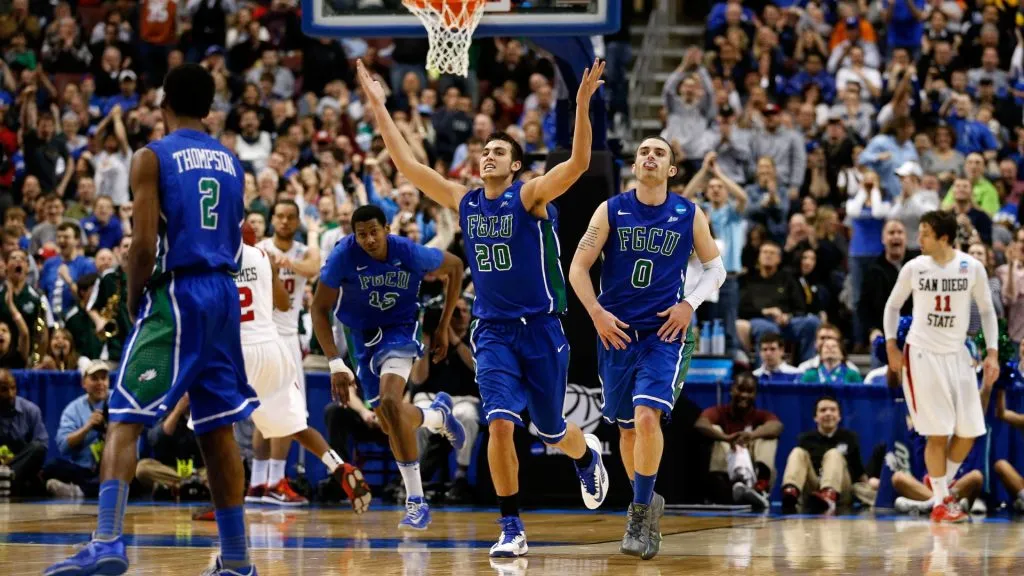
Chase Fieler and Brett Comer celebrate in the second half while taking on the San Diego State Aztecs during the third round of the 2013 NCAA Men’s Basketball Tournament. (Source: Rob Carr/Getty Images)
Their 2013 run saw them eliminate No. 2 seed Georgetown, No. 7 seed San Diego State, and No. 3 seed Kansas, before falling just short of a Final Four spot. Florida Gulf Coast’s improbable run introduced the world to their electric style of play, making them one of the most entertaining underdogs in tournament history.
What makes these underdog stories so special?
The magic of March Madness lies not just in the victories, but in the stories behind the teams. The underdogs who make a run to the Final Four or win it all capture the imagination of fans and serve as a reminder that no team is truly out of the race.
In each case, the players exhibit resilience, teamwork and a sense of destiny. They’re not just playing for themselves—they’re playing for their school, their city and the millions of fans who believe in them against all odds.