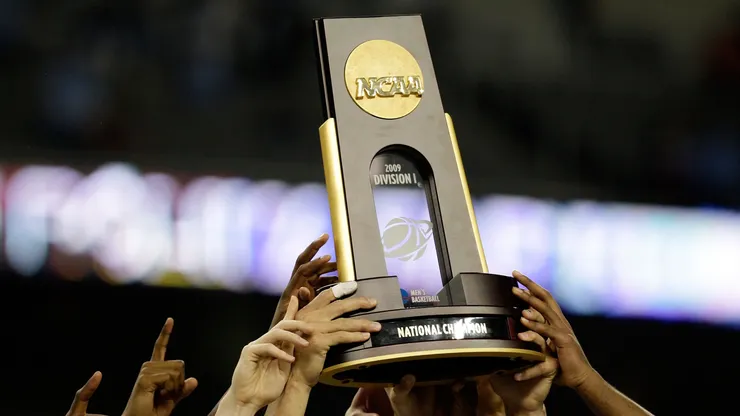
March Madness has transformed into a phenomenon that goes far beyond merely being a basketball tournament, with its finals turning into a true spectacle that ignites the passion of millions of fans across the country.
Since its beginnings in 1939, when barely eight teams competed for the title, to the current format featuring 68 participants, the NCAA Men’s Basketball Championship has evolved hand in hand with college basketball itself.
Each victory has not only marked a sporting milestone but has also woven a rich history filled with passion, innovative strategies and unforgettable moments. Discover the latest champions who have redefined the game…
| Year | Winner | Coach | Score | Runner-Up | Site |
| 2025 | Florida Gators | Todd Golden | (65-63) | Houston Cougars | San Antonio, Texas |
| 2024 | UConn | Dan Hurley | 75-60 | Purdue | Glendale, Ariz. |
| 2023 | UConn | Dan Hurley | 76-59 | San Diego State | Houston, Texas |
| 2022 | Kansas | Bill Self | 72-69 | North Carolina | New Orleans, La. |
| 2021 | Baylor | Scott Drew | 86-70 | Gonzaga | Indianapolis, Ind. |
| 2019 | Virginia | Tony Bennett | 85-77 (OT) | Texas Tech | Minneapolis, Minn. |
| 2018 | Villanova | Jay Wright | 79-62 | Michigan | San Antonio, Texas |
| 2017 | North Carolina | Roy Williams | 71-65 | Gonzaga | Phoenix, Ariz. |
| 2016 | Villanova | Jay Wright | 77-74 | North Carolina | Houston, Texas |
| 2015 | Duke | Mike Krzyzewski | 68-63 | Wisconsin | Indianapolis, Ind. |
| 2014 | Connecticut | Kevin Ollie | 60-54 | Kentucky | Arlington, Texas |
| 2013 | Louisville | Rick Pitino | 82-76 | Michigan | Atlanta, Ga. |
| 2012 | Kentucky | John Calipari | 67-59 | Kansas | New Orleans, La. |
| 2011 | Connecticut | Jim Calhoun | 53-41 | Butler | Houston, Texas |
| 2010 | Duke | Mike Krzyzewski | 61-59 | Butler | Indianapolis, Ind. |
| 2009 | North Carolina | Roy Williams | 89-72 | Michigan State | Detroit, Mich. |
| 2008 | Kansas | Bill Self | 75-68 (OT) | Memphis | San Antonio, Texas |
| 2007 | Florida | Billy Donovan | 84-75 | Ohio State | Atlanta, Ga. |
| 2006 | Florida | Billy Donovan | 73-57 | UCLA | Indianapolis, Ind. |
| 2005 | North Carolina | Roy Williams | 75-70 | Illinois | St. Louis, Mo. |
| 2004 | Connecticut | Jim Calhoun | 82-73 | Georgia Tech | San Antonio, Texas |
| 2003 | Syracuse | Jim Boeheim | 81-78 | Kansas | New Orleans, La. |
| 2002 | Maryland | Gary Williams | 64-52 | Indiana | Atlanta, Ga. |
| 2001 | Duke | Mike Krzyzewski | 82-72 | Arizona | Minneapolis, Minn. |
| 2000 | Michigan State | Tom Izzo | 89-76 | Florida | Indianapolis, Ind. |
2000: Michigan State Spartans
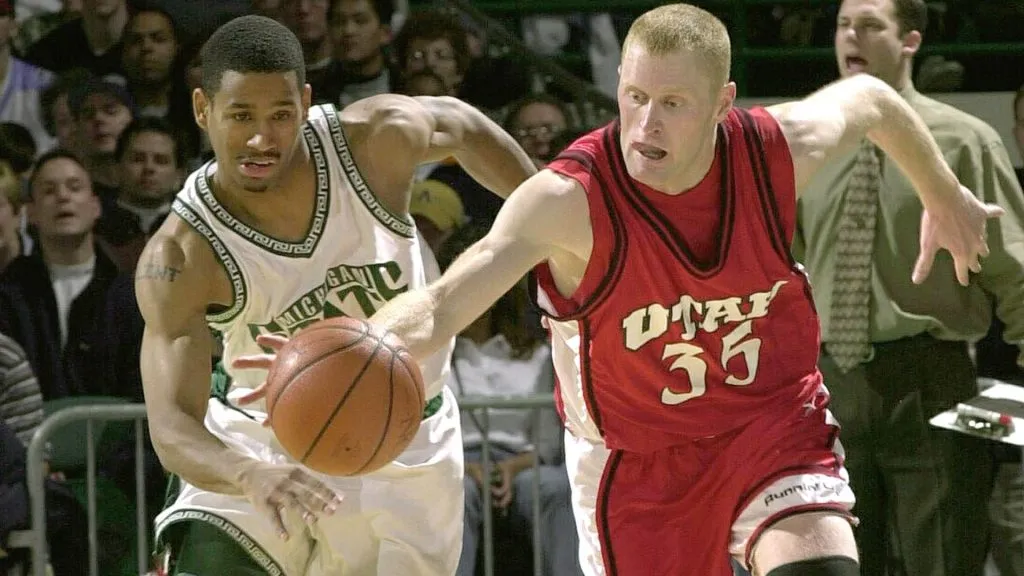
Utah’s Jeff Johnsen, right, reaches for the ball in front of Michigan State’s Seth Black in round two of the Midwest Region of the NCAA Men’s Basketball Championship in 2000. (Source: Doug Pensinger)
The Michigan State Spartans claimed the 2000 NCAA Championship, defeating the Florida Gators 89–76 in a dominant performance. Held at the RCA Dome in Indianapolis, Indiana, Michigan State, under coach Tom Izzo, showcased their defensive toughness and balanced offense.
With standout performances from Mateen Cleaves and Morris Peterson, they pulled away from Florida in the second half to secure their first national title since 1979. This victory established the Spartans as one of the elite programs in college basketball.
2001: Duke Blue Devils
In 2001, the Duke Blue Devils secured their third NCAA Championship under head coach Mike Krzyzewski, defeating the Arizona Wildcats 82–72 in an exciting final held at the Metrodome in Minneapolis, Minnesota.
The Blue Devils were led by standout players like Shane Battier, who was named the Final Four’s Most Outstanding Player, and had a well-balanced offensive attack. Arizona’s rally in the second half fell short, as Duke’s superior execution in the final minutes clinched the victory. This title reinforced their dominance in college basketball during the early 2000s.
2002: Maryland Terrapins
April 1, 2002: Maryland (@TerrapinHoops) beats Indiana 64-52 to win the National Championship. pic.twitter.com/561LW8r0lW
— This Day In Sports Clips (@TDISportsClips) April 2, 2022
The 2002 NCAA Championship game was a dramatic showdown in which the Maryland Terrapins defeated the Indiana Hoosiers 64–52 to win their first-ever national title. Held at the Georgia Dome in Atlanta, Georgia, Maryland, led by coach Gary Williams, played a disciplined game, combining strong defense and effective offense to take down the Hoosiers.
The Terrapins’ victory was highlighted by a standout performance from Juan Dixon, who was named the Final Four’s Most Outstanding Player. Maryland’s first-ever title marked a major milestone for the program and solidified its place in NCAA history.
2003: Syracuse Orange
In a thrilling 2003 NCAA Tournament, the Syracuse Orange triumphed over the Kansas Jayhawks 81–78 in a historic final. The game, played at the Louisiana Superdome in New Orleans, featured an incredible performance from Syracuse’s Carmelo Anthony, who led the Orange to their first-ever national title.
The game was filled with high drama, including a critical three-pointer by Hakim Warrick to seal the win. Their victory under coach Jim Boeheim was a crowning achievement for one of the most exciting tournaments in recent memory.
2004: UConn Huskies
In 2004, the UConn Huskies captured their second NCAA Championship in a dominant 82–73 win over the Georgia Tech Yellow Jackets. The final, played at the Alamodome in San Antonio, Texas, saw UConn’s depth and defensive prowess take center stage.
With standout performances from Emeka Okafor, who was named the Final Four Most Outstanding Player, UConn’s defense shut down Georgia Tech’s offense, allowing them to build a comfortable lead. This victory solidified UConn’s status as a rising force in college basketball under head coach Jim Calhoun.
2005: North Carolina Tar Heels
In a thrilling 2005 final, the North Carolina Tar Heels defeated the Illinois Fighting Illini 75–70 in one of the most exciting games in NCAA history. Held at the Edward Jones Dome in St. Louis, Missouri, the game featured back-and-forth action with multiple lead changes.
North Carolina, led by Roy Williams and standout performances from players like Tyler Hansbrough and Raymond Felton, emerged victorious with a strong second half, holding off Illinois’ late-game push. The Tar Heels’ victory marked their fourth national title and was a defining moment in college basketball.
2006: Florida Gators
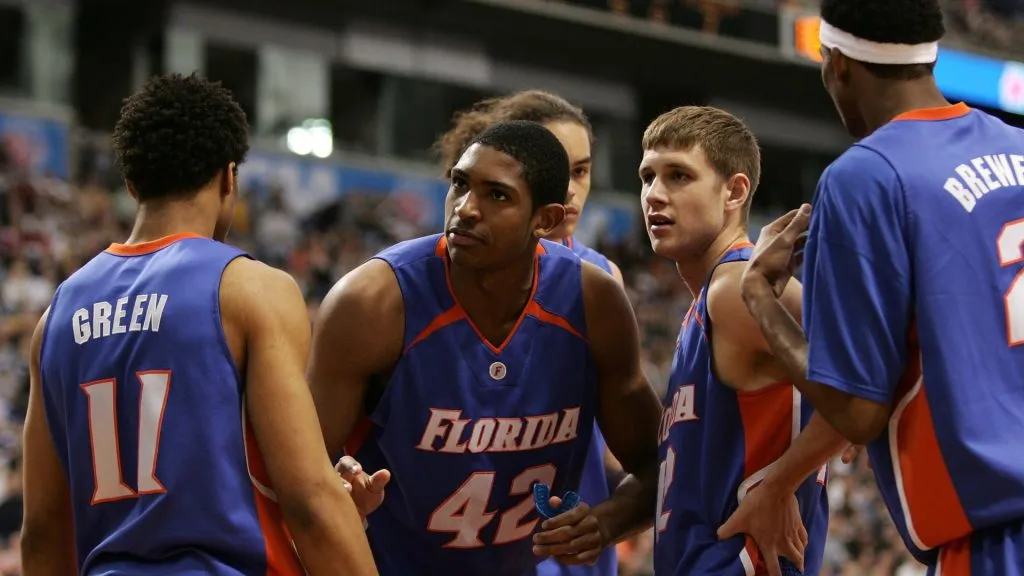
Taurean Green and his teammates talk in a hudle against the Villanova Wildcats during their Minneapolis Regional Final of the 2006 NCAA Divison I Men’s Basketball Tournament. (Source: Elsa/Getty Images)
In 2006, the Florida Gators took home their first-ever NCAA Championship title, defeating the UCLA Bruins 73–57 at the RCA Dome in Indianapolis, Indiana. The Gators, led by Billy Donovan, relied on a stifling defense and efficient offense to overpower the Bruins.
Joakim Noah was named the Final Four’s Most Outstanding Player, showcasing his versatility and leadership on both ends of the floor. Florida’s championship victory marked the beginning of an era of dominance, as they would return to claim another title in 2007.
2007: Florida Gators
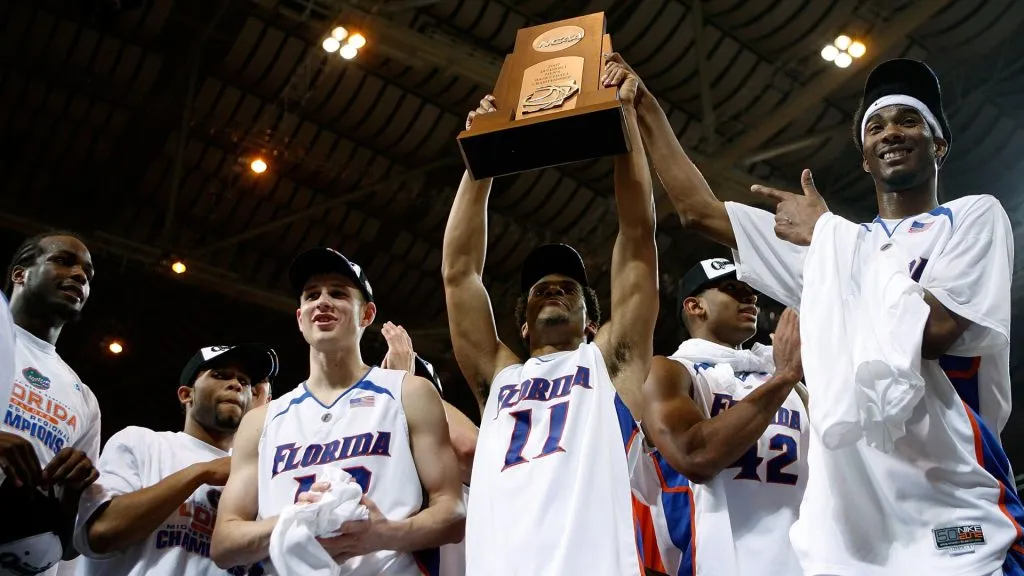
The Florida Gators celebrate defeating the Oregon Ducks in the midwest regionals of the NCAA Men’s Basketball Tournament at the Edward Jones Dome on March 25, 2007. (Source: Dilip Vishwanat/Getty Images)
The Florida Gators defended their title in 2007, defeating the Ohio State Buckeyes 84–75 in a memorable final at the Georgia Dome in Atlanta, Georgia. The Gators, under coach Billy Donovan, showcased their depth and versatility, dominating the second half of the game to secure back-to-back championships.
With star players like Joakim Noah, Al Horford and Corey Brewer, Florida proved to be a well-balanced team capable of both defensive and offensive mastery. This victory further cemented Florida’s place as a powerhouse in college basketball.
2008: Kansas Jayhawks
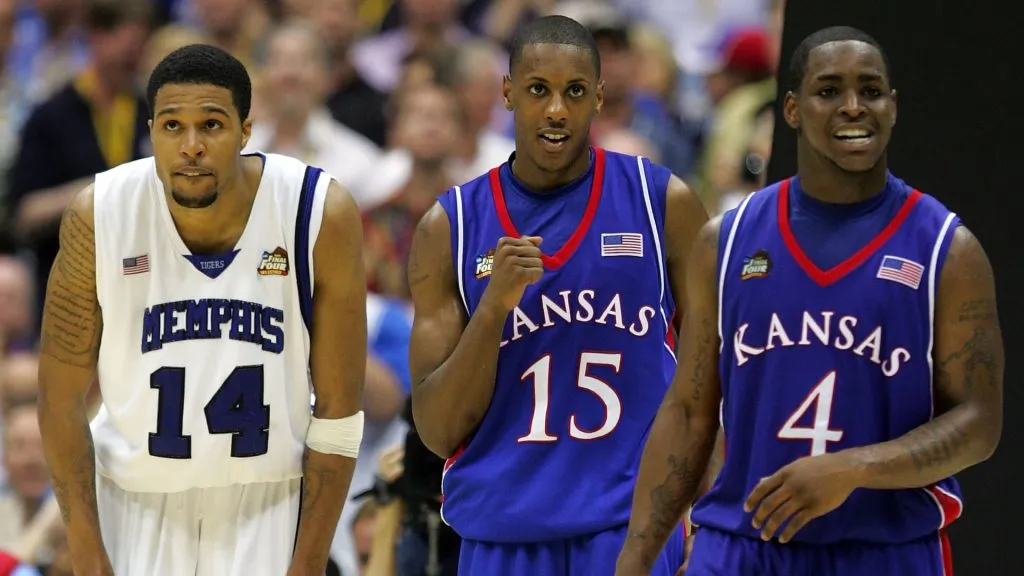
Mario Chalmers reacts in overtime along with teammate Sherron Collinsas Chris Douglas-Roberts of the Memphis Tigers looks on during the 2008 NCAA Men’s National Championship game. (Source: Ronald Martinez/Getty Images)
The 2008 final was an instant classic, with the Kansas Jayhawks coming out on top in a thrilling 75–68 overtime victory against the Memphis Tigers. Held at the Alamodome in San Antonio, Texas, this game was a rollercoaster of emotions. Kansas, coached by Bill Self, fought back from a late deficit to send the game into overtime, where they pulled away with clutch plays and key defensive stops.
The victory was sealed by Mario Chalmers‘ iconic three-pointer to tie the game in the final seconds of regulation, making this one of the most unforgettable moments in NCAA basketball history.
2009: North Carolina Tar Heels
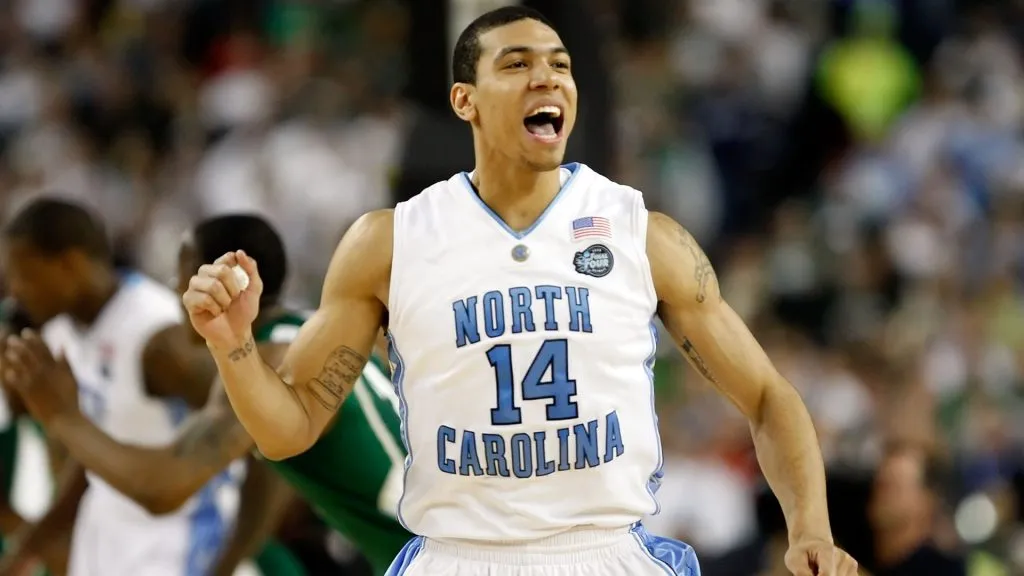
Danny Green #14 reacts after making a three-pointer in the first half against the Michigan State Spartans during the 2009 NCAA Division I Men’s Basketball National Championship game. (Source: Streeter Lecka/Getty Images)
In 2009, the North Carolina Tar Heels dominated the final with a spectacular 89–72 victory over the Michigan State Spartans. The game, played at Ford Field in Detroit, Michigan, reflected the unstoppable force of the Tar Heels, led by the experienced Roy Williams.
With an explosive offense and aggressive defense, North Carolina controlled the pace of the game from start to finish, proving their strength and unity. The victory was celebrated with enthusiasm and pride, marking another memorable chapter in the legacy of one of college basketball’s greatest programs.
2010: Duke Blue Devils
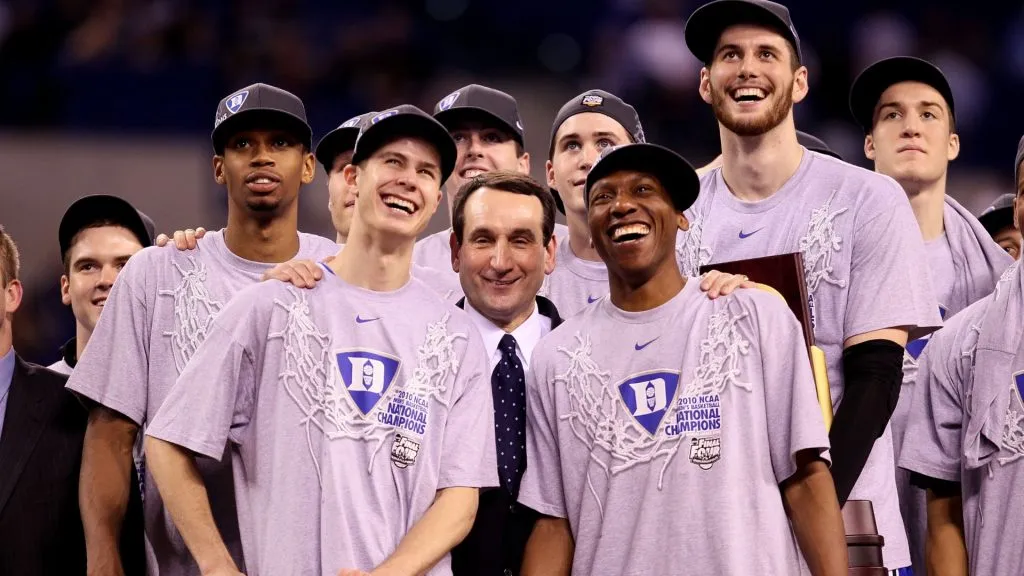
Lance Thomas, Jon Scheyer,Mike Krzyzewski, Nolan Smith and Brian Zoubek celebrate after they won 61-59 against the Butler Bulldogs during the 2010 NCAA Division I Men’s Basketball National Championship game. (Source: Andy Lyons/Getty Images)
The 2010 final was a tense and precise duel, where the Duke Blue Devils triumphed 61–59 over the Butler Bulldogs. Held at Lucas Oil Stadium in Indianapolis, Indiana, the final was full of intense moments, where every play seemed to decide the outcome.
Under the legendary Mike Krzyzewski, Duke demonstrated a perfect balance of offensive aggression and defensive solidity, executing decisive plays in the final moments that made the difference. The tension remained until the last second, solidifying a victory that reaffirmed Duke’s greatness and legacy in college basketball.
2011: UConn Huskies
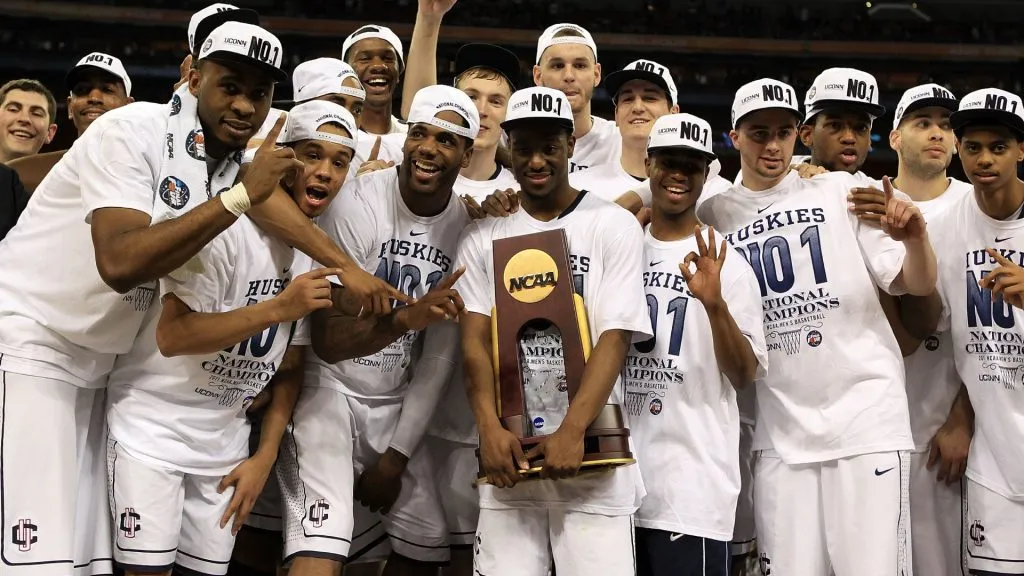
Kemba Walker holds the trophy as he and his team celebrate after defeating the Butler Bulldogs to win the National Championship Game of the 2011 NCAA Division I Men’s Basketball Tournament. (Source: Streeter Lecka/Getty Images)
In 2011, the UConn Huskies delivered one of the most memorable March Madness finals, defeating the Butler Bulldogs 53–41. Held at NRG Stadium in Houston, Texas, the final was marked by relentless defense and a calculated offense that allowed the team to control every phase of the game.
Under Jim Calhoun, UConn showed a strategic order that neutralized the opponent’s best plays, maintaining the advantage in a game where every possession was crucial. The Huskies’ effectiveness and collective commitment resulted in a victory that was etched in history for its quality and precision in the most critical moments.
2012: Kentucky Wildcats
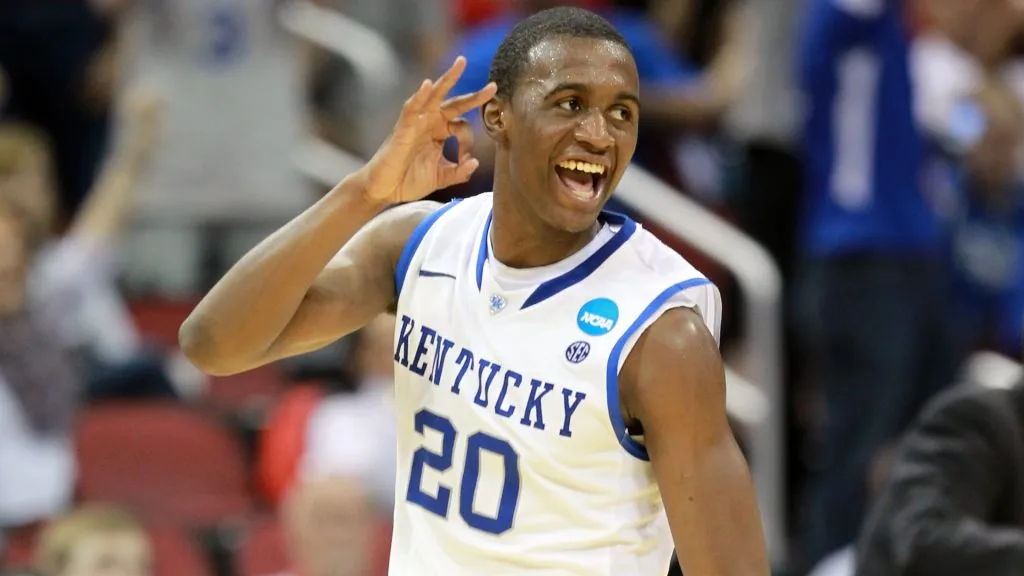
Doron Lamb reacts after he made a 3-point shot in the first half against the Western Kentucky Hilltoppers during the second round of the 2012 NCAA Men’s Basketball Tournament. (Source: Andy Lyons/Getty Images)
The 2012 tournament witnessed the resurgence of the Kentucky Wildcats, who were crowned champions with a 67–59 victory over the Kansas Jayhawks. The final, played at the majestic Caesars Superdome in New Orleans, Louisiana, reflected the team’s commitment and tactical ability.
Under John Calipari’s direction, Kentucky combined youthful energy with the experience needed to overcome every obstacle on the court. Every play was the result of meticulous planning, allowing the Wildcats to control the game and secure a victory that reaffirmed their place among the greats in college basketball.
2013: Louisville Cardinals
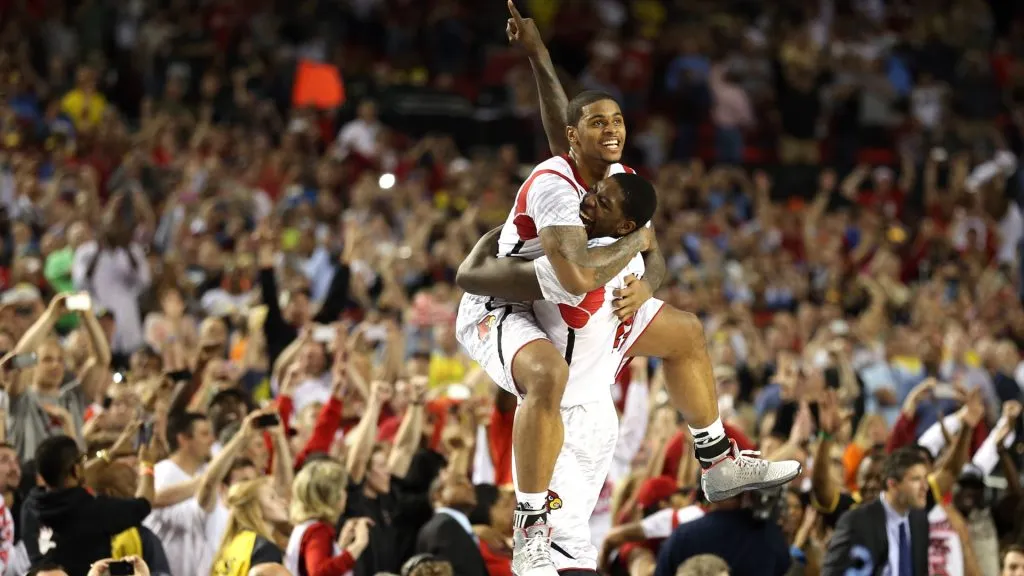
Chane Behanan (top) #21 and Montrezl Harrell #24 of the Louisville Cardinals celebrate after they won 82-76 against the Michigan Wolverines during the 2013 NCAA Men’s Final Four Championship. (Source: Andy Lyons/Getty Images)
The 2013 final is remembered both for the intensity of the game and the controversy that followed. The Louisville Cardinals, led by Rick Pitino, defeated the Michigan Wolverines 82–76 in overtime at the Georgia Dome in Atlanta, Georgia.
The game was filled with spectacular plays and moments of uncertainty, where the pace of the game accelerated in the final moments. However, it is important to remember that this title was later vacated due to sanctions imposed by the NCAA, adding a layer of controversy to what was initially celebrated as a thrilling and passionate victory.
2014: UConn Huskies
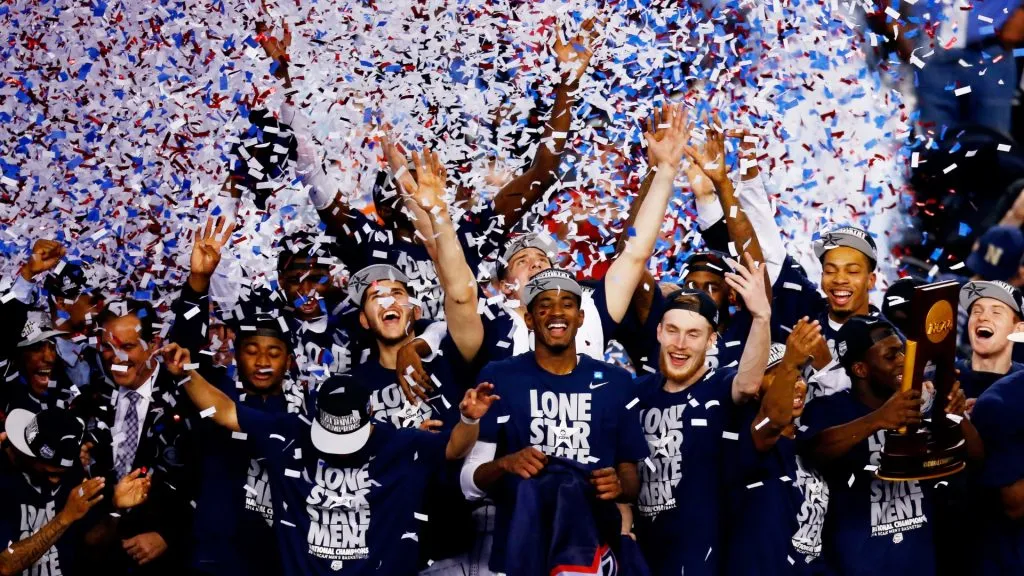
The Connecticut Huskies celebrate after defeating the Kentucky Wildcats 60-54 in the NCAA Men’s Final Four Championship at AT&T Stadium on April 7, 2014. (Source: Tom Pennington/Getty Images)
In 2014, the UConn Huskies delivered a demonstration of strategy and discipline in a final where they defeated the Kentucky Wildcats 60–54. The game, held at AT&T Stadium in Arlington, Texas, was defined by solid defense and an attack that capitalized on every opportunity, reflecting the meticulous planning of the team.
Under Kevin Ollie’s direction, every play seemed perfectly rehearsed, allowing UConn to build and maintain a lead until the end. The defensive strength and collective commitment combined to make this final a memorable encounter where every second counted toward achieving glory in March Madness.
2015: Duke Blue Devils
The 2015 tournament gave fans a final full of emotion and determination, with the Duke Blue Devils defeating the Wisconsin Badgers 68–63. With Mike Krzyzewski at the helm, the Duke team displayed a blend of collective play and individual leadership that allowed them to keep their composure even in the most critical moments.
Held at Lucas Oil Stadium in Indianapolis, Indiana, the final was a constant back-and-forth of advantage, where every point scored reflected the intensity and meticulous preparation of the players. Duke’s victory was a clear testament to the legacy of excellence and competitive spirit that defines this iconic program.
2016: Villanova Wildcats
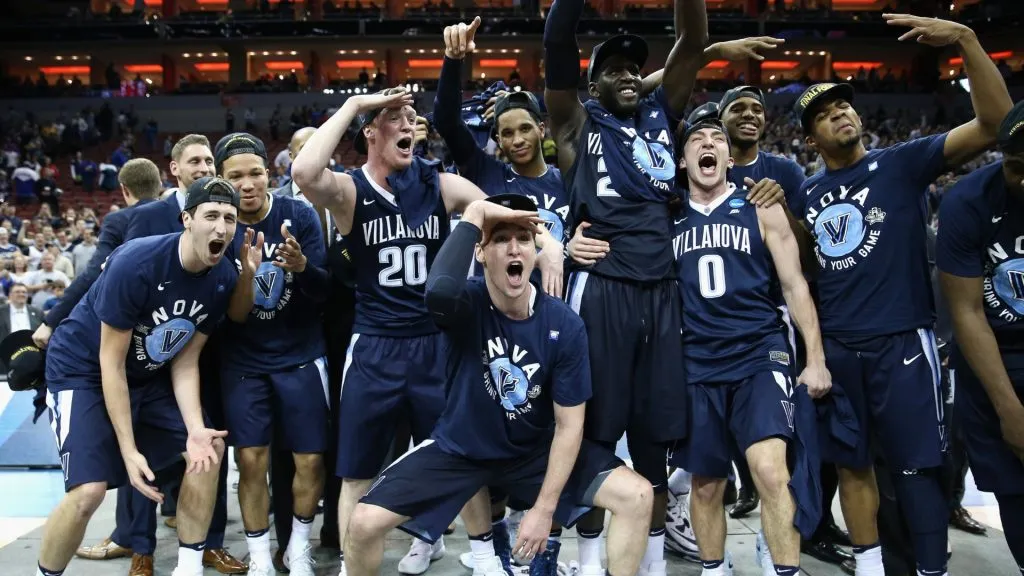
The Villanova Wildcats celebrate defeating the Kansas Jayhawks 64-59 during the 2016 NCAA Men’s Basketball Tournament South Regional. (Source: Andy Lyons/Getty Images)
The 2016 final stood out for its drama and the intensity of every play. The Villanova Wildcats were crowned champions with a close 77–74 victory over the North Carolina Tar Heels, in a game that was decided in the final seconds. Under the guidance of the visionary Jay Wright, every minute at Lucas Oil Stadium in Indianapolis, Indiana, was maximized.
The combination of aggressive defense and lethal offense allowed Villanova to capitalize on the most critical opportunities, making this final a true battle of wills and strategies, where perseverance and teamwork were the absolute protagonists.
2017: North Carolina Tar Heels
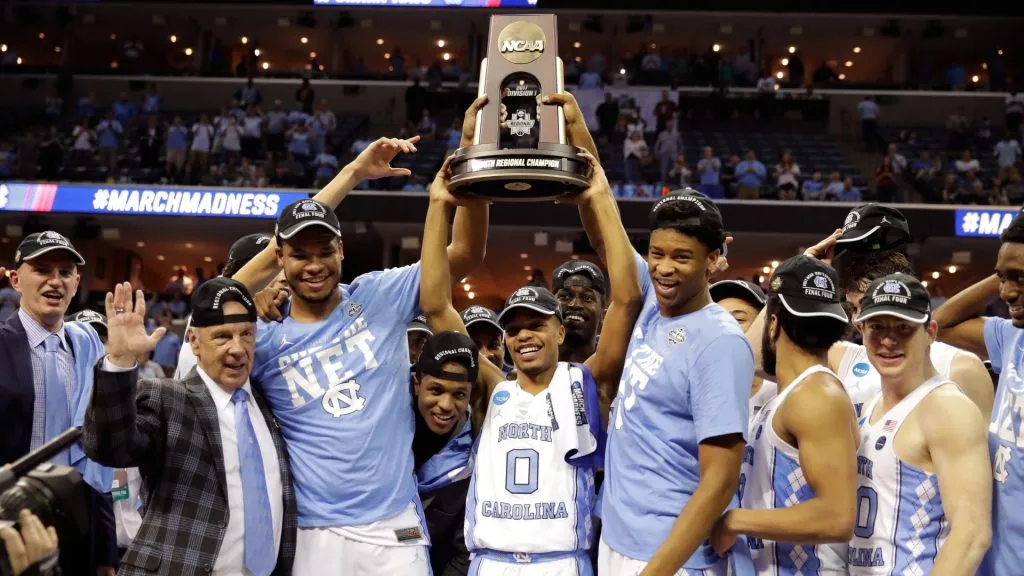
The North Carolina Tar Heels hold up the South Regional Champion trophy after defeating the Kentucky Wildcats during the 2017 NCAA Men’s Basketball Tournament South Regional. (Source: Andy Lyons/Getty Images)
The 2017 final became a true sports spectacle, where the North Carolina Tar Heels took the title by defeating the Gonzaga Bulldogs 71–65. Directed by the experienced Roy Williams, the Tar Heels showed a perfect blend of aggression and tactical control.
The game, held at the University of Phoenix Stadium in Glendale, Arizona, was full of bold plays, leadership changes, and decisive moments that kept the audience on the edge of their seats.
North Carolina’s ability to adjust its strategy in real-time and respond to every situation with determination was key to securing a victory that will be remembered in the history of the tournament.
2018: Villanova Wildcats
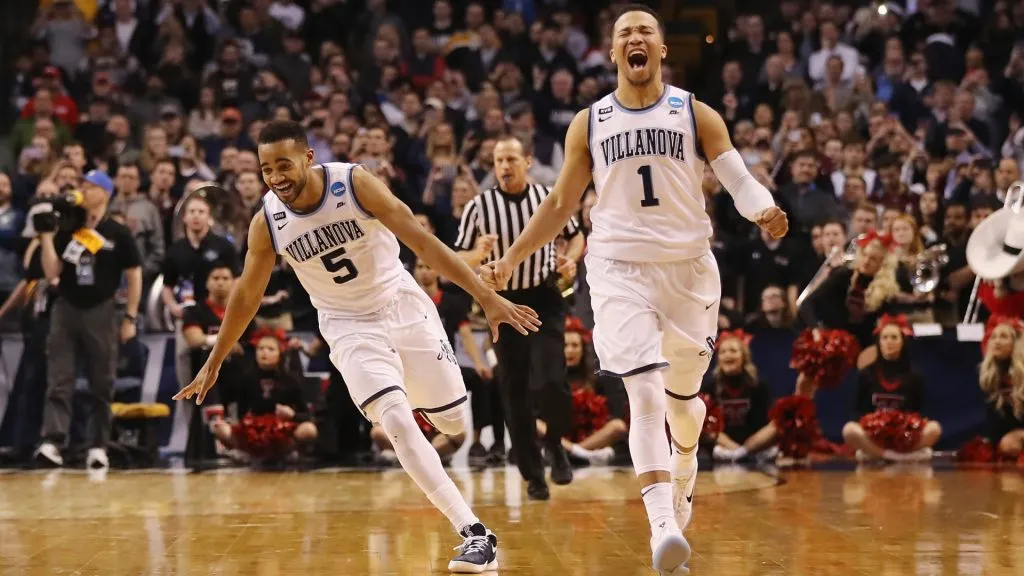
Phil Booth #5 and Jalen Brunson #1 of the Villanova Wildcats celebrate defeating the Texas Tech Red Raiders 71-59 in the 2018 NCAA Men’s Basketball Tournament East Regional. (Source: Elsa/Getty Images)
In 2018, the Villanova Wildcats once again proved their quality and elite status in college basketball. With a 79–62 victory over the Michigan Wolverines, the final played at the Alamodome in San Antonio, Texas, was an exhibition of precision, technique, and passion.
Jay Wright, Villanova’s strategist, orchestrated a game where every possession and every play seemed meticulously calculated to destabilize the opponent. The team’s performance, marked by solid defense and a devastating offense, left an indelible mark on the memories of fans, solidifying Villanova’s reputation as one of the most successful and admired programs in March Madness.
2019: Virginia Cavaliers
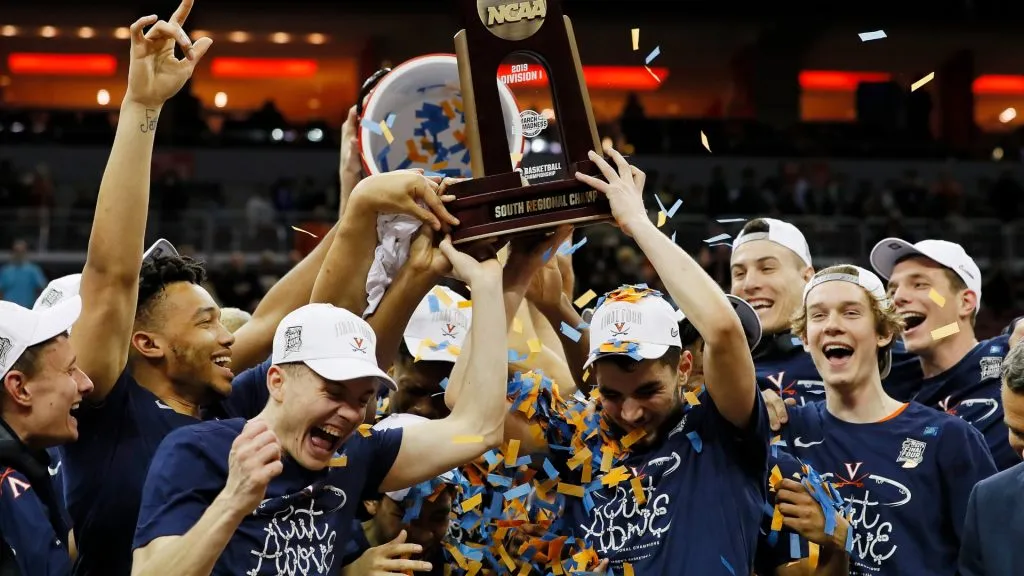
The Virginia Cavaliers raise the trophy after defeating the Purdue Boilermakers 80-75 in overtime of the 2019 NCAA Men’s Basketball Tournament South Regional. (Source: Kevin C. Cox/Getty Images)
The 2019 final turned into a true battle of endurance and tactics. The Virginia Cavaliers, led by Tony Bennett, triumphed 85–77 in overtime against the Texas Tech Red Raiders at U.S. Bank Stadium in Minneapolis, Minnesota. The game was filled with tense moments, where each basket and strategic play seemed to make the difference.
Virginia’s determination and collective commitment were evident at every stage of the game, turning a highly demanding day into a victory celebrated for its precision, courage, and ability to overcome adversity in the final moments of the match.
2021: Baylor Bears
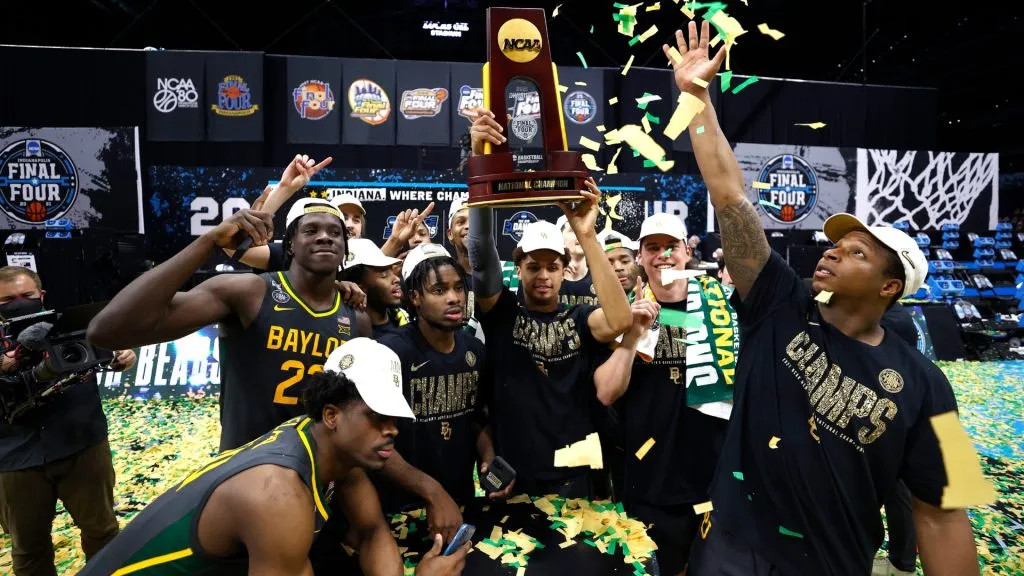
MaCio Teague #31 of the Baylor Bears holds up the trophy after defeating the Gonzaga Bulldogs 86-70 in the National Championship game of the 2021 NCAA Men’s Basketball Tournament. (Source: Jamie Squire/Getty Images)
In 2021, the Baylor Bears became champions with a commanding 86–70 victory over the Gonzaga Bulldogs. The final, played at Lucas Oil Stadium in Indianapolis, Indiana, showcased offensive power and a defense that prevented the opponent from finding their rhythm.
Scott Drew, leading a well-prepared team, implemented a meticulous game plan that capitalized on every opportunity and neutralized opposing threats. The intensity of the game, coupled with flawless execution in key moments, made this victory a clear example of how strategy and team cohesion can transform a sporting day into a masterpiece of college basketball.
2022: Kansas Jayhawks
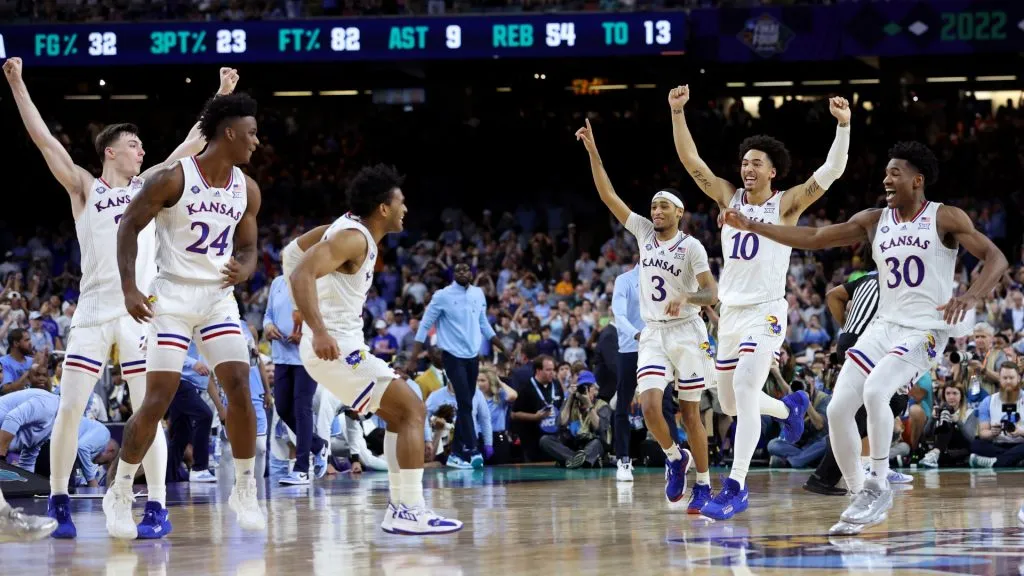
Kansas Jayhawks players celebrate after defeating the North Carolina Tar Heels 72-69 during the 2022 NCAA Men’s Basketball Tournament National Championship. (Source: Jamie Squire/Getty Images
The 2022 tournament left an indelible mark thanks to the brilliant performance of the Kansas Jayhawks. In a nail-biting final, they defeated the North Carolina Tar Heels 72–69 at the historic Caesars Superdome in New Orleans, Louisiana.
Under the guidance of the charismatic Bill Self, every minute of the game was crucial as the team combined solid defense with precise offense to overcome a relentless opponent.
The final was defined by a series of strategic plays and unshakable determination, which thrilled fans to the last second, proving that Kansas excels in the most critical moments of the tournament.
2023: UConn Huskies
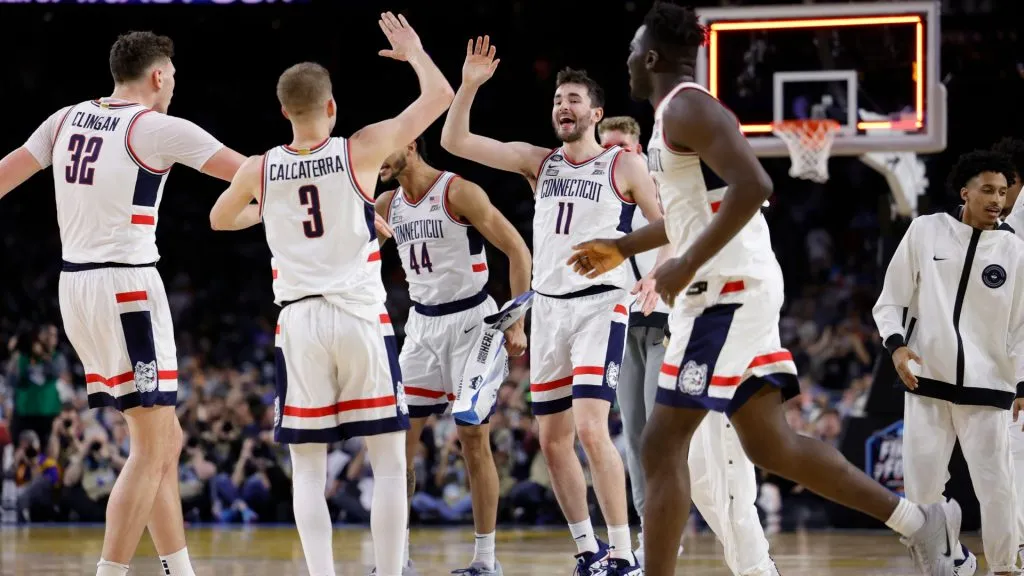
Alex Karaban and teammates celebrate a three-point basket at the end of the first half against the Miami Hurricanes during the NCAA Men’s Basketball Tournament Final Four semifinal game. (Source: Carmen Mandato/Getty Images)
The 2023 edition showcased the strength and tradition of the UConn Huskies. With a 76–59 victory over the San Diego State Aztecs, the team, led by coach Dan Hurley, demonstrated excellent precision in execution and remained calm in critical moments.
The NRG Stadium in Houston, Texas, became the perfect stage for a game where every basket counted, and the atmosphere was filled with euphoria and tension. UConn’s performance combined tactical discipline with individual skill, allowing the team to further cement its legacy and reaffirm its position as one of the most iconic programs in March Madness history.
2024: UConn Huskies
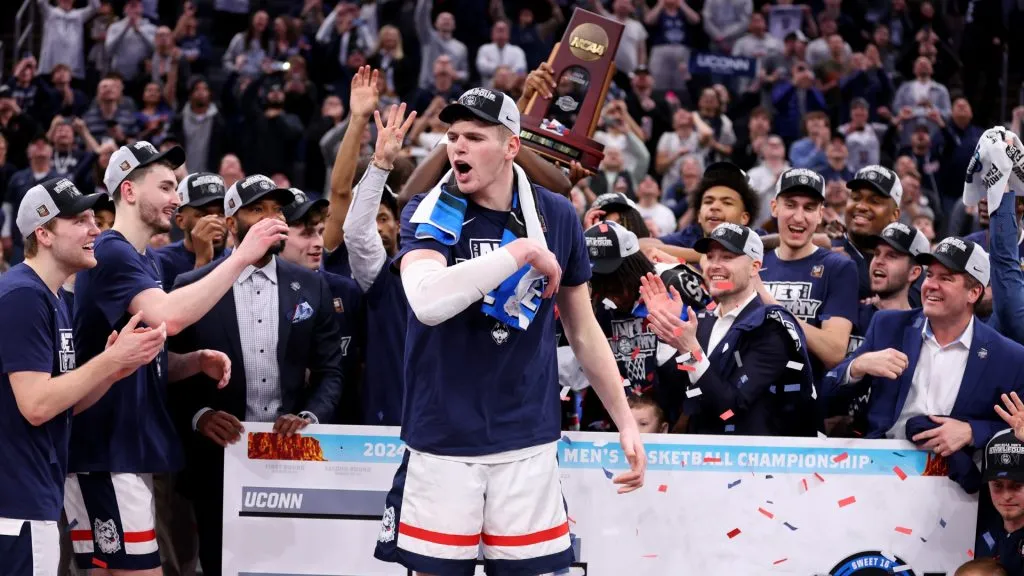
Donovan Clingan #32 of the Connecticut Huskies celebrates with his teammates after defeating the Illinois Fighting Illini in the Elite 8 round of the NCAA Men’s Basketball Tournament in 2024. (Source: Michael Reaves/Getty Images)
In 2024, the UConn Huskies captured their sixth NCAA Men’s Basketball Championship in a display of composure and strategic brilliance. On April 8, 2024, at the iconic State Farm Stadium in Glendale, Arizona, UConn defeated the Purdue Boilermakers with a final score of 75–60.
Under the leadership of coach Dan Hurley, the Huskies combined a tenacious defense with an efficient, high-tempo offense, gradually building a commanding lead as the game progressed. Every quarter saw key adjustments and clutch plays that underscored their resilience and tactical depth, ultimately securing a victory that resonated with fans nationwide.
2025: Florida Gators
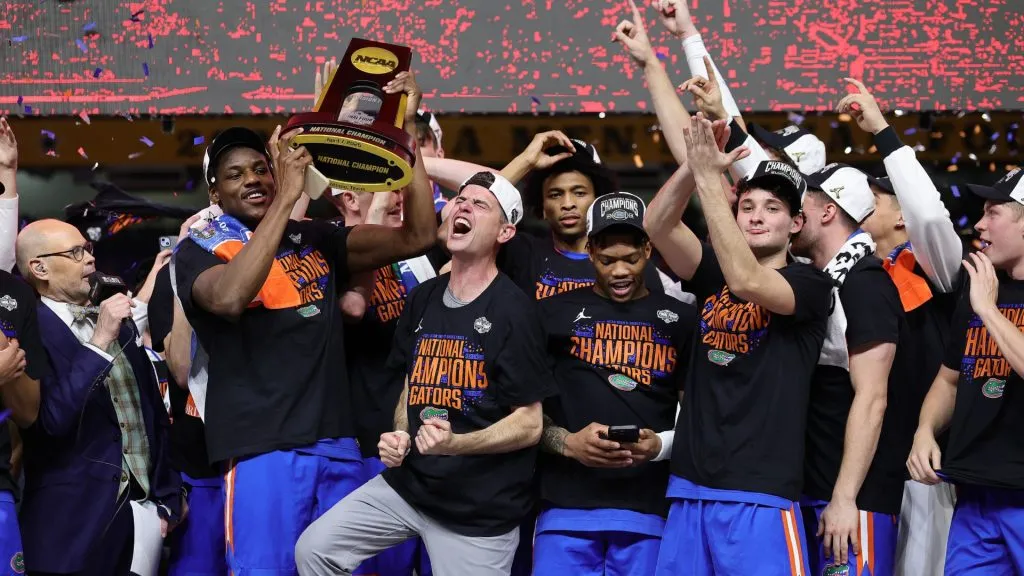
The Florida Gators celebrate after defeating the Houston Cougars in the National Championship of the NCAA Men’s Basketball Tournament at the Alamodome on April 07, 2025. (Source: Alex Slitz/Getty Images)
In 2025, the Florida Gators crafted a memorable chapter in college basketball history during March Madness. On April 7, 2025, at the historic Alamodome in San Antonio, Texas, the Gators emerged victorious over the Houston Cougars with a thrilling final score of 65–63.
Coached by Todd Golden, whose innovative strategies reshaped the team’s approach, the Gators showcased exceptional grit by erasing a 12-point deficit in the second half. Their performance was marked by decisive defensive stops and perfectly-timed offensive bursts that turned the tide of the game, reflecting both their collective resilience and determination.
This hard-fought victory not only earned the Gators their third NCAA championship but also underscored their evolution as a formidable force in collegiate basketball, leaving an indelible impact on the legacy of March Madness.