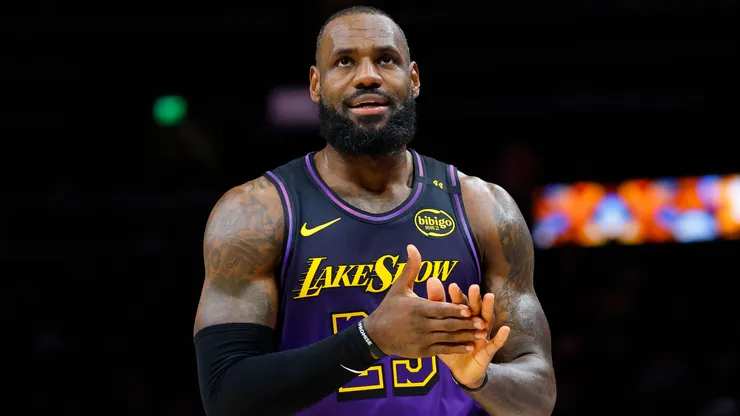
Minnesota Timberwolves legend and Hall of Famer Kevin Garnett recently criticized how NBA fans and analysts fail to fully appreciate the unprecedented brilliance of LeBron James, who continues to dominate at age 40. Garnett passionately highlighted the need to view the game through a fresh perspective, emphasizing that LeBron’s sustained excellence is an extraordinary achievement in the world of sports.
“We’ve been taught to see the game through this lens, and there’s a new lens now. We keep looking at it the old way,” Garnett said in a fiery rant. “LeBron James, 40 years old. He banged on someone. He banged on someone at 40! We can’t say that wasn’t dope. Get outta here. Are you serious?”
Garnett didn’t hold back as he continued: “That man dunked on someone at 40. And guess what we did? We just said, ‘LeBron James with another dunk,’ and moved on. That’s because most people haven’t played at 40, haven’t felt 40, and definitely haven’t dunked on someone at 40. Man, we gotta do a better job of appreciating greatness.”
Garnett’s frustration reflects the rarity of LeBron’s accomplishments. In a league where most players see significant declines in their late 30s, LeBron’s ability to remain among the NBA’s elite is nothing short of phenomenal. His recent posterizing dunk over Dallas Mavericks rookie Dereck Lively II epitomizes his continued dominance, showing that even at 40, he can still produce jaw-dropping moments.
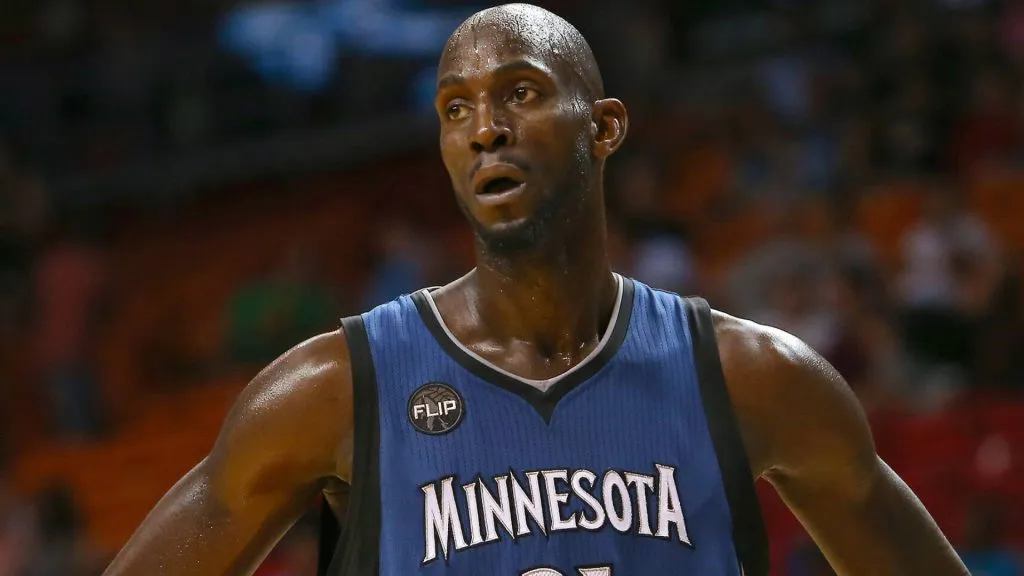
The Minnesota Timberwolves Kevin Garnett during a 2015 game against the Miami Heat at the AmericanAirlines Arena in Miami
LeBron vs. past legends
LeBron James’ longevity and dominance stand in stark contrast to other basketball legends who played into their 40s. Michael Jordan, for example, retired at age 40 after two seasons with the Washington Wizards, averaging a respectable 20 points per game. While Jordan’s final years solidified his legacy as a mentor and leader, they didn’t feature the MVP-caliber performances that defined his prime.
Similarly, Kareem Abdul-Jabbar played until he was 42, contributing to the Los Angeles Lakers’ success in his later years. By his 21st season, however, Kareem had shifted to a more complementary role, relying on his skyhook and veteran savvy rather than physical dominance.
LeBron, on the other hand, continues to be the focal point of his team. He leads in critical statistical categories, logs significant minutes, and remains a nightly threat to take over games. His unmatched dedication to maintaining his body—spending millions annually on recovery, nutrition, and advanced training—has set a new standard for athletes striving for longevity.
Redefining the narrative
Garnett’s impassioned plea underscores a larger issue in how fans and analysts perceive greatness in real time. LeBron’s continued dominance challenges the traditional boundaries of an athlete’s prime and sets a new benchmark for future generations. His impact transcends the court, redefining what it means to compete at the highest level in the latter stages of a career.
As Garnett put it, “We gotta do a better job of looking through this new lens and glorifying the game. In everything I love, we have to appreciate what’s happening in front of us.” LeBron James isn’t just playing basketball at 40—he’s rewriting the rules of longevity, resilience, and greatness in sports.