
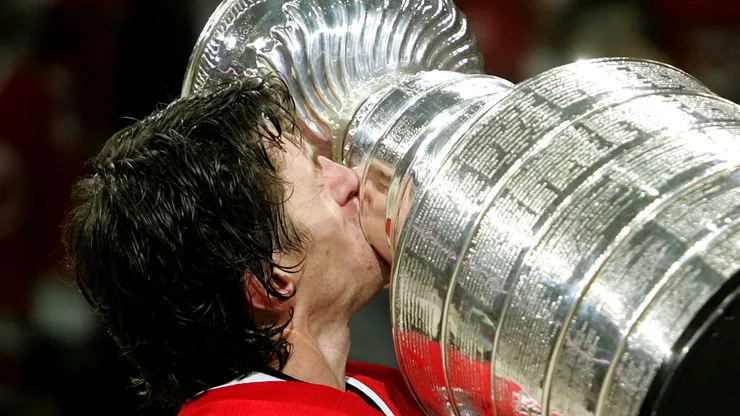
It’s not just a trophy, it’s a piece of living history. The Stanley Cup has been kissed, hoisted, dented and even used as a cereal bowl. But behind every champagne-soaked celebration lies a legacy that began with an aristocrat.
Since its humble beginnings in the 1890s, it has grown into a symbol of NHL greatness, passed from legend to legend. Its journey is filled with quirks, myths and rituals that make it as unique as the game itself.
Over the decades, it has collected not only names and victories, but also stories—some official, others whispered in locker rooms. Its evolving form and folklore reflect a sport steeped in grit, glory and a deep reverence for tradition.
How the Stanley Cup got its name
The Stanley Cup derives its name from Lord Frederick Arthur Stanley, the 16th Earl of Derby and Governor General of Canada from 1888 to 1893. His passion for ice hockey was ignited after watching a game during Montreal‘s 1889 Winter Carnival.

Stanley Cup (Source: @RN_Hockey)
Captivated by the sport, he and his family became ardent supporters, with his sons even forming their own team, the Rideau Hall Rebels. Recognizing the need for a symbol of hockey supremacy, he donated a silver bowl in 1892 to be awarded to Canada’s top amateur team.
This trophy, initially known as the Dominion Hockey Challenge Cup, was first awarded in 1893 to the Montreal Hockey Club. Over time, the Cup transitioned from an amateur award to the pinnacle of professional hockey achievement.
Its association with Lord Stanley not only honors his contribution to the sport but also underscores the Cup’s deep-rooted history in Canadian culture. Today, the it stands as a testament to his vision and the enduring legacy in North America.
The Stanley Cup’s evolution over the years
The Cup has undergone significant transformations since its inception. Originally a modest silver bowl, the trophy expanded in 1924 to include engraved names of winning team members, leading to the addition of bands beneath the bowl.
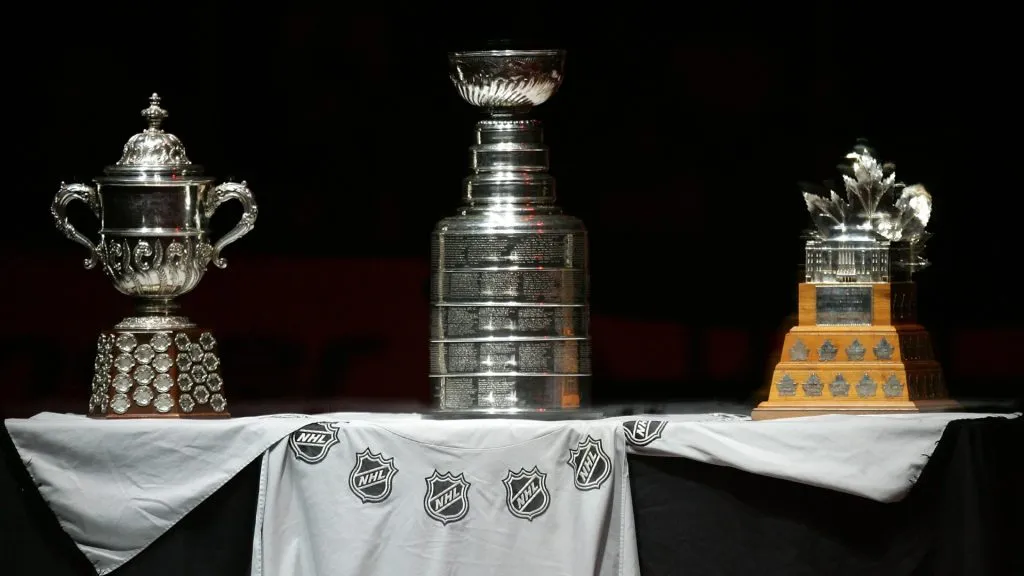
The Stanley Cup is placed between the Clarence Campbell Trophy and the Conn Smythe Trophy during a pre-game ceremony honoring the Anaheim Ducks winning the 2007 Stanley Cup. (Source: Robert Laberge/Getty Images)
This practice not only honored individual contributions but also necessitated structural changes to accommodate the growing list of champions. In 1948, the it was redesigned into a two-piece trophy with a barrel-shaped base and a removable bowl.
The current version, introduced in 1958, features a ceremonial bowl atop three tiered bands and a collar, with five uniform bands at the base. These modifications have solidified the Stanley Cup’s status as a unique and revered symbol in professional sports.
Interesting facts about the Stanley Cup
The Stanley Cup is not just a trophy; it’s a repository of fascinating stories and traditions. One of its unique features is that it’s the only major professional sports trophy passed from champion to champion, rather than being reproduced each year.
This practice allows players to hoist the same Cup as legends before them, creating a tangible link across generations. It has also been part of some unconventional moments.
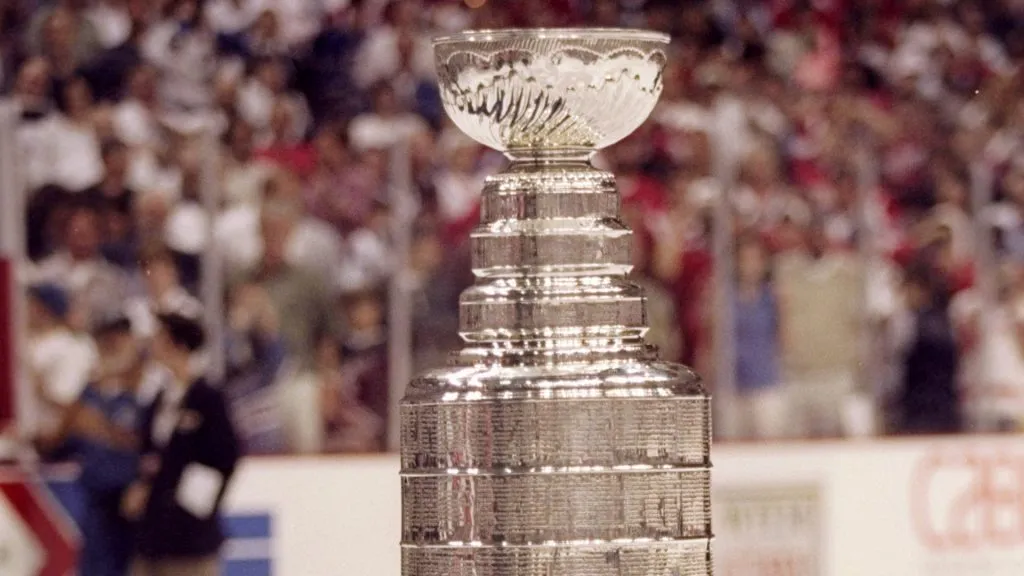
General view of the Stanley Cup trophy during the Stanley Cup Finals game between the Detroit Red Wings and the Washington Capitals in 1998. (Source: Getty Images)
It has traveled to various countries, been used to serve everything from cereal to caviar and even served as a baptismal font for a player’s child. These anecdotes contribute to the Cup’s mystique and highlight its significance beyond the rink.
Superstitions and traditions of the Stanley Cup
Superstitions are deeply ingrained in hockey culture, and the Stanley Cup is at the center of many. A prevalent belief is that touching the Cup before officially winning it brings bad luck. As a result, players often avoid contact with the trophy until they’ve earned the right to hoist it.
Another tradition involves players spending a day with the Cup during the off-season, a practice that began with the 1994-95 New Jersey Devils. This personal time has led to the Cup being part of various ceremonies and adventures, further embedding it into the personal narratives of players and fans alike.
Famous moments in Stanley Cup history
The Stanley Cup’s history is replete with memorable moments that have defined the sport. In 1970, Bobby Orr scored an overtime goal to clinch the championship for the Boston Bruins, captured in an iconic photograph of him soaring through the air.
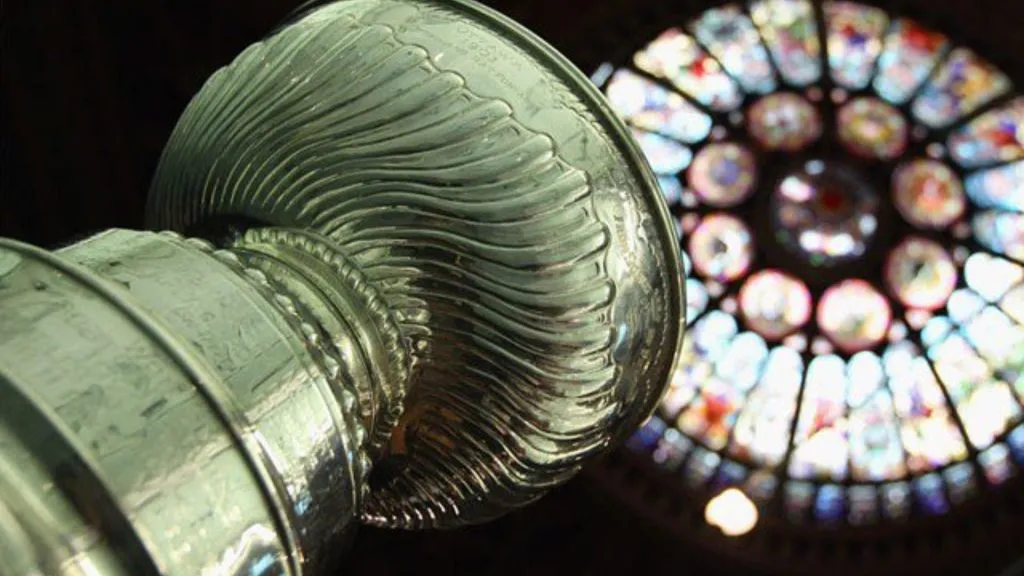
Stanley Cup (Source: @Canada)
Another unforgettable event is the “Miracle on Manchester” in 1982, where the Los Angeles Kings overcame a 5-0 deficit to defeat the Edmonton Oilers 6-5 in overtime, marking the largest comeback in NHL playoff history.
Stanley Cup trivia you should know
- The Montreal Canadiens hold the record for the most Stanley Cup wins, with 24 championships to their name.
- The Cup has traveled to over 25 countries, including Afghanistan, Australia, and Sweden, showcasing its global appeal.
- Each championship team is allowed to engrave up to 55 names on the Cup, a tradition that began in 1924.
- The current Stanley Cup weighs approximately 34.5 pounds (15.5 kilograms) and stands about 35.25 inches tall.
- The Cup has been used for various purposes, from serving food and drinks to being a baptismal font, reflecting its unique place in sports culture.