
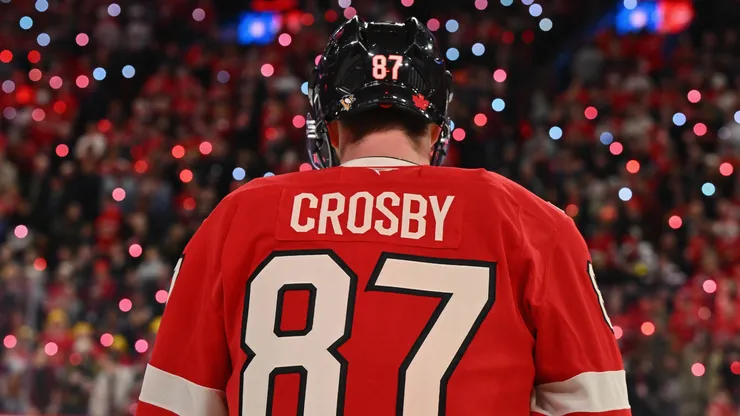
In the world of the National Hockey League, superstitions and peculiar rituals are as common as goals and assists. For many players, the real game begins long before they step onto the ice and start the battle.
From strange lucky charms to rituals that defy logic, these hockey myths are almost as legendary as the stars themselves—like Sidney Crosby, who has earned a reputation as one of the most superstitious figures in the league.
A little baby powder on the skates? Throwing up before every game? Avoiding touching a trophy to not tempt fate? For some, these are mere quirks; for others, they mark the fine line between victory and defeat.
Wayne Gretzky’s pre-game routine
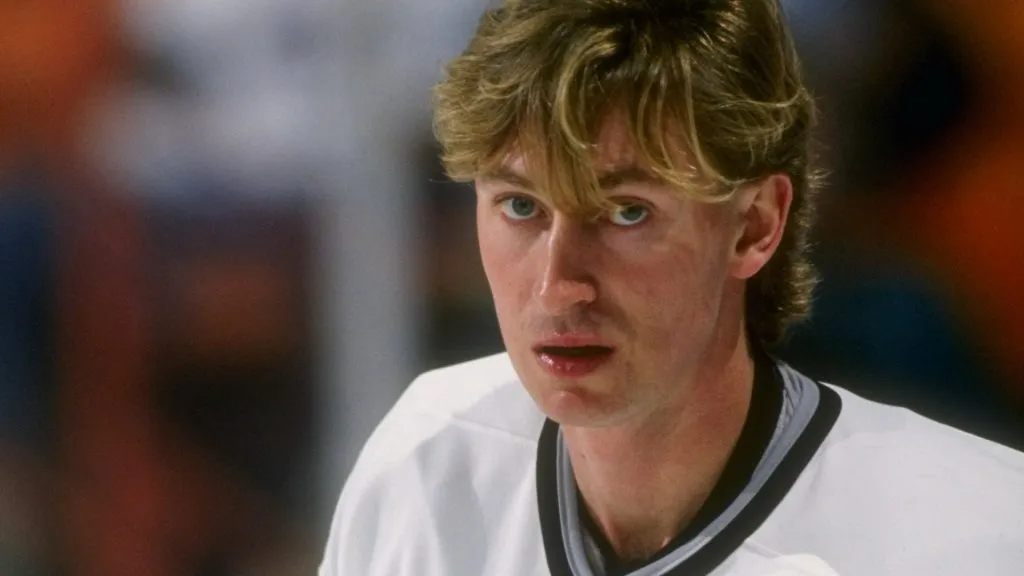
Center Wayne Gretzky of the Los Angeles Kings in 1990. (Source: Getty Images)
Considered by many as the greatest hockey player of all time, Wayne Gretzky left nothing to chance when it came to his pre-game preparation. Among his most notable rituals was his refusal to cut his hair before games, believing that keeping his mane intact would bring him good luck on the ice.
Additionally, he followed a meticulous order when putting on his gear, ensuring that each piece was placed in a specific sequence. As a final touch, he applied baby powder to his skates, convinced that this detail improved his performance on the ice.
Glenn Hall’s unusual preparation
Known as “Mr. Goalie”, Glenn Hall is a legendary goaltender, famous for his remarkable record of 502 consecutive games. However, what truly stands out in his career is his peculiar method of handling pre-game nerves: inducing vomiting before every game. This ritual, though strange, became a constant in his routine, allowing him to release tension and mentally prepare for the challenges in net.
Sidney Crosby’s locker room habits

Sidney Crosby #87 of the Pittsburgh Penguins walks out of the locker room for their game against the San Jose Sharks at SAP Center on February 14, 2023. (Source: Ezra Shaw/Getty Images)
Sidney Crosby, captain of the Pittsburgh Penguins, is known not only for his exceptional talent but also for his numerous superstitions. One of his most notable habits is using only home-team tape to wrap his hockey stick.
Once his stick is prepared, no one else can touch it; if this happens, he removes the tape and starts the process over from scratch. Additionally, he has a tradition of eating a peanut butter and jelly sandwich precisely at 5 p.m. on game days, ensuring that this dietary routine is part of his mental and physical preparation.
Playoff Beards tradition
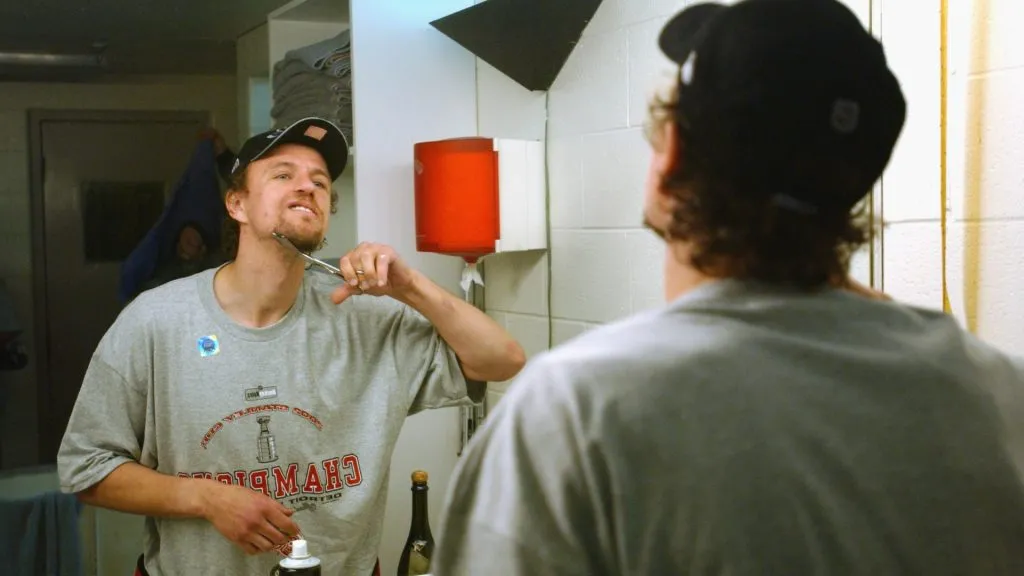
Fredrik Olausson of the Detroit Red Wings shaves his beard in the locker-room after defeating the Carolina Hurricanes during game five of the NHL Stanley Cup Finals in 2002. (Source: Dave Sandford/Getty Images/NHLI)
Growing a beard during the playoffs is a deeply rooted tradition in the NHL. Although its exact origins are debated, many attribute its popularization to the New York Islanders in the 1980s.
During their four consecutive Stanley Cup championships, players chose not to shave from the start of the playoffs until their conclusion, believing that the beards symbolized unity and determination. This practice has remained strong, and today, both players and fans adopt “playoff beards” as a symbol of support and hope for success.
Octopus toss in Detroit
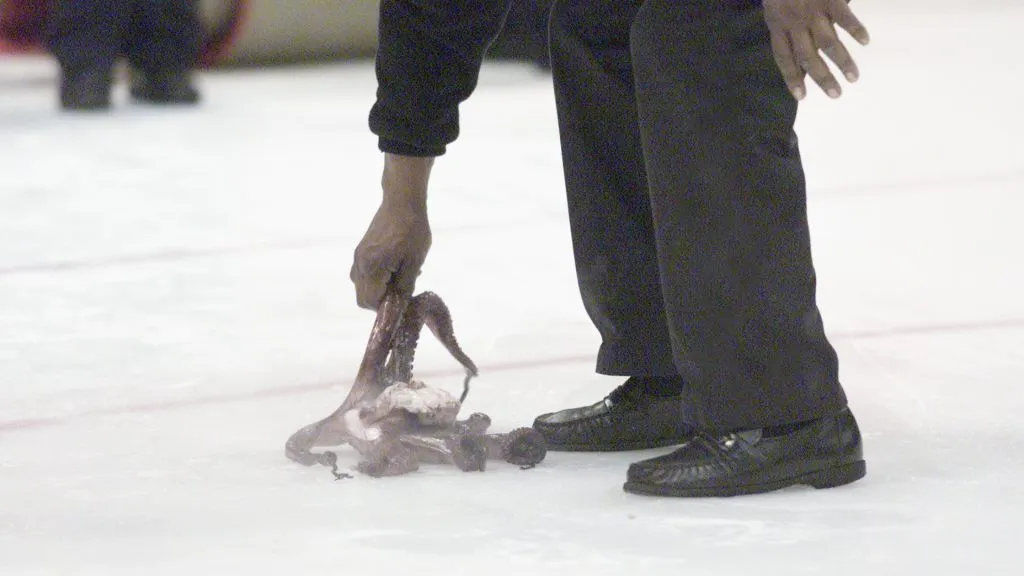
Maintenance removes an octopus thrown on the ice in celebration after the Detroit Red Wings scored a goal over the Vancouver Canucks during game 2 of the Stanley Cup playoffs in 2002. (Source: Tom Pidgeon/Getty Images/NHLI)
One of hockey’s most unique traditions is the “Legend of the Octopus” of the Detroit Red Wings. This custom dates back to 1952 when brothers Pete and Jerry Cusimano, owners of a fish market in Detroit’s Eastern Market, threw an octopus onto the ice during a playoff game.
The eight tentacles of the octopus represented the eight victories required at the time to win the Stanley Cup. The gesture was seen as a good luck charm, and the Red Wings went on to win the championship that year. Since then, fans have continued to throw octopuses onto the ice during playoff games, cementing this as a beloved tradition in Detroit.
Superstition around Conference trophies
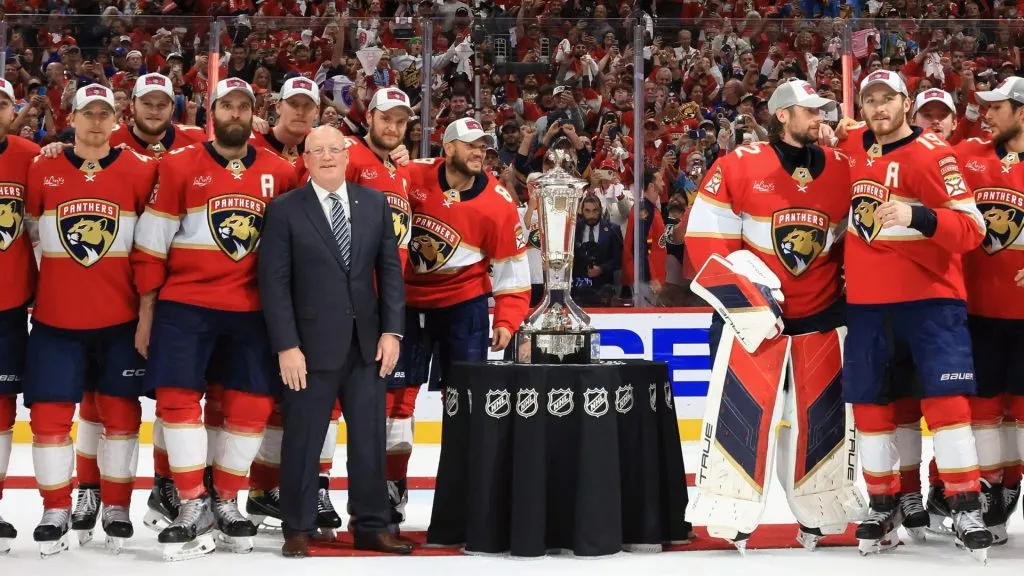
The Florida Panthers accept the Prince of Wales trophy after a series win against the New York Rangers in Game Six of the Eastern Conference Final of the 2024 Stanley Cup Playoffs. (Source: Bruce Bennett/Getty Images)
In the NHL, there is a widespread belief among players that touching the conference trophies—the Prince of Wales Trophy for the Eastern Conference champion and the Clarence S. Campbell Trophy for the Western Conference champion—brings bad luck before the Stanley Cup Final.
Many teams choose not to celebrate excessively or touch these trophies, considering the Stanley Cup to be the only true goal. This superstition has led to scenes where players pose next to the trophy without actually touching it, showing respect while keeping their focus on the ultimate prize.