Six months remain until the start of the 2026 FIFA World Cup, a timeframe that seems insufficient for major regulatory changes to be introduced and modify the competition ahead of such an important event. However, two key rules could be introduced for the upcoming World Cup tournament and would have a significant impact on the game.
While one of these is the ‘Wenger Offside,’ which would radically change how that infraction is called, the other would be even more controversial and directly targets time-wasting. The proposal suggests that if a player requires medical assistance during the match, they would be forced to stay off the field for a minimum of two minutes after receiving it.
Currently, the rule states that a player receiving assistance must leave the field and can only re-enter once the referee permits it, which usually occurs just seconds after leaving the pitch.
The only exceptions where the player does not need to leave the field are if the player who committed the foul received a yellow card or if the player in question is a goalkeeper.
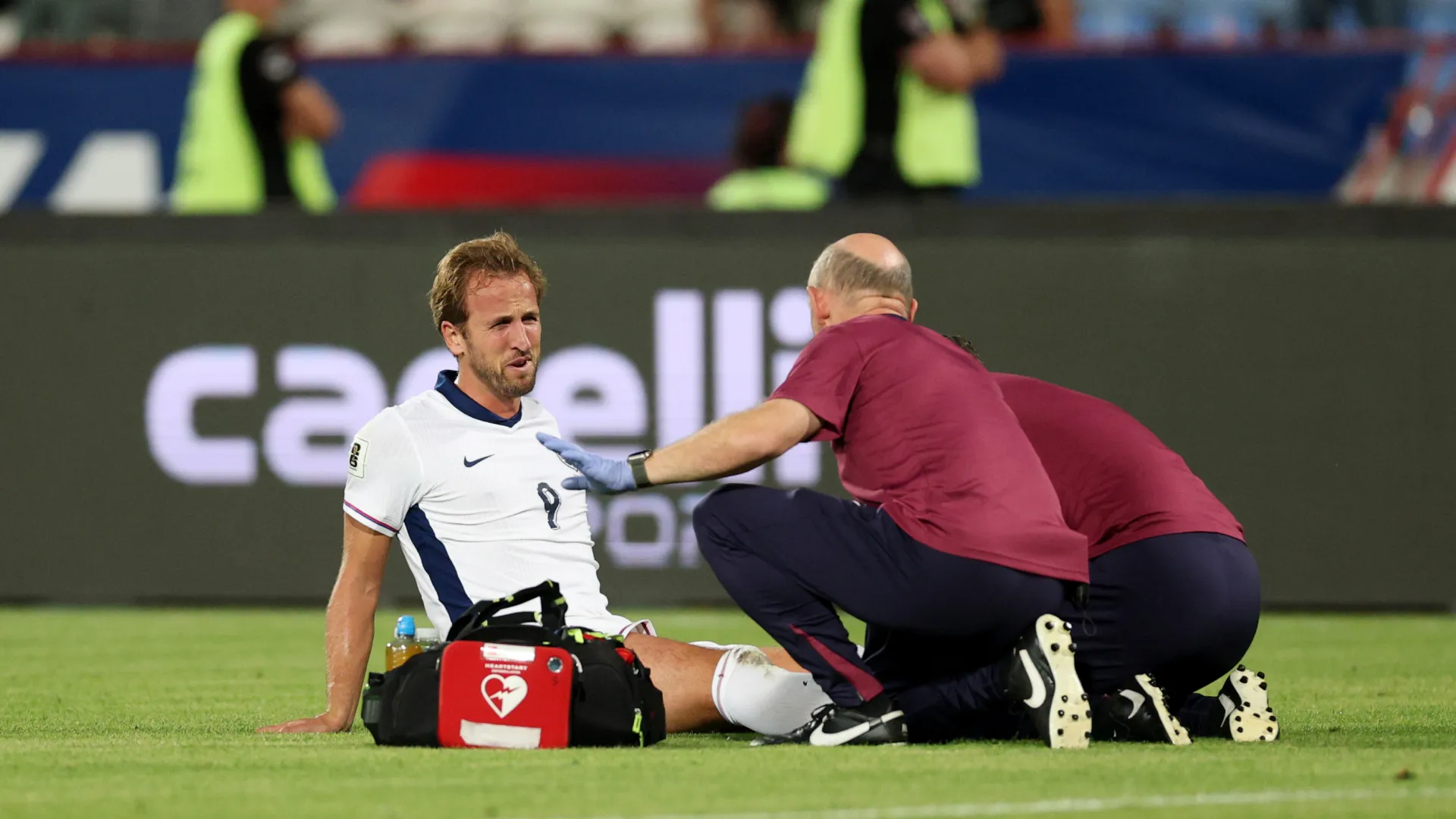
Harry Kane being assisted by medical staff. (Getty Images)
The goal is to reduce time lost by medical staff entering the pitch for players who are faking injuries and requesting professional assistance. However, this would remain subject to the referee’s interpretation, as their decision to caution an offender or not would take on even greater significance during the match.
The rule was tested at the FIFA Arab Cup
This new rule was recently tested during the 2025 FIFA Arab Cup, which was held in Qatar from December 1 to December 18. Morocco emerged as the champion of the tournament after defeating Jordan in the final.
The trial, overseen by FIFA Referees Committee chairman Pierluigi Collina, was designed as a deterrent against time-wasting. Under the experimental regulation, any player requiring on-field medical attention was forced to remain off the pitch for a mandatory two minutes after play resumed, leaving their team temporarily shorthanded.
Following the conclusion of the tournament in late December, FIFA began evaluating the data to determine if the measure effectively increased “net playing time“. These findings are expected to be presented to the International Football Association Board (IFAB) during their upcoming meetings in early 2026, where a final decision will be made regarding its potential implementation for the 2026 World Cup.