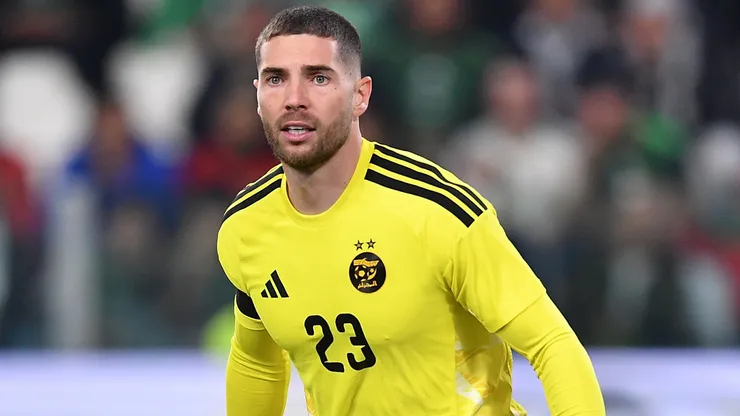
France‘s influence on the 2026 FIFA World Cup stretches well beyond the players wearing Les Bleus blue. While Didier Deschamps‘ squad remains one of the favorites to challenge for the title, dozens are representing other nations.
The numbers are remarkable. According to data compiled from the official World Cup squads, 99 players born in France made the final rosters for the 2026 tournament. Of those, 76 chose to represent countries other than France.
Nations such as Algeria, Haiti, the Democratic Republic of Congo and Senegal feature several French-born players who opted to wear different colors on soccer’s biggest stage. Behind every decision lies a different story.
Which countries have the most French-born players?
Algeria has the most French-born players at the 2026 FIFA World Cup. 13 French players are representing Algeria, the largest country in Africa, at this year’s tournament.
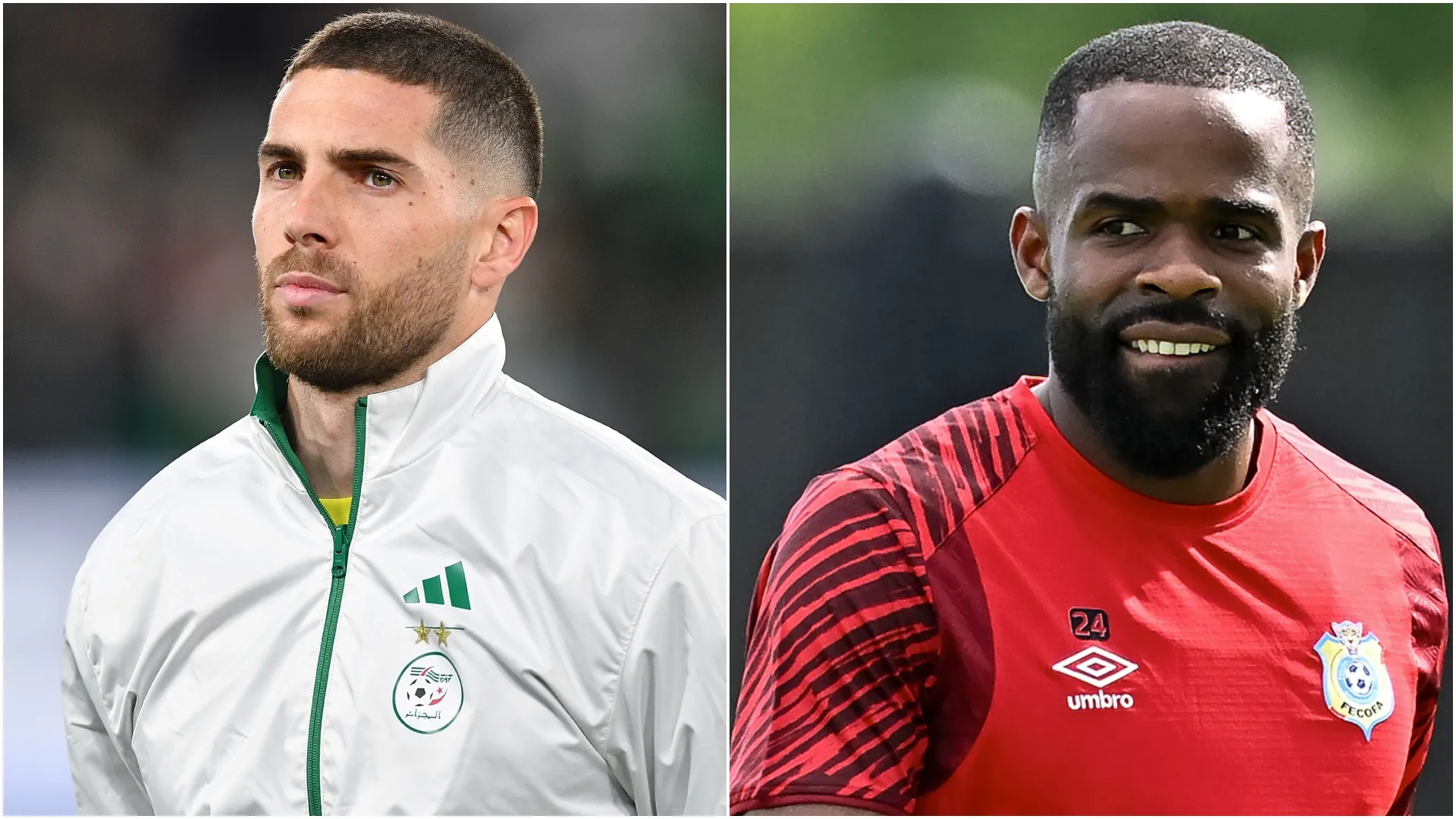
Luca Zidane of Algeria and Gedeon Kalulu of DR Congo (Source: Valerio Pennicino/Maria Lysaker — Getty Images)
Haiti follows with 12 French players, while DR Congo has 11 and Senegal 9. Ivory Coast rounds out the top five with 8 French-born players in its squad. The figures highlight the extraordinary reach of France’s soccer development system.
Out of the 1,248 players selected by the 48 World Cup teams, 99 were born in France. Only 23 made France’s own squad—as there are also three players born aboad on the French roster—while the remaining 76 chose to represent other national teams.
That means nearly one in every 12 players at the tournament was born on French soil. Many of these countries benefit from long-standing historical, linguistic and cultural ties with France.
Nations in North and West Africa, in particular, have deep diaspora connections that allow players eligible for multiple countries to choose the national team that best reflects their identity and ambitions.
Which French-born players are representing other countries?
- Logan Costa | Cape Verde
- Steven Moreira | Cape Verde
- Willy Semedo | Cape Verde
- Eduoard Mendy | Senegal
- Mory Diaw | Senegal
- Yehvann Diouf | Senegal
- Kalidou Koulibaly | Senegal
- Moussa Niakhate | Senegal
- Mamdou Sarr | Senegal
- Antoine Mendy | Senegal
- Pape Gueye | Senegal
- Iliman Ndiaye | Senegal
- Karim Boudiaf | Qatar
- Yahia Fofana | Ivory Coast
- Evan Ndicka | Ivory Coast
- Guela Doue | Ivory Coast
- Seko Fofana | Ivory Coast
- Nicolas Pepe | Ivory Coast
- Evann Guessand | Ivory Coast
- Elye Wahi | Ivory Coast
- Ange-yoah Bonny | Ivory Coast
- Haissem Hassan | Egypt
- Aymeric Laporte | Spain
- Montassar Talbi | Tunisia
- Dylan Bronn | Tunisia
- Yan Valery | Tunisia
- Ellyes Skhiri | Tunisia
- Hannibal Mejbri | Tunisia
- Ismael Gharbi | Tunisia
- Elias Achouri | Tunisia
- Johny Placide | Haiti
- Alexandre Pierre | Haiti
- Martin Experience | Haiti
- Jean-Kevin Duverne | Haiti
- Jean-Ricner Bellegarde | Haiti
- Dominique Simon | Haiti
- Duckens Nazon | Haiti
- Ruben Providence | Haiti
- Josue Casimir | Haiti
- Yassin Fortune | Haiti
- Wilson Isidor | Haiti
- Lenny Joseph | Haiti
- Luca Zidane | Algeria
- Melvin Mastil | Algeria
- Aissa Mandi | Algeria
- Rayan Ait-Nouri | Algeria
- Jaoen Hadjam | Algeria
- Samir Chergui | Algeria
- Nabil Bentaleb | Algeria
- Fares Chaibi | Algeria
- Houssem Aouar | Algeria
- Riyad Mahrez | Algeria
- Amine Gouiri | Algeria
- Anis Hadj Moussa | Algeria
- Fares Ghedjemis | Algeria
- Issa Diop | Morocco
- Redouane Halhal | Morocco
- Neil El Aynaoui | Morocco
- Samir El Mourabet | Morocco
- Ayyoub Bouaddi | Morocco
- Gessime Yassine | Morocco
- Lionel Mpasi | DR Congo
- Arthur Masuaku | DR Congo
- Gedeon Kalulu | DR Congo
- Dylan Batubinsika | DR Congo
- Steve Kapuadi | DR Congo
- Samuel Moutoussamy | DR Congo
- Gael Kakuta | DR Congo
- Cedric Bakambu | DR Congo
- Yoane Wissa | DR Congo
- Nathanael Mbuku | DR Congo
- Simon Banza | DR Congo
Why do French-born players choose to represent other national teams?
Most French-born players choose other national teams because of family heritage, identity and greater opportunities at the international level. For many, the decision is deeply personal rather than purely professional.
France possesses one of the deepest talent pools. Breaking into Les Bleus can be extraordinarily difficult, even for players performing at the highest club level. Choosing another eligible nation often provides a more realistic path.
Family also plays a significant role. Many French-born players are children or grandchildren of immigrants from countries including Algeria, Morocco and Senegal. Representing those nations allows them to honor their parents’ roots.
FIFA‘s eligibility rules have made these choices increasingly common. Players with multiple nationalities can represent the country of their birth, ancestry or residency, provided they meet the governing body’s requirements.