
High-octane racing unveils a hidden chessboard beneath roaring engines. Tire compounds evolve from mere rubber into vital tactical choices, shaping grip, lap strategy and crucial pit decisions that ultimately define every hard-fought race.
F1 drivers extract every ounce of performance as they balance the fleeting grip of soft compounds with the endurance of harder rubbers. Subtle shifts in weather and track conditions demand constant adaptation and razor-sharp decisions.
Behind every tire choice lies intense preparation and relentless testing by teams. A fusion of science and instinct drives these decisions, hinting at the unpredictable drama that races promise without revealing the full story.
Types of compounds
Every racing tire is built around a specific compound — a carefully engineered blend of rubber, synthetic materials and secret additives designed to deliver a certain balance of grip, durability and responsiveness. In F1, for instance, Pirelli provides five slick compounds, ranging from the hardest (C1) to the softest (C5).
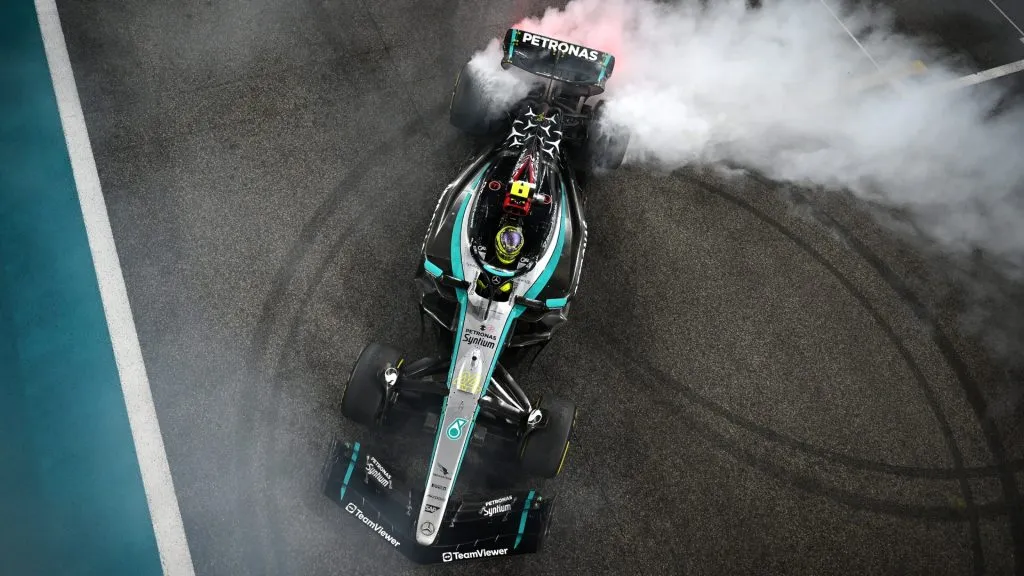
4th placed Lewis Hamilton of Great Britain driving the (44) Mercedes AMG Petronas F1 Team W15 does donuts on track to celebrate his final race with Mercedes in 2024. (Source: Clive Mason/Getty Images)
Hard compounds are built to last longer. They are less sticky but can endure higher temperatures and more laps before degrading. They’re ideal for circuits that are abrasive or extremely hot.
Softer compounds, on the other hand, offer maximum grip but have a short lifespan. They heat up quickly, which makes them excellent for qualifying or short, aggressive stints, but they wear out much faster.
Each compound has what engineers call an “optimal working window”. This refers to the temperature range within which the tire performs best. If the tires are too cold or too hot, they can slide, blister or degrade rapidly. Teams spend hours running simulations to understand exactly when and how these compounds will perform across a race weekend.
According to Pirelli’s official motorsport division, the selection of which compounds are brought to each race is based on track characteristics, expected weather and data from previous years. Once chosen, they must make strategic decisions about how and when to use them, depending on factors such as fuel loads, track evolution and driver style.
Weather tires
When rain hits the track, the slick tires used for dry conditions become useless. That’s where wet-weather tires come into play. There are two primary types: intermediates and full wets.
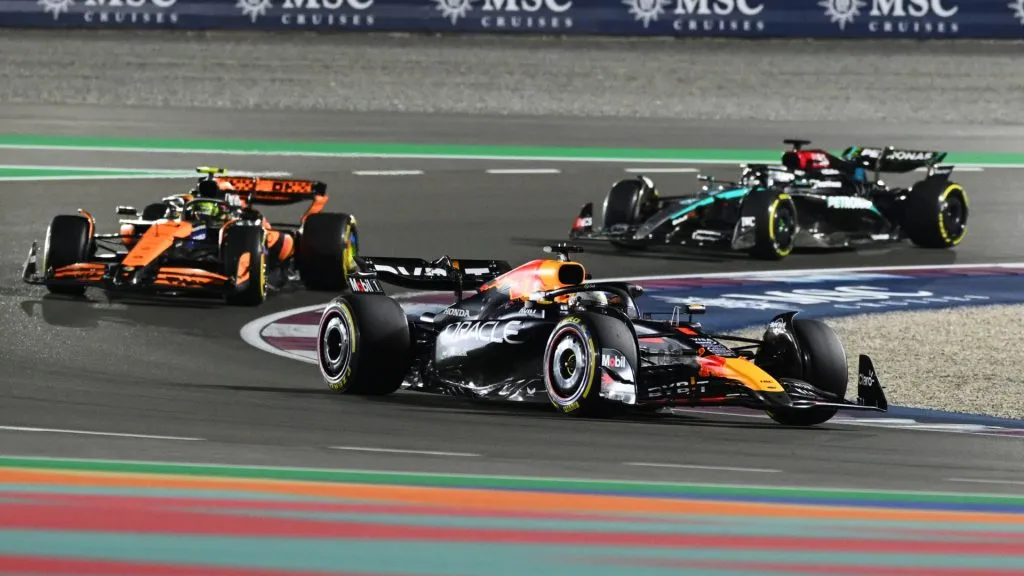
Max Verstappen, Lando Norris and George Russell during the F1 Grand Prix of Qatar in 2024. (Source: Clive Mason/Getty Images)
Intermediate tires are designed for light rain or a drying track. They have shallow grooves that can disperse small amounts of water while maintaining good grip on a damp surface. These tires are often used when the track is too slippery for slicks but not wet enough for the full wet tires.
Full wet tires, recognizable by their deep, aggressive grooves and distinctive blue markings, are engineered for heavy rain and standing water. They can channel over 60 liters of water per second away from the contact patch, helping the car maintain grip and avoid aquaplaning — a condition where the tire loses contact with the track entirely due to a layer of water.
What’s fascinating about wet-weather tires is how soft and adaptable their rubber is. Because they’re used in cooler conditions, they’re formulated to heat up quickly, giving drivers confidence even in the most treacherous situations.
Pit strategy
In racing, tire strategy is not just a matter of swapping rubber. It’s a high-stakes game of timing, precision and prediction. Teams need to decide when to pit, how many times and which compounds to fit, all while anticipating weather changes, safety cars and rival tactics.
The choice of tire strategy can define a race. A one-stop plan with hard tires may be safer and more consistent, while a two-stop strategy using soft and medium tires can offer more raw pace if managed correctly.
However, each decision comes with risk. Pitting too early might mean running out of tire life toward the end, while pitting too late could mean losing crucial time to rivals with fresher tires.
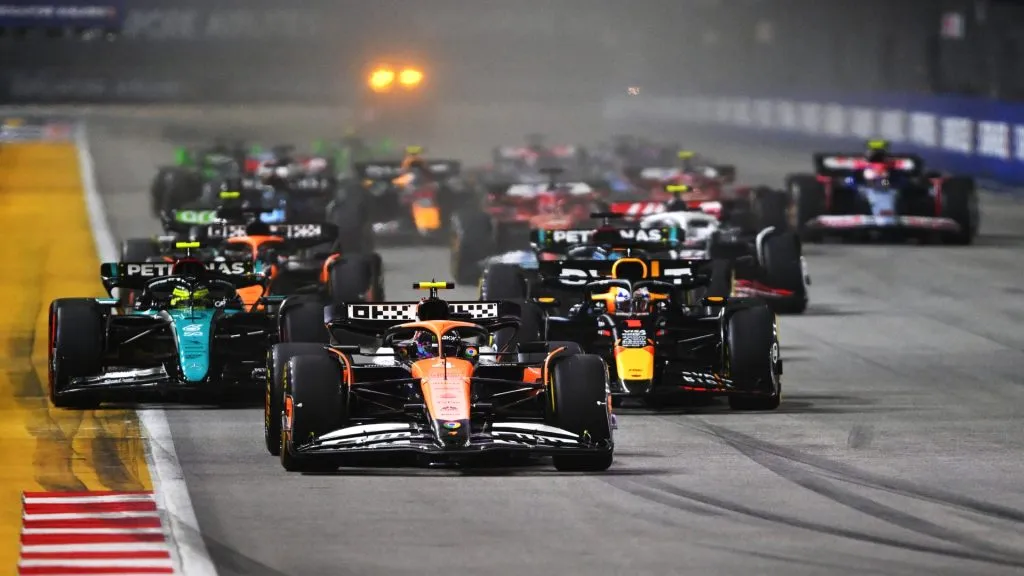
Lando Norris, Max Verstappen and the rest of the field into turn one at the start during the F1 Grand Prix of Singapore in 2024. (Source: Rudy Carezzevoli/Getty Images)
Drivers also play a role. Those who are skilled at managing tire wear can stretch a stint longer than expected, giving their engineers more flexibility. A sudden lock-up or aggressive cornering can shorten a tire’s life dramatically, forcing an earlier-than-planned stop.
The pit crew’s efficiency is another critical factor. A clean pit stop takes about 2 to 3 seconds in Formula 1. A slow stop — even by half a second — can drop a driver behind a rival and into dirty air, which affects performance. In such a tightly contested field, every tenth of a second counts.
Tire wear
Tire wear refers to the gradual loss of rubber as a tire interacts with the track surface. But it’s not as simple as tires wearing down evenly. Different types of wear give teams valuable clues about the health of a car’s setup and the condition of the track.
Thermal degradation occurs when a tire gets too hot and the rubber compound begins to break down. It’s common in long stints, especially on soft tires or in hot conditions. The surface can become greasy, reducing grip.
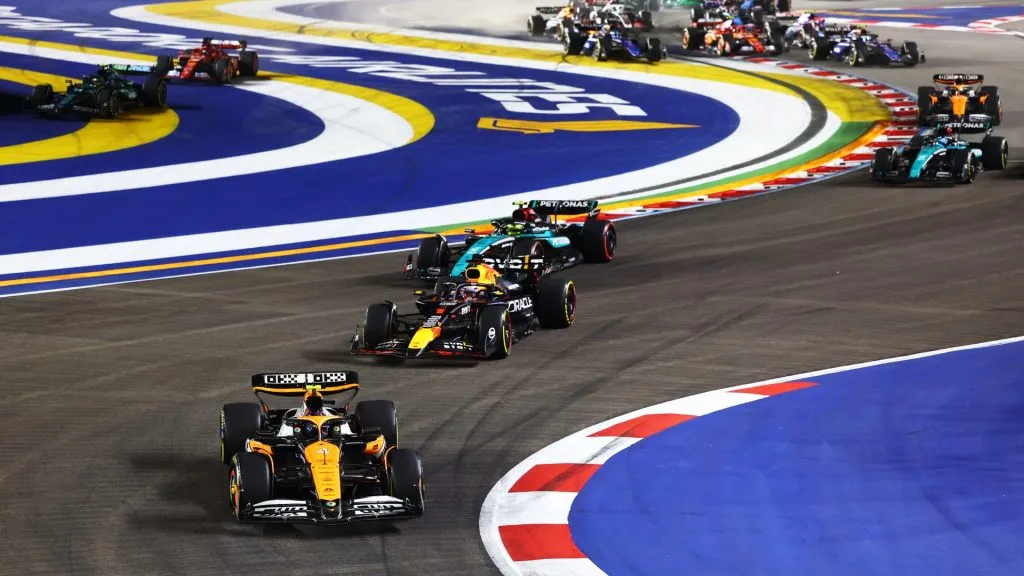
Lando Norris, Max Verstappen and the rest of the field at the start during the F1 Grand Prix of Singapore in 2024. (Source: Mark Thompson/Getty Images)
Mechanical wear is caused by the roughness of the track itself. Some circuits, like Silverstone or Barcelona, are known for being “abrasive” — their surfaces grind down tires more quickly due to coarse asphalt.
Then there’s graining, a phenomenon where small bits of rubber tear off and reattach to the surface of the tire, creating a rough, pebbled layer. This disrupts the tire’s contact with the road, reduces grip and often feels like the car is driving on marbles. It typically occurs when the tire is sliding due to low temperatures or incorrect pressure.
Teams use data from sensors, thermal cameras and visual inspections to monitor wear. Engineers track tire temperatures across three zones — inner, center and outer — to understand how the tire is interacting with the track. If one side is overheating, it may indicate improper camber or alignment settings.