Each year, four golf tournaments rise above the rest, shaping careers and defining legacies. Known as “the majors”, they bring together the world’s top players for a test of skill, patience, and poise on the game’s biggest stages.
From the blooming azaleas of Augusta to the gusty coastlines of the UK, each major has its own identity. They don’t just differ in course or country—they tell completely different stories about what it means to master the sport.
Why do these four matter more than hundreds of others played yearly? It’s not just history or prize money—it’s tradition, challenge and global prestige. Let’s break down what makes each major unique, from format quirks to calendar spots.
The Masters
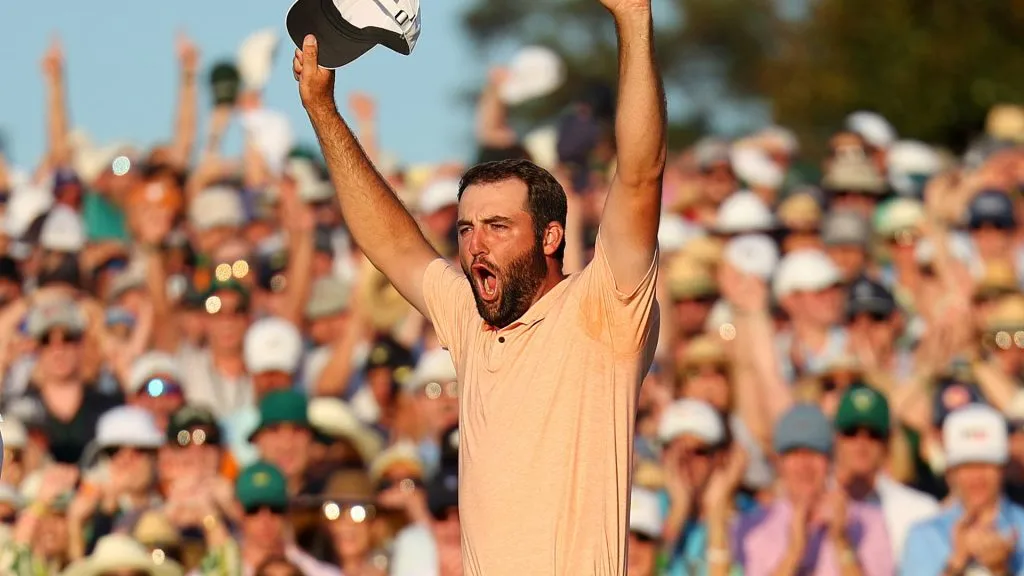
Scottie Scheffler of the United States celebrates on the 18th green after winning the 2024 Masters Tournament at Augusta National Golf Club on April 14, 2024. (Source: Andrew Redington/Getty Images)
The Masters unfolds each April at the immaculate Augusta National Golf Club in Georgia, the only major held at a permanent venue. Conceived by Bobby Jones and Clifford Roberts in 1934, it marks the ceremonial start of golf’s biggest season. Participation is by invitation only, creating an elite field composed of former champions, top-ranked professionals and recent major winners.
What elevates The Masters is its ritualistic charm. From the ceremonial first tee shots to the Champion’s Dinner and the coveted Green Jacket, every detail contributes to a sense of reverence. Augusta’s setting—with its rolling fairways and blooming azaleas—adds visual drama to the intensity of competition.
The tournament follows a 72-hole stroke play format, with the top 50 and ties advancing after two rounds. Its slick, contoured greens and strategic layout demand creative shot-making and composure, especially under pressure. Though the youngest of the four majors, it carries a mystique that makes it unforgettable.
PGA Championship

Champion Brooks Koepka holds The Wanamaker Trophy after the final round of the PGA Championship at Oak Hill Country Club on Sunday, May 21, 2023. (Source: Ross Kinnaird/Getty Images)
Unlike its counterparts, the PGA Championship is reserved solely for professional golfers, a fact that defines its character. First held in 1916, it transitioned from match play to stroke play in 1958 and now occupies a prime slot in May. It’s overseen by the PGA of America—not to be confused with the PGA Tour—and consistently features one of the most competitive fields in golf.
This major is widely regarded as a proving ground for modern pros, with entry earned via rankings, recent performance and qualification by club professionals. The tournament’s venues vary each year, offering a mix of traditional layouts and contemporary challenges.
It is known for rewarding aggressive, high-level play while still requiring precision and strategy. Its format is 72-hole stroke play with a cut after 36 holes. Winners often emerge from thrilling final rounds, where shotmaking meets mental resilience. It’s a favorite among players for its balance of prestige and opportunity.
U.S. Open
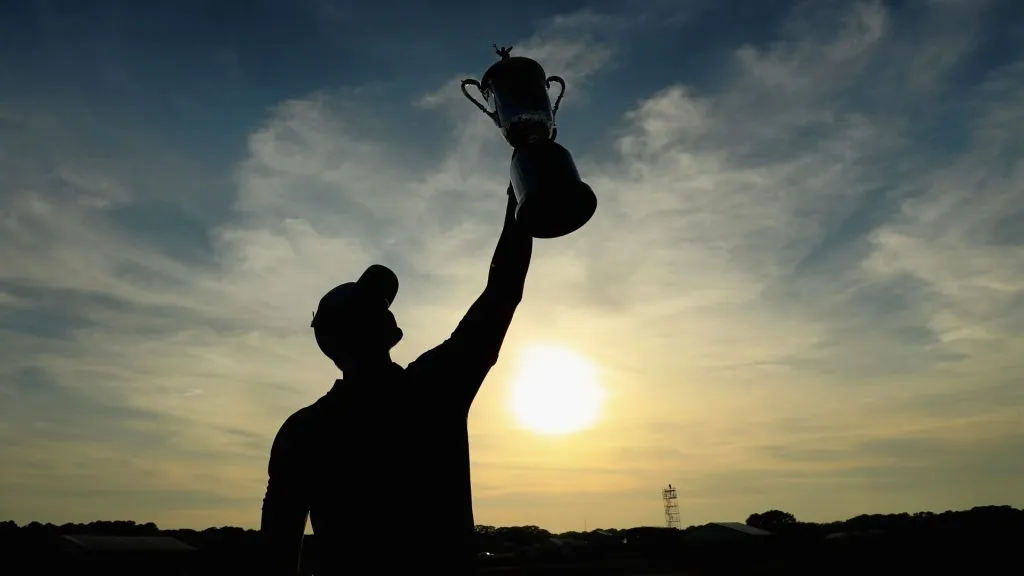
Brooks Koepka of the United States celebrates with the U.S. Open Championship trophy after winning the 2018 U.S. Open at Shinnecock Hills Golf Club on June 17, 2018. (Source: Andrew Redington/Getty Images)
Renowned as the toughest of the four, the U.S. Open is golf’s ultimate stress test. Organized by the USGA, it takes place in June at a rotating selection of demanding U.S. courses—venues like Winged Foot, Oakmont and Pebble Beach, known for unforgiving setups. Every element, from tight fairways to thick rough and rapid greens, is designed to challenge the limits of the field.
It’s also the most accessible major in terms of qualification. Thousands of professionals and amateurs compete in preliminary rounds, earning the tournament a reputation as golf’s most open crucible. Still, by the weekend, it’s usually the calmest heads and sharpest games that survive.
With a stroke play format over 72 holes and a cut to the top 60 and ties, the U.S. Open demands grit, patience and adaptability. Scoring under par is rarely the norm—often, even level par can lead to victory. The mental toll it takes has become part of its legend, making a win here a true badge of honor.
The Open Championship
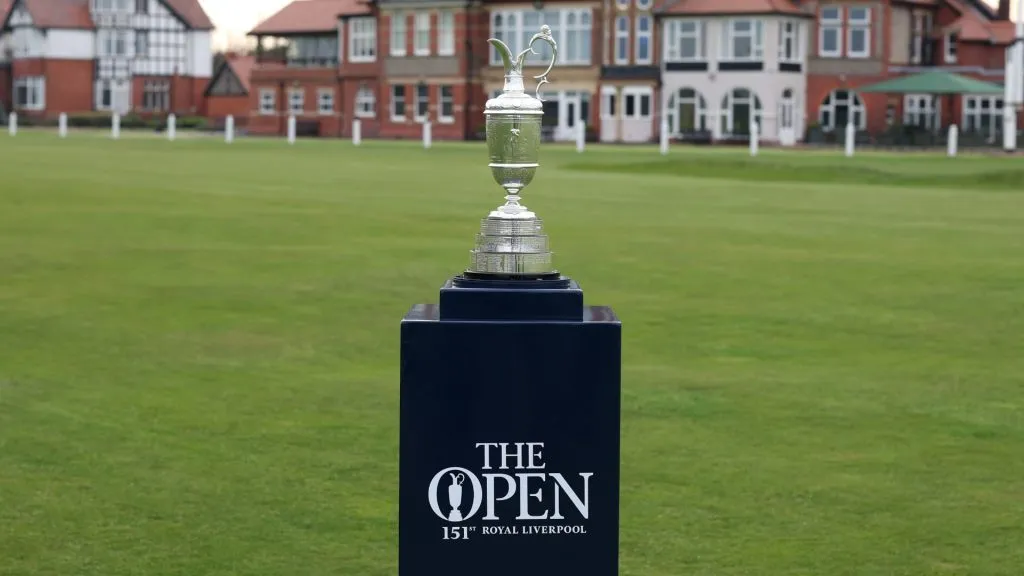
A view of the Claret Jug in front of the clubhouse at Royal Liverpool Golf Club on April 19, 2023. (Source: Richard Heathcote/Getty Images)
The Open Championship—simply “The Open” to purists—is the oldest of the majors, first staged in 1860 at Prestwick, Scotland. Managed by The R&A, it travels each July to storied coastal courses such as St Andrews, Royal Portrush, and Muirfield. These rugged links terrains are exposed to the elements, giving The Open its distinctive personality.
Wind, firm fairways and pot bunkers demand improvisation and a deep understanding of trajectory and spin. Players must often abandon modern power play in favor of finesse and adaptability. The weather can shift within minutes, turning birdie chances into bogey scrambles.
The competition follows the standard 72-hole stroke play format, with a cut to the top 70 and ties after two rounds. The winner receives the Claret Jug, an enduring symbol of golfing excellence. Above all, The Open honors the origins of the sport—its grassroots spirit, global reach, and unvarnished purity remain at its heart.