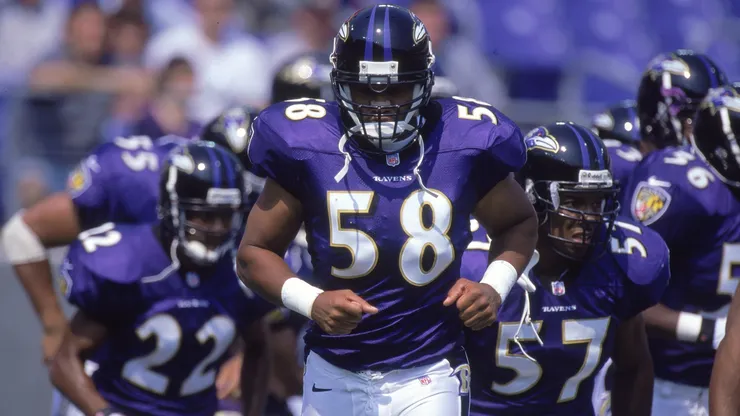
The Baltimore Ravens forged a reputation on hard-hitting defense, bold personalities, and a relentless chase for greatness. Legends like Ray Lewis, Ed Reed and Terrell Suggs set the tone for what “Ravens football” truly means.
Era-defining talent arrived in every phase of the game: fearsome pass rushers, shutdown corners, explosive playmakers on offense and leaders who transformed big moments into lasting NFL memories.
From the early foundation to the Lamar Jackson era, the franchise’s most impactful figures continue to shape a culture of grit, pride and innovation—one highlight, one roar from the crowd, one Baltimore Sunday at a time.
Ray Lewis
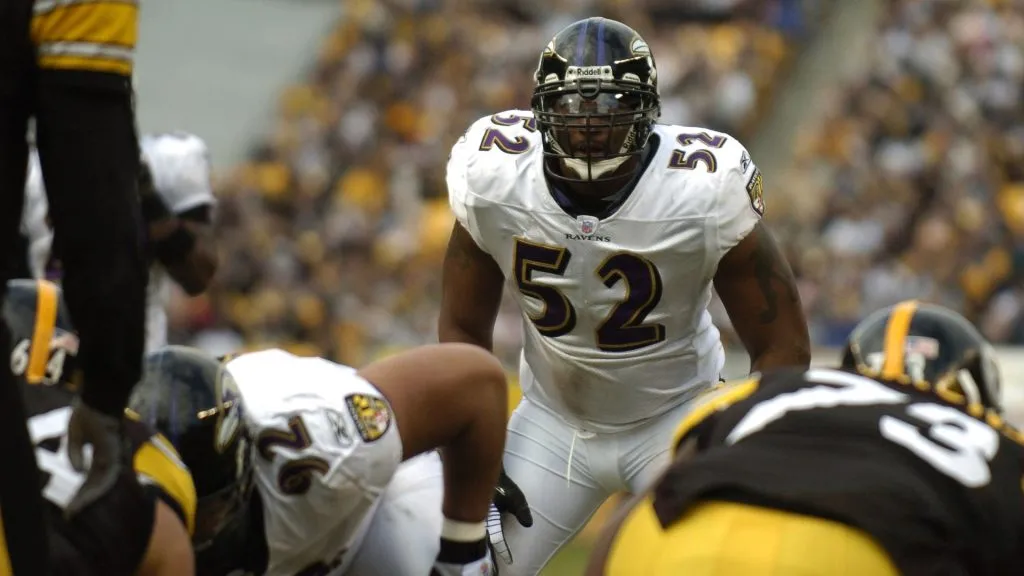
Ray Lewis (Source: Dan Beineke/NFLPhotoLibrary)
The name Ray Lewis doesn’t just conjure memories of an elite linebacker; it embodies the image of a pre-game dancing storm and an unmatched intensity that electrified the gridiron. Selected 26th overall in the 1996 Draft by the fledgling franchise, he became, instantly, the emotional and strategic pulse of the Ravens.
He is the undisputed leader who forged a promising defense into one of the most feared units in NFL history, culminating in the 2000 season’s Super Bowl XXXV victory, where he was named MVP.
His impact transcended mere statistics: 13 Pro Bowl selections and two Defensive Player of the Year awards attest to his skill, but his true legacy rests in his ability to diagnose plays and, most importantly, to motivate his teammates.
He led Baltimore to a second championship in Super Bowl XLVII, a storybook ending to his career that led to his Pro Football Hall of Fame induction in 2018. Lewis was the embodiment of the Ravens’ defensive identity for nearly two decades.
Jonathan Ogden
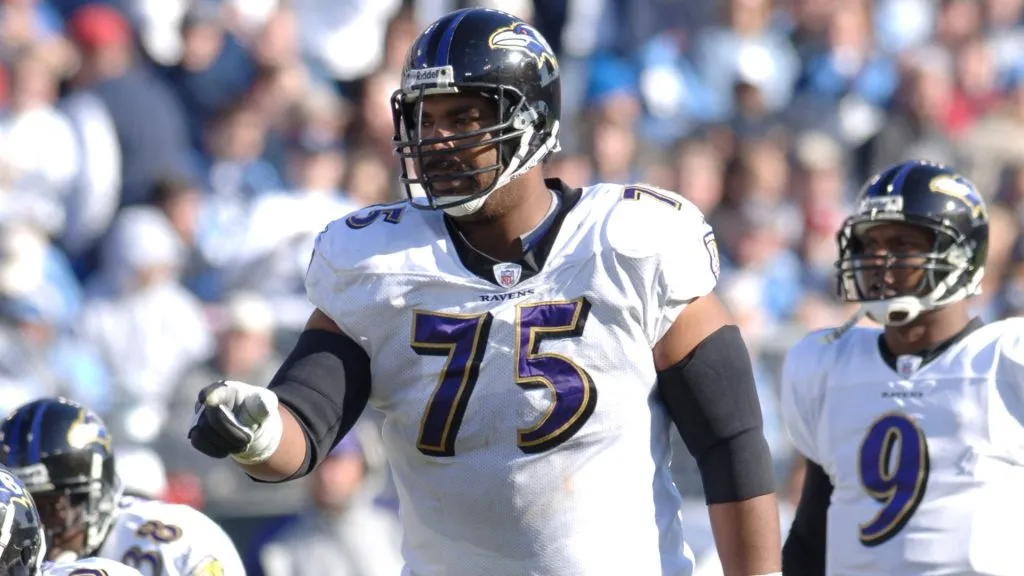
Jonathan Ogden (Source: Joe Murphy/NFLPhotoLibrary)
While the Ravens’ narrative often revolves around their ferocious defense, the bedrock of any successful franchise is an impenetrable offensive line. This is where the quiet giant, Jonathan Ogden, shines.
Drafted with the fourth overall pick in 1996, he holds the distinction of being the first-ever draft selection in Baltimore Ravens history, a landmark moment that cemented the franchise’s future on both sides of the ball.
Unlike his defensive counterparts, he did not make noise with spectacular tackles; his greatness lay in consistency and technical perfection as an Offensive Tackle. Throughout his 12-year career, he was the left-side fortress, protecting quarterbacks and carving open running lanes, leading to 11 Pro Bowl nods and the Super Bowl XXXV title.
He was the first Raven to be enshrined into the Pro Football Hall of Fame, proving that the franchise’s greatness literally began at the line of scrimmage. His cheerful demeanor was often noted to be in contrast with his on-field dominance, as former Giant Michael Strahan quipped: “You look at him and you think to yourself this guy is not mean enough to handle the bad guys in the NFL“.
Ed Reed
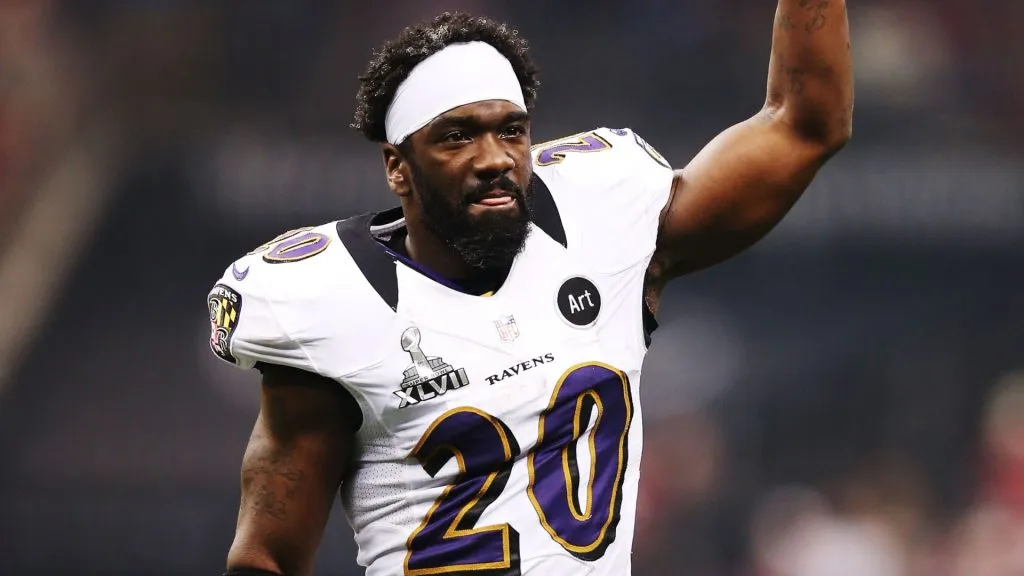
Ed Reed (Source: Christian Petersen/Getty Images)
If Ray Lewis was the conductor of the defensive symphony, Ed Reed was the virtuoso who played the highest notes from the backfield. Drafted 24th overall in 2002, this Safety earned a reputation as one of the most intelligent defensive players of his generation. He didn’t just intercept passes; he often tricked opposing quarterbacks into throwing them, possessing a chameleon-like ability to appear where he was least expected.
He holds the NFL record for career interception return yards and became the franchise’s interception leader. His 2004 NFL Defensive Player of the Year award and his nine trips to the Pro Bowl are testaments to his profound impact.
Like Lewis, he was instrumental in the Super Bowl XLVII victory, concluding a golden defensive era before his 2019 Hall of Fame enshrinement. He was the perfect blend of athleticism, aggression, and intellect—a true ball-hawking presence who moved with predatory grace.
Terrell Suggs
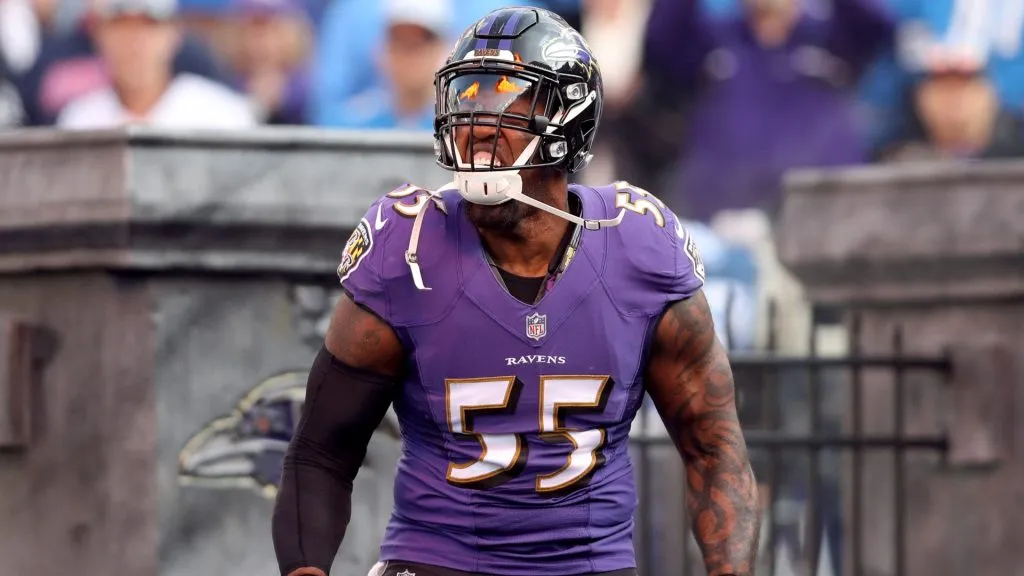
Terrell Suggs (Source: Patrick Smith/Getty Images)
Affectionately known as “T-Sizzle”, Terrell Suggs personified the relentless pass-rusher and was the soul of the Ravens’ defense for over a decade and a half. Selected 10th overall in 2003, this Arizona State linebacker/defensive end made an immediate splash, securing the NFL Defensive Rookie of the Year award.
He is the franchise’s all-time sacks leader and always played with an edge and intensity that perfectly suited Baltimore’s hard-nosed identity. His career peaked in 2011 when he was named NFL Defensive Player of the Year after tallying 14 sacks and a league-leading seven forced fumbles.
He served as a crucial pillar in the Super Bowl XLVII-winning defense, proving to be both an emotional leader and a constant threat off the edge. After 16 seasons of dedication to the Ravens and seven Pro Bowl appearances, “T-Sizzle” left an enduring mark of passion and relentless pressure, cementing his legacy as one of the era’s great outside linebackers.
Marshal Yanda
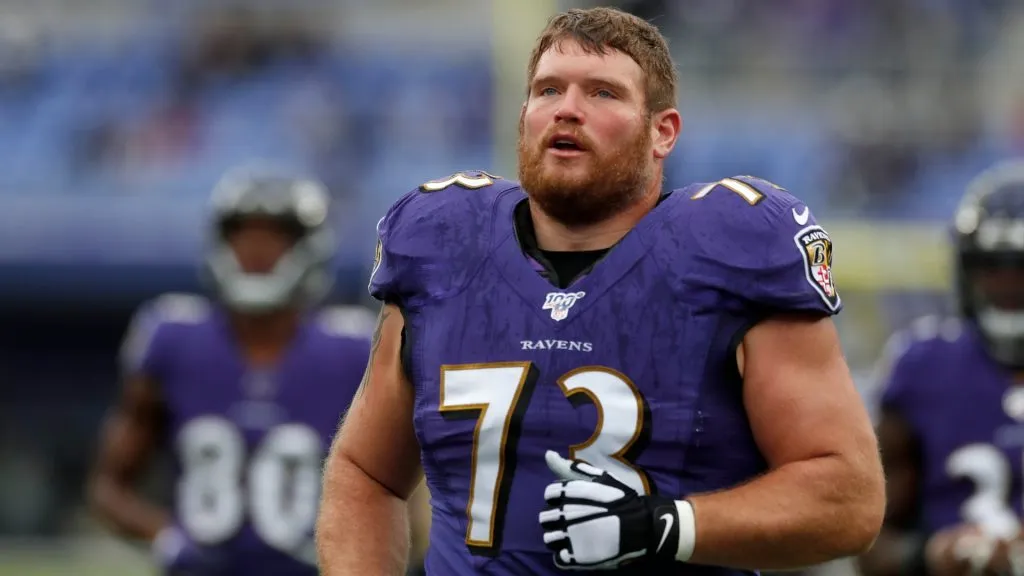
Marshal Yanda (Source: Todd Olszewski/Getty Images)
While the defense grabbed the headlines and the quarterbacks drew the cameras, Marshal Yanda carved out a career of quiet excellence in the trenches. Drafted in the third round in 2007, this Offensive Guard became the epitome of consistency and toughness on Baltimore’s line of scrimmage.
He wasn’t a household name to the general public, but among peers and analysts, he was revered. He achieved a staggering eight Pro Bowl selections and was a two-time First-Team All-Pro, an extraordinary accomplishment for an interior lineman operating outside the limelight.
His presence was vital in balancing the Ravens’ offense and protecting quarterbacks like Joe Flacco en route to Super Bowl XLVII. After 13 seasons, he retired in 2020 as one of the finest offensive linemen of his generation, recognized by his inclusion in the NFL 2010s All-Decade Team, a testament that silent excellence also defines the Ravens’ greatness.
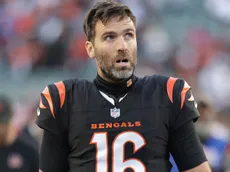
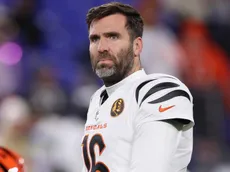
Joe Flacco
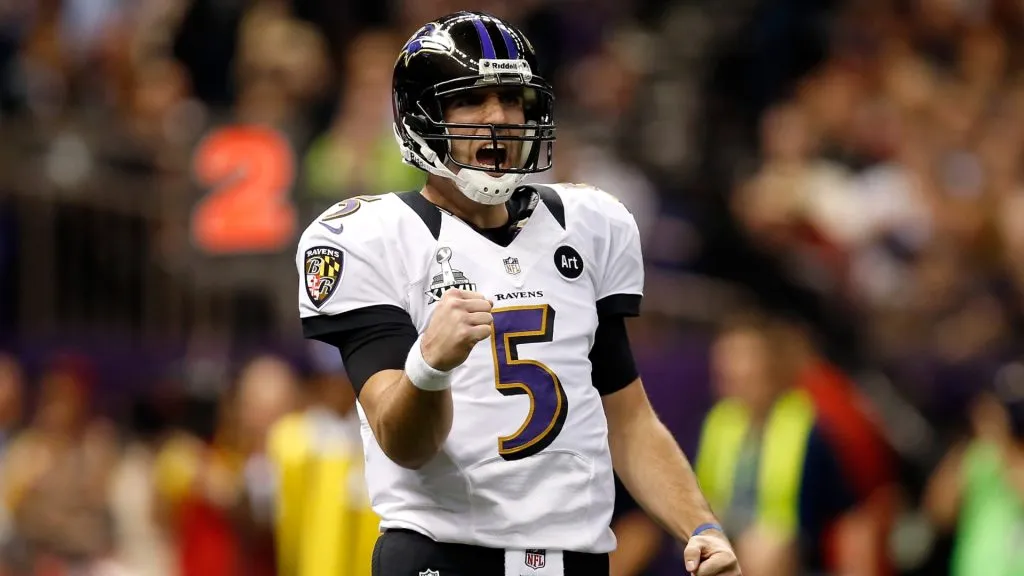
Joe Flacco (Source: Chris Graythen/Getty Images)
In a team historically defined by its defense, Joe Flacco emerged as the ice-veined quarterback required to reach the pinnacle. Selected in the first round of the 2008 Draft, the University of Delaware product carved out his place in franchise lore by transforming defensive potential into a championship.
He was not known for gaudy stats but for his rocket arm and his ability to elevate his play during the most crucial time: the playoffs. His legendary run during the 2012 postseason, dubbed “Flacco Inferno”, saw him throw 11 touchdowns against zero interceptions, an elite performance culminating in the Super Bowl XLVII title and the Super Bowl MVP award.
His ability to win road playoff games makes him a statistical anomaly and a champion. Though his time in Baltimore concluded with the arrival of Lamar Jackson, he ensured he left his mark as the quarterback who delivered offensive glory to the “Charm City”.
Lamar Jackson
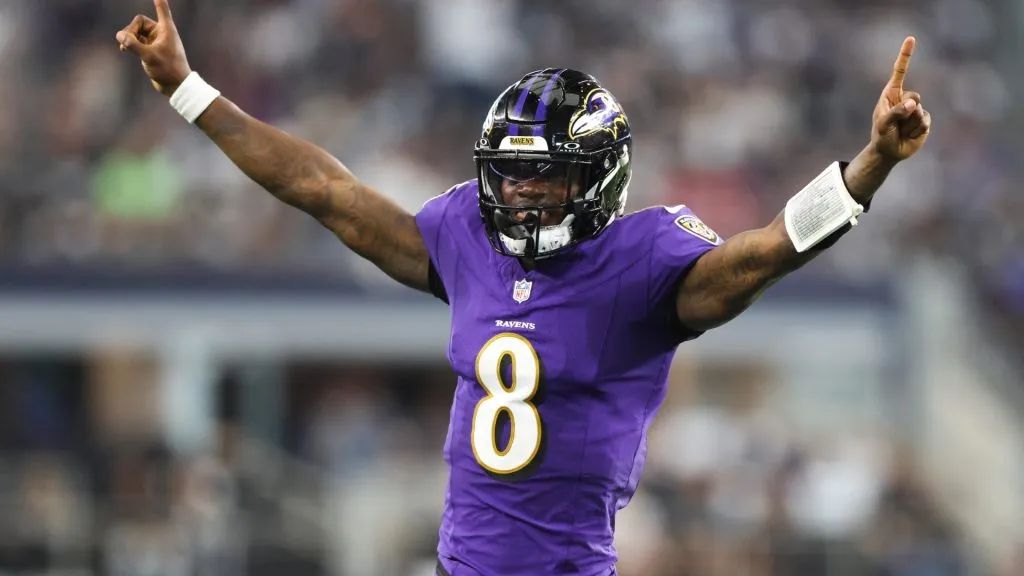
Lamar Jackson (Source: Ron Jenkins/Getty Images)
The youngest quarterback on this list, Lamar Jackson, represents the offensive revolution and the electrifying future of the Ravens. Drafted 32nd overall in 2018, he quickly proved that his playing style—often scrutinized pre-draft—was, in fact, an unstoppable force.
He doesn’t just break ankles with his speed; he shatters records. He became the first player in NFL history with over 4,000 passing yards and 800 rushing yards in a single season . His ability to execute elite throws while dazzling defenses with his running ability has earned him the NFL MVP award twice, setting a brand new standard for the quarterback position.
His impact has forced opposing teams to entirely re-think their defensive schemes. He is, undeniably, the most dynamic offensive force in franchise history and the engine of the new Baltimore Ravens era.
Haloti Ngata
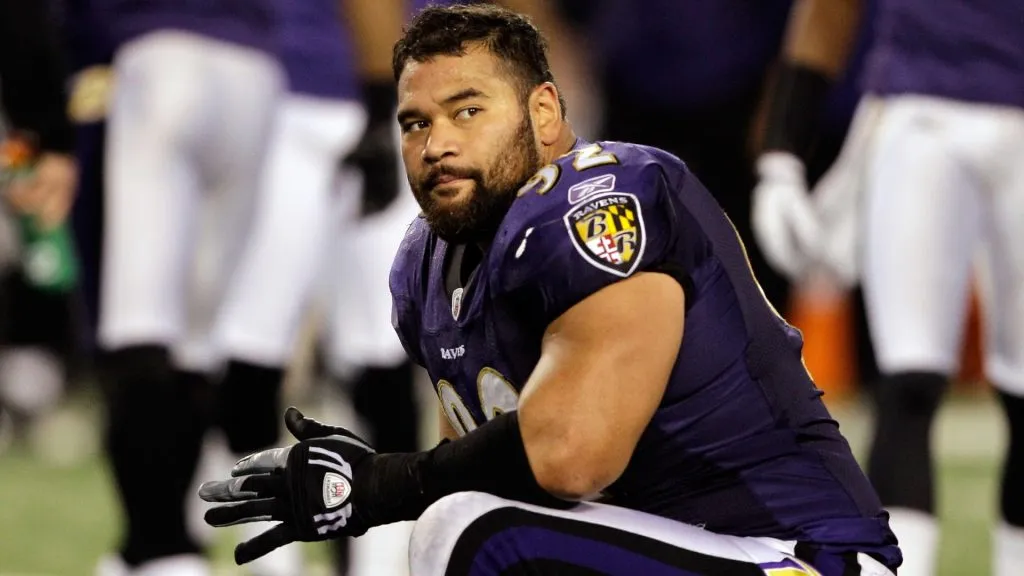
Haloti Ngata (Source: Rob Carr/Getty Images)
In the lexicon of Ravens defense, Haloti Ngata‘s name signifies raw, powerful disruption. Selected in the first round of the 2006 Draft, the massive defensive tackle was the crucial missing link that transitioned the legendary defensive era of Lewis and Reed into a new phase of dominance.
He was no ordinary interior lineman; he was an unblockable, two-gap force who routinely commanded double teams, thereby freeing up Lewis and Terrell Suggs to wreak havoc.
His brilliance was foundational. He wasn’t chasing glamorous sack numbers; he was dismantling the opponent’s offensive line from the inside out, wrecking running plays and collapsing the pocket.
His consistency resulted in five Pro Bowl selections and a Super Bowl XLVII ring. While Lewis was the heart and Reed the brain, he was the unmovable mountain at the defense’s core—a powerful, athletic anomaly whose quiet strength often overshadowed his immense impact on the game’s outcome.
Jamal Lewis
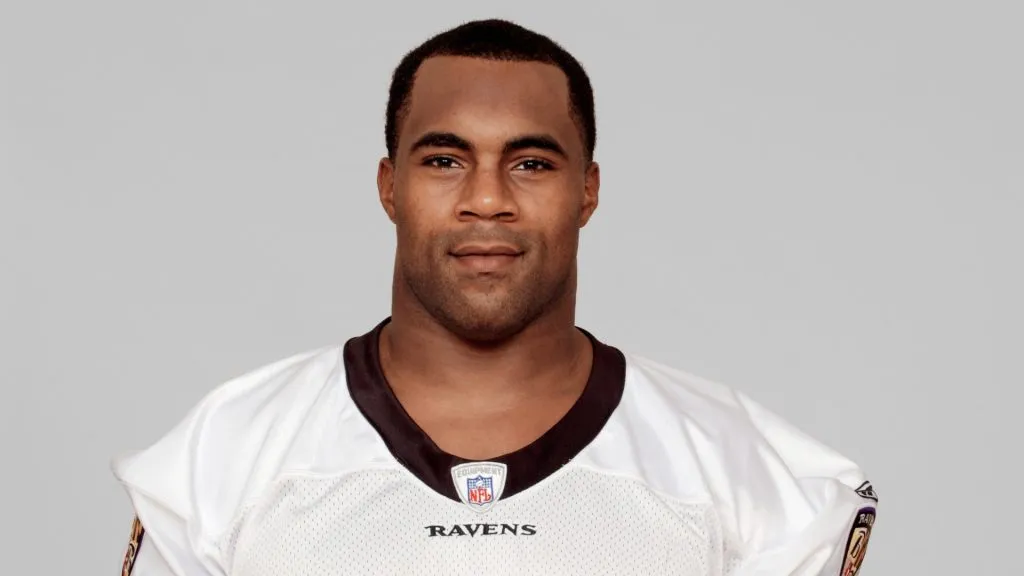
Jamal Lewis (Source: Getty Images)
When the Ravens needed to establish their identity as a physical, ground-and-pound team in the early 2000s, Jamal Lewis answered the call with a fury. Drafted fifth overall in the 2000 NFL Draft, he burst onto the scene with a phenomenal rookie year, contributing over 1,300 yards to the Super Bowl XXXV championship team. But his true masterpiece came in 2003, when he ran for an astounding 2,066 yards, nearly dethroning Eric Dickerson’s single-season record.
He was a north-and-south runner with explosive acceleration and the power to break tackles, embodying the city’s blue-collar ethos. He was an offensive titan in a defense-first franchise, giving the team a much-needed identity counterbalance.
Despite his 2,000-yard season—a feat only a handful of players in NFL history have achieved—Lewis is sometimes overlooked in the pantheon of running back greats, making his record-breaking run an essential part of the Ravens’ foundational story.
Justin Tucker
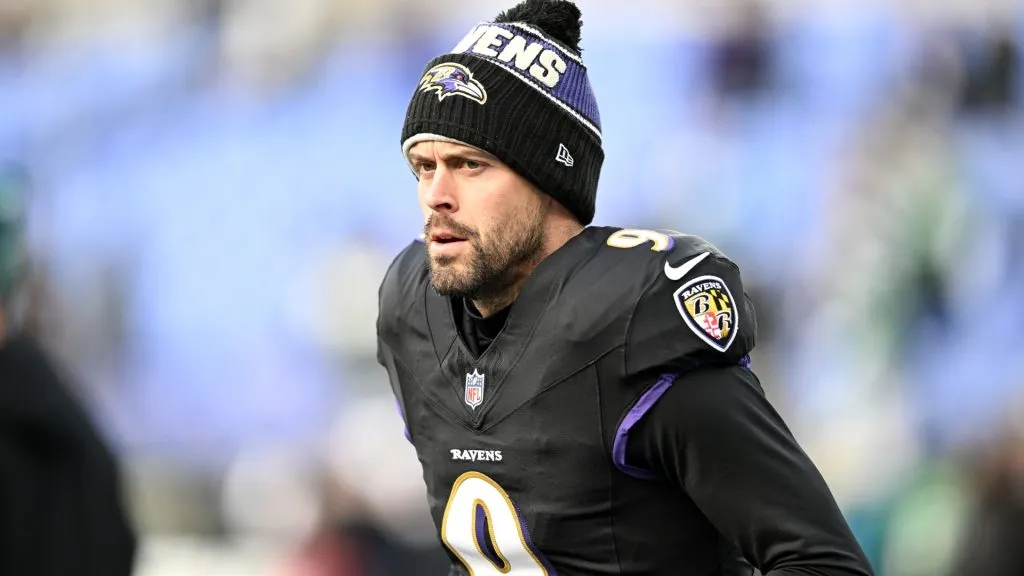
Justin Tucker (Source: Greg Fiume/Getty Images)
Forget the defense and the passing game for a moment: the most consistently reliable element of the modern Ravens franchise has been the leg of Justin Tucker. Signed as an undrafted free agent in 2012, this former opera major from Texas quickly established himself as the most accurate kicker in NFL history.
He is a paradox: a soft-spoken, multi-talented individual who performed under pressure with surgical, almost defiant, precision. His crowning moment remains the NFL-record 66-yard field goal—a breathtaking, gravity-defying walk-off winner in 2021.
Not just an accurate kicker; but also a weapon, earning seven Pro Bowl selections and five First-Team All-Pro nods, often functioning as the team’s insurance policy and ultimate offensive finisher. When the offense stalled, the Ravens simply needed to cross the 50-yard line to be within the range of “The Maestro”, a true specialist who redefined his position.
Todd Heap
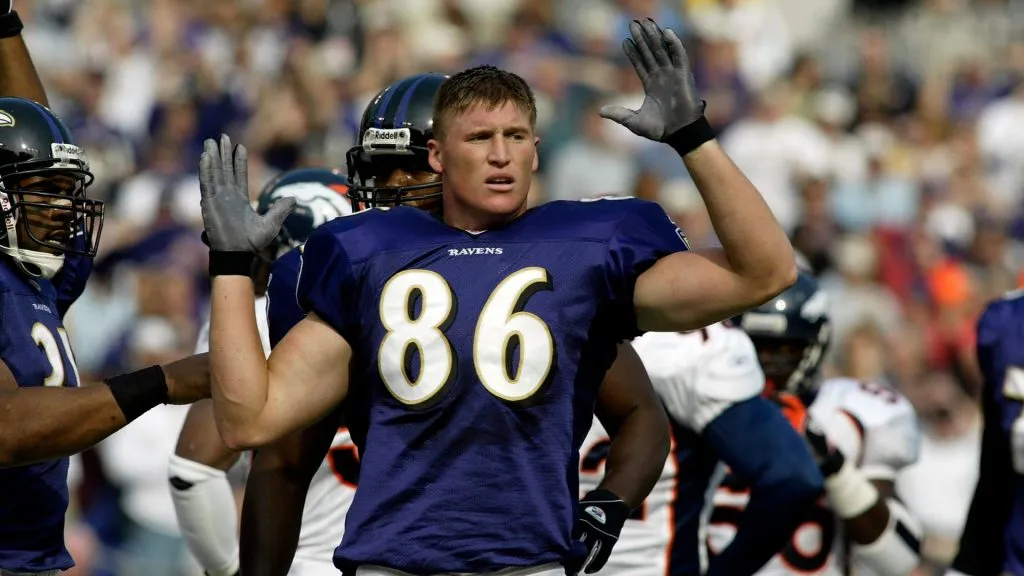
Todd Heap (Source: Grant Halverson/Getty Images)
For over a decade, when the Ravens’ offense needed a crucial first down or a red-zone strike, Todd Heap was the trusted target. Selected 31st overall in the 2001 Draft, Heap became the quintessential security blanket for every Ravens quarterback from Kyle Boller to Joe Flacco.
He was the most dependable receiver in a franchise initially devoid of consistent offensive star power. He wasn’t just a possession tight end; he was a gritty, high-effort player who became a fan favorite for his toughness and reliability.
He earned two Pro Bowl selections and held numerous franchise receiving records before his departure, establishing the legacy of the elite tight end position that later generations would inherit. More than just a statistic, he was a model of unwavering work ethic and a cornerstone of the Ravens’ methodical, run-heavy offense during the 2000s.
Rod Woodson
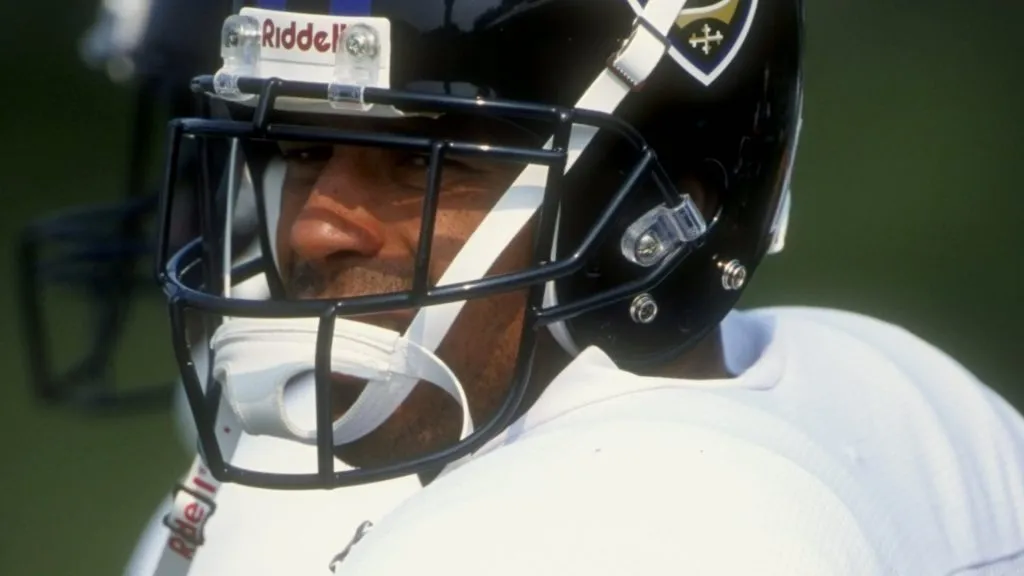
Rod Woodson (Source: Getty Images)
It’s rare for a legendary player to join a new team and immediately become the catalyst for a championship defense, but that’s exactly what Rod Woodson did. After stellar careers in Pittsburgh and San Francisco, the Hall of Fame defensive back signed with the Ravens in 1998, moving primarily to the safety position. His arrival provided the veteran intelligence and leadership that molded the youthful talent of Lewis and Reed into the record-breaking 2000 defense.
He was the ultimate “closer” in the secondary. An NFL record-holder with 71 career interceptions and 12 interception returns for a touchdown, his presence gave the 2000 defense its final, terrifying layer of wisdom and ball-hawking ability.
He was an honorary Raven, a transformative presence who helped the franchise win its first Super Bowl, proving that sometimes, the acquisition of an established legend is the final piece of the greatness puzzle.
Ray Rice
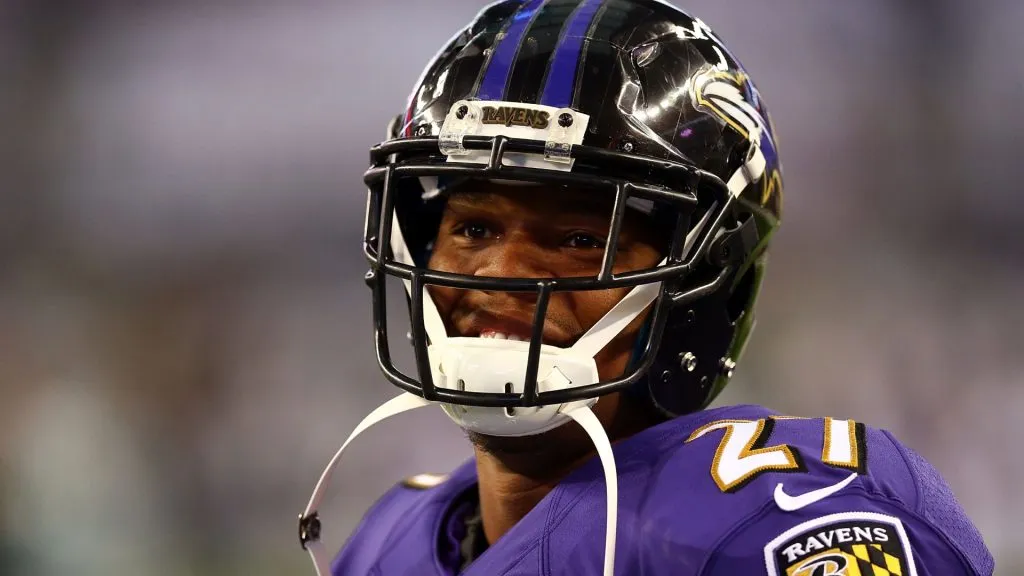
Ray Rice (Source: Ronald Martinez/Getty Images)
From 2009 to 2012, few players in the NFL were as dynamic or essential to their offense as Ray Rice. Drafted in the second round in 2008, the compact, explosive running back quickly became the centerpiece of the Ravens’ offense under Joe Flacco. He was a rare breed: equally devastating as an elusive runner between the tackles and as a fluid receiver out of the backfield.
He consistently produced over 2,000 yards from scrimmage in multiple seasons, a mark of true elite, all-purpose skill. He was a three-time Pro Bowler and a tireless, low-center-of-gravity runner who carried the offense during the Super Bowl XLVII run.
His memorable fourth-and-2 conversion in the 2012 playoffs against the Chargers remains one of the most clutch plays in team history. On the field, his prime was undeniably that of a top-tier NFL talent, driving the team’s greatest offensive successes of the early 2010s.
Peter Boulware
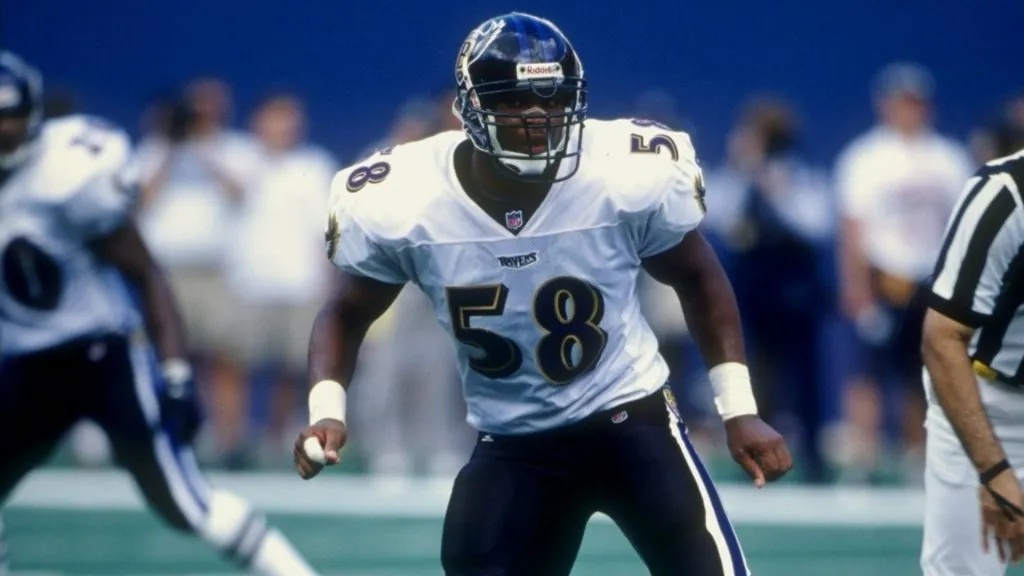
Peter Boulware (Source: Tomasso Derosa /Allsports)
Before Terrell Suggs carried the torch, Peter Boulware was the face of the Ravens’ elite pass rush. Drafted fourth overall in 1997, the outside linebacker from Florida State was an immediate impact player, providing the edge pressure that perfectly complemented Ray Lewis’s dominance in the middle.
He captured the NFL Defensive Rookie of the Year award after a stellar debut season, setting the tone for the type of athletic, ferocious defender Baltimore would prioritize.
He was a relentless force, consistently racking up sacks and earning four Pro Bowl selections during his career. He was a foundational member of the legendary Super Bowl XXXV defense, cementing his legacy as one of the franchise’s original defensive stars. While his career was defined by fierce performance, he was later inducted into the Ravens’ “Ring of Honor”, confirming his status as a defensive pioneer who helped establish the culture of aggression in Baltimore.
Matt Stover
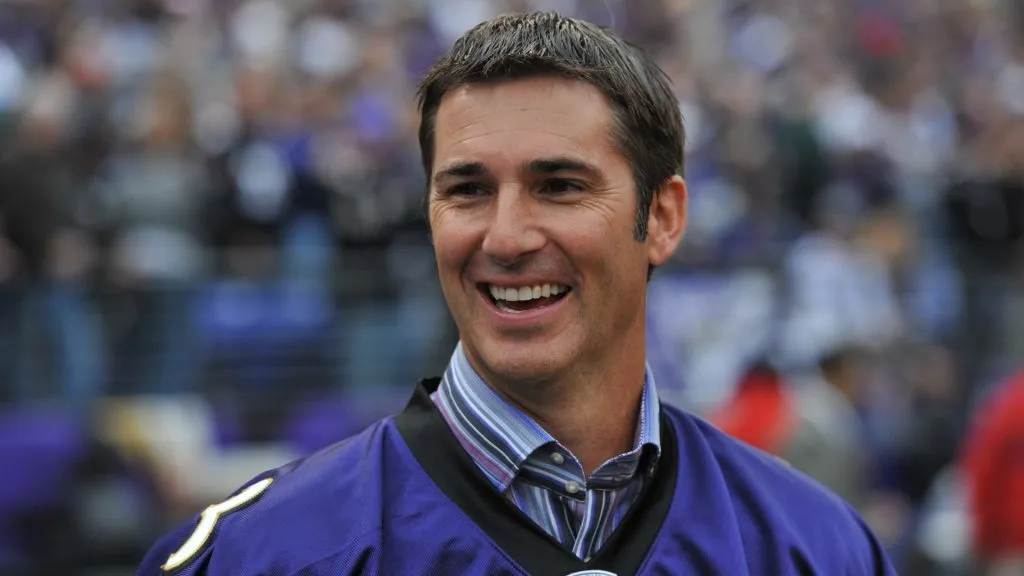
Matt Stover (Source: Larry French/Getty Images)
In the story of the Baltimore Ravens, Matt Stover provides a unique link to the past: he was the last active player from the original Cleveland Browns franchise that relocated to Baltimore in 1996. For 13 seasons, he was the picture of reliability and consistency, bridging the gap between the franchise’s tumultuous beginnings and its first championship.
Before the era of Justin Tucker, he was “Mr. Automatic”. He retired after the 2009 season as the NFL’s fourth all-time leading scorer, a testament to his longevity and clutch accuracy .
He was a Pro Bowl selection and a critical, quiet contributor to the Super Bowl XXXV victory. His legacy is one of steadfast excellence; he was the dependable veteran who literally kept the team on the scoreboard when the offense sputtered, an anchor in the special teams unit and a pillar of the early Ravens organization.
Tony Siragusa
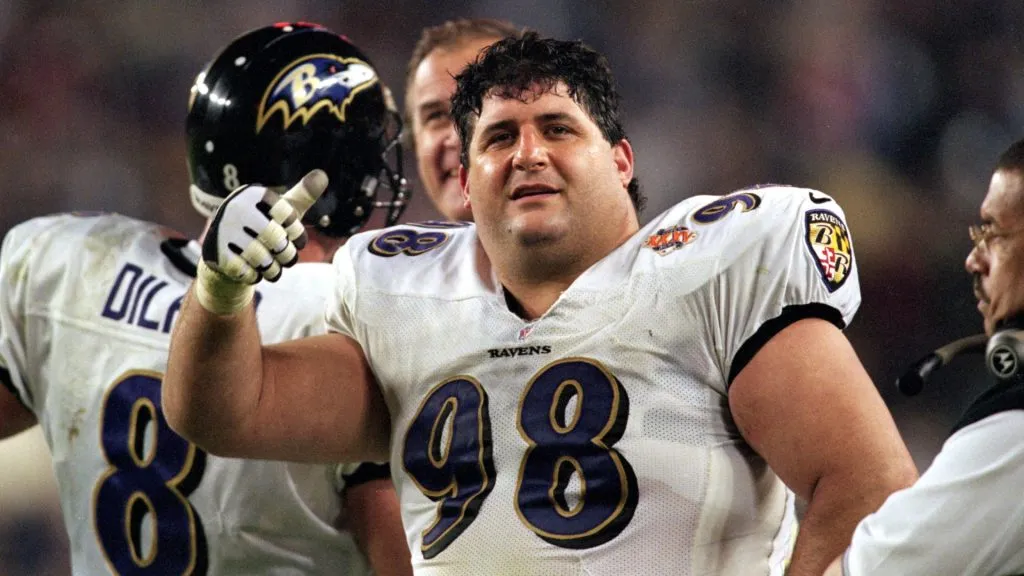
Tony Siragusa (Source: Andy Lyons /Allsport)
The name Tony Siragusa, affectionately known as “Goose”, brings to mind not just a defensive tackle, but a larger-than-life character whose boisterous personality was essential to the locker room of the Super Bowl XXXV team. Signed as a free agent, he became the massive, unmovable force at the center of the defensive line, absorbing blocks and opening lanes for Lewis and the other playmakers.
“The Goose” was the quintessential defensive anchor. Though his contributions were rarely reflected in the box score, his presence was vital in creating the dominance of the 2000 defense, which allowed a historically low number of points.
He embodied the rugged, intimidating spirit of that unit. He may not have the awards of his Hall of Fame teammates, but his impact as the tough, vocal enforcer who defined the attitude of the Super Bowl-winning defense is undeniable and unforgettable.
Adalius Thomas
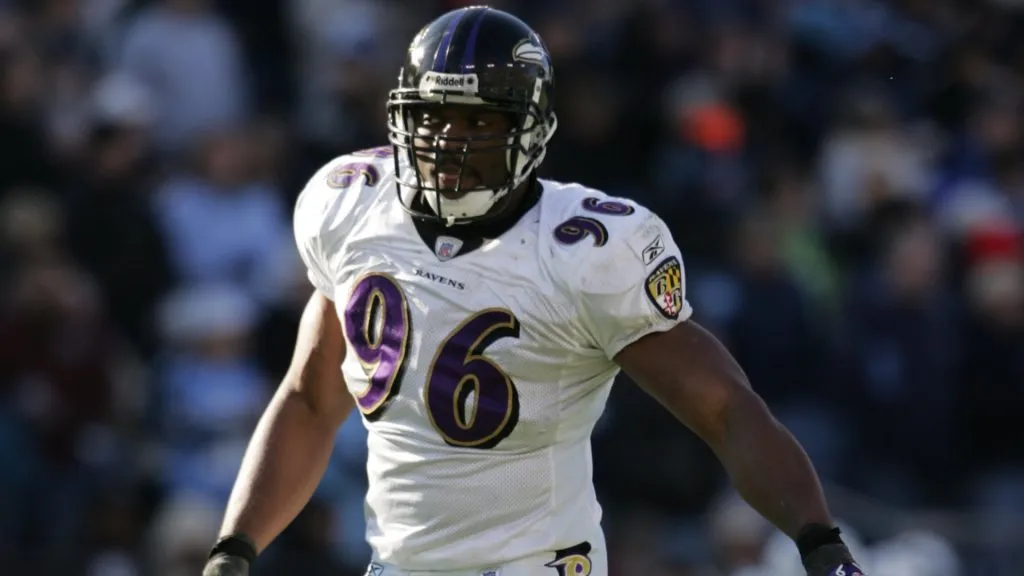
Adalius Thomas (Source: Andy Lyons/Getty Images)
Adalius Thomas was the kind of defender every coach dreams of: a versatile, hyper-athletic linebacker who could effectively rush the passer, cover tight ends, and drop into zone defense. Drafted in the sixth round in 2000, he developed into one of the league’s most adaptable defensive players, a true “Swiss Army Knife” in a unit already stocked with talent.
His ability to play multiple positions and create mismatches was crucial to the Ravens’ defensive identity in the mid-2000s. He was a Pro Bowl selection and one of the rare players who delivered impact plays in every facet of the game.
He represented the defensive creativity of the organization, demonstrating that the pursuit of greatness went beyond just finding stars, but also identifying and developing unique, multi-dimensional talents who could execute complex schemes.
Chris McAlister
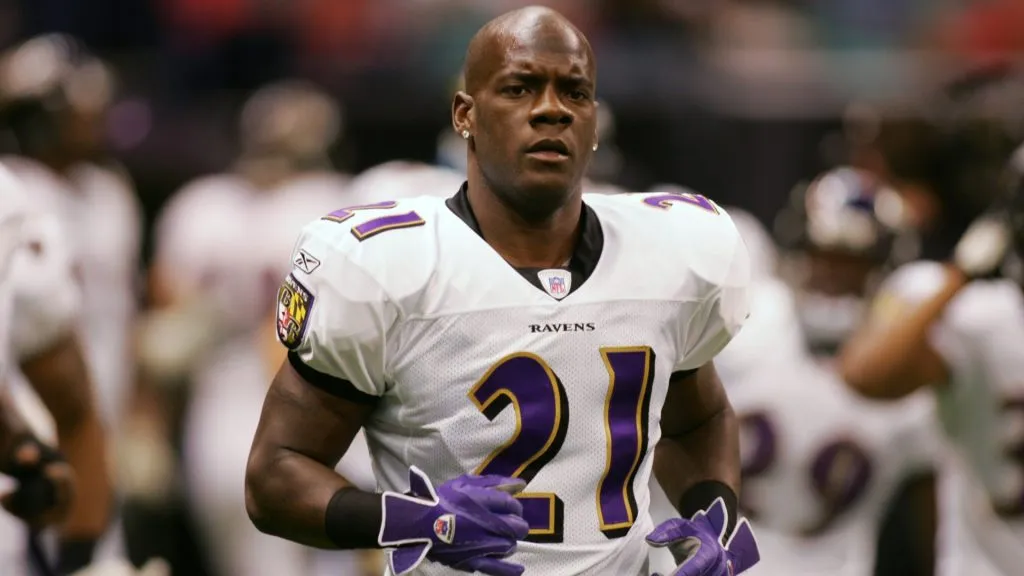
Chris McAlister (Source: Ronald Martinez/Getty Images)
Every great defense needs a cornerback capable of erasing the opposing team’s best receiver. For the Ravens, that player was Chris McAlister. Drafted 10th overall in 1999, he was a long, physical cornerback who established himself as a dominant presence in the secondary, often shutting down one side of the field entirely.
He was part of the phenomenal defensive backfield that included Rod Woodson and Ed Reed in the 2000 Super Bowl team. His combination of size and speed allowed him to press receivers or play off-coverage with equal effectiveness.
A three-time Pro Bowler, he became the Ravens’ most important cornerback for years, his elite play often going unnoticed simply because quarterbacks learned it was better to avoid throwing near him—the ultimate compliment for a shutdown corner.
Sam Koch
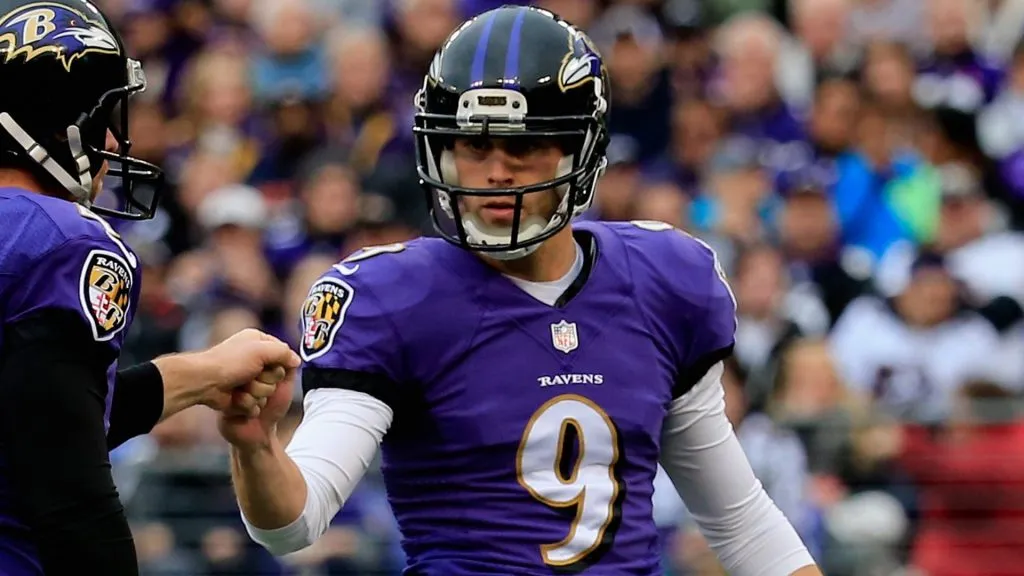
Sam Koch (Source: Rob Carr/Getty Images)
While the kicker Justin Tucker steals the spotlight, the foundation of the Ravens’ special teams excellence rests with Sam Koch. Drafted in 2006, he was not just a punter; he was a “Punting Architect,” mastering the art of directional punting and innovative kicks that routinely pinned opponents deep in their own territory.
His importance is often measured not by distance, but by field position—a concept critical to the Ravens’ defensive success. He holds the NFL record for most career punts for any individual franchise, symbolizing his longevity and consistent ability to execute the game plan.
A Super Bowl XLVII champion and a Pro Bowl selection, his mastery of the technique—including the invention of the “Koch Kick”—transformed the punting game from a simple necessity into a genuine weapon for Baltimore.
Jarret Johnson
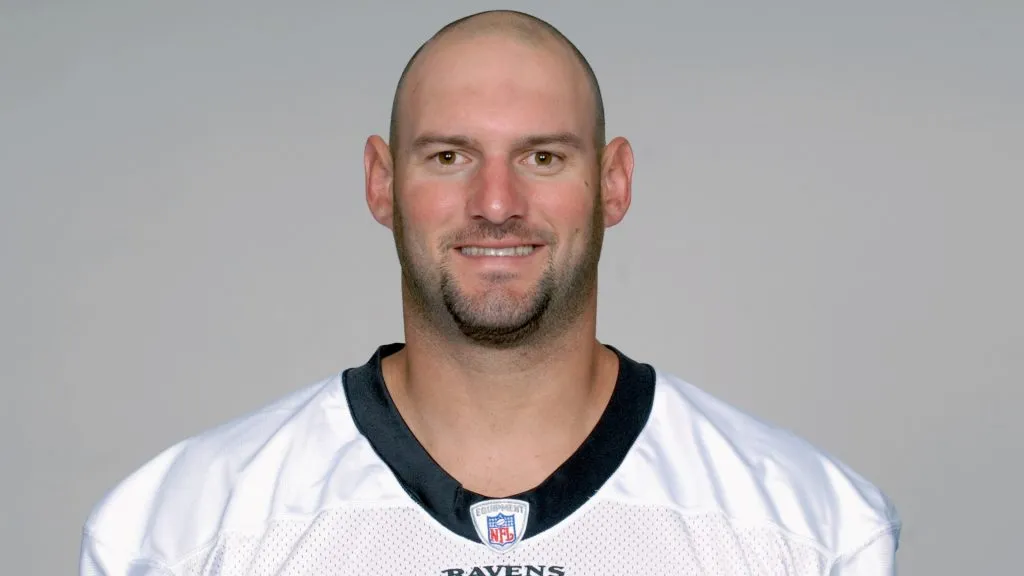
Jarret Johnson (Source: NFL via Getty Images)
In a defense filled with Hall of Famers, Jarret Johnson was the essential piece of grit and reliability that often went unheralded. Drafted in the fourth round in 2003, this outside linebacker from Alabama became the epitome of the blue-collar Raven, performing the dirty work against the run that allowed his star teammates to chase the glory plays.
His excellence lay in his sheer durability and effort. He held the franchise record for consecutive starts for a time, a testament to his relentless presence on the field. While his 25.5 career sacks with the Ravens don’t jump off the page, his ability to set the edge against the rushing attacks of the AFC North—a brutal division—was his hallmark.
He wasn’t flashy; he was fundamentally perfect, earning the respect of the entire city as an “unsung hero” and defensive leader during a decade of defensive dominance.
C.J. Mosley
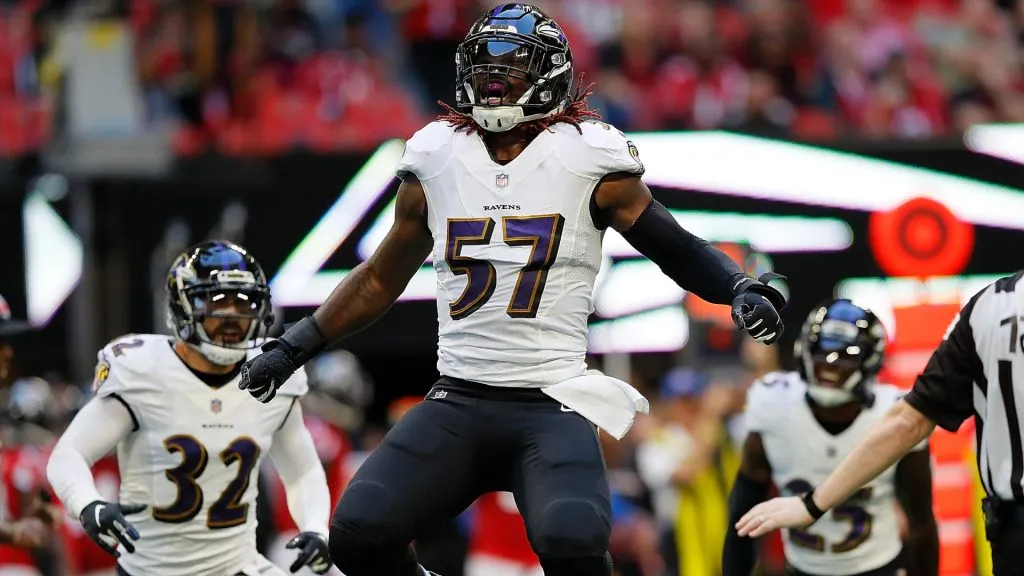
C.J. Mosley (Source: Kevin C. Cox/Getty Images)
Stepping into the colossal shadow left by Ray Lewis, C.J. Mosley was tasked with commanding the middle of the Ravens’ defense immediately. Selected 17th overall in 2014, the Alabama product proved worthy of the immense responsibility, quickly becoming the defensive general and inheriting the “green dot” helmet that signaled his leadership on the field.
His game was defined by his elite athleticism, sure-handed tackling, and surprising playmaking ability in coverage, making him a true three-down linebacker. He was an instant success, becoming the first player in franchise history to make the Pro Bowl as a rookie.
He compiled four Pro Bowl selections and four Second-Team All-Pro nods during his tenure in Baltimore, demonstrating his elite status. His departure marked the end of the seamless lineage of inside linebacker greatness that began with Lewis, reminding fans how quickly a true defensive leader can become invaluable.
Anquan Boldin
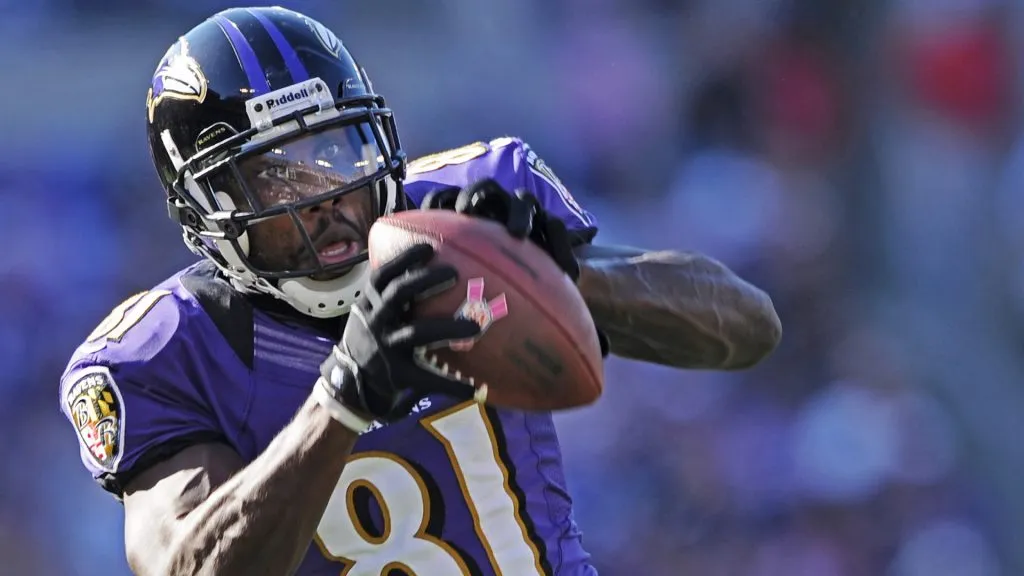
Anquan Boldin (Source: Patrick Smith/Getty Images)
While his time in Baltimore was brief, Anquan Boldin’s impact was focused entirely on one thing: championship execution. Acquired in 2010, the veteran wide receiver immediately injected a much-needed dose of physicality and postseason grit into the Ravens’ passing game.
He specialized in contested catches and refusing to go down, giving Joe Flacco a reliable, hard-nosed target. His career crested during the 2012 playoff run, often referred to as the “Flacco Inferno,” where he truly earned the moniker of “Postseason Warrior”.
In those four games leading to the Super Bowl XLVII title, Boldin was unstoppable, logging 22 catches for 380 yards and 4 touchdowns—including several momentum-swinging grabs in the Super Bowl itself. His clutch performance in those critical moments made his short tenure one of the most significant and effective of any non-defensive player in franchise history.
Derrick Mason
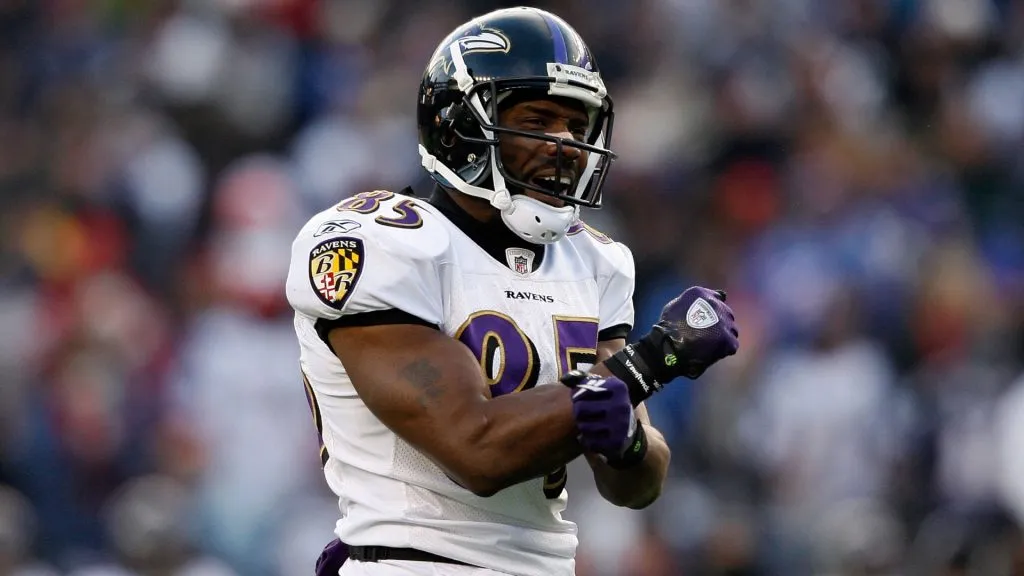
Derrick Mason (Source: Elsa/Getty Images)
The arrival of Derrick Mason in 2005 as a free agent marked a pivotal moment for the Ravens’ offense: finally, they had a true, consistent number one wide receiver. He was neither the fastest nor the tallest, but he was a technician, a detail-oriented veteran whose reliable hands and route running made him a quarterback’s best friend.
He immediately set the tone for receiving excellence in Baltimore, holding the franchise career records for receptions and receiving yards upon his retirement. He also became the first Raven to record a 100-catch season. He was the veteran presence who shepherded young Joe Flacco into the NFL, providing the stability and leadership needed to evolve the offense.
General Manager Ozzie Newsome stated that few players made more of an impact on the organization than him, cementing his status as the player who proved the Ravens could also achieve offensive greatness.
Brandon Williams
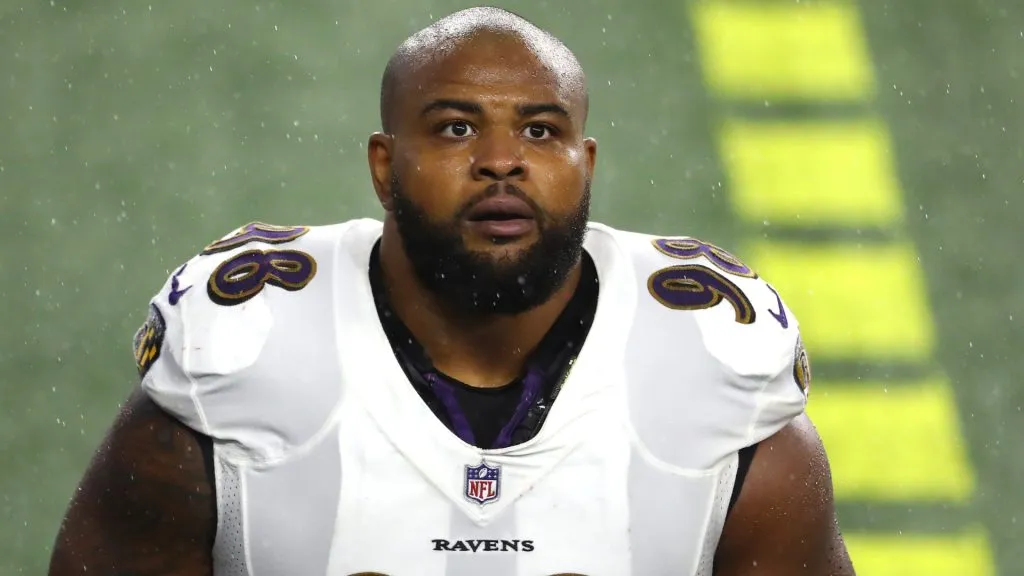
Brandon Williams (Source: Maddie Meyer/Getty Images)
When discussing defensive greatness, the unglamorous job of the Nose Tackle is often overlooked, but not so with Brandon Williams. Drafted in 2013, the Division II standout became the immovable object in the middle of the defensive line, inheriting the lineage of Haloti Ngata as the linchpin of the Ravens’ run defense.
His value was his sheer mass and power, forcing running plays to bounce outside where the linebackers could finish the job. He was, fundamentally, the player who allowed the Ravens to control the line of scrimmage and dictate the flow of the game.
His consistency as a run-stuffer earned him a Pro Bowl selection in 2018. Though he did not put up massive sack numbers, his presence meant that opposing teams simply could not run up the middle—a vital, powerful piece of the enduring “Defense and Beyond” legacy in Baltimore.
Shannon Sharpe
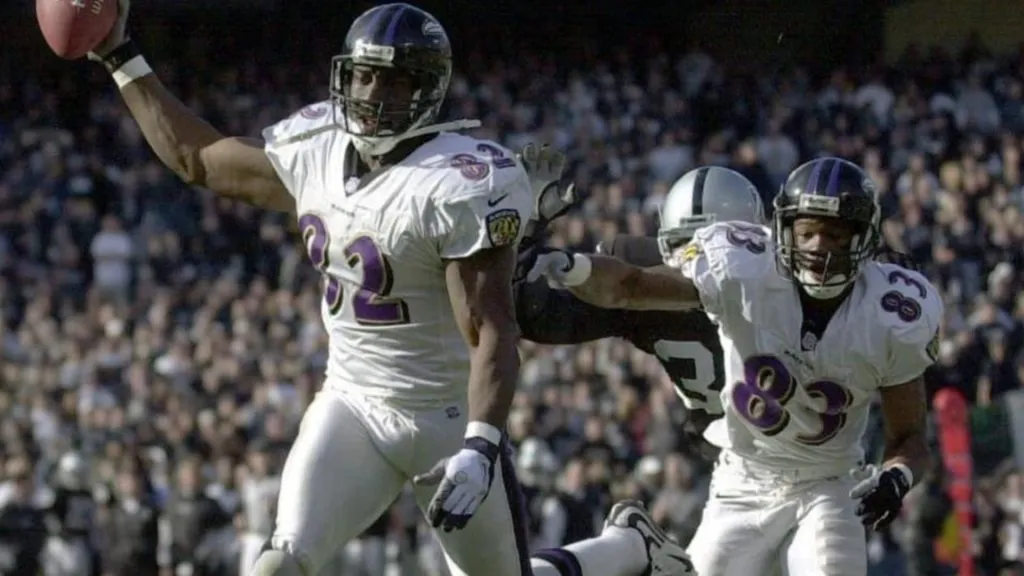
Shannon Sharpe (Source: Baltimore Ravens)
The final piece needed to ignite the 2000 Super Bowl defense was not a defender, but a veteran offensive voice with championship pedigree. Shannon Sharpe, the Hall of Fame tight end, arrived in Baltimore for a two-season stint and immediately became the audible leader and most reliable playmaker for the nascent Ravens offense.
Sharpe, already a legend from his time in Denver, gave the Ravens something they desperately needed: a clutch receiver and an emotional fire to match the defense’s intensity. He was not merely a complementary piece; he was the primary target, consistently leading the team in receptions and providing the offensive stability necessary to avoid turnovers.
His impact was felt most profoundly in the 2000 AFC Championship game, where his 96-yard touchdown reception proved to be the longest touchdown catch in Ravens playoff history at the time, shattering the Raiders’ hopes and launching Baltimore toward their first championship in Super Bowl XXXV. His brief tenure redefined the role of a veteran acquisition, proving that the right blend of talent and leadership can instantly unlock greatness.