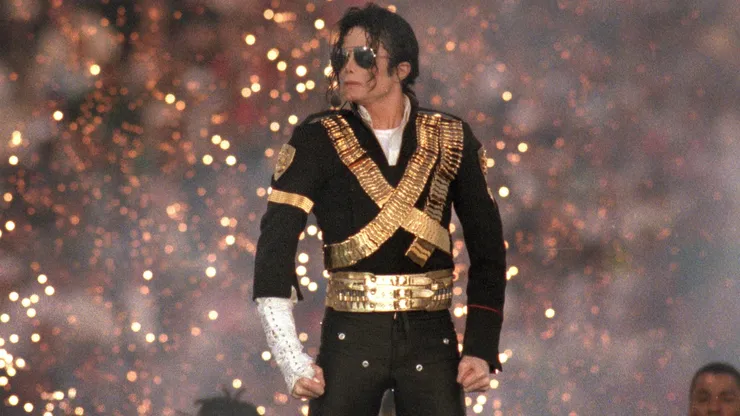
The Super Bowl halftime show has grown from a simple musical interlude into a cultural spectacle, where pop icons and legendary performers seize one of the world’s largest stages. Each performance blends music and pageantry, creating moments that linger far beyond the stadium.
From Michael Jackson’s groundbreaking 1993 set to Rihanna’s 2023 spectacle, these shows have evolved into carefully crafted narratives of artistry and entertainment. They reflect changing trends and technological leaps, turning a 15-minute slot into a defining moment of pop culture.
Across NFL decades, these shows have become more than performances—they are flashes of innovation, theatrical ambition and cultural resonance, capturing attention, inspiring conversation and cementing their place in music history.
Michael Jackson (1993)
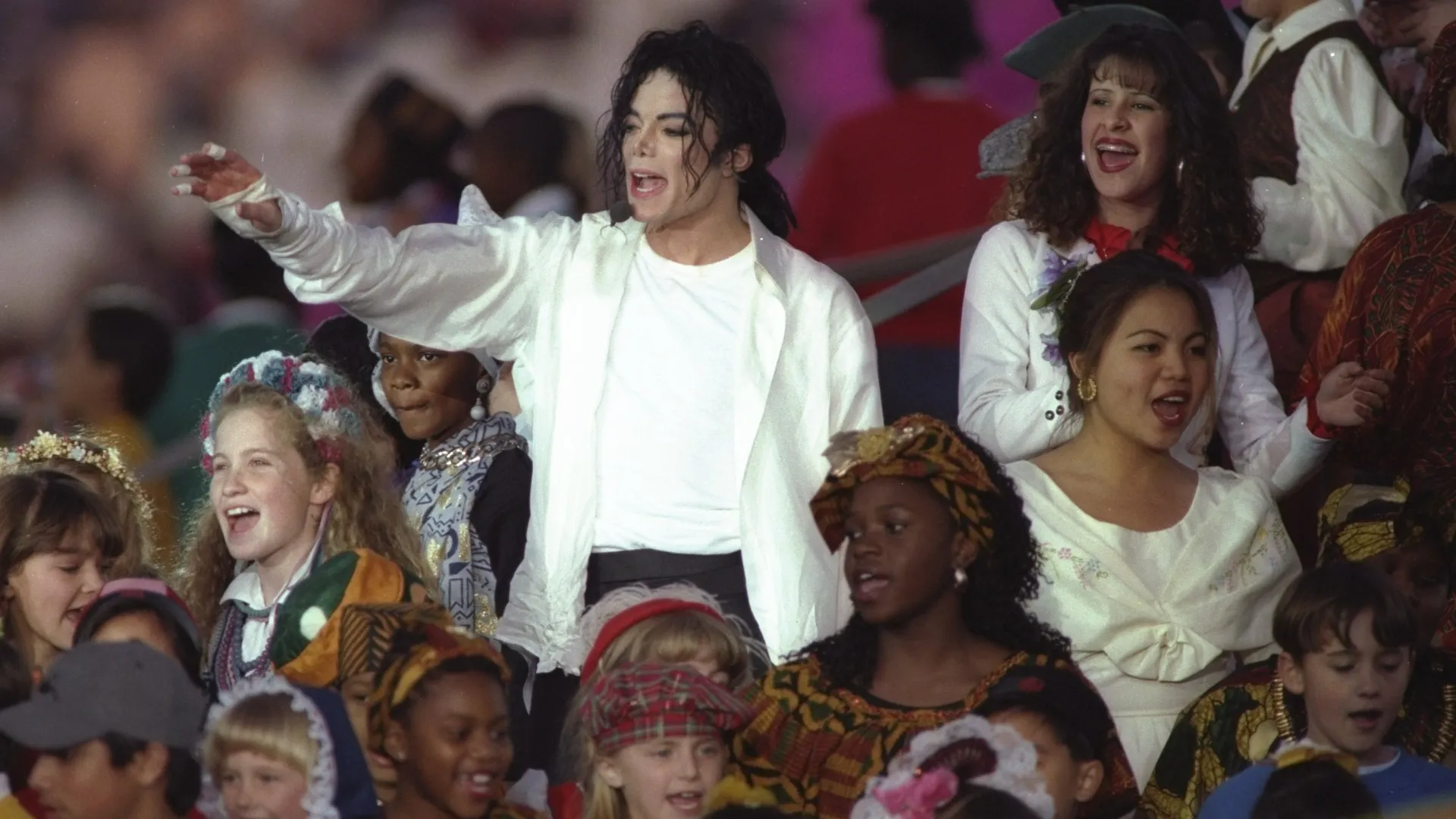
Michael Jackson (Source: Getty Images)
Long before halftime spectacles became the production extravaganzas they are today, Michael Jackson redefined what the moment could be. His 1993 show at Super Bowl XXVII captivated over 133 million viewers and marked a pivot point where halftime became a career‑defining platform for global entertainers.
With a tight, electrifying medley of hits, precision choreography and signature costume flair, his performance solidified his status as a cultural force whose reach extended far beyond music charts.
Rihanna (2023)
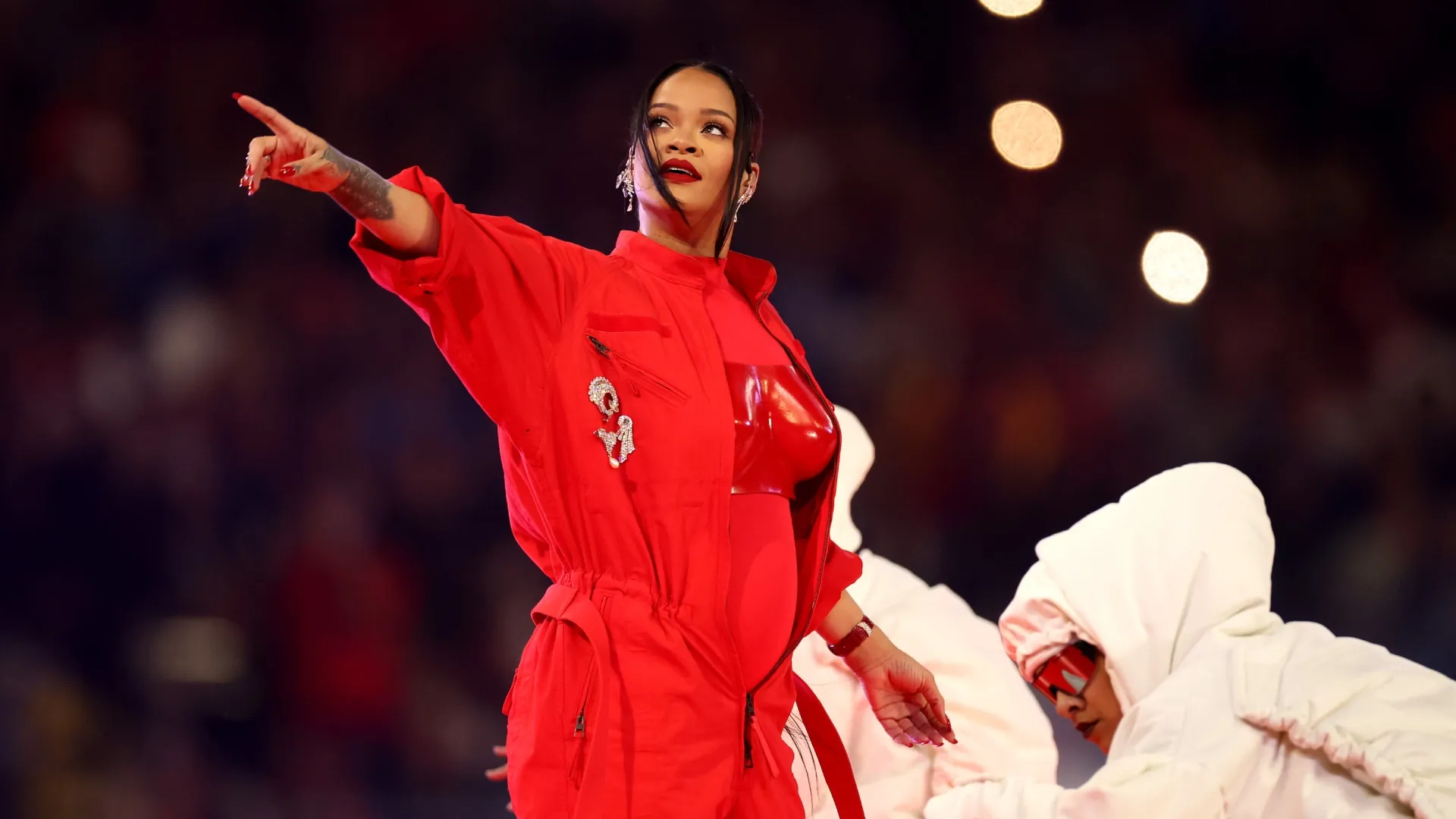
Rihanna (Source: Ezra Shaw/Getty Images)
Rihanna’s appearance at Super Bowl LVII was a testament to her enduring allure and pop catalog’s breadth. Headlining the first Apple Music‑sponsored halftime show, she delivered an expansive medley that traversed her chart‑topping hits, merging club rhythms with emotional balladry and high‑energy choreography.
Her bold red costume and commanding presence helped anchor a visually striking show that drew more than 121 million viewers, placing it among the most watched in recent years and reinforcing her status as a global musical icon.
Dr. Dre, Snoop Dogg, Eminem, Mary J. Blige and Kendrick Lamar (2022)
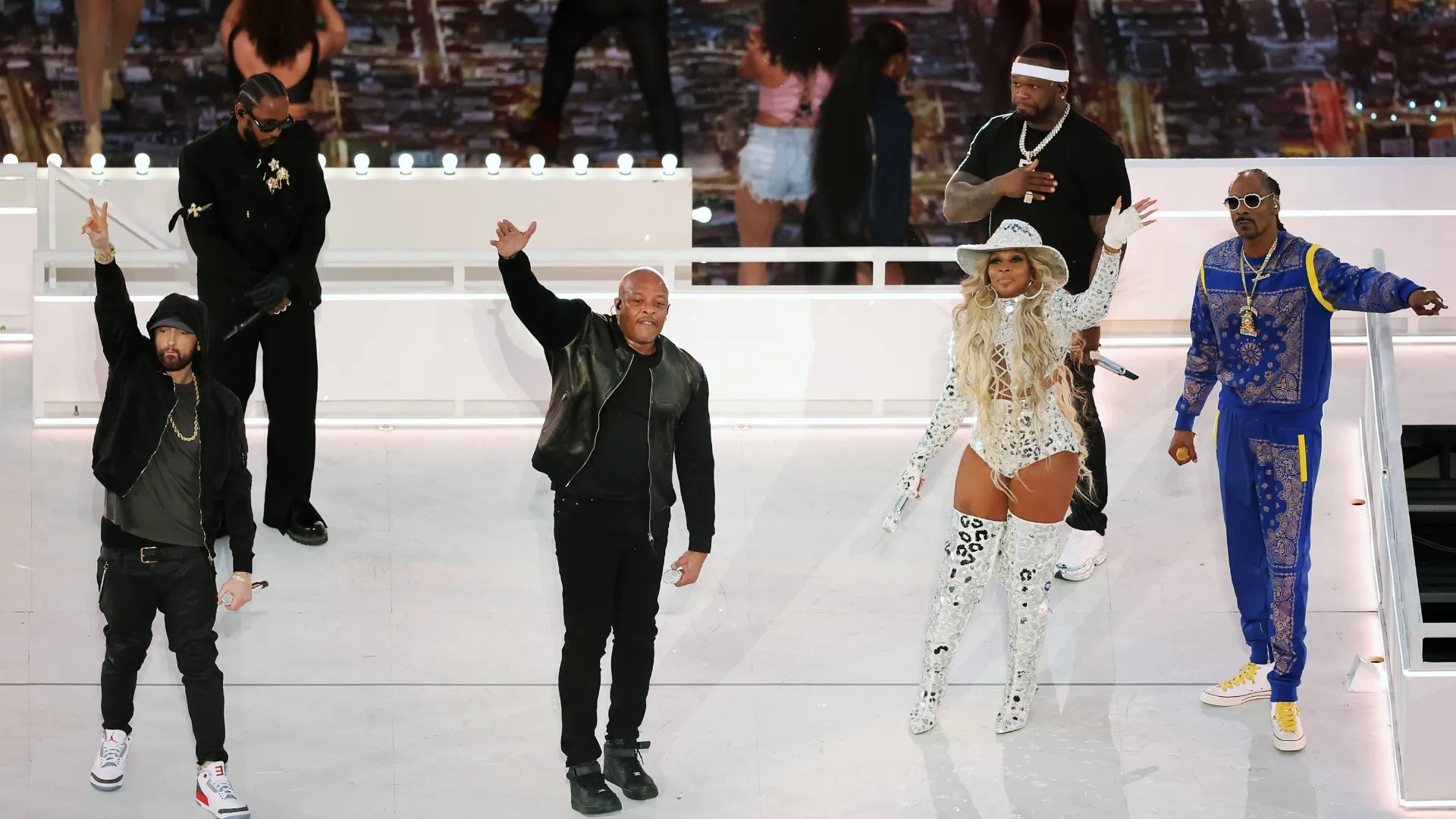
Dr. Dre, Snoop Dogg, Eminem, Mary J. Blige and Kendrick Lamar (Source: Gregory Shamus/Getty Images)
The Super Bowl LVI halftime show was a seismic shift for the NFL’s musical intermission, placing hip‑hop at the heart of America’s biggest televised stage for the first time. Anchored by West Coast rap legend Dr. Dre alongside Snoop Dogg’s laid‑back charisma, Eminem’s fiery delivery and Kendrick Lamar’s lyrical gravitas, the set was a living mosaic of decades‑defining hip‑hop anthems and cultural milestones.
Mary J. Blige added soulful heat to the lineup, culminating in a rare blend of power and nostalgia that bridged generations of music fans. The performance won multiple Primetime Emmy Awards and was widely praised for its energy and cultural resonance, marking a milestone where the halftime show became a celebration of hip‑hop’s global influence.
Lady Gaga (2017)
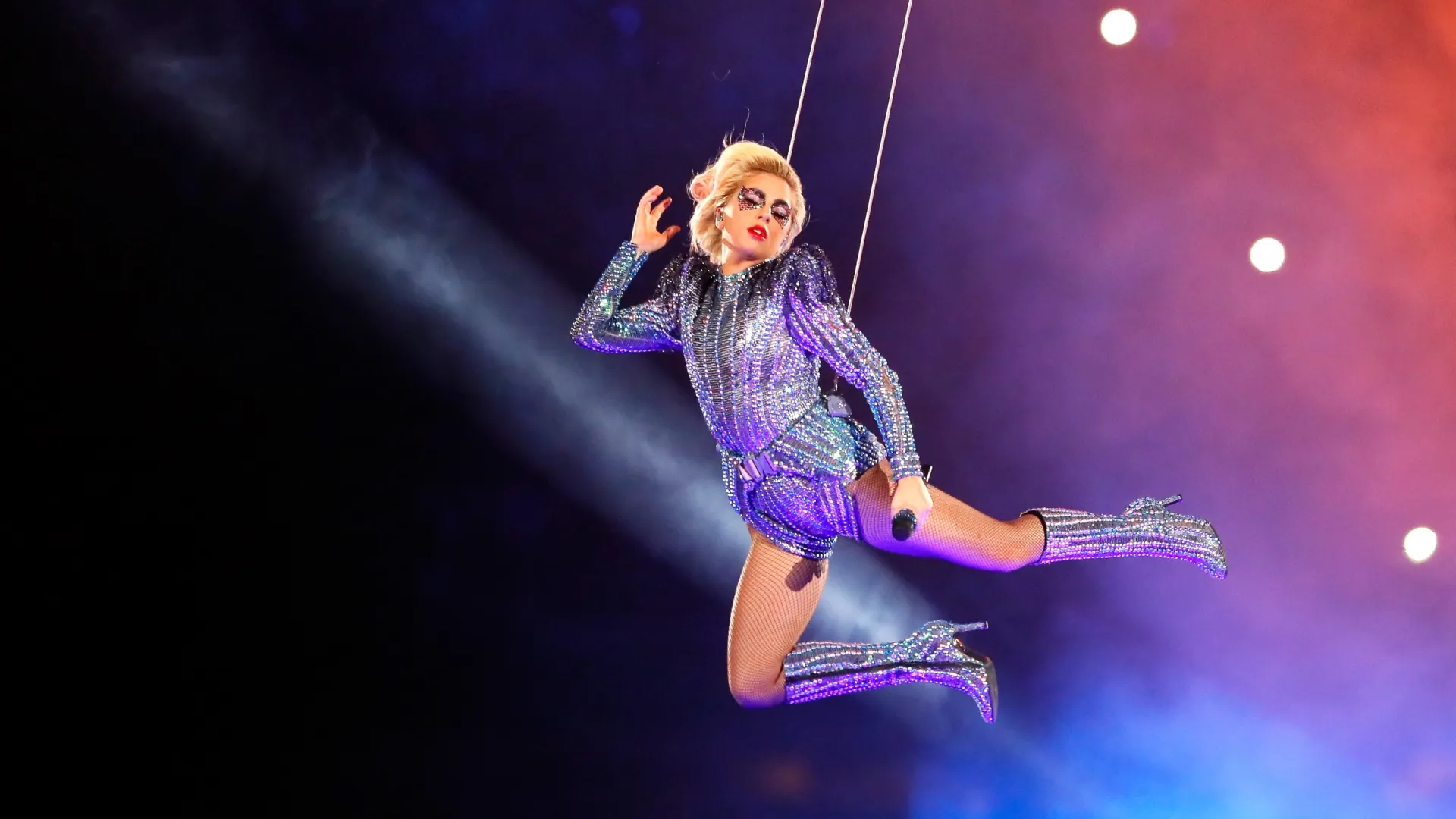
Lady Gaga (Source: Patrick Smith/Getty Images)
Lady Gaga’s halftime show at Super Bowl LI was a testament to showmanship and vocal prowess. Opening with a dramatic a cappella rendition of “God Bless America,” she then launched into an electric set spanning her catalog—melding cinematic staging, soaring choreography, and high production values.
A bold roof‑top leap early in the performance became one of the event’s most replayed clips, emblematic of her fearless approach to live spectacle and her ability to fuse pop brilliance with theatrical flair.
U2 (2002)
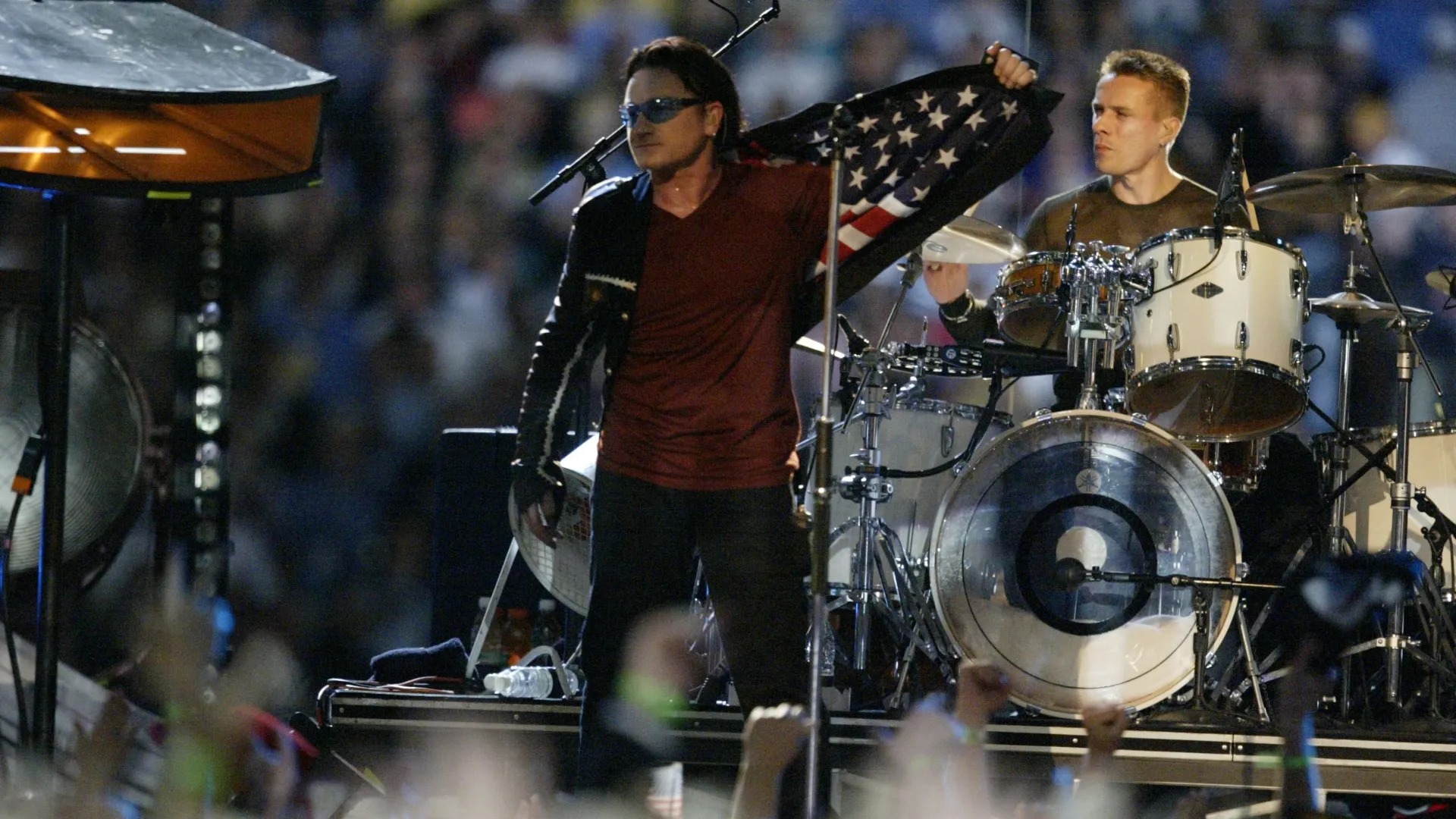
U2 (Source: Jed Jacobsohn/Getty Images)
U2’s 2002 halftime show arrived just months after the September 11 attacks, transforming the Super Bowl stage into a platform for collective reflection rather than mere entertainment. The Irish rock icons began with soaring optimism in “Beautiful Day”, then gently shifted tones with “MLK” before rising to a cathartic climax with “Where the Streets Have No Name”.
As the band performed, the names of 9/11 victims were projected behind them, and Bono closed the set revealing an American flag inside his jacket—an unforgettable gesture of unity and healing.
Beyonce (2013)
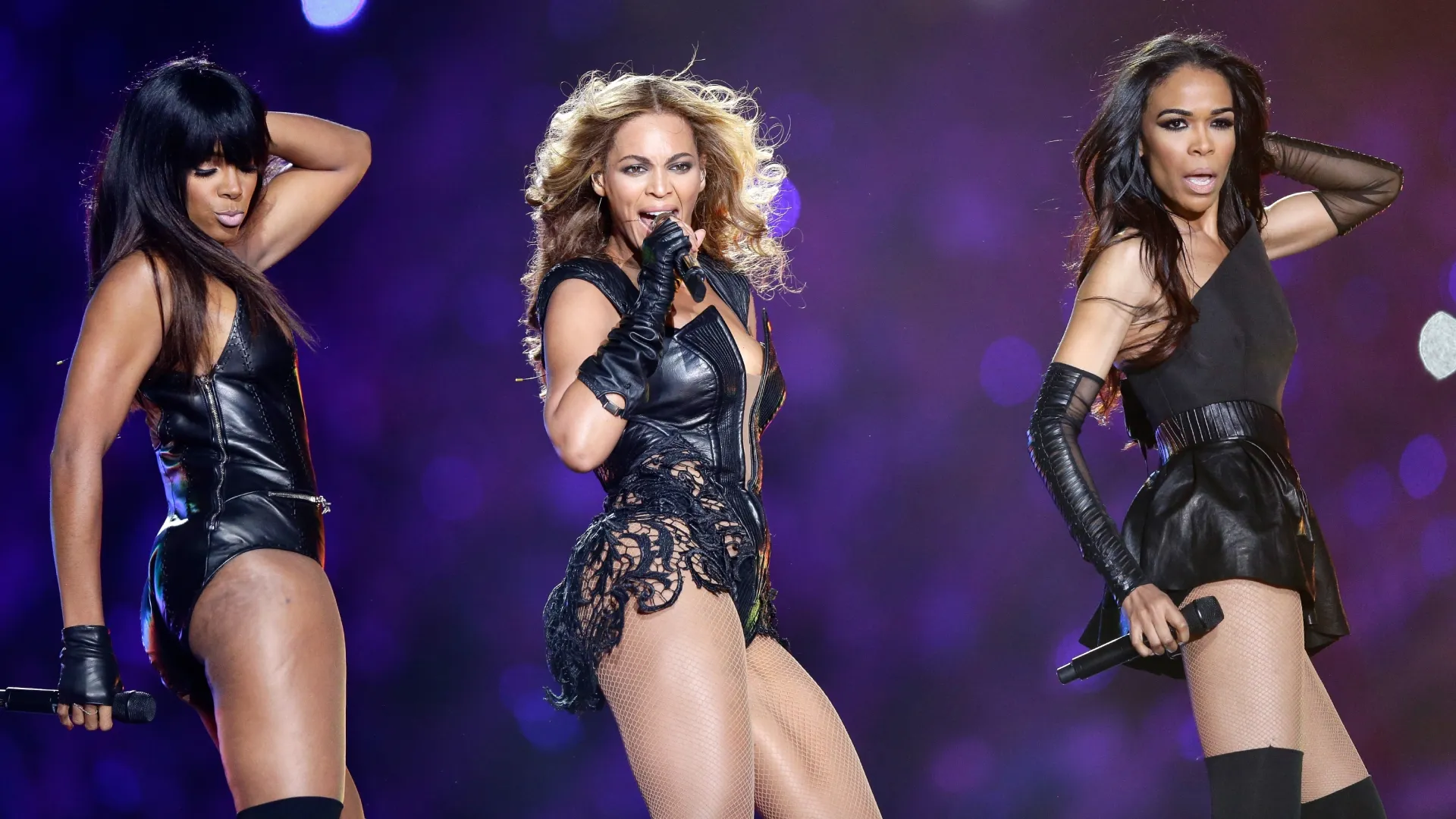
Beyonce with Kelly Rowland and Michelle Williams (Source: Ezra Shaw/Getty Images)
Beyonce’s Super Bowl XLVII performance was an all‑out showcase of precision artistry, athletic choreography and commanding stage presence. With a medley of hits that blended pop, R&B, and hip‑hop moments, she controlled the narrative from start to finish.
A highlight was the surprise reunion with Destiny’s Child—Kelly Rowland and Michelle Williams joining her for classic hits—which added emotional weight to the already electric atmosphere. Moments after she exited, a partial stadium blackout occurred, cementing the show in halftime lore and sparking endless online conversation.
Prince (2007)
Prince’s Super Bowl XLI halftime show is often cited as one of the greatest in Super Bowl history, not least because of the dramatic rain that poured down upon his performance. Defying the elements, he delivered a potent blend of rock, funk, and soul, culminating in a haunting rendition of “Purple Rain”.
The combination of atmospheric conditions and his commanding stage presence blurred the line between circus and sermon, making the set not just a show but a narrative moment of resilience and artistry.
Aerosmith, NSYNC, Britney Spears, Mary J. Blige and Nelly (2001)
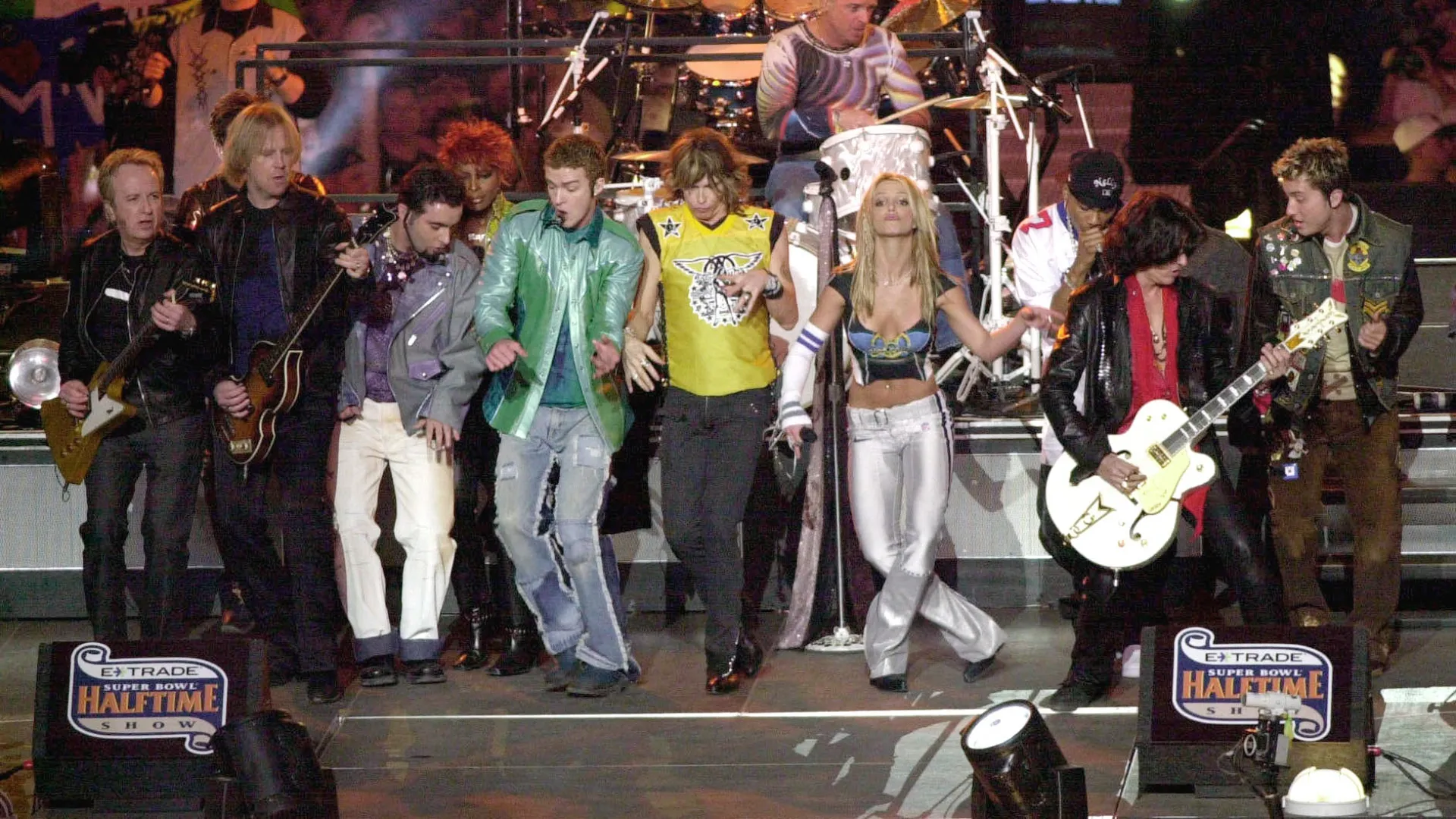
NSYNC, Aerosmith and Britney Spears (Source: Doug Pensinger/ALLSPORT)
January 28, 2001’s halftime show at Super Bowl XXXV was a showcase of genre fusion and pop spectacle. Rock veterans Aerosmith traded verses with boy band phenomenon *NSYNC in a back‑and‑forth medley blending “I Don’t Want to Miss a Thing” with *NSYNC’s choreographed pop hooks.
What began as two worlds colliding evolved into a celebratory finale: all the performers—Britney Spears, Mary J. Blige, Nelly, and more—joined forces for a rendition of “Walk This Way.”
This unprecedented mash‑up of rock, pop, R&B, and hip‑hop echoed early 2000s music culture, making the performance feel less like a halftime break and more like a capsule of the era’s chart‑topping diversity.
Katy Perry, Missy Elliott and Lenny Kravitz (2015)
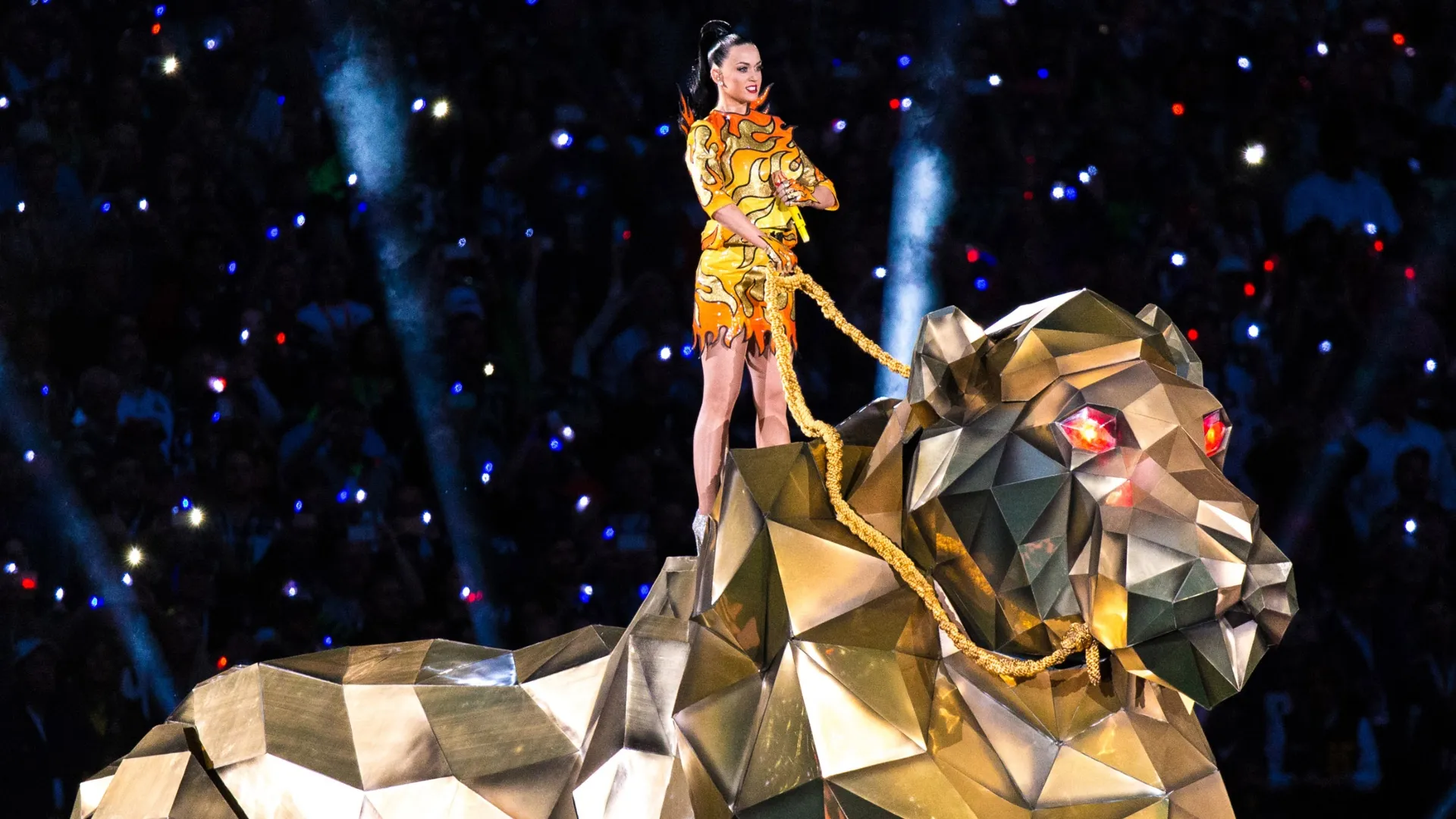
Katy Perry (Source: Christopher Polk/Getty Images)
Katy Perry’s Super Bowl XLIX halftime show leaned into excess and color in a way that few others have managed. From her coronation atop a towering mechanical lion to the extravagance of dancers dressed as vivid beach motifs, the performance was unapologetically theatrical.
Her set moved fluidly through anthem‑like pop anthems (“Roar,” “Firework”) and playful nods to youth culture (“Teenage Dream”), while special guests Missy Elliott and Lenny Kravitz brought bursts of hip‑hop swagger and rock guitar to the mix.
And no recap of this show is complete without the now‑legendary “Left Shark” moment—an off‑beat backup dancer whose unorthodox moves became an internet sensation and cultural footnote in halftime lore.
The Who (2010)
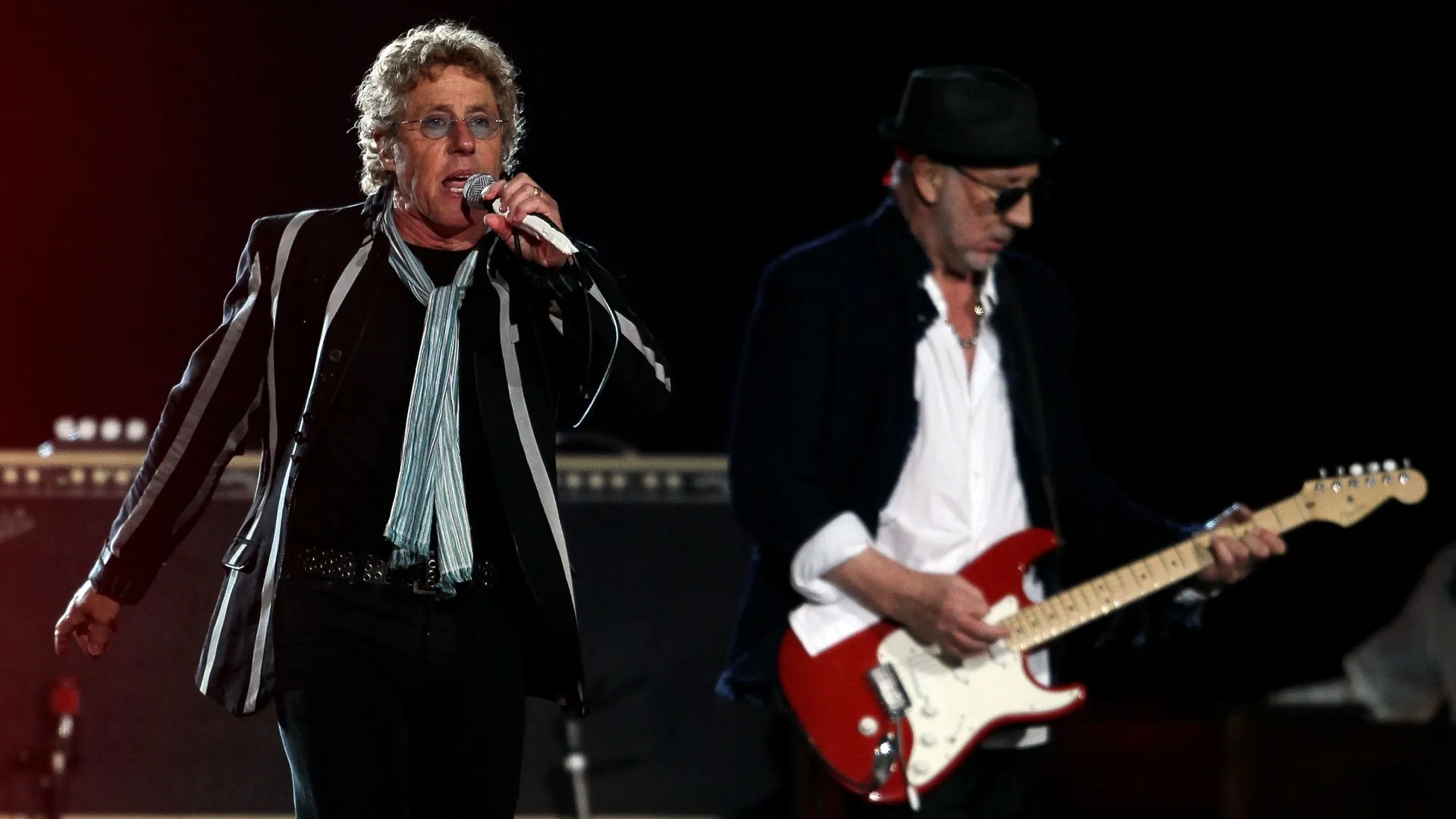
The Who (Source: Andy Lyons/Getty Images)
When The Who took the halftime stage in 2010, they did so with the authority of rock pioneers rather than pop chart‑toppers. In an era when the Super Bowl was increasingly dominated by contemporary pop, the English band offered something distinctly classic: powerful guitar work, blistering energy, and a set that read like a greatest‑hits barrage.
With Pete Townshend’s windmill‑style strums and Roger Daltrey’s emotive vocals, The Who’s performance stitched the sacrament of stadium rock into the pageantry of America’s biggest sports broadcast, reminding viewers that halftime spectacle could still be rooted in raw musical force.
Coldplay, Beyonce and Bruno Mars (2016)
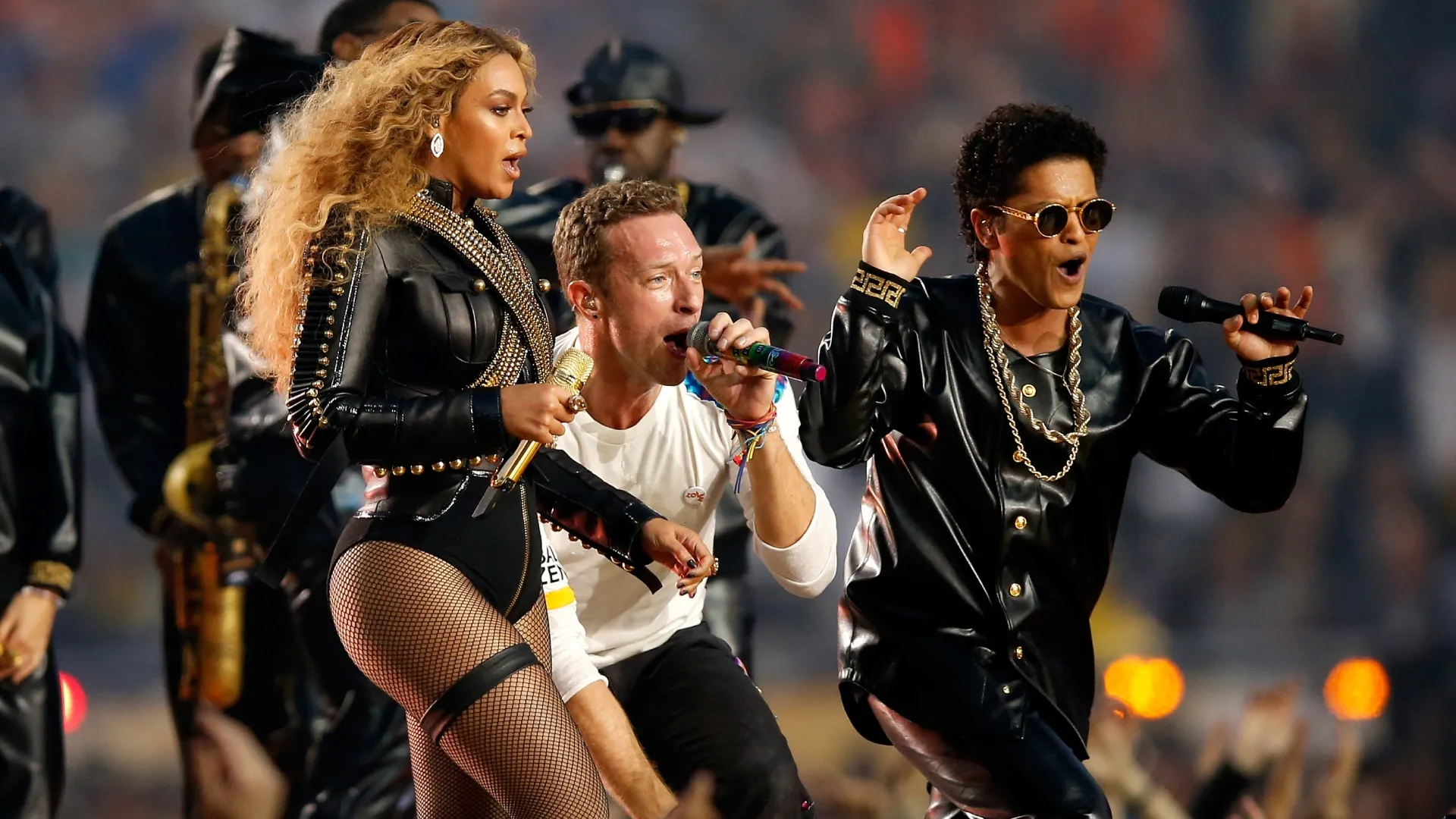
Beyonce, Chris Martin of Coldplay and Bruno Mars (Source: Ezra Shaw/Getty Images)
Coldplay’s Super Bowl 50 performance was more than a halftime show—it was a collaborative celebration of musical legacy and performance craft. On February 7, 2016, the British band spearheaded a set that wove their sweeping anthems with guest appearances from Beyonce and Bruno Mars, creating a tapestry of pop, soul, and electrifying showmanship.
From the sing‑along familiarity of Coldplay’s catalog to Beyonce’s commanding presence and Bruno Mars’ charismatic rhythm, the set blurred the lines between headliner and featured act, turning halftime into a showcase of interconnected star power with global resonance.
Bruce Springsteen and the E Street Band (2009)
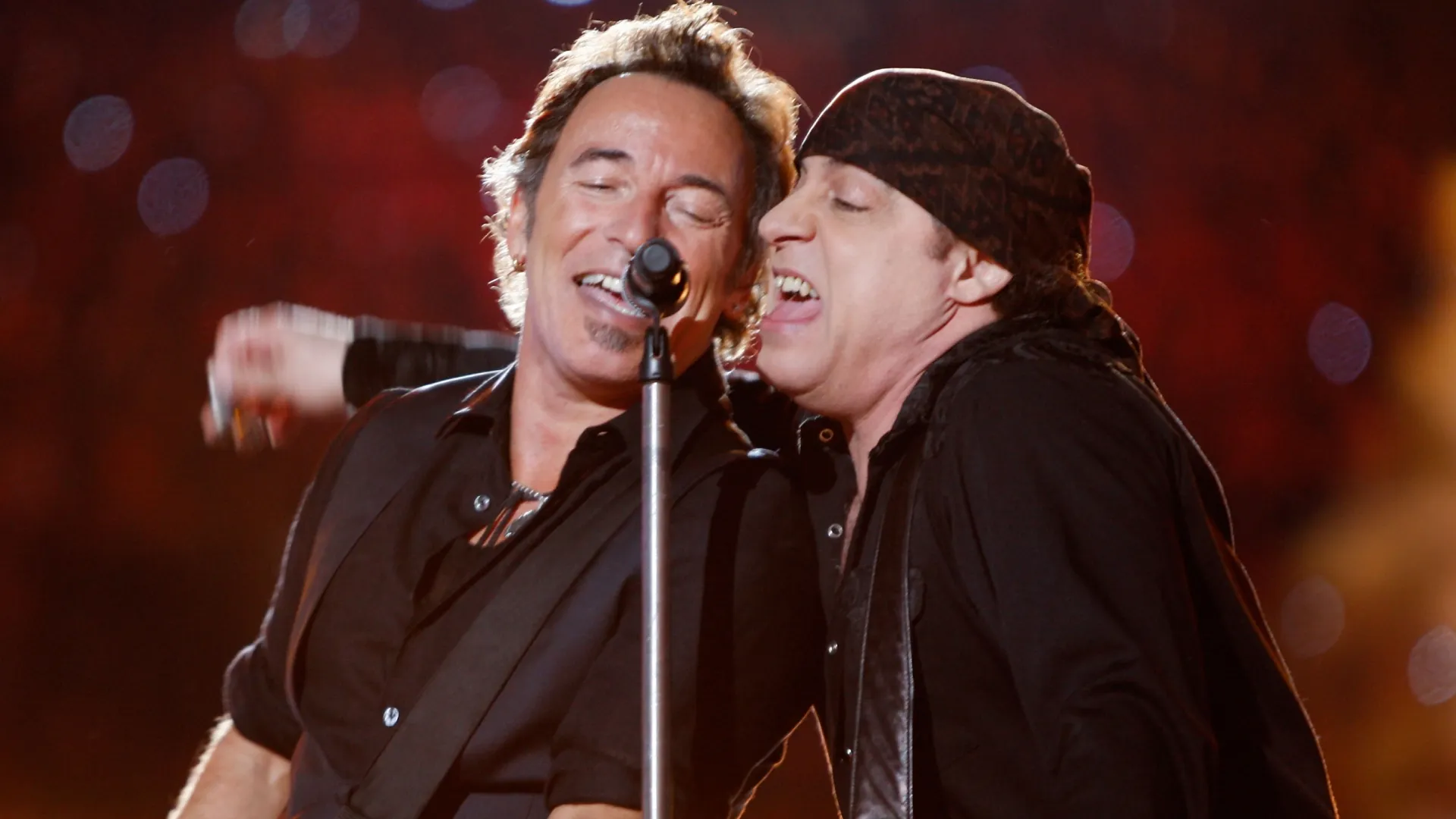
Bruce Springsteen and the E Street Band (Source: Jamie Squire/Getty Images)
Bruce Springsteen’s 2009 halftime show carried the no‑nonsense stamp of the Boss himself: sprawling, heartfelt, and intensely live. In an era when pop spectacle often relied on visual wizardry, his performance was rooted in the virtuosity of band interplay and live energy.
With the E Street Band firing on all cylinders, the set bristled with guitars, horns, and Springsteen’s gravelly vocal certainty—less about flash, more about the communal electricity of rock ‘n’ roll performed at full throttle.
The Rolling Stones (2006)
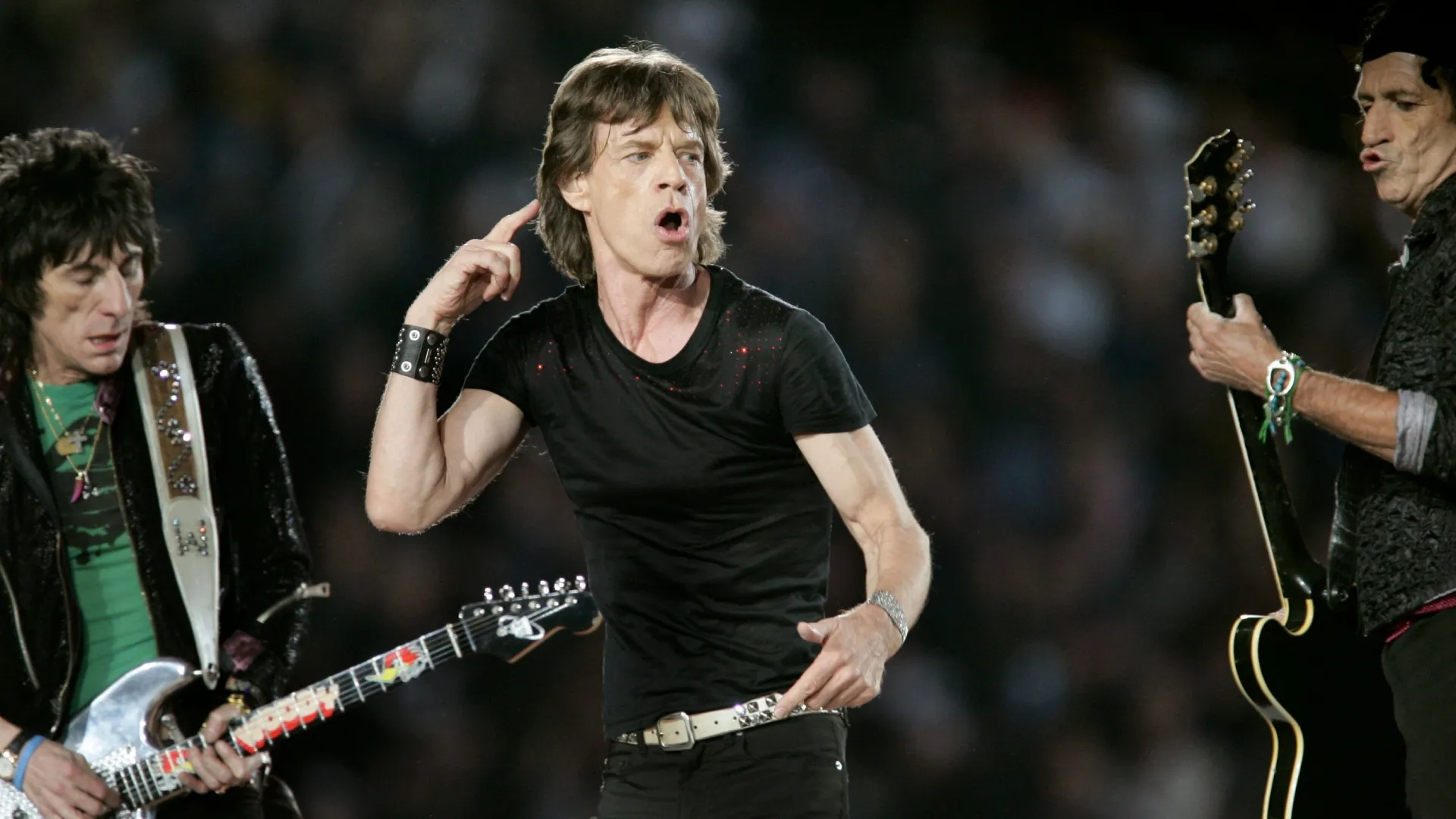
The Rolling Stones (Source: Jonathan Daniel/Getty Images)
Super Bowl XL in 2006 transformed halftime into a moment of rock history with The Rolling Stones at the helm. With a stage shaped like their iconic tongue logo and a setlist that leaned into decades of hits, they brought a weathered swagger and gritty charm that contrasted with the more choreographed pop spectacles that followed in later years. Their performance was less about precision production and more about the enduring pull of authentic rock performance—raw, loud, and unmistakably theirs.
Paul McCartney (2005)
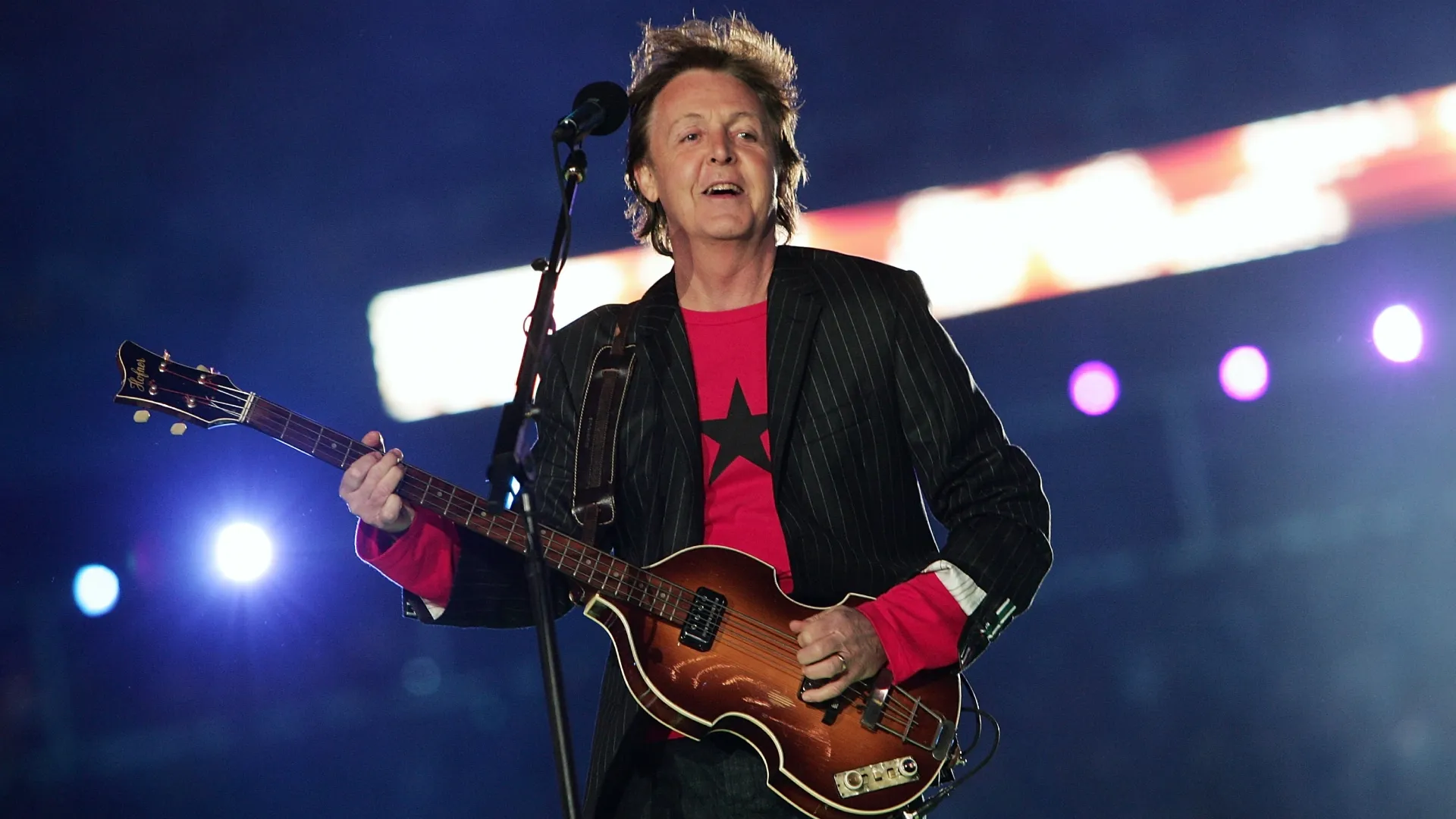
Paul McCartney (Source: Jed Jacobsohn/Getty Images)
In 2005, Paul McCartney’s halftime performance became an understated yet profound nod to music history. Far from the color‑soaked pageantry of more recent shows, he delivered a set that felt like an open‑air concert from the Beatles’ canon, steeped in nostalgia and timeless melody.
Against the backdrop of an NFL championship crowd, his presence bridged generational gaps, wrapping the spectacle of sport in the universal familiarity of songs that have echoed across decades.