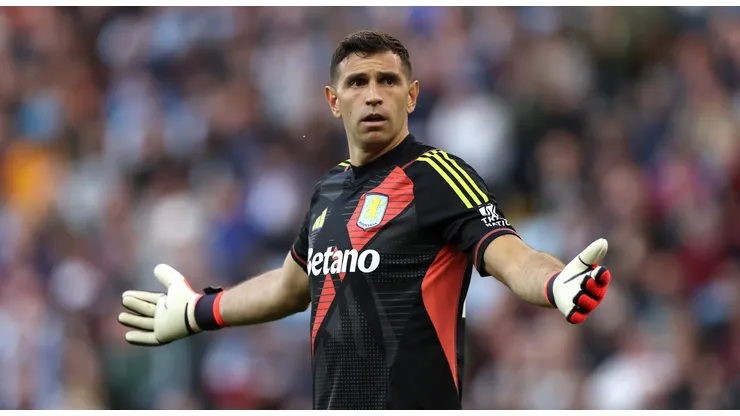
Soccer continues to evolve with new regulations designed to modernize the game. After Argentina’s 2022 FIFA World Cup victory, officials introduced a rule banning goalkeepers from talking to strikers during penalty kicks. This change responded to the controversy sparked by Emiliano Martínez’s mind games during the tournament. Many believed the adjustments would end there. However, IFAB have now introduced another rule for goalkeepers to enhance the spectacle for fans.
“The IFAB has unanimously decided to amend Law 12.2 (Indirect free kick). The amendment means that if a goalkeeper holds the ball for longer than eight seconds (with the referee using a visual five-second countdown), the referee will award a corner kick to the opposing team (rather than the current indirect free kick for more than six seconds),” stated IFAB on their website.
The main goal of this rule change is to improve the flow of the game. Goalkeepers’ actions often slow down play, making matches less dynamic. This adjustment forces goalkeepers to rely more on their skill and decision-making. They now have a maximum of eight seconds to react and select their pass wisely. Additionally, this rule puts their game intelligence to the test. It increases the pressure on goalkeepers to read the field effectively and make quick decisions.
This is just the first step by IFAB to regulate time-wasting in soccer. The organization plans to address other disruptions that slow down play. On-field injury treatments could also face new regulations to keep the game moving. These changes aim to bring a fresh dynamic to the sport. Younger fans increasingly prefer a faster, more fluid style of play, making these adjustments crucial for the game’s evolution.
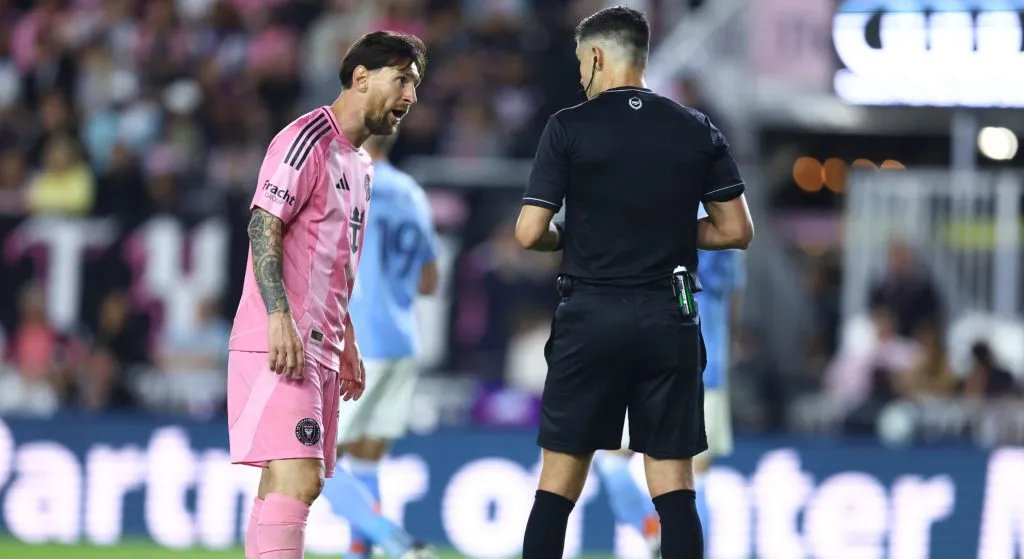
Lionel Messi #10 of Inter Miami CF talks to a referee during the first half of a MLS match between Inter Miami CF and New York City FC at Chase Stadium on February 22, 2025 in Fort Lauderdale, Florida.
Is this the only rule change IFAB have approved recently?
Last year, the IFAB had already implemented in some leagues a change regarding complaints made by players to referees: “Law 3.10 (Team captain), guidelines have been introduced into the Laws for any competitions wishing to apply the principle of only the captain approaching the referee in specific situations,” stated IFAB on their website.

This rule change aims to reduce the minutes lost due to excessive protests to referees. Complaints have been a major source of game delays. Frequent protesters, like Vinicius Jr, must now be more cautious. Repeated complaints could result in sanctions from the referee.
However, the changes do not stop there, as there are other rules that will be approved. Law 8.2 regarding the Dropped Ball will have some changes: “If the ball is outside the penalty area when play is stopped, it is dropped for the team that had or would have gained possession if this is clear to the referee; otherwise, it is dropped for the team that last touched it. The ball is dropped at its position when play was stopped.”
In addition, Law 9.2 regarding ball in play will also have other changes: “An indirect free kick with no disciplinary sanction will be awarded if a team official, substitute, substituted or sent-off player or player who is temporarily off the field of play touches the ball as it is leaving the field of play and there was no intention to interfere unfairly,” stated IFAB on their website.
When will IFAB’s new rule changes take effect?
According to IFAB, these changes will take effect on July 1, 2025. The FIFA Club World Cup 2025 will be the first tournament to apply the new rules. All leagues, including the Premier League, will implement these adjustments. However, it may take some time for teams and players to fully adapt to the changes.