
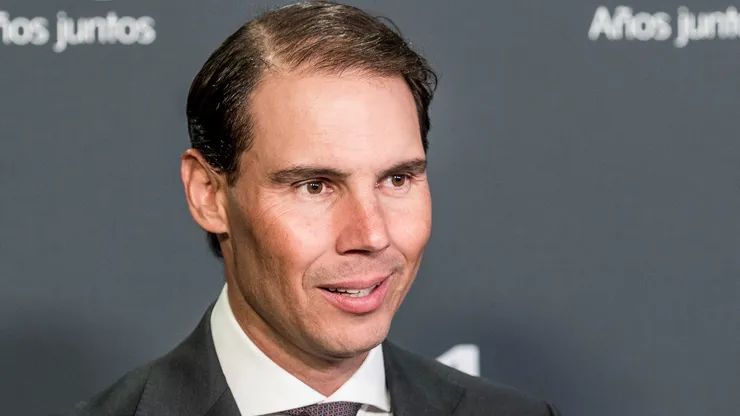
Rafael Nadal didn’t shy away from offering his perspective on Jannik Sinner’s doping controversy. The 22-year-old Italian, who tested positive for clostebol, is nearing the end of his three-month suspension and is expected to return to competition soon.
Critics have called the punishment “lenient” and questioned why Sinner was allowed to compete throughout the season before the ban was enforced by the World Anti-Doping Agency (WADA).
In an interview with The Telegraph, Nadal firmly backed Sinner and commended his character. “I am convinced Jannik never tried to cheat or gain an unfair advantage,” Nadal said. “I am certain he is not only innocent but also an honest person”.
Nadal further explained his faith in the ruling process. “Ultimately, if I am not mistaken, he was deemed innocent in the final ruling. The case wasn’t good for our sport, but these things sometimes happen—accidents occur,” he continued. “I view it that way because I believe in Jannik. Of course, I don’t want to question the verdict. The authorities had all the information at their disposal, much more than we often have, which can be limited and subjective”.

Jannik Sinner of Italy poses with the Norman Brookes Challenge Cup during the 2025 Australian Open Men’s champion media. (Kelly Defina/Getty Images)
“I trust the ruling. Jannik accepted the three-month suspension, and for me, the case is closed. If we don’t like how the protocols work, then those involved should work to improve them. But I don’t like speaking negatively about our sport. At the end of the day, those protocols are something we’ve all accepted and signed during our careers,” Nadal added.

Jannik Sinner’s suspension ends on May 4, making him eligible to compete at the Italian Open in Rome, which begins just two days later. Speculation is high that Sinner will participate as a local favorite. Additionally, he is expected to feature in the Roland Garros draw, with the French Open slated to begin on May 25.
Why was Sinner’s suspension so short?
Sinner’s positive test for clostebol, conducted during last season’s Indian Wells tournament, sparked debate. The banned substance was allegedly transferred to his system due to negligence by his physiotherapist, who handled him without gloves after contact with the substance. This detail allowed Sinner to strike an agreement with WADA, avoiding a potentially career-altering two-year suspension.
Sinner’s reaction to the ruling
Although Sinner maintains he was treated unfairly, he ultimately agreed to the settlement to avoid a prolonged legal battle. “The decision to reach an agreement was very quick, even though I didn’t fully agree with it,” Sinner said in an interview with Sky Sports. “In the end, I chose the lesser evil, even if it was unfair. A greater injustice could have occurred”.
SurveyShould Sinner's suspension have been more severe?
Should Sinner's suspension have been more severe?
ALREADY VOTED 0 PEOPLE