
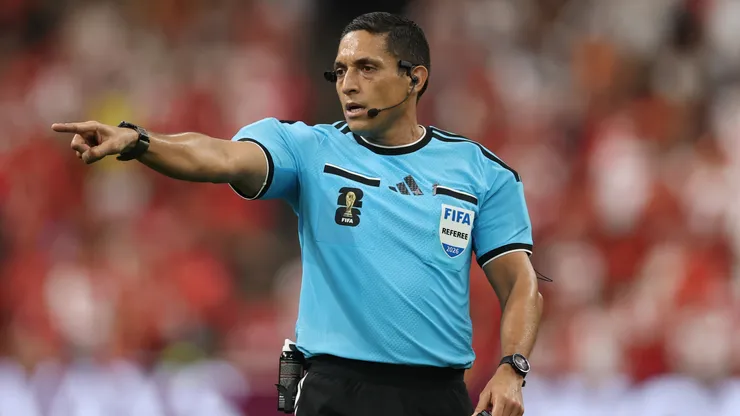
Offside might be considered the one soccer rule that still hasn’t been fully “fixed.” It still relies heavily on human judgment from the main referee and the assistant referees on the sidelines, who sometimes miss an obvious offside call.
The offside rule dictates that if an attacking player is ahead of the second-to-last defender, either completely or with any part of their body (excluding hands and arms), and attempts to receive a pass from a teammate, that is the moment an assistant referee will raise their flag.
But it’s not just about being ahead of that second-to-last defender; the attacking player must also be in the opponent’s half of the field and closer to the goal line than the ball. It sounds complicated, but it’s relatively easy to understand when you see it in action. If an attacker is already past that second-to-last defender and a teammate passes them the ball, that’s an almost instant offside.
The final pass determines offside
To clarify the rule further, offside is judged at the exact moment a player makes the pass to a teammate who is up against the opposing defenders. If that attacker has already crossed the “imaginary line” of the last defender before the ball leaves their teammate’s foot, it’s offside.
Because of this, timing is everything between the passer and the receiver. Ideally, the receiver should start their run right after the ball is kicked. That way, they can enter the zone without committing an infraction. This is where vision and anticipating the pass come into play.
The human factor complicates offside
It’s worth noting that even though almost all international tournaments, domestic leagues, and the World Cup now use Video Assistant Referee (VAR), human judgment still ultimately decides the call. Even when a TV replay shows a player is offside, it’s still up to the officiating crew whether or not to review a controversial play.
With the introduction of Video Assistant Referee (VAR) technology, these close calls are now tracked with high-tech cameras. This ensures that millimeter-accurate decisions can be made during crucial goal-scoring moments.