
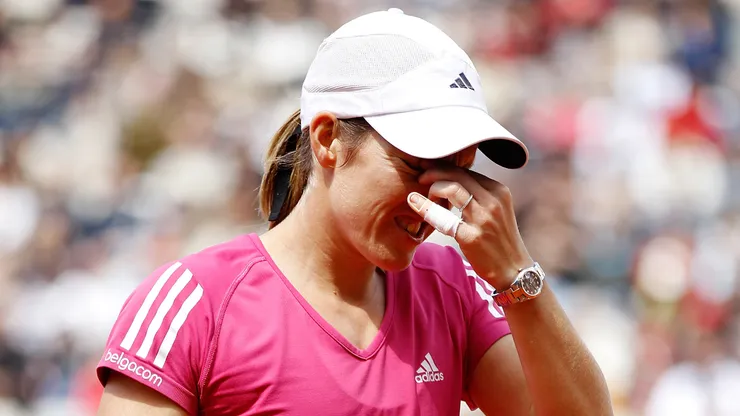
Among some of the best tennis players of the 2000s, a name that comes out often is Belgian star Justine Henin. She won seven Grand Slams, including three consecutive French Opens, an Olympic gold medal and became World No. 1 during her career. However, not everything was easy, as she also had to deal with a divorce, a difficult relationship with her family, and a serious virus until she shockingly retired when she was at the top of the sport.
Henin was born on June 1, 1982, in Liège, Belgium. She developed a passion for tennis at a young age, inspired by her mother, Françoise, who introduced her to the sport. She told the press that her mom took her to watch Roland Garros when she was 10, and she watched the final between Steffi Graf and Monica Seles in 1992.
Tragically, her mother passed away after suffering from cancer, when Justine was 12 years old. “It was really, really difficult for me to play after this,” she told Reuters after reaching her first Wimbledon final in 2001. “I think when my mother died, I became more mature than I would be if she was still here.”
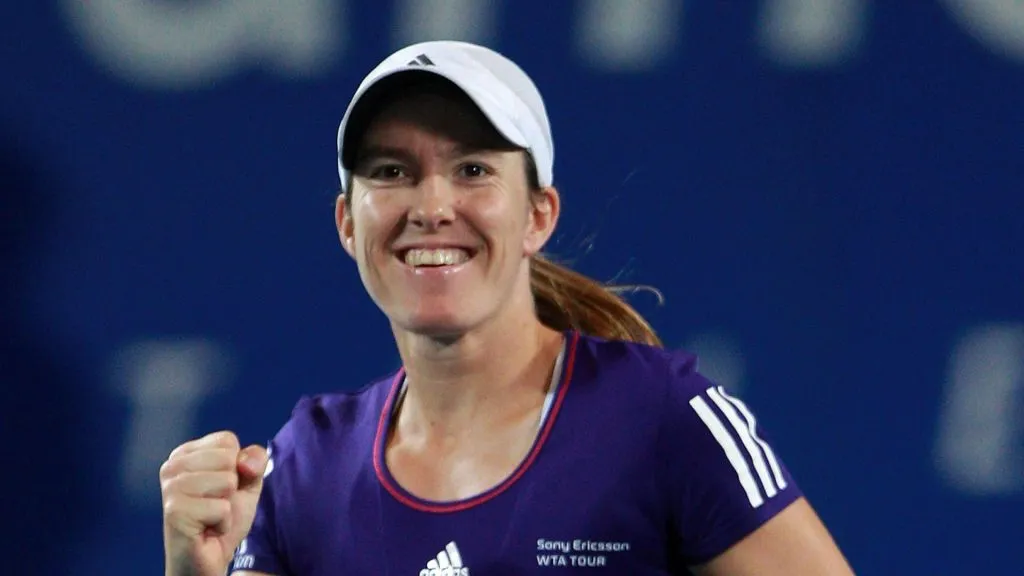
Justine Henin (Paul Kane/Getty Images)
It was one of the first heartbreaks that Henin would have to overcome during her life and career. However, sooner than later, she became a dominant force on tour since she became professional at only 16 years old. She won her first Grand Slam in 2003, conquering the French Open, before clinching her second major in the New York that same year.
Henin’s rise to World No. 1 and her signature one-handed backhand
Henin, who is 5ft 5in (165cm), was known for her versatility, especially in her offensive game, as well as her effective one-handed backhand, which has been on decline among players, especially women. For these traits, as well as her slick footwork and her strong forehand, she was often compared to Roger Federer, as well as Martina Hingis.
About her signature backhand, she told the WTA Tour official website in 2023: “I remember when I was 8, 9, 10 years old, that I had been working on it a lot,. So many people, my dad wanted me to take it on with two hands because I was not powerful enough, but again, it was another challenge.”
And she surely conquered. After winning her first two majors, she added five more to her resumé: one Australian Open (2004), another US Open (2007) and three consecutive French Opens (2005, 2006, 2007). Only Monica Seles and Iga Swiatek have been able to win three consecutive major titles in Paris in the Open Era.
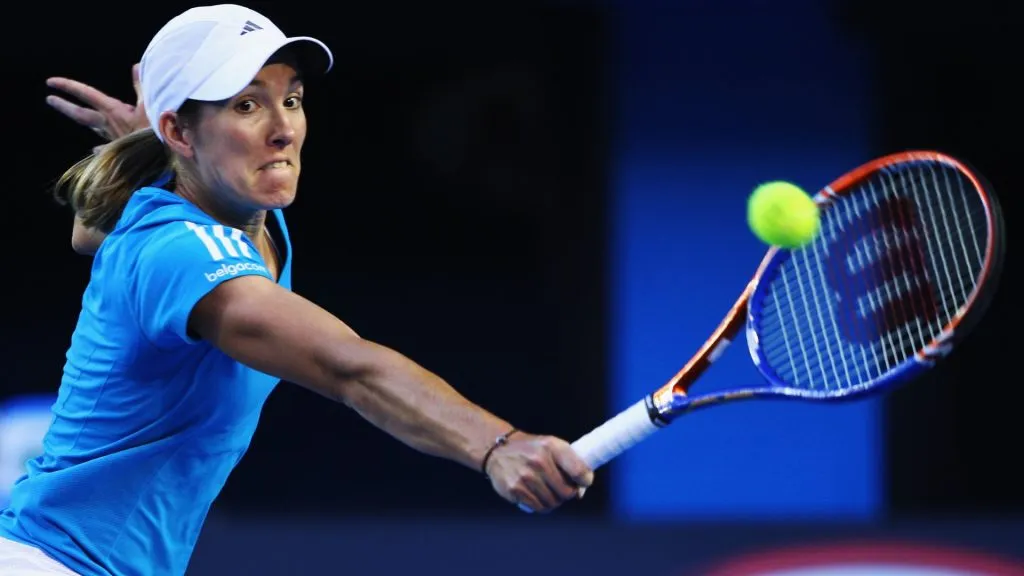
Justine Henin’s backhand was iconic ( Clive Brunskill/Getty Images)
Her consistent performance and formidable skill set led her to achieve the world No. 1 ranking in 2003, a position she held for a total of 117 weeks, in a era in which the Williams sisters, Maria Sharapova and even her compatriot Kim Clijsters were their rivals. She also was the year-end No. 1 in 2003, 2006 and 2007. In total, she won 43 single titles, including her majors, as well as an Olympic gold medal at the 2004 Athens Games and two Tour Finals titles.
The struggles: a serious virus, a divorce and family estrangement
In 2004, ahead of the Olympics, Henin’s health was affected by infection with a strain of cytomegalovirus and an immune system problem, which made her feel fatigued. Affected by the illness, she lost in the second round of the French Open but was able to recover just in time to come out victorious in Athens. Then, she also lost early in the US Open, and took some time off to recuperate.
“The last two years, I made a lot of effort to get where I am now, to become the No. 1, to win Grand Slams and the Olympics,” she wrote on her website at the time. “It’s very logical and understandable that I’m this tired. It’s high time I get some rest now.”
But that wasn’t the only obstacle she had to overcome. After her mother died, due to several circumstances (she never discussed it much), she was estranged for years from her father, Jose, and her three siblings. During that time, she also divorced husband Pierre-Yves Hardenne in 2007 just five years after their wedding. Her divorce made her miss the Australian Open of that year.
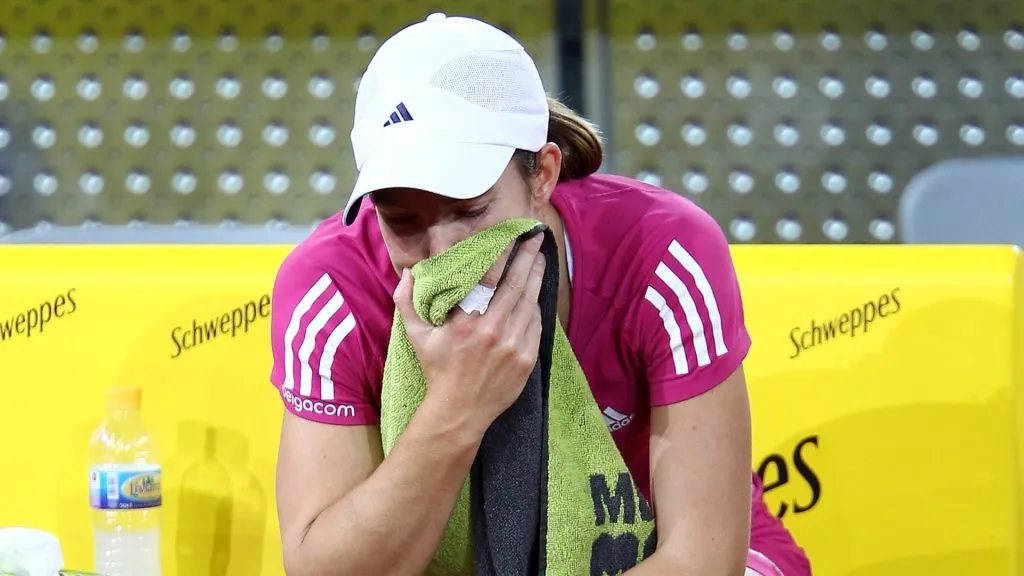
Justine Henin in 2010 (Clive Brunskill/Getty Images)
However, after her brother David almost died in a car accident, they reconciled later that year. She dedicated her French Open victory to her family, who watched her from the stands for the first time. “To succeed professionally during a very painful personal period brought big satisfaction, therefore I undoubtedly have even more pride during this second phase of being No. 1.” she told Eurosport in 2022.
Her sudden retirement, short comeback and life post-tennis
In 2008, Henin was, arguably, at some of the best points in her career: she was 25 years old and was the World No. 1. However, she shocked the world when she decided to retire on the eve of the French Open. She cited a lack of passion, as well as the physical demands of the sport. “When I think back, whenever I looked in the mirror, the woman I saw was lost,” she told The Daily Mail. “I was feeling so empty.”
She took some time for herself, even did charity work in Congo. However, her first retirement was short-lived and she returned to a brief stint in 2010, inspired by Federer’s victory in the 2009 Roland Garros (in which he conquered the career Grand Slam) and her compatriot Clijsters, who also retired in 2007 and then returned to win the 2009 US Open.
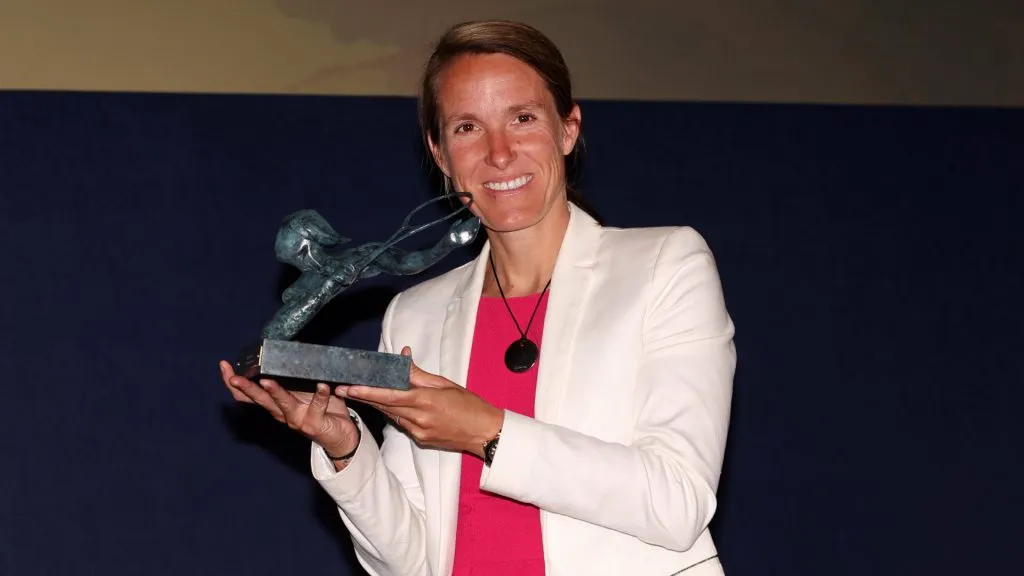
Henin receives the 2023 ITF Philippe Chatrier Award ( Clive Brunskill/Getty Images)
While she reached the 2010 Australian Open final, she lost to Serena Williams. Next year, after she was eliminated from the same tournament in the third round, she announced her definitive retirement from tennis due to a shoulder injury.
Henin, 42, dedicates much of her time to the academy she has managed for the past 15 years in Limelette, located around 30 kilometers southeast of Brussels. She is also a mother to two children, Lalie, 11, and Victor, 7. Additionally, she works as a tennis analyst for French television.