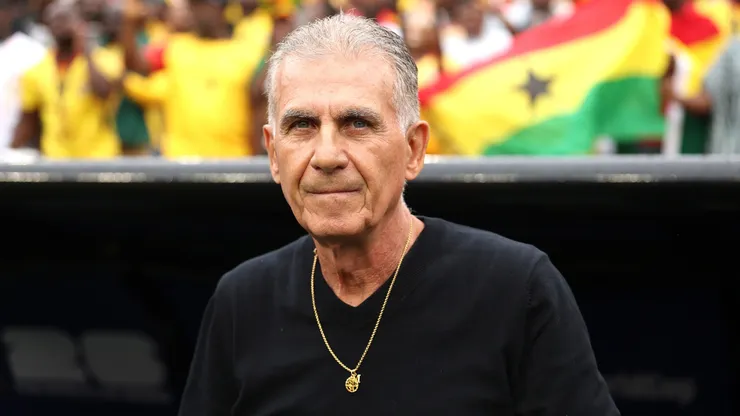
Carlos Queiroz has spent decades building a reputation as one of international soccer‘s most accomplished coaches, taking charge of national teams across four continents and working alongside some of the sport’s biggest names.
Now leading Ghana into the 2026 FIFA World Cup, the veteran Portuguese manager adds another chapter to a career that has already included five World Cup cycles and stops at powerhouse programs around the globe.
While many fans remember him for his time as Sir Alex Ferguson’s assistant at Manchester United, his coaching journey stretches far beyond Old Trafford. He has managed Portugal, Iran, Colombia, Egypt and Real Madrid.
How old is Carlos Queiroz?
Carlos Queiroz is 73 years old. He was born on March 1, 1953, in Nampula, Mozambique, which was then part of Portuguese Overseas Africa. Although he was born in Africa, he moved to Portugal and built his soccer career there.
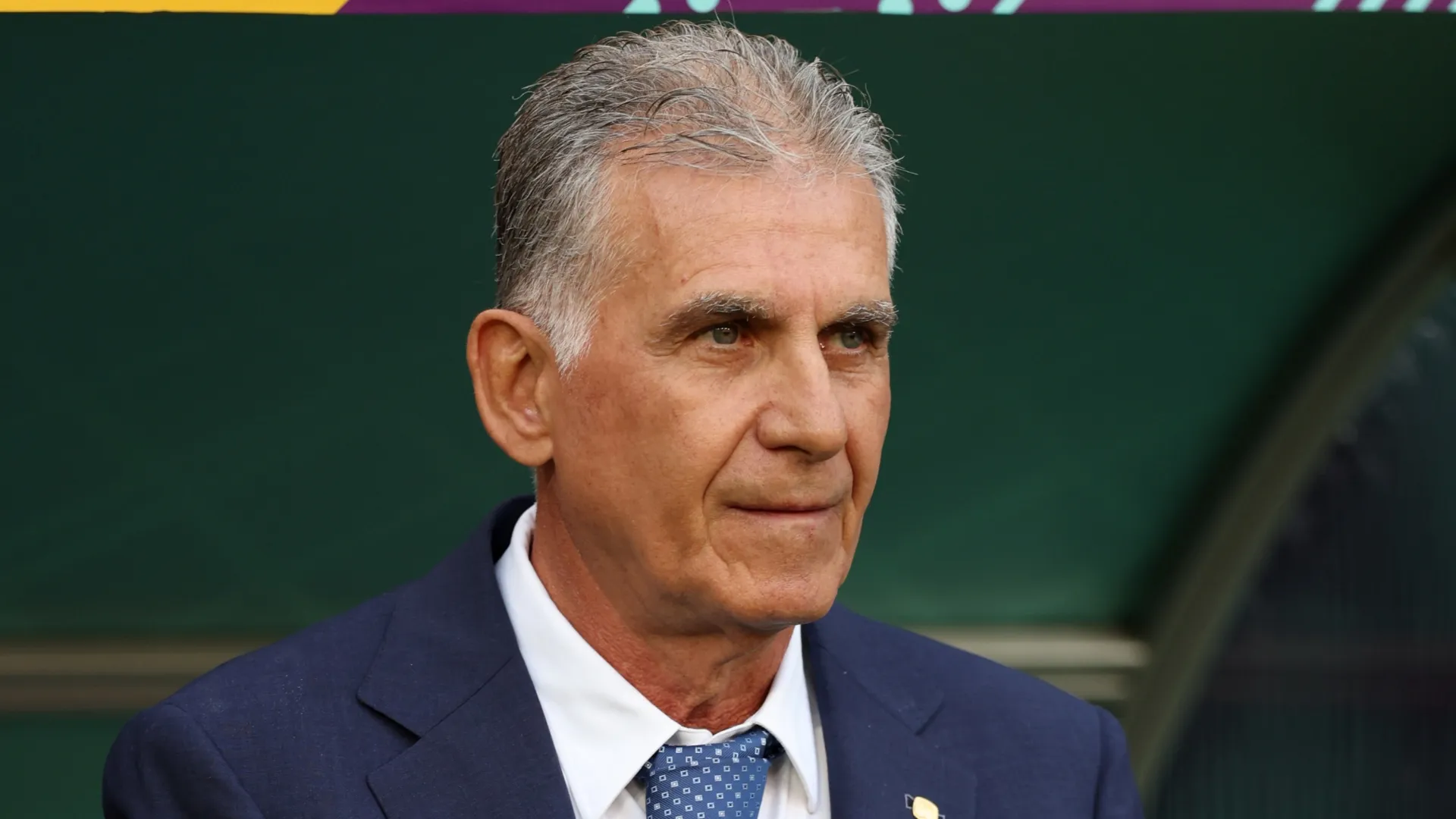
Carlos Queiroz looks on prior to the FIFA World Cup Qatar 2022 Group B match (Source: Clive Brunskill/Getty Images)
His longevity in the game has made him one of the most experienced managers in international soccer. After decades on the sidelines, he remains active at the highest level, taking over Ghana just weeks before the start of the World Cup.
How tall is Carlos Queiroz?
Carlos Queiroz is 5 feet 11 inches (1.80 meters) tall. His composed demeanor has been a trademark during stints with club and national teams, particularly in high-pressure international tournaments where experience often proves invaluable.
What is Carlos Queiroz’s nationality?
Carlos Queiroz is Portuguese. Although he was born in Mozambique in 1953, the country was a Portuguese territory at the time, and he has represented Portugal throughout his coaching career.
He first rose to prominence by leading Portugal’s youth national teams, helping develop what became known as the country’s “Golden Generation”. Since then, he has coached around the world, but his nationality has remained Portuguese.
Did Carlos Queiroz play soccer professionally?
No, Carlos Queiroz did not have a notable professional playing career.
Unlike many elite coaches, he made his name almost exclusively from the dugout rather than on the field. He began coaching at a young age and quickly demonstrated an exceptional ability to develop players and organize teams.
His breakthrough came in the late 1980s when he guided Portugal to back-to-back FIFA World Youth Championship titles in 1989 and 1991. Those triumphs launched his reputation and opened the door to coaching opportunities.
Which teams has Carlos Queiroz coached?
Carlos Queiroz has coached numerous national teams and clubs across Europe, Asia, Africa and South America. His résumé includes some of the biggest jobs in international soccer. Among the teams he has managed are:
- Portugal (youth and senior national team)
- South Africa
- United Arab Emirates
- Real Madrid
- Iran
- Colombia
- Egypt
- Qatar
- Oman
- Ghana
In club soccer, his most famous role came at Manchester United, where he served twice as Sir Alex Ferguson‘s assistant manager. During those spells, he helped the club win multiple Premier League titles and played a key role.
How many World Cups has Carlos Queiroz coached in?
Carlos Queiroz has coached at five FIFA World Cups. The 2026 tournament with Ghana marks his fifth appearance as a head coach at soccer’s biggest event. His World Cup appearances include:
- 2010 – Portugal
- 2014 – Iran
- 2018 – Iran
- 2022 – Iran
- 2026 – Ghana
He also guided South Africa to qualification for the 2002 FIFA World Cup but resigned before the tournament began. His five consecutive World Cups place him among the most experienced international coaches.
What trophies has Carlos Queiroz won?
Carlos Queiroz has won several major titles, most notably at youth international level. His most significant achievements include: the FIFA World Youth Championship with Portugal in 1989 and 1991.
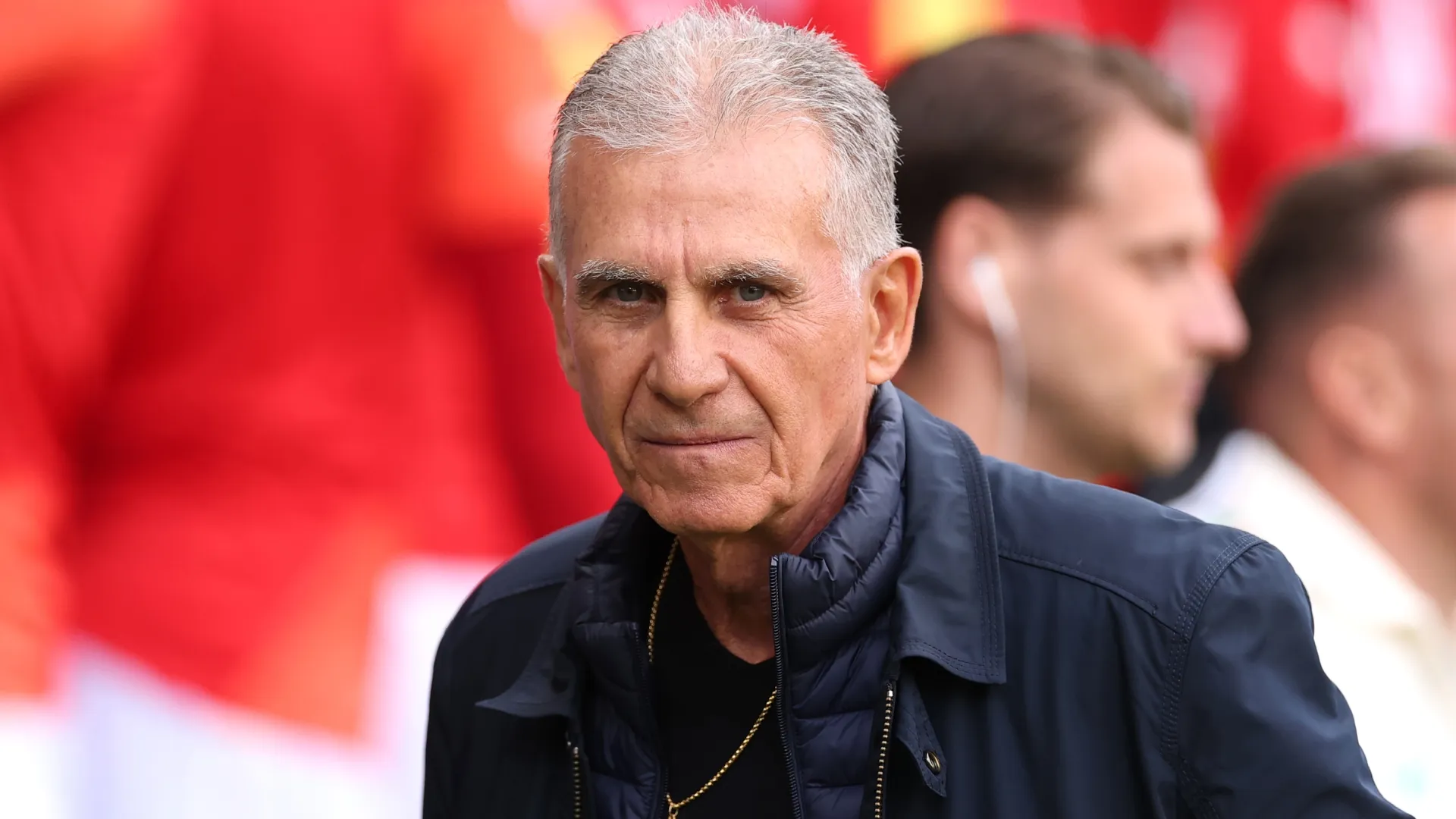
Carlos Queiroz looks on during the international friendly match (Source: Warren Little/Getty Images)
Those two triumphs helped launch the careers of several future stars, including Luis Figo, Rui Costa and Joao Pinto. Although he has not won a senior World Cup or continental championship, he has collected domestic league and cup medals.
When did Carlos Queiroz become Ghana’s head coach?
Carlos Queiroz became Ghana’s head coach on April 13, 2026. He was appointed by the Ghana Football Association after Otto Addo was dismissed, with the mission of preparing the Black Stars for the FIFA World Cup.
He immediately took charge of preparations and brought decades of experience to a squad looking to make a deep run. His appointment also made him only the second coach ever to manage five consecutive FIFA World Cups as a head coach.
What is Carlos Queiroz’s coaching style?
Carlos Queiroz is known for building disciplined, defense-first teams that are difficult to break down. His tactical discipline and tournament experience were major reasons Ghana turned to him ahead of the 2026 FIFA World Cup.
He has favored a pragmatic tactical approach centered on defensive organization, compact positioning and quick counterattacks. His teams often concede possession to stronger opponents before looking to exploit space in transition.
That philosophy was particularly evident during his time with Iran, where he consistently produced competitive performances against higher-ranked nations despite having fewer resources and less individual talent.