

Australia’s national team is recognizable on the world stage thanks to its yellow and green jerseys. Yet for fans watching the 2026 FIFA World Cup, one question keeps coming up: why do the Socceroos wear colors that don’t appear on the flag?
The answer lies in a unique piece of the country’s sporting identity, one that predates the modern era of international soccer and has become a symbol of national pride. The nation’s official sporting colors are green and gold.
Those colors were formally proclaimed as the national colors in 1984. Inspired by the golden wattle, the combination represents the landscapes, natural heritage and the long tradition of international competition.
What is the meaning of Australia’s green and gold jersey?
Australia’s green and gold jersey represents the country’s national sporting colors and symbolizes its natural landscape, heritage and identity.
The colors worn by the Socceroos are inspired by the golden wattle and Australia’s national floral emblem, whose bright yellow blossoms and green leaves have long been associated with the nation.
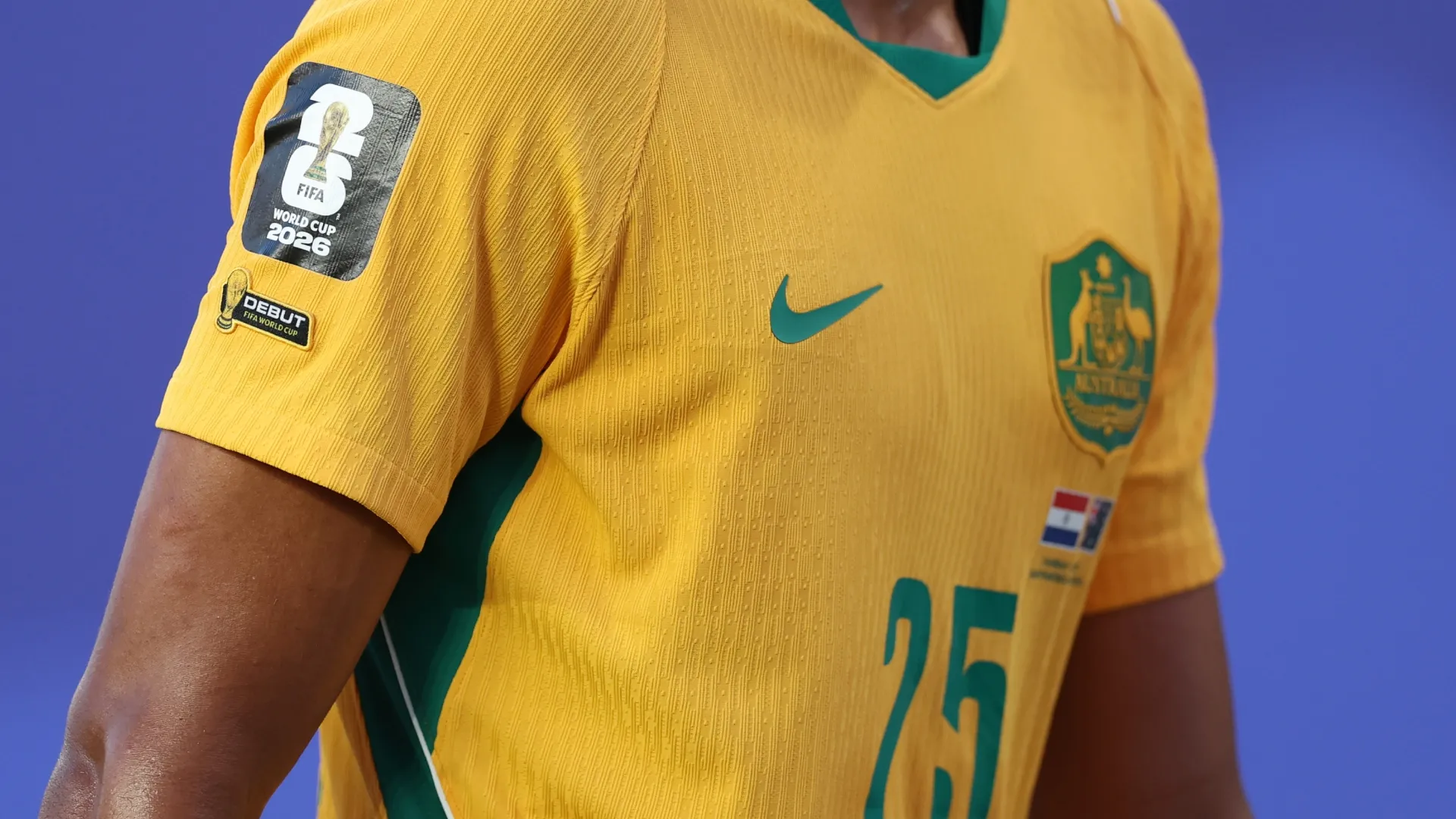
The debut patch on the sleeve of Lucas Herrington during the FIFA World Cup 2026 Group D match (Source: Stu Forster/Getty Images)
The meaning behind the colors extends beyond soccer. Gold reflects Australia’s beaches, mineral wealth, wheat fields and sporting success, while green represents its forests, eucalyptus trees, grasslands and vast natural landscapes.
Australia is one of several countries whose sporting identity differs from its national flag. For decades, Australian teams across cricket, rugby, athletics, swimming and soccer have embraced green and gold.
When did Australia adopt green and gold as its national sporting colors?
Australia officially adopted green and gold as its national colors on April 19, 1984, when Governor-General Sir Ninian Stephen signed a formal proclamation recognizing them. However, the colors had already been associated with Australian sport for nearly a century before receiving official status.
Green and gold first gained prominence in the late 19th century. Historians generally trace their sporting debut to the Australian cricket team’s 1899 tour of England, when captain Joe Darling introduced green caps and gold blazers to distinguish the side from other teams representing the British Empire.
Before 1984, Australia had no officially designated national colors. Different combinations—including red, white and blue, which appear on the national flag, and blue and gold, which are linked to the Commonwealth Coat of Arms—were used to represent the country.