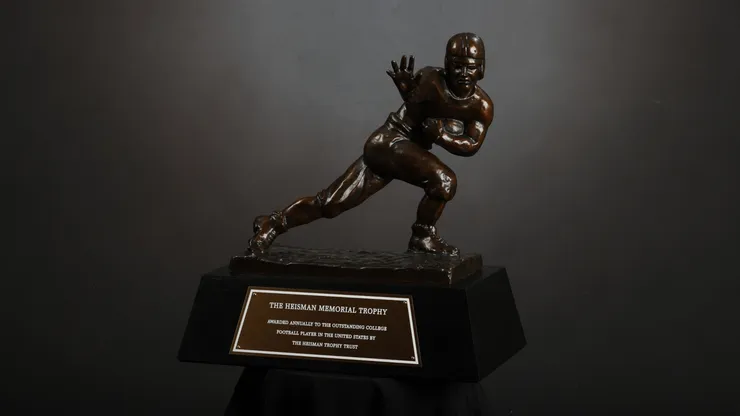
Some college football programs don’t just produce great athletes—they shape legends. Decade after decade, certain schools have become synonymous with excellence, building dynasties that extend far beyond the Saturday spotlight.
The Heisman Trophy, awarded to the game’s most outstanding player, has often served as proof of that dominance. From powerhouse programs to surprising contenders, history shows where the sport’s brightest stars most often emerge.
Patterns run deep: a mix of tradition, coaching brilliance, and relentless recruiting has created true hotbeds of talent. These programs have not only collected hardware but also written lasting chapters in football’s rich narrative.
LSU | 3
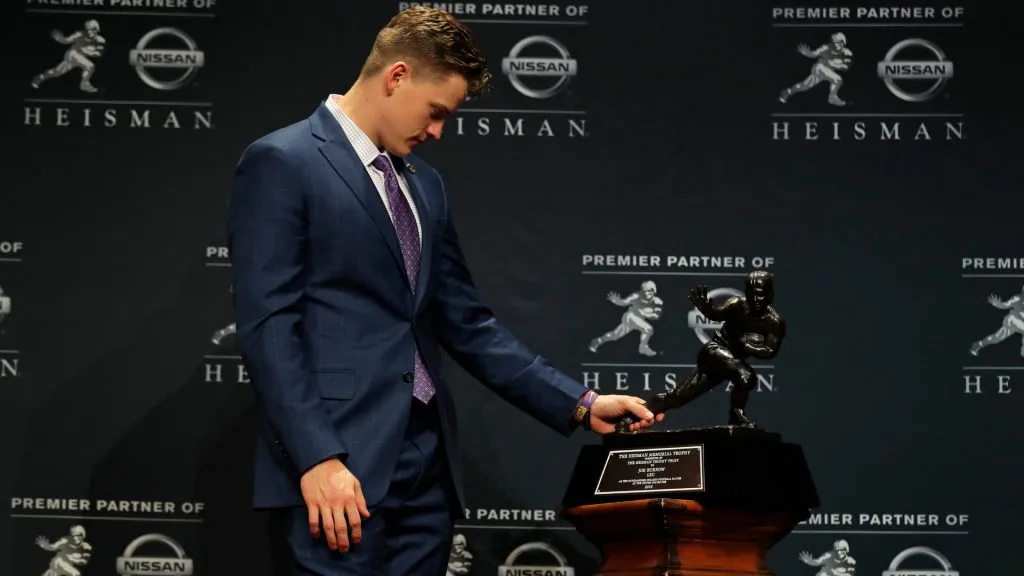
Joe Burrow of the LSU Tigers in 2019. (Source: Adam Hunger/Getty Images)
- 1959 — Billy Cannon
- 2019 — Joe Burrow
- 2023 — Jayden Daniels
LSU’s Heisman legacy spans decades and styles. Billy Cannon in 1959 was a two-way star, celebrated for his speed, toughness, and “Halloween run” (among other iconic moments) — the kind of player whose exploits became legend in Baton Rouge and beyond.
Joe Burrow’s 2019 season lives in highlight reels: efficient passing, record books, team success, championship chase. He brought LSU not only its second Heisman but also its national title. That combination raises a program’s status in hearts and in history.
And then came Jayden Daniels in 2023. His performance — both through the air and on the ground — supplied a modern twist: prolific, multi-dimensional, yet under immense expectations. He joined Cannon and Burrow in that elite LSU trio of Heisman winners.
Nebraska | 3
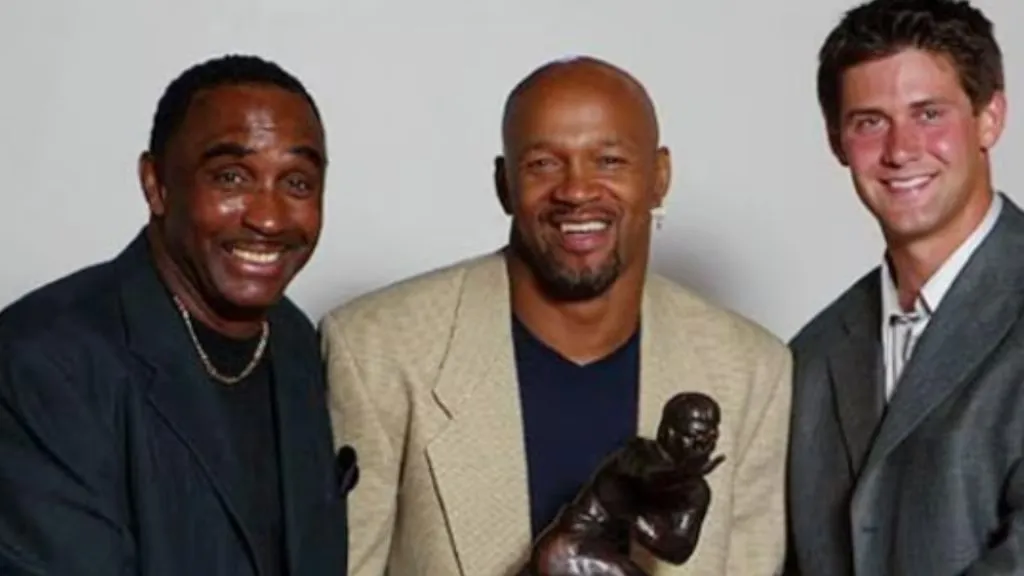
Johnny Rodgers, Mike Rozier and Eric Crouch. (Source: NCAA and Nebraska Athletics)
- 1972 — Johnny Rodgers
- 1983 — Mike Rozier
- 2001 — Eric Crouch
Nebraska’s contributions to Heisman history are reminders of the Big Eight and later Big 12’s power in developing punishing ground attacks and dynamic backs. Johnny Rodgers in 1972 lit up the nation with big plays as a receiver and returner, feted for his breakaway speed and knack for the dramatic.
Mike Rozier in 1983 was a workhorse back who carried the Huskers’ offense. He ran behind big lines but also ran with style and urgency: every snap felt like he had the potential to break off something explosive.
Eric Crouch in 2001 was a perfect blend of leadership and dual-threat quarterbacking. He ran Nebraska’s offense with a vision that adapted with the game, made big plays when needed, carried the weight of expectation, and made the Heisman at a time of transition for many programs.
Michigan | 3
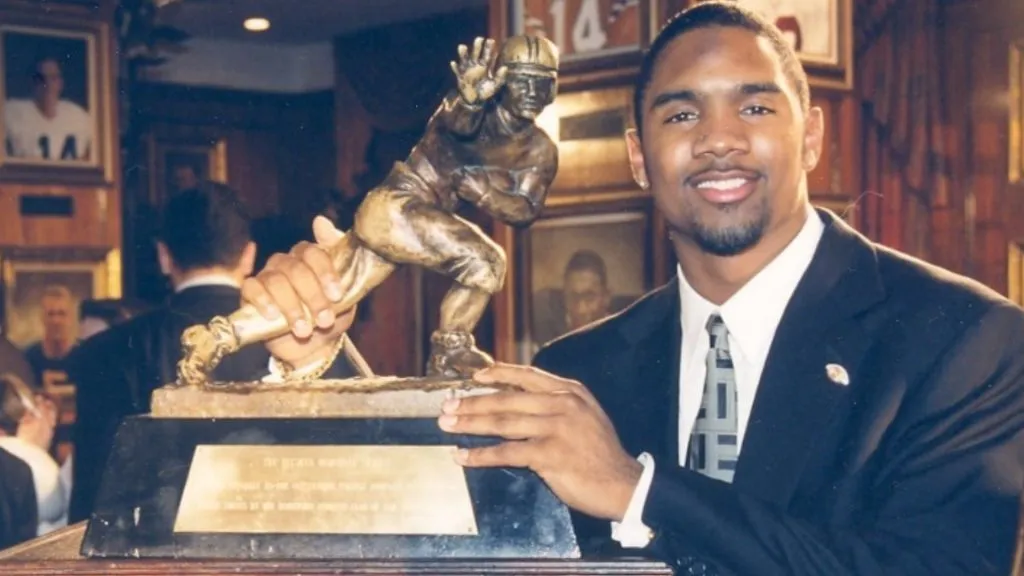
Charles Woodson in 1997. (Source: Heisman)
- 1940 — Tom Harmon
- 1991 — Desmond Howard
- 1997 — Charles Woodson
Michigan’s Heisman history stretches back to the early golden years of the award. Tom Harmon in 1940 was nearly mythic — his versatility, his highlight moments, his ability to influence games as a rusher, passer, returner. Harmon was one of those players who shaped what it meant to be a star.
Desmond Howard’s 1991 season remains one of the most iconic in Heisman lore: his punt returns, his receptions, his moments under the lights. The “Heisman pose” after his Ohio State breakaway is still one of college football’s most enduring images.
Charles Woodson in 1997 perhaps defied category — not just a defensive back, but a playmaker in all three phases. Interceptions, punt returns, coverage, offense: Woodson’s wins weren’t just charted in stats, but in momentum swings, game-turning moments and a football IQ that transcended traditional roles.
Florida State | 3
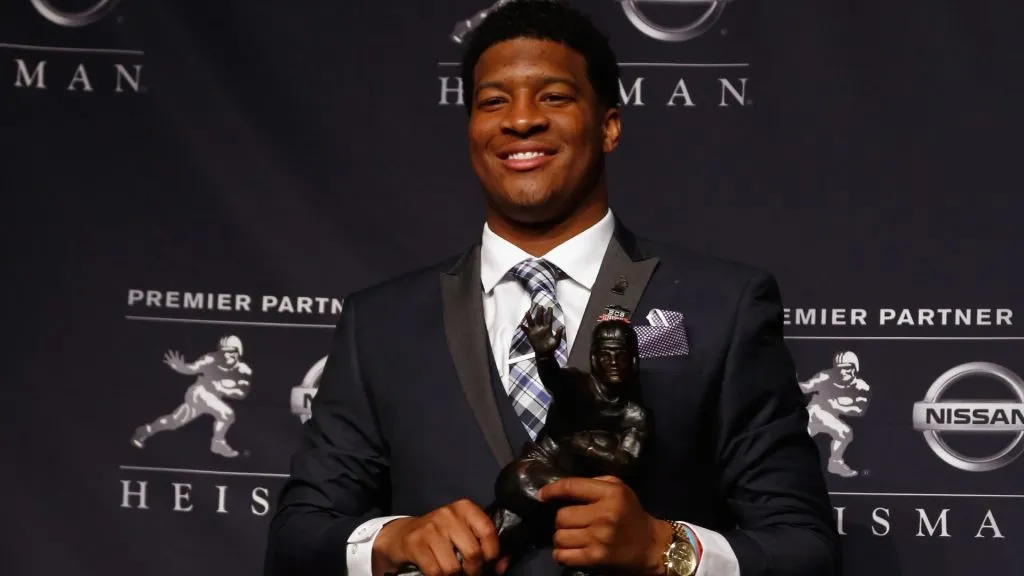
Jameis Winston in 2013. (Source: Jeff Zelevansky/Getty Images)
- 1993 — Charlie Ward
- 2000 — Chris Weinke
- 2013 — Jameis Winston
Florida State has made its Heisman mark carefully, and with flair. Charlie Ward in 1993 helped cement FSU as a national brand under Bobby Bowden; his dual-threat leadership and championship run showed college teams outside the traditional power centers could compete at the highest levels.
Chris Weinke’s 2000 campaign was different: older, experienced, patient. Weinke showed that the Heisman doesn’t always go to the youngest or flashiest but sometimes to the one with wisdom and timing. His play finessed defenses in ways few expected.
Jameis Winston in 2013 exploded onto the national stage — freshman quarterback, huge numbers, big moments, biggest personality. He showed how momentum, fan attention, and stats can align to create a march toward the Heisman. Also, that FSU could still produce winners even as the college football landscape grew ever more crowded.
Florida | 3
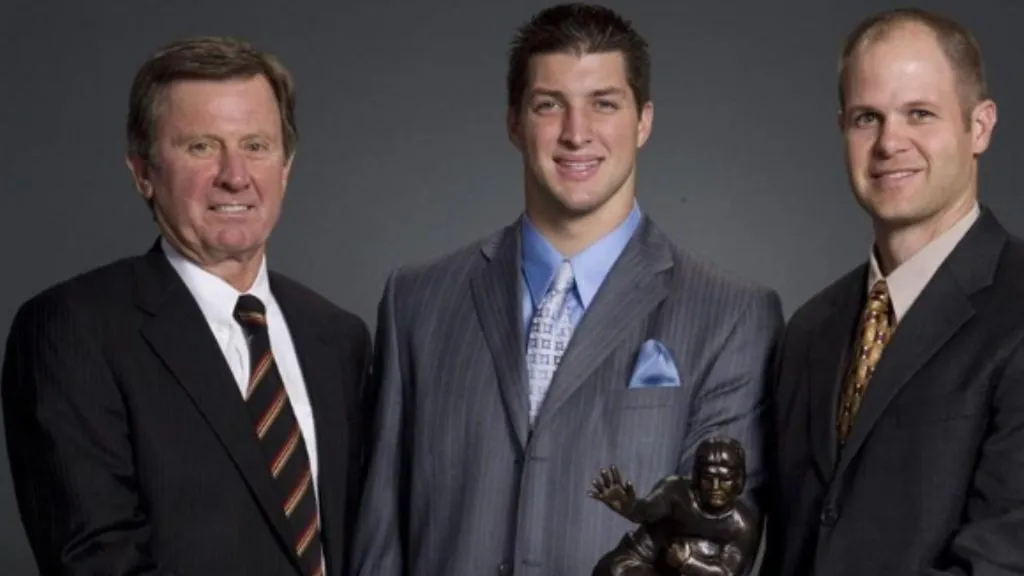
Steve Spurrier, Danny Wuerffel and Tim Tebow. (Source: NCAA and Florida Athletics)
- 1966 — Steve Spurrier
- 1996 — Danny Wuerffel
- 2007 — Tim Tebow
Florida’s Heisman winners track the progression of the passing game in the SEC and beyond. Steve Spurrier’s 1966 season was a turning point: the “Florida Flyer” showed that precision passing and innovation could make waves in a Conference dominated by ground-and-pound ball.
Thirty years later, Danny Wuerffel rode Steve Spurrier’s return to dominance, thriving in the “Fun ‘n’ Gun” offense. Wuerffel wasn’t just throwing lots of passes; he managed them, read defenses, made clutch decisions. His year was as much about evaluating situational football as it was about big plays.
Then came Tim Tebow in 2007, perhaps Florida’s most expansive Heisman story. He passed, he ran, he motivated — he was a force on the field and off. With Tebow, Florida’s program leaned fully into the blend of spectacle and substance, the kind of player who could carry narrative as much as points.
Army | 3
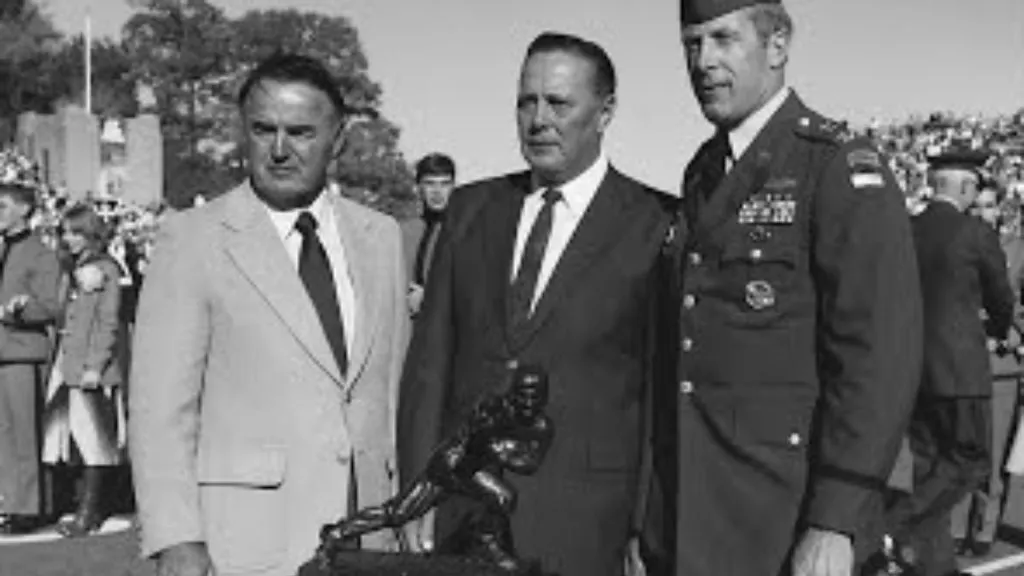
(Source: NCAA and Heisman)
- 1945 — Felix “Doc” Blanchard
- 1946 — Glenn Davis
- 1958 — Pete Dawkins
Army’s era of Heisman dominance came during and just after World War II, an epoch when the service academies held enormous prestige in college football. Felix “Doc” Blanchard and Glenn Davis, back-to-back winners in 1945 and 1946, were more than great players; they embodied wartime America’s values: discipline, sacrifice, teamwork. Their rivalry, their skill, their dramatic games remain legendary.
Pete Dawkins’ win in 1958 rounded out that golden era. A Rhodes Scholar, an Army captain, his Heisman was not just for athletic excellence, but the full package: character, leadership, academic achievement. In today’s politicized sports media, it’s almost a lost art to win a major award under that kind of multidimensional scrutiny.
Though Army hasn’t produced a Heisman winner since then, those three trophies still loom large in college football memory — reminders of a time when service academies were center stage, and depth, restraint, strategy carried weight alongside speed and size.
Auburn | 3
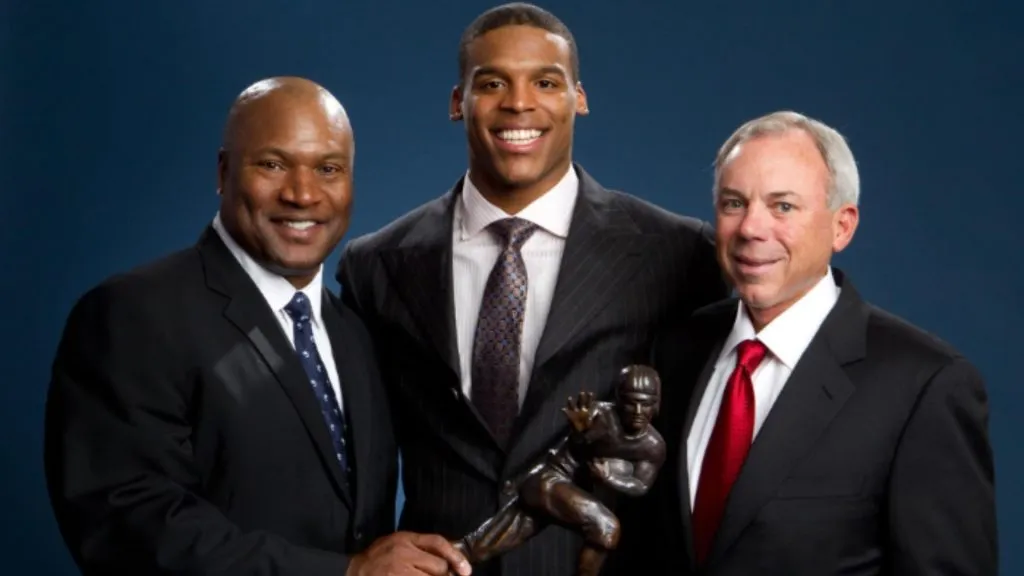
Pat Sullivan, Bo Jackson and Cam Newton. (Source: NCAA)
- 1971 — Pat Sullivan
- 1985 — Bo Jackson
- 2010 — Cam Newton
Auburn’s Heisman lore is part folklore, woven into the Plains’ fabric. Pat Sullivan’s win in 1971 was more than a stat line — it marked the Tigers as a program where talent could shine nationally, especially in a Southern Conference environment that valued toughness and grit.
Bo Jackson’s 1985 season is still talked about in reverent tones — he played like a force of nature, rushing, catching, hurdling, dominating. He didn’t just win the Heisman; he became an icon, one of those rare athletes whose name echoes in pop culture as much as in sports history.
Cam Newton in 2010 added another dimension to Auburn’s tradition. He was a dual-threat quarterback before that was a buzzword, combining passing touchdowns with rushing explosiveness, engineering an undefeated season, and winning both the Heisman and the national championship in the same year. The narrative arc for Auburn reached its summit in ’10.
Alabama | 4
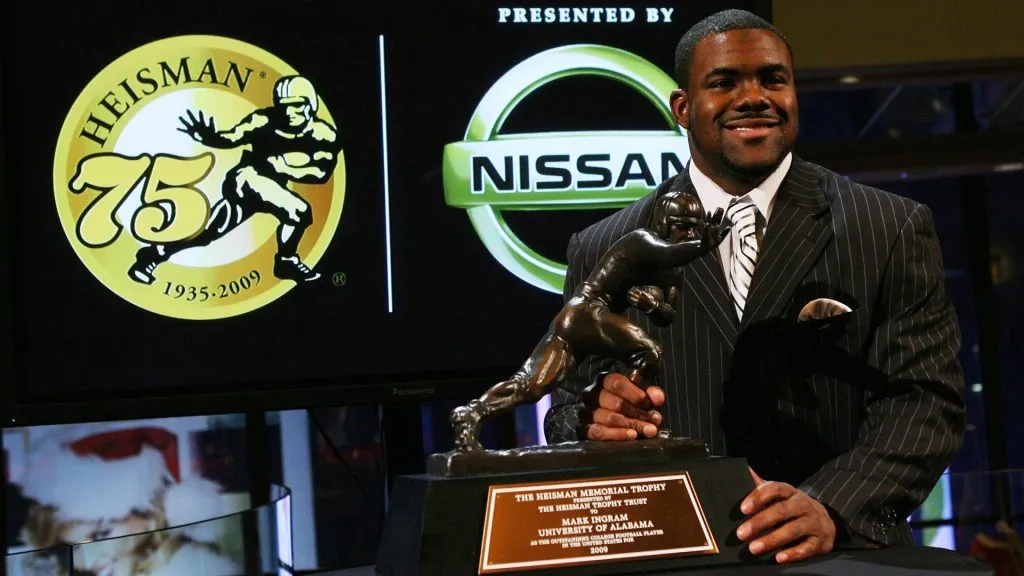
Mark Ingram #22 of the Alabama Crimson Tide in 2009. (Source: Chris Trotman/Getty Images)
- 2009 — Mark Ingram
- 2015 — Derrick Henry
- 2020 — Devonta Smith
- 2021 — Bryce Young
Alabama’s journey toward Heisman prominence is relatively recent but intensely impactful. Before 2009, the Crimson Tide — despite national titles and NFL stars — had never claimed college football’s most prestigious individual honor. Mark Ingram’s breakthrough that year ended the drought.
When Derrick Henry seized it in 2015, it was more than stats: he dominated the Southeastern Conference with sheer power, becoming a symbol of Alabama’s physical identity. Six years later, DeVonta Smith rewrote expectations of a receiver’s role, delivering crisp routes, elite hands, and touchdowns by the dozen.
Then came Bryce Young in 2021, the first quarterback in Alabama history to win the Heisman. His season was a showcase of precision under pressure — between the blitzes, the high stakes, and those huge moments late in games, he embodied Alabama’s evolution: from bruising backs to surgical throwers.
Notre Dame | 7
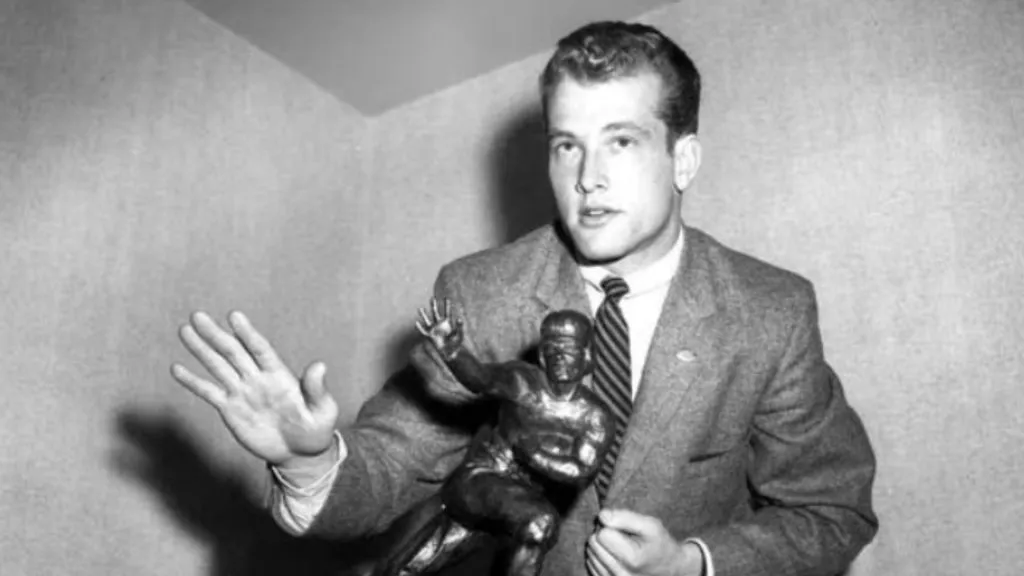
Paul Hornung (Source: NCAA)
- 1943 — Angelo Bertelli
- 1947 — John Lujack
- 1949 — Leon Hart
- 1953 — John Lattner
- 1956 — Paul Hornung
- 1964 — John Huarte
- 1987 — Tim Brown
For Notre Dame, the Heisman story is woven into the mythology of college football itself. The Fighting Irish produced seven winners, from Angelo Bertelli in 1943 to Tim Brown in 1987, capturing the spirit of different eras.
Legends like Paul Hornung, Leon Hart and John Lujack not only defined the Irish on the field but also contributed to the aura that made the program larger than life. Brown’s award, the school’s most recent, was a reminder of Notre Dame’s ability to produce transcendent talent even as the game evolved.
While the Irish have gone decades without adding to their Heisman total, the weight of their tradition ensures that each winner remains part of an enduring narrative, one where faith, history and football intersect in a uniquely American way.
Oklahoma | 7
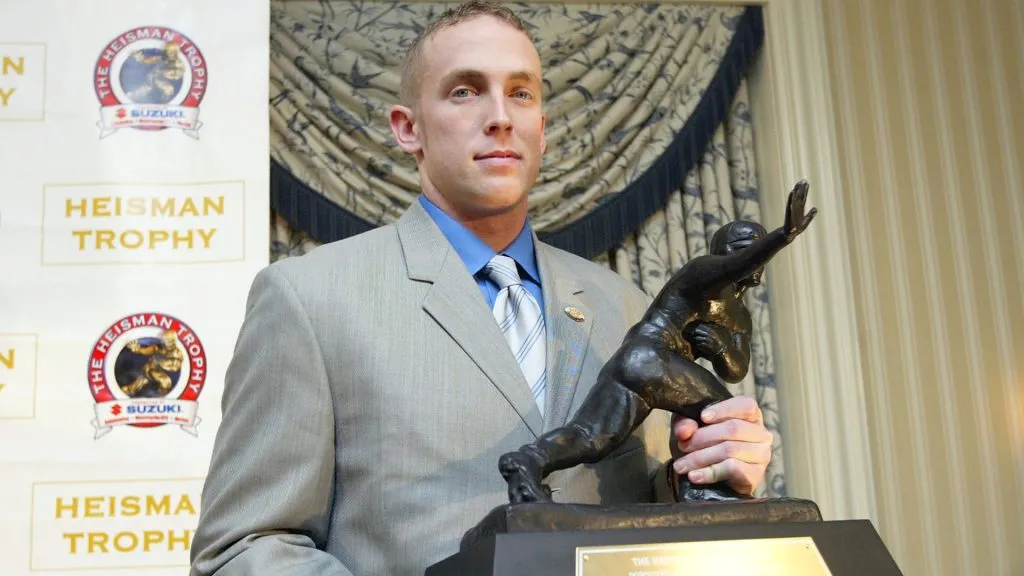
Jason White of the University of Oklahoma Sooners in 2003. (Source: Chris Trotman/Getty Images)
- 1952 — Billy Vessels
- 1969 — Steve Owens
- 1978 — Billy Sims
- 2003 — Jason White
- 2008 — Sam Bradford
- 2017 — Baker Mayfield
- 2018 — Kyler Murray
Few programs embody offensive ingenuity quite like Oklahoma, and its seven Heisman winners mirror the program’s ability to reinvent itself with each era. Billy Vessels, Steve Owens and Billy Sims built the Sooners’ early tradition, but in the 21st century the program evolved into a quarterback factory.
Jason White’s 2003 breakthrough opened the door for Sam Bradford in 2008, followed by Baker Mayfield and Kyler Murray, who delivered back-to-back Heismans in 2017 and 2018.
That stretch cemented OU as a modern powerhouse for aerial attacks, showcasing how coaching and system design can turn individual brilliance into national recognition. The Sooners’ Heisman legacy underscores both their historical roots and their place in shaping today’s game.
Ohio State | 7
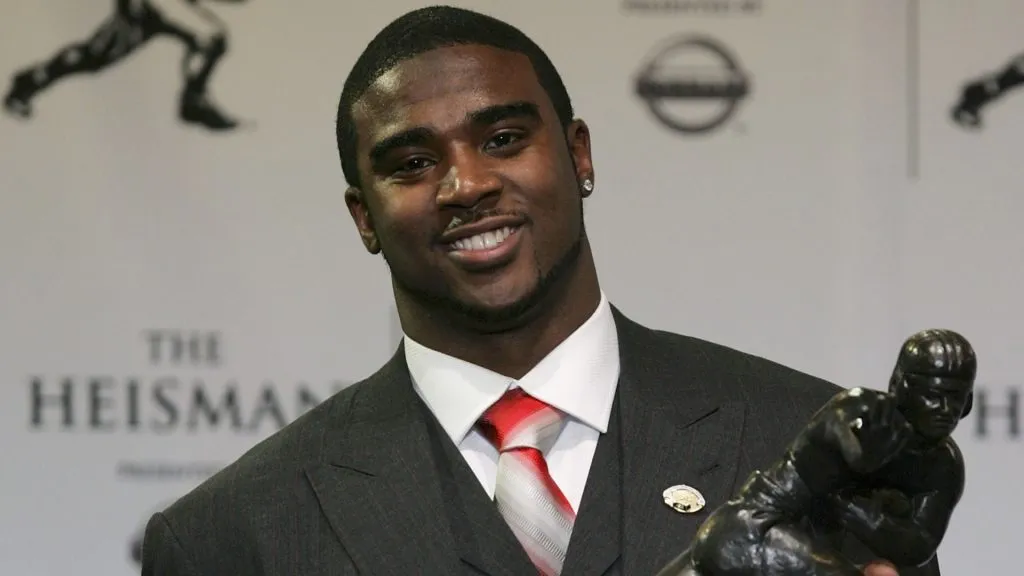
Troy Smith of Ohio State University in 2006. (Source: Chris Trotman/Getty Images)
- 1944 — Les Horvath
- 1950 — Vic Janowicz
- 1955 — Howard Cassady
- 1974 and 1975 — Archie Griffin
- 1995 — Eddie George
- 2006 — Troy Smith
In Columbus, Heisman history feels almost routine. Ohio State’s seven winners represent decades of consistency, with players who redefined versatility and power. Archie Griffin remains the lone two-time Heisman recipient in history, securing back-to-back trophies in 1974 and 1975, a feat that still sets the Buckeyes apart.
Eddie George’s bruising 1995 season, Troy Smith’s command of the 2006 offense, and the early contributions of Les Horvath and Vic Janowicz all illustrate the breadth of talent to emerge from the program.
Far from a one-position dynasty, Ohio State’s winners reflect adaptability and evolution, blending tradition with modern dominance and ensuring the Buckeyes remain one of the sport’s most storied Heisman hotbeds.
Southern California | 8
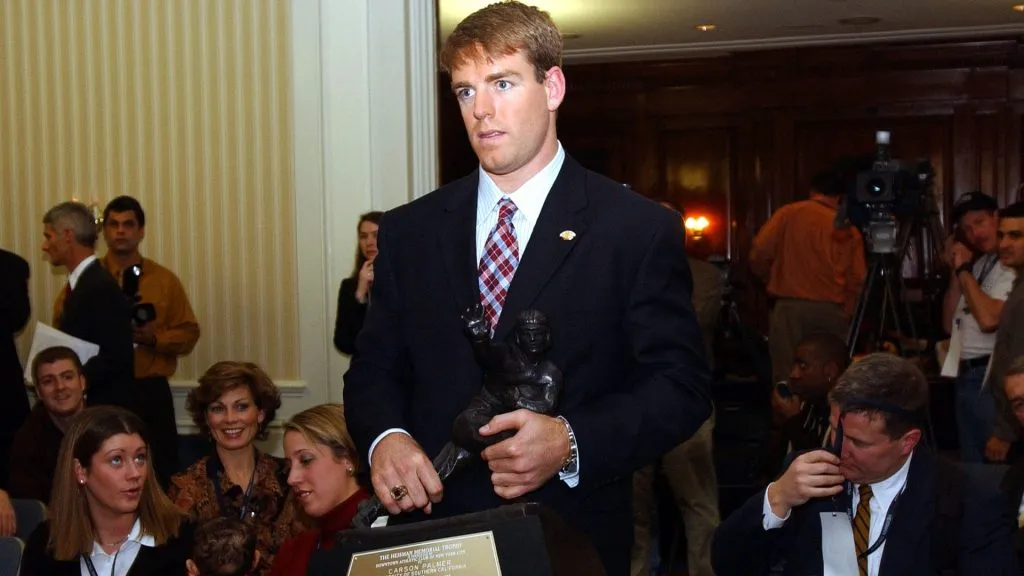
Carson Palmer of the University of Southern California in 2002. (Source: Spencer Platt/Getty Images)
- 1965 — Mike Garrett
- 1968 — O. J. Simpson
- 1979 — Charles White
- 1981 — Marcus Allen
- 2002 — Carson Palmer
- 2004 — Matt Leinart
- 2005 — Reggie Bush
- 2022 — Caleb Williams
From the glamour of Los Angeles to the roar of the Coliseum, USC has long been a cradle of individual greatness. With eight Heisman winners, the Trojans stand at the top of college football’s most decorated programs.
Their legacy spans generations, from Mike Garrett’s electrifying 1965 season to Marcus Allen’s record-breaking campaign in 1981, and into the modern era with quarterbacks like Carson Palmer, Matt Leinart and Caleb Williams.
Even Reggie Bush’s 2005 award, once vacated in controversy, was reinstated in 2024 as rules around name, image and likeness reshaped the sport. Each winner reflects not just dominance on the field but also a cultural imprint that made USC’s Heisman tradition as enduring as its championship banners.