If you’ve ever watched golf and heard words like “birdie” or “bogey” thrown around, you’re not alone in wondering what they actually mean. Golf has its own quirky language and cracking the code is part of the fun for any fan of the game.
At first glance, golf scoring seems simple: hit the ball, count the strokes. But then comes “par”, “eagle” and even the elusive “albatross”. These terms aren’t just colorful—they’re essential to how the sport is played and understood.
Before you step onto the green—or even just tune in to the Masters—it helps to know how these scores work. From the satisfaction of a birdie to the frustration of a double bogey, every stroke tells a story.
Stroke play basics
Stroke play is the most common scoring format in golf, especially at the professional level. It’s straightforward in theory—every shot counts. The goal is to complete the entire course, typically 18 holes, using the fewest total strokes.

Tiger Woods of the U.S. Team hits his tee shot on the 3rd hole during the final day singles matches at The Presidents Cup at The Royal Montreal Golf Club on September 30, 2007. (Source: Streeter Lecka/Getty Images)
Each stroke is recorded, including penalty strokes for hitting out of bounds or into hazards. At the end of the round, the player with the lowest overall score wins.
This format rewards consistency and mental resilience, as one bad hole can have a ripple effect on your final score. Unlike match play, stroke play is a marathon, not a sprint—and it’s the format used in major tournaments like The Masters or the U.S. Open.
Par, birdie, eagle
Golf has a language all its own, and understanding its scoring terms is key to following the action. “Par” is the baseline—it’s the number of strokes a skilled golfer is expected to take to finish a hole.
If you complete a par-4 hole in just three shots, congratulations—you’ve made a “birdie”. Go two strokes under par, and you’ve scored an “eagle,” which is considerably rarer and more difficult.
These names have curious origins: “birdie” comes from early 20th-century American slang, meaning something excellent, while “eagle” was introduced later to represent a more impressive feat. The more you get familiar with these terms, the more you’ll appreciate the nuance behind every swing.
Match play vs. stroke play
While stroke play focuses on the total score over an entire round, match play flips the script. In match play, players compete hole by hole. Winning a hole means you took fewer strokes than your opponent—simple as that.
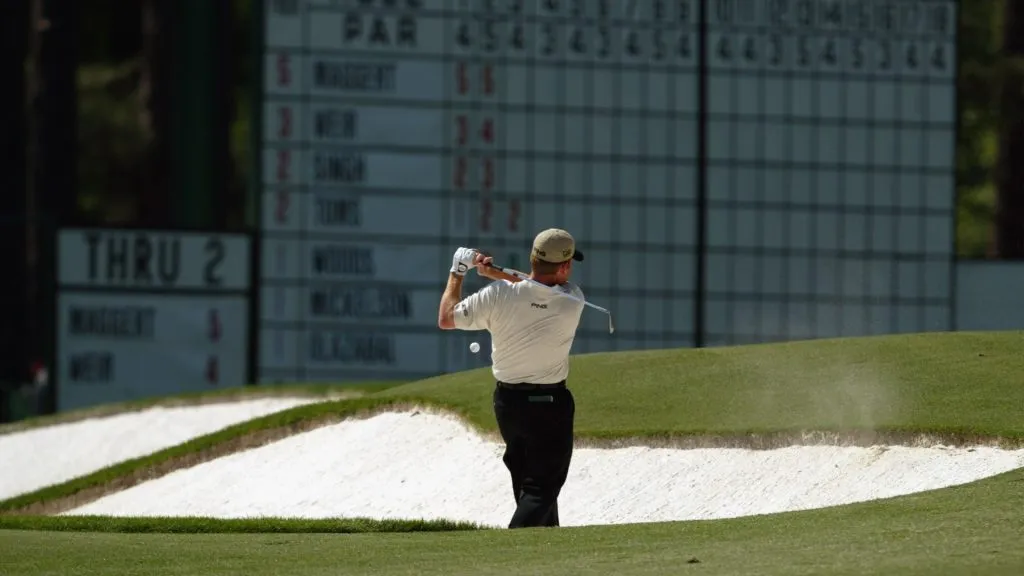
Jeff Maggert of the USA plays out of the third hole bunker as the ball comes back and hits him during the final round of the 2003 Masters Tournament. (Source: Getty Images)
The player who wins the most holes wins the match, regardless of their overall number of strokes. This format can be thrilling and unpredictable, as a bad hole doesn’t necessarily ruin your chances. It also encourages more aggressive, risk-taking strategies since the penalty of a lost hole doesn’t carry forward.
This head-to-head style is often used in team events like the Ryder Cup, where the psychological aspect of direct competition becomes just as important as technical skill.
Scorecards
At first glance, a golf scorecard might seem like a basic spreadsheet of holes and numbers. Each hole is listed with its par, length (in yards or meters), and handicap rating, which indicates its difficulty relative to the rest of the course.
This lets players pace themselves, knowing when to take risks and when to play it safe. Scorecards also track your performance hole by hole, helping you spot trends in your game and adjust accordingly.
Whether you’re a casual weekend player or preparing for tournament play, understanding your scorecard is crucial—it’s the story of your round, written one swing at a time.