
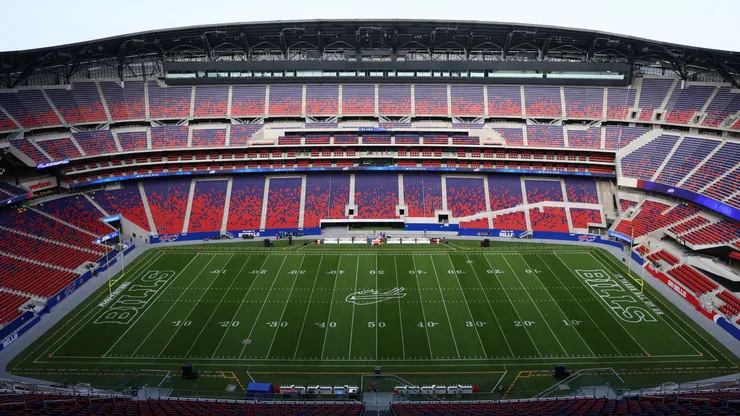
The Buffalo Bills’ new Highmark Stadium is an open-air venue with a large canopy rather than a fully enclosed roof, and its natural grass field has underground heating coils. It was built to preserve the outdoor feel of football.
The canopy covers roughly 64% of the seating bowl, helping shield fans from snow, rain and wind without turning the stadium into a domed venue. The Bills didn’t build the stadium solely for its new technology or increased capacity, but also to provide greater comfort.
The playing surface is another major difference from their previous home, which cost less than the new one. It uses natural Kentucky bluegrass, and the field features underground heating coils designed to prevent the surface.
How does the Highmark Stadium canopy work?
The Highmark Stadium canopy is a 360-degree structure that covers roughly 64% of the seats, protecting fans from precipitation while significantly reducing the impact of Buffalo’s strong winds.
It does not turn the venue into a dome: the Bills deliberately designed Highmark Stadium as an open-air facility, with the canopy working alongside the stadium’s exterior to provide protection without enclosing the playing field.
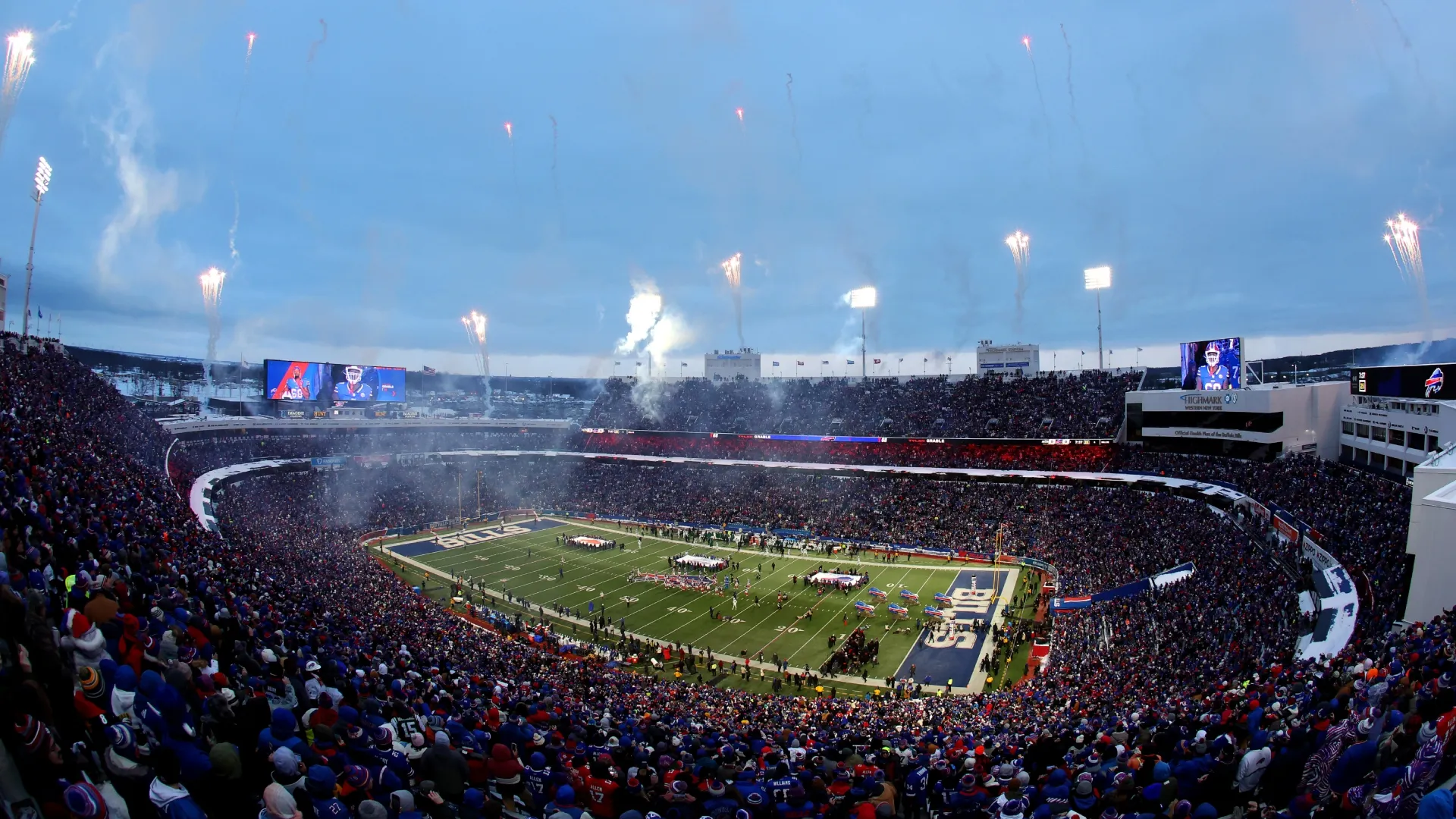
A general view of fireworks before a game at Highmark Stadium (Source: Timothy T Ludwig/Getty Images)
The canopy stretches around the entire seating bowl and was designed with Buffalo’s weather in mind. The structure works together with the stadium’s exterior facade to prevent swirling winds from reaching field level.
The team said wind studies conducted during the design process showed that the impact of wind inside the new stadium, which has a smaller fan capacity, would be minimal compared with the previous venue. The exterior itself is also part of the weather strategy.
The stadium incorporates perforated metal panels and a multidimensional exterior skin, which help diminish the wind factor and limit the swirling effect that can make conditions at field level particularly difficult. ESPN reported that the canopy and exterior skin were specifically designed to protect against wind and precipitation while keeping the stadium open-air.
How does the Bills’ new Stadium handle snow?
The Bills’ new Highmark Stadium uses several systems to deal with Buffalo’s winter weather, including a snow-melt system built into the canopy and underground heating coils beneath the natural-grass playing surface. The combination is designed to address two different problems: snow accumulation on the stadium structure and freezing conditions on the field.
The canopy’s snow-melt system was already being installed during construction when the Bills reached the stadium’s “topping out” milestone in April 2025. The team’s official construction update specifically listed the start of the snow-melt system as part of the ongoing canopy installation.
The playing field has its own winter protection. Highmark Stadium uses natural Kentucky bluegrass, and the field includes underground heating coils designed to prevent the playing surface from freezing. The NFL confirmed the system when the new stadium officially opened in June 2026.
What other weather features does Highmark Stadium have?
Beyond the canopy and heated field, Highmark Stadium has temperature-controlled spaces, radiant heating throughout parts of the concourses and additional heated areas designed to give fans places to escape Buffalo’s cold weather. These features were incorporated specifically after the Bills surveyed more than 14,000 fans about what they wanted from the new stadium.
One of the major additions is radiant heating at points of congregation throughout the concourses. The Bills included the system in areas where fans are likely to spend time away from their seats, giving them another way to warm up without requiring the entire open-air stadium to be enclosed.
The stadium also includes temperature-controlled spaces in several areas. Bills COO Ron Raccuia previously said the design included conditioned spaces in the end zones, clubs and upper decks after fan focus groups identified indoor, climate-controlled areas as an important priority.