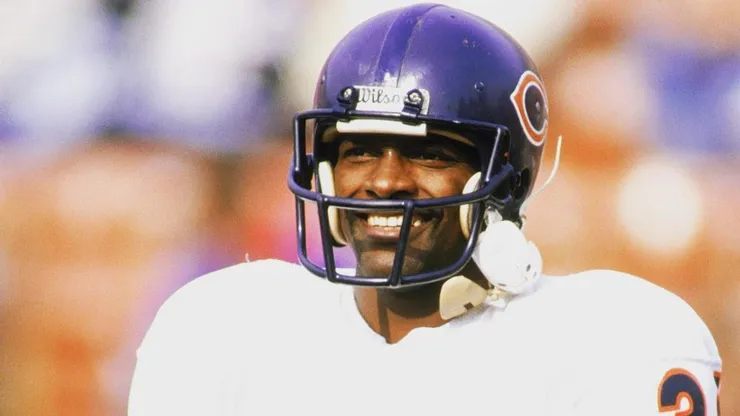
They’ve seen leather helmets and Super Bowl shuffles, bruising snow games and Monday night lights. Few teams have lived more football history than the Chicago Bears and few cities wear it prouder.
Across generations, certain names stopped being just players and became folklore. Their tackles rattled eras, their runs froze time, and their presence gave Chicago more than wins, it gave it identity.
What they left behind isn’t just in record books, but in the way NFL fans speak their names—with reverence, defiance, and full hearts. In a town built on toughness, these are the ones who defined it.
25. Charles Tillman
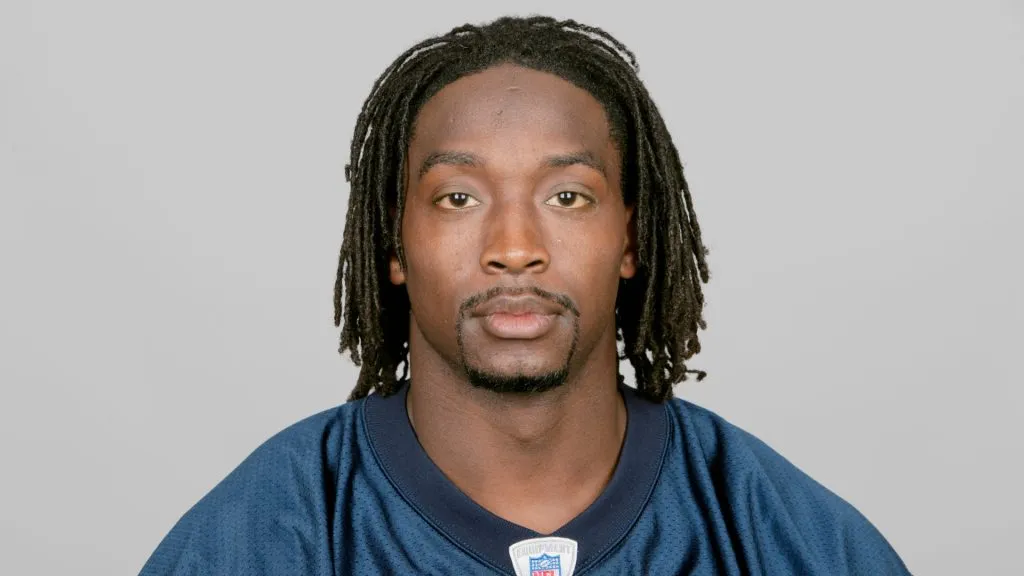
Charles Tillman of the Chicago Bears poses for his 2005 NFL headshot at photo day in Chicago. (Source: Getty Images)
Charles Tillman, affectionately known as “Peanut,” was a master of the defensive back craft during his 11 seasons with the Bears (2003–2013). Famous for his signature “Peanut Punch” technique, he specialized in stripping the ball from ball carriers, creating turnovers that shifted momentum in countless games.
His 44 career forced fumbles are among the highest in NFL history, showcasing his relentless focus on defensive disruption. A seven-time Pro Bowler and two-time first-team All-Pro, Tillman also served as a defensive captain and leader in the locker room.
His impact extended beyond stats, as he was known for his toughness, sportsmanship, and community work. In 2023, he was inducted into the Pro Football Hall of Fame, solidifying his legacy as one of the greatest Bears defenders and a beloved figure in Chicago sports history.
24. Mark Bortz
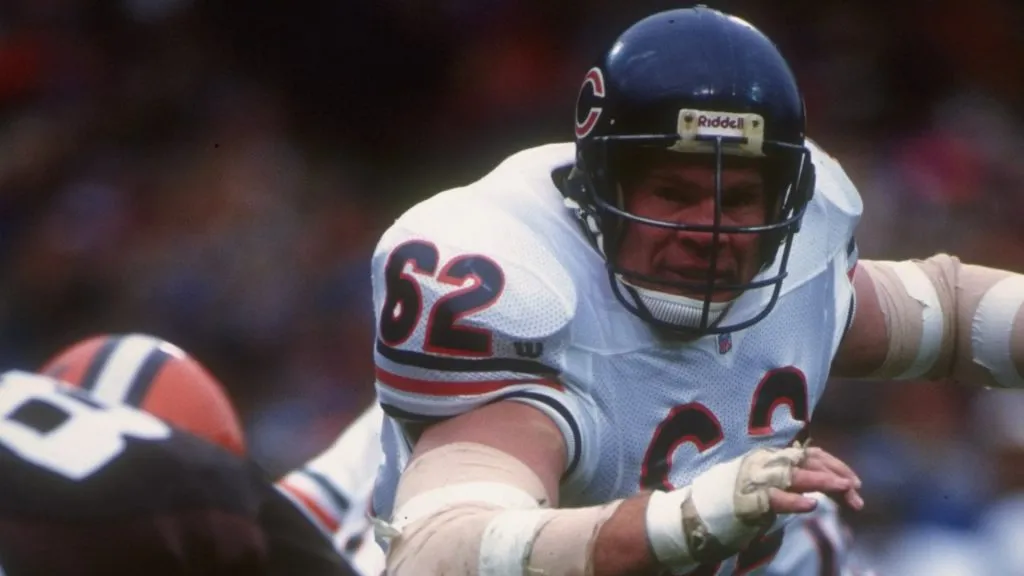
Offensive lineman Mark Bortz of the Chicago Bears runs with the ball during a game against the Cleveland Browns at Soldier Field in 1992. (Source: Getty Images)
Mark Bortz was a reliable and tough guard who contributed quietly but effectively to the Bears’ offensive line during the mid-1980s. Drafted in the 10th round in 1981, he earned his spot through grit and determination, eventually starting over 150 games in his 11-year career.
His blocking helped create holes for Walter Payton and provided protection for the passing game, key elements in the team’s march to the 1985 Super Bowl championship.
Though he rarely made headlines, his contribution was vital to the offensive front’s success and the Bears’ balanced attack. Known for his work ethic and consistency, he earned respect from teammates and coaches alike, embodying the essential role of a dependable offensive lineman on one of football’s most dominant teams.
23. Joe Fortunato
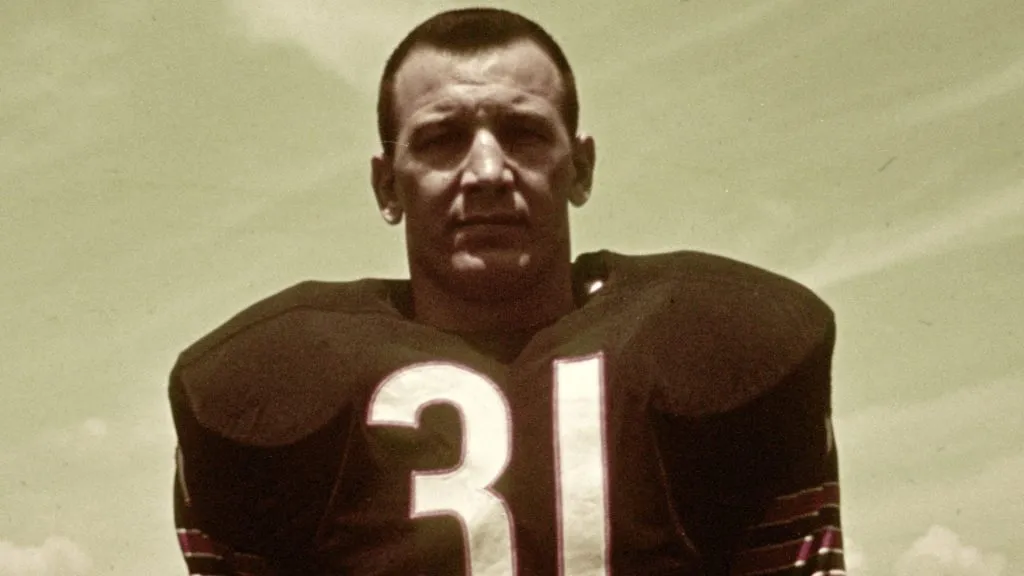
Joe Fortunato (Source: @ESPNChicago)
Joe Fortunato’s career with the Bears spanned from 1952 to 1965, a period when linebackers were expected to be rugged, relentless, and smart on the field. Playing primarily as a middle linebacker, he earned six Pro Bowl selections and was considered the defensive anchor during the 1950s and early ’60s, a time when the Bears often boasted one of the NFL’s toughest defenses.
He was known for his tackling precision and ability to read offenses, helping lead the Bears through some of their most competitive seasons before the advent of their 1980s dominance. His nickname, “Forty-Fort,” reflected both his hometown and his hard-hitting style.
While he never won a championship with Chicago, his leadership and toughness left a lasting imprint, and he was inducted into the Bears’ Ring of Honor—an acknowledgment of his significance in the team’s storied past. He represents the gritty spirit that has long defined Chicago Bears linebackers.
22. Keith Van Horne
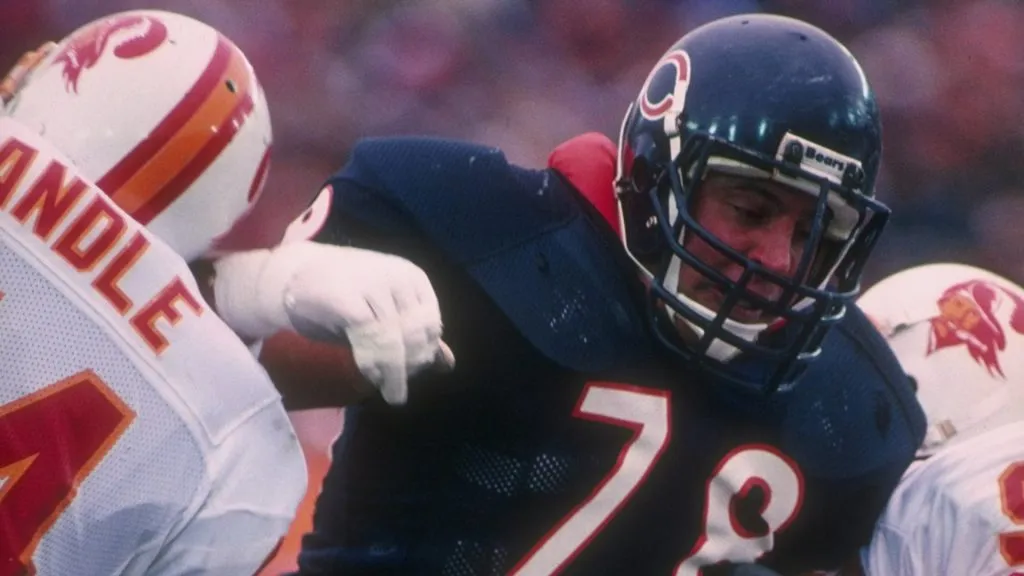
Offensive tackle Keith Van Horne of the Chicago Bears works against the Tampa Bay Buccaneers during a game at Soldier Field in 1988. (Source: Getty Images)
Selected in the first round of the 1981 draft (11th overall), Keith Van Horne became the quiet but resolute foundation of the Bears’ offensive line for 13 seasons. At 6’6” and nearly 280 pounds, he started 169 of 186 games and was central to the protection schemes that freed runners and passers alike—including during the 1985 Super Bowl triumph. Reliable and rock-solid, he earned a spot among the “100 Greatest Bears of All-Time” and embodied consistency at a position often overlooked but universally respected.
21. Richie Petitbon
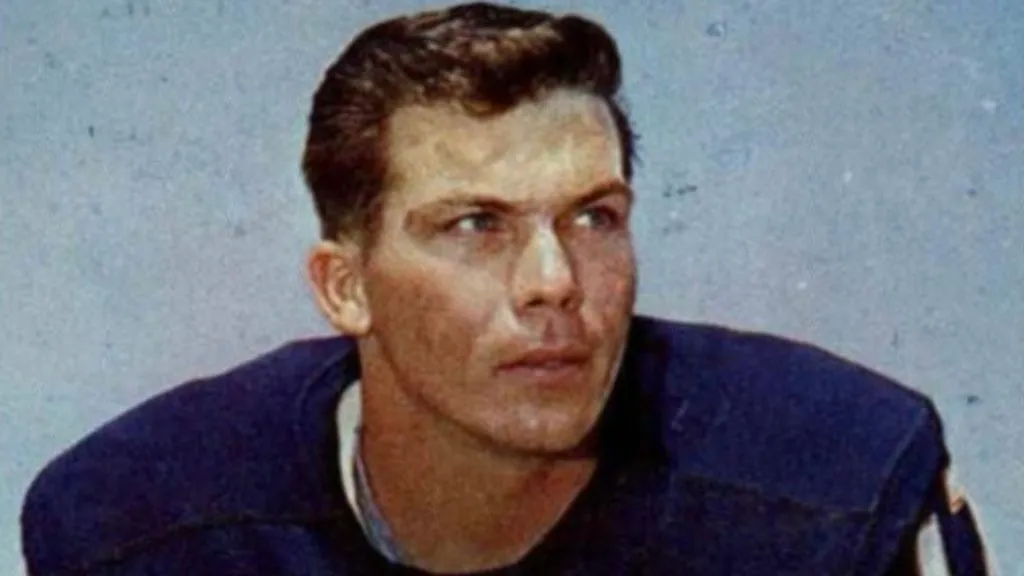
Richie Petitbon (Source: @jacobinfante24)
Richie Petitbon arrived in Chicago in 1959 as a promising second-round pick. His shift from cornerback to safety unlocked a defensive career defined by intelligence and clutch play. In 1962, he returned an interception 101 yards—a team record—and two seasons later, his game-sealing pick in the NFL Championship secured a 14-10 win for Chicago.
He ended his Bears tenure with 38 interceptions (second most in team history), four Pro Bowl nods, and multiple All-Pro honors—his leadership often steering the defense with a cerebral hand.
20. Mike Hartenstine
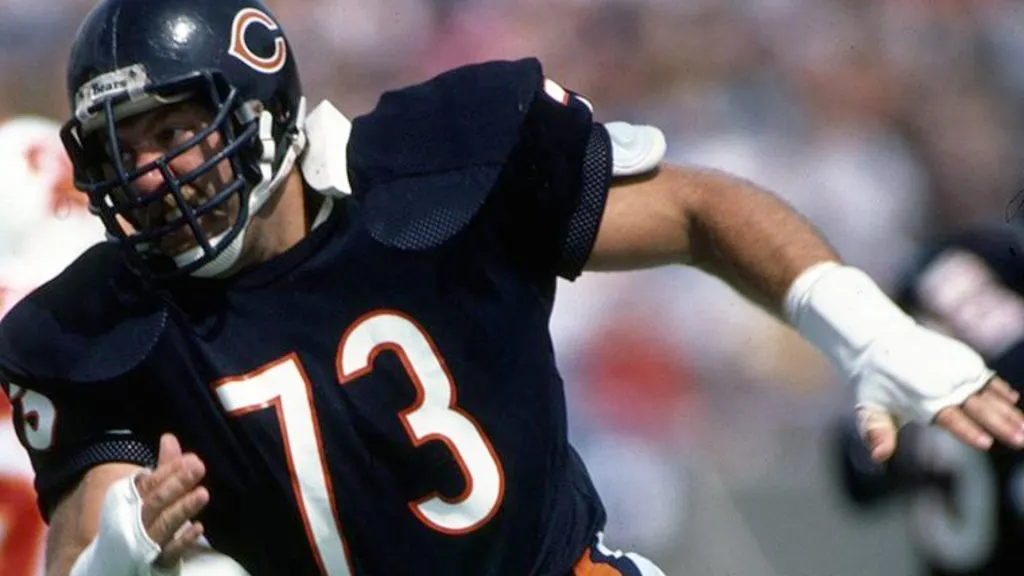
Mike Hartenstine (Source: @ChicagoBears)
Drafted 31st overall in 1975 after a standout swim through Penn State’s lineup, Mike Hartenstine quickly earned a place on the NFL All-Rookie team. Over 12 seasons with the Bears, he amassed 55 sacks and was the anchor of a defensive unit that roared its way to Super Bowl XX glory—he being the oldest player on that legendary 1985 squad. Known for his quiet consistency and veteran savvy, he became one of the “100 Greatest Bears of All-Time,” a fitting tribute to a career marked by durability and class.
19. Jim Osborne
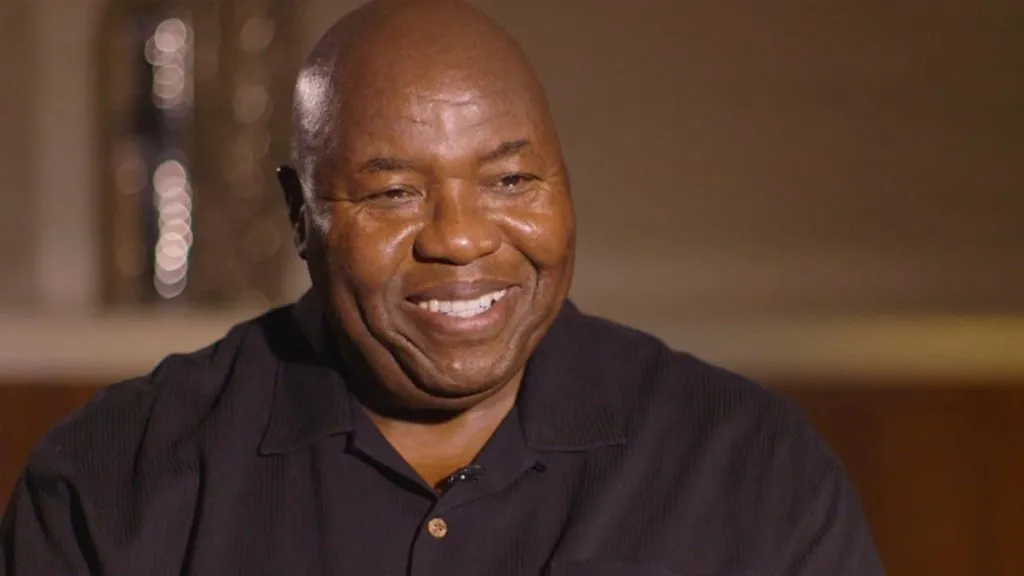
Jim Osborne (Source: Chicago Bears)
Few linemen were as unsung yet as essential as Jim Osborne. A seventh-round pick out of Southern University in 1972, he answered the call by becoming one of the most formidable defensive tackles in team history—amassing an estimated 81 career sacks (unofficially), despite the NFL only officially tracking the stat starting in 1982.
Over 13 seasons—186 games—all in Bears blue, he embodied endurance and disruptive grit, quietly anchoring the defense just ahead of legends Butkus and Singletary. A Chicago fixture, he earned a place among the franchise’s greatest (#42 in one Top 100 countdown) for his fearsome consistency and foundational presence.
18. Olin Kreutz
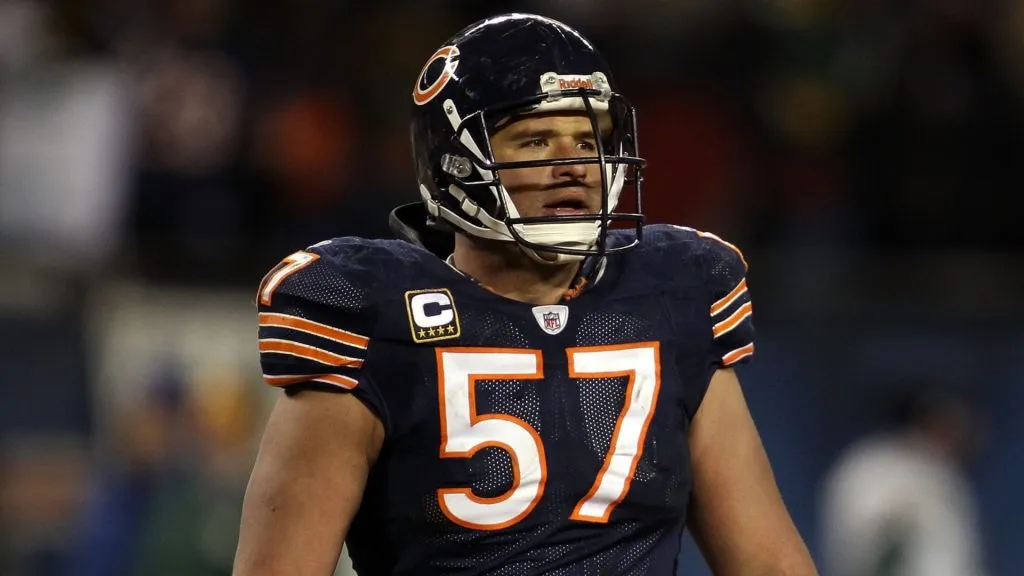
Olin Kreutz #57 of the Chicago Bears looks on late in the fourth quarter against the Green Bay Packers in the NFC Championship Game at Soldier Field on January 23, 2011. (Source: Jonathan Daniel/Getty Images)
Quietly relentless and technically impeccable—Olin Kreutz was the steadfast anchor of the Bears’ offensive front from 1998 through 2010. Drafted in the third round, he emerged as one of the premier centers of his generation, making six consecutive Pro Bowls and earning a First-Team All-Pro nod in 2006.
He started 182 games for Chicago—second only to Walter Payton in franchise history—and was named to the NFL’s 2000s All-Decade Team. A natural leader, he was instrumental in calling protections and keeping the offense humming through both veteran campaigns and rebuilding eras. Even after retiring, his legacy endured—he was named a Hall of Fame semifinalist in 2020.
17. Doug Atkins
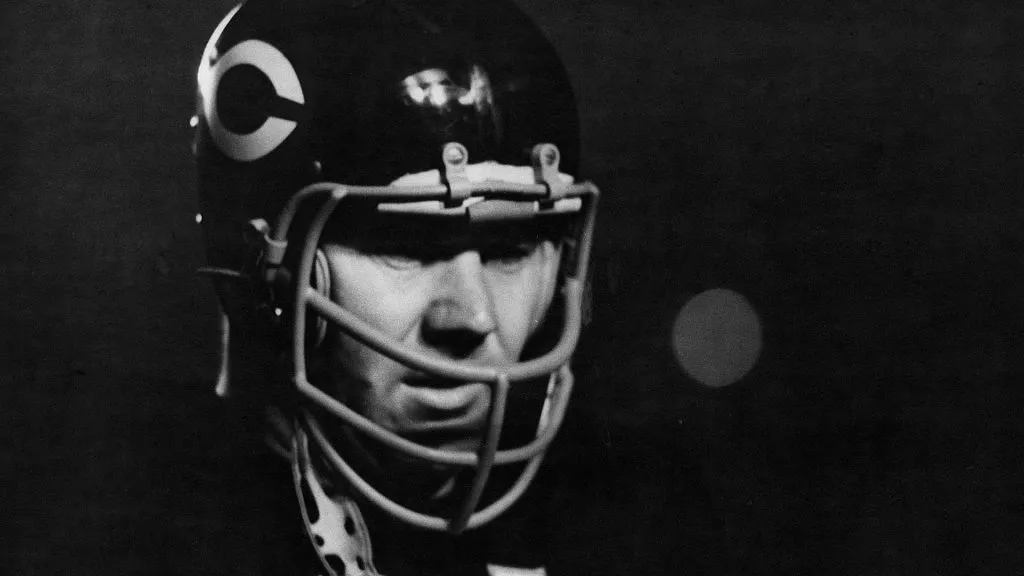
Doug Atkins (Source: @ChicagoBears)
At a staggering 6-8 and built like a linebacker masquerading as a defensive end, Doug Atkins loomed over the field—and his opponents. Originally on a basketball scholarship at Tennessee, he was converted into a football phenom, soaring past blockers with the same agility that once made him a high-jump standout.
After two seasons with Cleveland, he was traded to Chicago in 1955—where his legend took off. A four-time All-NFL and eight-time Pro Bowler, he anchored a ferocious defense that captured the 1963 NFL Championship.
Opponents both respected and feared the man: as Fran Tarkenton once said, “He was the strongest man in football… if he gets to you, the world starts spinning“. His career—spanning 17 seasons, 205 games, and a Hall of Fame bust earned in 1982—embodies the rugged spirit of early pro football.
16. Gale Sayers
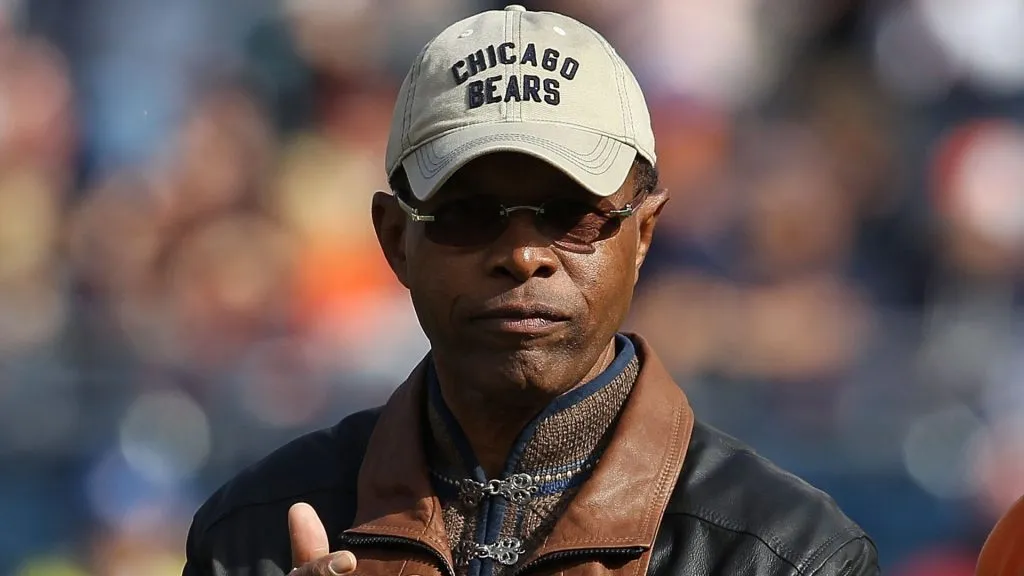
Former player Gayle Sayers of the Chicago Bears is introducted to the crowd before a game against the Washington Redskins at Soldier Field on October 24, 2010. (Source: Jonathan Daniel/Getty Images)
Few players have ever captivated a city like Gale Sayers did in his too-brief career. Drafted in 1965, “The Kansas Comet” exploded onto the scene with a rookie season for the ages—2,272 all-purpose yards and an NFL-record six touchdowns in a single game.
His breathtaking cuts and instant acceleration made every touch a potential highlight. Knee injuries limited him to just 68 games, but in that short span he twice led the league in rushing and redefined the concept of the open-field threat. Inducted into the Hall of Fame at 34—the youngest ever—he remains proof that greatness is measured by impact, not longevity.
15. Bulldog Turner
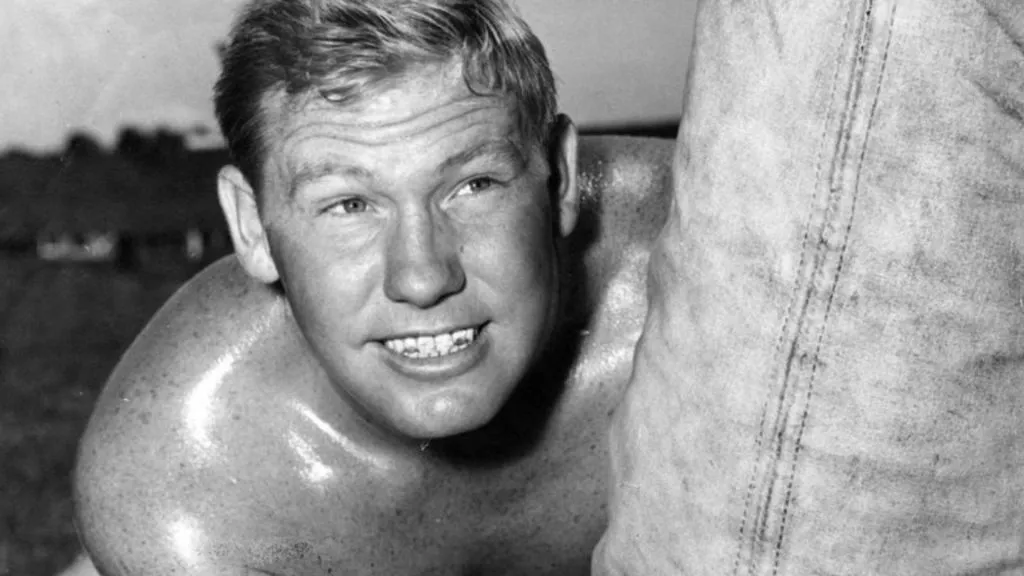
Bulldog Turner (Source: @ChicagoSports)
From 1940 to 1952, Bulldog Turner was the steady heartbeat of George Halas’s dynasty teams. A center on offense and a linebacker on defense, he combined ironman stamina with uncanny football IQ, helping lead the Bears to four NFL championships.
He intercepted 17 passes in his career—rare for a lineman—and was named First-Team All-Pro seven times. Known for reading plays before the snap, he neutralized opponents not just with physicality, but with anticipation. His adaptability in an era of 60-minute players made him one of the most complete talents in league history.
14. Bronko Nagurski
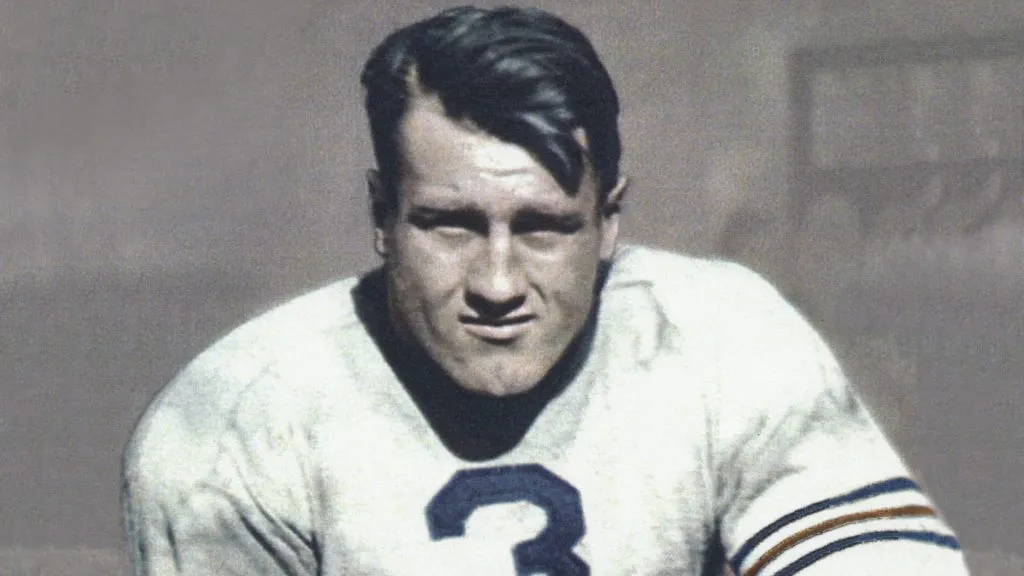
Bronko Nagurski (Source: Getty Images)
In the NFL’s rugged early years, no name struck fear quite like Bronko Nagurski. Standing 6’2″ and weighing 226 pounds—massive for the 1930s—he bulldozed defenders as a fullback and crushed opponents as a tackle, embodying the two-way toughness of his era.
A three-time NFL champion (1932, 1933, 1943), he was so dominant that league rules were reportedly adjusted to curb his power. He briefly retired in 1937 to wrestle professionally, only to return during World War II and help Chicago win another title at age 35. His legend is as much folklore as fact—a testament to a man who defined the sport’s raw, unfiltered beginnings.
13. Mike Ditka
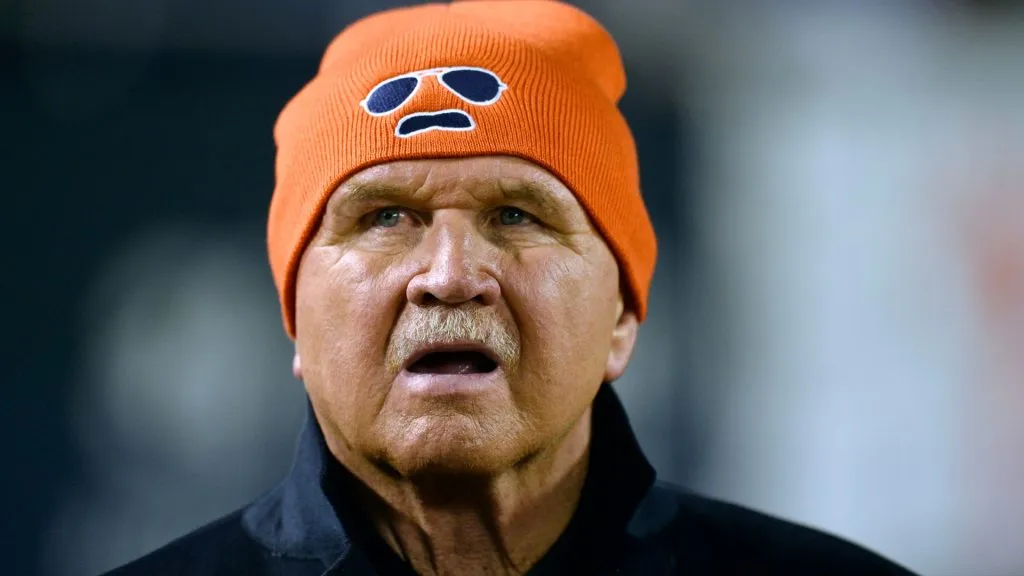
Former head coach Mike Ditka of the Chicago Bears watches from the sidelines during the first quarter at Soldier Field on December 15, 2014. (Source: Brian Kersey/Getty Images)
Before he became a Hall of Fame coach, Mike Ditka redefined the tight end position as a player. Drafted fifth overall in 1961, he instantly blurred the lines between receiver and blocker, catching 56 passes and scoring 12 touchdowns as a rookie—numbers unheard of for his position at the time.
Over six seasons with Chicago, he made five Pro Bowls, won NFL Rookie of the Year, and became a vital cog in the Bears’ 1963 championship run. His fiery personality and unyielding toughness set a tone that carried into his later coaching career—most notably guiding the 1985 Bears to Super Bowl glory. His #89 is retired at Soldier Field, cementing his legacy as both a player and a cultural icon in Chicago.
12. Sid Luckman
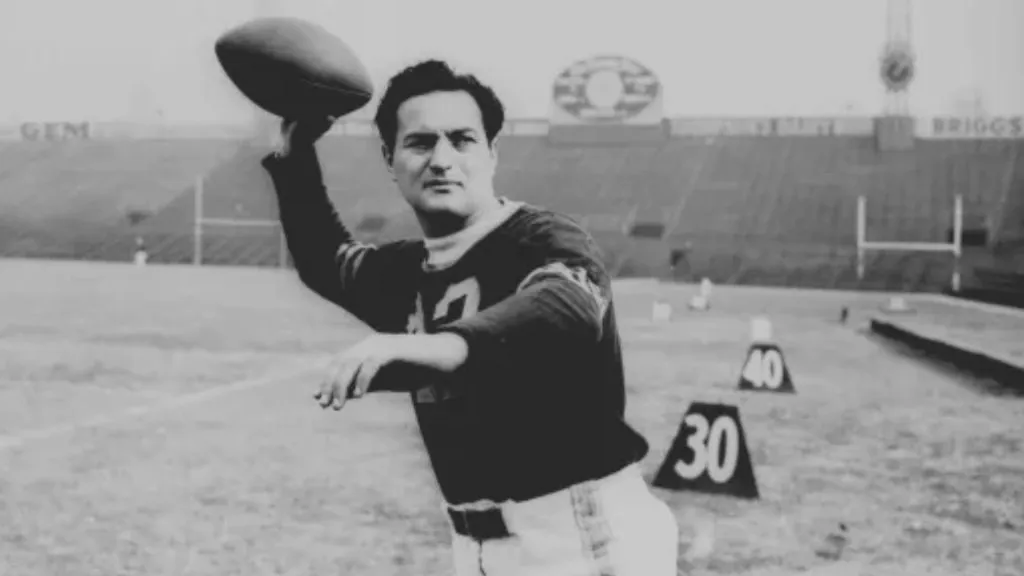
Sid Luckman (Source: Chicago Tribune)
Before Sid Luckman, the forward pass was an afterthought in pro football. Drafted in 1939, he became the first great T-formation quarterback, revolutionizing the position with his quick release, deep-ball accuracy, and cerebral command of the field.
He guided the Bears to four NFL championships (1940, 1941, 1943, 1946) and posted a career passer rating of 75.0—exceptional for the era. His six-touchdown performance in the 1943 NFL Championship Game remains one of the most dazzling postseason feats in league history. More than his stats, his influence shaped offensive football for decades, making him both a Hall of Famer and a tactical pioneer.
11. Matt Forte
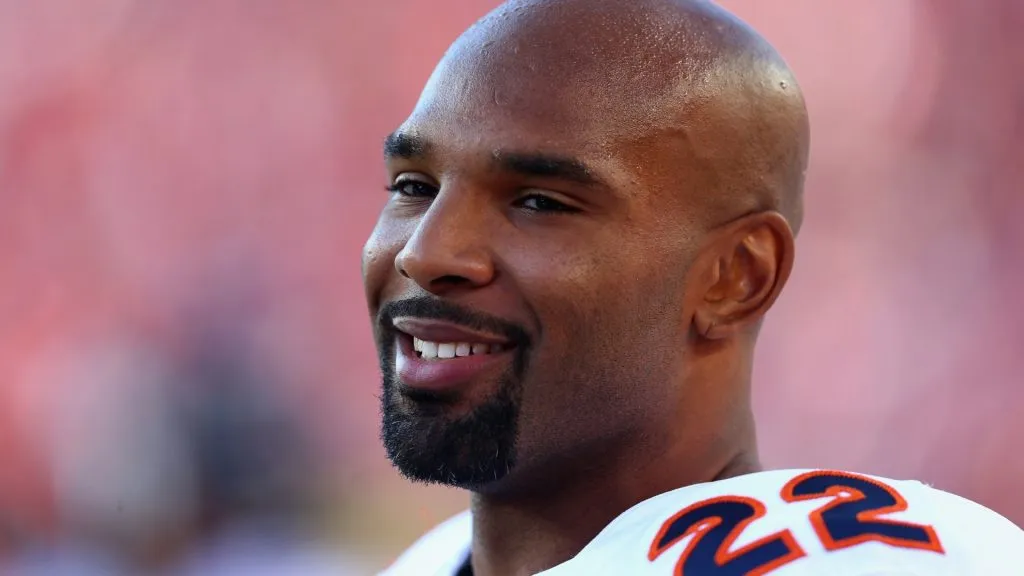
Running back Matt Forte #22 of the Chicago Bears looks on against the San Francisco 49ers at Levi’s Stadium on September 14, 2014. (Source: Jeff Gross/Getty Images)
When Matt Forte arrived in 2008, he gave the Bears an offensive identity they hadn’t had in years—a running back who could punish defenses on the ground and torch them through the air. In his rookie season, he racked up 1,238 rushing yards and 63 receptions, immediately becoming the centerpiece of Chicago’s attack.
Across eight seasons in navy and orange, he surpassed 1,000 rushing yards five times, caught at least 50 passes in all but one year, and in 2014 nearly broke the NFL’s single-season record for receptions by a running back with 102 catches. His 12,718 total yards from scrimmage rank second in franchise history, trailing only Walter Payton—a testament to his rare versatility and consistency.
10. Jay Hilgenberg
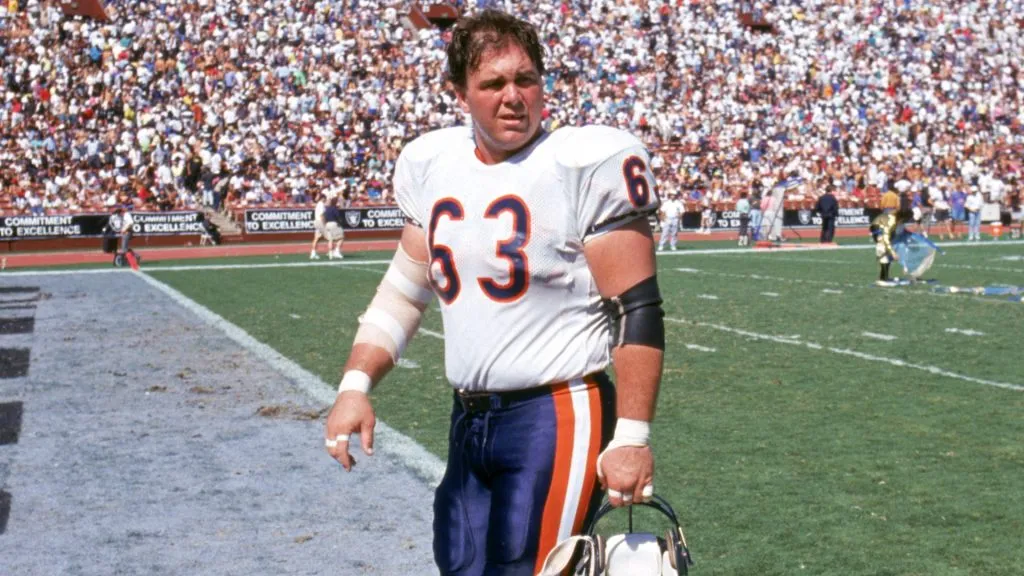
Center Jay Hilgenberg #63 of the Chicago Bears walks off the field during a game against the Los Angeles Raiders at the Los Angeles Memorial Coliseum on September 30, 1990. (Source: George Rose/Getty Images)
The Bears’ offensive success in the 1980s owed much to a center whose name wasn’t always in the headlines but whose work was critical on every snap. Jay Hilgenberg joined the team in 1981 as an undrafted free agent, yet by 1984 he was the linchpin of the offensive line, making seven straight Pro Bowls and five All-Pro teams.
He orchestrated protections for Jim McMahon and paved the way for Walter Payton, all while facing the NFL’s most fearsome nose tackles. His steady excellence was most evident in the 1985 title run, where Chicago’s offense out-muscled opponents at the line of scrimmage, and he never missed a postseason start during his tenure.
9. Gary Fencik
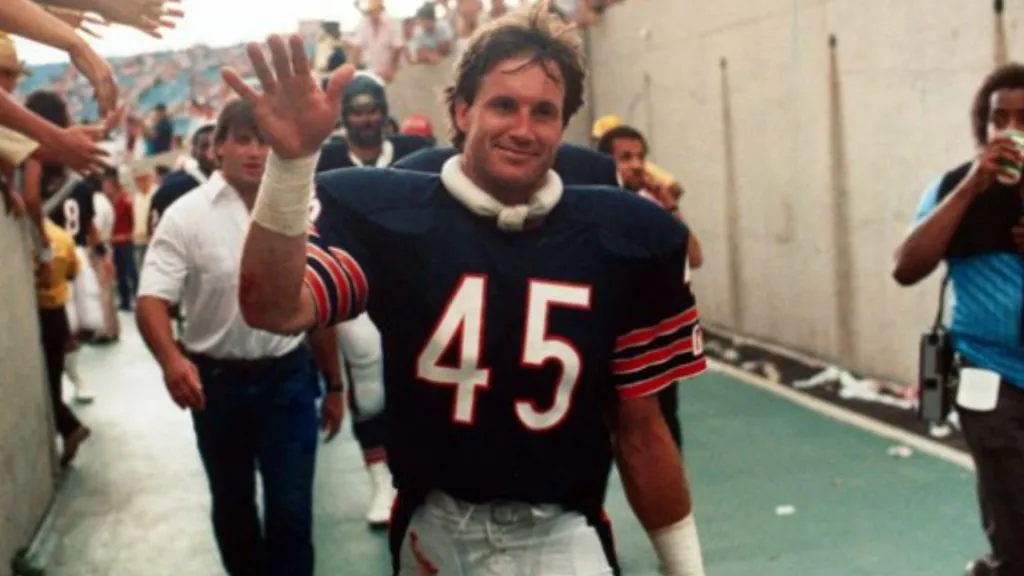
Gary Fencik (Source: @ChicagoSports)
In an era defined by defensive intimidation, Gary Fencik added brains to the brawn. A Yale graduate with Wall Street aspirations, he instead chose to patrol Chicago’s secondary from 1976 to 1987, becoming the franchise’s all-time leader in interceptions (38) and total tackles (1,102).
As part of the famed ’85 defense, his sure tackling and coverage instincts kept deep threats in check, while his leadership as defensive captain added cohesion to a unit brimming with outsized personalities. Off the field, he transitioned seamlessly into a finance career, proving he could command both the locker room and the boardroom.
8. Dıck Butkus
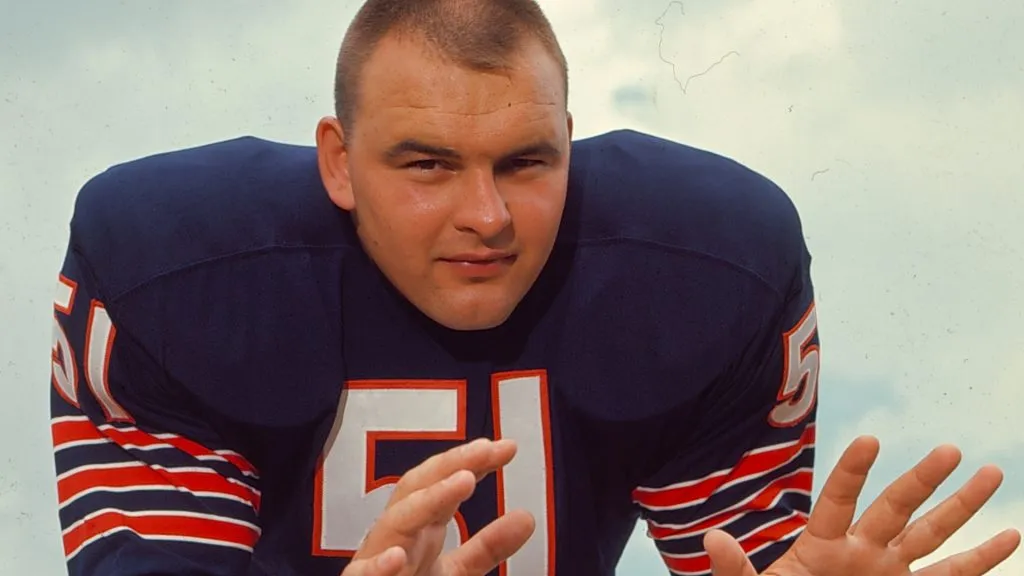
Dıck Butkus (Source: @ChicagoBears)
Dick Butkus is often regarded as the fiercest linebacker in NFL history, a true embodiment of Chicago Bears toughness. Drafted third overall in 1965, he revolutionized the middle linebacker position with a blend of brutal physicality and relentless pursuit. His hits became legendary, and his intimidating presence on the field set a standard for defensive excellence that few have matched.
Over his nine-season career, he earned eight Pro Bowl selections and was a five-time First-Team All-Pro, anchoring the Bears defense and becoming the symbol of their identity in the late ’60s and early ’70s.
His impact went beyond statistics; he was a cultural icon who redefined what it meant to play linebacker. His fiery passion and uncompromising style made him a fan favorite and an adversary feared by offenses across the league. Even after retiring early due to injuries, his legacy endured, influencing generations of defenders and earning him a deserved place in the Pro Football Hall of Fame in 1979.
7. Richard Dent
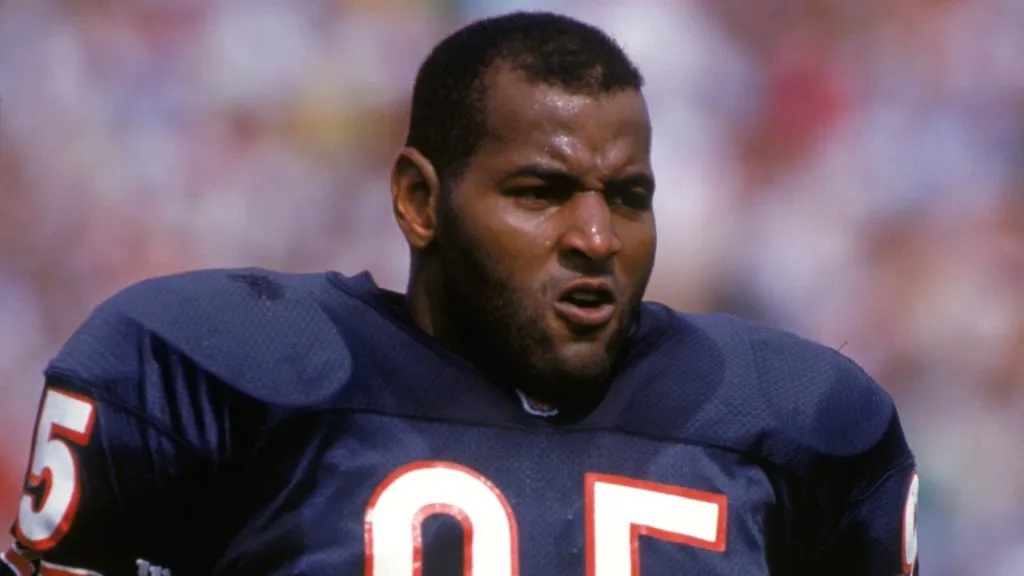
Defensive end Richard Dent #95 of the Chicago Bears looks on during a game against the Detroit Lions at Soldier Field in September of 1992. (Source: Jonathan Daniel/Getty Images)
Richard Dent was the sharpened spear of Chicago’s pass rush, the man quarterbacks dreaded seeing off the corner. Drafted in the eighth round in 1983 out of Tennessee State, he quickly proved draft position meant nothing when paired with explosive speed and a knack for getting to the quarterback.
By 1984, he led the league with 17.5 sacks, setting the stage for the legendary 1985 season where his 17 sacks, dominance in the playoffs, and two forced fumbles in the Super Bowl earned him game MVP honors. His 137.5 career sacks remain the franchise record, and his 2011 Hall of Fame induction was a belated recognition of a career defined by disruption.
6. Steve McMichael
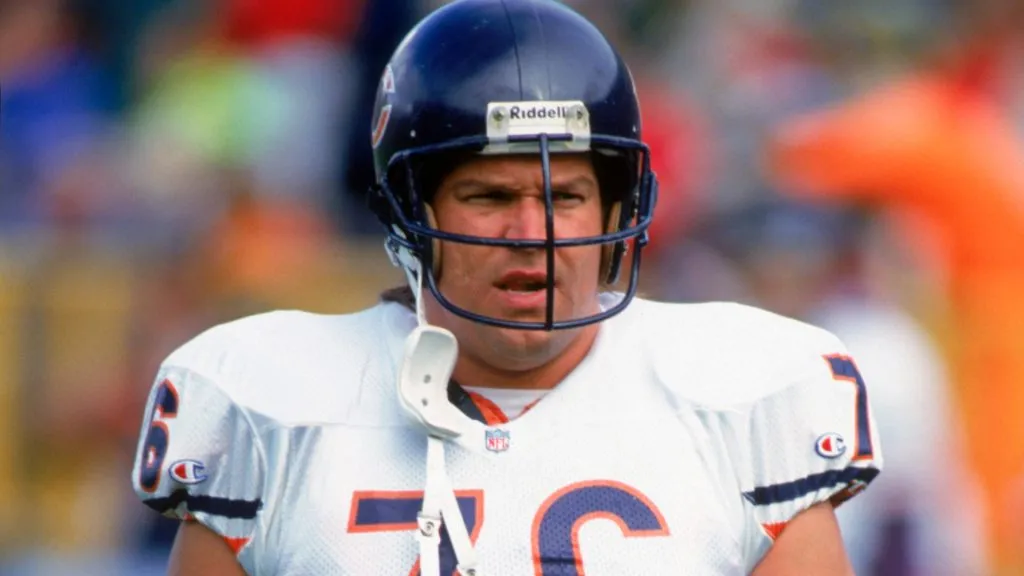
Steve McMichael #76 of the Chicago Bears walks across the field during the game against the Green Bay Packers on October 31,1993. (Source: Jonathan Daniel/Getty Images)
Steve “Mongo” McMichael was more than a defensive tackle—he was a Chicago legend whose energy resonated off the field as powerfully as his hits did on it. After a brief stint with the Patriots, he signed with the Bears in 1981 and quickly became a cornerstone of the 1985 Super Bowl–winning defense, known for his vibrancy, grit, and massive durability—playing a franchise-record 191 consecutive games.
His career totals—95 sacks, 847 tackles, a pair of Pro Bowl selections, and multiple All-Pro honors—solidified him among the elite defensive linemen of his era. His Hall of Fame induction in 2024 was especially poignant—granted through a bedside ceremony at his home, as he battled ALS with the same toughness that made him a star.
5. Lance Briggs
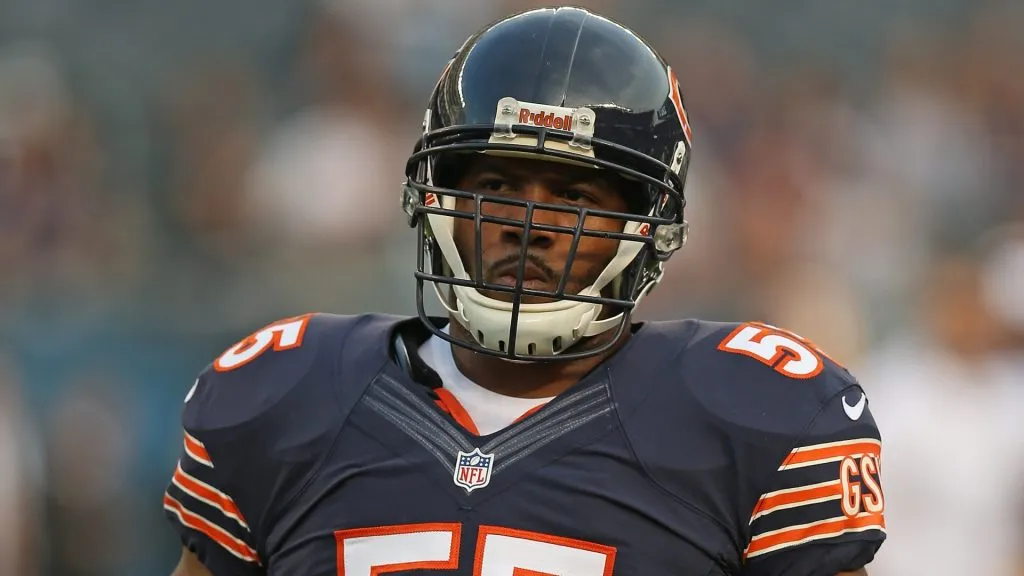
Lance Briggs #55 of the Chicago Bears participates in warm-ups before a preseason game against the Washington Redskins at Soldier Field on August 18, 2012. (Source: Jonathan Daniel/Getty Images)
Quiet but relentless, Lance Briggs emerged as one of the most instinctive and durable linebackers in Bears history. Chosen in the third round of the 2003 draft, he remained a bedrock of the defense for 12 seasons, amassing roughly 940 solo tackles, 237 assists, 15 sacks, 16 interceptions, and 7 fumble recoveries—earning seven Pro Bowl nods along the way.
He was a tackling savant whose consistency and savvy masked his lack of flash—but his 2006 season demanded attention. He was named to the Sporting News All-Pro team as an outside linebacker, a rare nod to his peak-level impact.
4. Dan Hampton
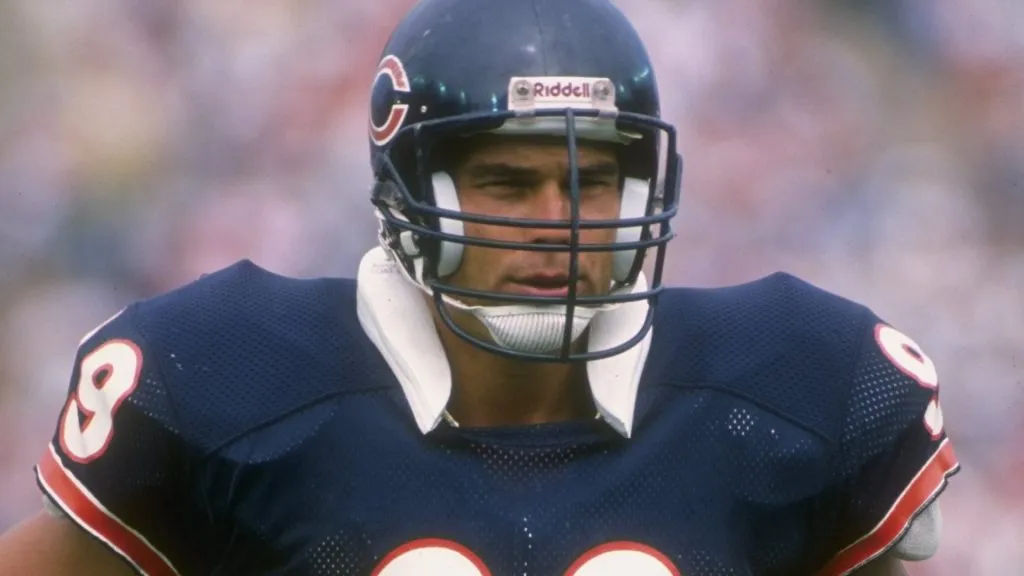
Defensive lineman Dan Hampton of the Chicago Bears looks on during a game against the Cincinnati Bengals in 1989. (Source: Getty Images)
From his towering presence at both defensive end and tackle, Dan Hampton embodied the ferocity and adaptability that defined the Bears’ lethal front line of the 1980s. Drafted No. 4 overall in 1979 after a decorated college career at Arkansas, he would go on to spend 12 relentless seasons in Chicago, earning five All-Pro honors, four Pro Bowls, and a defining role in the Super Bowl XX championship defense.
His ring of accomplishments shines brightest in 1984—he logged 11½ sacks, tied an NFL single-game record with 12 sacks, and was named NFC Defensive Lineman of the Year, as the Bears led the league in nearly every defensive category. His ability to dominate in the trenches—lighting up quarterbacks, stuffing rushing lanes, and imposing his will—earned him a Pro Football Hall of Fame induction in 2002.
3. Brian Urlacher
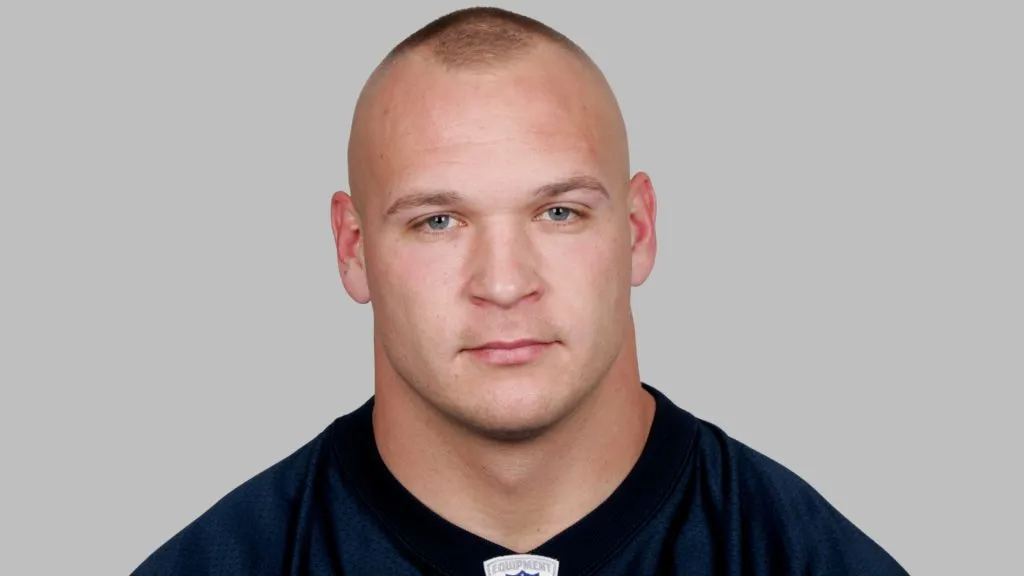
Brian Urlacher of the Chicago Bears poses for his 2006 NFL headshot at photo day in Chicago. (Source: Getty Images)
Stepping into the lion’s den of Bears linebackers, Brian Urlacher arrived in 2000 carrying an awareness of living up to legends like Butkus and Singletary—and he did not disappoint. In his rookie season, he captured Defensive Rookie of the Year honors after piling up eight sacks and nearly 100 solo tackles.
The 6’4″, 258-pound phenom, already alarmingly fast and intelligent, became the second Bears player ever to earn NFL Defensive Player of the Year in 2005. Over 13 seasons—all with Chicago—he amassed 1,360+ tackles, 41.5 sacks, 22 interceptions, and a reputation for turning defense into spectacle: remember the 90-yard fumble return and the 85-yard pick-six that electrified the fans.
2. Mike Singletary
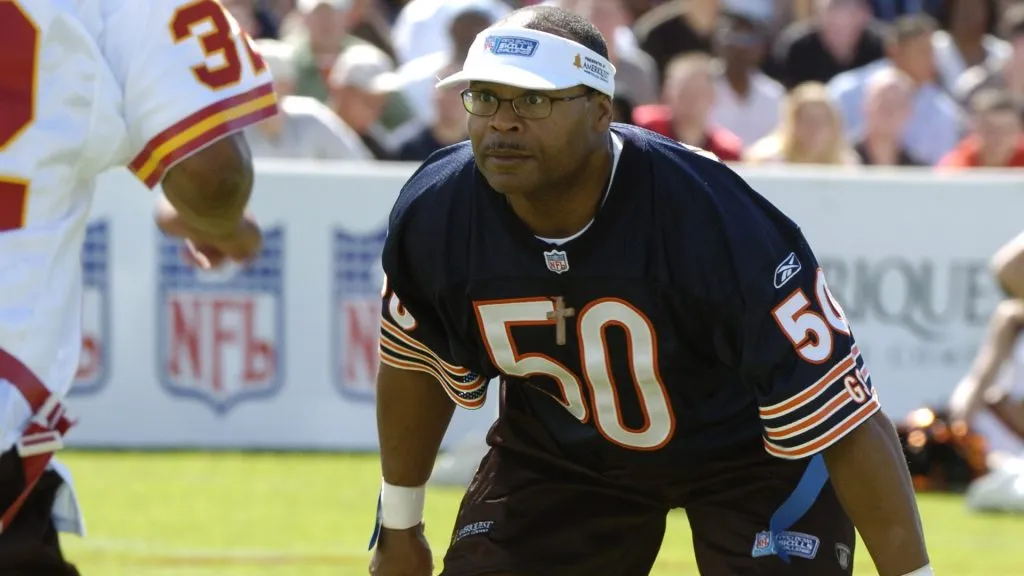
Chicago Bears linebacker Mike Singletary competes in a flag-football legends game during 2005 Pro Bowl week in Ko Olina, Honolulu February 11, 2005. (Source: Al Messerschmidt/Getty Images)
Mike Singletary wasn’t a linebacker; he was a force of nature taking hold of Soldier Field’s heart and steel. From 1981 to 1992, he embodied intensity and cerebral discipline, anchoring the Bears’ defense with an obsession for preparation. His gaze across the line was famous—so intense that opponents practically paused in dread.
Twice named NFL Defensive Player of the Year (1985, 1988), ten-time Pro Bowler, and a Hall of Famer (1998), he was the driving presence behind the 1985 Super Bowl–winning “46 defense” that obliterated opponents—holding the Patriots to a mere seven rushing yards in the title game. A teammate once captured it best: “He processed that preparatory knowledge into action. Action that was explosive”.
1. Walter Payton
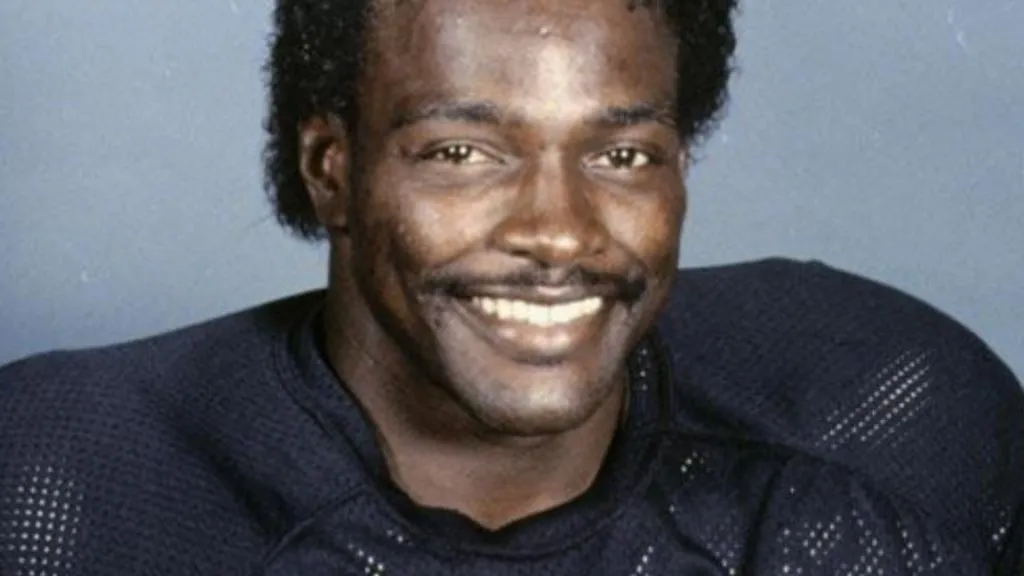
Walter Payton (Source: Pro Football Hall of Fame)
When Walter “Sweetness” Payton graced the gridiron from 1975 to 1987, he wasn’t just a running back—he was an era. With unmatched agility, tenacity, and grace, he retired as the NFL’s all-time leading rusher, setting records for career rushing yards (16,726), touchdowns (110), and scrimmage yards (21,264).
His relentless durability was legendary—missing a single game in 13 seasons—and his performance earned him NFL MVP and Offensive Player of the Year in 1977, plus nine Pro Bowls. Off the field, his spirit was equally impactful: he founded a charitable legacy that continues to uplift communities, and the NFL’s Walter Payton Man of the Year Award stands as a lasting tribute to his character.