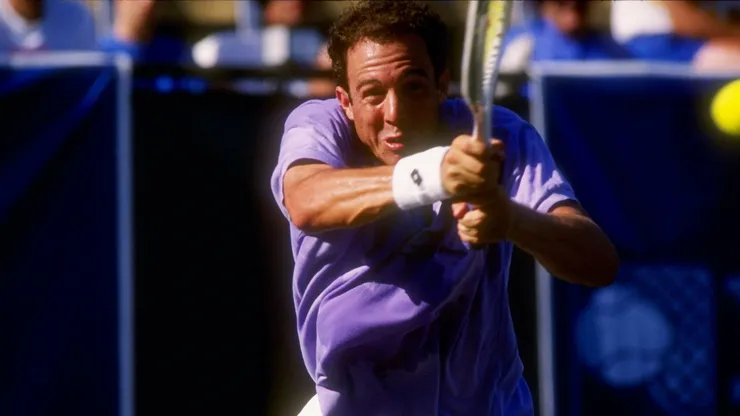
Tennis has always been a popular sport in the United States, with many American players competing on the professional circuit. However, some players were overshadowed by legends of their era. Such was the case with Jeff Tarango, one of the most polarizing figures in 1990s tennis. Emerging at the tail end of John McEnroe and Jimmy Connors’ illustrious careers, Tarango also competed alongside tennis icons Pete Sampras and Andre Agassi.
Born in California in 1968, Tarango started playing tennis at a young age. His first major controversy occurred during his junior days in a match against Agassi, and his fiery demeanor continued into his professional career. One of his most infamous moments came at Wimbledon 1995, where he was hit with one of the largest fines in tennis history.
In his autobiography, Andre Agassi recounted an early clash with Tarango that left a lasting impression. When Agassi was just eight years old, he faced Tarango in a junior tournament where, due to the lack of umpires, players acted as line judges.
Agassi claimed that Tarango made several questionable calls, all benefiting himself, ultimately leading to Tarango’s victory. The future legend confessed he left the court in tears, overwhelmed by the unfairness. Years later, Tarango denied Agassi’s accusations.
1992: His career highlight
Jeff Tarango’s professional career never reached the heights of his American contemporaries. His highest singles ranking came in 1992 when he reached No. 42 in the world. That year, he captured his only two singles titles, winning in Wellington and Tel Aviv. In doubles, however, Tarango found more success, collecting 14 career titles and showcasing his skill in the doubles format.
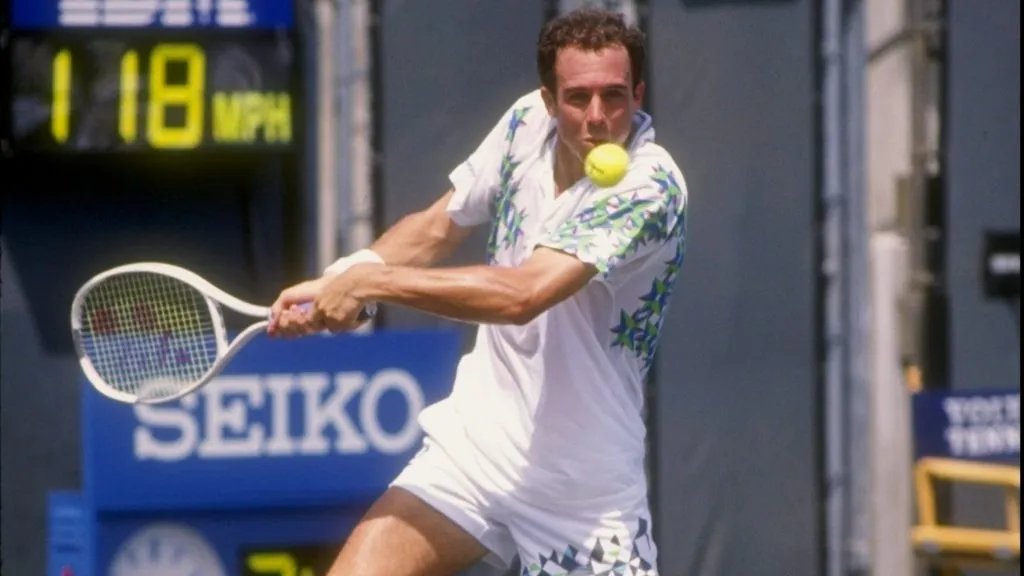
Jeff Tarango in action on the court during the Volvo Tennis tournament in 1992. (Getty Images)
The 1995 Wimbledon scandal and a record fine
Tarango’s most notorious moment came at Wimbledon in 1995 during his third-round match against Germany’s Alexander Mronz. The umpire for the match was France’s Bruno Rebeuh.
After losing the first set, Tarango became visibly frustrated, feeling he was being unfairly treated by Rebeuh. The breaking point came in the second set when a serve he believed was in was called out.
The crowd began booing Tarango for his behavior, and he responded by telling them to “shut up.” Rebeuh issued a warning, sparking a heated exchange in which Tarango accused the umpire of corruption, stating: “You’re one of the most corrupt officials in this sport“.
Rebeuh then penalized Tarango by awarding a game to his opponent. In protest, Tarango packed his bags and walked off the court, forfeiting the match. The controversy escalated when Tarango’s wife slapped Rebeuh twice in the face.
The fallout was severe. Tarango was fined $63,000—a record at the time—and was banned from competing in the next two Grand Slam tournaments, as well as Wimbledon 1996.
1999 Roland Garros finalist and retirement
Despite the Wimbledon debacle, Tarango continued his career, though his singles results remained underwhelming. In doubles, however, he experienced a resurgence. In 1999, he reached the Roland Garros doubles final alongside Goran Ivanišević but lost in straight sets to Mahesh Bhupathi and Leander Paes.
In 2003, Tarango retired from professional tennis. However, he stayed involved in the sport, working as a commentator for various networks and later transitioning into coaching. Among the players he coached was the highly successful Maria Sharapova.