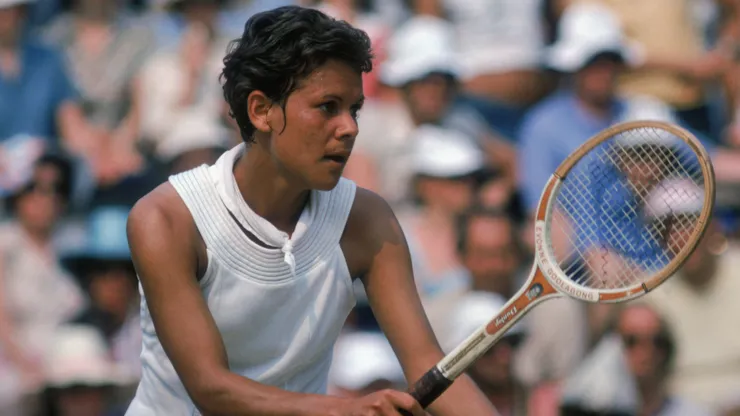
Among the most inspiring stories in tennis, Evonne Goolagong Cawley’s is certainly one. The tennis icon became World No. 1 and won seven Grand Slam titles, but she achieved this after enduring numerous challenges, including racism and abuse. She is also one of the few women to have won a major title after becoming a mother.
Goolagong was born on July 31, 1951, in Griffith, New South Wales, Australia. She grew up as the third of eight children in the small town of Barellan as part of the Wiradjuri people, an Indigenous Australian group.
Her family was the only Aboriginal family in Barellan, and at that time, many Australians believed it was best to remove Aboriginal children from their families to educate them in white Australian society. “Whenever a car would come down the road, my mum would tell us to hide ‘or else the welfare man would take you away,’” she told CNN in 2015.
Despite facing significant social and economic challenges, she developed a passion for tennis at a young age. Encouraged by local coach Vic Edwards, she moved to Sydney as a teenager to train professionally, setting the stage for a remarkable career in the sport.
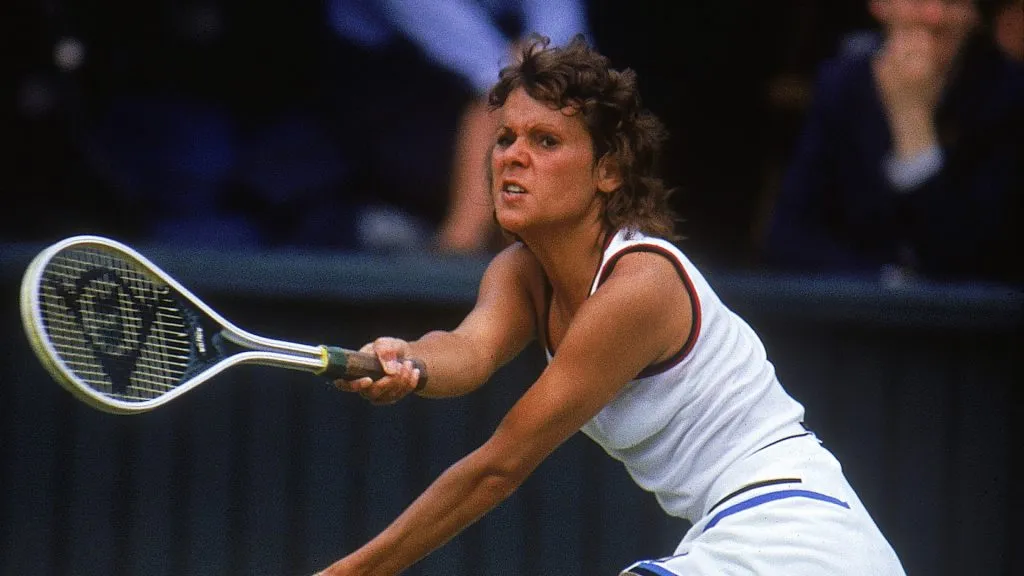
Evonne Goolagong Cawley won Wimbledon at only 19 years old (Getty Images)
Rise to the top: French Open and Wimbledon Champion
Goolagong rose to prominence in the early 1970s, becoming one of the top players in women’s tennis. She won her first Grand Slam title at the French Open in 1971 and followed it with a victory at Wimbledon later that year, which was one of her childhood dreams. As she told CNN, “Every time I went to sleep at night, I would dream about playing at that magical center court and every time I hit the wall I would pretend I was there.”
Even after winning Wimbledon, Goolagong recalls still experiencing racism. “Before I started traveling overseas I was with a friend and in those days I loved music and I loved disco dancing so she took me out but I wasn’t allowed in,” she told CNN about being excluded. “That happened again in Brisbane and I was with two Aboriginal friends and this was just after I won Wimbledon. I said ‘don’t worry we’ll go somewhere else’. I think it hurt my friends more than me.”
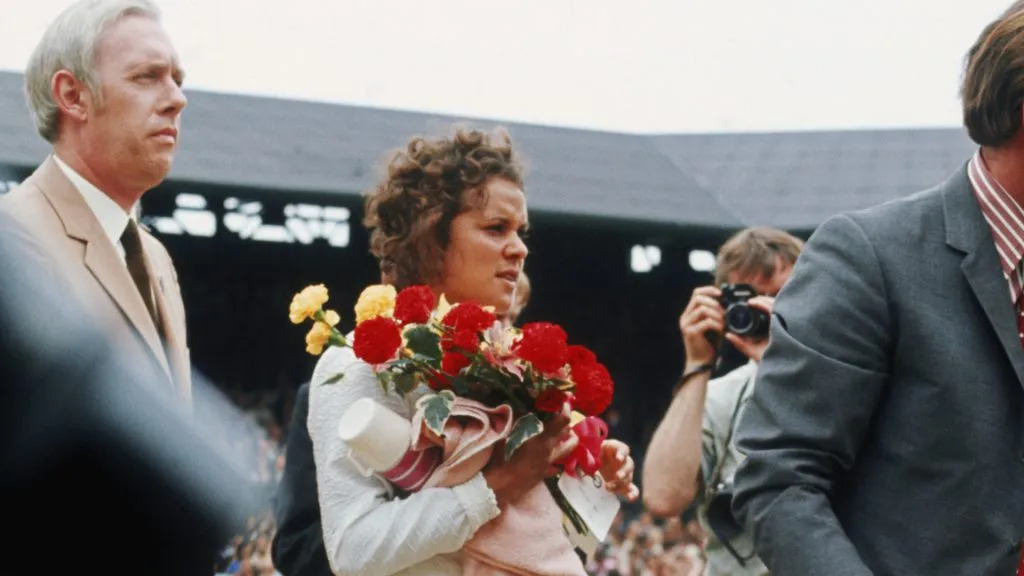
Goolagong at the 1972 Wimbledon Championships (Don Morley/Getty Images)
Another obstacle in Goolagong’s life was her tense relationship with her first coach, Vic Edwards, who also became her guardian when her father died. In her 1993 autobiography, titled Home!, she hinted that Edwards harassed her, as she went to live with him and his family. He controlled every aspect of her career and finances.
Until she met her husband, a former tennis player, Roger Cawley. They got married in 1975, when she was 23 years old. Edwards wasn’t invited to the wedding, and she was finally able to control her own career. According to an article from the time in The New York Times, Edwards said that “She can either give herself to love or tennis, but not both.” Of course, she decided to continue with her career.
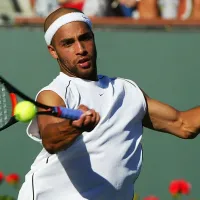
She won Wimbledon as a mother
However, despite the challenges, her tennis career was remarkable. Overall, she claimed seven Grand Slam singles titles, including four Australian Open titles. She even returned to win Wimbledon one more time in 1980, this time as a mother and becoming the first mother to win the title in 66 years.
She represented Australia in three Fed Cup competitions, winning the title in 1971, 1973 and 1974, and was Fed Cup captain for three consecutive years. However, despite her success, she says that her main motivation was having fun: “I believe that’s what life is all about. I certainly had a lot of fun during my career playing tennis, doing the thing I wanted to do and to do it well.”
Retirement and life after tennis
While she retired from professional tennis in 1983, Goolagong Cawley still played in senior invitational competitions, worked as a touring professional, and held several sports-related leadership roles. She has also been a commentator for tennis events, a coach for young players, and an advocate for environmental causes.
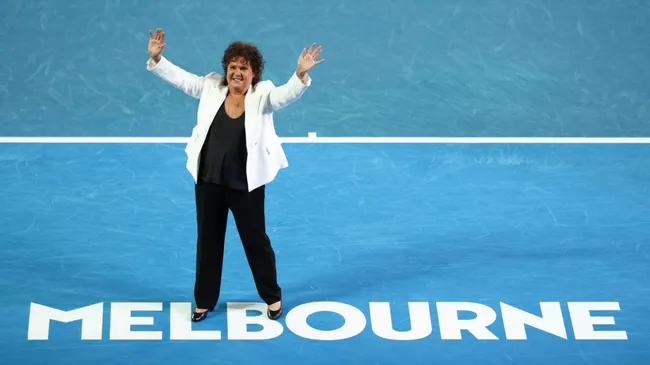
Goolagong is one of the most iconic figures in Australia’s sports (Graham Denholm/Getty Images)
As one of the first Indigenous athletes to achieve international stardom, she paved the way for future generations. After retiring from professional tennis, she dedicated herself to mentoring young Indigenous players through the Evonne Goolagong Foundation, which promotes tennis and education for Indigenous youth.

“Tennis gave me a platform, but I hope I used it for something good,” she told Honey Nine in 2023. In 2018, Goolagong Cawley was inducted into the International Tennis Hall of Fame, cementing her place as one of the greatest tennis players in history.