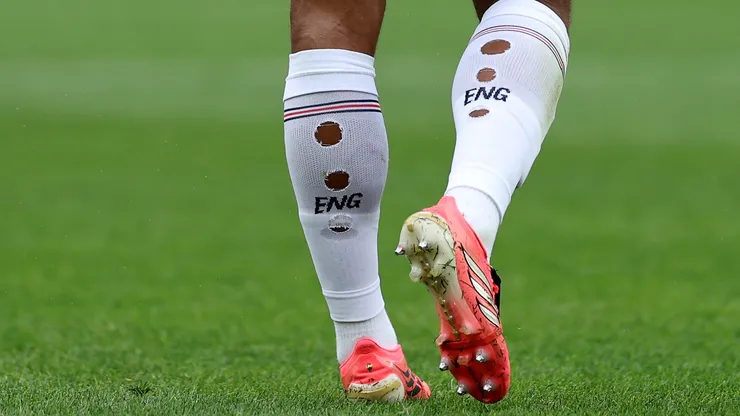
Fans of the 2026 World Cup will notice many elite players with holes in their socks. These openings do not stem from rough tackles or wear and tear during the matches. Athletes cut them intentionally to relieve intense muscle tension and improve overall physical comfort.
New socks are incredibly tight and compress the calves, which can restrict natural blood flow. Jude Bellingham was one of several players who cut holes in his socks recently. Slicing the fabric stops the material from choking the lower leg during heavy running.
Bulging calf muscles need room to flex, and tight fabric can trigger painful cramps. Cutting these ventilation slots drops the pressure on the lower leg muscle instantly. It gives athletes better circulation and maximum flexibility when sprinting on the pitch.
Useless after ninety minutes
Professional soccer socks cost between $15 and $35 dollars per pair. They feature advanced moisture-wicking technology, padded ankles, and targeted compression zones. While not overly expensive individually, the costs compound quickly across an entire squad.
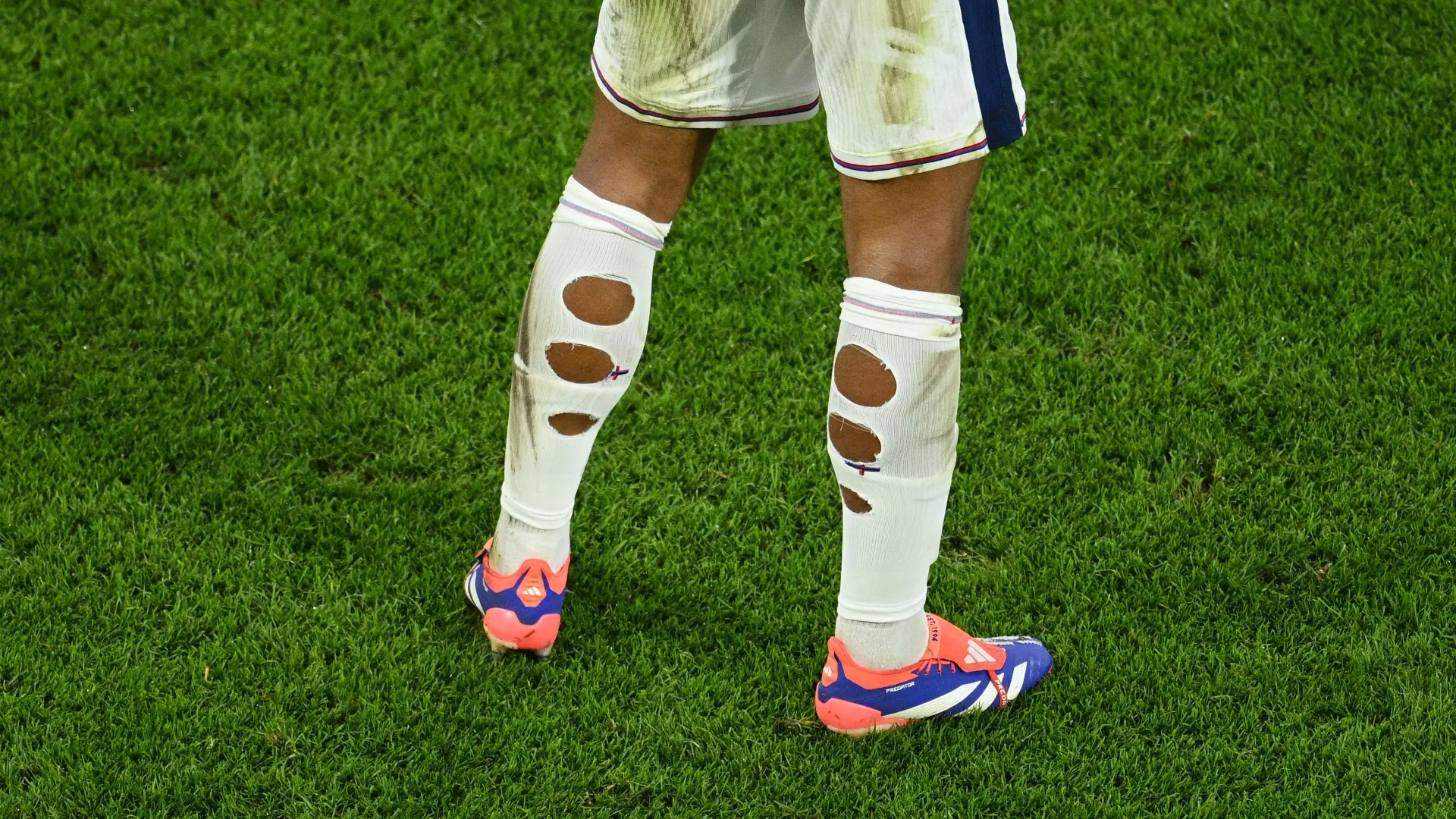
Bellingham in another tournament with holes in his socks (Getty Images)
Once scissors slice the synthetic fibers, the structural integrity is completely ruined. The holes unravel and stretch out of shape during heavy running. This damage makes the modified footwear completely useless for any future matches.

Equipment logistics behind the scenes
National teams face strict uniform limits, but socks are rarely in short supply. Kit managers pack hundreds of pairs, unlike highly restricted jerseys and shorts. This massive inventory allows players to cut up fresh footwear before every single game.