In the dizzying universe of “March Madness“, where every March college basketball becomes a national celebration, figures emerge who have left an indelible mark on the history of the sport.
Coaches like John Wooden, the architect of UCLA’s dynasty, and Bobby Knight, known as “The General” for his strict discipline at Indiana, have left an unforgettable legacy in the history of college basketball.
These strategists, among others, not only accumulated trophies but also built legacies that continue to inspire generations, having been part of the NCAA tournament, where every game is an epic battle for glory.
Who built the best dynasties?
John Wooden – UCLA
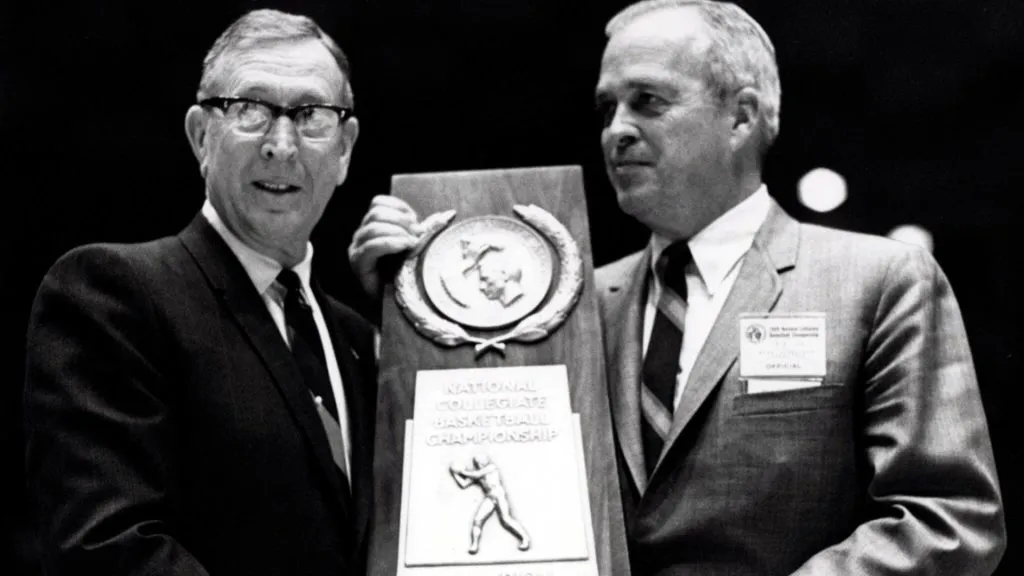
John Wooden (L) accepting the award for leading UCLA to its first NCAA championship. (Source: @SportsCenter)
John Wooden is synonymous with the word “dynasty.” As the head coach of UCLA, he revolutionized the game with his emphasis on fundamentals and team-oriented play. His philosophy, encapsulated in his “Pyramid of Success”, laid the foundation for 10 NCAA Championships (1964-1975), including a historic 7 consecutive titles.
He was known for his ability to mold players into cohesive units, regardless of individual talent, making his teams nearly impossible to beat during their peak. His impact is still felt today, not only in the strategy of college basketball but in how coaches approach leadership and player development.
Coach K (Mike Krzyzewski) – Duke University
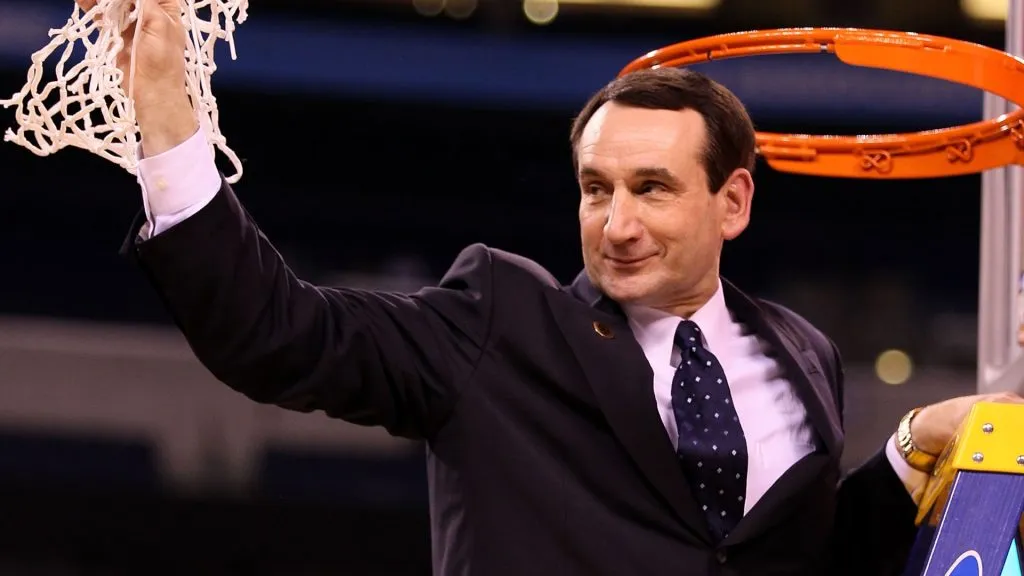
Mike Krzyzewski of the Duke Blue Devils cuts down a piece of the net following their 61-59 win against the Butler Bulldogs during the 2010 NCAA Division I Men’s Basketball National Championship game. (Source: Andy Lyons/Getty Images)
Mike Krzyzewski, or Coach K, is arguably the most influential figure in modern college basketball. With 5 NCAA Championships (1991, 1992, 2001, 2010, 2015) and 12 Final Fours, his legacy is defined by his exceptional ability to adapt to changing times and recruit elite talent.
Under his leadership, Duke became a powerhouse, known for their balanced approach of tough defense and fast-paced offense. He is also praised for his leadership off the court, fostering an environment that prioritizes player development, discipline, and the team-first mentality.
His ability to succeed in both the NCAA Tournament and international play (coaching Team USA to Olympic gold) speaks to his profound impact on the game.
Bill Self – University of Kansas
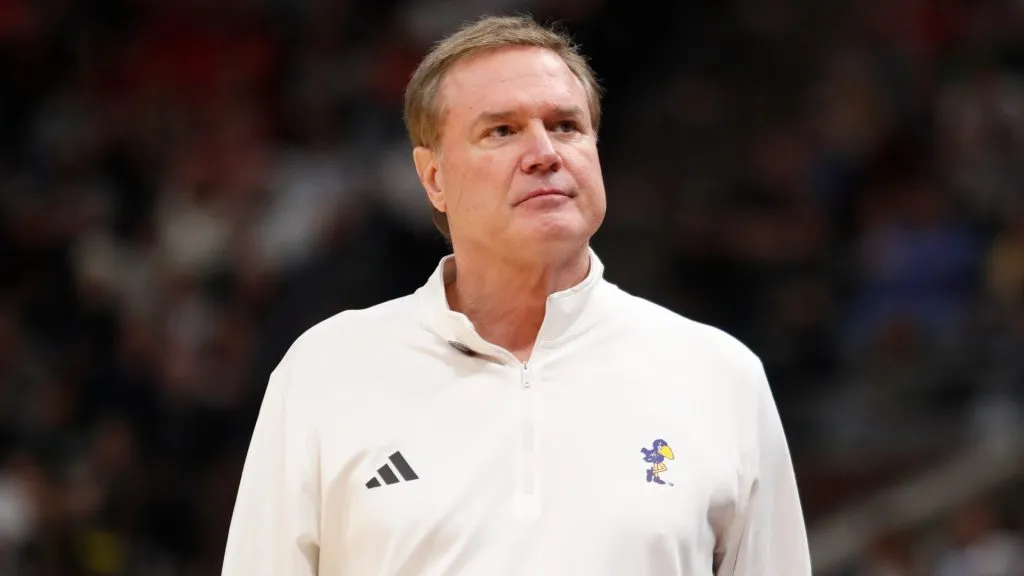
Head coach Bill Self of the Kansas Jayhawks reacts during the second half against the Gonzaga Bulldogs in the second round of the NCAA Men’s Basketball Tournament in 2024. (Source: Chris Gardner/Getty Images)
Bill Self has cemented his place as one of college basketball’s greats through his 2 NCAA Championships (2008, 2022) and consistently maintaining Kansas at the top of the Big 12 Conference. He is known for blending traditional basketball fundamentals with modern, fast-paced, and adaptable strategies.
His teams are often recognized for their tough defense and rebounding, and he has a knack for bringing in top recruits who are ready to step into the spotlight immediately. Kansas under Self has become a model of consistency, always contending for championships while developing players who can thrive at the next level.
Roy Williams – North Carolina and Kansas
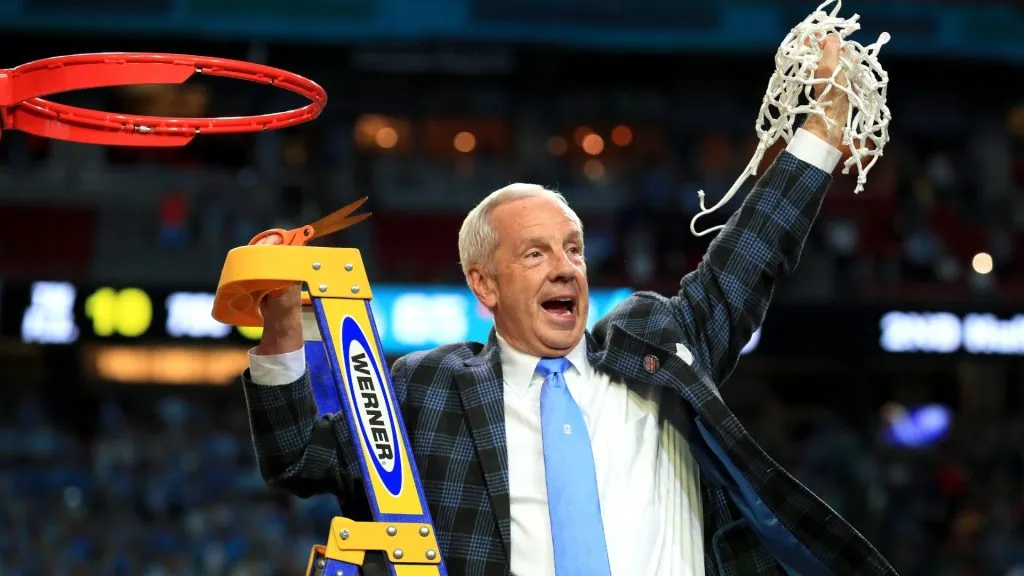
Roy Williams of the North Carolina Tar Heels cuts down the net after defeating the Gonzaga Bulldogs during the 2017 NCAA Men’s Final Four National Championship game. (Source: Tom Pennington/Getty Images)
A legendary figure with a reputation for being a player’s coach, Roy Williams won 3 NCAA Championships (2005, 2009, 2017), leading both Kansas and North Carolina to national titles. He is particularly known for his emphasis on fast-break offense and transition basketball, which allowed his teams to play a thrilling, up-tempo style.
His leadership extended beyond tactics; he created an environment where players thrived both on and off the court, with many going on to successful NBA careers. He also took over from Dean Smith at UNC and continued the legacy of success, further solidifying the Tar Heels’ dominance in college basketball.
Adolph Rupp – University of Kentucky
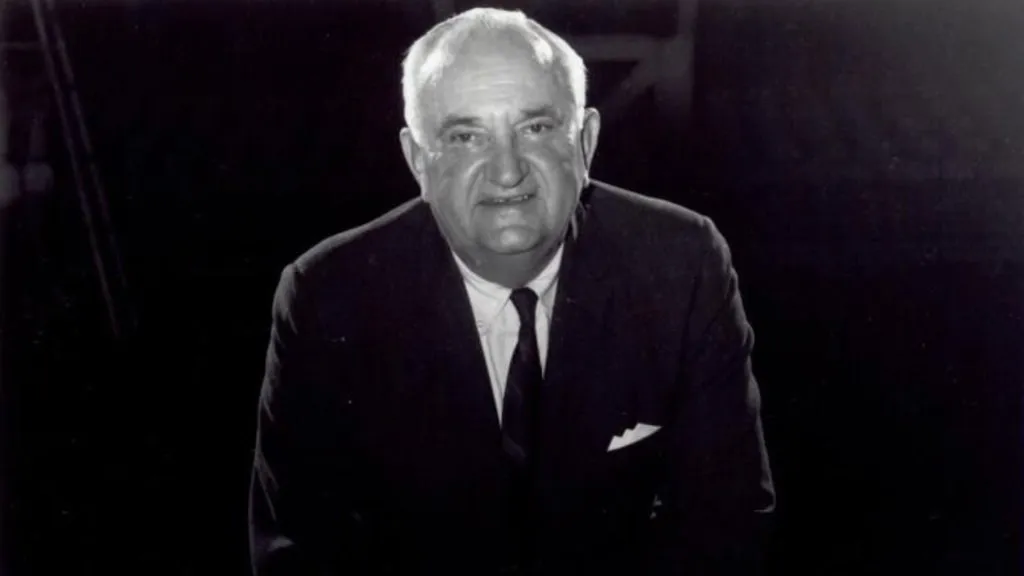
Adolph Rupp (Source: Coach Rupp)
Adolph Rupp is a pioneering figure in college basketball who made Kentucky the gold standard for success during his tenure. With 4 NCAA Championships (1948, 1949, 1951, 1958), he laid the groundwork for the Wildcats’ legendary status. He was ahead of his time in terms of his approach to recruiting and developing talent, building teams that were disciplined, strategic, and relentless.
His ability to consistently win in the competitive SEC and build a dynasty with greats like Pat Riley and Cliff Hagan made Kentucky a name synonymous with basketball excellence. His leadership also contributed to the national expansion of the sport, as Kentucky became a fixture in the national conversation.
Tom Izzo – Michigan State University
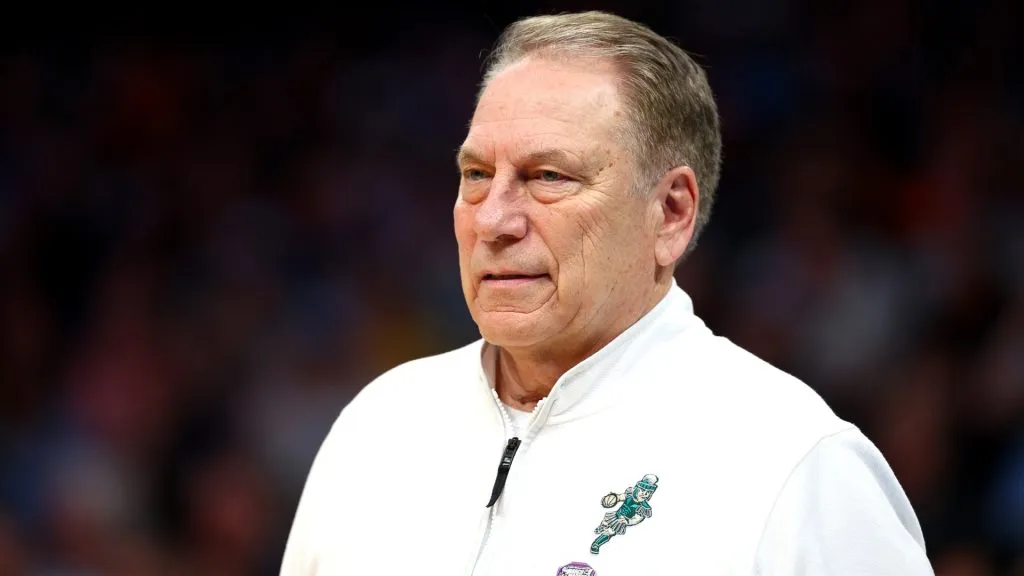
Tom Izzo of the Michigan State Spartans looks on during the first half against the North Carolina Tar Heels in the second round of the NCAA Men’s Basketball Tournament in 2024. (Source: Jared C. Tilton/Getty Images)
Known for his mastery of postseason play, Tom Izzo has made Michigan State a perennial contender. With 1 NCAA Championship (2000) and 8 Final Fours, his Spartans are famous for their toughness, defense, and rebounding prowess.
His approach to March Madness is one of the most respected in college basketball, consistently getting the best out of his players in the pressure-cooker environment of the tournament.
He has also been credited with developing some of the game’s best players, including Draymond Green, who went on to an illustrious NBA career. His teams have remained relevant for over two decades, always a threat to make a deep tournament run.
Jim Boeheim – Syracuse University
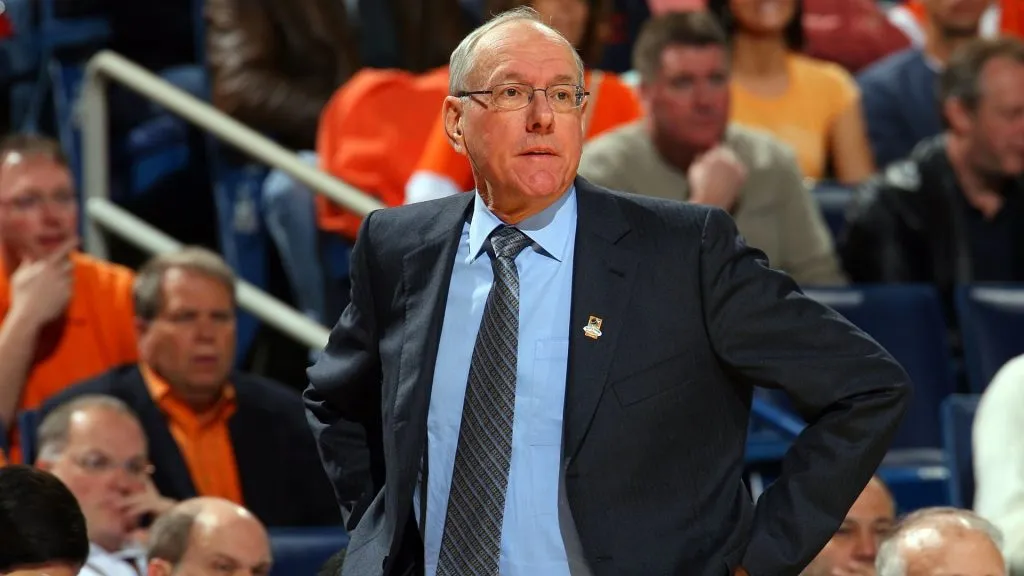
Head coach Jim Boeheim of the Syracuse Orange gestures from the bench against the Gonzaga Bulldogs during the second round of the 2010 NCAA men’s basketball tournament. (Source: Rick Stewart/Getty Images)
Jim Boeheim is one of the most respected and enduring figures in college basketball, particularly known for his iconic 2-3 zone defense, which has become a hallmark of Syracuse University.
Over his extensive career, he led the Orange to 1 NCAA Championship (2003) and numerous deep tournament runs. His ability to mold players into disciplined, defensive units that thrive in high-pressure games has been key to his sustained success.
He has also been lauded for his ability to adapt his coaching style to the talent at his disposal, allowing him to remain successful over decades despite changes in the game.
Jim Calhoun – University of Connecticut (UConn)
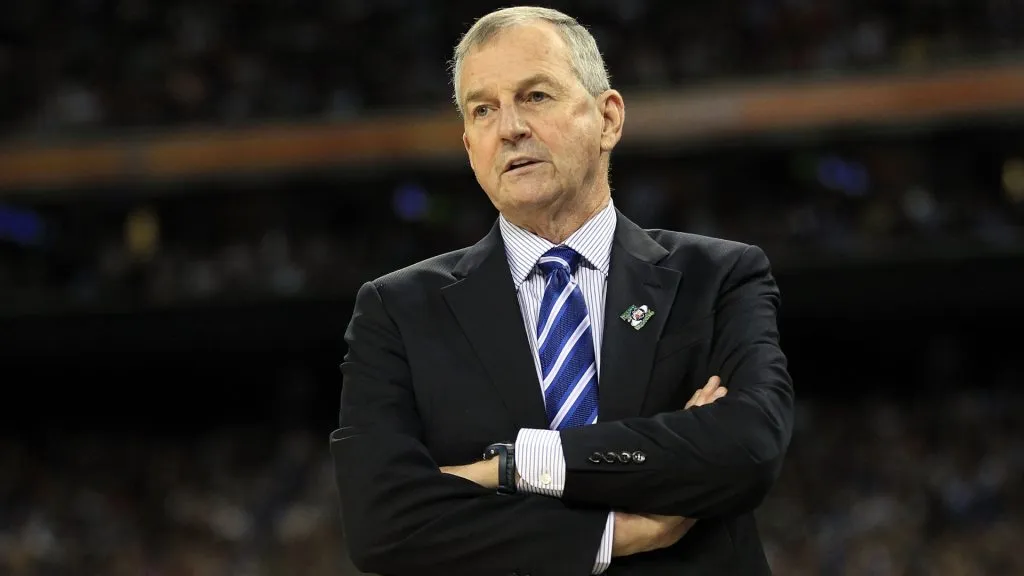
Jim Calhoun of the Huskies looks on from the sidelines against the Bulldogs during the National Championship Game of the 2011 NCAA Division I Men’s Basketball Tournament. (Source: Streeter Lecka/Getty Images)
Jim Calhoun is widely regarded for his ability to develop elite talent, particularly players who excelled on both ends of the floor. His UConn teams were known for their fierce defense, unselfish ball movement and ability to perform in high-pressure tournament situations.
His leadership was instrumental in transforming UConn into a national powerhouse, turning the program into a consistent title contender in the 2000s. Under his watch, UConn also became known for producing NBA-caliber players such as Ray Allen, Kemba Walker and Rudy Gay.
His gritty, no-nonsense approach to coaching, along with his ability to adapt and grow with the changing dynamics of college basketball, made UConn one of the premier programs in the sport.
Billy Donovan – University of Florida
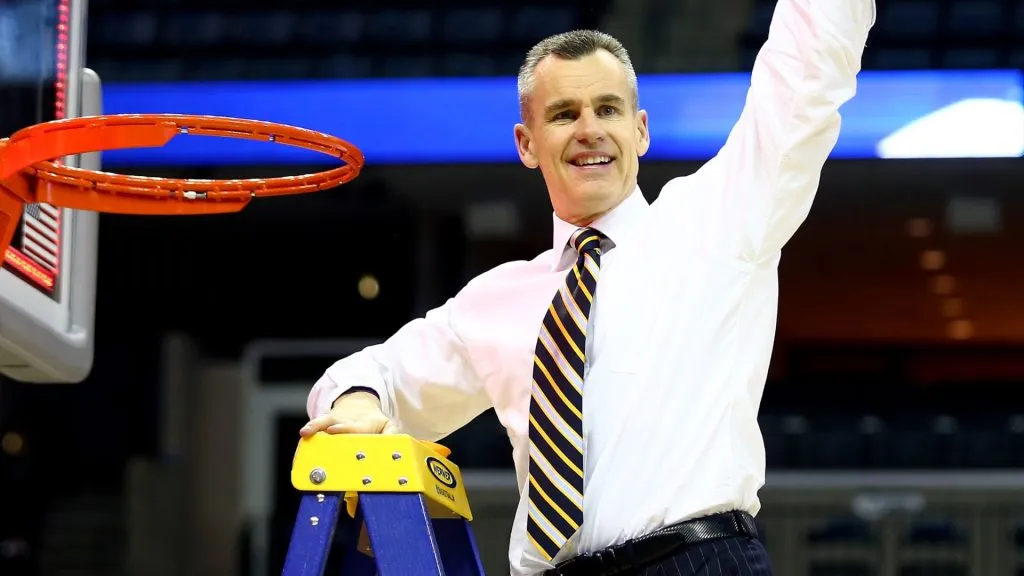
Head coach Billy Donovan of the Florida Gators cuts the net after defeating the Dayton Flyers 62-52 in the south regional final of the 2014 NCAA Men’s Basketball Tournament. (Source: Streeter Lecka/Getty Images)
Billy Donovan is best known for building a Florida Gators dynasty, capturing 2 NCAA Championships (2006, 2007) in back-to-back seasons. His ability to blend skilled players with a balanced approach, combining strong defense and offensive versatility, was key to his success.
He took Florida to the pinnacle of college basketball during an era of tough competition, crafting one of the most formidable teams in the modern era. His teams were characterized by their unselfish play, led by standout players like Joakim Noah, Al Horford and Corey Brewer. His leadership not only created a championship dynasty but also helped elevate Florida’s basketball program into national prominence.
Bob Knight – Indiana University
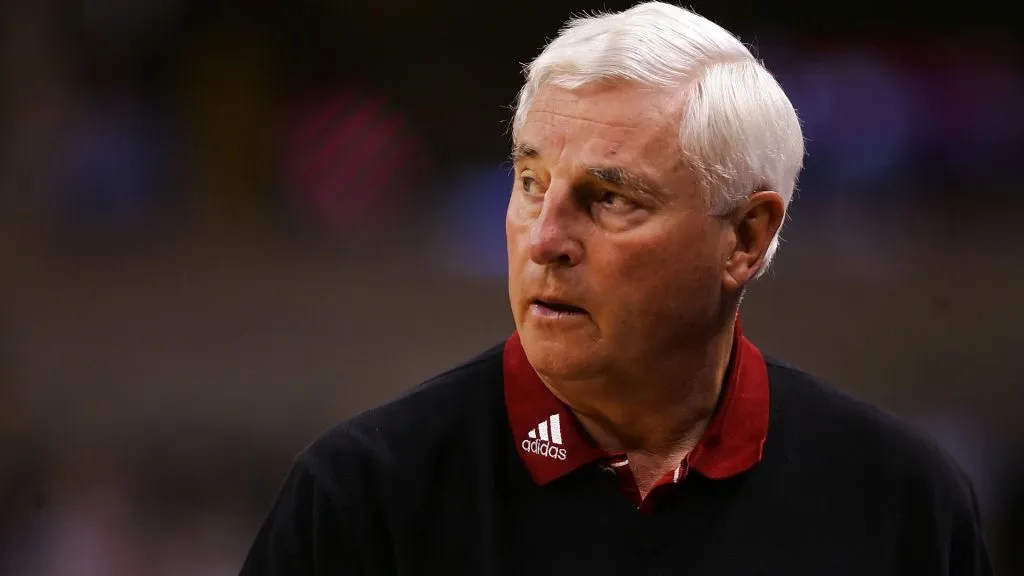
Bob Knight of the Texas Tech Red Raiders reacts from the sideline against the Boston College Eagles during the First Round of the 2007 NCAA Men’s Basketball Tournament. (Source: Streeter Lecka/Getty Images)
Bob Knight is a coaching legend, widely recognized for his intense approach and defensive mastery. Knight led Indiana University to 3 NCAA Championships (1976, 1980, 1983) and is most famous for leading the 1976 Hoosiers to a perfect season (32-0), the last in NCAA history.
His signature defense-first philosophy, coupled with his emphasis on fundamentals and discipline, made his teams a dominant force in college basketball. Under his leadership, Indiana was a perennial title contender, known for tough, physical basketball and excellent execution.
His impact is still felt today through his players, many of whom went on to have successful NBA careers, and his coaching tree has left a lasting influence on the game.
John Calipari – University of Kentucky
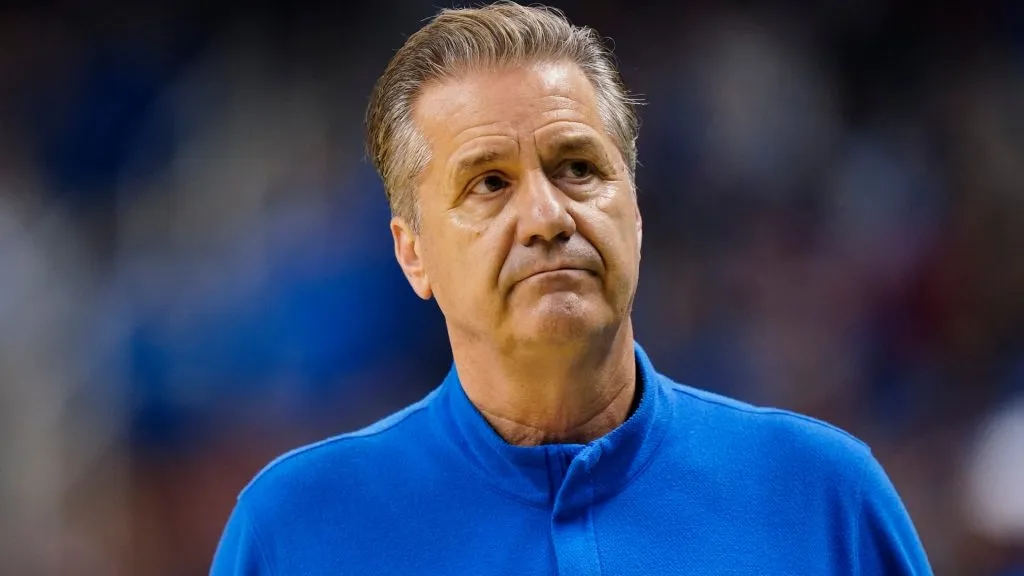
John Calipari of the Kentucky Wildcats reacts during the second half against the Kansas State Wildcats in the second round of the NCAA Men’s Basketball Tournament in 2023. (Source: Jacob Kupferman/Getty Images)
John Calipari has turned Kentucky into one of the most successful programs of the modern era, known for attracting high-caliber talent, particularly one-and-done players. With 1 NCAA Championship (2012), his teams have been consistently competitive, dominating the SEC and making numerous deep runs in the NCAA Tournament.
His unique ability to manage a roster of young, highly talented players and develop them quickly for postseason success is one of the hallmarks of his coaching career.
He has brought Kentucky back to national prominence, producing NBA stars like Anthony Davis, John Wall and DeMarcus Cousins. His emphasis on player development, both on and off the court, has made him a central figure in college basketball’s current landscape.
Denny Crum – University of Louisville
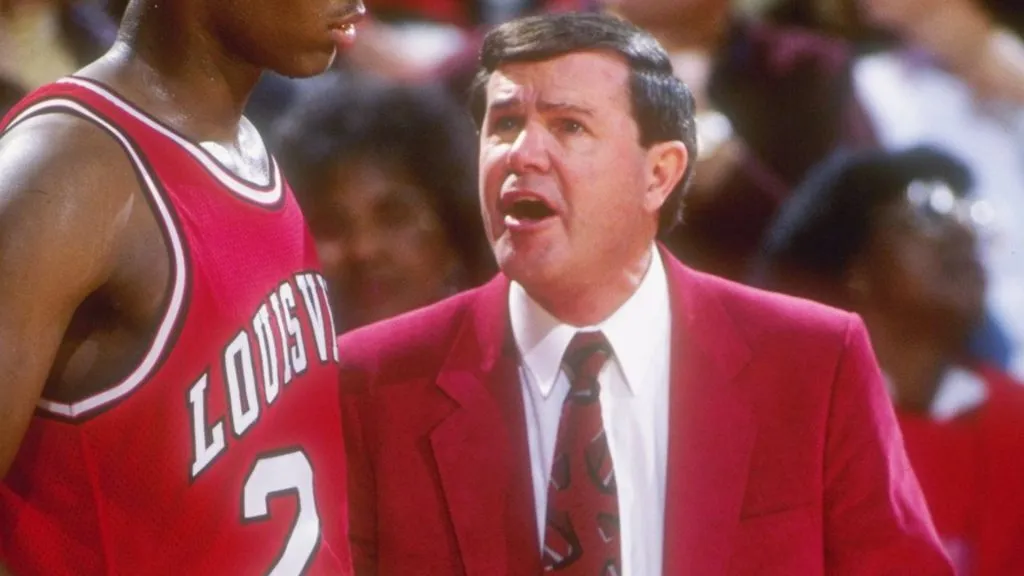
Denny Crum (Source: @Super70sSports)
Denny Crum transformed Louisville into a powerhouse program, winning 2 NCAA Championships (1980, 1986) and developing a reputation for his innovative offense and tough defense. His ability to recruit top talent and mold them into championship-caliber teams made Louisville a constant contender throughout the 1980s and 1990s.
His Cardinals were particularly known for their high-pressure defense and fast-paced offense, setting the foundation for the program’s long-term success. He produced a number of notable players, including Pervis Ellison and Mickie Riley, and his legacy remains integral to the identity of Louisville basketball.
Rick Pitino – University of Louisville and University of Kentucky
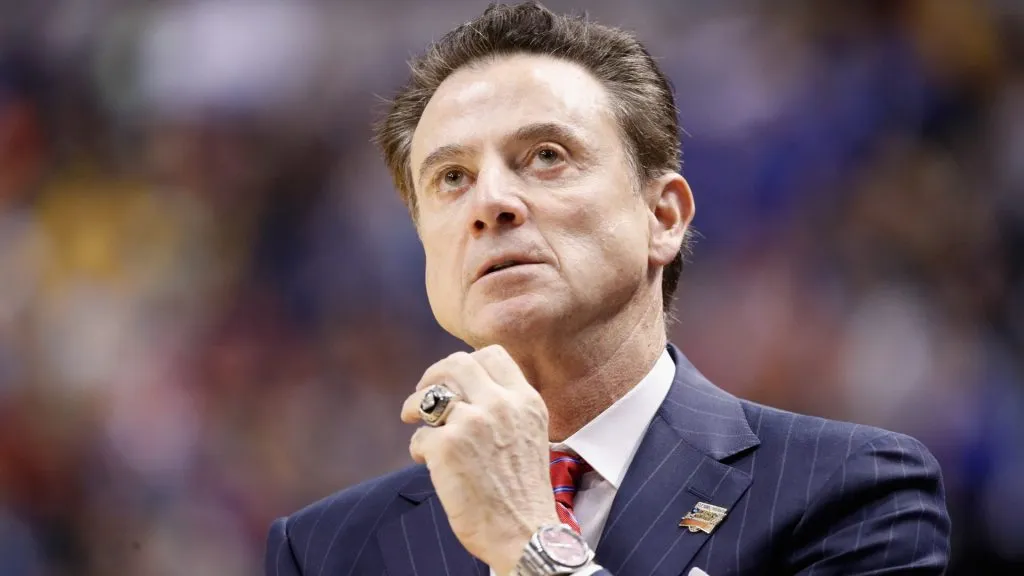
Rick Pitino of the Louisville Cardinals reacts against the Michigan Wolverines in the second half during the second round of the 2017 NCAA Men’s Basketball Tournament. (Source: Joe Robbins/Getty Images)
Rick Pitino has achieved success at multiple programs, including Louisville and Kentucky, and is known for his fast-paced style and commitment to defense. With 2 NCAA Championships (1996 with Kentucky and 2013 with Louisville), he is one of the most accomplished coaches in college basketball.
His success at Kentucky revived the Wildcats as a national powerhouse, and at Louisville, he continued his legacy by building another championship-caliber program. His coaching career has been marked by his ability to adapt to various situations and recruit top-level talent.
Players like Anthony Davis and Russ Smith were key to his success at Kentucky and Louisville, respectively. His high-pressure defense and “40 minutes of hell” philosophy left a lasting mark on the game.
Dean Smith – University of North Carolina
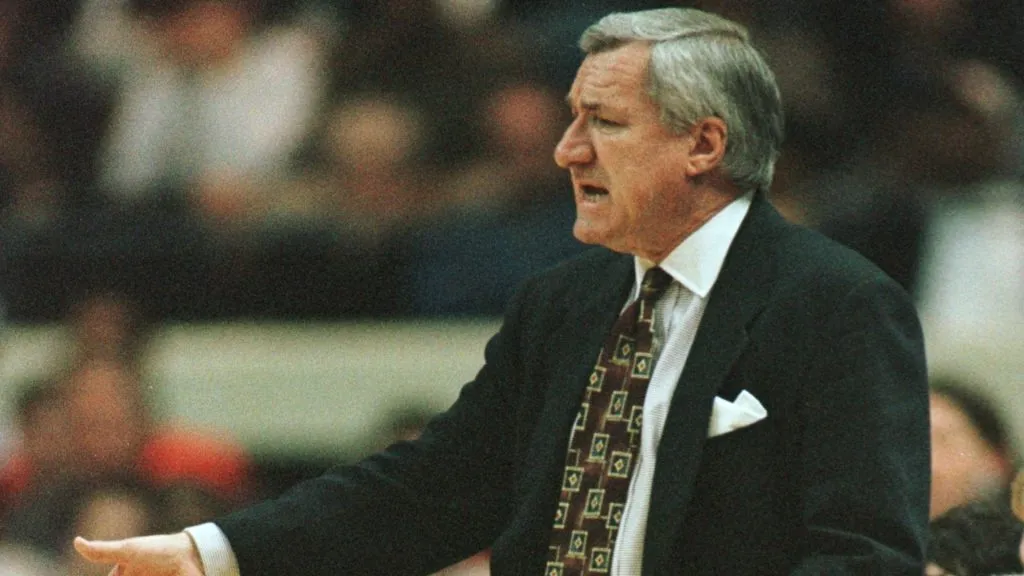
Dean Smith of the North Carolina Tar Heels in action during the Tar Heels game versus the New Orleans Privateers in the first round of the East regionals of the NCAA Tournament in 1996. (Source: Getty Images)
Dean Smith is a towering figure in college basketball, renowned for his ability to build a winning culture at North Carolina. Over his 36-year tenure, he led the Tar Heels to 2 NCAA Championships (1982, 1993) and developed a system based on unselfish play, motion offense and exceptional defense.
His ability to coach NBA-caliber players such as Michael Jordan, James Worthy and Vince Carter helped North Carolina become a dominant force in college basketball.
His emphasis on team-first play and his leadership off the court, as well as his involvement in civil rights causes, made him an iconic figure in the sport. His influence extended far beyond his championship wins, shaping the game’s philosophy and leaving a legacy that continues to inspire coaches today.