A man that needs no introduction, Tab Ramos sat down for an exclusive interview with Bolavip to discuss a wide range of topics. From the USMNT‘s performance at the 2026 World Cup to Mauricio Pochettino‘s contract extension, the three-time World Cup veteran also shared his thoughts on MLS, the promotion/relegation debate, and more.
Building on previous experiences like in Qatar 2022, Ramos followed closely this year’s World Cup as a broadcaster. Now, he continues contributing to the beautiful game’s growth in the country by leading the US National Soccer School.
During his playing days, Ramos made a name for himself as a midfielder who earned 81 caps with the USMNT, including three World Cup appearances (1990, 1994, and 1998).
Tab Ramos analyzes the 2026 World Cup and the USMNT’s performance
Bolavip: What did you think about the USA’s performance and the country hosting the World Cup this year?
Tab Ramos: I think the World Cup was an incredible event. We had a lot of concerns initially because there wasn’t a lot of interest, it seemed, in the country for it. Like a month before the World Cup, it seemed like no one knew it was happening.
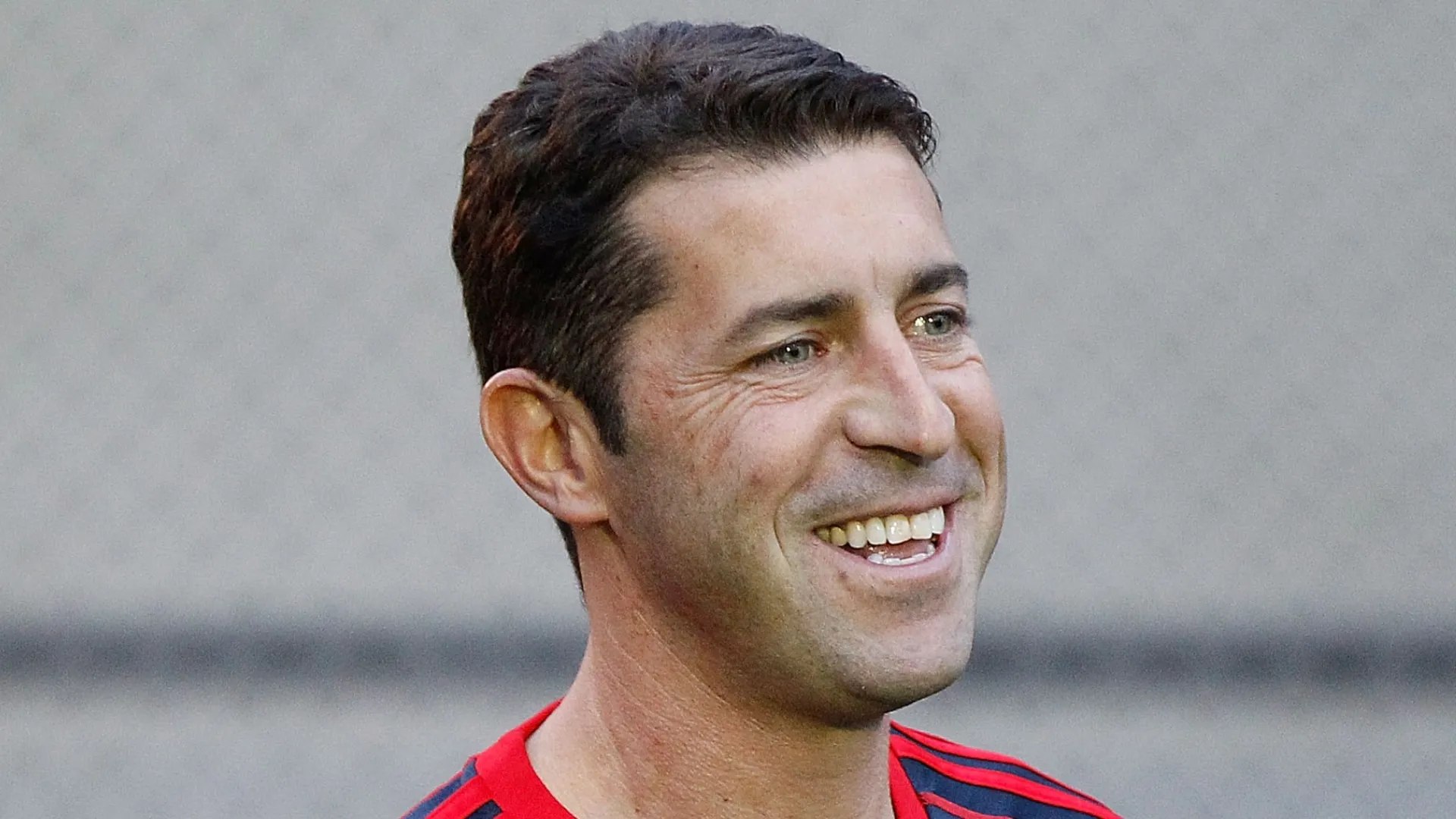
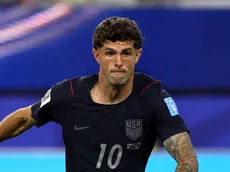
Tab Ramos had bigger expectations for the USMNT at the 2026 World Cup.

But the World Cup, that full month when the World Cup was going on, it was absolutely crazy here. And I think it was definitely the best ever, it was a great event. Every stadium was packed. I was fortunate enough to broadcast a lot of the games out of Philadelphia and out of Toronto, so I was involved heavily in it, and I truly enjoyed it. I think it was definitely one of the best World Cups ever.
In terms of the national team itself, I thought, in general, the national team had a good performance. I thought our first game against Paraguay was likely the best that any US team has ever played at a World Cup, and I think that’s a very positive sign. However, in general, you have to judge the national team by results, and I think the results were just barely okay and really below the expectations.
Bolavip: Did you expect the team to go further, or did you expect at least a better performance against European opposition?
Tab Ramos: Well, I mean, it seems like going to the Round of 16 is the norm for our country here, regardless of the coach that we have. And so, because we brought in Mauricio Pochettino, and he’s one of the highest-paid national team coaches in the world and obviously he has incredible experience overseas, our expectations were a little bit higher than getting to the same place we always get.
We waited for two years in the beginning of Pochettino’s era, as we didn’t get good results. He kept saying, “Well, we’ve got to wait for the World Cup. We have to wait for the World Cup.” And we waited for the World Cup, but in the end, we ended up getting the same results as always. So, in general, I’d have to say this World Cup was below expectations.
Bolavip: And why do you think this was the result?
Tab Ramos: Well, I think what the team showed in the World Cup was exactly what the team had been showing for the past year and a half, which was an up and down of some FIFA windows playing really well, like when we beat Paraguay and beat Uruguay 5-1, and then the next window playing really poorly, like when we lost to Portugal and we lost to Belgium.
And really, that’s probably the last two really noticeable windows, but that really happened throughout Pochettino’s process. And I think the World Cup showed exactly the same. It showed our team playing really well against Paraguay, maybe the best ever, not as well against Australia, and then poorly against Turkey, which you can justify because it was a second team.
But the Bosnia game was barely okay. And then obviously the Belgium game was not a good game. So it sort of showed us the same as it had been shown for the last year and a half.
Pochettino’s contract extension and the USMNT’s direction
Bolavip: What are your thoughts on US Soccer extending Mauricio Pochettino‘s contract?
Tab Ramos: Well, I think first of all, there’s no question that Mauricio Pochettino is a good coach. So, I think we’re lucky to have a good coach. But at the same time, I’m not sure how much research it came down to.
But let me just start with this: I think whenever you hire a coach, there has to be a goal in place, right? What is it that you want from this coach? Right? That’s something that we don’t know.
So, we haven’t had the president of the federation say, “Hey, over the next eight years, we’re looking for this. We’re looking to play this way, or we’re looking for these results.” None of that has been made public in any way.
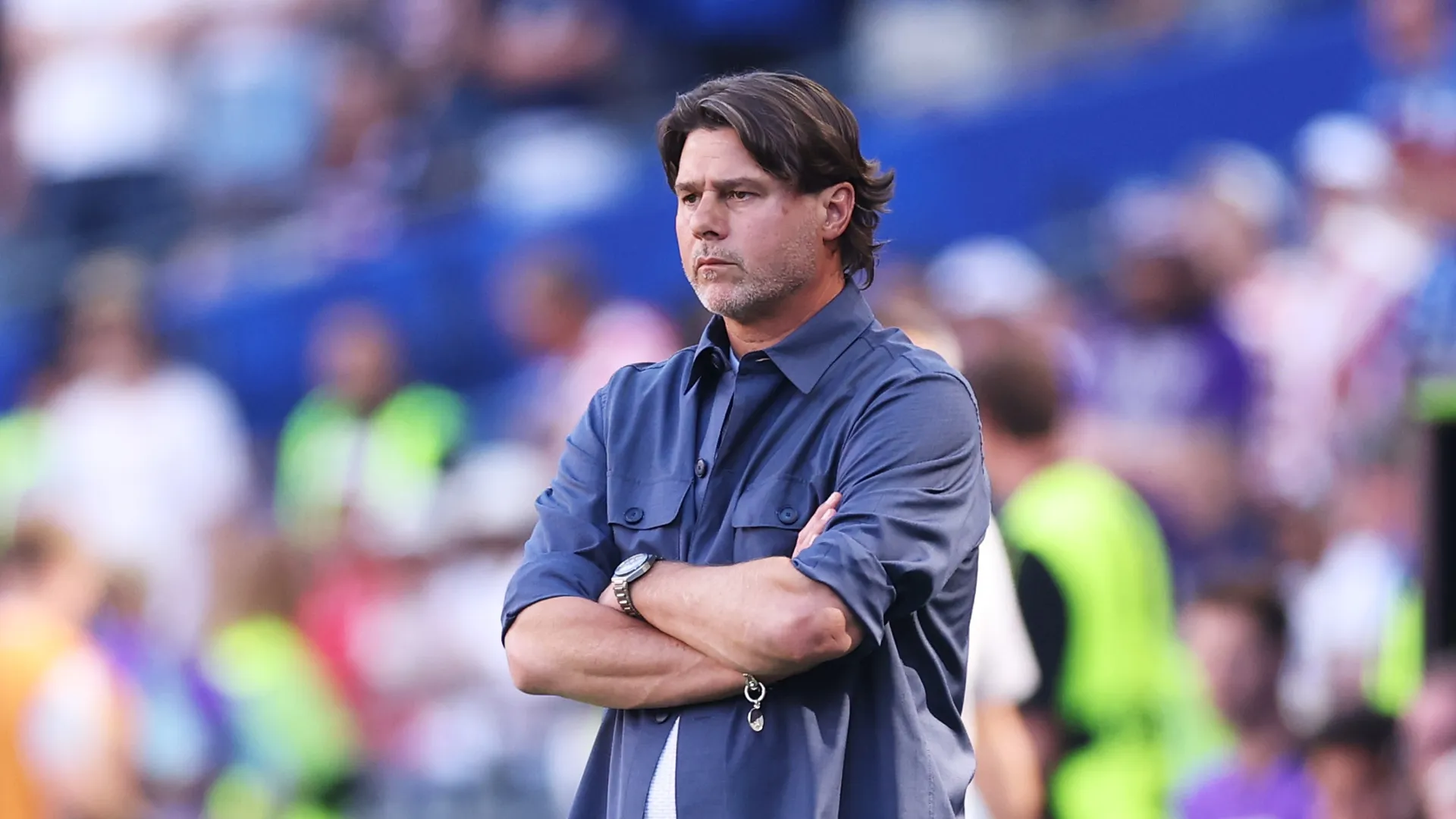
Mauricio Pochettino has agreed to a new contract to coach the USMNT through 2030.
All we know is that they decided—a group of people decided—that they’re going to keep Mauricio Pochettino, right? But we don’t know if Mauricio Pochettino was kept because the demand was, “Hey, for 2030, the goal is to be a semifinalist or a quarterfinalist,” or because they hired Mauricio Pochettino because Mauricio Pochettino is going to install a new way to play that’s going to translate to our youth national teams and it’s going to change the way we play.
None of that has been said except that Mauricio Pochettino is going to help with the youth programs and help with coaching education. Now, as far as I know, he hasn’t worked in youth programs, nor has he worked in youth education, right?
So, we don’t really know what it’s for. So, I think the best way to answer your question was, if Mauricio Pochettino was not the guy, then who was, right? Because I didn’t have a clear answer.
I think if we don’t have a goal in place, it’s hard to put in candidates. So all of us outside of the national team started to throw in people. Okay, “Thierry Henry or Xavi Hernandez, or it could be Roberto Martinez.” Like, we start throwing names, but really the names don’t mean anything if you don’t have a goal.
And I’m not sure what the process was because we don’t know the goal. Had we known the goal, I think we could have an opinion. At this point, I really can’t have an opinion on whether this is a good hire or not, but I do know that he’s a good coach.
The criticism faced by Christian Pulisic and the Folarin Balogun situation
Bolavip: Going back to the World Cup, what do you think about the criticism that Christian Pulisic faced, especially after the elimination?
Tab Ramos: Well, I think criticism is fair. This is what this game is about, right? I’m sure there were some people who thought that because we played well in the first-round games that the full performance was good enough. And then there’s going to be people that are going to say, “Well, that’s not good enough. I think we got to the same place as other World Cups.”
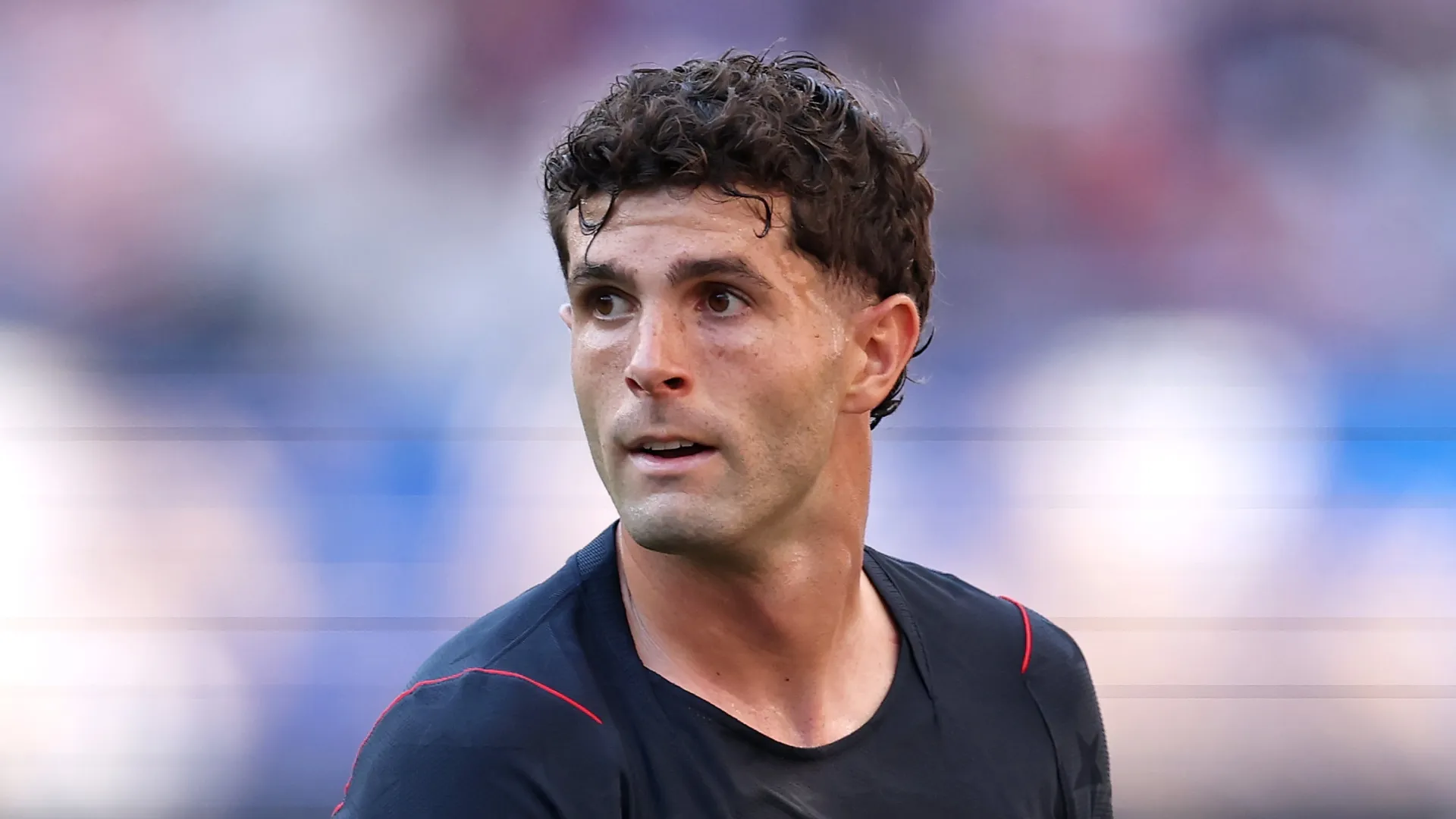
Christian Pulisic faced criticism for his 2026 World Cup performance.
So, the World Cup was okay. But if you think about it, we got the same place we got in other World Cups, but we were playing at home this time. So at times, you expect to do better than before, not the same. And so, yeah, it seems to me like it’s not necessarily unfair to say that the World Cup was not great.
Bolavip: Do you think that the whole Folarin Balogun situation affected the team negatively?
Tab Ramos: I remember going into that game just looking from the outside, thinking how we had great momentum going into the game regardless of whether Balogun was going to play or not.
And I think if anything, the Balogun situation was a big distraction that I think maybe sidetracked our team a little bit and I think motivated Belgium a little bit more. So I think if anything, I think it had a negative effect on our team for sure.
Bolavip: Do you see now a core group of players for the next World Cup, or do you think that a major overhaul should be done for the next tournament?
Tab Ramos: Well, this is an interesting question because when you look at the roster, we had a roster of 26 players. Fifteen of them will be 30 or older in the next World Cup. Normally, if you look at the stats, teams in general have between five and six 30-year-olds on teams.
So it’s inevitable that there’s going to be eight or ten changes just by stats alone. There’s no question that we’ve now had this generation for two of their, let’s say, prime years, and now there’s likely going to be a lot of changes.
The future of soccer in the US
Bolavip: What kind of impact do you think this World Cup and this generation will make for soccer in the US?
Tab Ramos: I think it will have a huge impact. I think this World Cup will be felt for the next couple decades. Sometimes it takes a little bit of time because I think all of the new people that got to see the World Cup this year—and there were over 50 million people watching our national team by the end—it will certainly have an effect on them, and it takes time.
I mean, if you think in 1994, really no one knew what soccer was in general. I mean, most American people thought that soccer was just the hooligans in England who fought each other in the games. I mean, that’s basically—and I’m, of course, generalizing. Of course, we had some people who knew about the game.
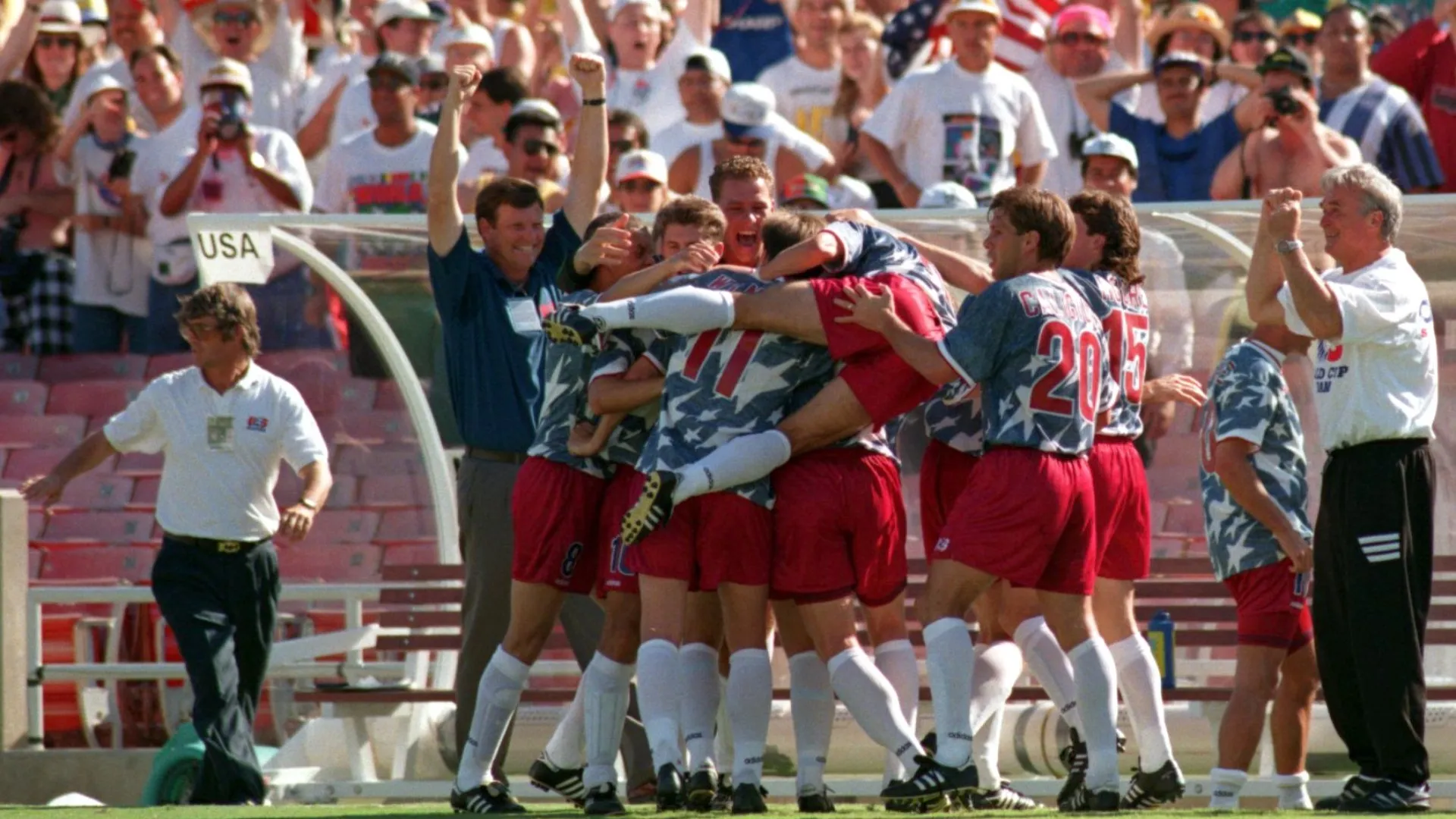
The USMNT’s 1994 World Cup squad made a huge impact in the country.
But if you think about it, over the next 20 years, the effects were slowly gaining ground, right? And over the last 10 years, think about all the new stadiums that MLS has built. Think about all the new facilities that MLS teams have built to develop players.
These are all results from the 1994 World Cup. And so some results are immediate. Within a couple years, the league started. Some results take a decade or two. They build their own stadium. The league grows. You have more teams.
So I think it’ll be the same effect this time. And it’ll take time. But I think there’s no question that this World Cup was really positive for the game in this country.
Bolavip: And where do you see MLS in this situation? Do you see the league in a good direction, or do you think that changes should be made to make this league even bigger?
Tab Ramos: I think it depends on what our expectations are of the league, because I think the league is in a good place. I mean, obviously, we know there’s five big leagues in Europe. Those are the best in the world. There’s the Brazilian league, which I put right below them or right on par with some of them because the Brazilian league now has money and great teams. Maybe you put the league in Argentina a little bit below that.
And then I’m not sure that MLS is not competitive with other leagues in the world after that, right? And we could argue about that. You could say, “Well, you know, I think that—I don’t know—the Dutch league is better.” I mean, we could argue about other leagues, but I think MLS is right there.
So, if you take the top six or seven leagues, MLS is right there. So, I think it depends on the expectations. I think MLS is in a good place.
I think where we have to make progress is on the player development front, is on the culture front, because inevitably MLS is the professional league. That’s where everybody goes. But MLS can’t be responsible for all of it. So MLS has to be responsible for having a proper league. And I think we do have a proper league. So I don’t think it falls on them. It falls on the rest of us. It falls on us as soccer and on the rest of us to help MLS with the players that are coming along.
The pro/rel debate
Bolavip: Do you think the promotion/relegation debate is relevant or not?
Tab Ramos: I don’t. I personally don’t think it’s relevant, to be honest. And the reason I say that is because to have a true pro/rel, everyone has to be involved in that.
And what do I mean by that? What I mean by that is that if you and I want to start a team with our friends, we should be part of the pyramid of true pro/rel, right? We start with our friends in the corner and we bring ten friends, and our team does well, and then we bring a couple kids from the outside, and our team gets bigger, and then we go into the sixth division and we do well, and then we have a chance.
That’s true pro/rel. But if pro/rel is going to be, let’s say the USL, puts all their teams together and they move up and down within their teams, I just don’t really think that means anything. I don’t think that’s the true value, the true spirit of pro/rel.
Bolavip: What can you tell us about your program with the US National Soccer School?
Tab Ramos: Well, we have a program here in which we have the kids. First, it’s academic. So, the kids come to school in the morning. They eat lunch with us.
We have a high-performance group that works on all of their levels. It works with the kids on the analytics of their training sessions, works with them on the activation every day, so they don’t get on the field without the proper activation. And then in the afternoon, they’re on the field for two or two and a half hours every day.
I truly feel that this country, and in particular with a new wave of thinking of—not of workload, we’re always worried about workload, and other countries train more than we do.
We have to remember that still today, a lot of the greatest players in the world come from Africa and South America, regardless of whether the best teams come from there or not. And the reason those are the best players is because they have more contact with the ball. They have more hours with the ball. And so we’re here to provide that.
We’re not a club. We’re a school. The kids are here and do about 8 to 10 hours of training, sometimes 12 hours of training with us, just on the field every week. Plus, then they go to their clubs. So, I think that we’re providing all of the hours that young players can’t do on their own.
Bolavip: Are you planning, besides this project, to return to coaching on the professional level?
Tab Ramos: No, I don’t want to return to coaching at all. I found that I did my full professional coaching pathway, from coaching nine-year-olds all the way to coaching U-18s for many years. Then, as you know, I coached the national teams for many years. I was a youth technical director for many years.
And then I always thought, like every coach, I always thought, “Well, you got to move up, you know? So, the next step is to go into the pros.” And then you realize, at least for me, I got hit by the fact that it really wasn’t so much about me and my coaching style.
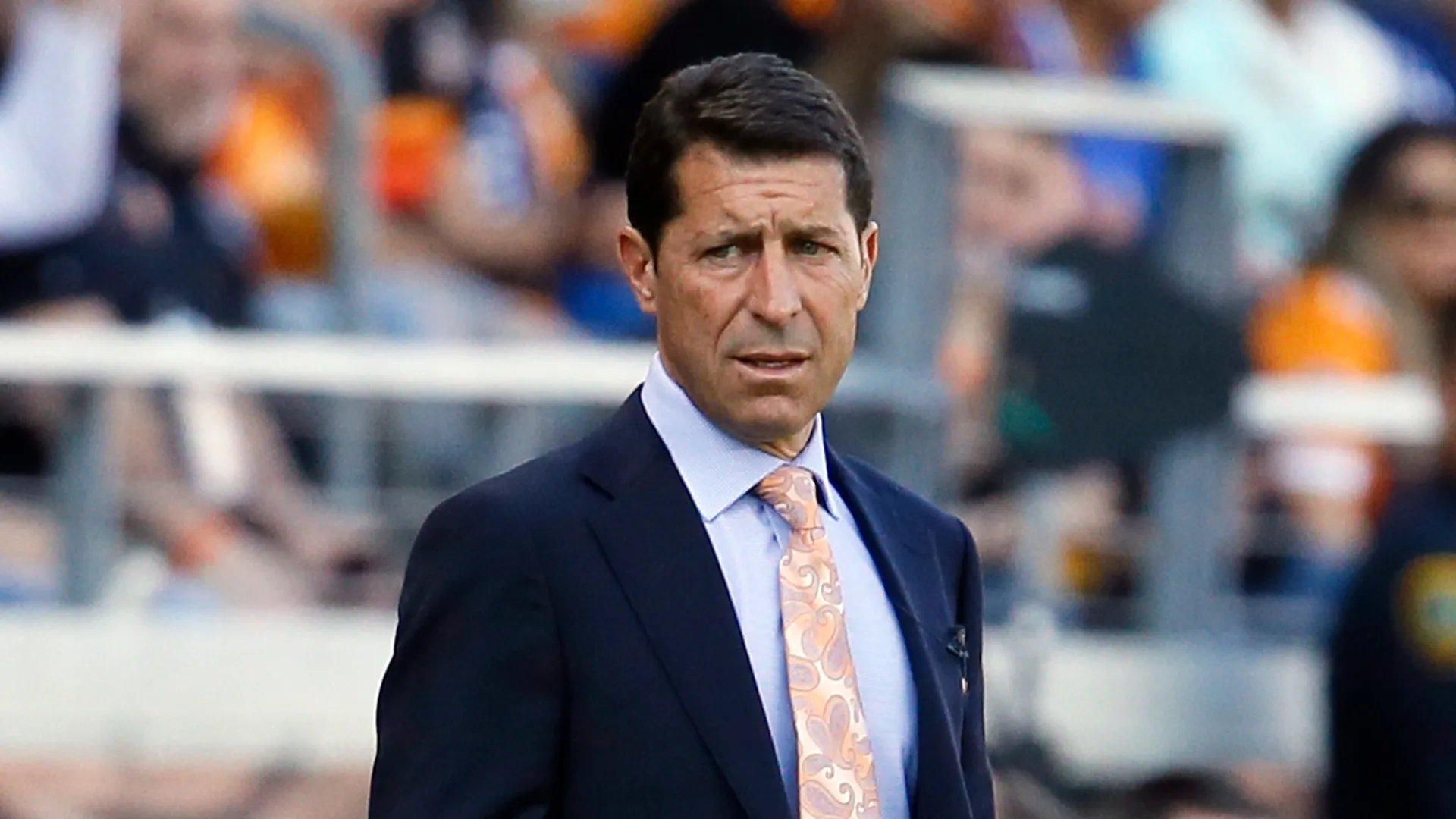
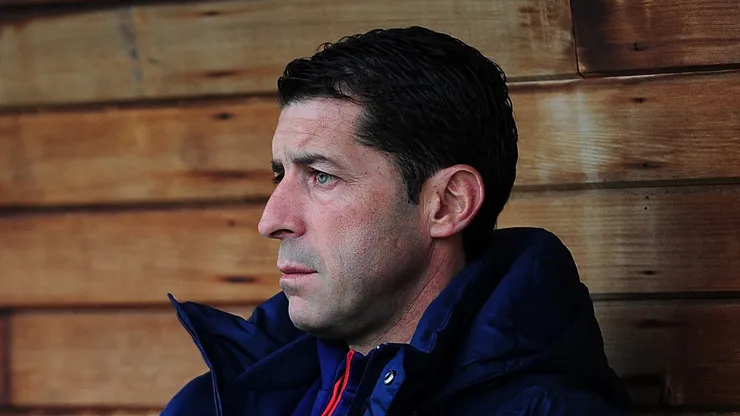
Tab Ramos during an MLS game as head coach of the Houston Dynamo in 2020.
When you go into the professional world, it has a lot to do with the roster that you have and the roster that you can get. And by no means am I taking responsibility away from myself. Maybe I just was not a great professional coach. Maybe that’s what happened.
But I do realize that I know just as much as everybody else. But when you don’t have a roster, in the end, it’s difficult to be successful. And here’s the bad part about it. The bad part about it is that you take it all home with you, and you’re worried about the players 24/7, and you don’t sleep, and it’s all day and night to be a coach, and it’s very, very difficult. I really don’t want to live through that again.
WATCH THE FULL INTERVIEW WITH TAB RAMOS ON BOLAVIP US: