The Boston Bruins, founded in 1924, quickly became a cornerstone of the NHL. Decades of fierce competition, championship pursuits and iconic moments built a team identity that resonates throughout hockey history.
These legends brought unmatched skill, grit and leadership, turning critical games into defining milestones. Their impact shaped the franchise, influenced teammates, and left a lasting mark that fans still celebrate in arenas.
Through nearly a century of highs and lows, these icons created a legacy larger than any single season. Their presence echoes in the Garden, in storied rivalries and in the enduring passion of a fanbase that treasures Boston hockey.
Bobby Orr
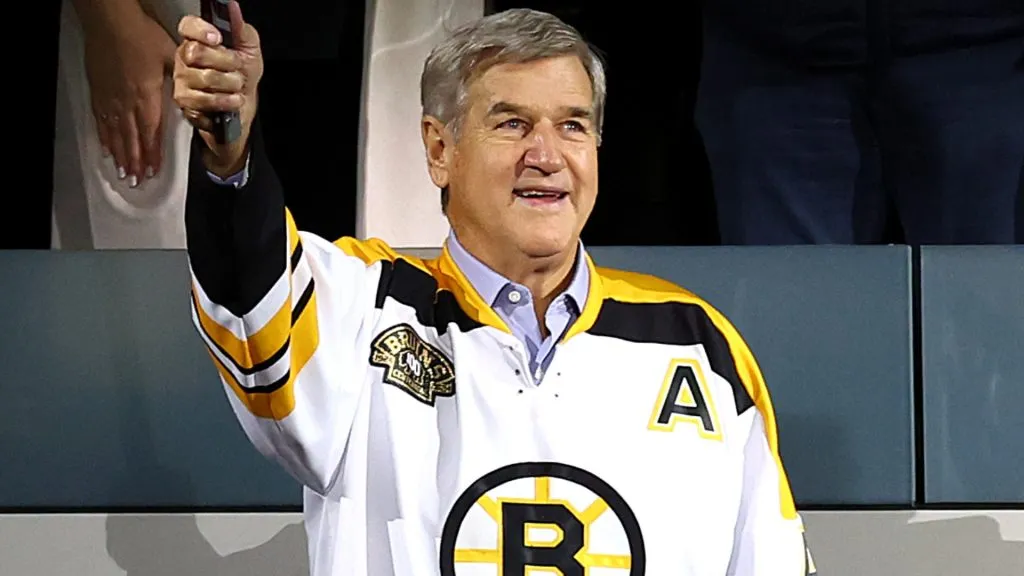
Bobby Orr (Source: Maddie Meyer/Getty Images)
Few moments in NHL history are as universally recognized as the iconic image of Bobby Orr flying horizontally through the air after scoring the overtime goal that clinched the 1970 Stanley Cup Final. This single snapshot did more than win a championship; it symbolized the birth of the total offensive defenseman, transforming the blueliner’s role from a strictly positional one to the dynamic genesis of the attack.
Arriving in 1966 to a franchise starving for a Cup since 1941, he immediately delivered, not only winning a record eight consecutive Norris Trophies but also twice capturing the Art Ross Trophy as the league’s top scorer—a feat unprecedented for a defender. Though his career was famously cut short by debilitating knee injuries, his ten seasons in Boston were a supernova that permanently altered the template for greatness in the sport.
Cam Neely
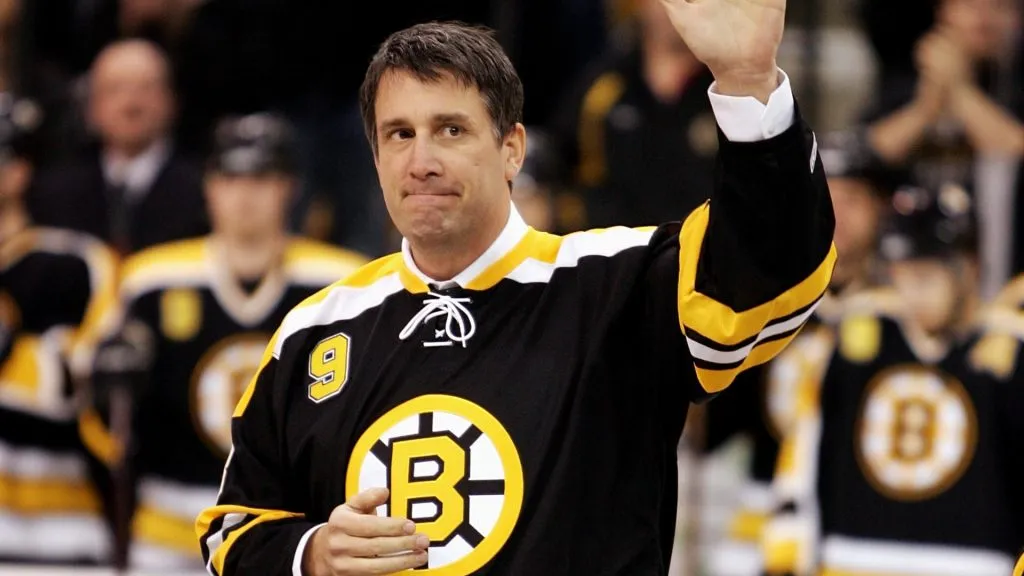
Cam Neely (Source: Elsa/Getty Images)
When the Bruins acquired Cam Neely in 1986, they gained a force of nature, one who became the quintessential NHL power forward by combining a brutal goal-scoring threat with a terrifying physical presence. He was far more than a sniper; he was the visible engine of Boston’s gritty style of play, always ready to battle in the corners and camp in front of the net.
His legend is cemented not just by his two 50-goal seasons, but by his sheer, tragic resilience: the unforgettable achievement of scoring 50 goals in only 44 games during the 1993-94 season, a heroic rush accomplished despite chronic hip and knee injuries that were the lingering result of a devastating playoff hit. Although those injuries forced an early retirement, his number 8 hangs high above the TD Garden as a lasting symbol of the indomitable will of Boston hockey.
Johnny Bucyk
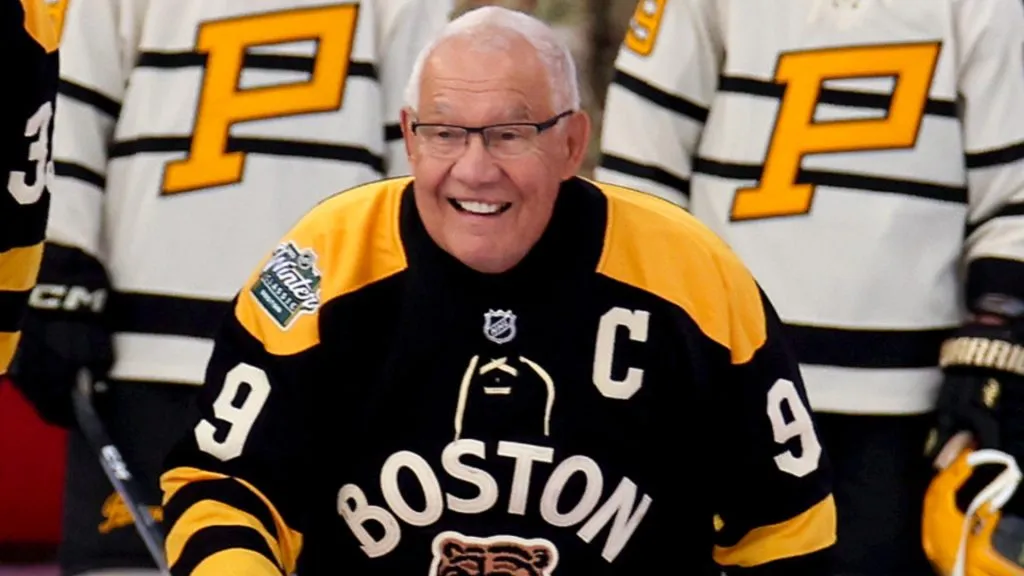
Johnny Bucyk (Source: Gregory Shamus/Getty Images)
For 21 straight seasons, Johnny Bucyk was the quiet, constant heartbeat of the Boston Bruins. Known by his apt nickname, “The Chief,” he embodied the stability and class of the franchise through multiple eras. His steady, offensive game was instrumental in delivering the 1970 and 1972 Stanley Cups, serving as the team’s captain for the latter victory.
His longevity translated directly into the record books, retiring as the franchise’s all-time leader in goals, a mark he held for decades, and his commitment extended long after his final shift: he has remained with the organization in various front-office roles, firmly cementing his status as the Bruins’ living ambassador whose quiet authority spanned generations.
Milt Schmidt
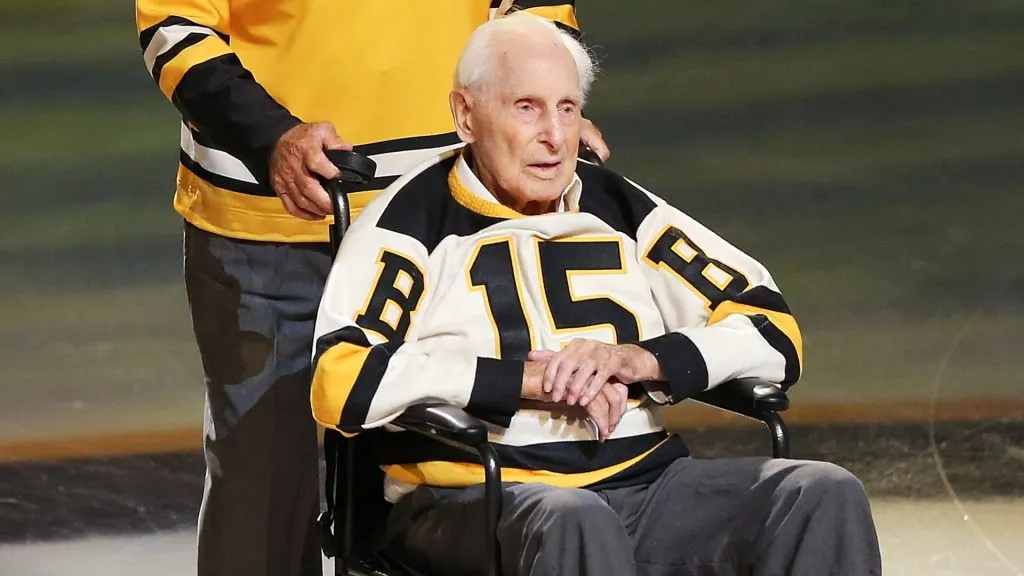
Milt Schmidt (Source: Maddie Meyer/Getty Images)
If the Bruins’ storied history were a hierarchy, Milt Schmidt would occupy the summit for one unmatched reason: he is the only person in franchise history to serve as player, captain, coach, and general manager. As the center of the legendary Kraut Line in the late 1930s, he led the team to the 1939 and 1941 Stanley Cups, even claiming the league scoring title in 1940.
However, his narrative is truly heroic because, along with his linemates, he famously suspended his career to enlist in the Royal Canadian Air Force during World War II, an act of sacrifice immortalized when both Bruins and Canadiens players hoisted the trio onto their shoulders in their final game before deployment.
Upon retirement, his genius persisted; as GM in 1967, he engineered the blockbuster trade for Phil Esposito, which built the foundation for the 1970 and 1972 Cup teams, proving himself a master of total organizational leadership.
Dit Clapper
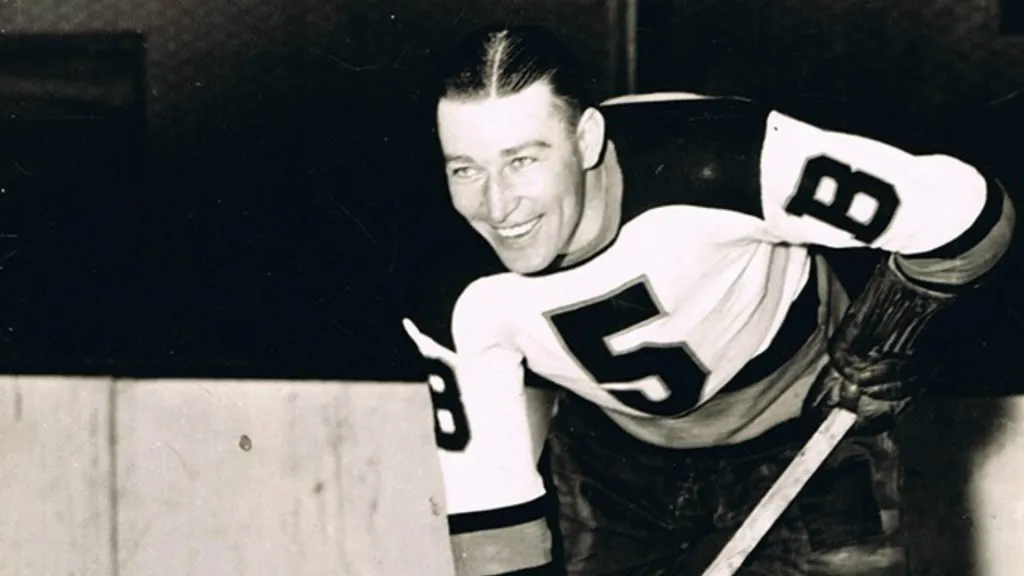
Dit Clapper (Source: The Hockey Writers)
To talk about the pioneers of the NHL is to talk about Aubrey “Dit” Clapper, the first player in league history to reach the remarkable benchmark of 20 seasons played, all with the Boston Bruins.
This longevity is only part of his defining legacy; he was the very embodiment of versatility, successfully transitioning mid-career from a gifted right wing on the fearsome Dynamite Line to a stalwart defenseman. He is, to this day, the only player to be named an NHL All-Star at both forward and defense, a testament to his sheer adaptability and skill.
He holds the unique distinction of being the only Bruin to play for and win the franchise’s first three Stanley Cups, earning him the distinction of having his number 5 retired immediately following his final game, recognizing a true league trailblazer.
Ray Bourque
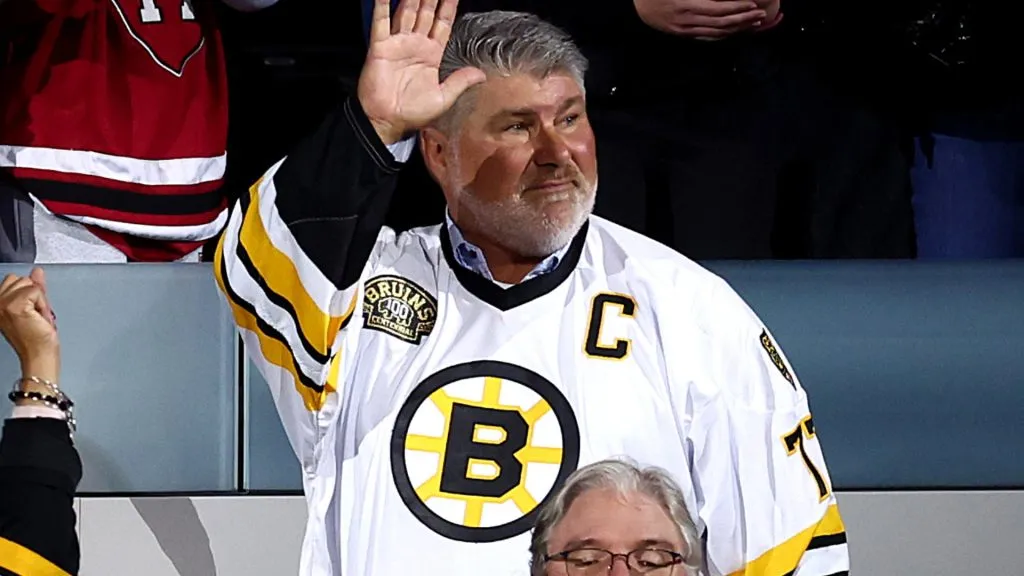
Ray Bourque (Source: Maddie Meyer/Getty Images)
While Bobby Orr redefined the defense position, Ray Bourque perfected consistent excellence in it, serving as the Bruins’ captain for a record 15 seasons and becoming synonymous with the Black and Gold by setting franchise records in games played, assists, and points.
His nearly two-decade run in Boston was a blend of skill and dedication, securing five Norris Trophies while combining elite offense with peerless defensive prowess. Despite accumulating nearly every individual honor, the Stanley Cup remained the one elusive prize, leading to the gut-wrenching decision to request a trade in 2000 to chase a championship.
His journey culminated in 2001 with the Colorado Avalanche when, in one of the most emotional moments in sports history, Avalanche captain Joe Sakic famously passed the Cup to Bourque first, providing a perfect, shared victory for the player who had been the Bruins’ hope for two decades.
Brad Marchand
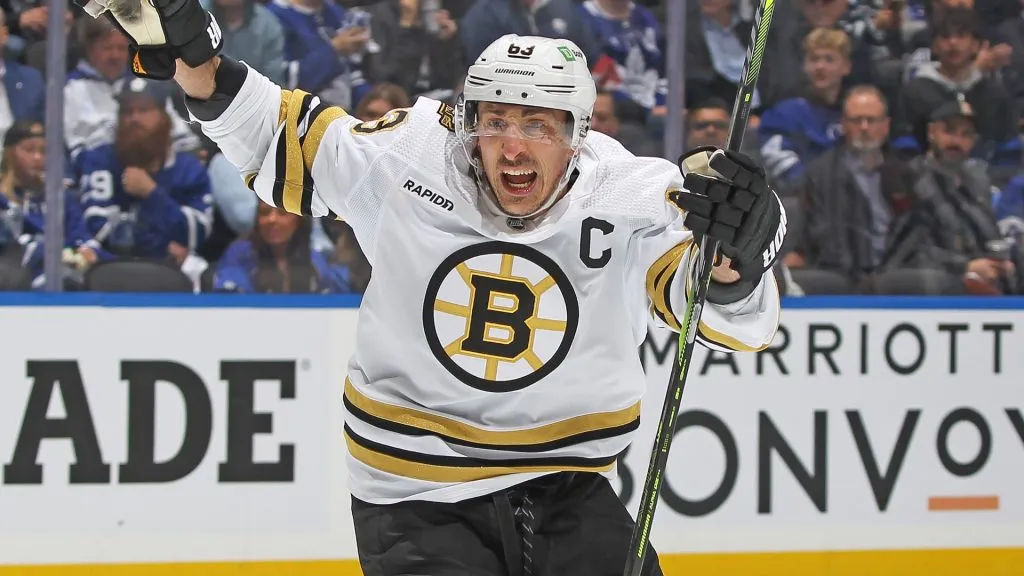
Brad Marchand (Source: Claus Andersen/Getty Images)
No player in modern hockey embodies the dual nature of the Boston Bruins quite like Brad Marchand. Nicknamed “The Little Ball of Hate” by President Barack Obama, he began his career as the ultimate pest—a high-energy agitator who got under opponents’ skin, famously on the celebrated Merlot Line that drove the 2011 Stanley Cup run.
However, his defining journey has been his evolution from a bottom-six provocateur to one of the NHL’s most prolific and elite wingers, hitting the 100-point mark in 2019 and holding the franchise record for shorthanded goals.
His ability to be simultaneously infuriating to opponents and indispensable to his team makes his career a study in calculated risk and explosive offensive skill, proving that the classic Boston spirit of aggression can be refined into superstar production.
Phil Esposito
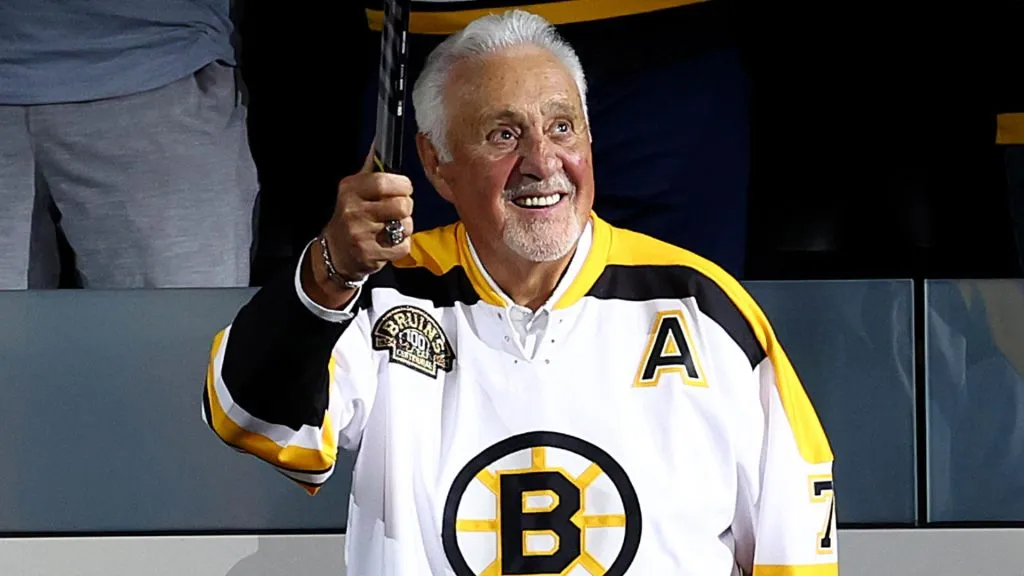
Phil Esposito (Source: Maddie Meyer/Getty Images)
When Phil Esposito arrived in Boston via a landmark 1967 trade, he didn’t just join the team; he turbocharged the NHL’s offensive ceiling. Known simply as “Espo,” this powerful center was the pioneer of the 100-point season, becoming the first player in league history to shatter that benchmark with an unprecedented 126 points in 1968-69.
A fierce competitor who parked his massive frame directly in the slot, he led the league in scoring five times and won two Hart Trophies, culminating his dominance with a then-record 76 goals and 152 points in 1970-71.
His explosive offense was the crucial centerpiece of the Big Bad Bruins dynasty, leading them to the 1970 and 1972 Stanley Cups and forever altering the expectations for a number one center in the NHL.
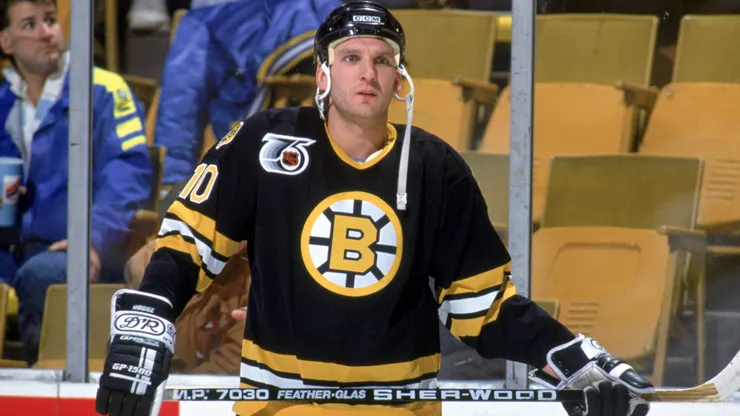
Eddie Shore
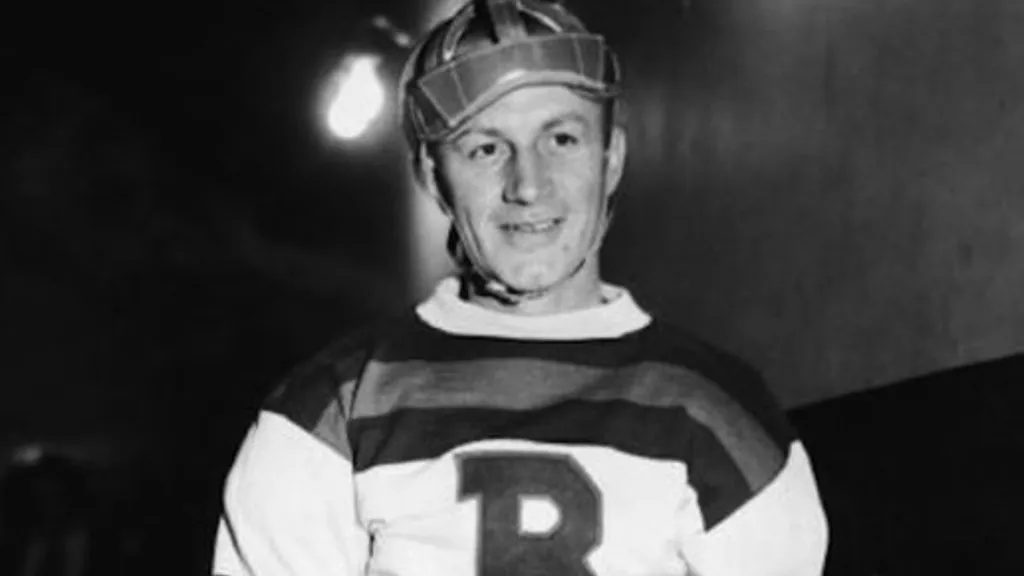
Eddie Shore (Source: Boston Bruins Alumni)
Before Bobby Orr, there was Eddie Shore, the league’s original superstar defenseman, whose ferocious style and sheer dominance made him a legend of the pre-war era. Dubbed “The Edmonton Express”, he was an imposing figure known for his aggressive rushes up the ice, his defiance of the conventional stay-at-home defense role, and his legendary toughness—earning him the NHL record of four Hart Trophies for a defenseman, a mark that still stands.
His brutal, physical game often resulted in significant injuries, including multiple broken noses, yet he thrilled fans by daring opponents to stop his puck-carrying adventures, fundamentally changing how the defense position was played and contributing directly to the Bruins’ first two Stanley Cups in 1929 and 1939.
Milan Lucic
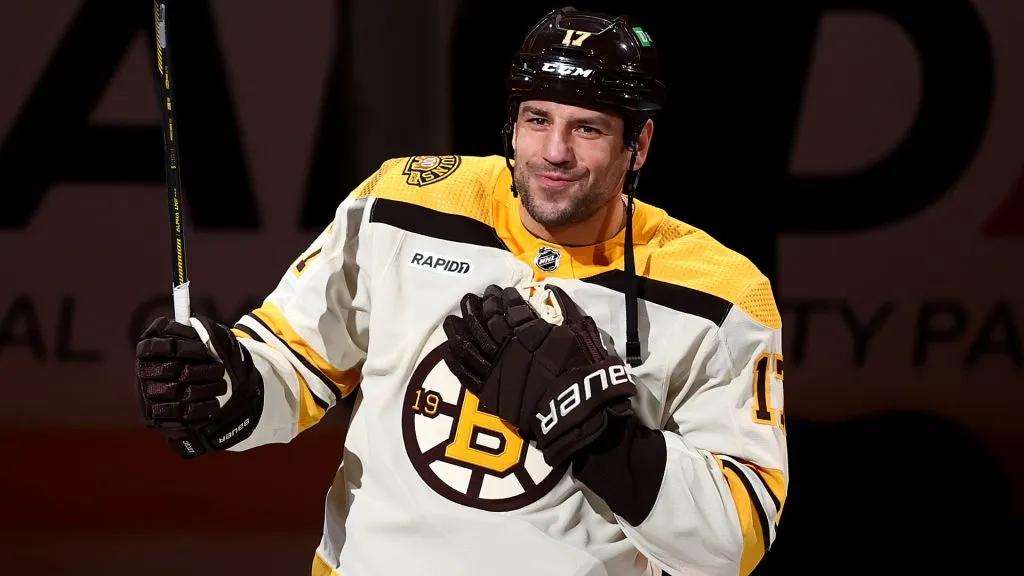
Milan Lucic (Source: Maddie Meyer/Getty Images)
Milan Lucic was the muscle and the mentality of the modern Bruins revival, a rugged power forward drafted to restore the physical identity of the franchise in the late 2000s. Becoming an instant fan favorite, his combination of scoring ability and raw intimidation earned him a reputation as the team’s “policeman,” a true throwback to the hard-nosed Big Bad Bruins ethos that often left opponents rattled.
He hit a career-high 30 goals during the 2010-11 season and was an absolutely vital force, both physically and offensively, in the team’s relentless march to the 2011 Stanley Cup. His eight seasons in Boston established him as the spiritual successor to the team’s rugged history, celebrated for his willingness to drop the gloves and his powerful contributions to the club’s most recent championship.
Adam Oates
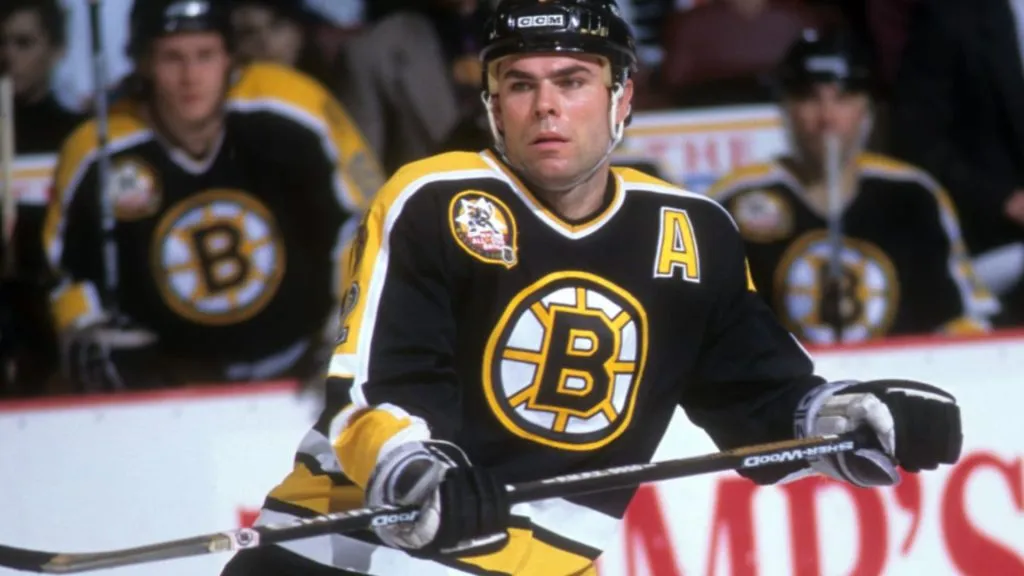
Adam Oates (Source: NHL)
Adam Oates was the elite playmaker who maximized the goal-scoring talent around him, turning undrafted beginnings into a Hall of Fame career and landing in Boston mid-season in 1992. His vision and passing ability were arguably second to none in his era; his career total of 1,079 assists was the fifth-highest in NHL history at the time of his retirement.
His best season came in his first full year in Boston, where he led the league with a remarkable 97 assists and finished third in overall scoring with 142 points, proving his ability to elevate superstars like Cam Neely to new heights.
He remains the only center in NHL history to play with three separate 50-goal scorers, a testament to his selfless, brilliant playmaking that consistently transformed the Bruins’ offense into a top-tier unit.
Patrice Bergeron
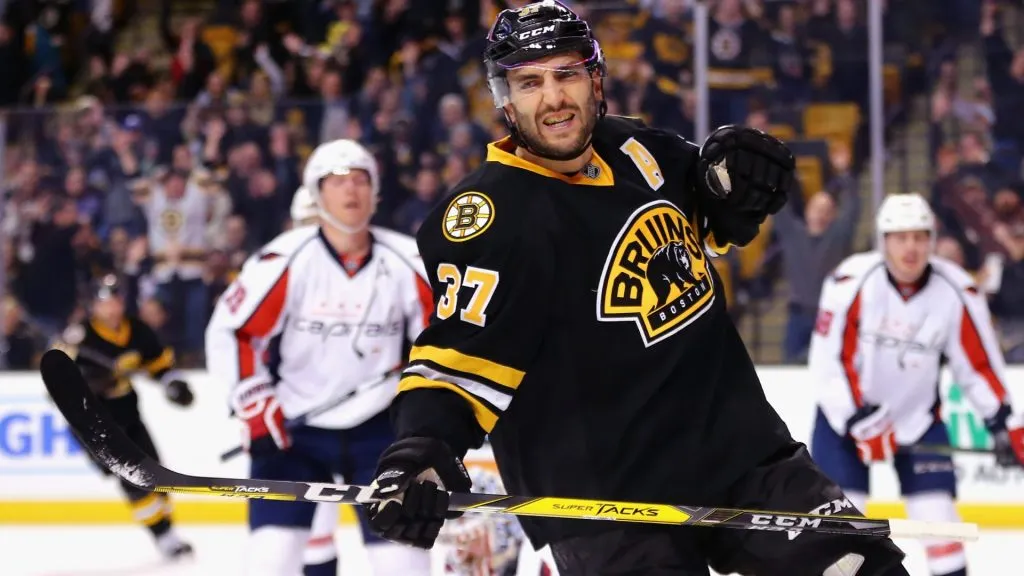
Patrice Bergeron (Source: Maddie Meyer/Getty Images)
The career of Patrice Bergeron is defined by a word rarely applied to a forward: perfection. Universally regarded as the premier two-way forward of his generation, he shattered the NHL record by winning the Frank J. Selke Trophy—awarded to the league’s best defensive forward—an astonishing six times, a feat that firmly establishes his defensive mastery.
Yet, his impact was equally felt in clutch offensive moments, including scoring the series-winning goal in Game 7 of the 2011 Stanley Cup Final, and, most notably, in his leadership, culminating in his selection as team captain from 2021 until his retirement.
His unparalleled combination of offensive production, defensive integrity, and legendary toughness—famously playing through multiple serious injuries in the 2013 Final—makes him the ideal of a modern captain and a member of the Triple Gold Club.
Zdeno Chara
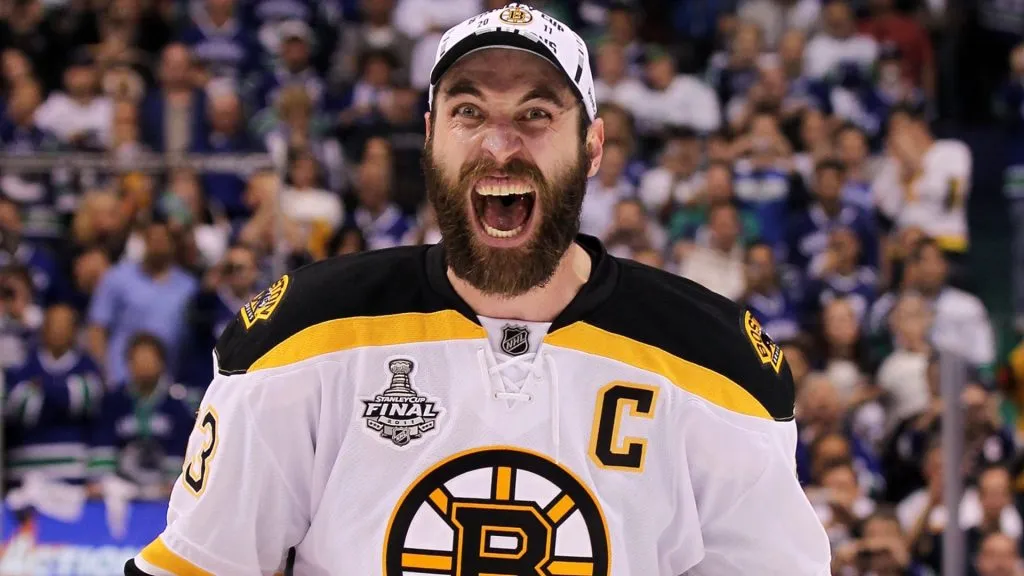
Zdeno Chara (Source: Bruce Bennett/Getty Images)
When Zdeno Chara signed with the Bruins in 2006, he did more than just fill a spot on the roster; he ushered in a new era of accountability and success, serving as captain for 14 seasons.
Standing at 6 feet 9 inches, “Big Z” was the most physically imposing presence in the league, a Norris Trophy-winning defenseman whose legendary work ethic and rigid standards for respect and preparation transformed the entire culture of the organization.
He led the Bruins back to consistent contention, famously lifting the Stanley Cup in 2011 after a decade-long drought. Beyond his crucial on-ice contributions, his legacy is defined by his moral leadership—famously banning the term “rookie” to ensure all teammates felt respected—establishing a foundation of professionalism that guided the team’s success for over a decade.
Torey Krug
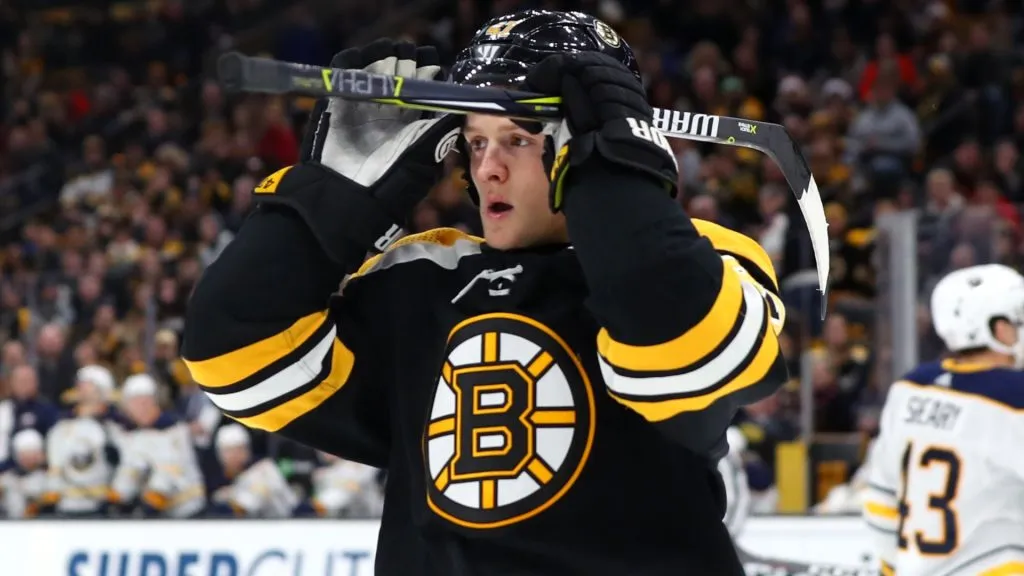
Torey Krug (Source: Maddie Meyer/Getty Images)
Torey Krug defied his smaller stature to become one of the most exciting and productive offensive defensemen in Bruins history, a crowd-favorite dynamo known for his power-play prowess and fearless style.
Undrafted out of college, he quickly established himself as a must-watch player, using a potent shot and elite puck-moving ability to become the quarterback of Boston’s power play for years.
While often celebrated for his offense, his legacy for fans was cemented by moments of pure emotion, most notably the visceral, helmet-less, full-speed body check he delivered in the 2019 Stanley Cup Final.
That explosive moment of physicality, a testament to his grit and engagement, proved that the undersized firebrand could deliver the same fierce intensity as the biggest names in the game.
Tim Thomas
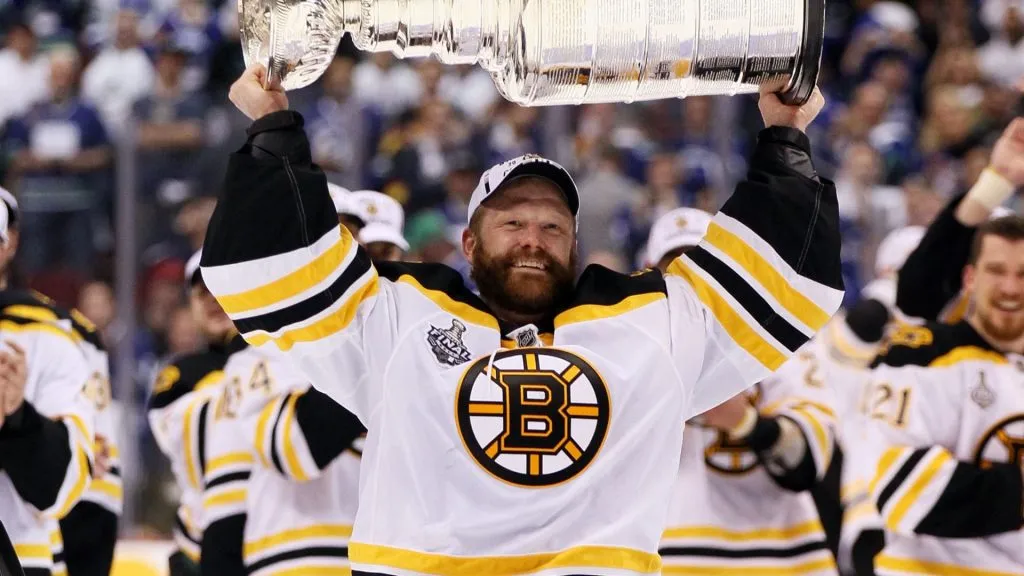
Tim Thomas (Source: Elsa/Getty Images)
The story of Tim Thomas is one of late-blooming, defiant perseverance that culminated in arguably the greatest goaltending performance in Stanley Cup history. After a winding, minor-league journey that didn’t see him become an established NHL starter until age 31, he redefined the position with his frenetic, acrobatic, and utterly unorthodox style.
His defining year came in 2011, when he secured the Vezina Trophy as the league’s top goaltender and then backstopped the Bruins to their first Stanley Cup in 39 years, earning the Conn Smythe Trophy as playoff MVP after setting an NHL record for most saves in a single postseason run. His incredible performance was a singular, clutch achievement that solidified his legend as the ultimate “money” goaltender.
Tuukka Rask
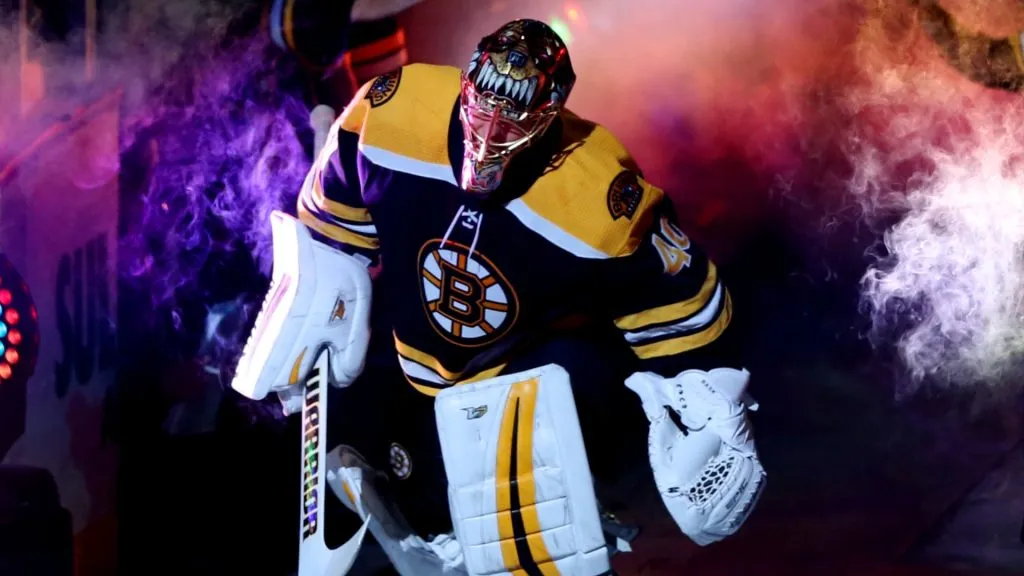
Tuukka Rask (Source: Maddie Meyer/Getty Images)
After taking over the starting role from Tim Thomas, Tuukka Rask established himself as the most statistically consistent goaltender in modern Bruins history, ultimately becoming the franchise’s all-time leader in both regular season games played and wins.
Drafted by the Maple Leafs but acquired by Boston in a famously lopsided 2006 trade, the Finnish netminder was an instrumental backup during the 2011 Stanley Cup win and later claimed the Vezina Trophy in 2014, leading the team to a Presidents’ Trophy.
His calm, positional mastery was the constant bedrock of the Bruins’ defense through the 2013 and 2019 Finals runs, retiring with one of the best career save percentages in the modern era, a testament to his quiet dominance and reliability.
Tiny Thompson
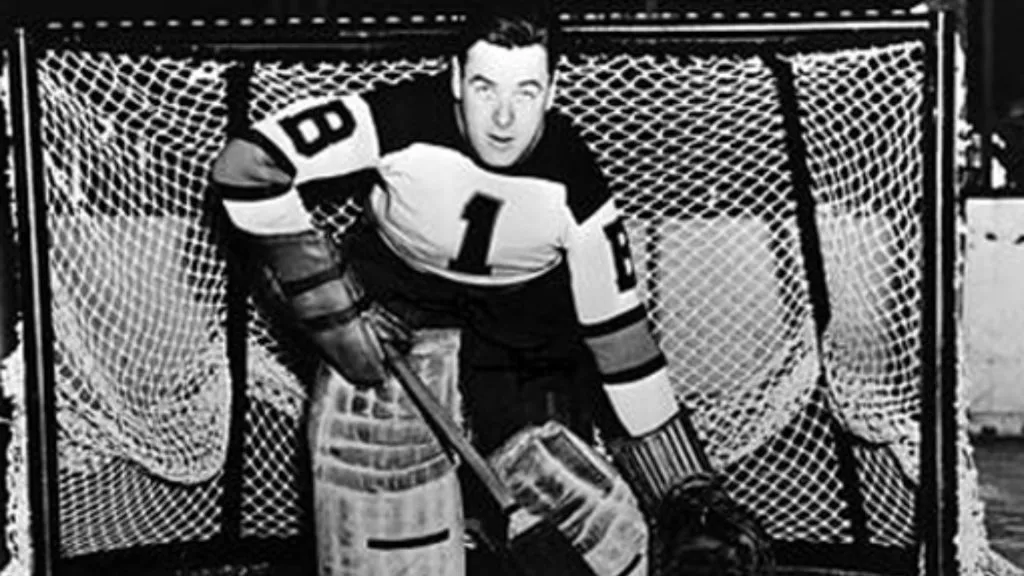
Tiny Thompson (Source: Boston Bruins Alumni)
In the era of the Original Six, no one guarded the crease with the silent authority of Cecil “Tiny” Thompson. Despite his ironic nickname, he was a towering figure in the net, setting the early benchmark for goaltending excellence by winning the Vezina Trophy an astounding four times between 1929 and 1938.
As a rookie, he led the Bruins to their very first Stanley Cup in 1929, famously recording a shutout in his NHL debut, a feat unique among Hall of Fame goalies. His legendary goals-against average and shutout totals defined the goaltending standard of his time and set the historical foundation for all Bruins netminders who followed.
David Pastrnak
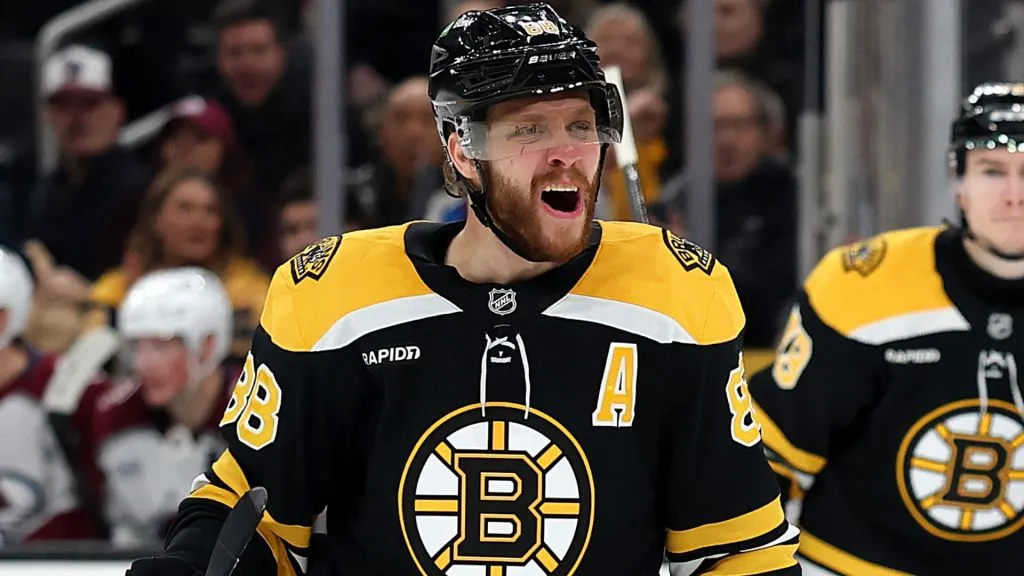
David Pastrnak (Source: Maddie Meyer/Getty Images)
The Czech winger David Pastrnak, known affectionately as “Pasta,” is the electrifying, creative force driving the Bruins’ current offensive engine and a genuine NHL superstar.
Selected 25th overall in 2014, he quickly became celebrated for his joyful demeanor, lethal one-timer, and pure goal-scoring prowess, culminating in him winning the Maurice “Rocket” Richard Trophy in 2020 as the league’s top goal scorer.
His offensive peak arrived in 2022-23 when he joined an exclusive club of Bruins legends by scoring a staggering 61 goals, a feat not accomplished by a Bruin in nearly 30 years. He embodies the excitement of modern, high-octane hockey and serves as the primary offensive beacon for the team’s faithful.
Gerry Cheevers
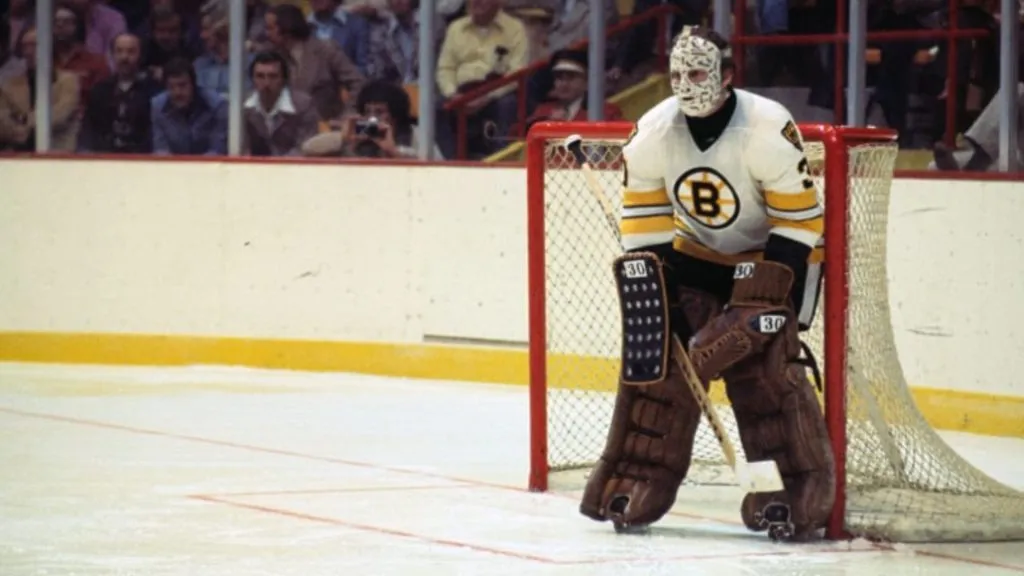
Gerry Cheevers (Source: NHL)
Gerry Cheevers was the swaggering, playoff-tested goaltender of the Bobby Orr-Phil Esposito dynasty, renowned for his clutch performances and the most iconic face mask in hockey history. He wasn’t just a great goalie; he was a character, gaining the reputation as a “money” goaltender for his postseason heroics, which included backstopping the Bruins to the 1970 and 1972 Stanley Cups.
His legend includes an NHL record that still stands today: an undefeated streak of 32 consecutive games in 1972. Moreover, his signature stitch-marked mask, famously drawn on by trainer John “Frosty” Forristall every time he took a shot to the face, became a visual symbol of the tough, resilient nature of the Big Bad Bruins era.
Brad Park
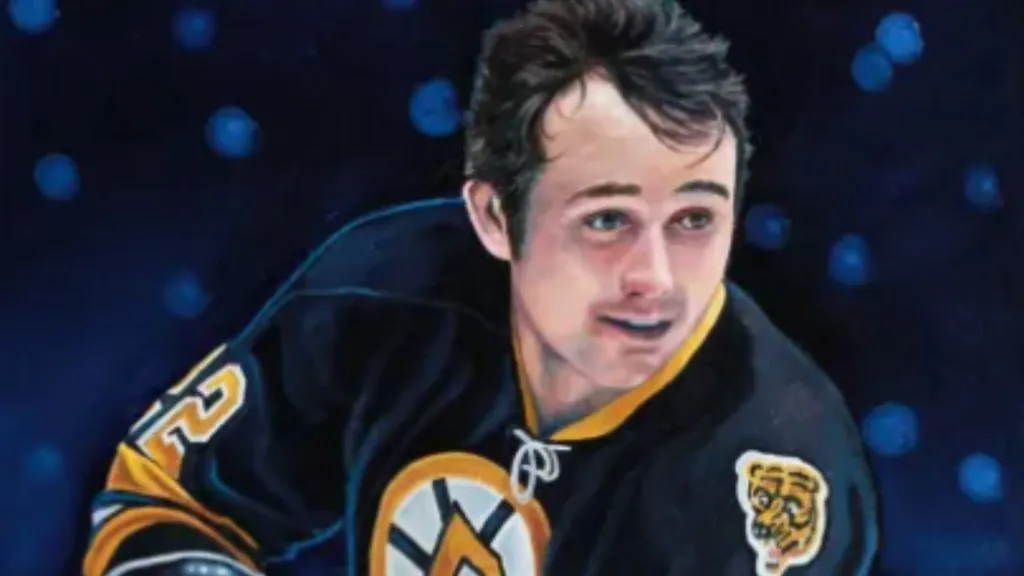
Brad Park (Source: NHL)
Brad Park arrived in Boston as the central piece of the infamous 1975 trade that sent Phil Esposito to the New York Rangers, an exchange so monumental it shook the league. Prior to the deal, Park was considered the second-best defenseman in hockey, often runner-up to his contemporary, Bobby Orr, but he never let the pressure of the trade define him.
He embraced the Black and Gold, continuing his elite level of play and cementing his status as one of the best defensemen of his generation with three more First Team All-Star selections in Boston.
While he never won a Stanley Cup, his career with the Bruins included a famous Game 7 overtime winner in 1983, and he retired as the second-highest scoring defenseman in franchise history, a quiet Hall of Famer who brought stability and excellence to the post-Orr blue line.
Terry O’Reilly
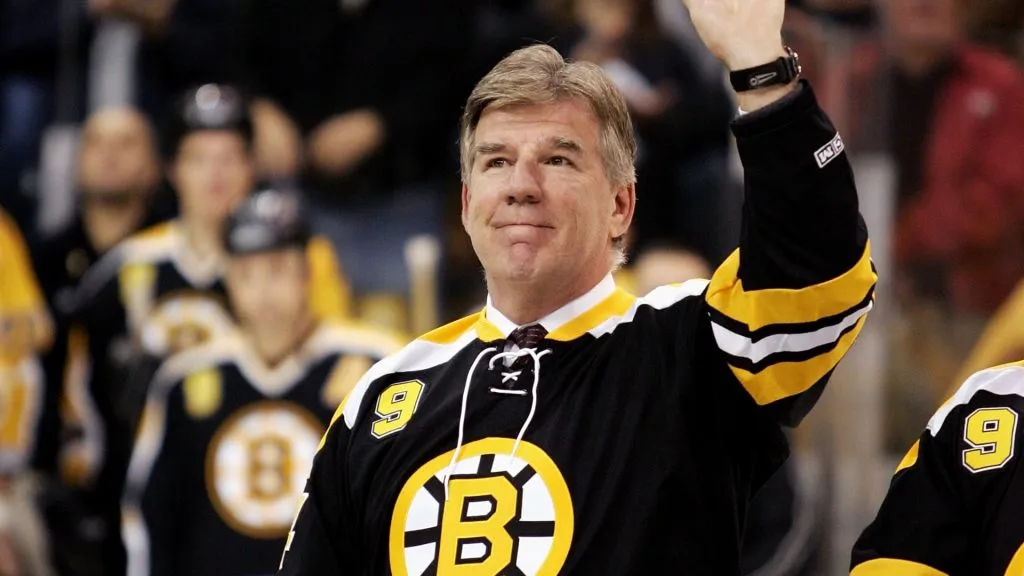
Terry O’Reilly (Source: Elsa/Getty Images)
Terry O’Reilly was less a player and more a state of mind for the Boston Bruins, embodying the relentless, physical, and protective identity of the franchise for 14 seasons. Nicknamed “Taz” (short for Tasmanian Devil) for his reckless, all-out energy, he was one of the most effective enforcers in NHL history, famously racking up over 2,000 career penalty minutes, including five consecutive seasons with over 200 PIM.
Yet, he was no mere bruiser; he was also a productive right wing who twice topped 77 points, demonstrating a rare balance of scoring touch and fierce protection for teammates like Bobby Orr and Phil Esposito. His ultimate “Bruin” status was cemented by his willingness to literally fight the crowd, making him the definitive symbol of the team’s blue-collar defiance.
Rick Middleton
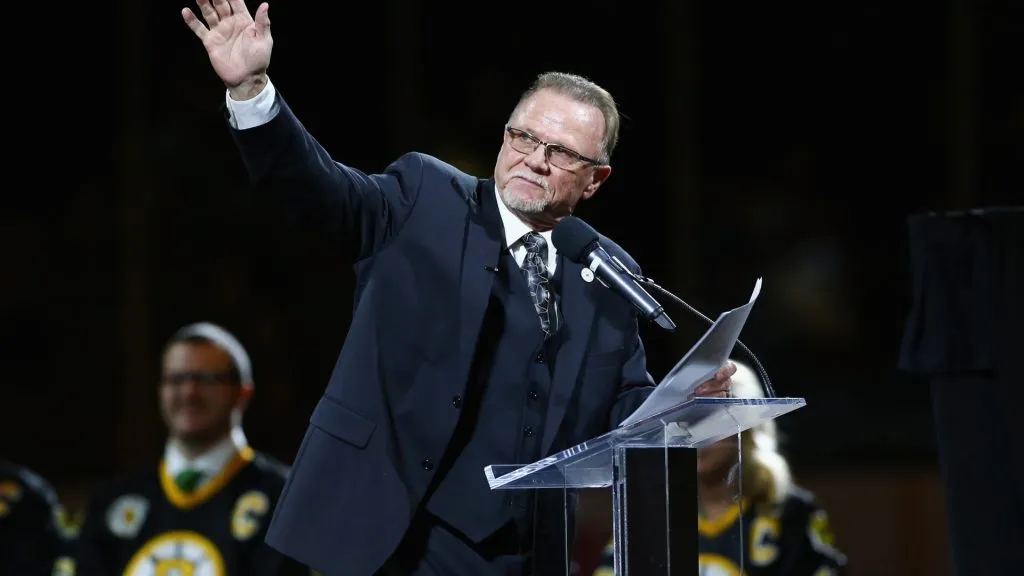
Rick Middleton (Source: Tim Bradbury/Getty Images)
For a generation of Bruins fans who came of age after the Orr/Esposito dynasty, Rick “Nifty” Middleton was the team’s pure, dazzling star, whose nickname perfectly described his slick, elusive stickhandling and mesmerizing one-on-one moves.
Acquired in the trade that sent Ken Hodge to the Rangers, he seamlessly stepped into a starring role, becoming a perennial leading scorer for the Bruins with five straight seasons of 40 or more goals and a career-high 51 tallies in 1981-82.
His impressive production came wrapped in rare discipline, earning him the Lady Byng Memorial Trophy for combining skill with sportsmanship in 1982. Though he never won a Cup, his flashy style and high-scoring consistency made him the exhilarating offensive focal point of the Bruins throughout the late 70s and 80s.
Wayne Cashman
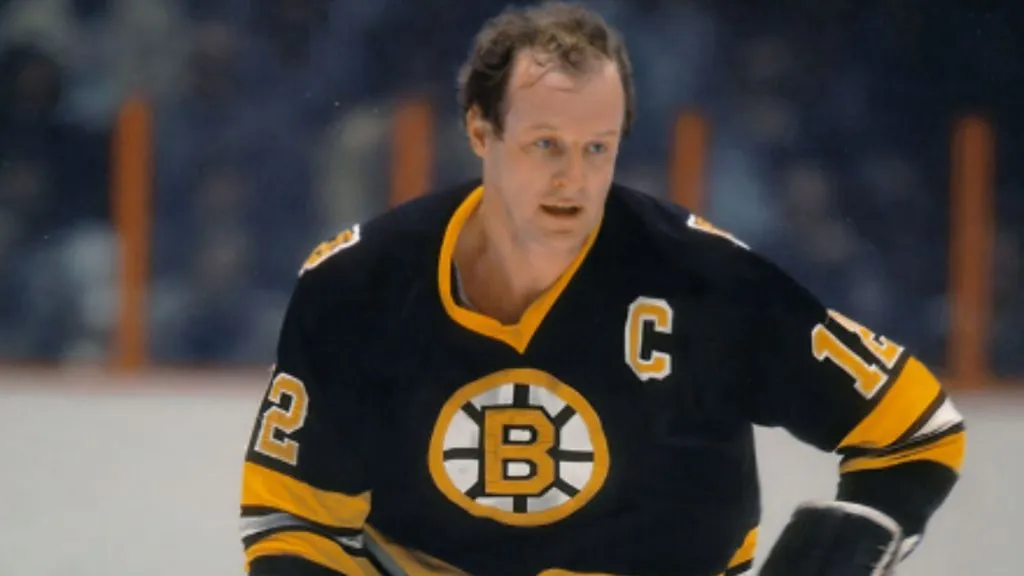
Wayne Cashman (Source: NHL Auctions)
Ask any member of the great Bruins teams of the 1970s and they’ll tell you that Wayne “Cash” Cashman was the glue, the true heart, and the ultimate teammate who allowed the superstars to shine. Playing his entire 17-season NHL career in Boston, he was the hard-grinding left wing on the record-breaking “Esposito Line” alongside Phil Esposito and Ken Hodge.
His unmeasured value lay not in his personal statistics, but in his ferocious work in the corners, his tenacious forechecking, and his willingness to serve as the policeman to protect his star linemates, a role he played with such relentless desire that he earned the nickname “Captain Crunch.”
He retired as the last active player from the NHL’s Original Six era, a true warrior who measured his success in Stanley Cup rings (1970, 1972) and the unwavering respect of the locker room.
Derek Sanderson
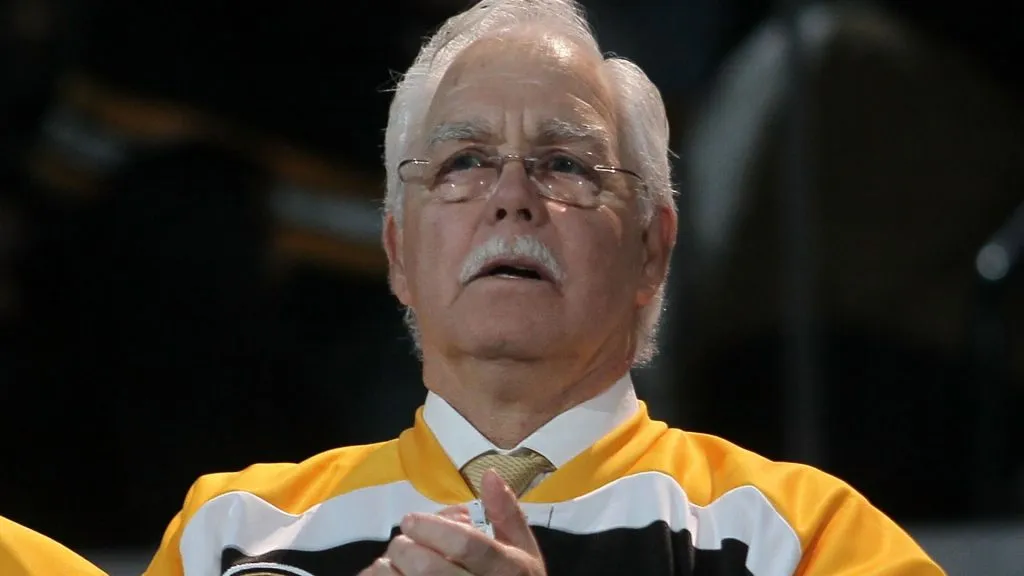
Derek Sanderson (Source: Bruce Bennett/Getty Images)
No Bruin star blended on-ice excellence with off-ice celebrity quite like Derek “Turk” Sanderson, the flamboyant center of the late 60s and early 70s dynasty. As the 1968 Calder Memorial Trophy winner for Rookie of the Year, his talent was undeniable—he was an elite penalty killer, a master of the faceoff, and famously made the pass that led to Bobby Orr’s “Flying Goal” in 1970, clinching the Stanley Cup.
However, “Turk” was equally known as the “Joe Namath of hockey,” famous for his Rolls-Royce lifestyle, flashy clothes, and media ubiquity, making him one of the sport’s first true cultural icons. His high-flying career was a rollercoaster of incredible achievement and personal struggle, yet his key role in both Cup victories ensures his place as one of Boston’s most memorable and colorful legends.
Ken Hodge
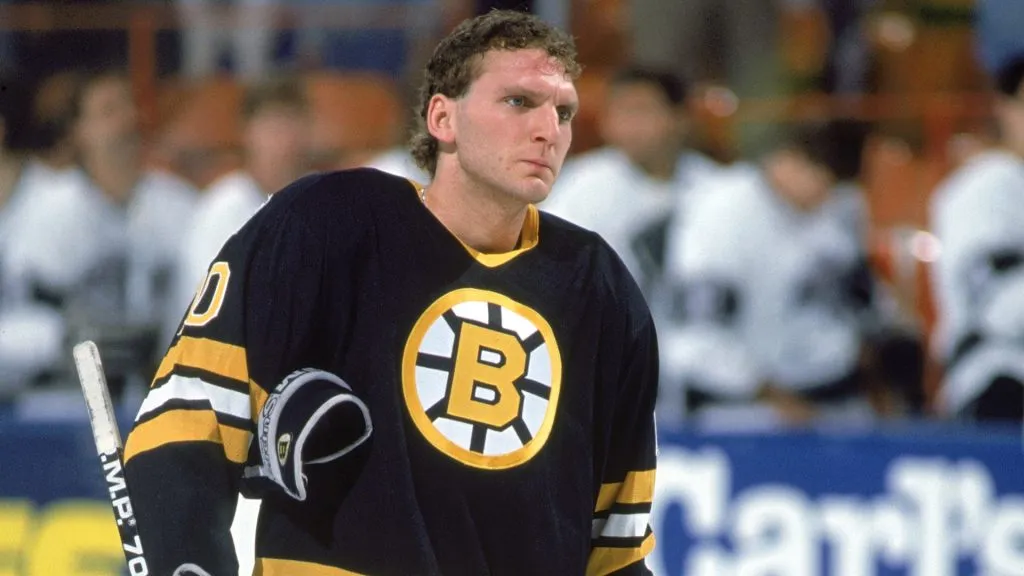
Ken Hodge (Source: Ken Levine/Getty Images)
Ken Hodge was the massive right wing, renowned for his size and shot, who completed one of the most offensively dominant forward lines in NHL history alongside Phil Esposito and Wayne Cashman.
Arriving in Boston with Esposito in the seminal 1967 trade, he immediately thrived, breaking the league record for points by a right winger and twice contributing to the only instances in NHL history where four players from the same team finished 1−2−3−4 in league scoring.
While often overshadowed by his future Hall of Fame linemates, he was a genuine star in his own right, notching two 100-point seasons and a 50-goal campaign, providing the crucial, powerful finish on the right side that drove the Bruins to their 1970 and 1972 Stanley Cup championships.