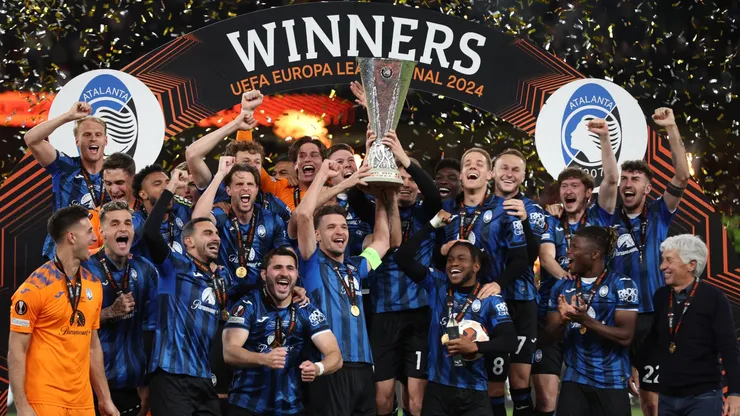
Every season, the UEFA Europa League crowns a new champion—but the trophy isn’t the only prize at stake. Beyond glory, the winners unlock doors to elite European football, often reshaping their club’s immediate future.
It’s not just a celebratory parade and silverware. A Europa League victory can redraw a team’s calendar, inject their finances with millions and place them on a collision course with Europe’s heavyweights.
As the confetti settles and the champagne fades, bigger questions arise: what lies ahead for these newly crowned kings of the second-tier? The answer, as always in soccer, leads to more than one competition.
Which tournaments await the UEFA Europa League winners?
Winning the UEFA Europa League is more than just a prestigious title, it serves as a gateway to elite competitions. Since the 2014/15 season, the champions have secured a direct entry into the UEFA Champions League group stage for the following season.
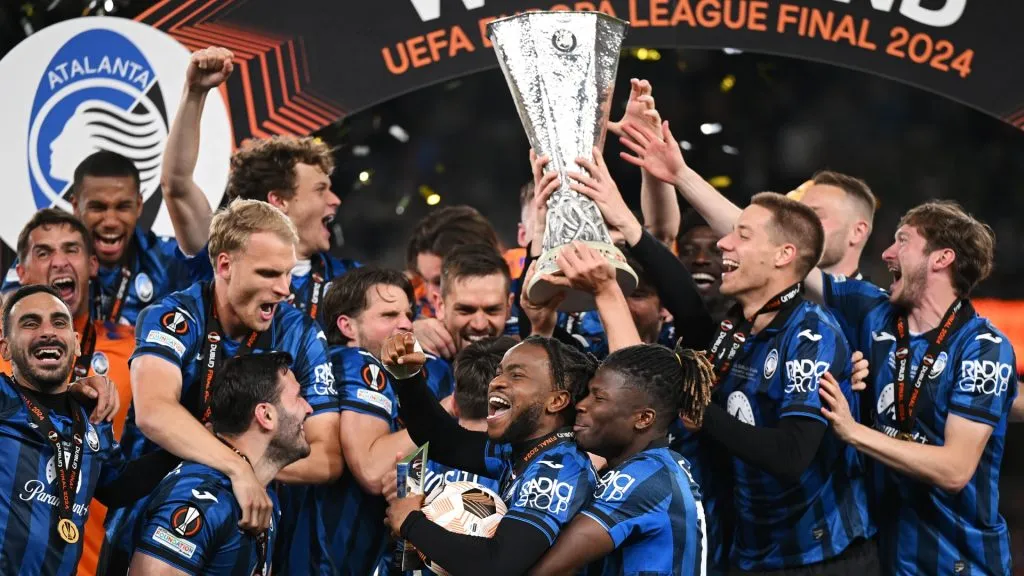
Ademola Lookman of Atalanta BC is embraced by El Bilal Toure as they celebrate as players of Atalanta BC lift The UEFA Europa League Trophy after defeating Bayer 04 Leverkusen in 2024. (Source: Michael Regan/Getty Images)
In addition to the Champions League, the winners are granted a spot in the UEFA Super Cup, where they face the Champions winners in a one-off match. This annual fixture serves as the traditional curtain-raiser for the club season.
However, there is an important contingency. If the Europa League winner has already qualified for the Champions League through their domestic league performance, UEFA doesn’t allow the group stage spot to go to waste.
Instead, this place is passed down to the next eligible club based on UEFA’s coefficients or league rankings, preserving the soccer competition’s balance and integrity. This system ensures that winning the league remains a valuable path to multiple prestigious opportunities, both financially and competitively.