
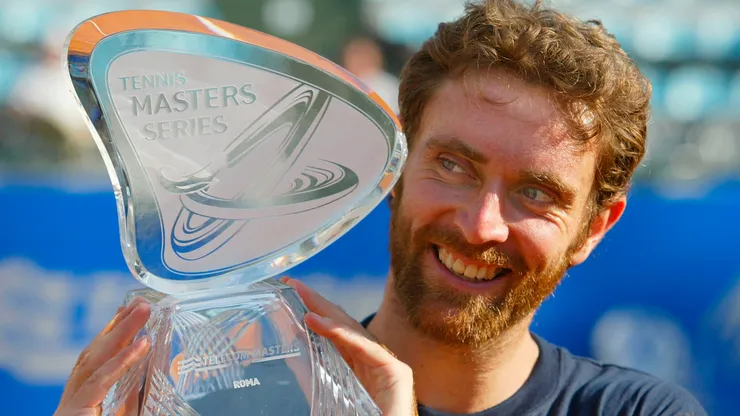
Spain has long been a powerhouse in tennis, producing legends like Manuel Santana, Manuel Orantes, and Carlos Moya. In the 1990s, the emergence of stars like Moyá, Alex Corretja, and Juan Carlos Ferrero overshadowed Felix Mantilla—a player who reached World No. 10, claimed ten career titles, and delivered one of his most memorable wins against Roger Federer.
Mantilla turned pro in 1993 at the age of 18, securing his first ATP title in 1996 at Porto, defeating Argentina’s Hernan Gumy. His breakout season came in 1997, where he clinched five titles—all on clay—including victories over top players like Carlos Moya, Gustavo Kuerten, and Albert Costa.
His clay-court dominance continued in 1998 with a semifinal run at Roland Garros, where he fell to eventual champion Moyá in four sets. That same year, Mantilla achieved his career-high ATP ranking of World No. 10.
The historic win over Federer
In 2003, Mantilla captured the biggest title of his career at the Rome Masters. The Spaniard defeated Roger Federer in straight sets, 7-5, 6-2, 7-6, to win the tournament at the Foro Italico—a victory that marked the final title of his career before his retirement in 2007.
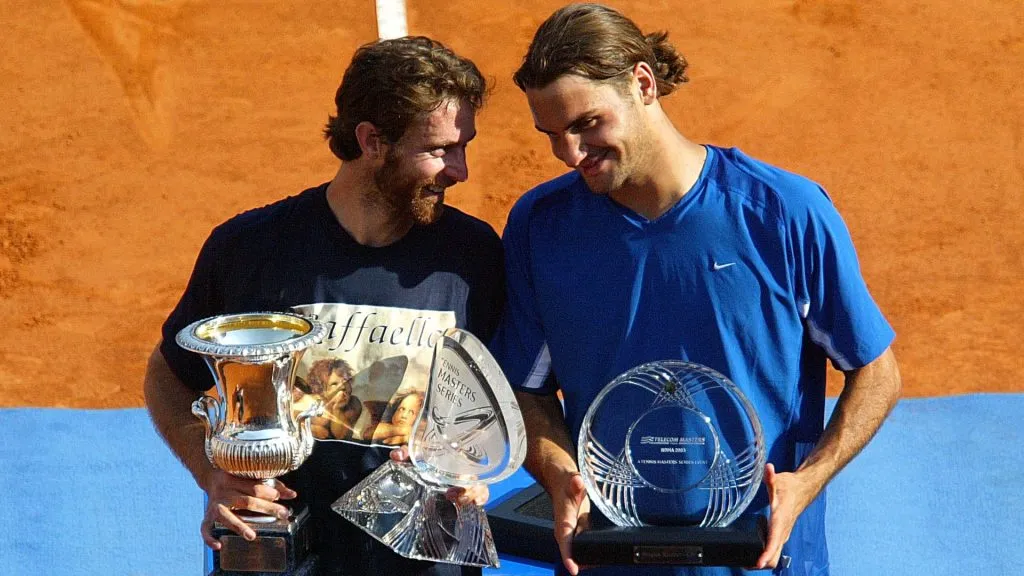
Felix Mantilla of Spain and Roger Federer of Switzerland share the podium after the Final of the ATP Rome Masters. (Mario Pietrangeli/Getty Images)
However, the final didn’t sit well with Federer, who at the time had yet to develop the poise that would later define his legendary career. Following the match, Federer criticized Mantilla’s playing style.

“It’s always tough when you miss opportunities early on,” Federer said in 2003. “When you waste your first five break points, it messes with you mentally. I kept trying to stay aggressive, but it didn’t work out, and losing the set that way was frustrating”.
Federer didn’t stop there, adding: “Mantilla plays a patience game—he doesn’t rush and keeps doing the same thing. It’s a bit boring if you ask me. It doesn’t matter if you hit a great shot or a bad one; the ball always comes back the same way. You have to understand that a good shot doesn’t necessarily put you in a better position on the court. You have to adjust your approach”.
Life after tennis
After retiring in 2007, Mantilla joined the Australian Institute of Sport’s European base in Barcelona the following year. He transitioned into coaching, working with players such as Alexandr Dolgopolov and Lucas Pouille. Today, Mantilla coaches Alejandro Davidovich Fokina, one of Spain’s top players, known for his prowess on clay courts.