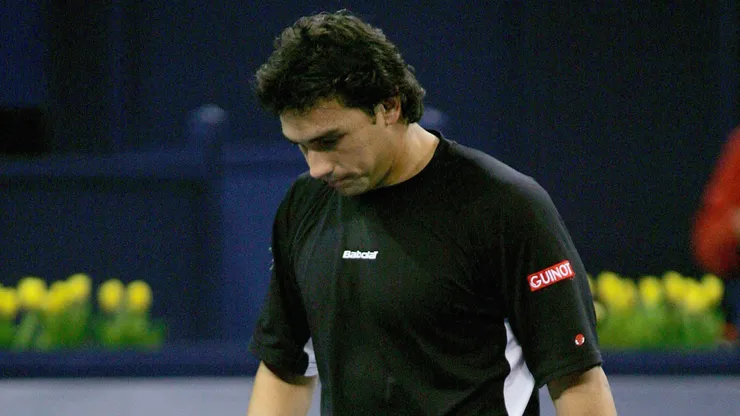
Mariano Puerta’s career was defined by moments of brilliance and controversy. Born in Córdoba, Argentina, he moved to Buenos Aires as a teenager to pursue a professional tennis career, inspired by Guillermo Vilas, a close friend of his father. While he achieved some success, including reaching the French Open final in 2005 against Rafael Nadal, he left the sport after two cases of doping.
As a junior, his most notable achievement was reaching the 1995 Roland Garros final against Mariano Zabaleta, which he lost. Despite losing that final, Puerta was already making a name for himself, and as he transitioned to the professional circuit, he achieved strong results, particularly on clay.
He had little difficulty staying in the top 100 and even won his first ATP title in Palermo, Italy, in 1998, defeating Franco Squillari. In 2000, he had a brilliant season, finishing second only to Gustavo Kuerten in the most clay-court wins. That year, he claimed the ATP title in Bogotá and reached the finals in Mexico City, Santiago, Gstaad, and Umag.
His injuries and his struggles with mental health
Puerta’s career was on a steady rise after an outstanding 2000 season. He established himself as one of the best on clay, but a wrist injury sidelined him for an extended period. His return to the court was not easy, and it took him time to realize that a psychologist could help.
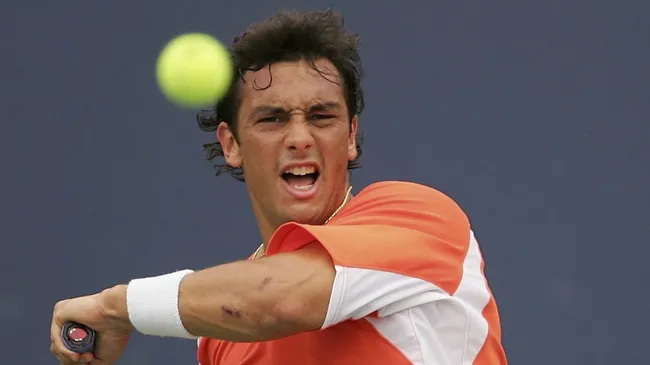
Mariano Puerta during the Rogers Cup in 2005 (Robert Laberge/Getty Images)
In 2020, he would tell La Nacion about that period of time: “In 2002, I wasn’t improving. I felt 100% responsible for the failure that was my return after surgery. I was so aware of it that I started hurting myself on purpose—sometimes deliberately hitting balls out, not being humble, not running for certain shots.”
He added, “You need a lot of humility to succeed in anything. Sometimes, achieving so much success at a young age makes you arrogant. There came a moment when I said, ‘Either I forgive myself, or this is over.’ I couldn’t go on like that.” However, the setbacks wouldn’t stop there.
First doping suspension
By 2003, Puerta was regaining his best form, but after a loss to Agustín Calleri in the Viña del Mar ATP tournament, he was subjected to an anti-doping test that came back positive, leading to a nine-month suspension. The banned substance found in his system was clenbuterol, which was part of a medication he took for asthma but was banned as it was considered anabolic.
He was suspended from October 2003 to July 2004. “I went to that tournament in Chile, won my first match, lost my second to Calleri, had a doping test, everything normal—until months later, they informed me that I had tested positive. I thought, ‘What is this? Oh, the medicine! I wanted to die,’” he told La Nacion.
A strong comeback and French Open final against Nadal
In July 2004, Puerta was cleared to compete again, and his career seemed to experience a spectacular revival. By 2005, he reached the ATP Buenos Aires final (losing to Gastón Gaudio) and won his third ATP title in Casablanca, defeating Juan Mónaco in the final.
In 2005, Puerta and David Nalbandian secured a historic Davis Cup doubles victory over Australia on grass, defeating Wayne Arthurs and Lleyton Hewitt in straight sets. He also achieved his highest career ranking, reaching World No. 9 on August 15.
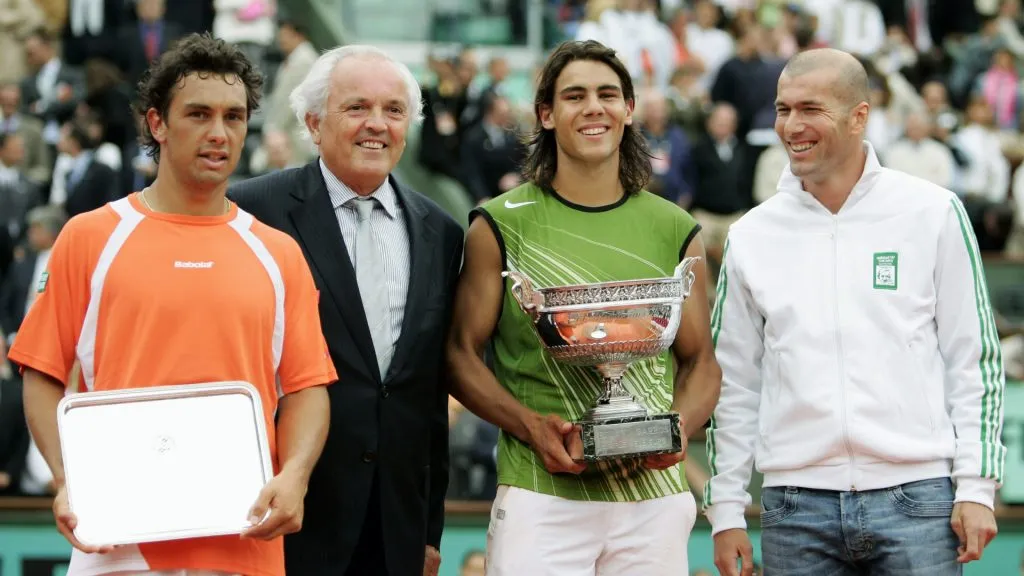
Mariano Puerta (L) at the 2005 Roland Garros trophy ceremony (Clive Mason/Getty Images)
However, without a doubt, his greatest moment came at Roland Garros that year, when he reached the final and faced Rafael Nadal, whom he had beaten in a Challenger final in 2003, who at the time had yet to win a Grand Slam title.
Though he took the first set 7-6, Nadal won the next three 6-3, 6-1, and 7-5. “When I went off the court, I knew I had lost against the best player in the world on clay. What could I do?” he later told the press, according to the French Open official website. While he was in one of his best professional moments, the Roland Garros final marked a turning point in Puerta’s career.
Second doping suspension and the end of his career
Just days later after the final, Puerta received the worst possible news: he had tested positive for epinephrine. A small dose of the substance was found in his body, and he claimed it resulted from drinking contaminated water from his wife’s bottle, which contained medication.
However, in 2020, he admitted to La Nacion that the explanation was a lie to try to reduce his suspension. According to his account, he was taking a supplement made of “caffeine and ginseng” that he got in a “not legal” way, so his lawyers thought it wasn’t a good idea to say that to the tribunal.
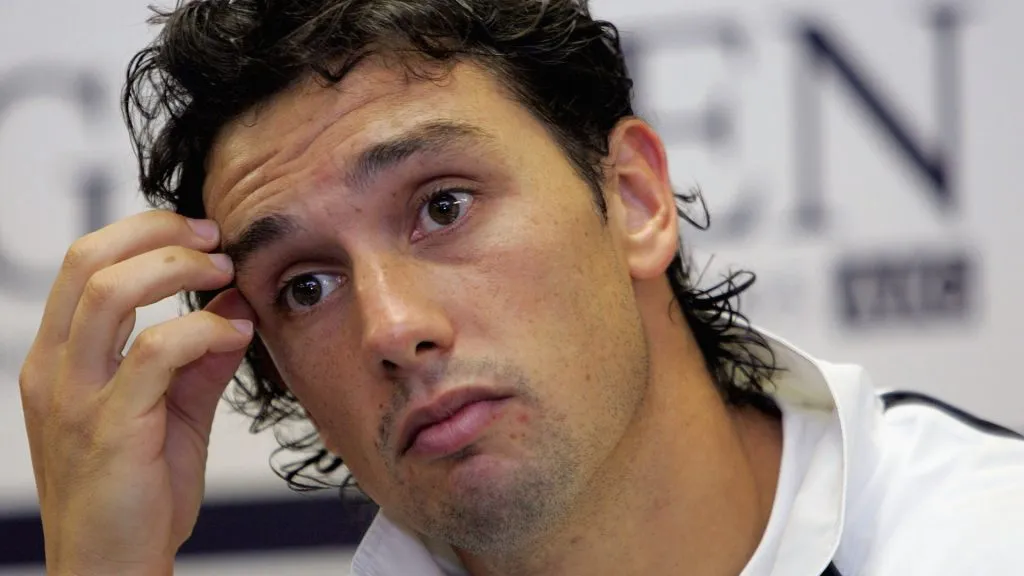
Mariano Puerta in 2005 (Koichi Kamoshida/Getty Images)
Puerta was handed an eight-year suspension, effectively ending his career, but in 2006, the Court of Arbitration for Sport reduced his ban to two years, allowing him to return in 2007, after it was determined that the amount in his system was 50 times lower than what was needed to have an effect on his performance.
The left-hander did make a comeback, winning the Bogotá Challenger in 2008, but his last top ATP match remained the 2005 Roland Garros final. After his retirement, he moved to the United States and remained far from tennis until he coached Cristian Garin from 2021 to 2022.