

Carlos Alcaraz made headlines last month by openly opposing the new two-week schedule for Masters 1000 tournaments, which extends their traditional one-week run. Stefanos Tsitsipas had previously criticized the changes, and now Jack Draper, a Madrid Open finalist, has joined the conversation.
This year, the extended format debuted at Indian Wells and will expand to the Canadian Open and Cincinnati Open. Previously, seven of the nine Masters events lasted one week with 56-player draws, while Indian Wells and Miami stretched to 10 days. Monte Carlo and Paris are the only Masters tournaments that will maintain their original one-week structure.
Amid the ongoing debate, Draper voiced his frustrations after defeating Matteo Arnaldi to secure a semifinal spot in Madrid. “I think the way the tour is at the moment with these two-week events and fewer weeks to be at home or train, it feels like you’re on a constant rabbit wheel with no way off,” the World No. 6 said.
“That’s scary to think about as a player,” Draper added. “Yes, we’re earning good money and playing in front of great crowds, which I love, but it’s mentally very, very taxing”.
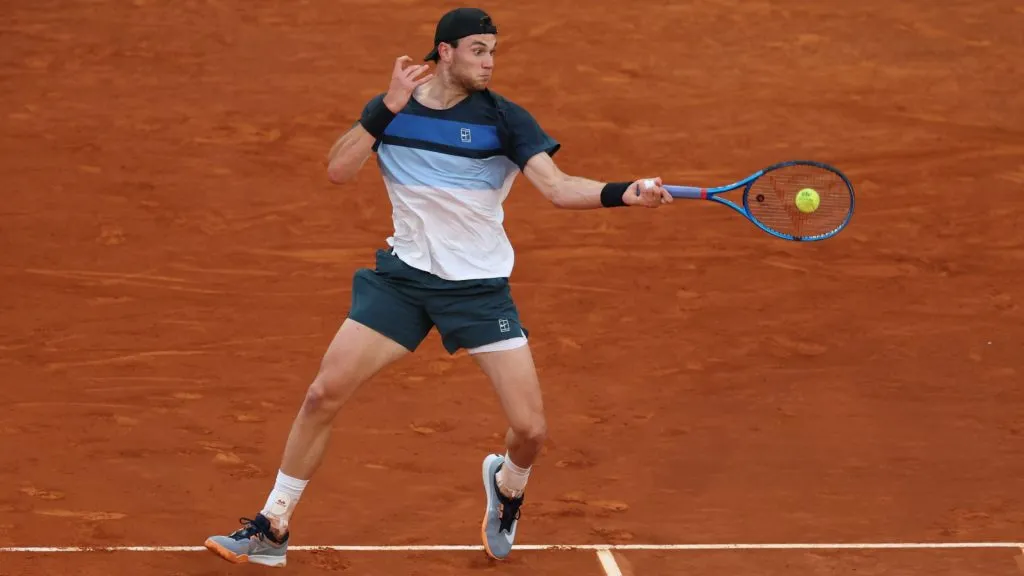
Jack Draper of Great Britain plays a return during his Madrid Open semifinal match against Lorenzo Musetti of Italy. (Clive Brunskill/Getty Images)
The 23-year-old Brit also expressed hope that the ATP and tournament organizers might revise the schedule to allow more recovery and training time for players. “[It’s] something that I hope the ATP and tours come together on at some point to clean up the calendar and create more space for us to train and work on our bodies,” he said.

Crowded schedule may impact tennis quality
Draper warned that the condensed schedule could lead to a decline in tennis quality as players struggle to deliver consistent performances due to fatigue. “For me, the big issue is that the quality can suffer. A lot of top players are inconsistent, and it’s purely because of overplaying,” he explained.
“People watching on TV might think, ‘That was a bad performance,’ but it’s mentally exhausting to show up every day and give 100%. We’re not robots—we have lives off the court, too,” Draper added.
What did Alcaraz and Tsitsipas say about this?
Speaking at the Barcelona Open, Alcaraz stated his preference for the traditional format, arguing it benefits both players and the sport. “The one-week tournaments are better. Some might think two weeks mean rest days, but that’s not the case,” the four-time Grand Slam champion explained. “You’re training, mentally preparing, and playing—there’s no real rest. Two weeks is too much, and I think the one-week Masters 1000s are better for tennis”.
Tsitsipas was more direct in his critique, sharing his thoughts after competing in the 2024 Paris Masters. “The two-week Masters 1000s have turned into a drag. The quality has definitely dropped,” Tsitsipas posted on X (formerly Twitter). “Players aren’t getting the recovery or training time they need with constant matches and no space for the intense work off the court”.
He also described the ATP’s decision as a misstep for the sport. “If the goal was to ease the calendar, extending every 1000 to two weeks is a backward move,” Tsitsipas said. “Sometimes it feels like they’re fixing what wasn’t broken”.