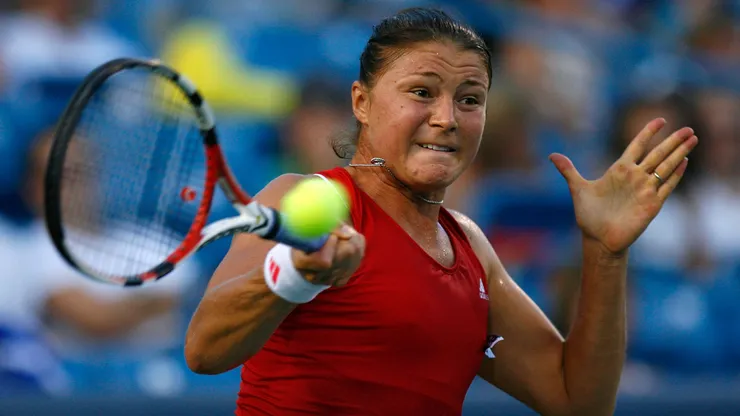
Russia has produced a wealth of tennis talent over the past few decades, with stars like Maria Sharapova, Vera Zvonareva, Elena Dementieva, Anastasia Pavlyuchenkova, and Anastasia Myskina leading the way on the women’s side. Among men, players like Yevgeny Kafelnikov, Nikolay Davydenko, Mikhail Youzhny, and Marat Safin — Dinara Safina’s older brother and a major figure in the sport — made their marks as well.
Born six years after Marat Safin, Dinara found inspiration in her brother’s success but also had tennis in her blood through her parents. Her father, Mikhail Safin, directed the Spartak Tennis Academy, while her mother, Rausa Isalanova, coached many top Russian players, including Anna Kournikova, Anastasia Myskina, Elena Dementieva, and Svetlana Kuznetsova.
Dinara turned pro at just 14 years old in 2000 and quickly made a name for herself on the WTA Tour. She captured her first singles title in 2002 in Sopot and notched a major win in 2005 by defeating Amelie Mauresmo in Paris.
Rise to the top
Her breakthrough year came in 2008, when she won four titles, reached the French Open final (falling to Ana Ivanovic), earned an Olympic silver medal in Beijing, and helped Russia capture the Billie Jean King Cup.
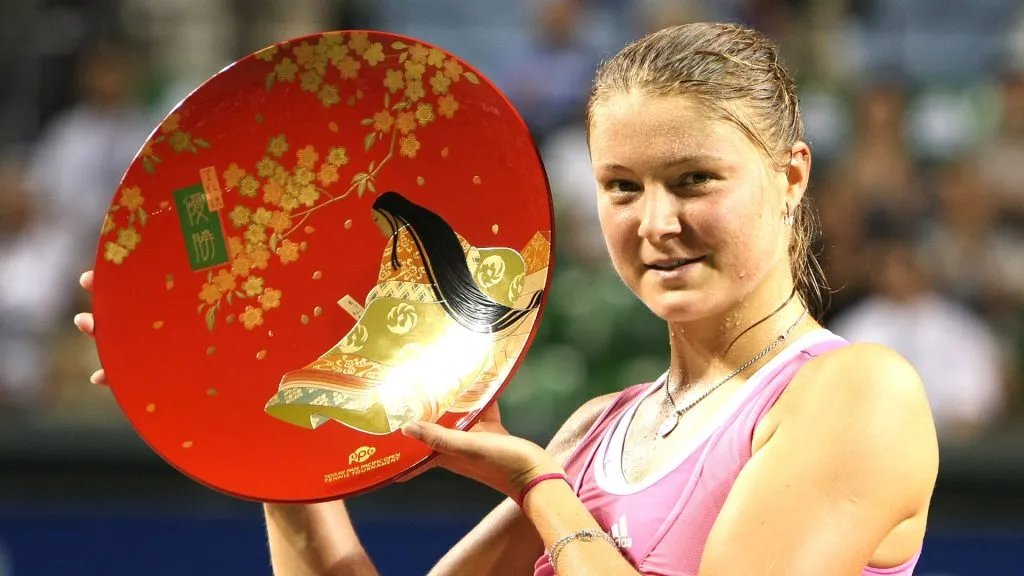
Dinara Safina of Russia holds the trophy after winning the final against Svetlana Kuznetsova of Russia during the Toray Pan Pacific Open Tennis. (Junko Kimura/Getty Images)
In 2009, Safina hit her career peak by reaching No. 1 in the world rankings. That year, she made finals at the Australian Open and French Open but fell short in both, while still claiming three singles titles. By 2010, injuries began to hamper her performance.
Safina also excelled in doubles, winning nine titles, including the 2007 US Open alongside Nathalie Dechy. She reached a career-high doubles ranking of No. 8 in 2008, and competed in doubles until 2011.
Early retirement amid physical struggles
Starting in 2009, persistent back problems and other physical ailments disrupted Safina’s consistency and limited her ability to contend for Grand Slam titles. Although she officially retired in 2014, her last professional match came in Madrid in 2011, at just 25 years old.
In a candid interview with Tennis.com, Safina revealed deeper struggles that went beyond injuries. She battled anxiety and an eating disorder that led to weight fluctuations, which affected her ability to return to peak form.
“What kept me from returning for all those years was fighting my body weight. I struggled with anxiety and an eating disorder that caused real binge eating,” Safina shared. “I was constantly overweight but could never lose it despite fighting hard. I tried different diets, but nothing worked. Playing with 30 extra pounds isn’t easy. Physically, I wasn’t the same, but people kept commenting on my weight gain and worse”.
She hopes her story sheds light on how common these battles are. “I want people to understand this can happen to anyone. Everyone has their own struggles and fears — it’s normal. Many have gone through the same, but there’s always light at the end of the tunnel,” she added.
Life after tennis
After stepping away from competition, Safina stayed connected to tennis. She worked as a liaison between the ATP and WTA for the St. Petersburg Open until the tournament ended in 2021 and participated in tennis events worldwide.
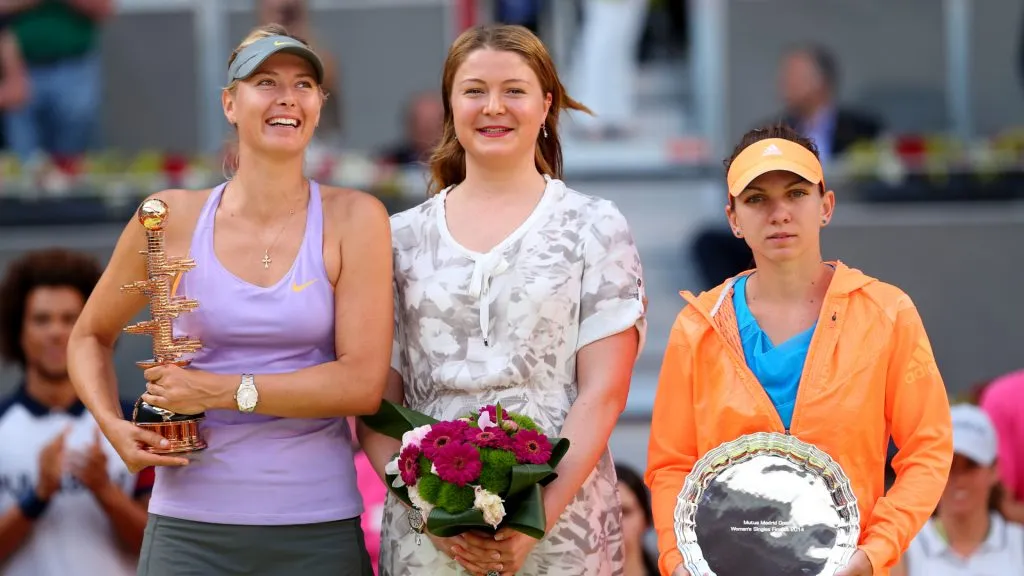
Maria Sharapova of Russia, Dinara Safina of Russia and Simona Halep of Romania hold there winner and runner up trophies after their Madrid Open final. (Clive Brunskill/Getty Images)
In 2024, she briefly coached rising Russian talent Diana Shnaider, though the partnership ended abruptly. Shnaider described the split: “It all happened spontaneously, right after the Madrid match against Iga Swiatek. Dinara told me she wouldn’t come to Rome with me. It was her decision alone. When I reached out in Rome to discuss the future and how we’d continue working, she said she no longer considered any cooperation. What can I do? It happened this way, it was Dinara’s choice, and I respect and accept that”.