Stoppage time, also known as injury time, is added to the end of each 45-minute half to compensate for minutes lost due to substitutions, injuries, and goal celebrations. The fourth official tracks these pauses meticulously using a secondary stopwatch to ensure that fans and players get a full 90 minutes of active soccer.
At the 2026 World Cup, referees have been directed to strictly calculate every second of dead time, meaning there is no official cap on how many minutes can be added. It is entirely common to see 10 to 15 minutes of stoppage time tacked onto a single half if extensive disruptions occur on the pitch.
The exact amount of added time depends heavily on VAR reviews, player injuries, and the new five-second countdown rules enforced on throw-ins and goal kicks. If players deliberately delay the game or require medical treatment, the lost time is carefully cataloged and added to the stadium scoreboard.
Why clock never stops during the match?
Soccer utilizes a continuous running clock to maintain the natural flow and traditional rhythm of the beautiful game. Unlike other American sports that feature frequent commercial breaks and constant whistles, soccer relies on the referee to account for pauses rather than stopping the main stadium clock.
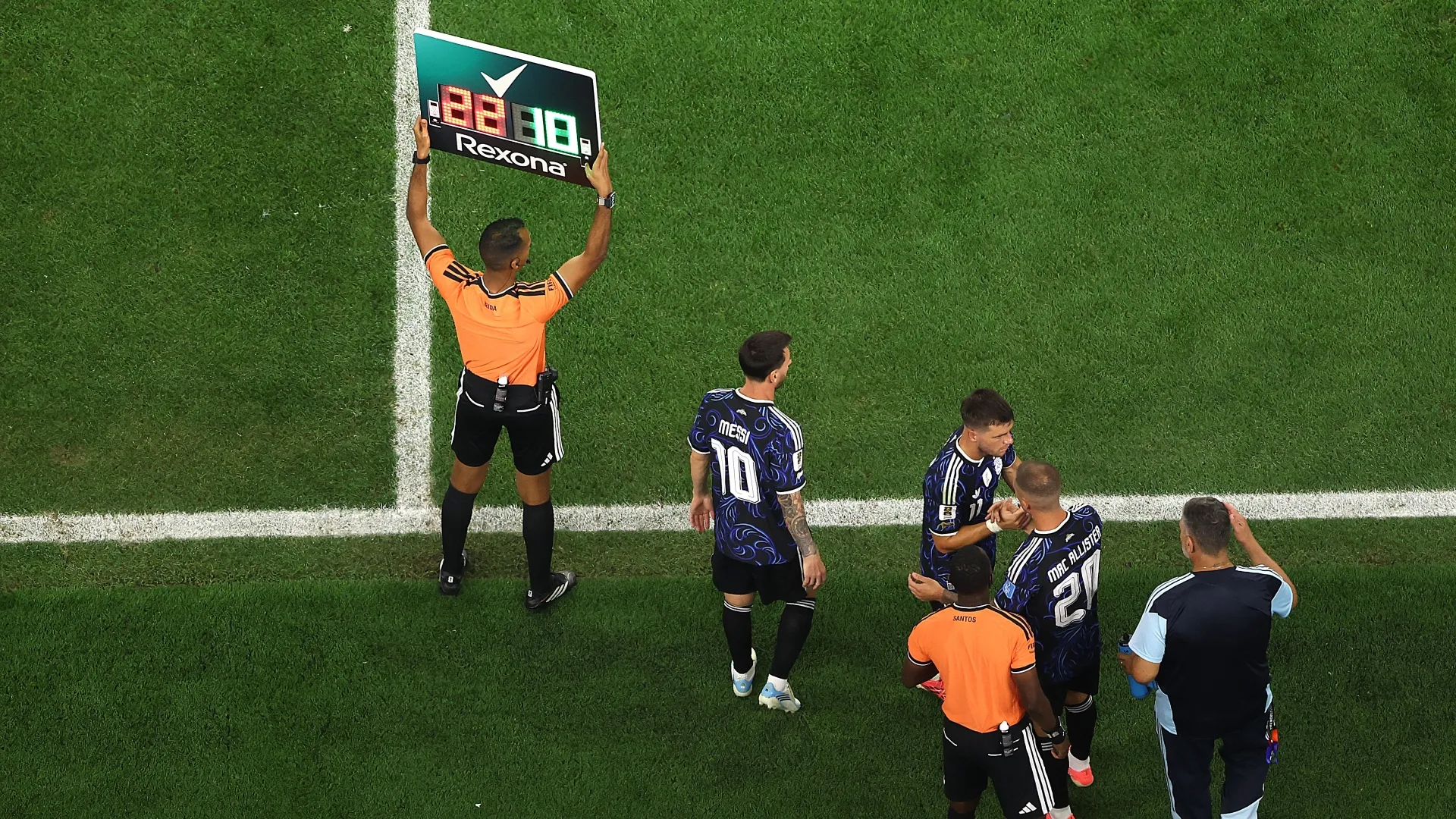
Substitutions during a World Cup match (Getty Images)
Furthermore, keeping the clock ticking forces teams to maintain a high level of conditioning and strategy without the luxury of strategic timeouts. While players might try to waste time by slowly walking off for substitutions, the referee simply tacks those seconds onto the end.
What is the longest World Cup game ever?
The record for the longest 2026 World Cup match by elapsed time belongs to France’s 3-0 victory over Iraq on June 22, 2026, in Philadelphia. A severe weather delay forced officials to suspend the match at halftime due to a dangerous lightning storm near the stadium. This unexpected safety protocol turned a standard 15-minute intermission into a grueling wait of two hours and 11 minutes before play could resume.
While severe weather delays can massively extend the real-world duration of a matchday, they are considered external interruptions and aren’t fully related to traditional stoppage time. Official soccer regulations state that a standard match length always consists of 90 minutes, plus an additional 30 minutes of extra time and a penalty shootout if a knockout game remains tied.