The 2026 Super Bowl LX halftime show became an unexpected cultural moment, with Bad Bunny commanding the spotlight at Levi’s Stadium. Early audience figures suggest his set drew more eyes than any in the event’s history.
What unfolded during those minutes on the field was both a musical showcase and a statement: a largely Spanish-language performance brimming with familiar faces and vibrant staging that left traditional halftime formulas behind.
Yet, the conversation around the show has extended well beyond ratings. NFL critics and fans alike have parsed its cultural meaning, from its artistic choices to its place in broader debates about identity and entertainment.
Did Bad Bunny’s halftime show break records?
While Bad Bunny’s Super Bowl LX halftime show delivered massive viewership, it did not break the all-time US TV audience record for a halftime performance. According to Nielsen’s Big Data + Panel ratings, the show averaged about 128.2 million viewers, placing it among the most-watched in NFL history.
However, the halftime show did set new benchmarks in other areas, including record engagement on social media and exceptionally high Spanish-language viewership on Telemundo, highlighting its broader cultural reach beyond traditional broadcast metrics.
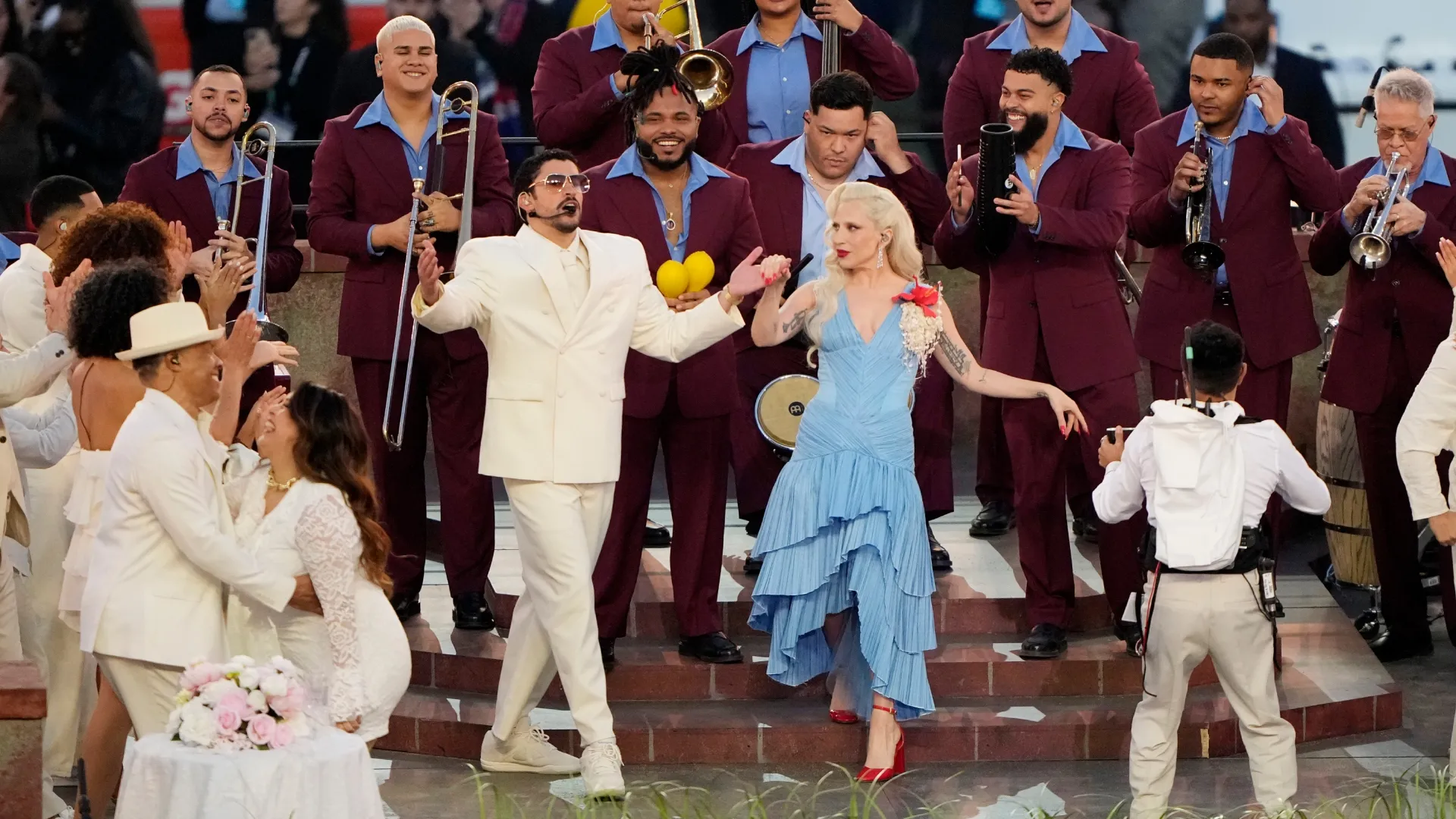
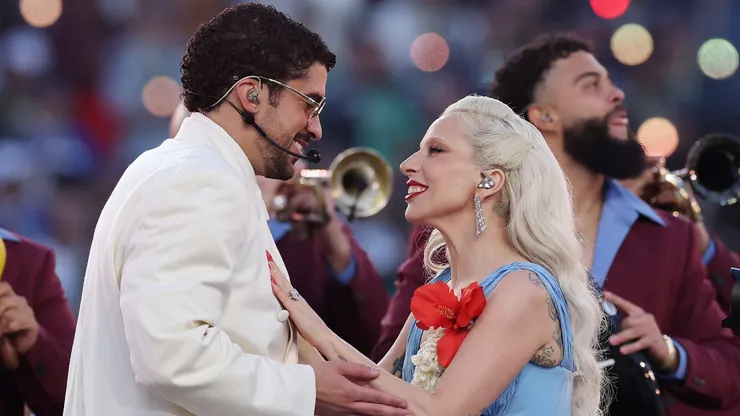
Bad Bunny and Lady Gaga during the Super Bowl LX Halftime Show (Source: Thearon W. Henderson/Getty Images)
The spectacle didn’t just edge past recent stars — it overtook longstanding standout moments from music history, including performances by Kendrick Lamar and even icons like Michael Jackson in earlier decades.
This surge reflects both the expanding global reach of the Super Bowl and the growing influence of Latin music on a worldwide stage. The Puerto Rican artist invited performers such as Lady Gaga and Ricky Martin, making the presentation even more special.
A wedding (which, surprisingly, was real), celebrity appearances at La Casita, glimpses of American flags and his Grammy wins, references to his Puerto Rican heritage and childhood — without a doubt, the show had it all.