
While the 2026 World Cup won’t be the first to feature co-hosts, it will make history as the first tournament to expand to 48 nations, with matches spread across Mexico, Canada, and the United States. With North America united under a massive soccer footprint, FIFA has entrusted these three nations with staging this unprecedented mega-event.
Qatar 2022 marked the end of an era, serving as the final World Cup to feature a 32-team field. That classic format had been the tournament standard since 1998, when host nation France ultimately captured their first world title ahead of 31 other competing countries during that memorable summer.
Between 1998 and 2022, FIFA introduced various subtle adjustments to enhance the tournament’s spectacle and competitive balance. Now, the 2026 edition brings a sweeping wave of new regulations designed to fundamentally reshape how the tournament is played, with the soccer world watching closely to see if this massive experiment sets the blueprint for the 2030 World Cup.
How many rule changes will there be at the upcoming World Cup?
There are 10 major rule changes in play when comparing the 2026 World Cup to Qatar 2022, which can be broken down into four distinct categories, and some of them are set to avoid huge referee’s mistakes. Chief among these changes is the overall tournament structure: with 48 nations now chasing the trophy, the traditional group-stage dynamic has undergone a complete overhaul.
Two structural rule changes
The 2026 field expands from 32 to 48 teams, creating 12 groups of four and introducing a brand-new Round of 32 knockout stage. Additionally, head-to-head results have officially surpassed overall goal difference to become the primary tiebreaker when separating teams leveled on points in the group stage.
The 4 anti-time-wasting rules
Officials will enforce a strict 5-second countdown on throw-ins and goal kicks. Exceeding the limit results in an automatic turnover of possession on throw-ins, or conceding a corner kick on goal kicks.
Substituted players must exit the pitch at the nearest boundary line within 10 seconds. If a player slow-walks the exit, their incoming substitute will be barred from entering the match for one full minute, forcing the team to play a man down.
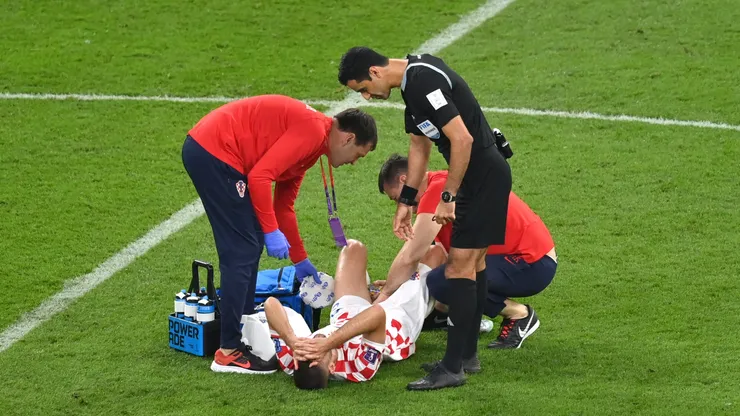
Any player receiving on-field medical attention for a minor injury must remain off the pitch for a mandatory 60 seconds before re-entering, a measure explicitly designed to prevent players from faking injuries to kill an opponent’s momentum.
Players are now legally forbidden from running to the technical area to receive tactical instructions from their managers while a goalkeeper is receiving medical treatment on the pitch.
The 2 new conduct red cards
Players who deliberately cover their mouths with their hands or jerseys during a heated confrontation with an opponent or match official will face a straight red card in an effort to eliminate hidden verbal abuse.
Any player or team official who walks off the pitch to protest an official’s decision will receive an automatic red card. Furthermore, orchestrating a full-team walk-off will result in an immediate match forfeit.
The 2 expanded VAR powers
VAR is now fully authorized to review and overturn incorrectly issued second yellow cards that lead to a sending-off. Lastly, VAR will now check obviously incorrect corner-kick awards and can look backward to penalize fouls committed prior to a set-piece if the infraction directly impacts a goal, penalty, or red card.