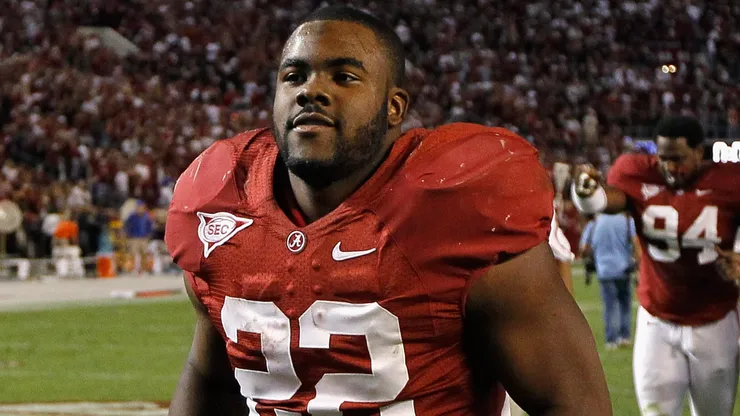
From small-town heroes to national icons, Alabama football has long been defined by those who turned Saturday afternoons into legend. Each era brought figures who carried the Tide’s weight, shaping both the game and the culture.
What started as grit on southern fields grew into a dynasty of unmatched dominance. Along the way, names etched in crimson became shorthand for excellence, their legacies stretching far beyond Bryant-Denny Stadium.
Generations of talent built more than a program, they built an identity. These players redefined positions to quiet leaders whose influence lingers and form the foundation of Alabama’s towering tradition in college football.
Don Hutson
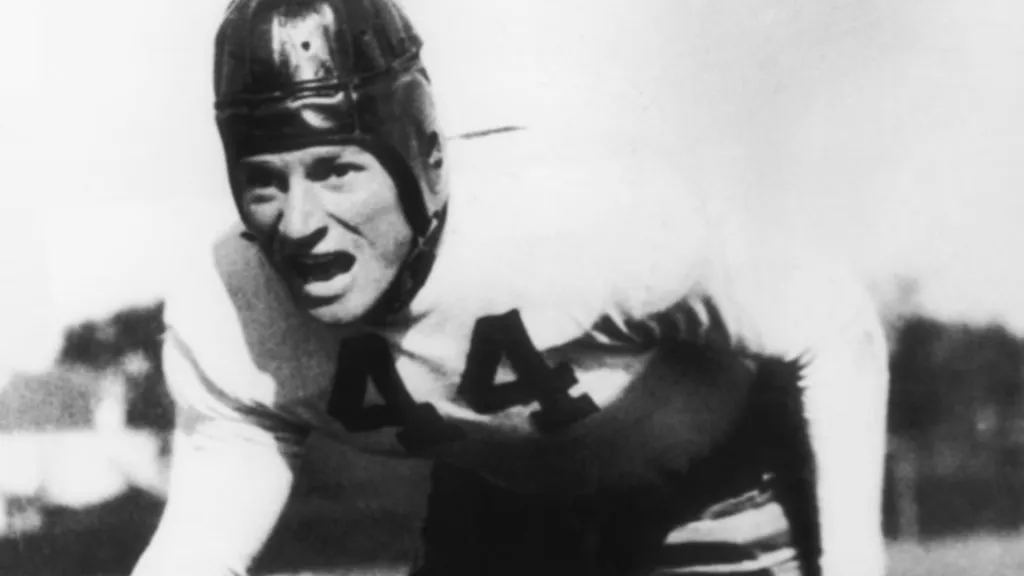
Don Hutson (Source: AL)
In an era when football was dominated by ground attacks and tight formations in the 1930s, Don Hutson was an athletic marvel who literally invented the modern wide receiver position at Alabama. With the speed of a track star, his brilliance culminated in the 1935 Rose Bowl.
In that game, which clinched the 1934 National Championship, he captivated the nation with six catches for 165 yards and two touchdowns, earning him the title of “the greatest pass-catching speed merchant end” from West Coast writers. His performance not only secured a title but laid the foundation for the passing game, foreshadowing a revolution in offensive strategy that would take decades to fully realize.
Joe Namath
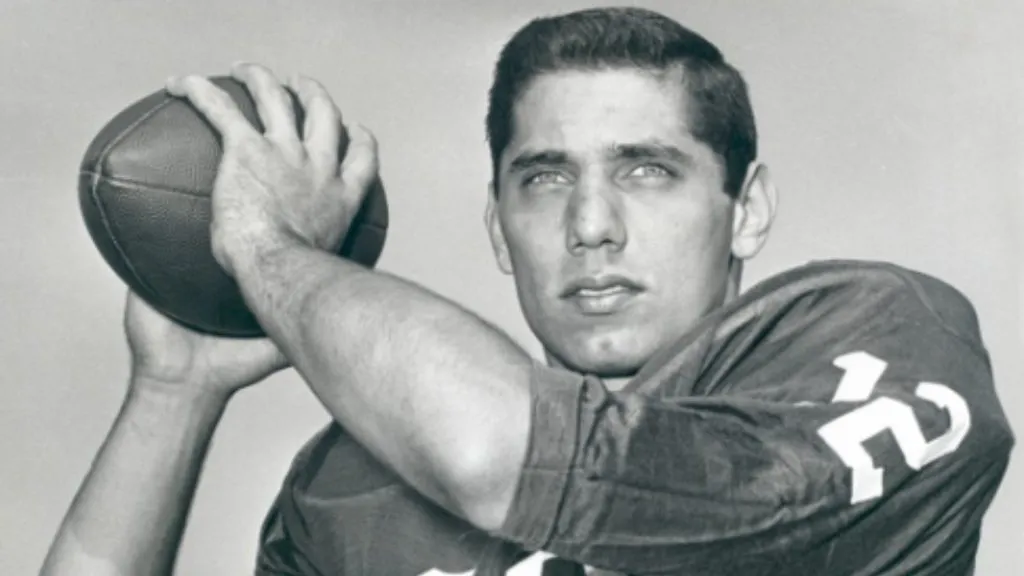
Joe Namath (Source: Encyclopedia of Alabama)
Before the white shoes and the swagger of “Broadway Joe” defined the NFL, Joe Namath was the quintessential Alabama quarterback, leading the Crimson Tide through a dominant 29−4 run under Bear Bryant from 1962 to 1964.
He brought a blend of big-city confidence and a powerful arm that was rare for the time, culminating in a National Championship in 1964. Although his career in Tuscaloosa was marked by both brilliance and the occasional injury, his impact transcended statistics.
He was the ultimate clutch performer and a celebrity playmaker who brought unparalleled star power to the quarterback position, forever elevating the profile of the Alabama program on the national stage.
Derrick Thomas
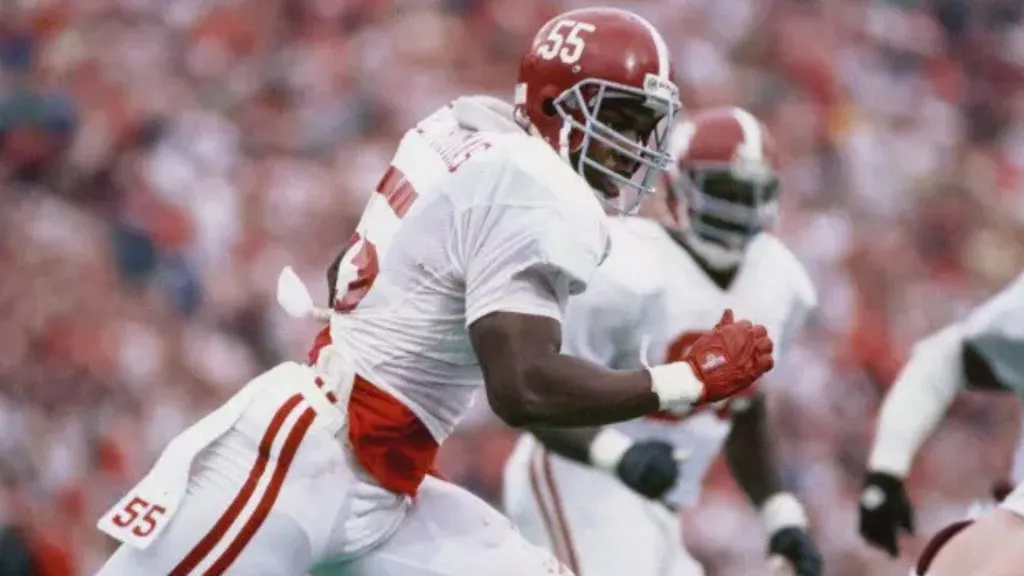
Derrick Thomas (Source: Alabama Athletics)
A ferocious and disruptive force, Derrick Thomas was the defensive nightmare of the late 1980s, becoming the gold standard for college pass rushers. As an outside linebacker, his speed and tenacity allowed him to shatter the line of scrimmage, setting an Alabama single-season record with an astonishing 27 sacks during his 1988 senior campaign.
That unparalleled dominance earned him the 1988 Butkus Award as the nation’s top linebacker and unanimous All-American honors. Upon leaving Tuscaloosa, he held the NCAA FBS career record with 52 sacks, a staggering figure that underscores his generational talent as an edge rusher and a testament to the aggressive defense that has always been a hallmark of the Crimson Tide dynasty.
DeVonta Smith
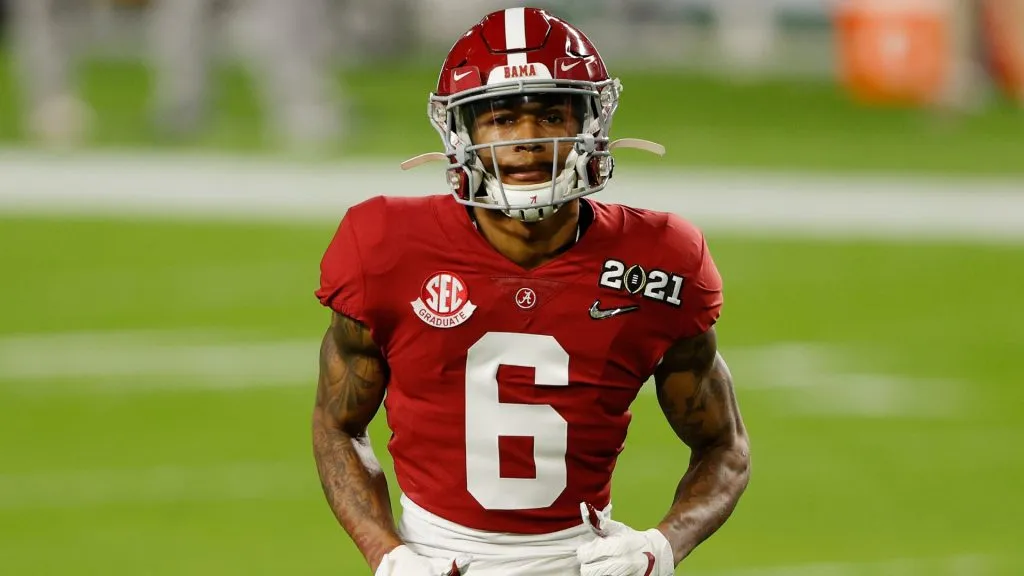
DeVonta Smith (Source: Sam Greenwood/Getty Images)
The “Slim Reaper” defied conventional wisdom about size and strength, carving out a legendary career that culminated in the ultimate individual prize for a receiver: the Heisman Trophy. DeVonta Smith‘s journey at Alabama was defined by clutch moments, from his game-winning catch as a freshman in the 2017 National Championship Game to his unstoppable senior season in 2020.
That year, he became the first wide receiver in 29 years to win the Heisman, leading the nation with 117 receptions, 1,856 receiving yards, and 23 touchdowns. He was an unguardable route runner and deep threat, who, despite his slight frame, delivered monumental production and secured two National Championships, proving that skill and elite separation trumped bulk.
John Hannah
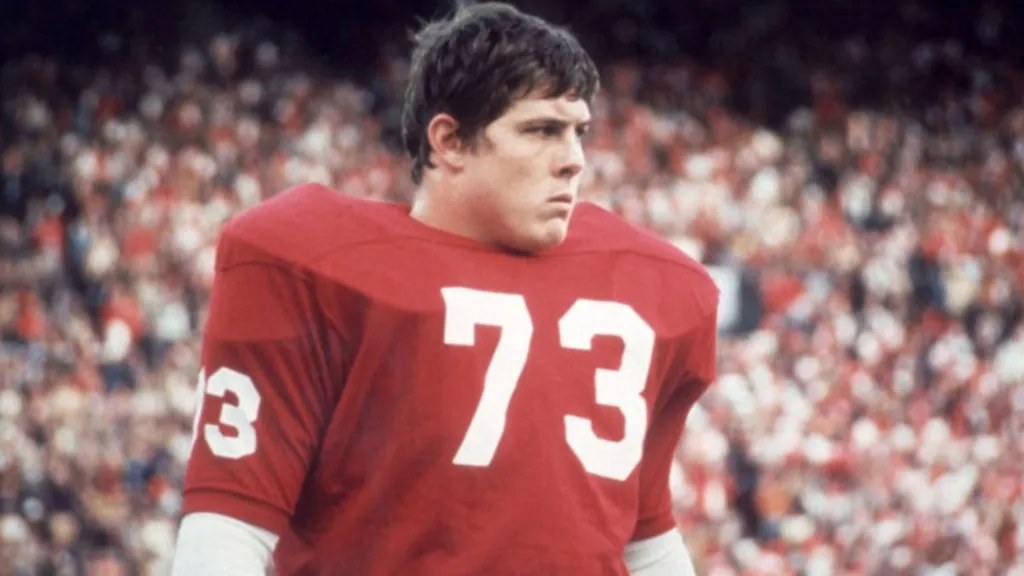
John Hannah (Source: AL)
Widely regarded as the greatest offensive lineman in the history of football, John Hannah was the pillar of strength and intensity on Alabama’s offensive line from 1970 to 1972. Bear Bryant himself called him “The finest offensive lineman I’ve ever been around”.
His athletic prowess was not limited to the trenches; he was also an SEC champion wrestler and a record-holder in track and field, a unique multi-sport background that fueled his explosive technique.
He earned Consensus All-American honors in 1972 and captured the Jacobs Blocking Trophy. His unmatched drive and physical domination anchored the line and established the standard of excellence for which all Alabama blockers are measured.
Ozzie Newsome
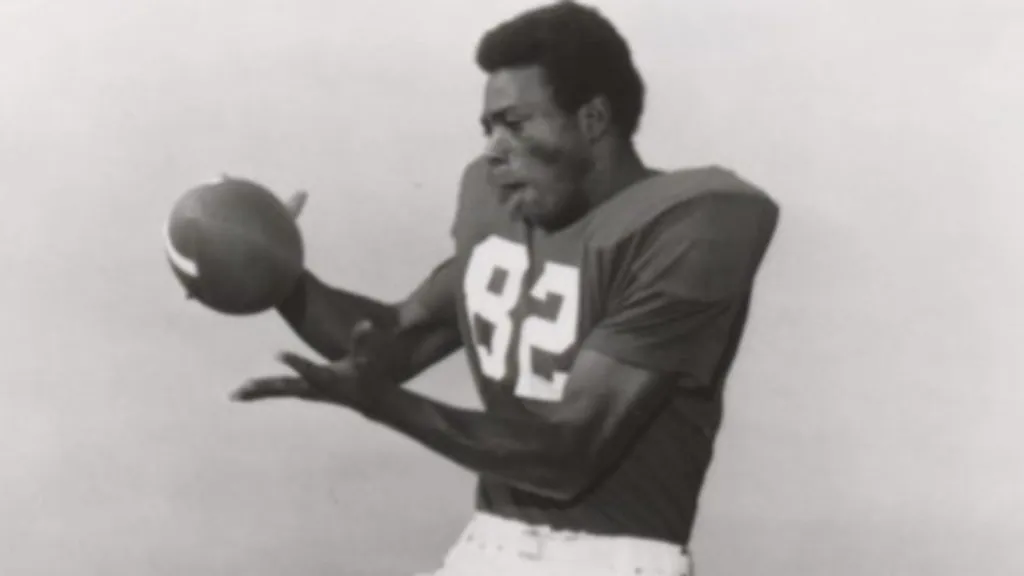
Ozzie Newsome (Source: Encyclopedia of Alabama)
A versatile weapon who redefined the “end” position, Ozzie Newsome‘s impact was so profound that Bear Bryant once called him “the greatest end in Alabama history, and that includes Don Hutson”. As a four-year starter from 1974 to 1977, he was a relentless playmaker, finishing his college career with 102 receptions for 2,070 yards.
His stunning 20.3 yards per catch average stood as an SEC record for over two decades, showcasing his ability to turn routine catches into explosive gains. A Consensus All-American in 1977 and a two-time All-SEC selection, he was the catalyst for three SEC Championship teams, seamlessly transitioning from a dynamic receiver to a legendary foundational figure of the modern game.
Shaun Alexander
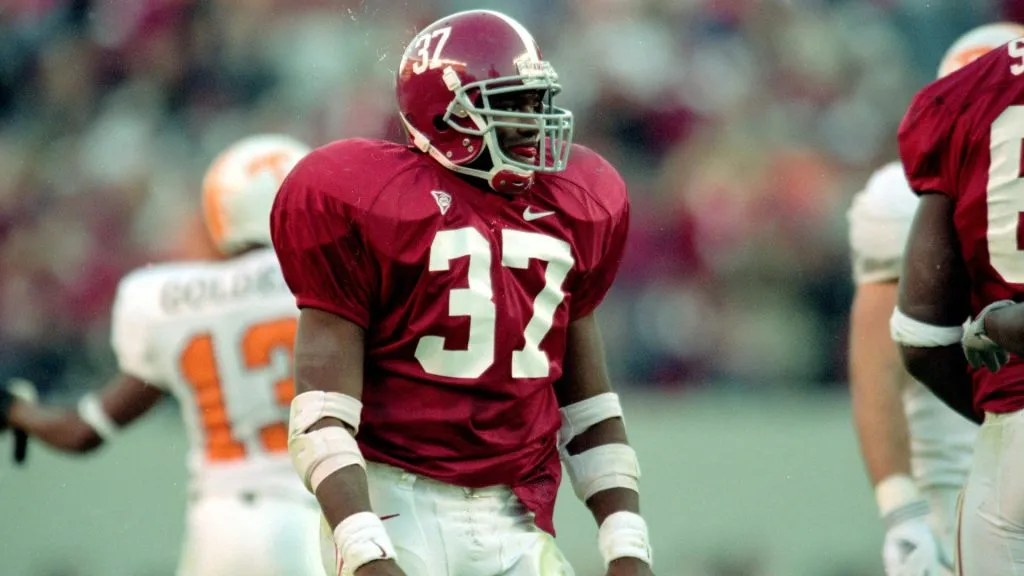
Shaun Alexander (Source: Elsa Hasch /Allsport)
Shaun Alexander was the powerful, versatile engine of Alabama’s backfield in the late 1990s, blending speed, vision, and touchdown production. His career in Tuscaloosa was highlighted by his All-American and SEC Player of the Year selection in 1999, but he made a singular statement earlier in his career by setting the Alabama single-game rushing record with a massive 291 yards—a mark that still stands today.
His legacy of elite production at the college level is literally honored annually, as the award given to the top freshman player in college football bears his name, underscoring his lasting importance to the sport’s history.
Bart Starr
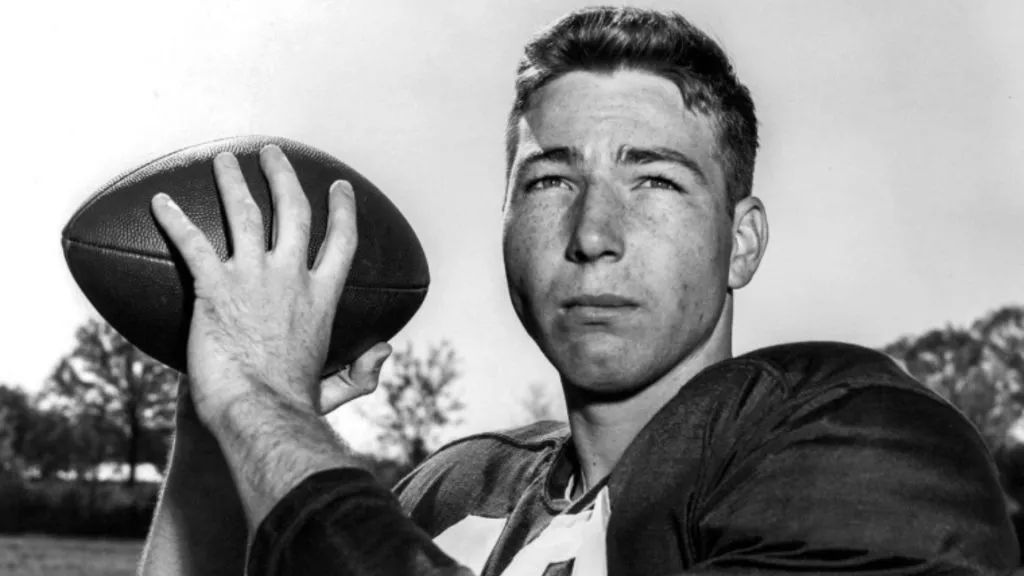
Bart Starr (Source: Encyclopedia of Alabama)
The name Bart Starr is synonymous with five NFL championships, but the roots of his quiet, cerebral leadership were firmly planted at Alabama in the 1950s. A quarterback during a tumultuous, pre-dynasty period for the Tide (1952–1955), his time in college was not defined by championships, but rather by the sheer resilience and precision that would later make him a legend.
Though he didn’t receive All-American honors, he served as a foundation stone for the program, embodying the grit and toughness that Bear Bryant would demand from all his players, paving the way for the quarterback excellence that followed for generations.
Derrick Henry
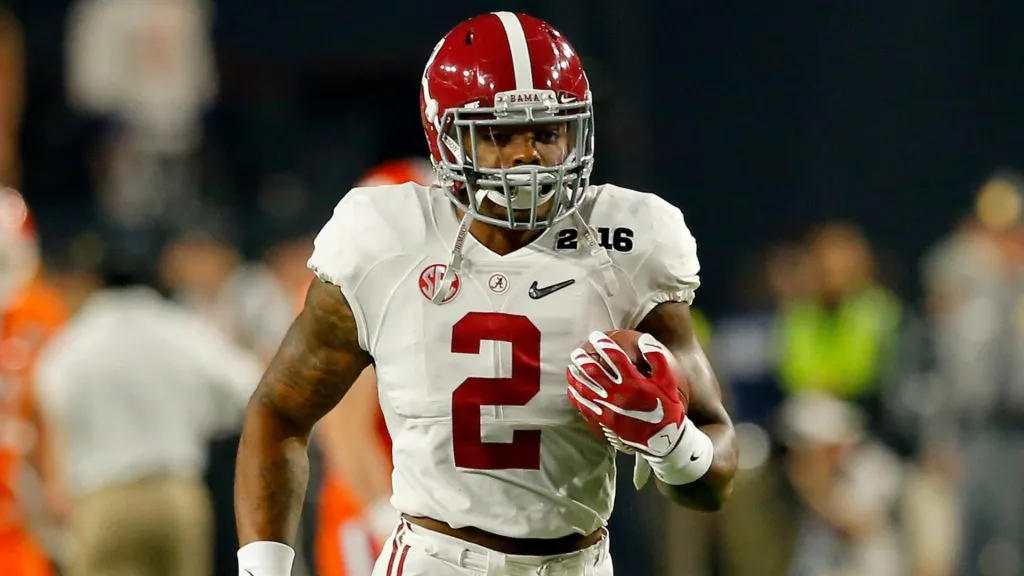
Derrick Henry (Source: Kevin C. Cox/Getty Images)
A physical outlier even among elite college running backs, Derrick Henry was a 250-pound freight train who shattered records and carried Alabama to a National Championship in 2015. His 2,219 rushing yards that season broke Herschel Walker’s long-standing SEC single-season record, while his 28 rushing touchdowns set a new conference mark.
His sheer dominance, particularly his historic 46-carry, 271-yard performance against Auburn, culminated in him becoming the second Alabama player to win the Heisman Trophy that year. He stands alone in football history as the only player to rush for over 2,000 yards in a single season at the high school, college, and professional levels.
Lee Roy Jordan
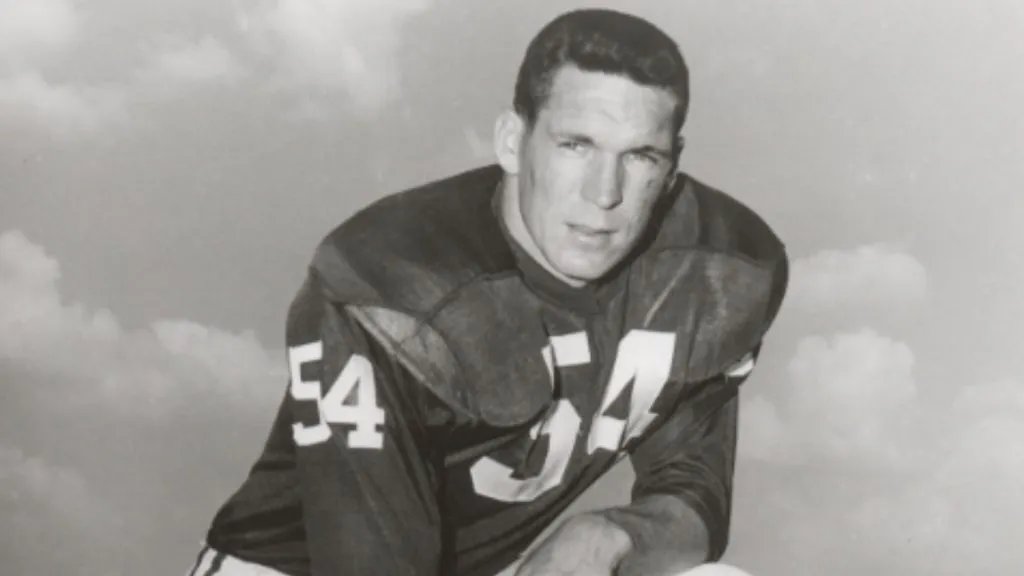
Lee Roy Jordan (Source: Encyclopedia of Alabama)
The spiritual and defensive leader of Bear Bryant’s first national championship team, Lee Roy Jordan set the tone for the relentless, physical defense that became the hallmark of the 1960s dynasty.
Playing center and linebacker, Jordan was the engine of a 1961 squad that went undefeated, allowing no opponent to score more than seven points in a single game.
His senior season was capped by a monumental performance in the 1963 Orange Bowl, where the unanimous All-American captain recorded a legendary 30 tackles in a 17−0 shutout victory over Oklahoma, cementing his status as one of the most dominant defenders in program history.
Cornelius Bennett
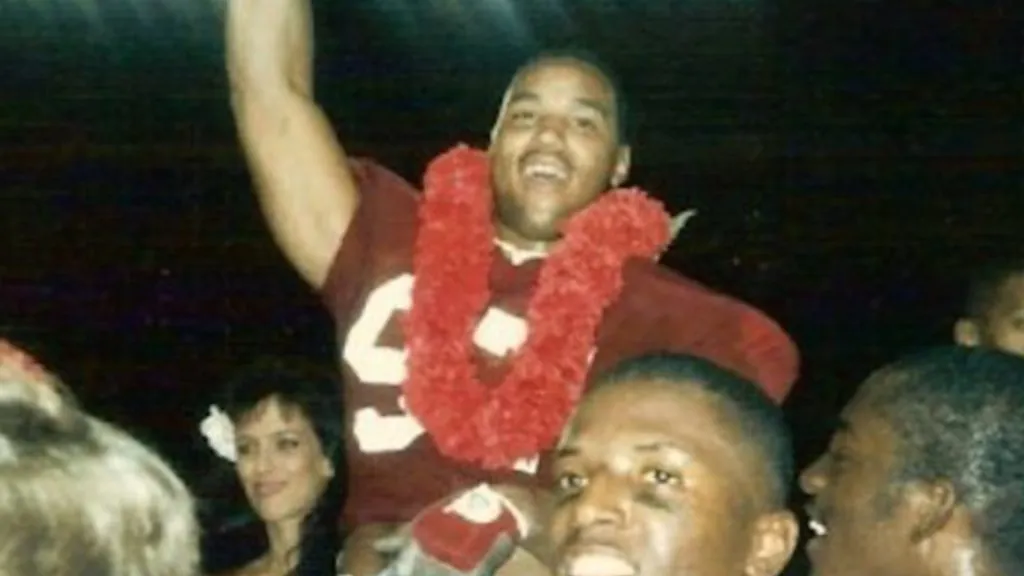
Cornelius Bennett (Source: Touchdown Alabama)
A three-time First-Team All-American, Cornelius Bennett was a prototype of the modern outside linebacker—fast, powerful, and utterly relentless against both the run and the pass. He was the anchor of Alabama’s defense in the mid-1980s and remains one of the most decorated defensive players the Tide has ever produced.
As a senior in 1986, he earned the Lombardi Award as the nation’s top lineman and finished seventh in the Heisman Trophy voting, a rarity for a defensive player. Selected second overall in the 1987 NFL Draft, his combination of elite athleticism and consistent production cemented his reputation as Alabama’s Player of the Decade for the 1980s.
Mark Ingram Jr.
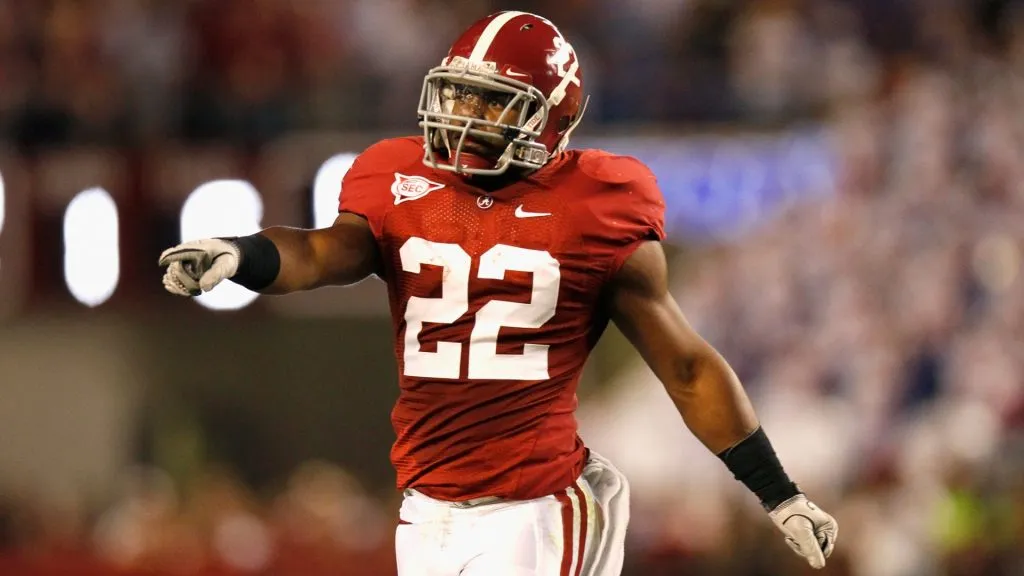
Mark Ingram (Source: Kevin C. Cox/Getty Images)
Mark Ingram Jr. didn’t just win the Heisman Trophy in 2009; he reignited the Alabama dynasty. By claiming the award, Ingram became the first player in Crimson Tide history to win the Heisman, shattering a nearly eight-decade barrier and immediately establishing Alabama as a destination for the sport’s elite offensive talent.
The sophomore running back rushed for 1,658 yards that season and, critically, capped his historic run by earning Offensive MVP honors in the 2010 BCS National Championship Game, leading Alabama to their first national title in 17 years and serving as the crucial bridge between the program’s past glory and its unprecedented future under Nick Saban.
Tua Tagovailoa
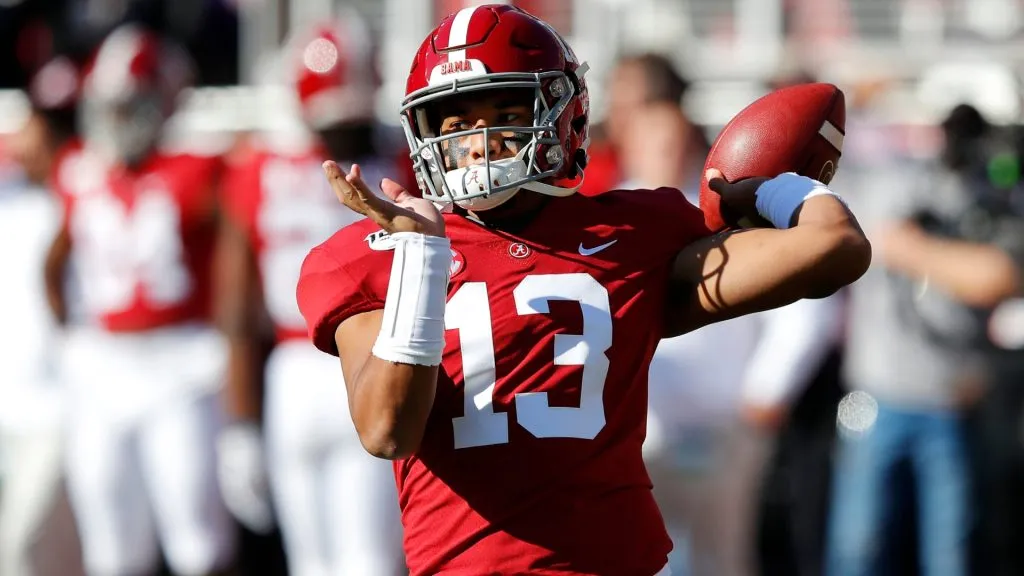
Tua Tagovailoa (Source: Kevin C. Cox/Getty Images)
The moment the current dynasty truly ascended is forever encapsulated by Tua Tagovailoa‘s 41-yard, game-winning touchdown pass in overtime of the 2018 College Football Playoff National Championship—a play he executed as a true freshman reserve.
He quickly became the face of Alabama’s explosive, high-powered offense, and his 2018 season was arguably one of the most statistically efficient ever: he won both the Maxwell and Walter Camp awards, and his career passing efficiency rating of 199.4 remains an NCAA record.
Though his college career was shortened by injury, his unparalleled passing metrics and flair for the dramatic fundamentally changed the identity of the Crimson Tide offense, proving that Alabama could master both brute defense and elite aerial precision.
Julio Jones
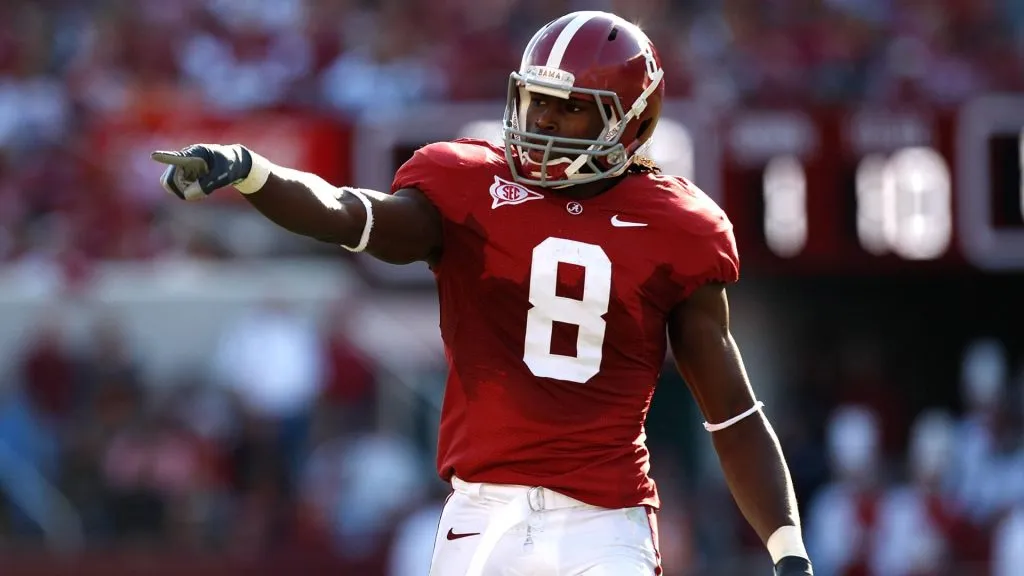
Julio Jones (Source: Kevin C. Cox/Getty Images)
A physical marvel who stepped onto the field and immediately elevated the Alabama offense, Julio Jones was the definitive alpha receiver during the earliest days of Nick Saban’s dynasty. Combining an NFL-ready 6′3″ frame with elite speed—developed through his high school state championships in the long and triple jumps—he was an instant star.
By the time he left Tuscaloosa, he ranked second in school history for career receptions and receiving yards, with his junior season culminating in First-Team All-SEC honors in 2010. His blend of size, hands, and game-breaking ability set a new ceiling for what a wide receiver could achieve in the program, quickly ushering in the modern era of high-powered Alabama passing games.
Amari Cooper
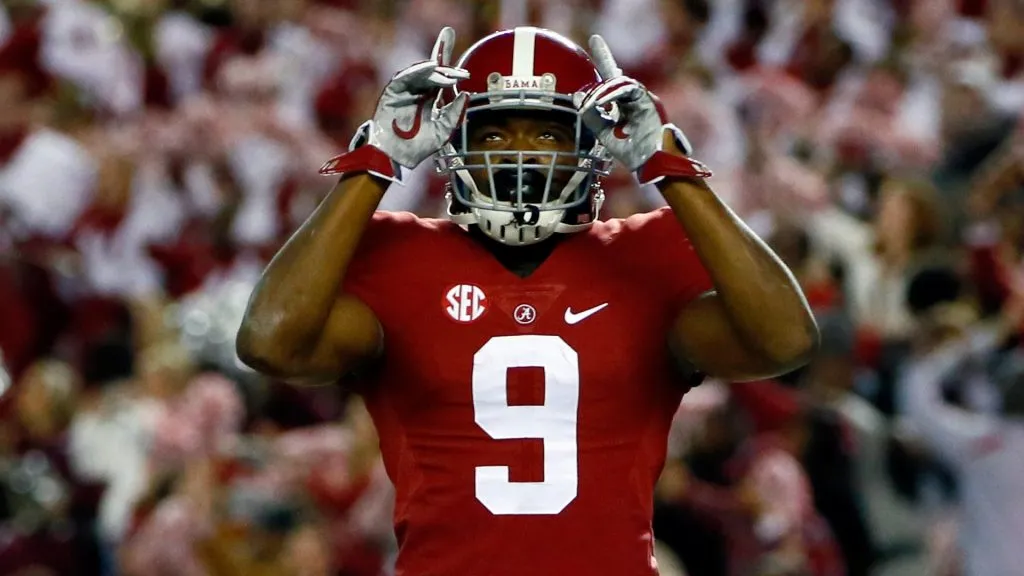
Amari Cooper (Source: Kevin C. Cox/Getty Images)
The peak of receiving precision, Amari Cooper was a record-breaking machine whose junior season performance in 2014 is one of the most statistically dominant campaigns in Crimson Tide history. That year, he won the Biletnikoff Award as the nation’s top receiver, earning unanimous All-American status and finishing third in the Heisman voting.
He established himself as Alabama’s all-time leader in receptions, receiving yards, and receiving touchdowns, completely rewriting the program’s record book in just three seasons. His route-running artistry and electric speed turned him into the most prolific pass-catcher in the history of the legendary program.
Ken Stabler
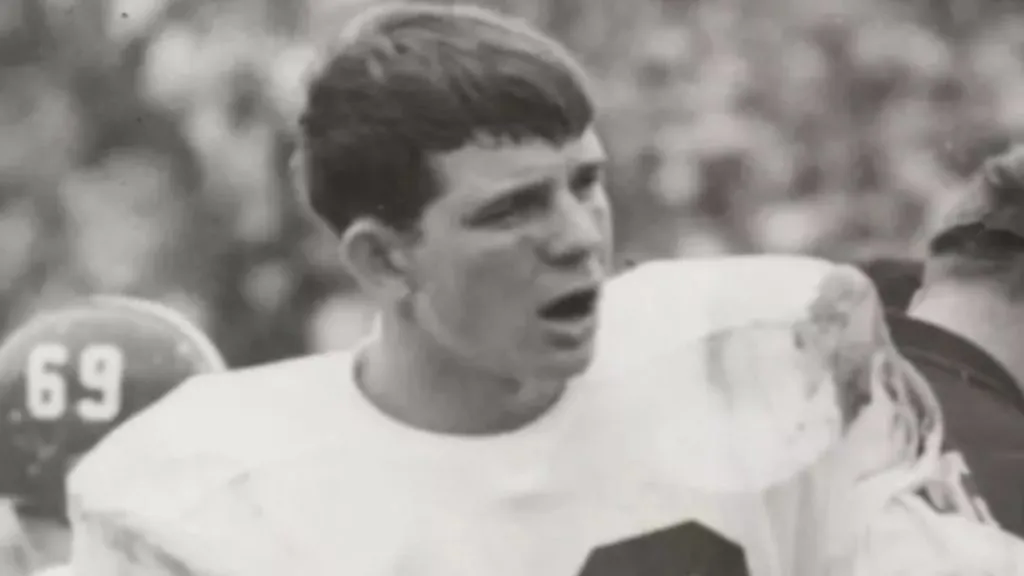
Ken Stabler (Source: Sugar Bowl)
Nicknamed “Snake,” Ken Stabler was the embodiment of cool under pressure, a clutch quarterback who directed Alabama to a National Championship in 1965 and finished his college career as a First-Team All-American in 1967.
He is perhaps most famous for his “Run in the Mud” during the 1967 Iron Bowl, a slippery 53-yard scramble for a touchdown that showcased his improvisational genius and helped seal a famous victory.
While his professional career with the Oakland Raiders defined his legend, his daring play and unconventional style at Alabama gave the Bear Bryant program a dramatic, big-play dimension that helped secure its place in the game’s elite tier.
Dwight Stephenson
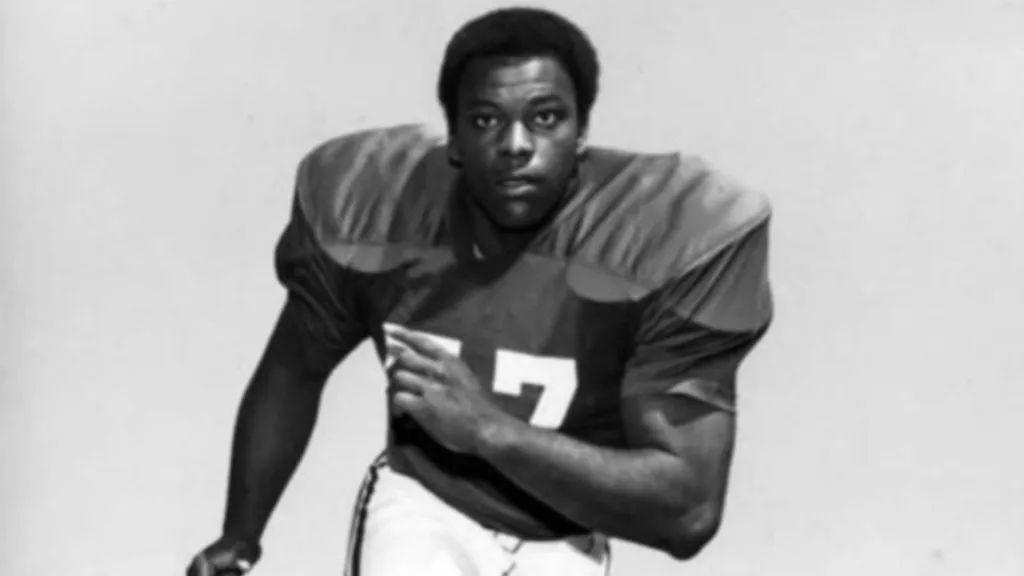
Dwight Stephenson (Source: Sports Illustrated)
Regarded by many in the NFL as the “best center to ever play,” Dwight Stephenson was the quiet, rock-solid centerpiece of Bear Bryant’s last great run of dominance. He anchored the offensive line for the Crimson Tide’s back-to-back National Championship teams in 1978 and 1979, leading the way through a remarkable 21-game winning streak.
A three-time All-SEC selection and All-American, his exceptional quickness and technique allowed him to consistently neutralize interior defensive lines. His tireless effort epitomized the selfless, winning mentality of the championship-era offensive line at Alabama.
Billy Neighbors
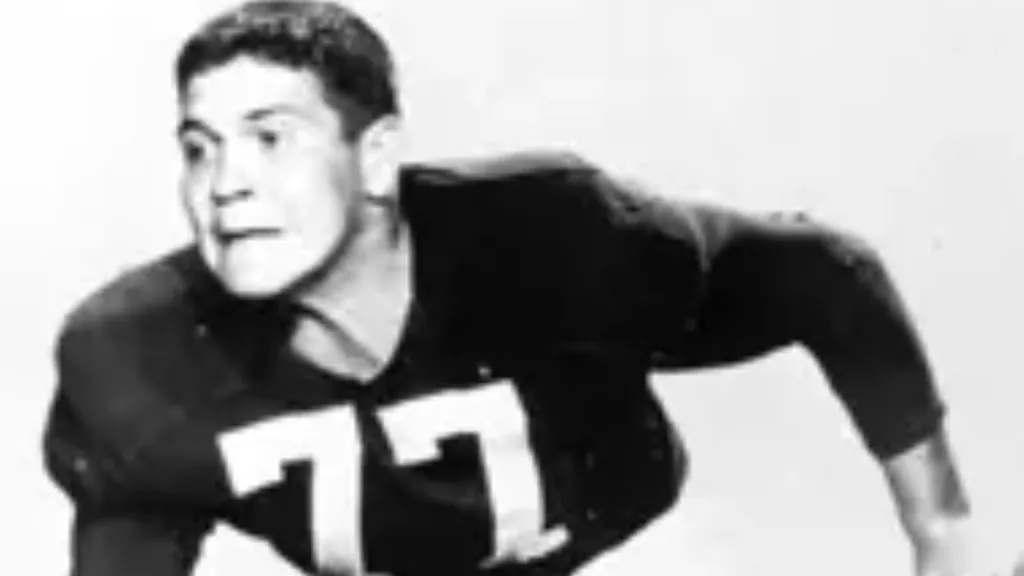
Billy Neighbors (Source: National Football Foundation)
A cornerstone of the offensive and defensive lines, Billy Neighbors was a true two-way star who captained the 1961 National Championship team—Bear Bryant’s first title at Alabama. He won the Jacobs Blocking Trophy in 1961 as the SEC’s most outstanding blocker and was named a unanimous All-American, leading an offense that powered an 11−0 season.
Crucially, he anchored a defense that only surrendered 25 points total during that perfect championship campaign, a stunning testament to the sheer physical control he helped instill on both sides of the ball for the emerging dynasty.
Chris Samuels
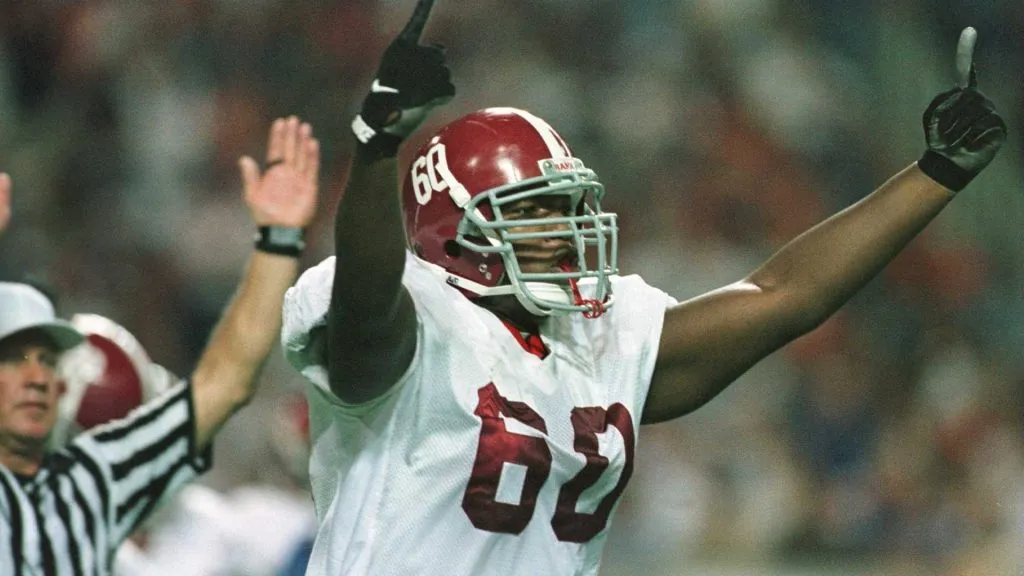
Chris Samuels (Source: Andy Lyons/Allsport)
Chris Samuels was the quintessential modern left tackle and arguably the most technically perfect offensive lineman to ever play for the Tide. A four-year starter, he famously never yielded a single sack in his 42 collegiate starts, an unbelievable measure of protection that cleared the way for running backs like Shaun Alexander.
In 1999, he was rightfully recognized as a unanimous All-American, winning both the Outland Trophy as the nation’s top interior lineman and the Jacobs Blocking Trophy. He provided the impenetrable foundation that allowed the late-90s Alabama offense to thrive.
DeMeco Ryans
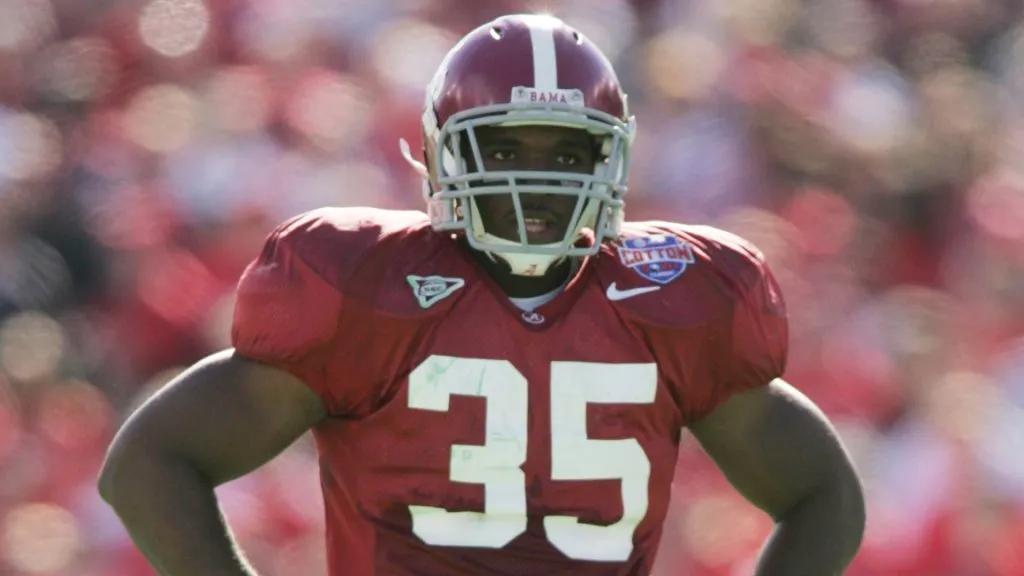
DeMeco Ryans (Source: Ronald Martinez/Getty Images)
A quintessential Nick Saban-era defensive leader, DeMeco Ryans was the commanding inside linebacker and defensive quarterback for the Crimson Tide from 2002 to 2005. He was celebrated for his intelligence, ferocious tackling, and impeccable character, which earned him the prestigious Lott Trophy in 2005 for athletic excellence and off-the-field achievement.
That season, he was also named the SEC Defensive Player of the Year and a unanimous All-American, leading Alabama to a dominant 10−2 record and a Cotton Bowl victory. His influence endures, as he transitioned his elite football mind into a top-tier NFL coaching career, a rare post-playing achievement for a Tide star.
Woodrow Lowe
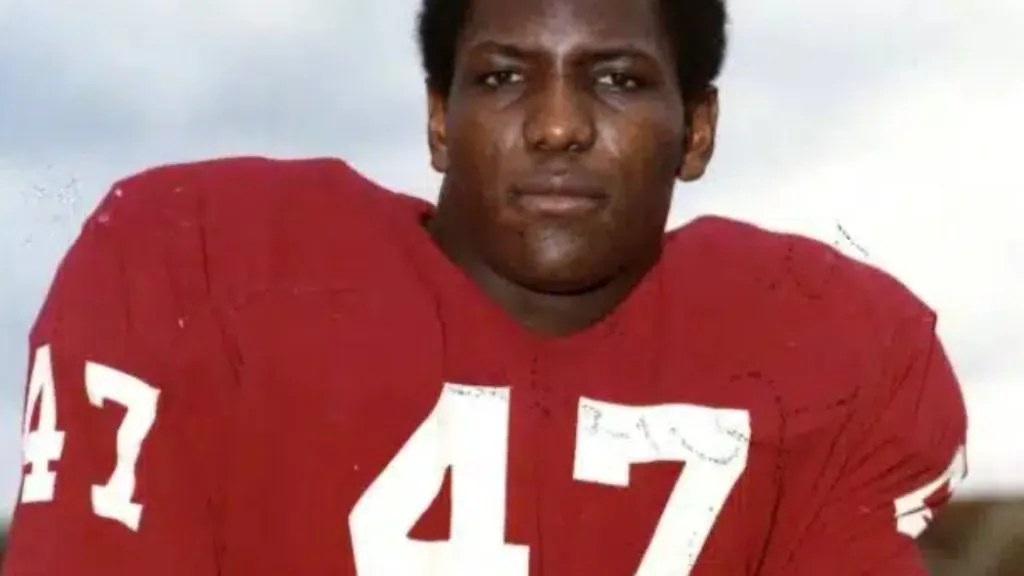
Woodrow Lowe (Source: Alabama Sports Hall of Fame)
A true symbol of defensive consistency and durability, Woodrow Lowe was one of the greatest linebackers of the Bear Bryant era, achieving the rare feat of being a three-time First-Team All-American from 1973 to 1975.
Lowe, who helped guide Alabama to four consecutive SEC titles and the 1973 National Championship, set an Alabama single-season record with 134 tackles as a sophomore. His exceptional career tackles total of 315 remains one of the highest in school history, cementing his legacy as a relentless tackling machine and a pillar of the championship defense of the mid-1970s.
Najee Harris
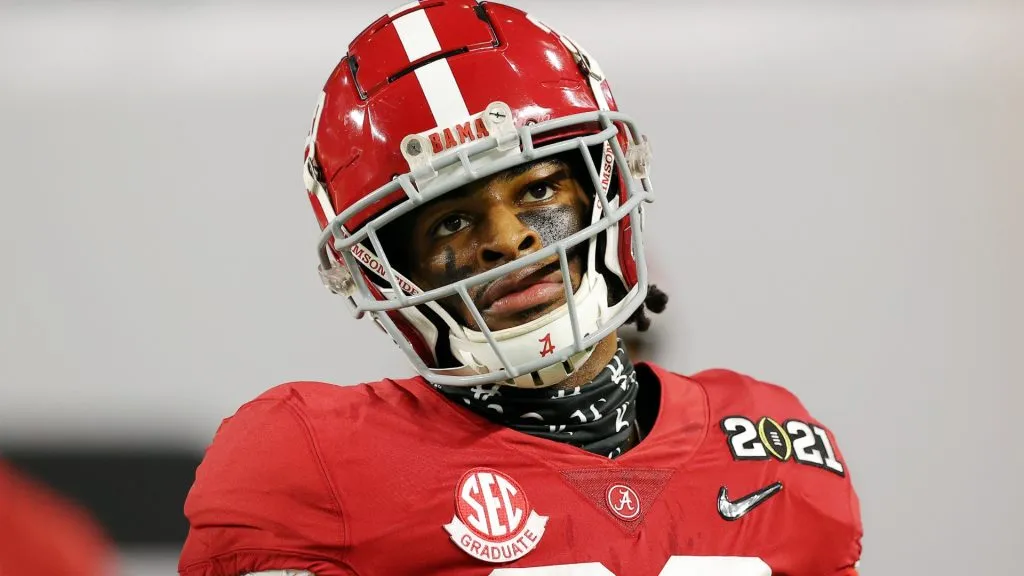
Najee Harris (Source: Kevin C. Cox/Getty Images)
Najee Harris defined the do-it-all running back role for the peak of the Saban dynasty, combining rare size and power with the agility of a receiver. By the end of his career in 2020, he had become Alabama’s all-time leader in rushing yards, total scrimmage yards and total touchdowns.
He capped his senior year with the Doak Walker Award as the nation’s best running back, a unanimous All-American selection, and a second National Championship. His signature blend of highlight-reel hurdle runs and tireless production was the final, devastating piece of one of the greatest offenses in college football history.
Barrett Jones
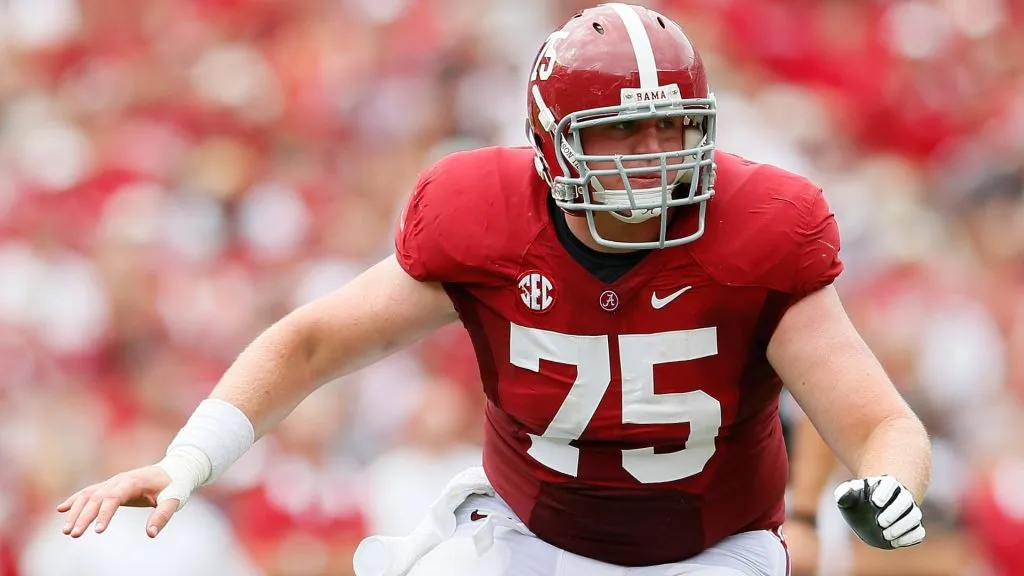
Barrett Jones (Source: Kevin C. Cox/Getty Images)
Perhaps the most versatile and intellectually decorated player of the dynasty, Barrett Jones was the ultimate anchor of the offensive line, winning three BCS National Championships while starting at three different positions: right guard, left tackle, and center.
He is the only player in history to win both the Outland Trophy and the Rimington Trophy. Beyond his unanimous All-American status, he was a rare four-time Academic All-American, graduating with a perfect 4.0 GPA and winning the prestigious William V. Campbell Trophy, showcasing unmatched excellence in athletics, academics, and community service.
Calvin Ridley
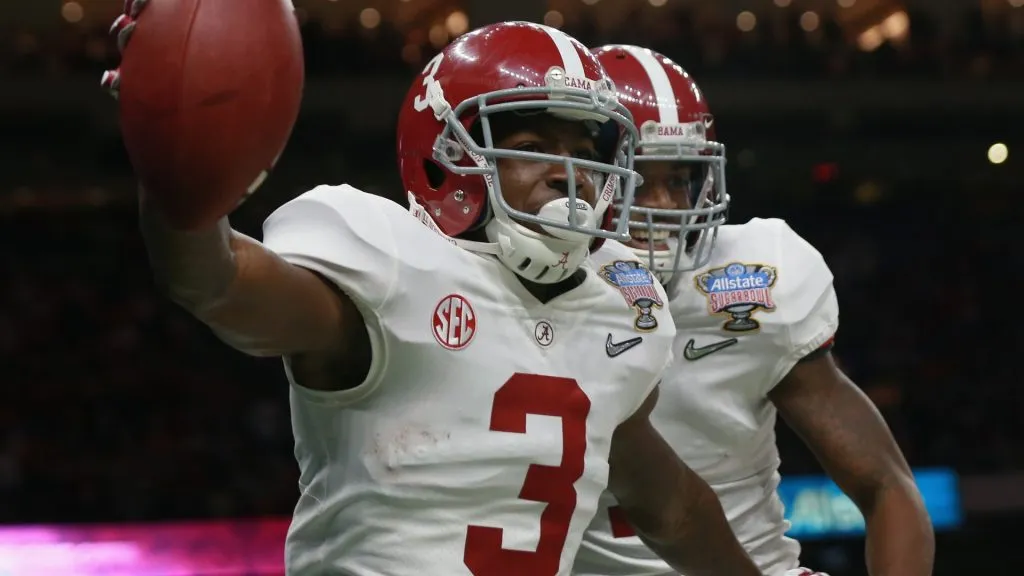
Calvin Ridley (Source: Sean Gardner/Getty Images)
Known for his smooth route running and breakaway speed, Calvin Ridley stepped in immediately following the departure of Amari Cooper to ensure the Alabama receiving corps remained elite. As a true freshman in 2015, he set the Crimson Tide single-season freshman record with 89 receptions and 1,045 yards.
He was a model of consistency, finishing his career ranked second in school history in receptions, a testament to his reliable hands and ability to create separation. He was a primary target and deep-threat presence on the 2015 and 2017 National Championship teams, consistently delivering explosive plays when the offense needed them most.
Johnny Musso
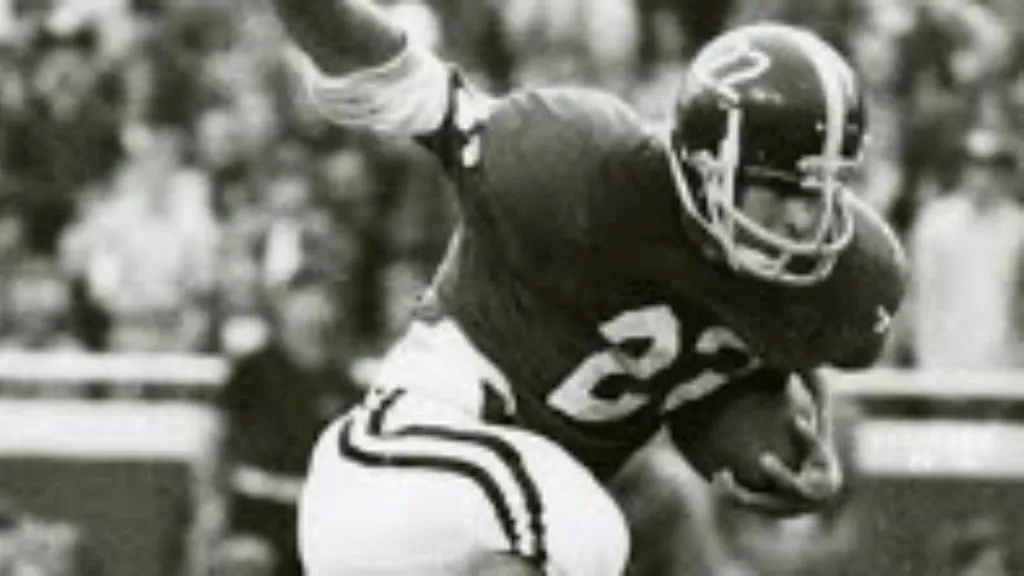
Johnny Musso (Source: Alabama Center)
Nicknamed the “Italian Stallion,” Johnny Musso was a running back icon for the Crimson Tide, leading the charge as Bear Bryant transitioned Alabama’s offense into the wishbone formation in the early 1970s. He was a two-time All-American and twice led the SEC in rushing, setting a school record with 2,741 career rushing yards that stood for 16 years.
He finished fourth in the 1971 Heisman Trophy voting and was celebrated as a National Football Foundation Scholar-Athlete, embodying the student-athlete ideal while serving as the rushing spearhead for the nascent phase of Bryant’s second championship dynasty.