Some college football programs have carved out a unique place in draft history. Producing a No. 1 pick isn’t just about raw talent — it reflects years of recruiting power, coaching stability and the ability to prepare athletes for the biggest stage.
The weight of being chosen first overall goes beyond the spotlight. For many schools, it’s a symbol of tradition, reputation and a lasting pipeline of excellence that stretches from campus fields to professional NFL glory.
Year after year, a select group of programs keeps finding its players atop the board. These schools have transformed draft night into a showcase of dominance, building legacies that stand as proof of their influence in shaping future stars.
Southern California | 6
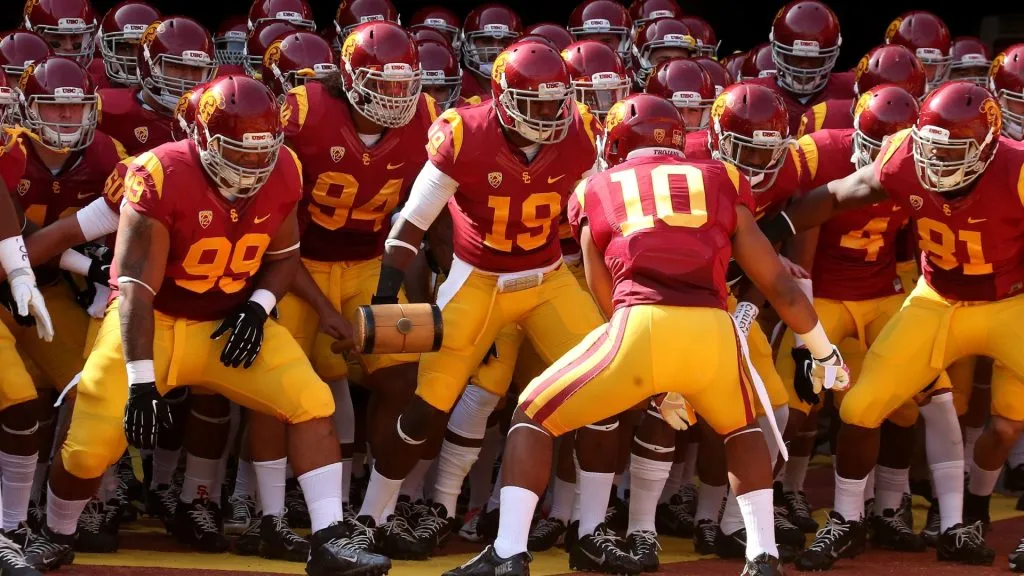
The USC Trojans get ready to run out of the tunnel for a game in 2013. (Source: Stephen Dunn/Getty Images)
USC now boasts six No. 1 overall picks in NFL Draft history — the most of any school. From Ron Yary in 1968 and O.J. Simpson’s iconic season a year later, to Keyshawn Johnson, Carson Palmer, and most recently Caleb Williams in 2024, the Trojans have consistently produced players who reach the league’s highest pedestal.
This track record reflects not just individual stars, but a program culture built on elite recruiting, big-stage coaching, and national visibility. Add in multiple Heisman winners and USC has long cemented itself as a pipeline of top-tier talent, carrying with it expectations that few other schools can match.
Georgia | 5
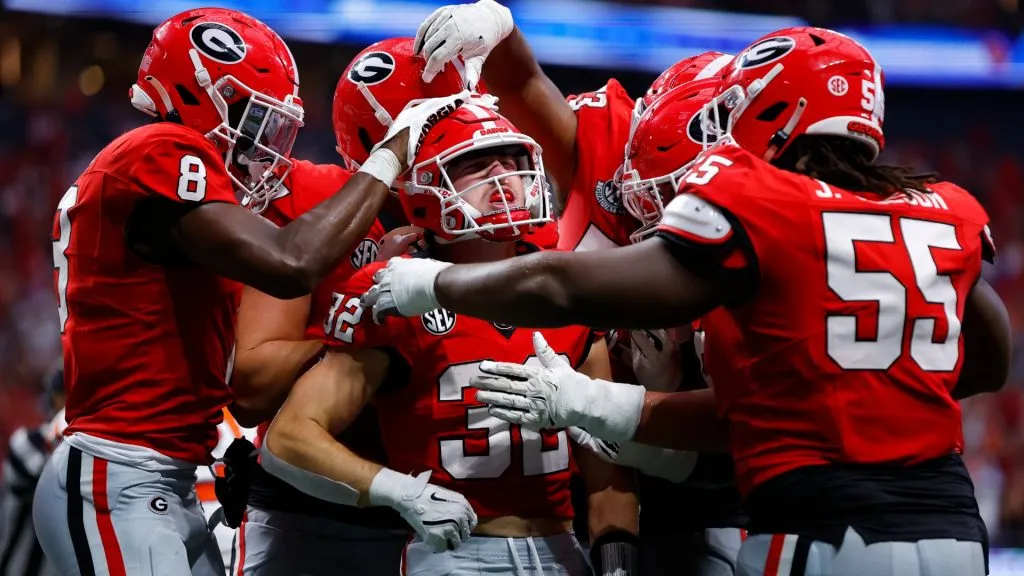
Cash Jones #32 of the Georgia Bulldogs in 2024. (Source: Todd Kirkland/Getty Images)
Georgia has produced five No. 1 picks, stretching from the early days of college football to the modern era. Frank Sinkwich (1943), Charley Trippi (1945), Harry Babcock (1953), Matthew Stafford (2009), and Travon Walker (2022) mark milestones in the Bulldogs’ legacy.
Sinkwich’s story remains remarkable: a Heisman winner who led Georgia to dominance despite playing with a broken jaw, he embodied grit as much as talent. After decades of absence, the Bulldogs returned to the top in 2009 with Stafford and again in 2022 with Walker, proof of modern recruiting power, institutional investment, and a renewed rise on the national stage.
Notre Dame | 5
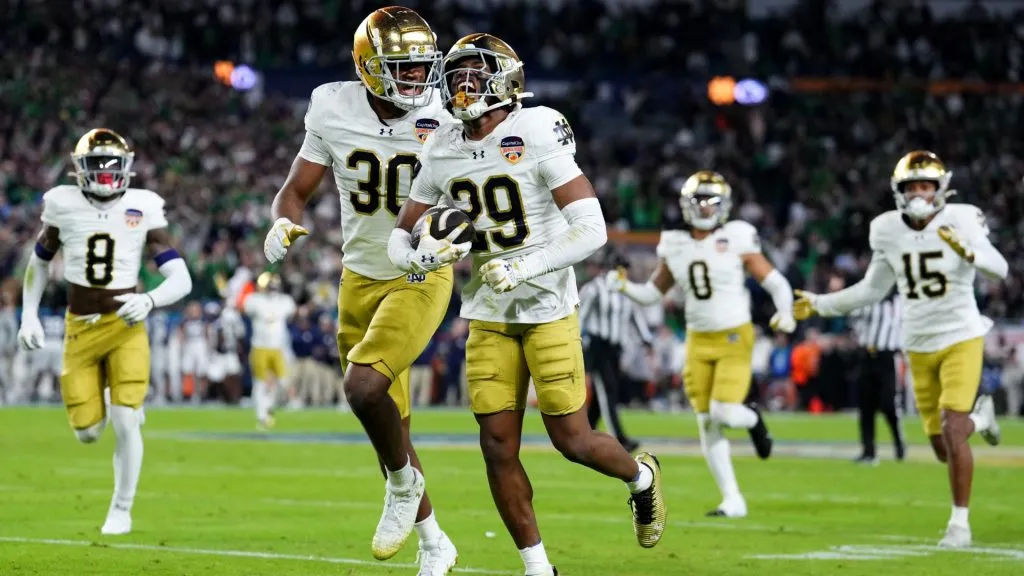
Notre Dame Fighting Irish players in 2025. (Source: Rich Storry/Getty Images)
Notre Dame has produced five No. 1 overall picks: Angelo Bertelli (1944), Frank Dancewicz (1946), Leon Hart (1950), Paul Hornung (1957), and Walt Patulski (1972). Each of these players reflects a different era in both college and professional football. Bertelli’s Heisman-winning season set a precedent for excellence, Hornung’s versatility earned him the nickname “Golden Boy,” and Hart dominated as a defensive stalwart before entering the NFL.
Though Patulski faced high expectations that proved difficult to meet in the pros, his selection marked the continuation of Notre Dame’s draft prominence. Over decades, they have maintained a reputation for producing elite talent, blending historical prestige with on-field achievements that made their athletes attractive to NFL teams.
While Notre Dame hasn’t seen a No. 1 pick since 1972, the program’s consistent presence in the first round highlights its enduring influence. With a strong recruiting pipeline and a legacy of developing professional-ready players, the Fighting Irish remain a program capable of shaping top-tier NFL talent for the future.
Oklahoma | 5
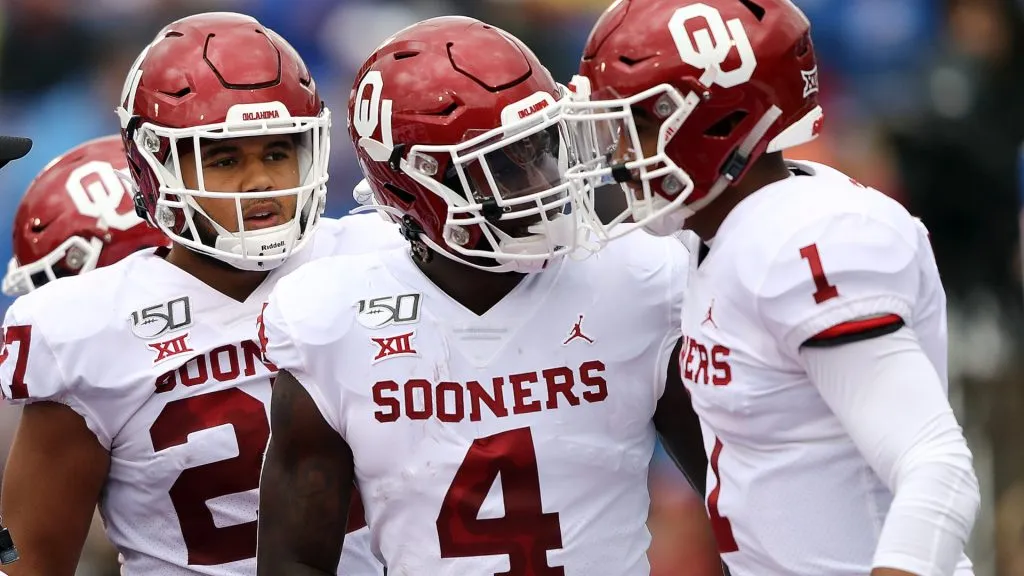
Oklahoma Sooners players in 2019. (Source: Jamie Squire/Getty Images)
Oklahoma also claims five No. 1 overall picks: Lee Roy Selmon (1976), Billy Sims (1980), Sam Bradford (2010), Baker Mayfield (2018), and Kyler Murray (2019). What sets the Sooners apart is not just frequency, but the consistency of producing leaders — particularly quarterbacks in the last 15 years.
Bradford’s rise in Norman, for instance, was punctuated by record-breaking seasons and a Heisman before going first overall in 2010. Coupled with Sims’ explosive runs and the recent quarterback wave of Mayfield and Murray, Oklahoma has proven it can adapt to different eras while maintaining its place as a modern draft powerhouse.
Auburn | 4
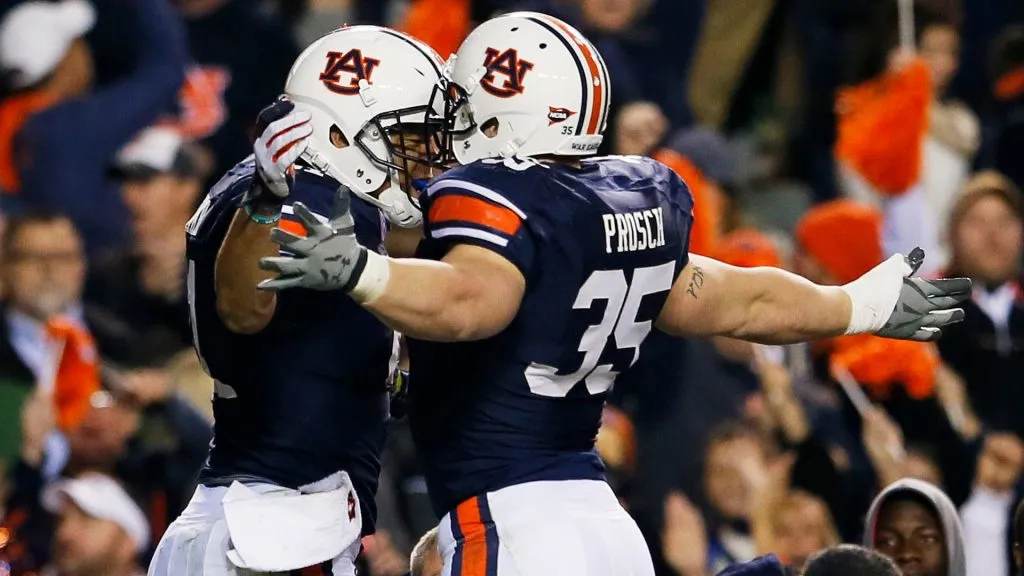
Auburn Tigers players in 2013. (Source: Kevin C. Cox/Getty Images)
Auburn’s football legacy is often remembered for grandeur, but its count of four No. 1 overall picks weaves a tale of peaks and what-ifs. The Tigers first claimed the top spot with Tucker Frederickson in 1965, then Bo Jackson in 1986 — whose blend of speed and power remains part myth. Shortly after came Aundray Bruce in 1988, expected to replicate defensive greatness, and then Cam Newton in 2011, whose perfect 14-0 season and national title led into a dramatic ascent into the NFL spotlight.
What’s striking is the intervals between picks: decades sometimes pass without top selections, yet Auburn’s moments are vivid. They combine individual brilliance with team success, leaving legacies that ripple beyond mere draft status.
Stanford | 4
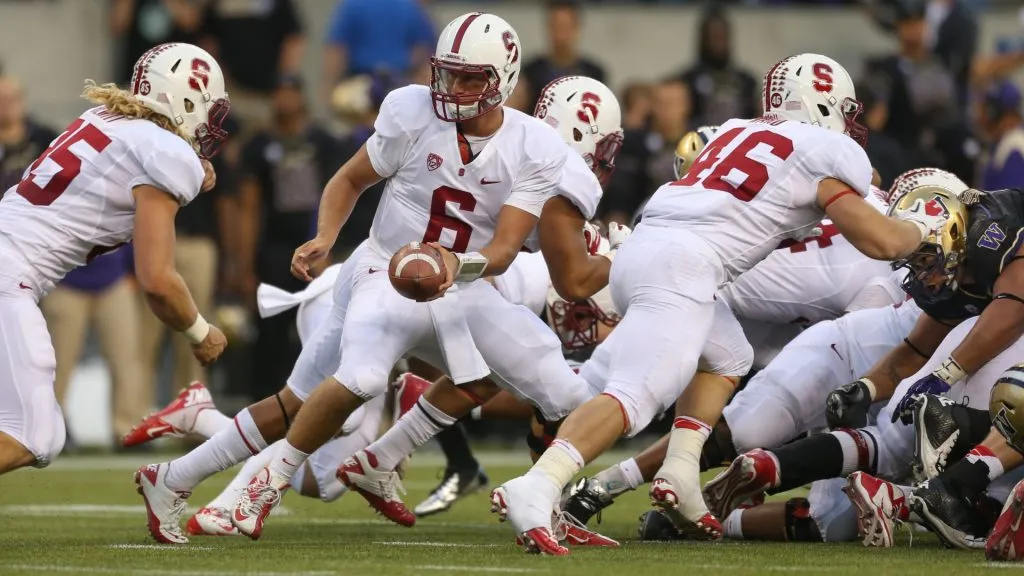
Stanford Cardinals players in 2022. (Source: Otto Greule Jr/Getty Images)
Stanford may seem more modest in overall No. 1 counts compared to some giants, but its four selections all have their own chapter of drama and expectation.
Starting in 1954 with Bobby Garrett, followed by Jim Plunkett in 1971, then John Elway in 1983, and more recently Andrew Luck in 2012 — each carry different stories. Garrett’s college dominance (including two-way play in early football eras), Plunkett’s later NFL and cultural resonance, Elway’s Hall of Fame career, and Luck’s high expectations epitomize what it means to be picked first from The Farm.
Stanford’s identity here hinges not only on raw talent but on producing quarterbacks whose careers are scrutinized on bigger stages. The Cardinal’s No. 1 picks tend to arrive with national media eyes, lofty expectations, and, in several cases, metrics that set benchmarks for what comes after collegiate success.
LSU | 3
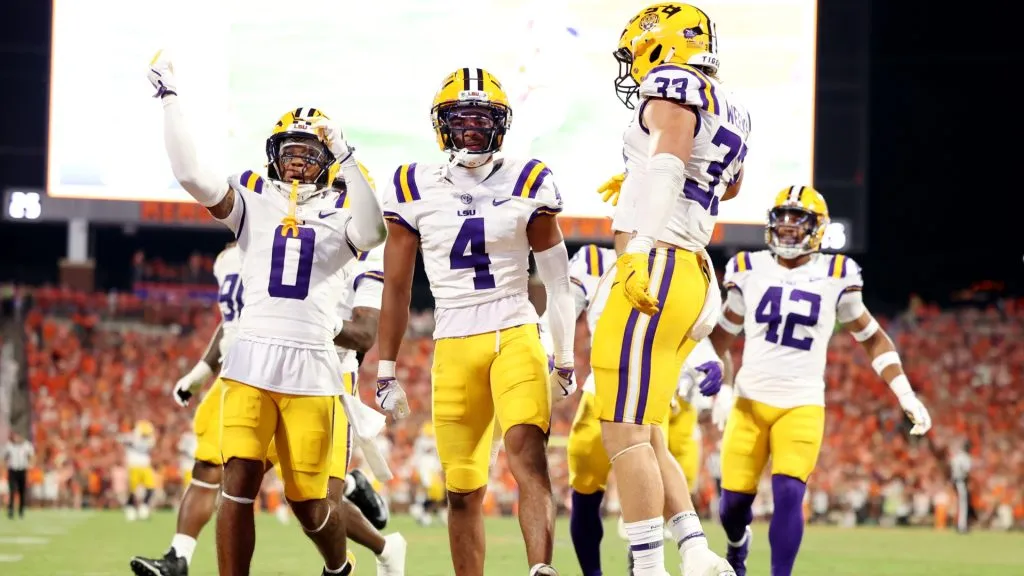
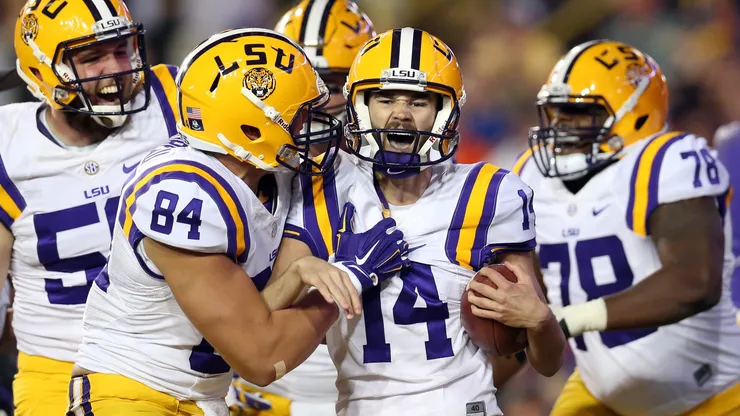
LSU Tigers players in 2025. (Source: Katie Januck/Getty Images)
LSU has had three players selected No. 1 overall: Billy Cannon in 1960, JaMarcus Russell in 2007, and Joe Burrow in 2020. Each of those picks reflects a distinct moment: Cannon’s era of bruising two-way play, Russell’s massive hype and ensuing disappointment, and Burrow’s meteoric rise culminating in a national championship and Heisman just before the draft.
LSU’s top-pick story illustrates more than raw scouting. It’s about program pressure, public expectations, and changing systems: how offense vs defense is valued, how media and recruiting shape athlete trajectories. With Burrow especially, LSU isn’t just returning to the pinnacle—it shows how a program can leverage legacy to produce modern superstardom.
Miami (Fla.) | 3
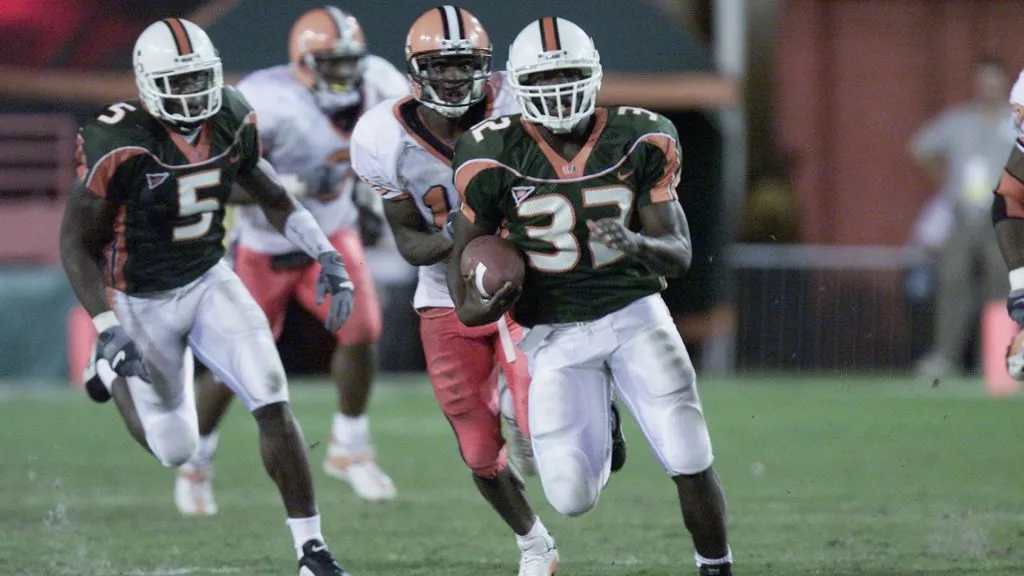
Miami Hurricanes players in 2001. (Source: Eliot Schechter/Getty Images)
Miami’s trio of No. 1 picks spread across eras and positions: Vinny Testaverde in 1987, Russell Maryland in 1991, and Cam Ward in 2025. Testaverde brought flamboyance and elite college stats; Maryland represented defensive toughness; Ward emerges amid a new chapter where quarterback evaluation combines dual-threat ability, system compatibility, and media scrutiny.
What ties them together is Miami’s reputation for producing impact players who carry not just talent but narratives. From South Florida’s recruiting pipelines to the expectations built by past legends, each No. 1 pick from “The U” comes freighted with more than just draft boards—it’s legacy, geography, hype, and stakes.
Ohio State | 3
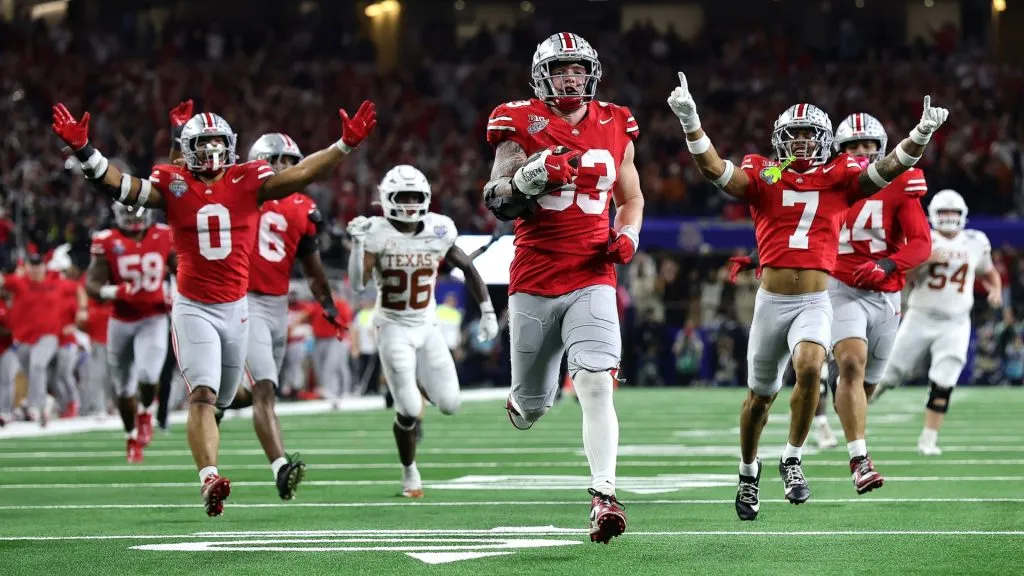
Ohio State Buckeyes players in 2025. (Source: Alex Slitz/Getty Images)
The Buckeyes stand out with three No. 1 picks: Tom Cousineau (1979), Dan Wilkinson (1994), and Orlando Pace (1997). Each selection captures different positional dominance: linebacker (Cousineau), defensive tackle (Wilkinson), and offensive tackle (Pace). Ohio State hasn’t been about just QBs or big rushing backs in that top slot—it shows strength in building elite linemen or defenders worthy of the highest billing.
Although Ohio State produces many first-round talents almost every year, having three top overall picks underscores the program’s capacity to develop players whose blend of size, athleticism, durability, and reputation compel teams to use their very first draft choice on them. It’s not always flashy; sometimes it’s the groundwork in weight rooms, coaching, and visibility that pays off.
Texas | 3
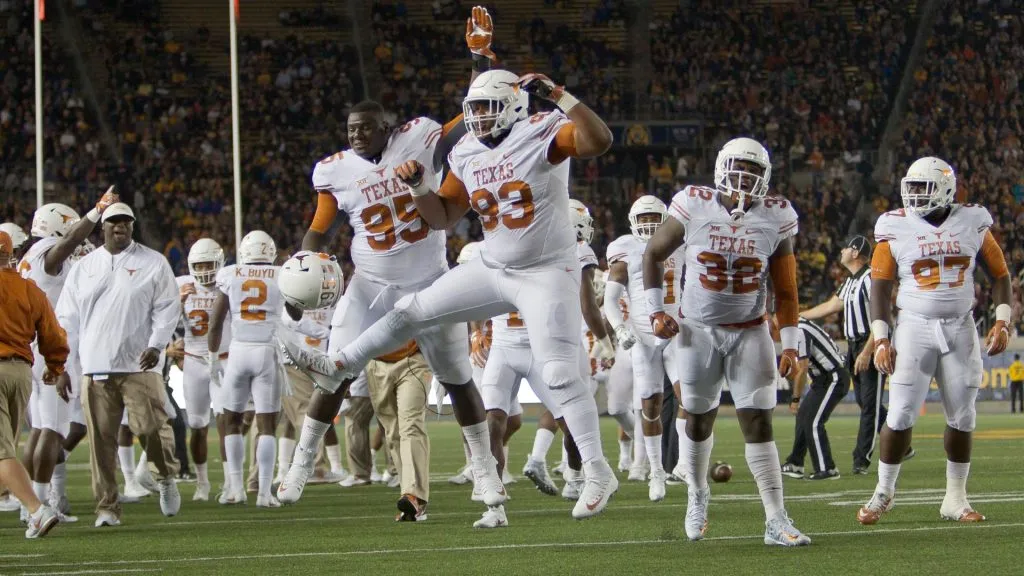
Texas Longhorns players in 2016. (Source: Brian Bahr/Getty Images)
The Longhorns boast three first overall picks as well: Tommy Nobis in 1966, Earl Campbell in 1978, and Kenneth Sims in 1982. Texas’ names reveal its strengths: Nobis as linebacker cornerstone, Campbell as one of the most brutal power backs in football history, Sims as an edge rusher/tackle from a sharp defensive front.
Texas’ era of dominance in the ’70s and early ’80s aligns with these selections. The program’s prestige, media attention, and bottleneck in high school recruiting in Texas itself made these No. 1 picks part of broader cultural narratives—not just for the school, but for state pride. Though they haven’t landed one recently, the Longhorns’ earlier picks still cast long shadows in NFL lore.
| College / Program | No. of No. 1 picks | Players (Year drafted) |
| Southern California (USC) | 6 | Ron Yary (1968), O.J. Simpson (1969), Ricky Bell (1977), Keyshawn Johnson (1996), Carson Palmer (2003), Caleb Williams (2024) |
| Georgia | 5 | Frank Sinkwich (1943), Charley Trippi (1945), Harry Babcock (1953), Matthew Stafford (2009), Travon Walker (2022) |
| Notre Dame | 5 | Angelo Bertelli (1944), Frank Dancewicz (1946), Leon Hart (1950), Paul Hornung (1957), Walt Patulski (1972) |
| Oklahoma | 5 | Lee Roy Selmon (1976), Billy Sims (1980), Sam Bradford (2010), Baker Mayfield (2018), Kyler Murray (2019) |
| Auburn | 4 | Tucker Frederickson (1965), Bo Jackson (1986), Aundray Bruce (1988), Cam Newton (2011) |
| Stanford | 4 | Bobby Garrett (1954), Jim Plunkett (1971), John Elway (1983), Andrew Luck (2012) |
| LSU | 3 | Billy Cannon (1960), JaMarcus Russell (2007), Joe Burrow (2020) |
| Miami (Fla.) | 3 | Vinny Testaverde (1987), Russell Maryland (1991), Cam Ward (2025) |
| Ohio State | 3 | Tom Cousineau (1979), Dan Wilkinson (1994), Orlando Pace (1997) |
| Texas | 3 | Tommy Nobis (1966), Earl Campbell (1978), Kenneth Sims (1982) |
| Alabama | 2 | Harry Gilmer (1948), Bryce Young (2023) |
| California | 2 | Steve Bartkowski (1975), Jared Goff (2016) |
| Michigan | 2 | Tom Harmon (1941), Jake Long (2008) |
| Nebraska | 2 | Sam Francis (1937), Irving Fryar (1984) |
| Penn State | 2 | Ki-Jana Carter (1995), Courtney Brown (2000) |
| South California | 2 | George Rogers (1981), Jadeveon Clowney (2014) |
| Tennessee | 2 | George Cafego (1940), Peyton Manning (1998) |
| Virginia Tech | 2 | Bruce Smith (1985), Michael Vick (2001) |
| Central Michigan | 1 | Eric Fisher (2013) |
| Chicago | 1 | Jay Berwanger (1936) |
| Clemson | 1 | Trevor Lawrence (2021) |
| Colorado A&M | 1 | Gary Glick (1956) |
| Florida State | 1 | Jameis Winston (2015) |
| Fresno State | 1 | David Carr (2002) |
| Illinois | 1 | Jeff George (1990) |
| Iowa | 1 | Randy Duncan (1959) |
| Indiana | 1 | Corbett Davis (1938) |
| Kentucky | 1 | Tim Couch (1999) |
| Louisiana Tech | 1 | Terry Bradshaw (1970) |
| Michigan State | 1 | Bubba Smith (1967) |
| Mississippi | 1 | Eli Manning (2004) |
| North Carolina State | 1 | Mario Williams (2006) |
| Oklahoma State | 1 | Bob Fenimore (1947) |
| Oregon | 1 | George Shaw (1955) |
| Oregon State | 1 | Terry Baker (1963) |
| Pennsylvania | 1 | Chuck Bednarik (1949) |
| Rice | 1 | King Hill (1958) |
| Southern Methodist | 1 | Kyle Rote (1951) |
| Syracuse | 1 | Ernie Davis (1962) |
| Tampa | 1 | John Matuszak (1973) |
| TCU | 1 | Ki Aldrich (1939) |
| Tennessee State | 1 | Ed “Too Tall” Jones (1974) |
| Texas A&M | 1 | Myles Garrett (2017) |
| Texas Tech | 1 | Dave Parks (1964) |
| Tulane | 1 | Tommy Mason (1961) |
| UCLA | 1 | Troy Aikman (1989) |
| Utah | 1 | Alex Smith (2005) |
| Vanderbilt | 1 | Bill Wade (1952) |
| Virginia | 1 | Bill Dudley (1942) |
| Washington | 1 | Steve Emtman (1992) |
| Washington State | 1 | Drew Bledsoe (1993) |