Atlanta’s history has been shaped by players who arrived with sharp edges, quiet certainty or raw electricity. Each era found its momentum in someone who didn’t just play well, but altered how the team carried itself on and off the field.
Some lifted the Falcons through fearless playmaking; others shifted the team’s culture simply by showing up with a different speed and discipline. Their impact lingered in locker rooms and in the city’s pulse each Sunday.
The NFL franchise’s evolution can be traced through these figures whose influence marked key turns—bold decision and improbable seasons. Their presence helped define the tone Atlanta still leans on today.
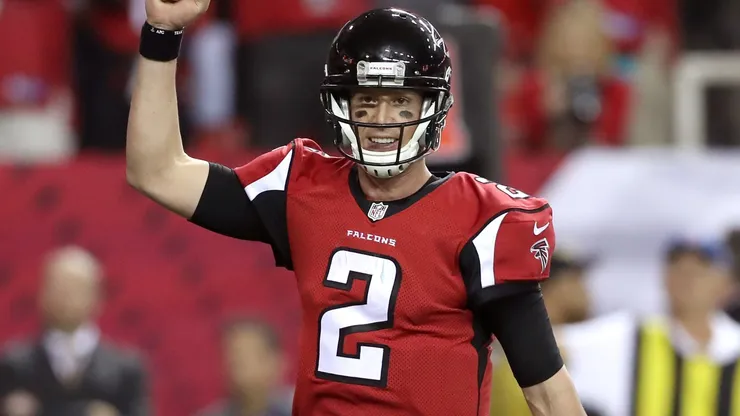
Matt Ryan
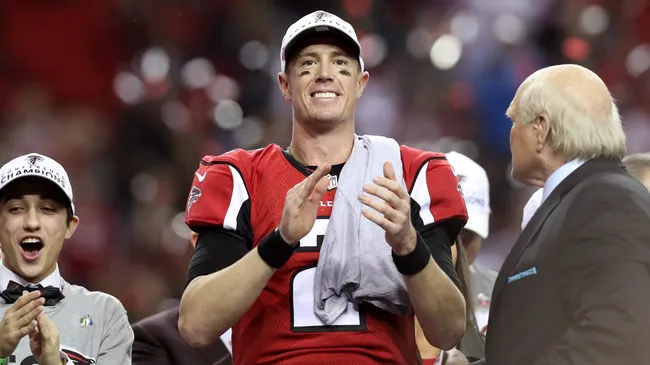
Matt Ryan (Source: Rob Carr/Getty Images)
The Atlanta Falcons were, for much of their history, a franchise defined by fleeting brilliance and frequent disappointment. Then came “Matty Ice”. Drafted third overall in 2008, Matt Ryan didn’t just fill the quarterback slot; he fundamentally reshaped the team’s professional identity.
His stoic pocket presence, relentless durability, and surgical precision in crucial moments became the signature of Atlanta’s most successful era. His peak arrived in 2016, a masterful season that culminated in the NFL MVP Award and an appearance in Super Bowl LI. While that game’s result remains a painful footnote, his influence cannot be overstated.
He shattered virtually every major franchise passing record, transforming the Falcons from a volatile, unpredictable squad into a perennial playoff contender. His legacy is one measured not just by Hall of Fame-caliber stats, but by the cultural expectation of competence and high-level performance he permanently instilled.
Tommy Nobis
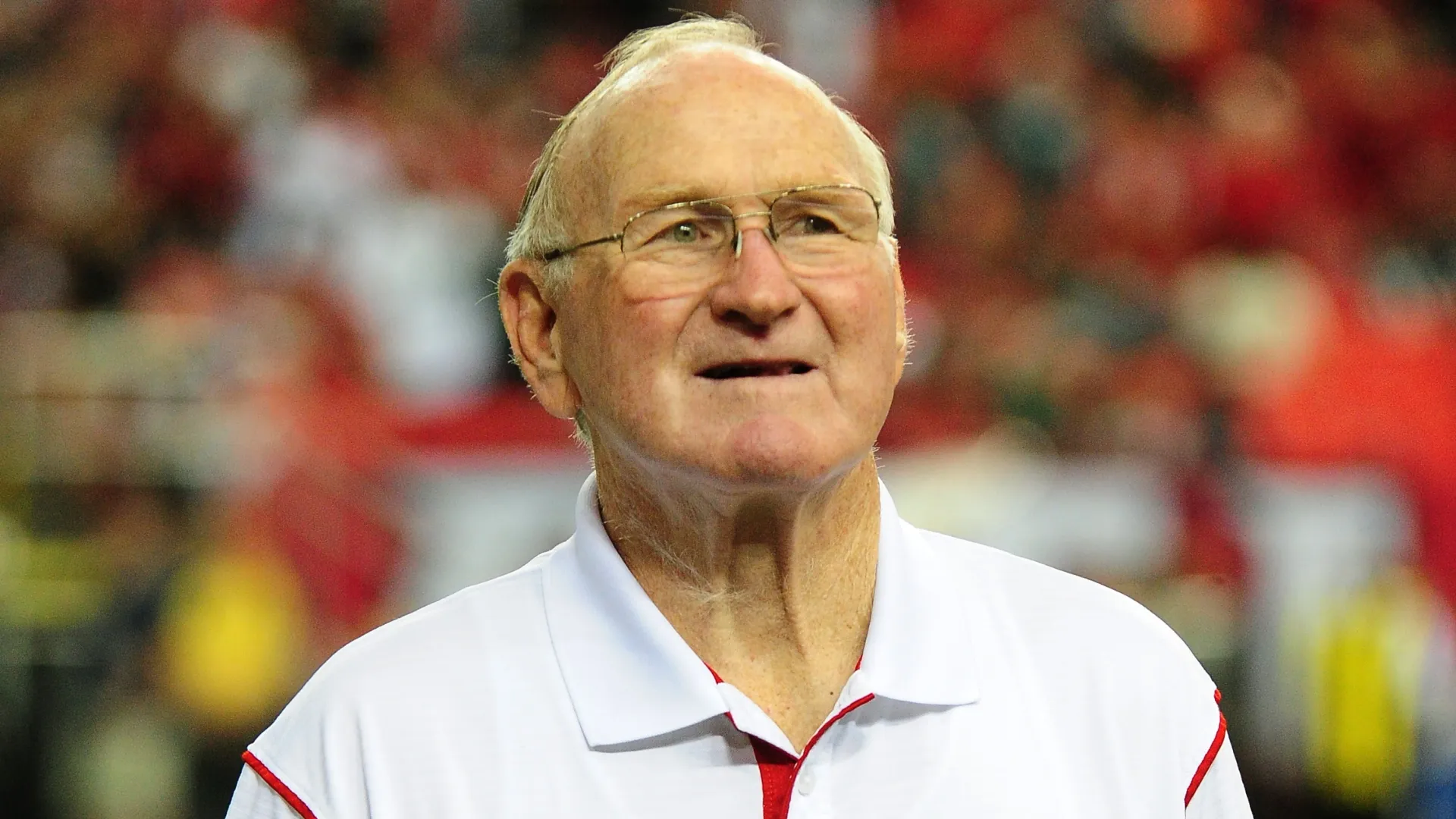
Tommy Nobis (Source: Scott Cunningham/Getty Images)
To speak of the Falcons’ genesis is to speak of Tommy Nobis. When the expansion team selected him with the very first overall pick in 1966, the linebacker immediately became the symbolic face of the nascent organization.
Known simply as “Mr. Falcon”, he embodied the grit and toughness the franchise desperately needed. Though he toiled on teams that rarely tasted victory, his individual output was staggering, unofficially credited with an astonishing 294 tackles in his rookie year alone—a legendary, if unverified, mark of dominance.
Historically, he holds the unique distinction of being the only player ever named both Offensive and Defensive Rookie of the Year in the NFL. His influence is rooted purely in historical significance and moral fortitude: he was the very first standard-setter, the foundational icon who showed what it meant to play with commitment in the red and black.
Deion Sanders
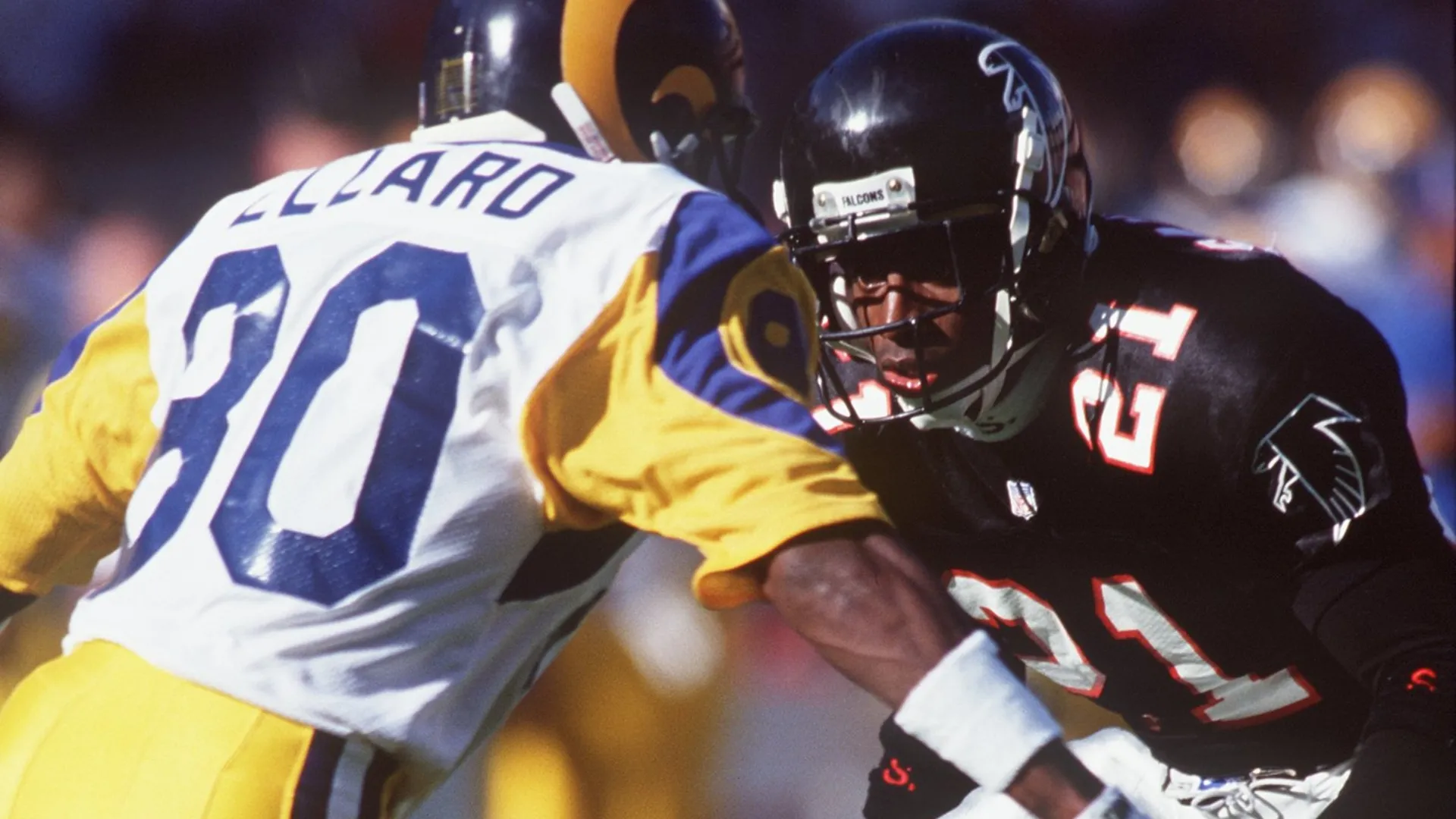
Deion Sanders (Source: Otto Greule/ALLSPORT)
If Atlanta needed flair, attention, and sheer explosive talent, they got it with Deion Sanders. “Prime Time” was a box-office phenomenon who treated the football field like his personal stage. As a cornerback, he revolutionized the coverage position, locking down his side of the field so completely that opposing quarterbacks often ceded territory without trying.
But his true influence on the Falcons—and on the league—was his rare ability to dominate in all three phases of the game. He is one of the few players in NFL history to score a touchdown in six different ways. His extravagant celebrations and outsized personality injected a dynamic, “cool” factor that drew national headlines to a franchise frequently overlooked.
While his tenure was brief, his legacy is that of a trailblazing entertainer and dynamic two-way threat who proved that charisma and world-class skill could coexist at the highest level.
Julio Jones
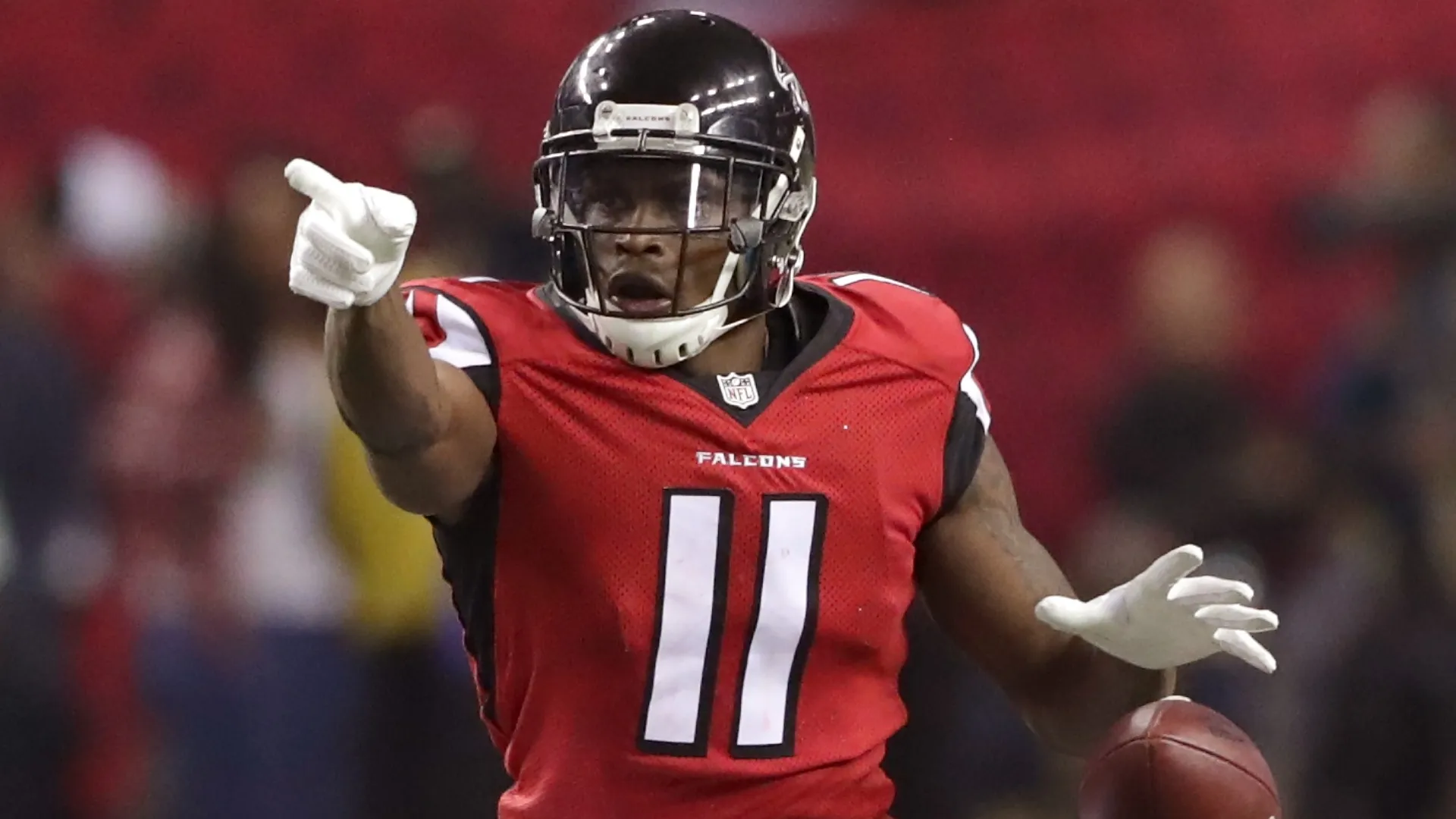
Julio Jones (Source: Streeter Lecka/Getty Images)
Julio Jones is the physical definition of a modern elite wide receiver. Acquired in an aggressive trade that cost the Falcons five draft picks, he validated that monumental investment from his first snap.
He was the ultimate vertical threat for Matt Ryan, a mesmerizing blend of size (6’3″, over 220 lbs) and blistering speed. His influence extends beyond his status as the franchise’s all-time receiving yards leader and two-time league leader.
It lies in the gravitational pull he exerted on defenses: his presence demanded double coverage and safety help, fundamentally warping the opponent’s defensive structure and creating opportunities for the entire offense.
His prime years—notably his 2015 campaign with 1,871 receiving yards—stand as one of the most physically dominant stretches ever produced by a receiver in the contemporary NFL. He was the indispensable, game-breaking weapon that powered the offense’s historic heights.
Claude Humphrey
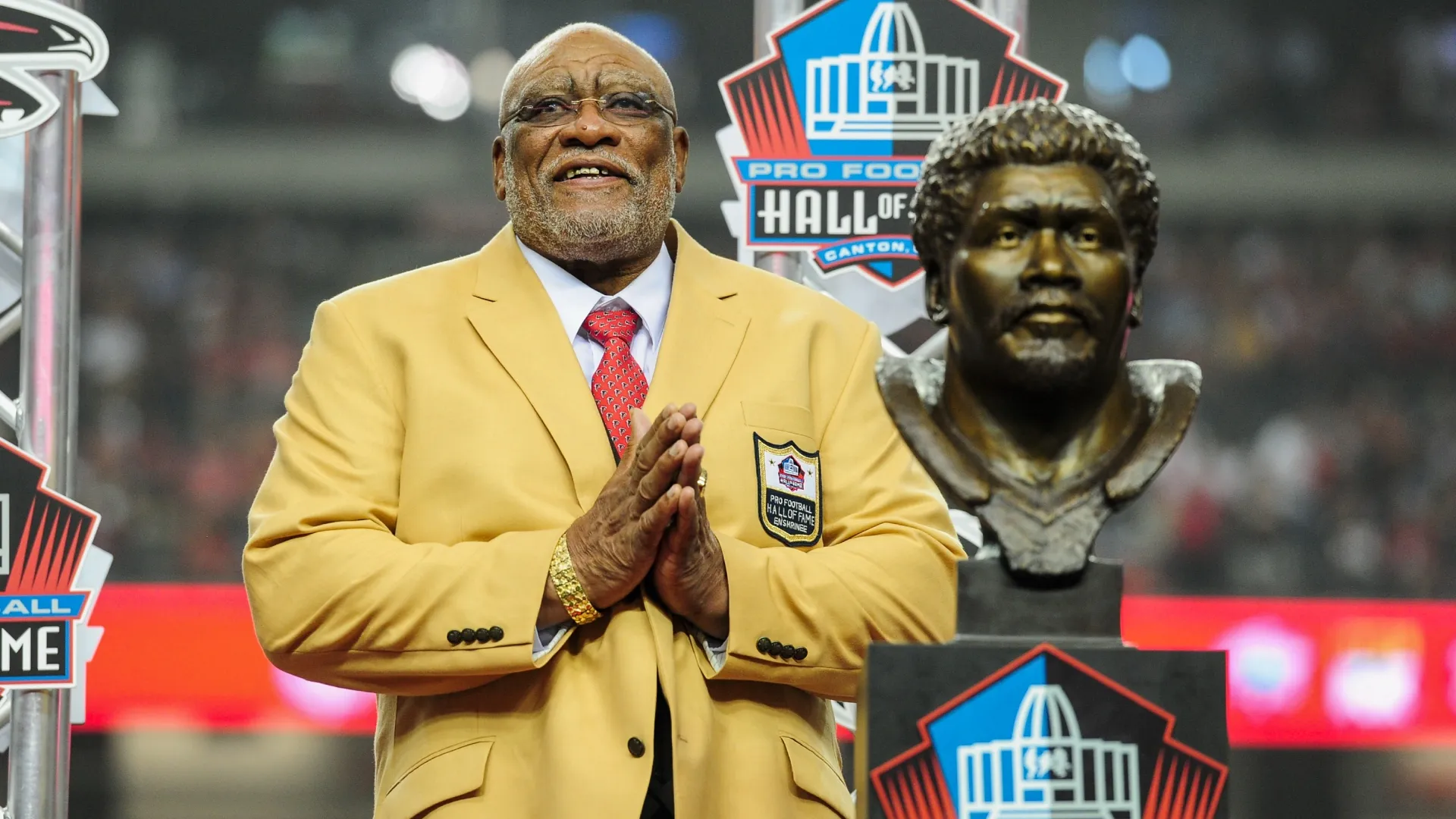
Claude Humphrey (Source: Scott Cunningham/Getty Images)
Claude Humphrey represents the classic case of a talent obscured by a lack of team success, whose brilliance was only fully recognized years later. This defensive end was an unquestioned elite pass rusher during an era when the sack was not an officially tracked statistic.
A relentless blend of raw power and deceptive quickness, he exploded onto the scene, earning Defensive Rookie of the Year honors in 1968 and proceeding to terrorize offensive lines for a decade.
Although the Falcons failed to reach the playoffs during his first 10 seasons with the club, his individual performance remained consistently transcendent, solidifying his reputation among peers and opponents.
His eventual, well-deserved induction into the Pro Football Hall of Fame served as a powerful vindication of individual excellence that shone through even the darkest years of the franchise. His influence is that of a defensive pioneer whose stature transcended the team’s circumstances.
Jessie Tuggle
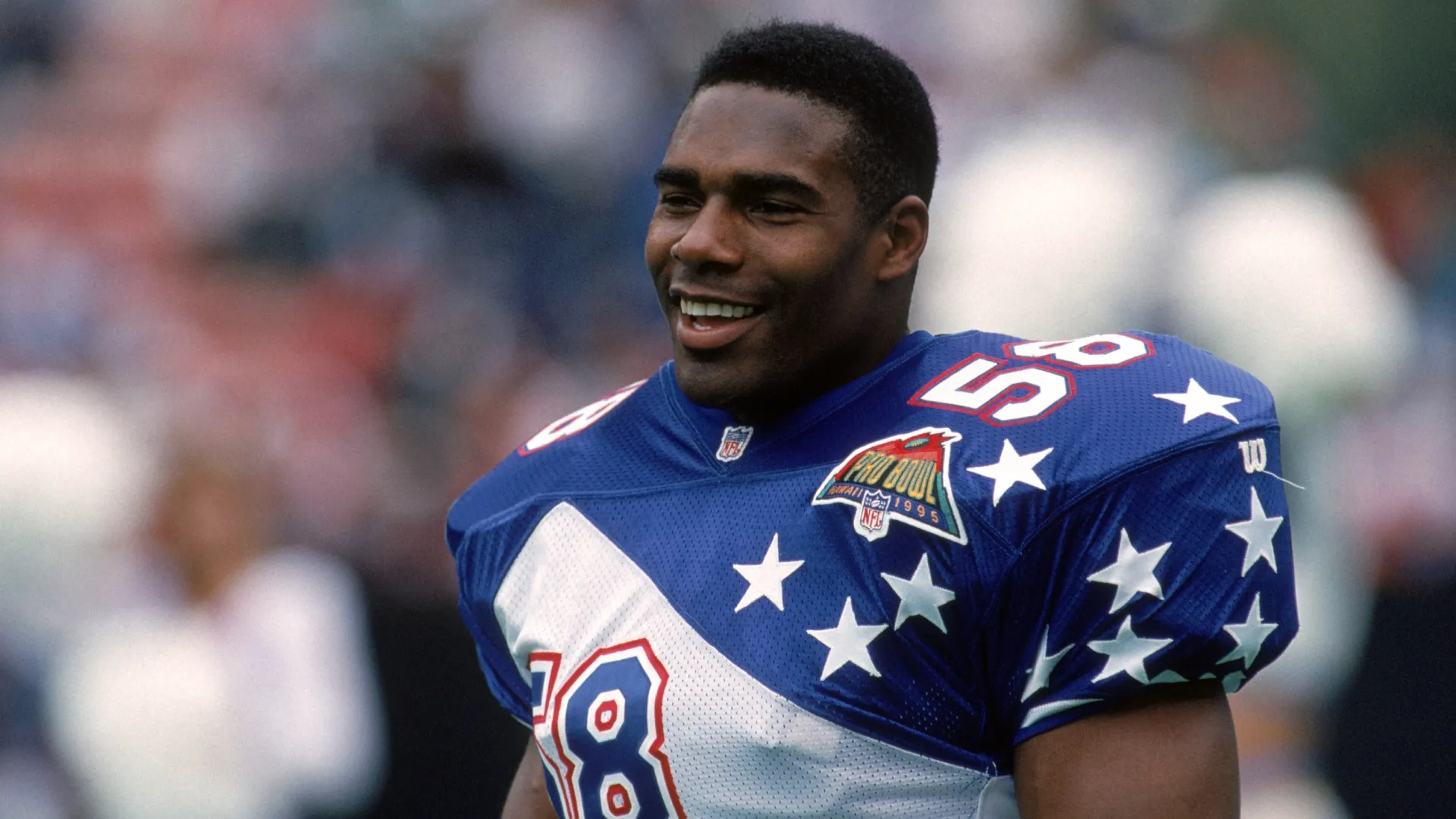
Jessie Tuggle (Source: George Rose/Getty Images)
Jessie Tuggle’s career is a powerful narrative of persistence and self-made success. Undrafted out of Valdosta State, this middle linebacker became the most prolific defensive force in franchise history. Known for the punishing nature of his tackles, “The Hammer” was a tackling machine who dominated the position for 14 seasons.
He accumulated what is widely considered the NFL’s unofficial career record for most tackles, a testament to his uncanny ability to always find the ball. His impact transcended raw numbers: he was the defensive captain and the emotional engine that powered the Falcons to their first Super Bowl appearance (XXXIII).
He personified the blue-collar work ethic and the underdog spirit embraced by Atlanta fans, setting the standard for commitment for future generations of Falcons defensive players.
Jeff Van Note
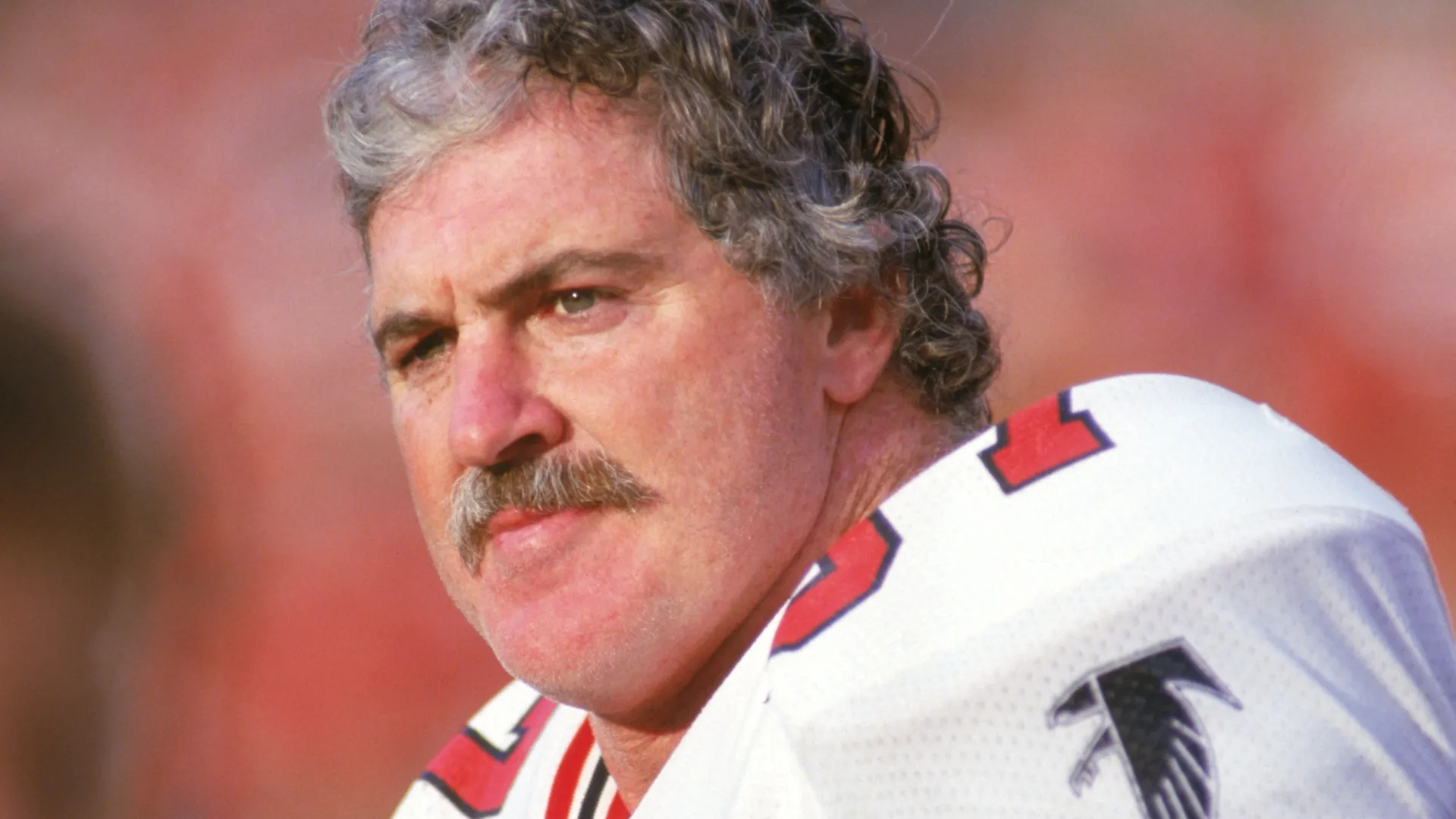
Jeff Van Note (Source: George Rose/Getty Images)
Jeff Van Note embodies durability and consistency within the chaotic environment of a developing franchise. For 18 seasons, this center was the immovable pivot point of Atlanta’s offensive line, a feat of longevity that kept him as the franchise’s all-time leader in games played for decades.
Despite constant changes in quarterbacks and head coaches, he maintained an elite level of play, earning five Pro Bowl selections. His influence was quiet but crucial: he served as the cerebral field general who coordinated protections and ensured the cohesion of the offense. He functioned as a vital bridge of continuity, connecting the founding generation of the late 60s with the emergence of the first competitive teams of the 1980s.
Jamal Anderson
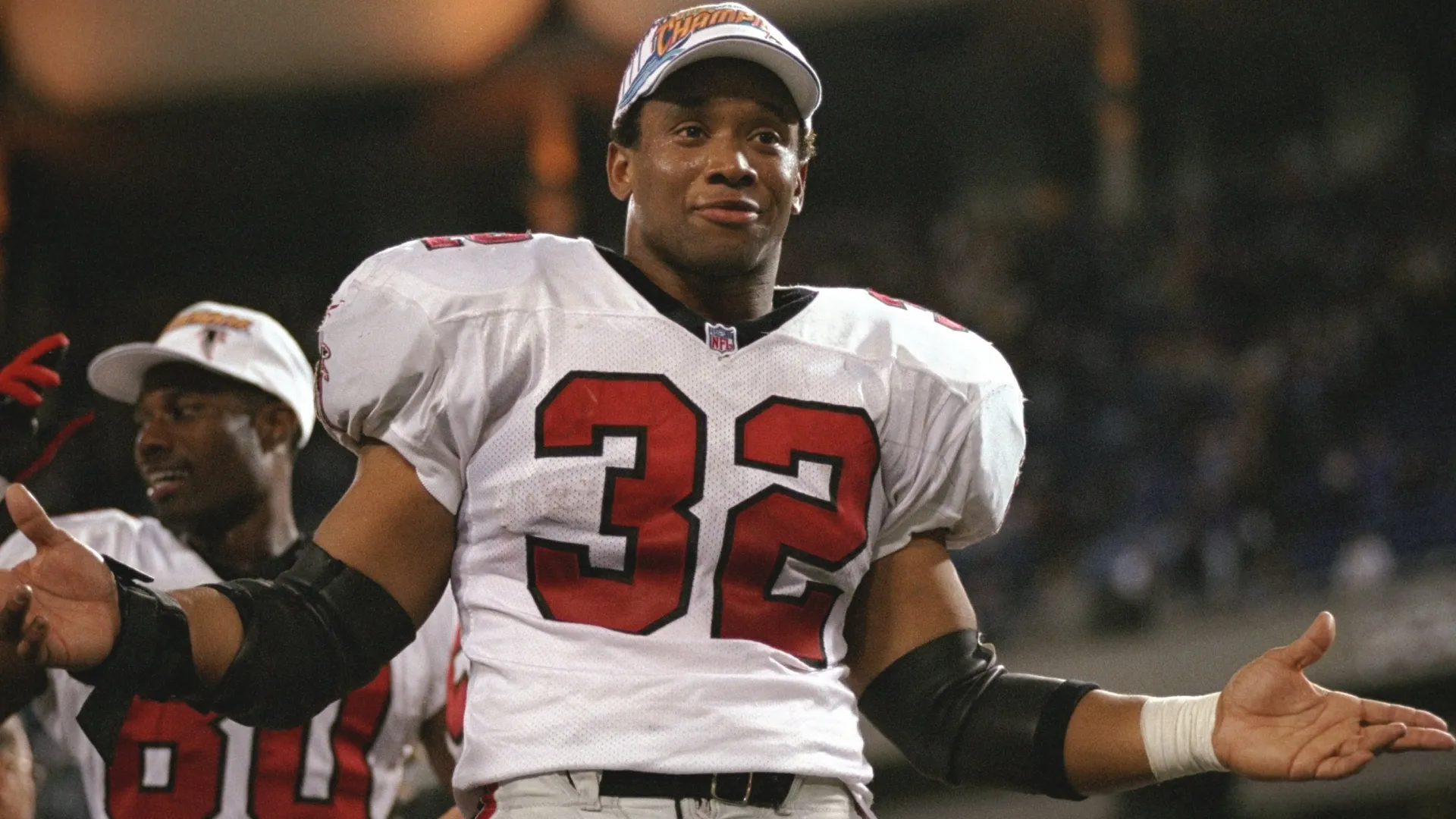
Jamal Anderson (Source: Jonathan Daniel /Allsport)
The “Dirty Bird” was more than just a dance; it was a cultural symbol that personified the rise of the 1998 Atlanta Falcons. The central figure of that explosion of identity was running back Jamal Anderson.
After a slow start, he solidified himself as one of the league’s most dominant rushers, peaking memorably in the Super Bowl XXXIII season where he set a franchise record with 1,846 rushing yards.
His influence was two-fold: tactically, he was the constant, primary engine of that team’s ground attack; culturally, his infectious energy and the Dirty Bird movement generated an unparalleled connection between the team and its fanbase. His swagger and production led the franchise to its first-ever championship final.
Michael Vick
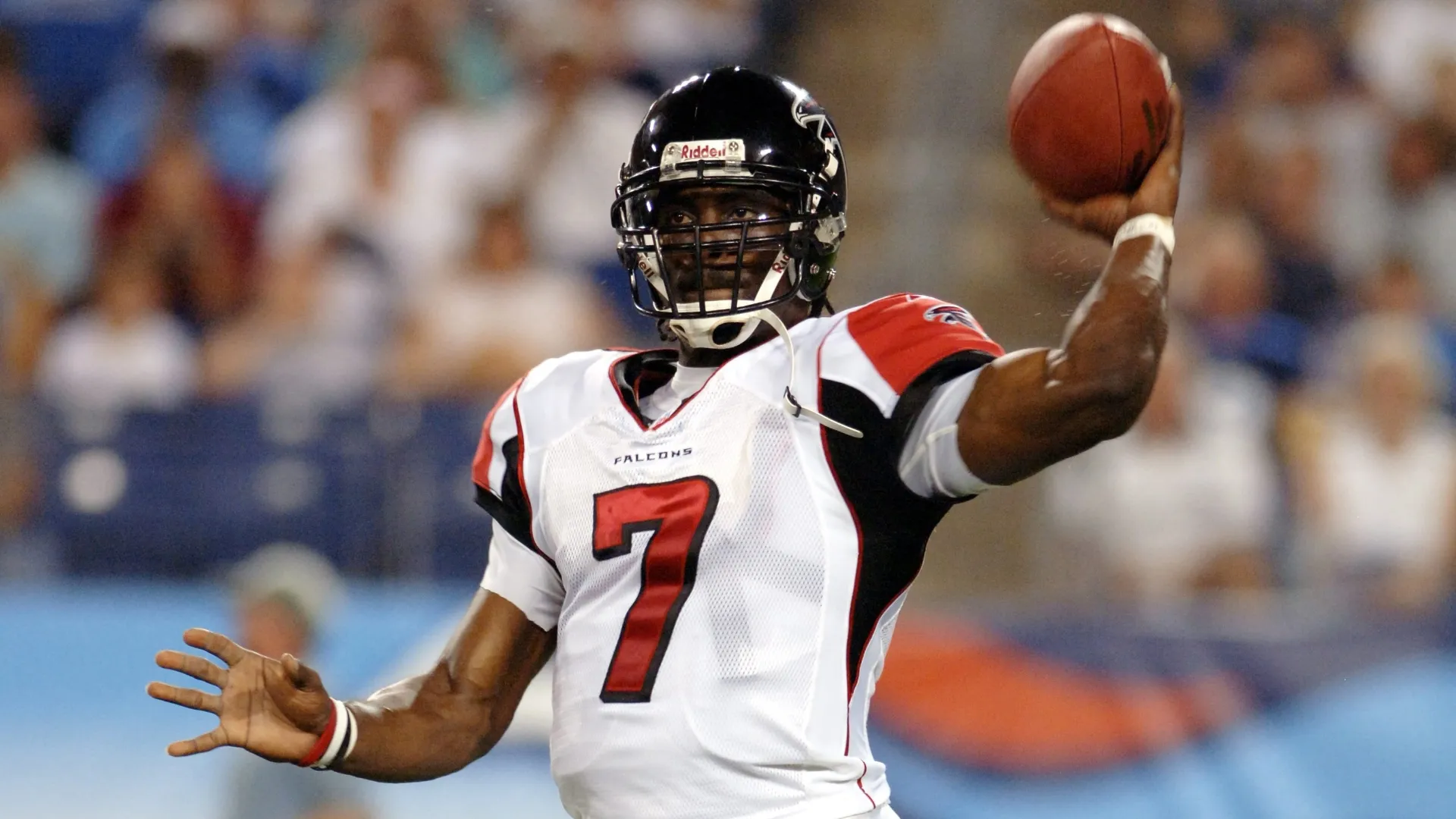
Michael Vick (Source: Joe Murphy/NFLPhotoLibrary)
The arrival of Michael Vick, selected first overall in 2001, was a seismic event that redefined the physical limits of the quarterback position. He did not merely play; he improvised with a level of speed and athletic ability unseen at his position. He forced NFL defenses to create entirely new schemes to mitigate his unprecedented running threat.
He led the Falcons to two playoff appearances, including an NFC Championship Game, often carrying the offense with gravity-defying plays. His impact extends beyond his controversial departure: he is recognized as the pioneer of the modern mobile quarterback in the 21st century, injecting a level of excitement and visibility into the franchise that few before or after have matched.
Steve Bartkowski
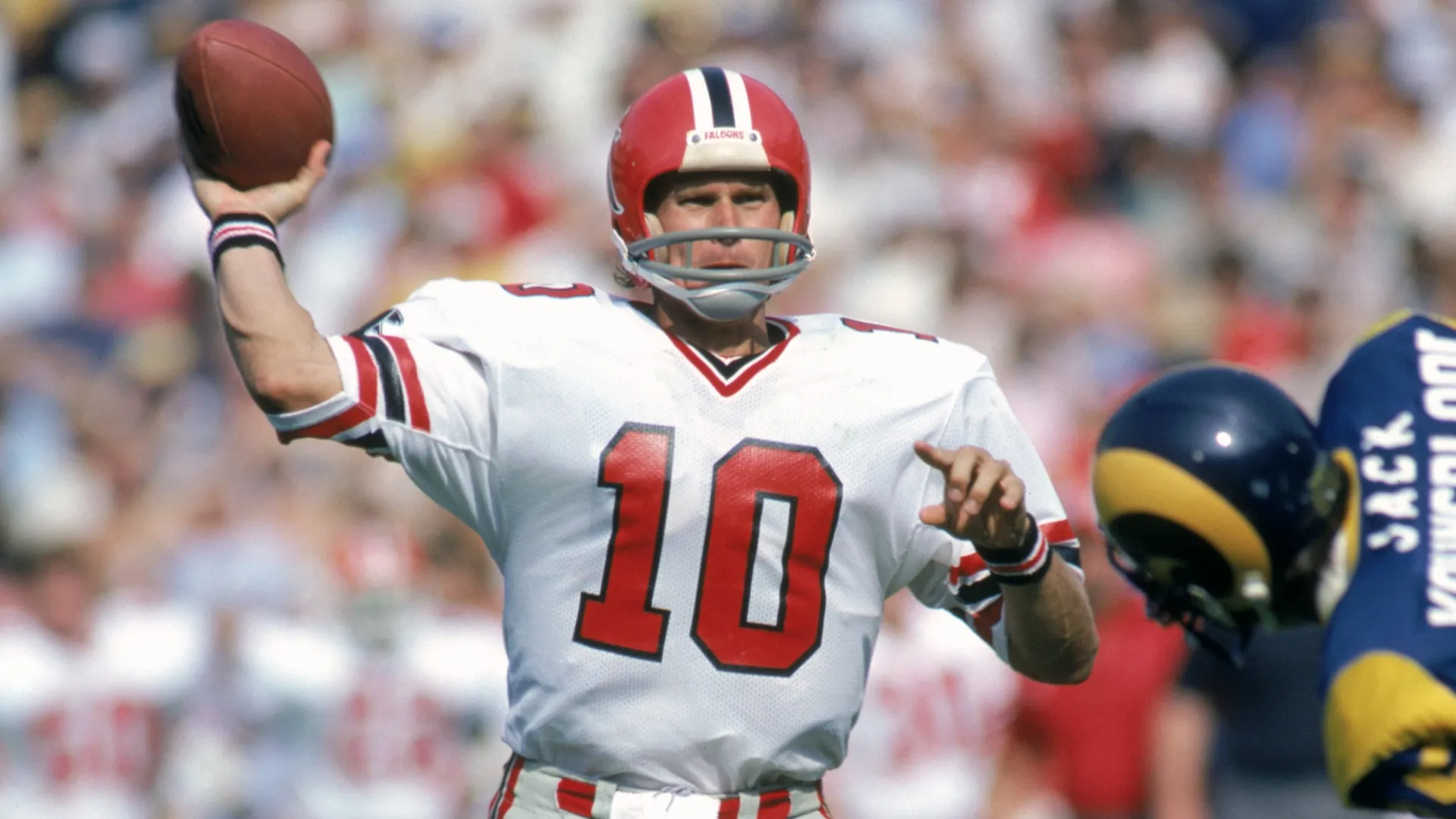
Steve Bartkowski (Source: George Rose/Getty Images)
Steve Bartkowski represented the first genuine promise of stability at football’s most important position for the Falcons. Drafted first overall in 1975, he faced the task of transforming a losing franchise into a respected competitor. While success was not immediate, he developed into a two-time Pro Bowler and was the leader of the first Falcons team to reach the playoffs and win a division title in 1980.
His strong arm and leadership established the credibility of the team’s offense. His influence is primarily historical: he was the first quality quarterback to spend his prime in Atlanta, setting early passing records and proving that the city could be home to a legitimate franchise passer.
Tony Gonzalez
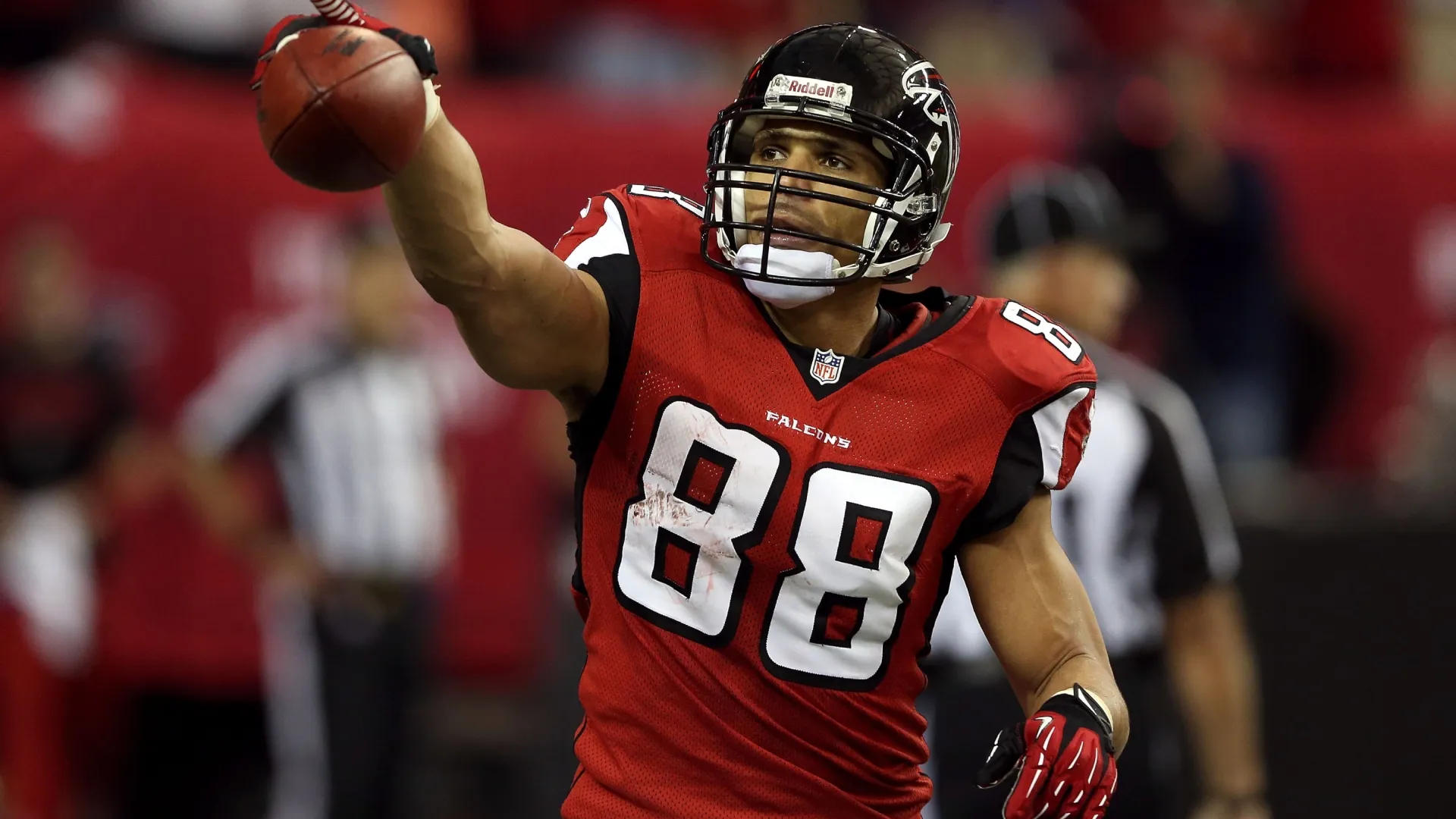
Tony Gonzalez (Source: Streeter Lecka/Getty Images)
Tony Gonzalez arrived in Atlanta with legendary status, but his brief, high-impact tenure cemented his position as one of the most impactful acquisitions in franchise history. Acquired via trade in 2009, he provided an essential offensive element: a Hall-of-Fame quality tight end who was an impeccable security blanket and a reliable red-zone threat. His influence was both strategic and psychological.
Strategically, his presence forced defenses to stretch and allowed the offense to reliably extend drives; psychologically, he added a layer of veteran leadership and a winning expectation to a rising team led by Matt Ryan and Coach Mike Smith. His excellence was a crucial piece in the puzzle that led the team to four consecutive winning seasons.
Warrick Dunn
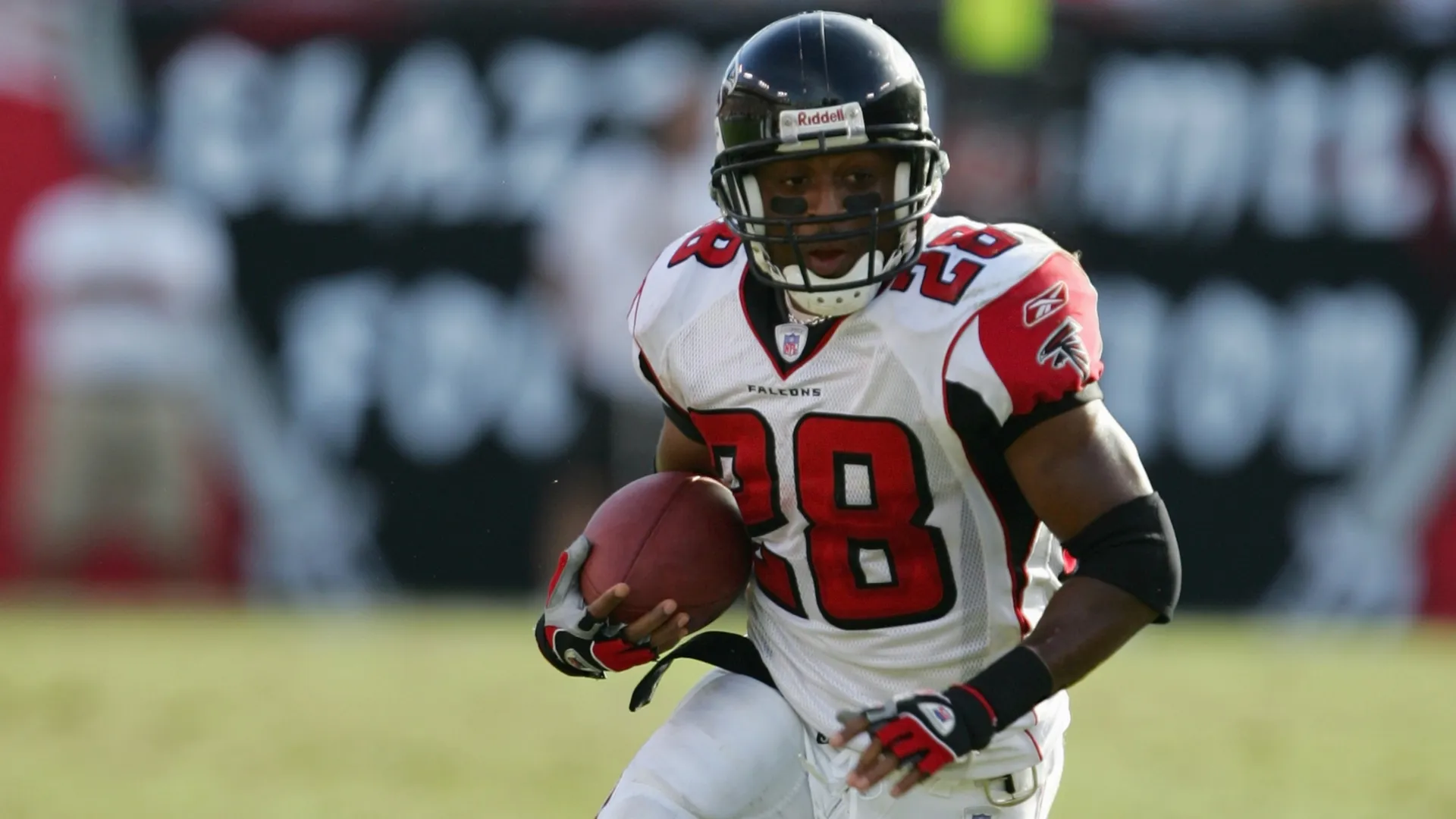
Warrick Dunn (Source: Robert Laberge/Getty Images)
Warrick Dunn‘s influence on the Atlanta Falcons spanned both the football field and the metropolitan area. Acquired during the Michael Vick era, he quickly established himself as a highly effective running back known for his agility, reliability, and dual-threat capability as a receiver out of the backfield. He provided a crucial measure of consistency in the offense, complementing Vick’s improvisational style and posting three consecutive 1,000-yard seasons.
Off the field, his charitable work—specifically his Homes for the Holidays program which assisted single-parent families in acquiring homeownership—became one of the most visible and widely lauded community initiatives associated with the franchise. His impact established a high bar for player engagement and charitable influence within the city, making him an icon whose legacy transcends gridiron statistics.
John Abraham
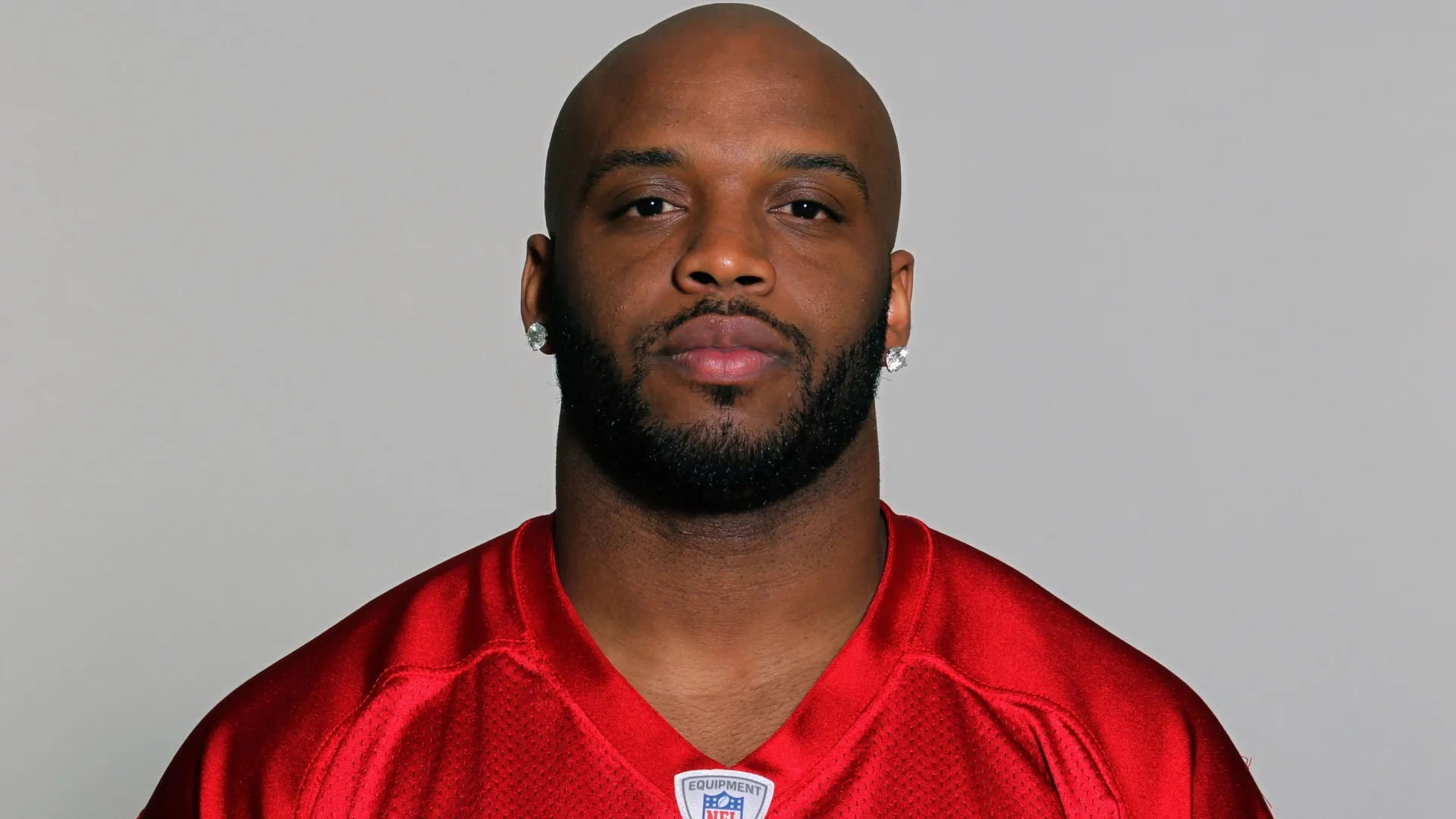
John Abraham (Source: NFL via Getty Images)
John Abraham was the relentless, explosive force that finally brought elite, consistent pass rush pressure to the Falcons defense in the post-Nobis era. Acquired via trade, he immediately elevated the defensive unit, becoming the franchise’s all-time official sack leader in his seven seasons with the team.
An exceptional blend of speed and power, he specialized in decisive plays, logging four Pro Bowl selections while in Atlanta. His influence was tactical: his ability to consistently beat tackles and disrupt the backfield commanded significant attention from opposing offensive coordinators, making life easier for the linebackers and secondary.
He provided the bona fide defensive anchor the franchise needed during the early, formative years of the Mike Smith/Matt Ryan era, proving that high-level, game-changing edge pressure could be sustained in Atlanta.
Todd McClure
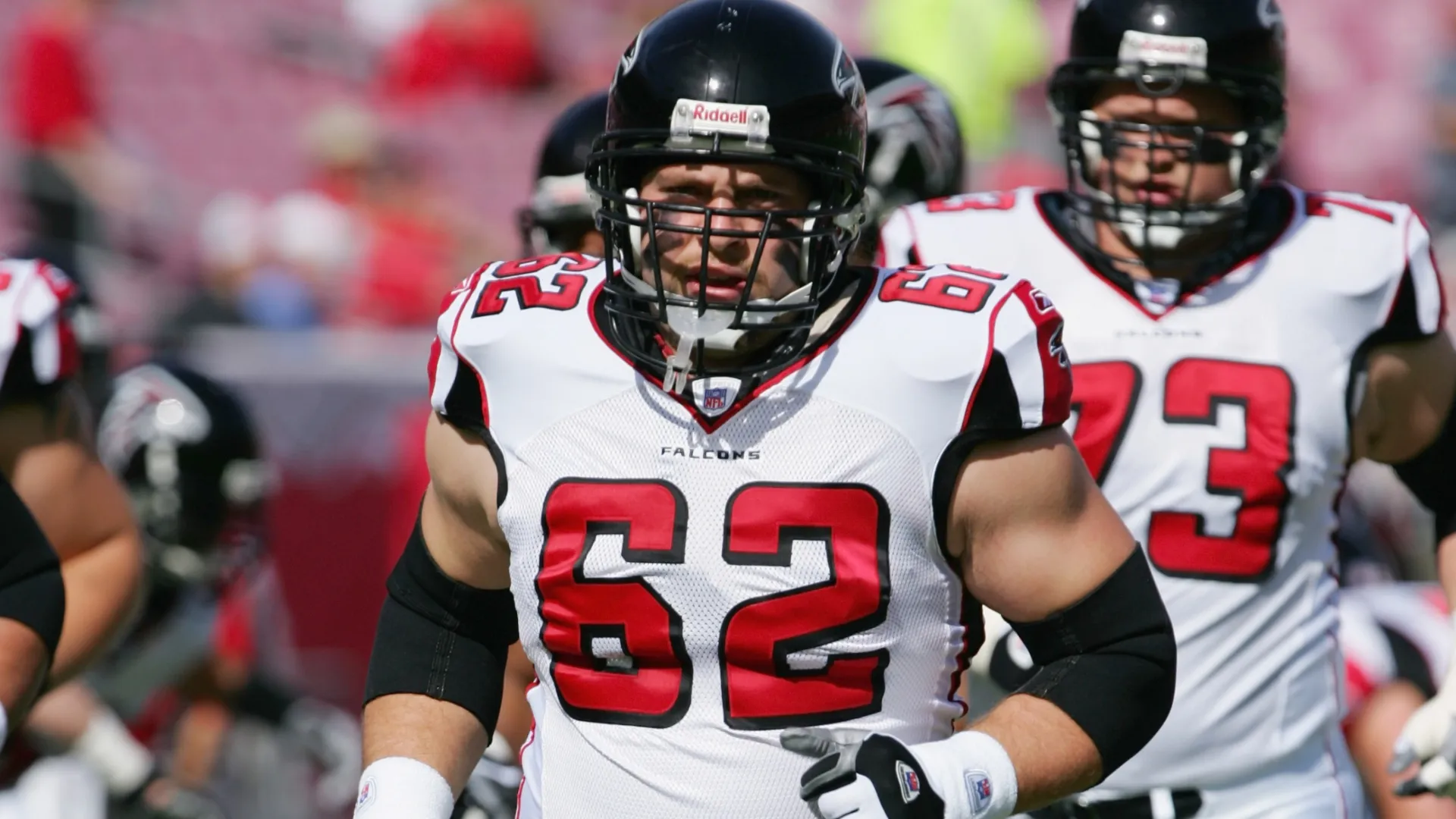
Todd McClure (Source: Robert Laberge/Getty Images)
Todd McClure was the epitome of the reliable, unglamorous anchor—a role vital to the success of any major football team. Drafted in 1999, the center spent 14 seasons with the Falcons, serving as the constant communication hub and intellectual leader of the offensive line through multiple coaching regimes and quarterback changes. His importance grew exponentially as he transitioned seamlessly from snapping to Vick’s unconventional style to Ryan’s traditional pocket presence.
His quiet leadership and durability—he missed only five games between 2001 and 2012—provided a bedrock of stability that allowed both the Dirty Bird rushing attack and the later aerial offenses to flourish. His influence is defined by his consistency and foundational role during the team’s transition into a perennial contender.
Michael Turner
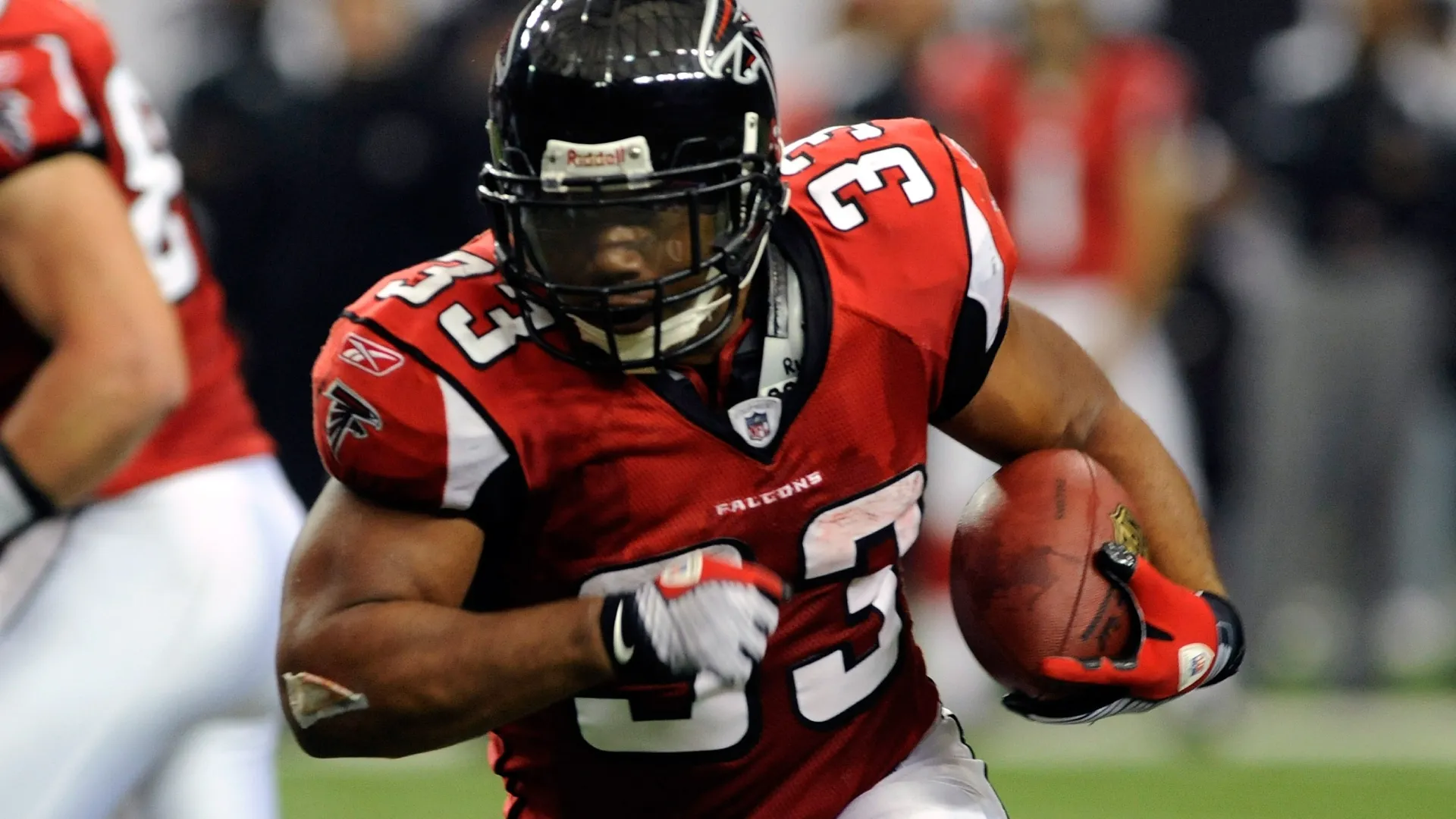
Michael Turner (Source: Al Messerschmidt/Getty Images)
Michael Turner, known as “The Burner,” was the essential offensive counterweight that defined the Falcons’ transition into the Matt Ryan era. His arrival in 2008 coincided with the new regime, and he immediately provided a brutal, high-volume rushing attack that punished opposing defenses.
He recorded four consecutive 1,000-yard seasons and holds the franchise record for rushing touchdowns in a single season (17 in 2008). His physical, downhill running style perfectly complemented the burgeoning passing game, preventing defenses from focusing solely on the rookie Ryan.
His influence was the establishment of a power rushing identity that made the Falcons offense truly balanced and effective during their run of winning seasons and playoff berths in the early 2010s.
Matt Bryant
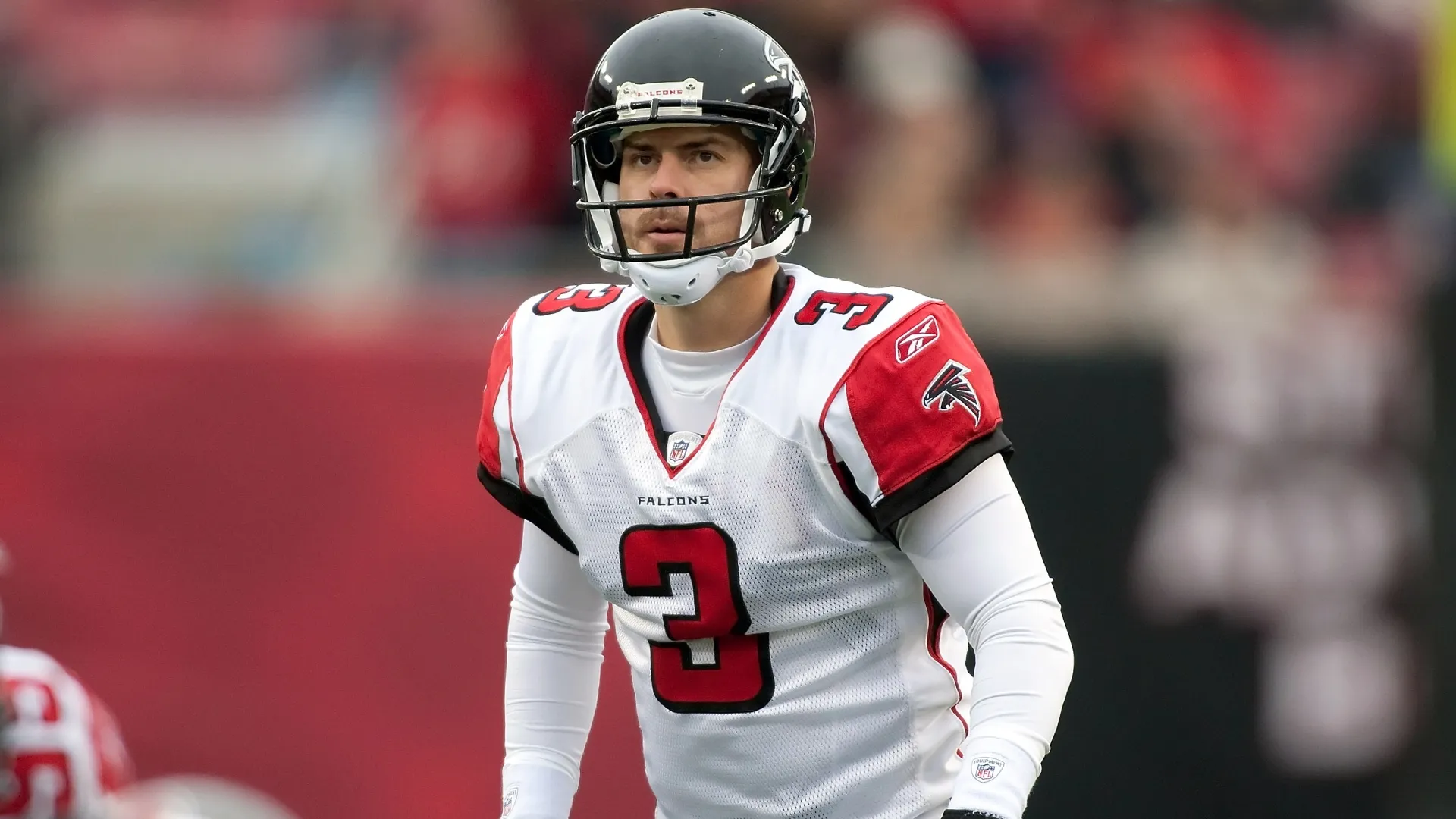
Matt Bryant (Source: J. Meric/Getty Images)
The influence of Matt Bryant—“Money Matt”—was purely about reliability and clutch performance in high-stakes moments. Joining the team in 2009, this kicker provided a level of scoring assurance that the Falcons had rarely experienced.
He became the team’s all-time leading scorer, consistently converting high-pressure field goals and extra points during the team’s most successful decade. His most significant impact was his exceptional accuracy and leg strength on longer kicks, instilling a level of confidence in the coaching staff to rely on him late in close games.
The 2012 season, culminating in a game-winning kick against the Seahawks in the Divisional Round, exemplifies his value as a reliable finisher who consistently converted opportunities into critical wins, solidifying the team’s reputation for late-game competence.
Devonta Freeman
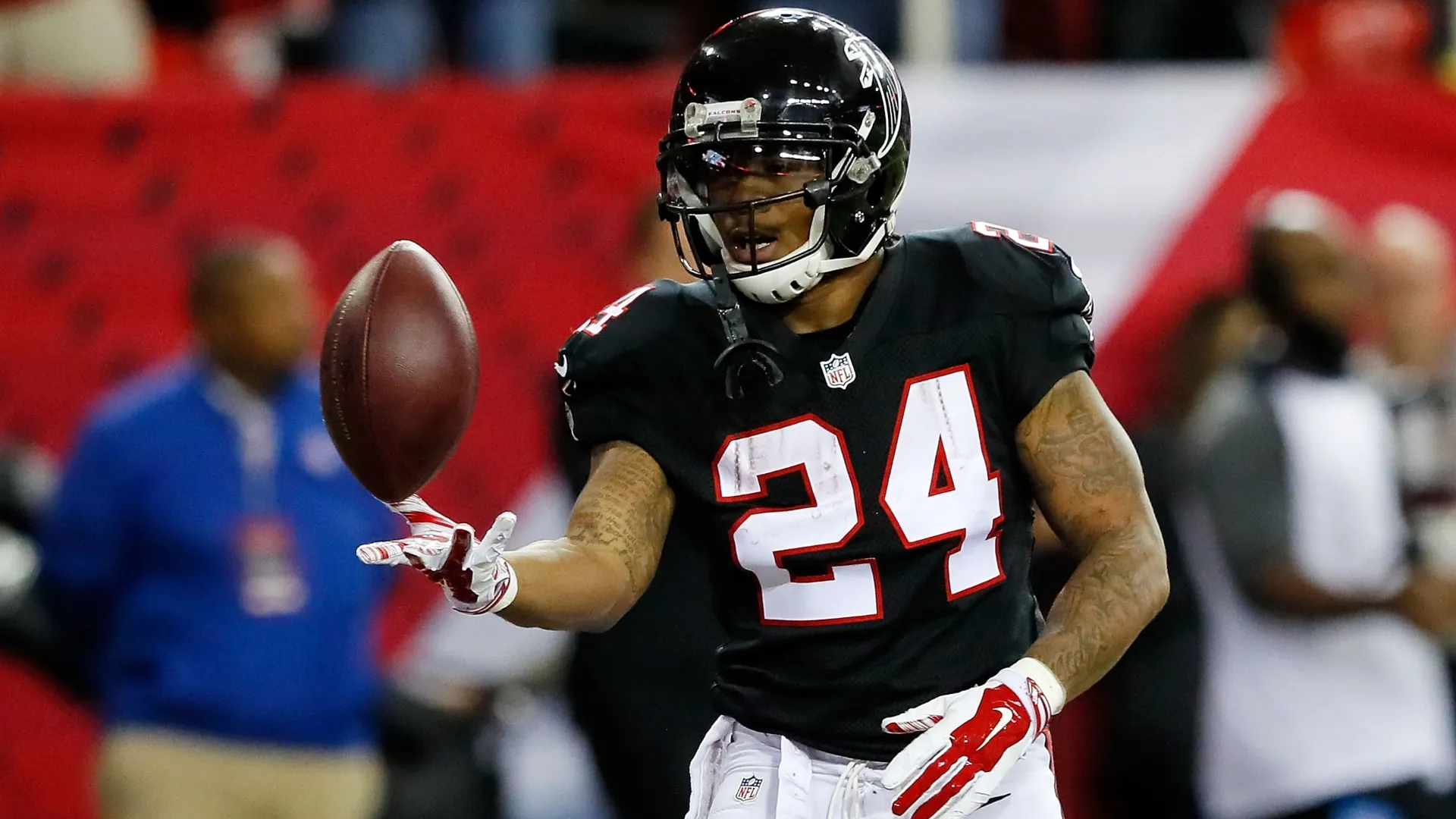
Devonta Freeman (Source: Kevin C. Cox/Getty Images)
Devonta Freeman was the versatile engine of the record-breaking 2016 Falcons offense, which remains one of the most potent scoring units in NFL history. As a running back, he possessed a rare combination of power, balance, and exceptional receiving ability, making him a true dual-threat.
His influence peaked during his back-to-back Pro Bowl seasons (2015-2016), where his production helped the Falcons transition to a modern, committee-based rushing attack that emphasized catching passes out of the backfield.
He was a crucial factor in the offensive balance that secured the team’s trip to Super Bowl LI, acting as a key facilitator and security outlet for Matt Ryan in the complex schemes designed by Kyle Shanahan.
Chris Miller
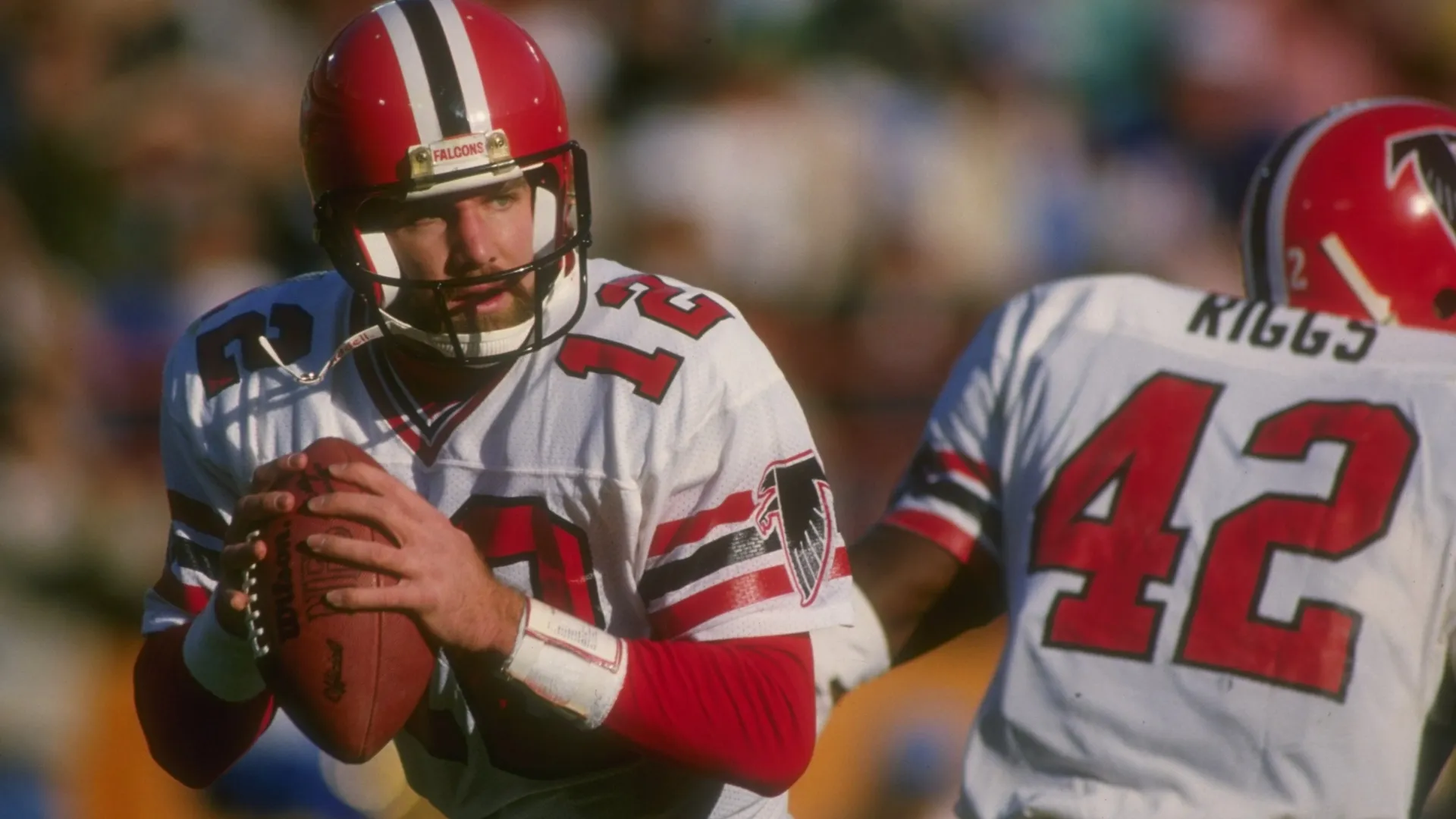
Chris Miller (Source: Mike Powell /Allsport)
Chris Miller was the starting quarterback who piloted the Falcons into the early 1990s and secured the first sustained period of offensive excitement since the early 80s. A Pro Bowler in 1991, he possessed a strong arm and a penchant for aggressive downfield passing, often earning him the moniker of a “gunslinger”.
His influence was most notable during the period when Deion Sanders and Andre Rison were establishing their presence. He was the primary orchestrator of the dynamic, fast-paced attack that helped solidify the Falcons’ identity as an entertaining, high-scoring team, paving the way for the more successful eras that followed.
Alge Crumpler
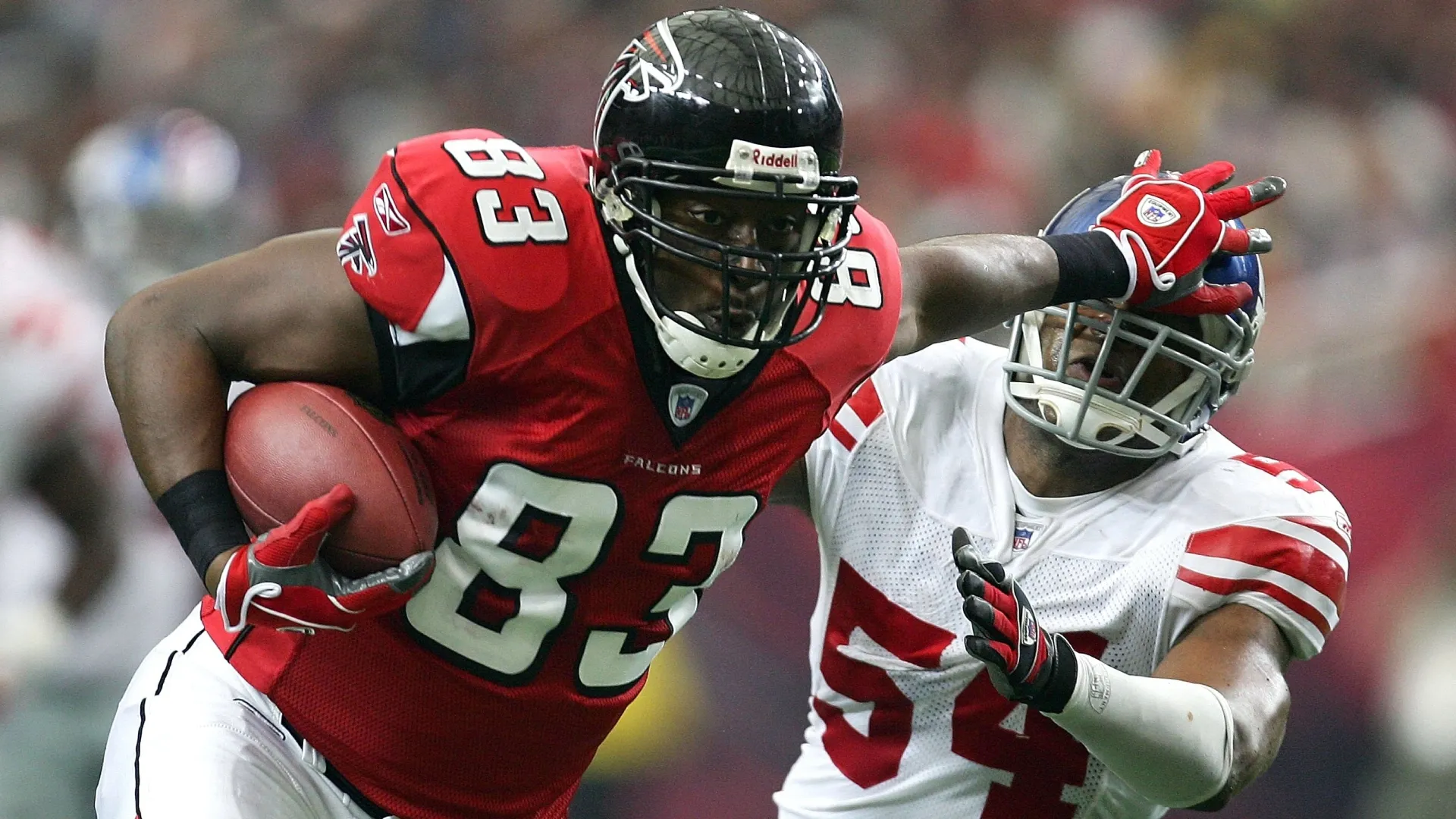
Alge Crumpler (Source: Scott Halleran/Getty Images)
Alge Crumpler was the essential, physical counterpart to Michael Vick’s electric playmaking. The tight end was known for his elite blocking ability, setting the tone for the Falcons’ run-heavy offense under Dan Reeves and later Jim Mora. More than just a blocker, he was a four-time Pro Bowler and a reliable target who provided crucial security over the middle of the field.
His influence was primarily structural: he anchored the ground game, helping Vick and Warrick Dunn succeed, while also providing a consistent red-zone threat. He represented the toughness and dependability that characterized the team’s transition into a playoff contender in the early 2000s.
Bill Fralic
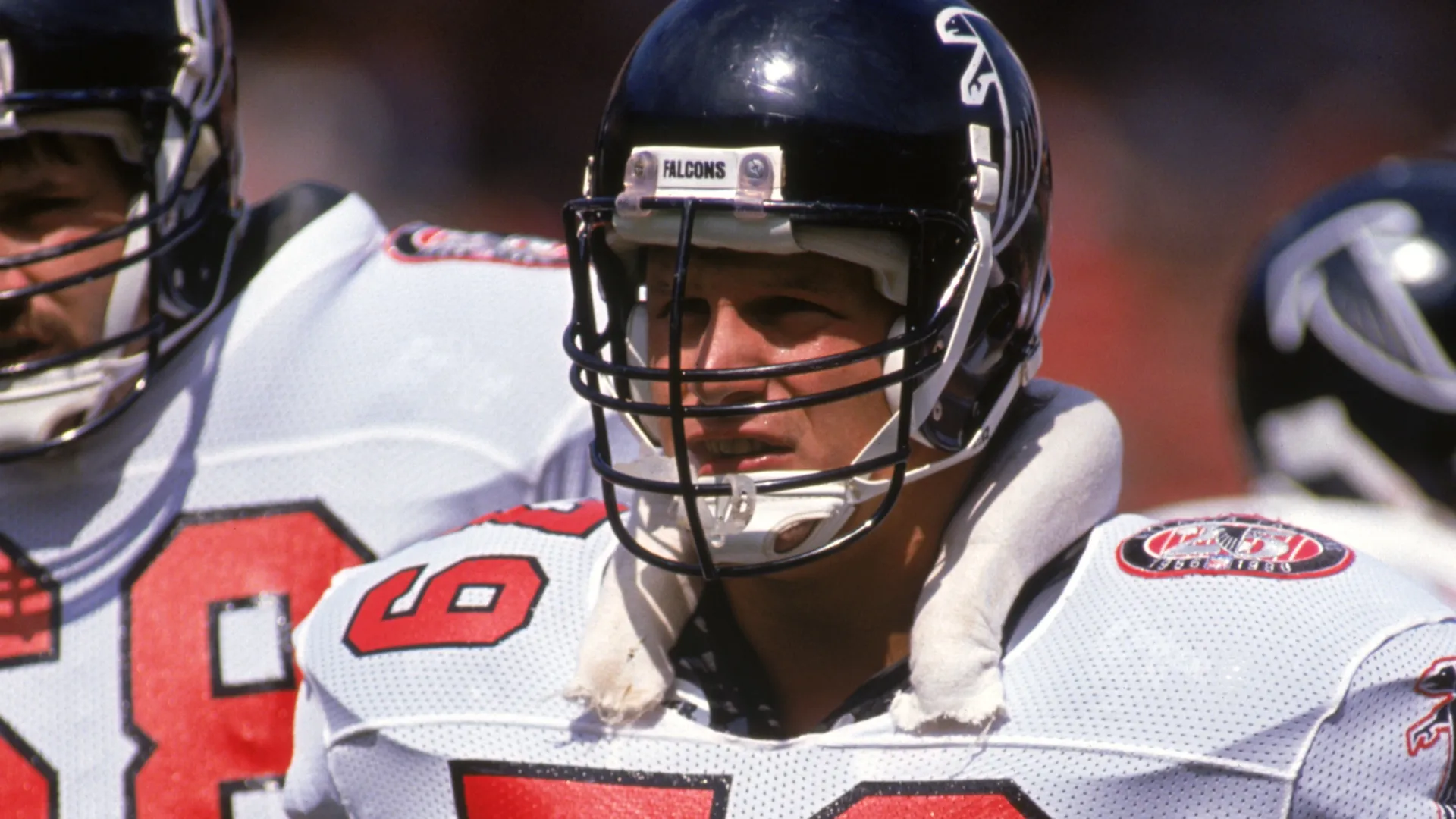
Bill Fralic (Source: George Rose/Getty Images)
Bill Fralic was a rare example of a highly decorated offensive player during the Falcons’ challenging period in the mid-to-late 1980s. Drafted second overall, the guard was known for his sheer power, size, and aggressive demeanor. He was named to the Pro Bowl four consecutive times (1986–1989), a testament to his individual dominance regardless of the team’s overall struggles.
His influence was purely through elite individual performance, providing a much-needed foundation of excellence and intimidation on the interior offensive line that was key to the development of the running game during that era.
Chris Chandler
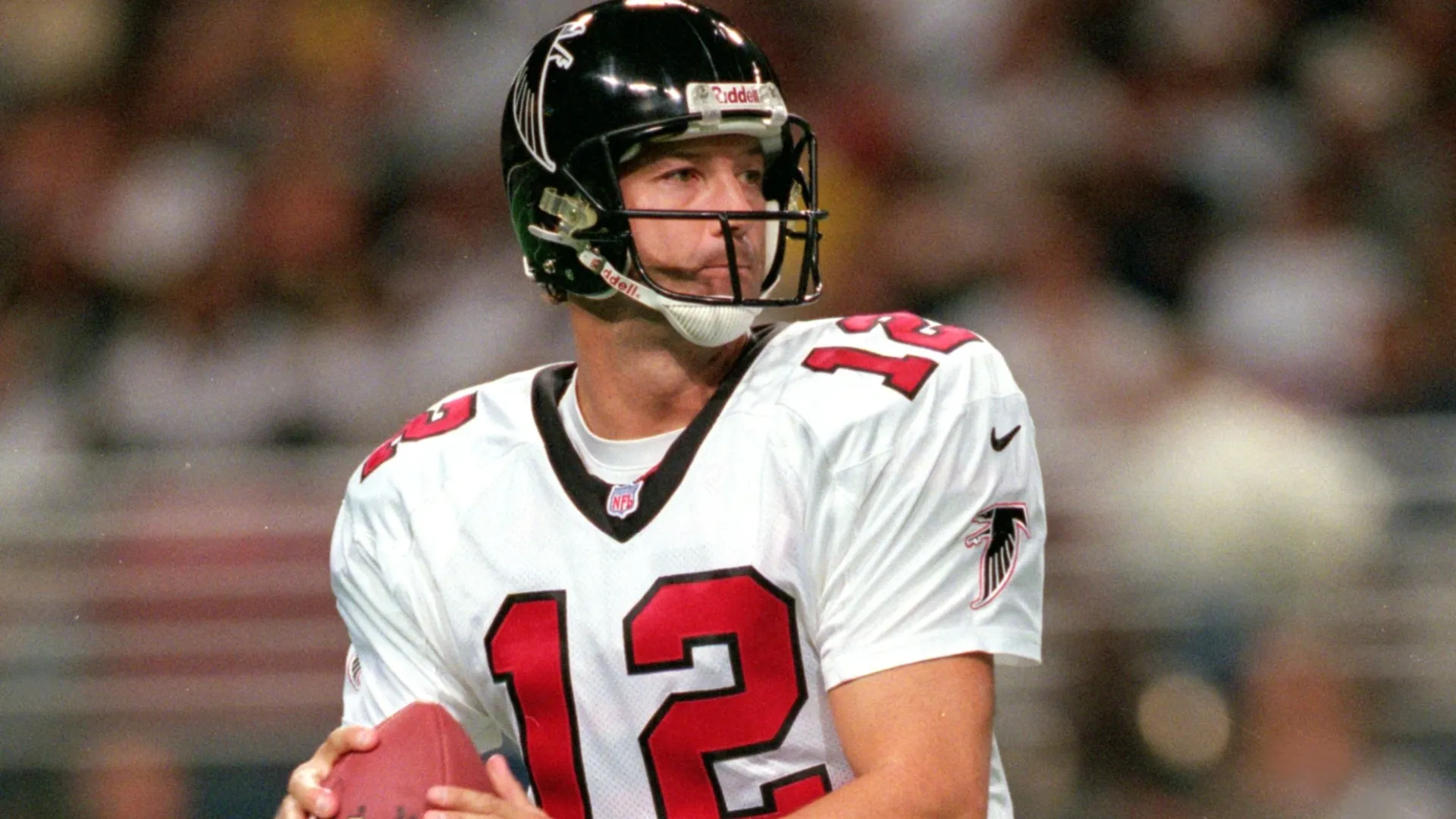
Chris Chandler (Source: Jeff Gross /Allsport)
Chris Chandler was the veteran quarterback who brought experience, stability, and intelligence to the position, enabling the success of the 1998 “Dirty Bird” team. He was not a player defined by flash, but by efficiency and timely playmaking.
He earned Pro Bowl honors in 1998 and 1999 and was the quiet leader and effective distributor who managed the offense, allowing Jamal Anderson and the rushing attack to thrive. His influence was crucial for the Super Bowl run, providing the necessary competence at quarterback that the franchise had often lacked in critical moments.
William Andrews
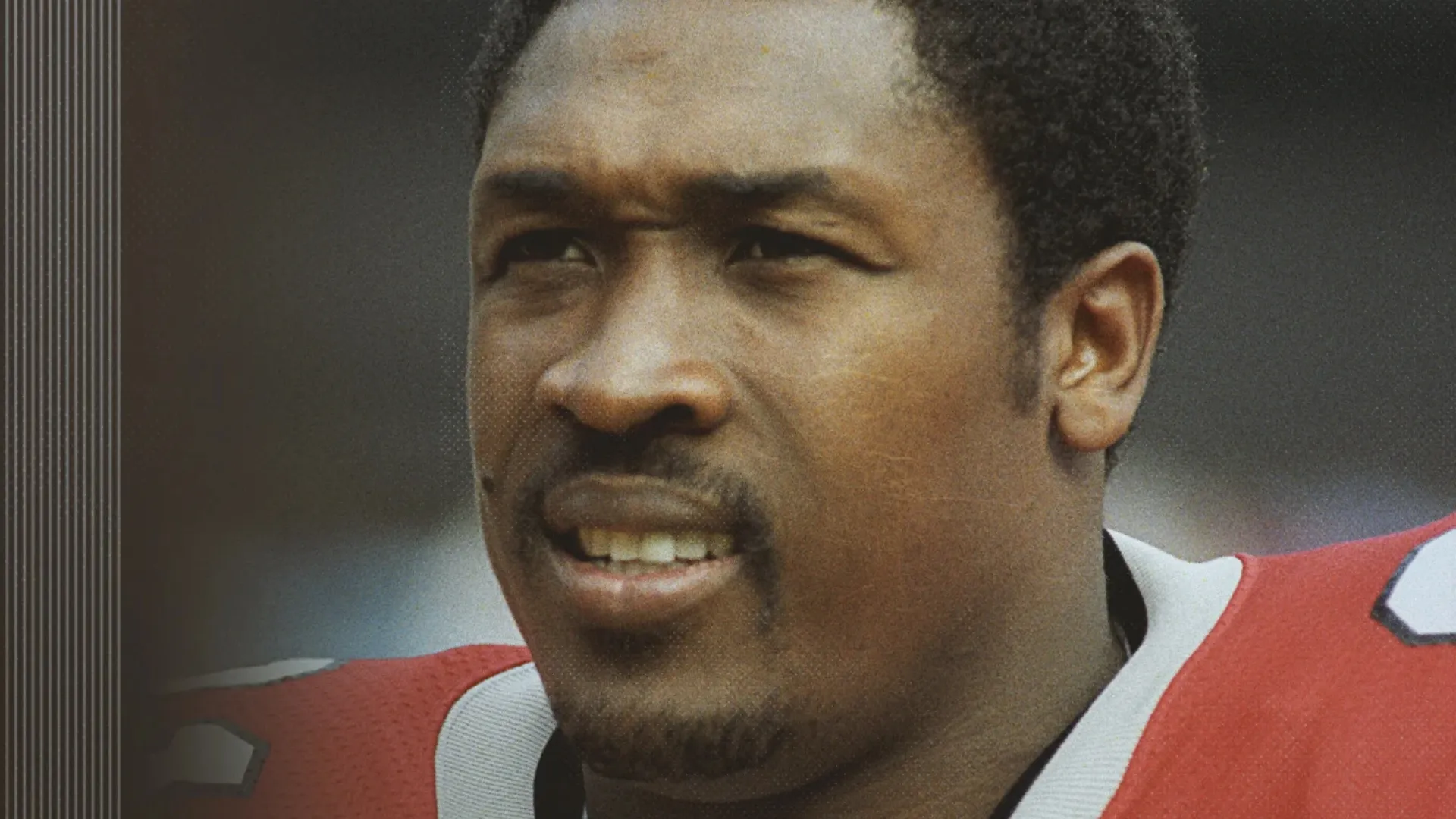
William Andrews (Source: Atlanta Falcons)
William Andrews was a genuine superstar whose career was tragically cut short by injury. For a brief, electrifying period, the running back was the most dynamic player in the Falcons’ offense.
Andrews became the first Falcon to record three consecutive 1,000-yard seasons (1980–1982) and was a threat in both the running and passing games, earning four consecutive Pro Bowl berths.
His influence was transformative: he was the primary offensive weapon that drove the team’s first-ever successful playoff runs in the early 1980s, setting a high standard for backfield versatility.
Andre Rison
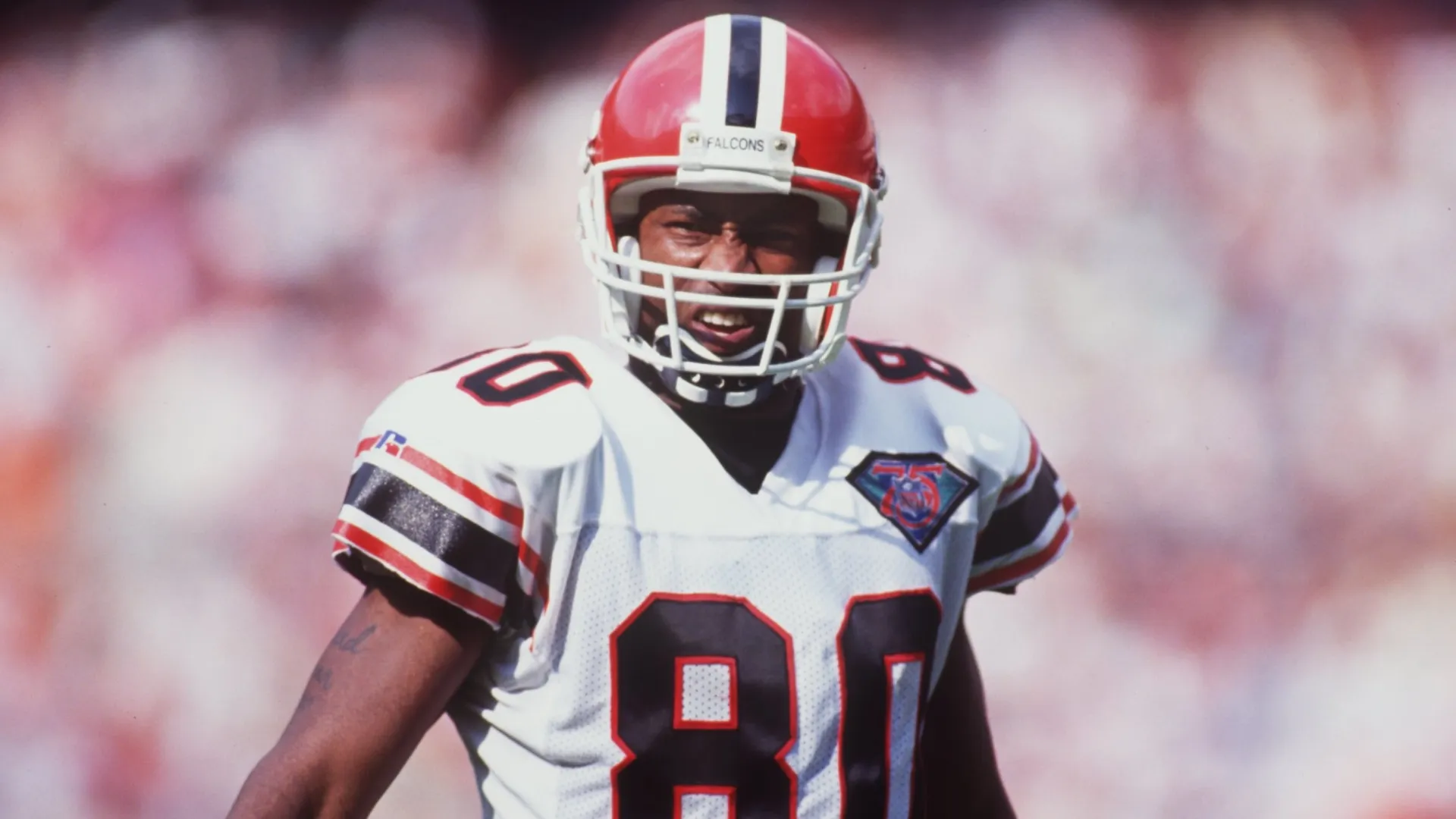
Andre Rison (Source: Getty Images)
Andre Rison was the flamboyant, high-production wide receiver who helped define the early 1990s Falcons’ explosive offensive identity. Known as “Bad Moon Rison,” he combined elite speed with a penchant for spectacular catches, earning four Pro Bowl selections while in Atlanta.
He was the primary downfield threat that stretched defenses and commanded attention, making him a key component of the high-octane offense led by Chris Miller. His influence lies in his ability to deliver Pro Bowl-caliber production while adding cultural flair to the team alongside Deion Sanders.
Ray Buchanan
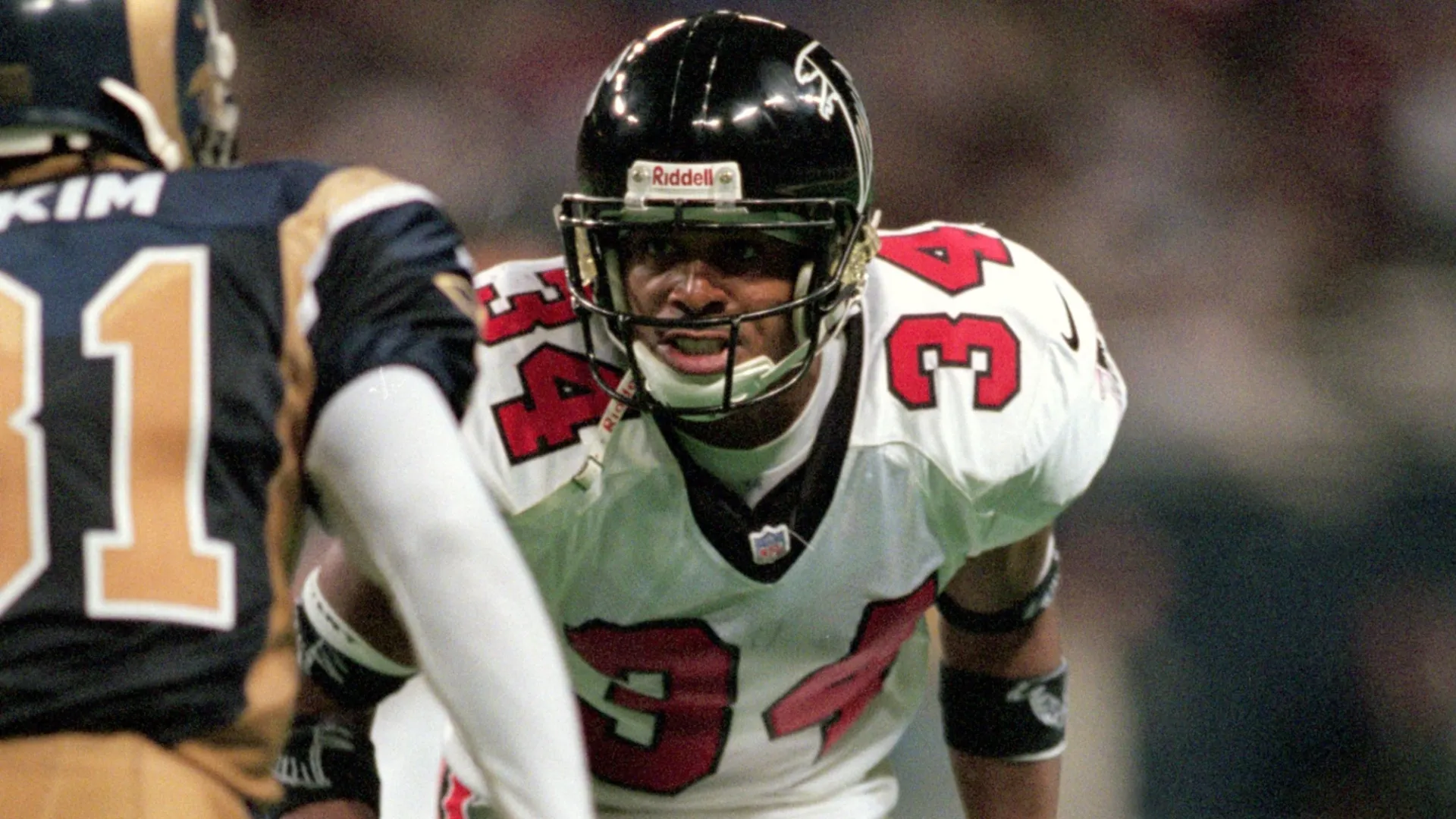
Ray Buchanan (Source: Jeff Gross /Allsport)
Ray Buchanan arrived in Atlanta as a free agent and immediately provided the defense with a reliable, lockdown presence at cornerback. He was an emotional and vocal leader who matched his charisma with high performance, earning Pro Bowl honors in 1998 and 2000.
His influence was critical to the 1998 Super Bowl team, where he anchored the secondary and provided the turnover creation that fueled the defense. His ability to shut down one side of the field was essential for the overall defensive scheme during the franchise’s first Super Bowl appearance.
Justin Blalock
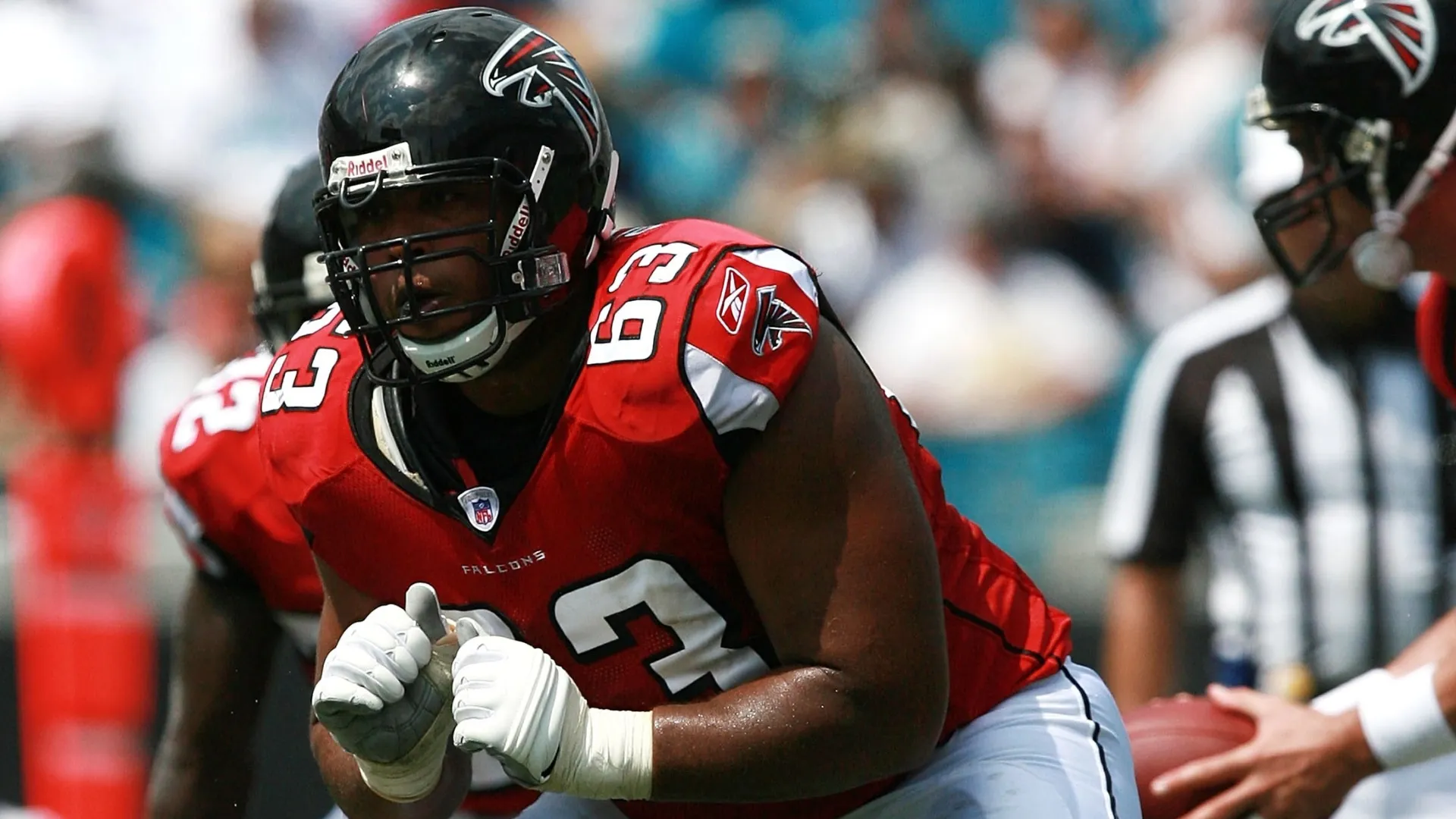
Justin Blalock (Source: Doug Benc/Getty Images)
Justin Blalock served as the indispensable, long-term solution at guard during the franchise’s defining era of success. Drafted in 2007, his career perfectly overlapped with Matt Ryan and the arrival of the Mike Smith regime.
He was a durable, consistent starter whose quiet competence and leadership on the interior line were vital to protecting Ryan and creating running lanes for Michael Turner.
His influence is rooted in his seven seasons of highly reliable play, providing the sustained stability necessary for the offensive juggernaut that drove the Falcons to multiple playoff appearances and a high level of offensive consistency.