

The financial outlook for the Los Angeles Chargers heading into the 2026 offseason has quietly become one of the more intriguing situations. Cap projections suggest the franchise could enter the year with notable room to maneuver.
At the center of the picture is quarterback Justin Herbert and a roster built around several high-profile contracts. Those deals shape the team’s long-term financial structure while leaving the front office with key decisions still looming.
Numbers alone rarely tell the whole story in the NFL. Between roster planning, potential restructures and the rhythm of free agency, their salary cap outlook could quietly influence how Los Angeles approaches a pivotal offseason.
How much is the Chargers’ cap space in 2026?
The Los Angeles Chargers are projected to have about $99.5 million in available cap space for the 2026 season, the highest total in the NFL under the offseason Top-51 accounting rule, according to data from Spotrac.
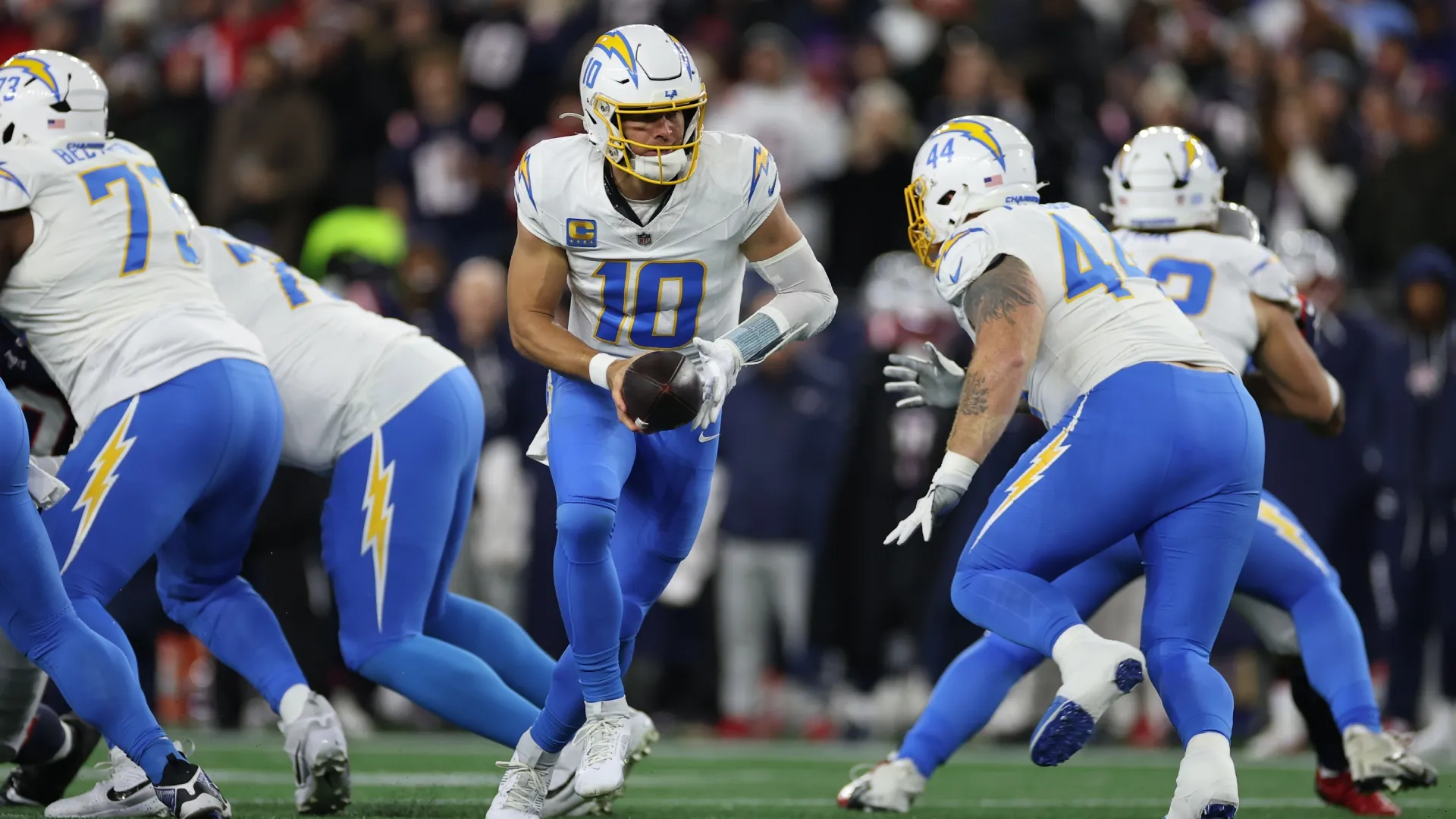
Justin Herbert #10 of the Los Angeles Chargers in action in 2026 (Source: Sarah Stier/Getty Images)
The projection is based on an adjusted team salary cap of roughly $303.3 million, which includes the league’s estimated cap for 2026—around $301.2 million—plus rollover space from the previous season and minor adjustments.
After accounting for their top 51 contracts and existing financial obligations, the franchise still retains nearly $100 million in flexibility. A major portion of the Chargers’ cap structure revolves around franchise quarterback Justin Herbert.
His contract carries a cap hit of about $46.3 million in 2026, the largest on the roster and roughly 15% of the team’s total cap allocation. Other significant charges include safety Derwin James at approximately $24.6 million and left tackle Rashawn Slater at $23.8 million, reflecting the team’s investment in cornerstone players on both sides of the ball.
Despite those sizable contracts, their books remain relatively clean. Spotrac estimates the team will carry around $5.5 million in dead money, a modest figure compared to many NFL teams that often exceed $20–30 million in dead cap.