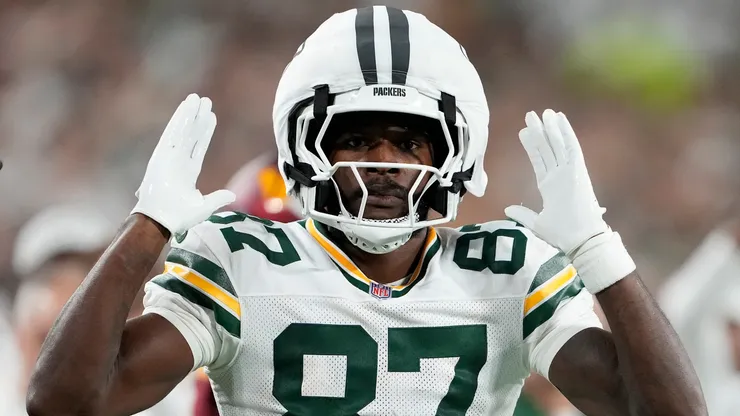
Romeo Doubs stands out long before the ball reaches his hands, his padded helmet has become a small mystery in itself. While many players stick to traditional gear, the Green Bay receiver has chosen something that turns heads and sparks curiosity across the league.
The choice isn’t just about comfort or style; it speaks to a growing shift in how players view protection in a physically demanding sport. As the NFL continues pushing for innovation and safety, his decision feels both personal and symbolic of a wider change.
Behind the soft shell lies a story of caution, confidence and the fine balance between performance and preservation. It’s a reminder that even the smallest piece of equipment can reveal something larger about the modern game.
The reason behind Romeo Doubs’ padded helmet choice
The padded helmet Romeo Doubs wears has become one of the most recognizable sights on the Green Bay Packers’ sideline. But it’s not a new fashion statement or a stylistic experiment, it’s a calculated choice rooted in safety.
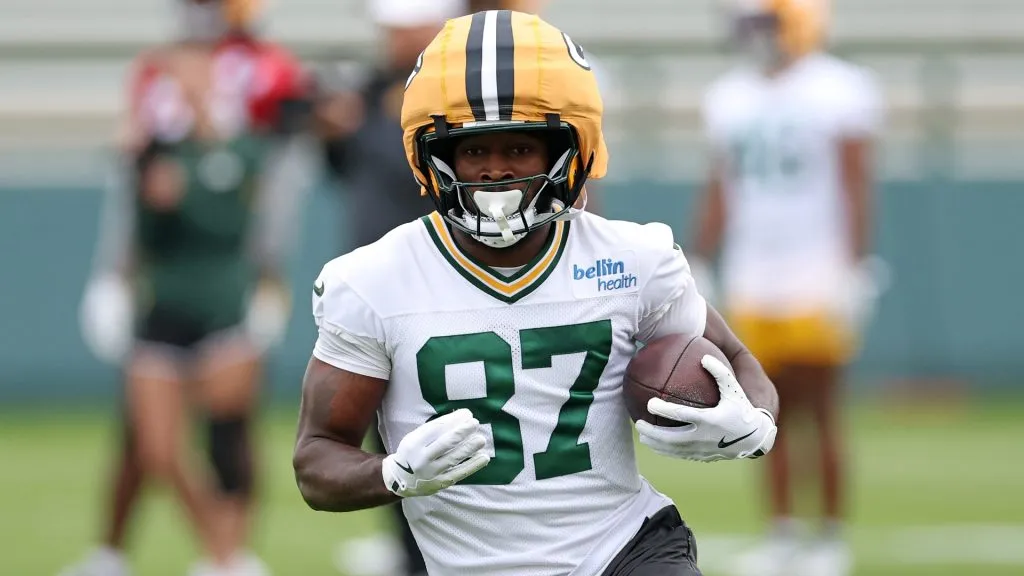
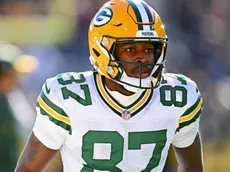
Romeo Doubs #87 of the Green Bay Packers participates in drills in 2025. (Source: Stacy Revere/Getty Images)
The soft shell covering his helmet is called a Guardian Cap, designed to reduce impact force and lower the risk of concussions, an issue that has taken center stage in the modern NFL.
He first started wearing the cap in a regular-season game in December 2024, shortly after returning from a concussion. The timing wasn’t accidental. After experiencing the physical and mental toll of an injury that can easily derail a player’s season, he decided that taking an extra step toward protection was worth it. His reasoning was simple: “Better safe than sorry”.
Originally introduced for use during practices and training camps, Guardian Caps were made mandatory for certain positions, such as offensive and defensive linemen, linebackers, and tight ends. But few wide receivers have chosen to wear them in live games.
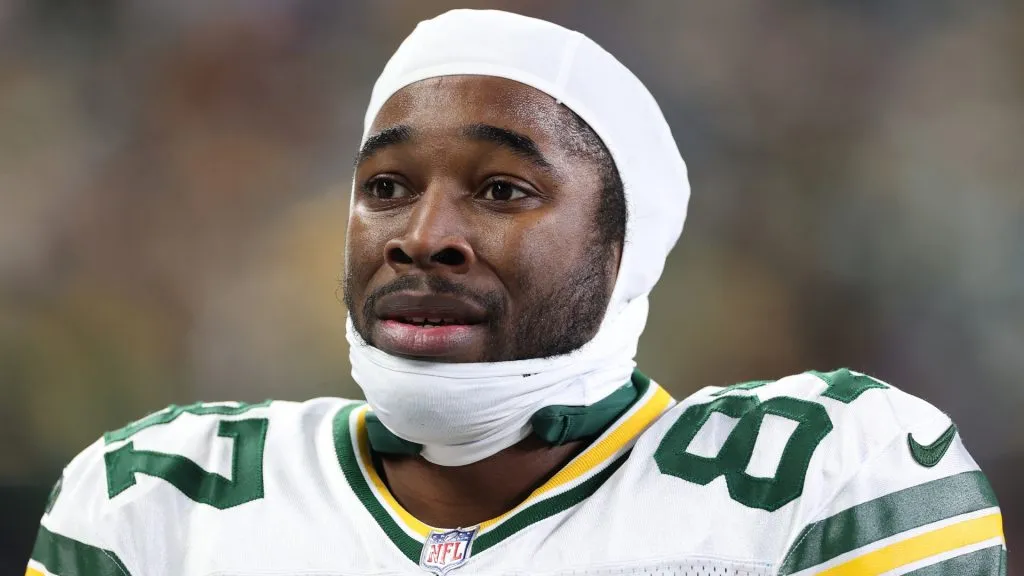
Romeo Doubs #87 of the Green Bay Packers in 2024. (Source: Steph Chambers/Getty Images)
Doubs’ decision, therefore, stands out, not only for its visual contrast but for what it says about changing attitudes toward player safety. Teammates and fans have had mixed reactions, with some calling the look “odd” and others applauding his forward-thinking mindset.
Yet, as more research highlights the long-term consequences of repeated head impacts, his move seems less unusual and more like a glimpse into football’s future. In a league that prizes toughness and tradition, his padded helmet represents a quiet act of evolution. It’s not about fear, it’s about endurance.