
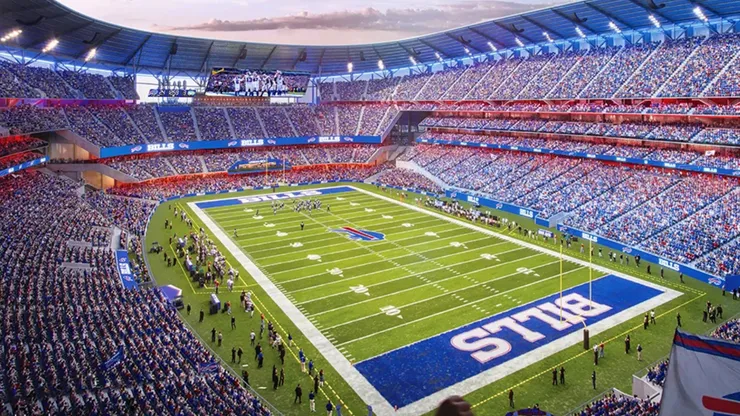
The Buffalo Bills have a new home, but one thing about Highmark Stadium feels familiar: the weather is still part of the game. As the franchise enters a new era in Orchard Park, its stadium brings modern amenities and a redesigned experience.
The Bills’ new venue features a sweeping canopy, advanced heating systems and a design that takes the region’s harsh winters into account, all while maintaining the outdoor atmosphere that the team’s fans have come to expect.
The decision has also drawn attention because a stadium roof can influence much more than comfort. From the new Highmark Stadium’s capacity and crowd noise to the conditions players face, it reflects a particular vision of what football should look like.
Why did the Bills decide not to build a dome?
The Buffalo Bills chose an open-air stadium because ownership wanted to preserve outdoor football, embrace Buffalo’s winter weather and create a home-field advantage that reflects the team’s identity.
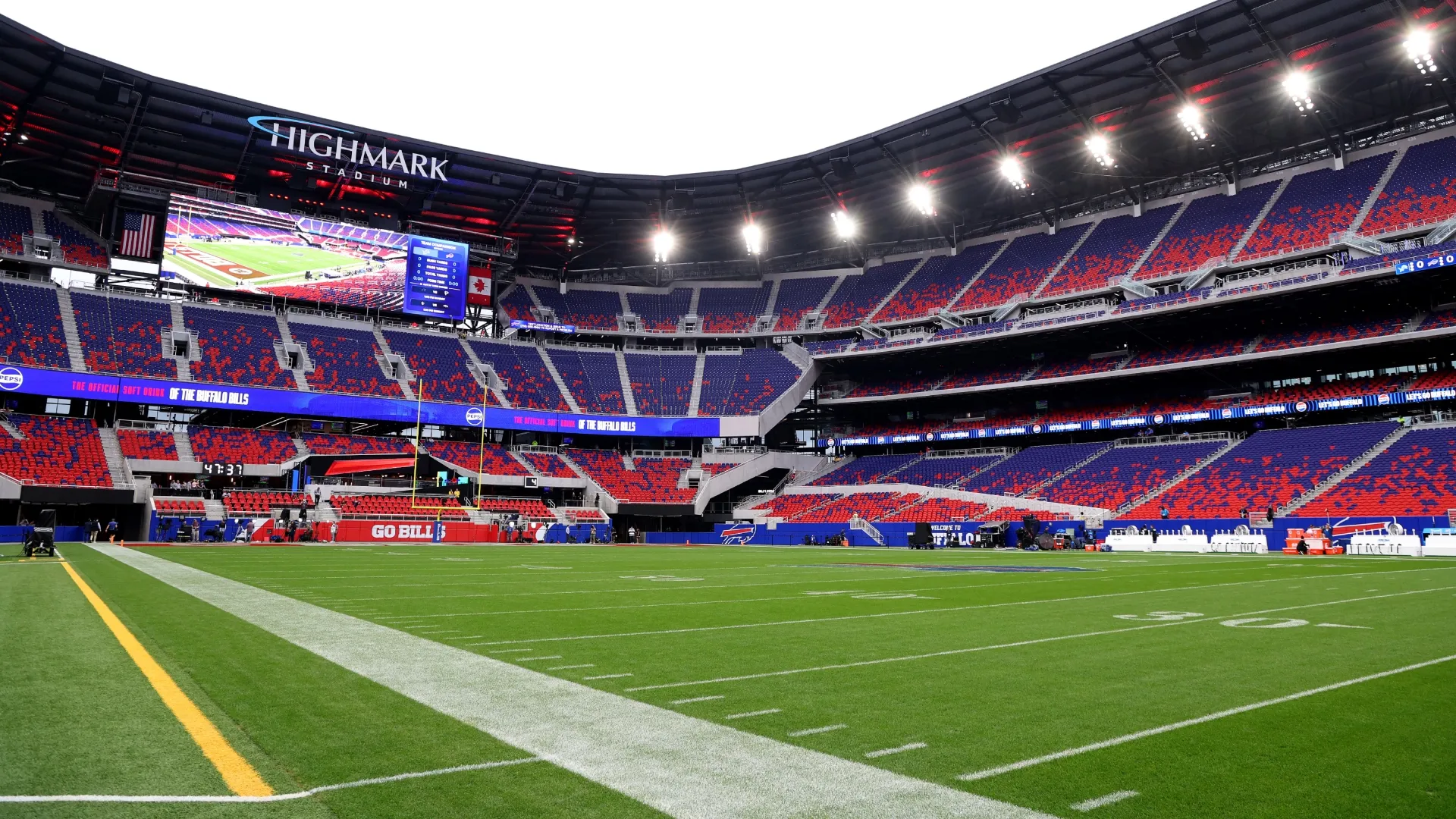
A general view of the Highmark Stadium on September 17, 2026 (Source: Timothy T Ludwig/Getty Images)
Rather than building a fully enclosed venue, the franchise prioritized a football-first design that would keep the elements involved in the game while improving the experience for fans. The decision was driven in part by the vision of Bills ownership and the stadium’s architects at Populous.
According to Populous Global Director Scott Radecic, ownership made it clear from the beginning that the team would play outdoors. The goal was to create an authentic Buffalo experience, particularly during the late-season games that have become part of the franchise’s identity.
Cost was also a consideration at the time of constructing the new Highmark Stadium. A full dome or retractable roof would have increased the price of an already expensive stadium project, while the Bills believed the potential to attract additional major events to the region would not necessarily justify that investment.
The team instead focused its resources on improving weather protection without eliminating the outdoor atmosphere. The result is a venue designed around the idea that weather can be an advantage rather than something to eliminate.
How will Highmark Stadium protect fans from the cold?
It was designed specifically with Buffalo’s harsh winter conditions in mind. Its combination of a protective canopy, wind-mitigating façade, heated areas and snow-melting technology is intended to make cold-weather games more comfortable without turning the stadium into an indoor venue.
The main features include:
- 360-degree canopy: Covers approximately 64% to 65% of the seats, providing protection from precipitation and reducing exposure to wind.
- Wind-mitigating façade: The stadium’s perforated exterior panels help control airflow and limit the impact of swirling winds around the seating bowl and field.
- Radiant heating: Heating systems are installed above certain seating areas to provide additional warmth during cold games.
- Heated concourses and conditioned spaces: Fans can access temperature-controlled areas throughout the stadium, including clubs and other enclosed spaces.
- Snow-melt system: The roof incorporates a large-scale snow-melting system designed to manage accumulation and help keep the canopy safe during winter weather.
The playing surface also has its own winter technology. The new venue features natural grass with underground heating and a SubAir system designed to help manage moisture, ventilation and field conditions throughout the season.
Will the Bills have a home-field advantage in the new stadium?
The new Highmark Stadium is designed to strengthen the Bills’ home-field advantage by bringing fans closer to the field, amplifying crowd noise and preserving the impact of Buffalo’s weather.
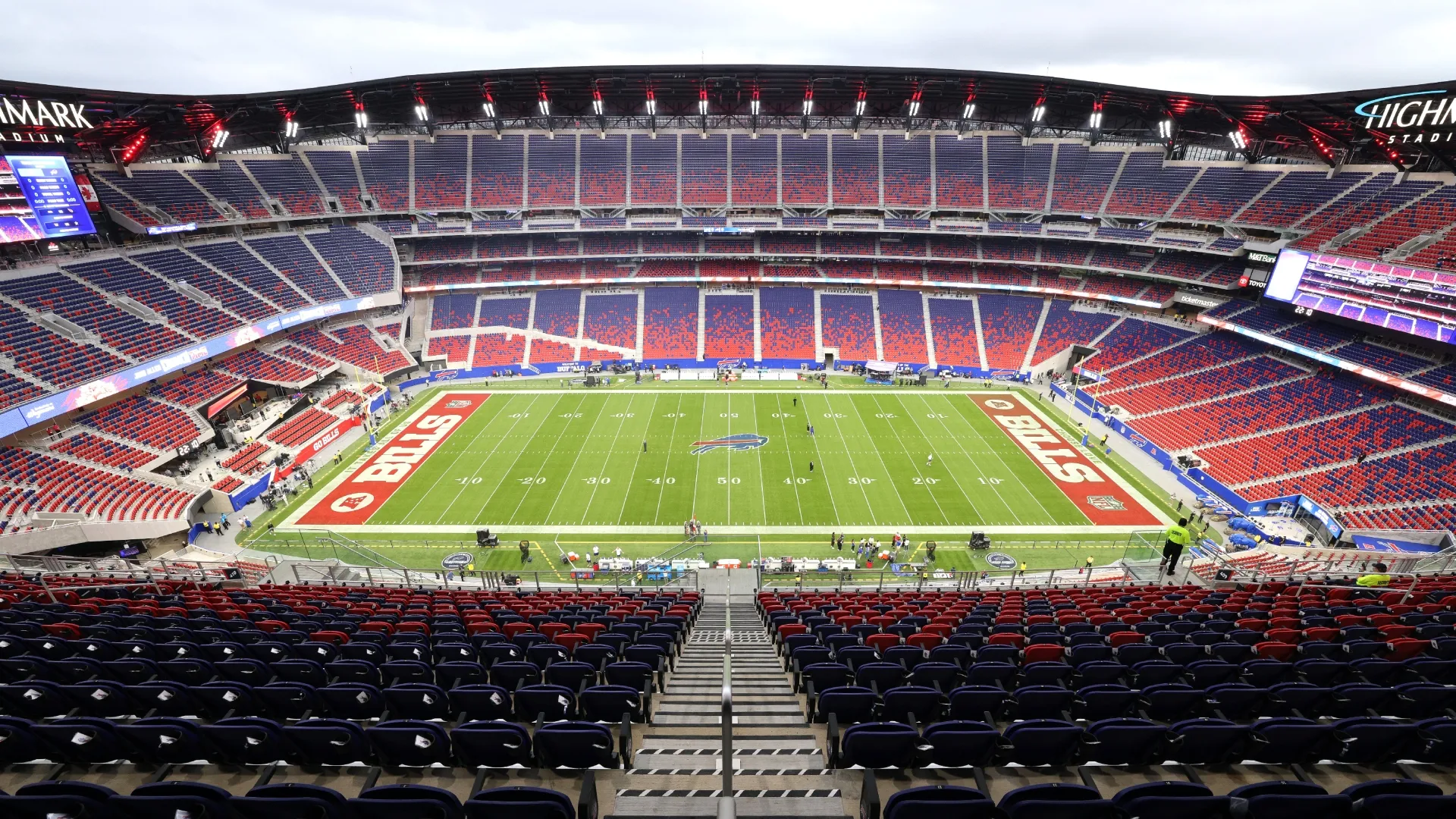
A general view of the Highmark Stadium on September 17, 2026 (Source: Bryan M. Bennett/Getty Images)
While no stadium can guarantee better results, the venue’s architecture is intended to make it a difficult place for visiting teams to play. One of the most important features is its steep, vertical seating bowl.
The design places fans closer to the action, creating a more intimate atmosphere and helping crowd noise reach the field. The upper seating areas are among the closest in the NFL, while the north end zone features a particularly close relationship between fans and the playing surface.
Key takeaways
- The Buffalo Bills chose an open-air Highmark Stadium in Orchard Park to preserve winter weather.
- Populous designed the stadium, avoiding a dome to save costs and maintain outdoor football.
- A 360-degree canopy covers 64% to 65% of seats at Highmark Stadium to protect fans.