Olympic ice hockey at Milano-Cortina is shaping up as one of the most intense showcases of the Winter Games, blending NHL talent with the sport’s purest international traditions. But beyond the slashes and saves lies a rulebook that sets this stage apart from what fans know from pro leagues.
Unlike the NHL, where dropping the gloves can be part of the culture, the Olympic tournament follows strict International Ice Hockey Federation guidelines that strip fighting from the game’s DNA. Infractions are met with stiff penalties that reshape how physicality is managed on the international ice.
As the stars skate onto the Olympic ice this February, the prohibition on on-ice battles underscores a broader philosophy: protect the athletes and emphasize skill over brawls, all while adapting a sport steeped in tradition for the global spotlight.
What happens if players fight in Olympic hockey?
Under International Ice Hockey Federation regulations, fighting is not treated as a colorful side of the sport but as a serious violation. Any player who drops the gloves during an Olympic game faces immediate penalties, including ejection and potential suspension, measures designed to keep the tournament centered on speed, structure and technical skill rather than intimidation.
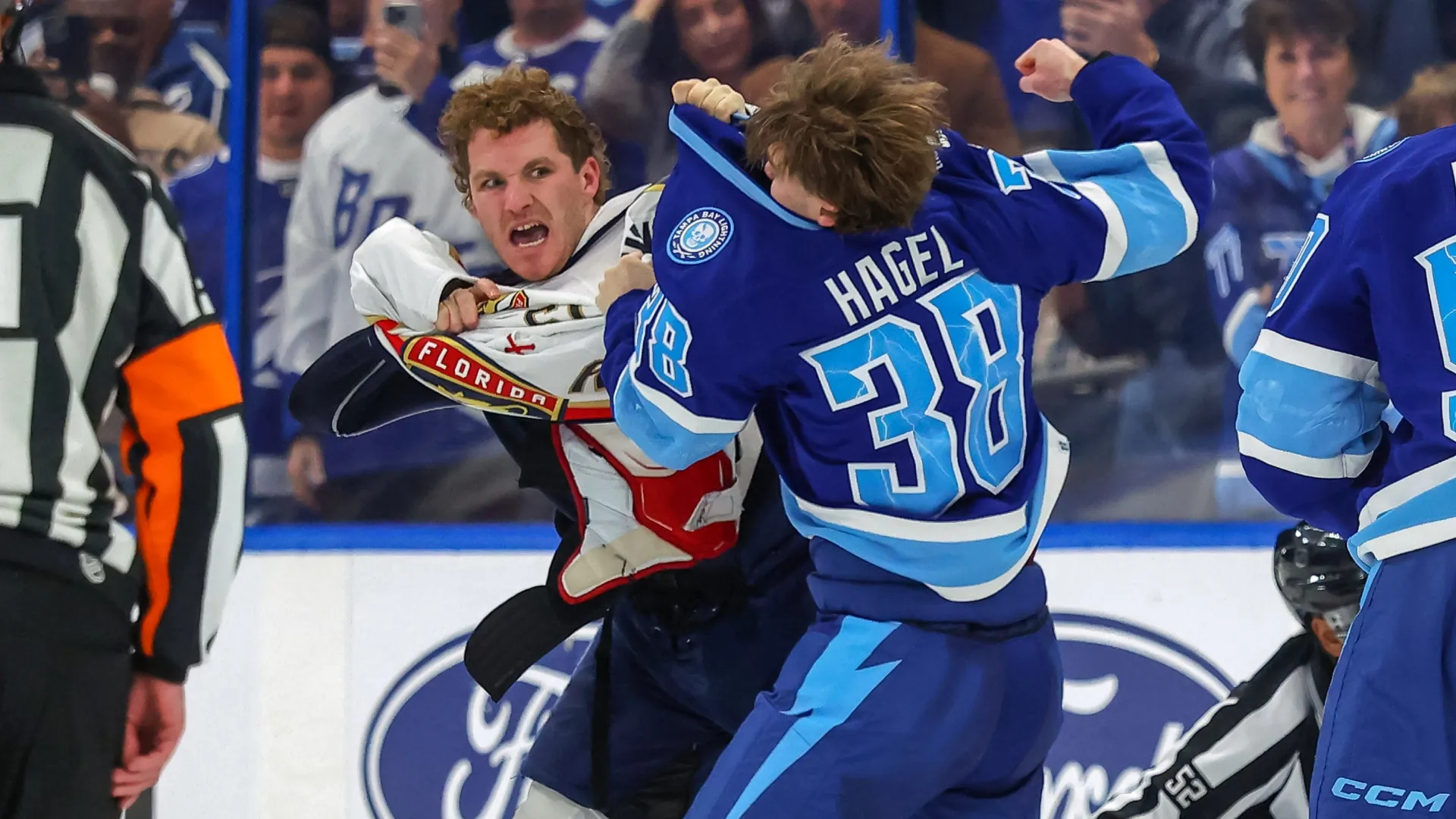
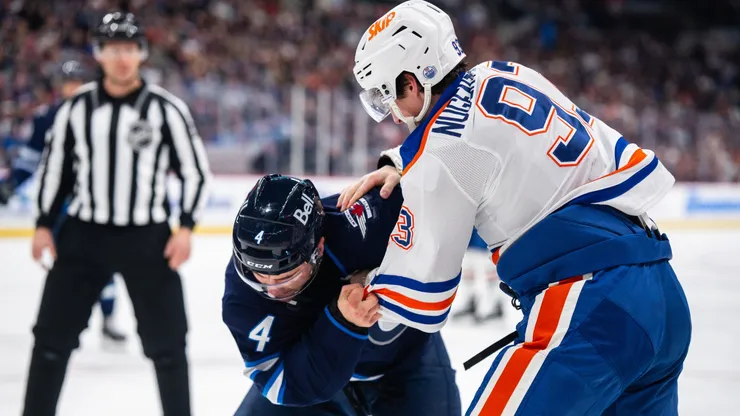
Matthew Tkachuk fights with Brandon Hagel in 2026 (Source: Mike Carlson/Getty Images)
This stricter framework creates a markedly different rhythm from the NHL, where brief fights can result in limited time in the penalty box but rarely remove a player from the contest entirely. On Olympic ice, discipline becomes part of competitive strategy, forcing teams to balance physical pressure with the risk of losing key contributors in decisive moments.
Milano Cortina now places that contrast under an even brighter spotlight as elite professionals compete on the Winter Games stage. With national pride, global audiences and medal stakes intertwined, every whistle can shift momentum, turning composure into one of the most valuable assets a roster can carry through the tournament.
What penalties apply for fighting in Olympic hockey?
Under IIHF rules used at the Winter Olympics, fighting leads to an automatic game misconduct, meaning immediate ejection with no return to the ice. Officials can also impose additional disciplinary action, including suspensions that carry into later medal-round games depending on severity.
Because Olympic tournaments are short, losing a player even for one game can significantly alter a team’s chances. The rule is designed not only to punish altercations, but to deter them entirely and preserve competitive balance across nations.
IIHF vs. NHL rules: Why the Olympic game feels different
The contrast with the NHL is stark. In North America’s top league, fights typically result in five-minute major penalties for the players involved, and teams often continue at full strength once the penalties expire. Ejections are far less common unless an incident escalates.
International hockey instead prioritizes flow, safety and technical execution, limiting tolerance for staged or retaliatory violence. At Milano Cortina, that philosophical divide becomes part of the drama—where restraint, not aggression, may prove decisive in the pursuit of gold.