
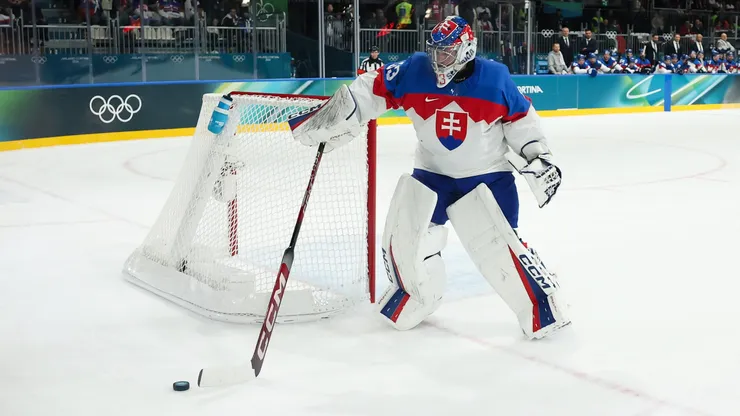
At the Winter Olympics, hockey won’t be played on the exact same ice sheet familiar to NHL fans. Olympic arenas are traditionally governed by other standards, which have long differed from the narrower North American pro format and shape the style of play.
Typically, international and Olympic rinks stretch wider than NHL surfaces and have been used to showcase a more open game in past Games. Yet for Milan, organizers and the IIHF agreed to a hybrid dimension.
The result is a surface that looks familiar but feels different under the blades: a rink built to Olympic specification but influenced by metric measurements and past practice where international rules and regional arenas shaped the strategy.
The reason Olympic hockey rinks aren’t the same as the NHL’s
Olympic hockey rinks follow IIHF rules, which use metric measurements and slightly different standards than the NHL. The Winter Olympic ice is shorter and a bit wider than NHL rinks, designed to encourage more open skating and passing.

Olympic hockey ring in Milano Cortina 2026 Winter Olympic Games (Source: Alexander Nemenov – Pool/Getty Images)
This distinction comes from the IIHF’s regulations, which prioritize player spacing, safety and an international style of play. NHL rinks are narrower, encouraging physical contact and quick transitions, while Olympic ice gives skaters extra lateral space to maneuver, creating different strategies on offense and defense.
For Milano‑Cortina 2026, organizers followed this hybrid approach: the rink is about three feet shorter than the NHL standard but retains Olympic width, balancing venue constraints with traditional international gameplay.
How big is the Olympic hockey ring?
At the Winter Olympics, hockey is unfolding on surfaces that look familiar. Instead of the NHL’s traditional 200 feet in length, the rink has been set up at 60 meters (about 196.85 feet) by 26 meters (85.3 feet), meaning it’s more than three feet shorter than what North American pros are used to.
It’s a curious blend of measurements. The International Ice Hockey Federation’s rulebook allows rink widths from 26 m to 30 m, and traditional Olympic and IIHF surfaces were typically both shorter and wider than NHL ice.
Olympic rink sizes have shifted over time — from the classic international ice to NHL dimensions used in Vancouver 2010 and Beijing 2022 — and now to a hybrid form that sits somewhere between the two traditions while aiming to balance player safety, venue constraints and the style of competition on the world stage.