In the fast-paced world of the NHL, games are not always decided in the 60 regulation minutes. Sometimes, a team’s fate is determined in an adrenaline-fueled overtime, where every second counts and fatigue sets in.
However, the overtime and shootout rules are not the same during the regular season as they are in the playoffs, and this completely changes the dynamics of each game. The clock never lies and sometimes it can be unpredictable.
While in the regular season teams battle under a 3-on-3 format in search of a quick goal and the possibility of deciding the winner with a shootout, the playoffs bring even greater tension, amplifying the emotions.
How do the NHL overtime and shootout rules work?
Regular Season
In the NHL, during the regular season, when a game is tied after the three regulation periods, it goes into overtime. This overtime lasts for 5 minutes and is played under a “sudden death” format, with both teams facing off with only three players on the ice, in a 3-on-3 format.
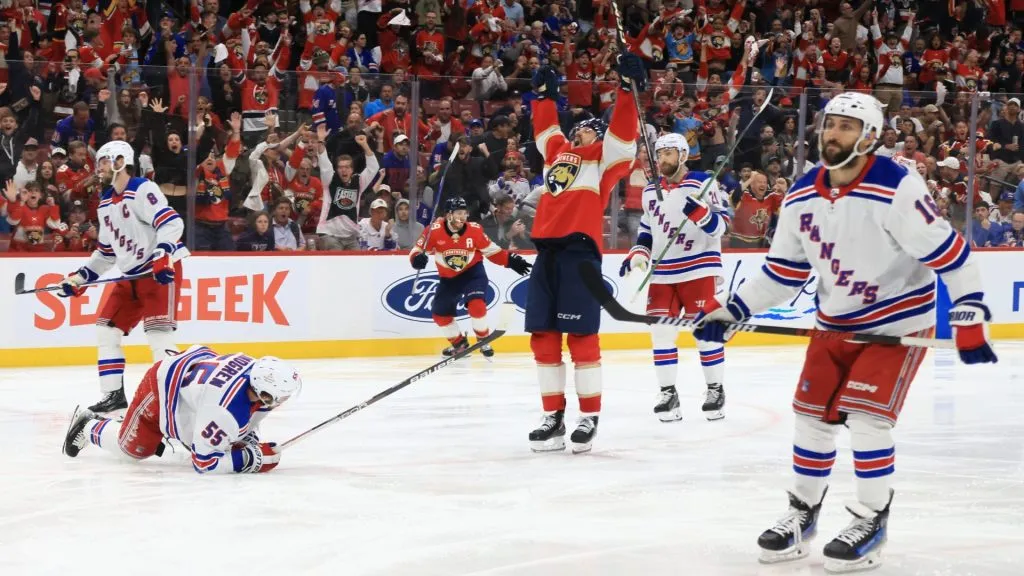
Sam Reinhart of the Florida Panthers celebrates after scoring a goal the game-winning goal in overtime against the New York Rangers in the 2024 Stanley Cup Playoffs. (Source: Bruce Bennett/Getty Images)
The team that scores the first goal during this additional period wins the game, resolving the tie quickly without needing extra time. If the score remains tied after these five minutes, the game enters the shootout phase.
In the shootout, each team selects three players to take direct shots on the opposing goalie. If, after those three rounds, the score is still tied, the shootout continues with additional “sudden death” rounds, where players alternate until one team scores and the other does not, determining the winner.
Playoffs
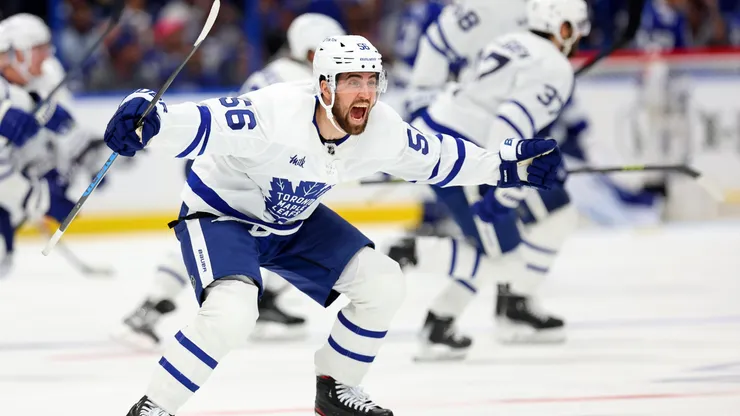
In the playoffs, the dynamic changes significantly. If a game is tied after the three regulation periods, it goes into overtime, but in this case, the periods last 20 minutes and the format remains “sudden death” with five players per team on the ice, 5-on-5. Here, the first goal scored in overtime decides the winner of the game.
What makes the playoffs special is that there are no shootouts. If the tie is not resolved after one overtime period, the game continues with another 20-minute period, repeating the “sudden death” format until a goal is scored, giving one team the victory. This feature heightens the excitement, as games can extend for several hours if necessary, making every goal a crucial and tense moment.